
# 1 position
Most Affordable Interior Design Schools & Degrees in Redwood City for 2027
Audited and Verified:
Our Editorial and Data Verification Process
Research.com uses government datasets, official education statistics and primary institutional information to support its career and degree guides. Our review process checks factual accuracy, occupational definitions, source dates and the requirements associated with the credentials discussed.
How This Article Was Fact-Checked
Our editorial team verifies salary estimates, employment projections, education requirements and program information against original data providers and official organizations. Salary figures are checked against the relevant occupational definitions and reporting periods. Information about licensure, accreditation and required in-person training is reviewed separately.
Fact-checked and verified on:

Co-Founder and Chief Data Scientist

Reviewed by Karolina Broda
Fact-Checker and Data Verification
Choosing interior design training near Redwood City means comparing more than tuition: a useful program must also build a portfolio and teach the technical skills employers expect. The U.S. Bureau of Labor Statistics reports a $67,190 national median annual wage for interior designers in May 2025, but that is not a starting-pay estimate. This guide explains local training, costs, credentials, and career prospects. It accompanies the Most Affordable Interior Design Trade Schools in Redwood City for 2027 ranking, created by the Research.com team of data scientists to help students make an informed choice about programs worth considering.
Key findings about interior design degrees in Redwood City
- Start with Cañada College's published interior design offerings and current fee schedule, then compare the full cost of software, materials, and commuting; a low tuition figure alone does not establish the cheapest job-ready route.
- California does not require an occupational license to work as an interior designer, but its "Certified Interior Designer" designation has separate requirements. A training certificate does not automatically confer that designation (California Council for Interior Design Certification).
- Interior designers had a $67,190 U.S. median annual wage in May 2025, and national employment is projected to grow 2.7% from 2025 to 2035. Neither figure predicts entry-level pay or openings in Redwood City (U.S. Bureau of Labor Statistics).
Table of Contents
- Most Affordable Interior Design Schools & Degrees in Redwood City for 2027
- What can I expect from an interior design trade school program in Redwood City?
- Where can I work with an interior design trade school training in Redwood City?
What can I expect from an interior design trade school program in Redwood City?
Expect studio-based training that turns a client brief into a workable space: measuring and planning rooms, selecting materials, producing drawings or digital models, and presenting a design. Interior design extends beyond decoration to circulation, accessibility, lighting, and the coordination of building-related decisions. Employers may ask for a portfolio showing how you solved these problems, not just attractive images (U.S. Bureau of Labor Statistics).
Cañada College gives Redwood City residents a local community-college option to investigate. Compare its current catalog's interior design credentials, course sequence, studio access, and scheduling with any other training route you consider. An associate degree generally involves more general education than a focused certificate; neither credential should be judged solely by how quickly it can be earned. Readers comparing easiest associate degrees to get should check whether the interior design coursework actually produces the portfolio their intended jobs require.
Where can I work with an interior design trade school training in Redwood City?
Possible settings include residential design studios, furniture and kitchen-and-bath businesses, architecture or workplace-design teams, and firms serving clients across the Peninsula and wider Bay Area. A short credential may be most useful for a support role - such as showroom sales, materials coordination, or drafting assistance - while independent project responsibility usually calls for stronger technical work and experience (U.S. Bureau of Labor Statistics).
Before enrolling, search actual job descriptions for the work you want and note their software, portfolio, and experience requirements. That makes the question "what can you do with a trade school diploma?" specific to the credential and skills you would earn, rather than an assumption that every design job has the same entry requirements.
The U.S. median annual wage for interior designers was $67,190 in May 2025 (U.S. Bureau of Labor Statistics, Occupational Outlook Handbook). It describes workers nationwide across experience levels - not Redwood City pay, a graduate outcome, or the likely wage for a first showroom or design-assistant position.
For a local earnings estimate, compare current Peninsula job postings for the exact role you seek and ask a program whether it publishes occupation-specific placement and earnings results. Check whether posted compensation is hourly, salaried, commission-based, or tied to contract work. Do not justify borrowing against the national median without accounting for time to build a portfolio and obtain paid experience.
Duration depends on the credential and course schedule. A focused certificate can require fewer courses than an associate degree; part-time study takes longer in calendar time, particularly when studio courses have prerequisites or are offered only in certain terms. Use Cañada College's current catalog and class schedule - not a generic completion estimate - to map the courses you need and when you can take them.
California does not set a universal number of classroom or apprenticeship hours for entry to interior design work (California Council for Interior Design Certification). Ask instead how many scheduled hours involve instructor feedback, drawing, software, and studio projects. An internship or employer placement may strengthen a portfolio, but confirm whether it is required, available, and paid before treating it as part of the program.
Online study can suit design history, research, and some software instruction. Campus studio sessions can make it easier to measure spaces, handle samples, critique drawings, and collaborate on presentations. A hybrid program can work well for someone employed in Redwood City if its in-person sessions fit their schedule and commute.
Format alone says little about training quality. Request sample assignments and ask how instructors review technical drawings, how students access required software, and whether they can build a portfolio from real-world briefs. General lists of accredited non-profit online universities are not a substitute for checking an interior design program's actual credential, studio work, and California relevance. Institutional accreditation does not itself certify a student's design skills.
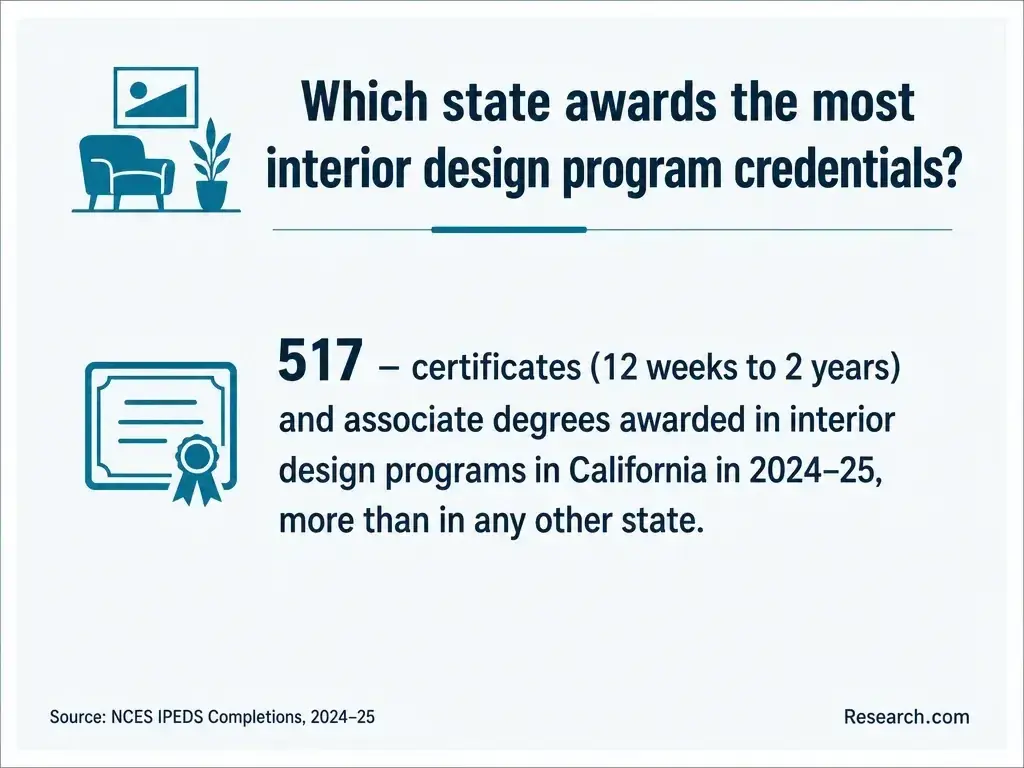
There is no reliable citywide average that covers every certificate, college program, and employer-training route. For a public-college comparison, California community-college resident enrollment fees were $46 per unit in the 2025-26 academic year (California Community Colleges Chancellor's Office). That is a per-unit charge, not a quoted price for Cañada College's full interior design pathway; verify the applicable rate and residency rules for your enrollment year.
The table separates charges that are easy to overlook. Request a written estimate for the exact credential and course sequence before comparing it with another option.
| Cost component | Why it changes the comparison |
| Enrollment, tuition, and mandatory fees | Depend on provider, residency, and courses taken. |
| Software, computer, printing, and materials | Digital drafting and physical presentations may require purchases or lab access. |
| Transportation and time away from work | Campus visits and studio schedules matter even when tuition is low. |
| Debt after grants or employer support | The amount financed can differ substantially from the advertised price. |
Eligible students should check federal aid eligibility for the specific program and ask about the California College Promise Grant, which can waive eligible community-college enrollment fees but does not cover every expense (Federal Student Aid; California Community Colleges Chancellor's Office). Comparing design with lists of most lucrative majors in college will not answer whether this occupational credential is affordable: weigh its total cost, likely starting role, completion prospects, debt, and earnings you would forgo while studying.
The credential depends on the program you complete. A community-college pathway may award a certificate or an associate degree, while a short software course may provide only a course-completion record. Check the current Cañada College catalog for the exact award name, required courses, and whether completed courses can apply to another credential.
These awards are not interchangeable with California's Certified Interior Designer designation or the voluntary NCIDQ credential. Each has separate eligibility rules; a similarly named school certificate is not evidence of professional certification (California Council for Interior Design Certification; Council for Interior Design Qualification). Ask which roles recent completers pursued and what portfolio work they had when applying.
Confirm current admission steps with the provider, then check whether your intended interior design courses have prerequisites, placement requirements, enrollment limits, or required software and computer specifications. Admission to a college does not necessarily reserve a seat in every studio course. For Cañada College, use its current catalog and admissions information to distinguish college entry from entry into a particular course sequence.
Prior design or construction experience may help you learn faster, but do not assume it automatically earns credit. Ask whether prior coursework or assessed learning can shorten the pathway, and obtain a written course plan before paying for classes that may duplicate what you already know.
A career-oriented sequence should connect space planning, color and materials, lighting, furniture specifications, drawing, digital visualization, and client presentations. It should also introduce the accessibility and building-code issues that affect design proposals, while making clear when a project requires coordination with licensed building professionals (U.S. Bureau of Labor Statistics).
Look closely at how those skills are assessed. A program that asks students to measure an existing space, revise plans after critique, specify materials, and explain decisions to a client offers different preparation from one centered on inspiration boards alone. Ask to see a course outline and examples of the portfolio work students are expected to produce.
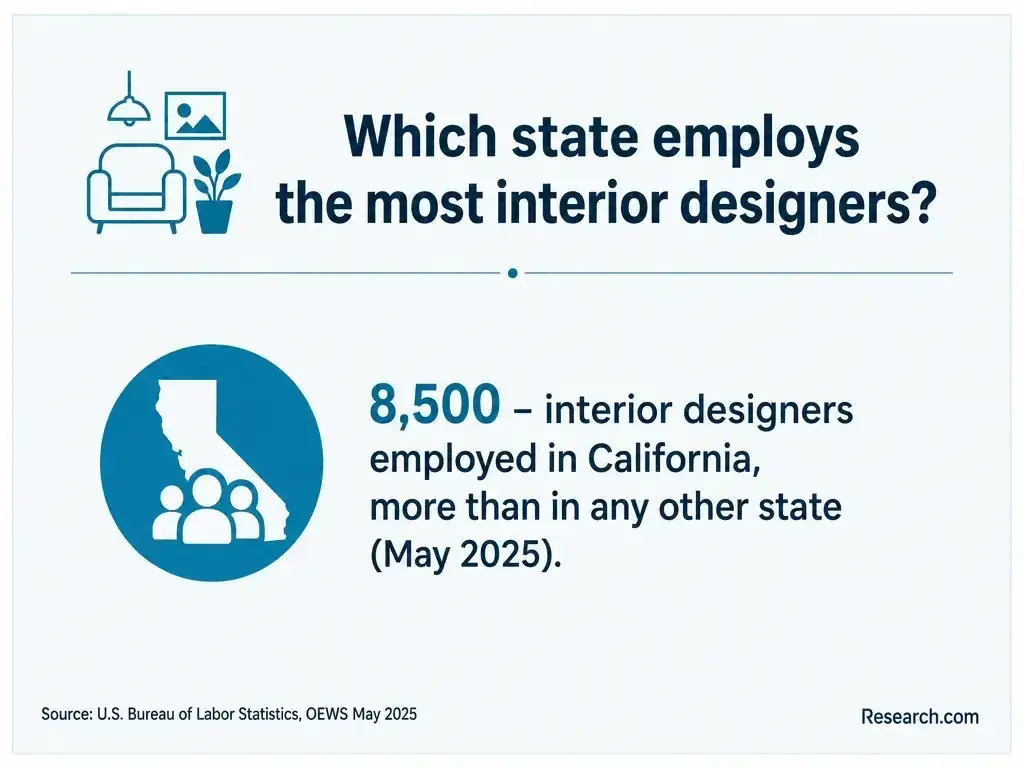
California does not require an occupational license simply to work as an interior designer. It does regulate use of the Certified Interior Designer title through a separate certification process; school completion alone does not grant that title (California Council for Interior Design Certification). An interior design credential also does not authorize work reserved for licensed architects or other regulated professionals.
If certification matters to your intended clients or employer, check the certifying body's current education, experience, and examination rules before choosing courses. Also distinguish institutional accreditation from program-specific recognition and professional certification: each answers a different question, and none should be assumed from a school's marketing language alone.
Start with the job you want, then test whether a program provides the credential, practical work, and affordable schedule needed to pursue it. The affordability ranking is a useful shortlist, but its score does not measure studio quality or employer recognition.
Bring these questions to admissions or a program instructor; the answers should let you compare options on the same basis:
- What exact credential will I receive, and which courses must I complete in sequence?
- How much supervised drawing, software, studio critique, and portfolio work will I do?
- What is my full estimated cost after fees, materials, commuting, and available aid?
- What evidence can you provide of placement, employer connections, or student portfolios for my target role?
- Will completed courses receive credit if I change pathways, and can you document that policy?
Choose a shorter certificate if it closes a defined skills gap without unnecessary coursework. Consider a broader associate-degree pathway if you need sustained studio practice and a stronger foundation. Avoid enrolling solely because a program is cheapest or fastest when its projects do not match the work you hope to perform.
Training can support entry into design assistance, showroom or furnishings work, drafting support, and materials coordination. With a stronger portfolio and experience, a worker may pursue residential or commercial design projects, specialize in areas such as kitchens and baths, or take on client and project-management responsibilities. Duties and hiring standards vary by employer (U.S. Bureau of Labor Statistics).
A direct-entry showroom job or employer-sponsored software training may be a better first step for someone who already has customer-facing experience and wants to test the field before paying for a credential. Formal studio training is more compelling when the target role requires technical drawings and a substantial portfolio. Broader comparisons, including 1 year masters programs usa, address a different education decision and should not be mistaken for a route into an entry-level interior design trade role.
U.S. employment of interior designers is projected to grow 2.7% from 2025 to 2035 (U.S. Bureau of Labor Statistics, Employment Projections). This national projection suggests opportunities but does not measure Redwood City openings or guarantee demand for new trainees. Local competition, the mix of residential and commercial projects, and an applicant's portfolio will matter more to an individual job search.
Before committing to training, sample current openings across a commute you would accept. Separate true entry-level roles from postings requiring years of experience, and record the software and project skills that recur. Recheck the market near graduation; a national long-range projection cannot replace a current local search.
Most Affordable Interior Design Schools & Degrees in Redwood City for 2027
Investing in occupational training is a consequential decision. Research.com's team built the affordability ranking to help readers compare programs against other reported options in the same occupation and location, using consistent cost and debt measures rather than promotional prices. The team reviews source quality and data comparability, but readers should still confirm current charges and program details directly with a provider.
Only programs with completions reported to IPEDS can enter the ranking. Most-affordable rankings score tuition, cost of attendance, median student debt, and federal loan default rate; an entropy-based method gives more weight to indicators that vary more across programs. Accreditation and other quality measures are not part of the affordability score. That differs from Research.com's best-program rankings, which also evaluate outcomes, earnings, support, and recognition. Absence from a college-oriented dataset does not mean a training option does not exist or lacks quality.
The ranking methodology draws on the following data sources. Some cover other trades and do not establish approval or recognition for an interior design program:
- IPEDS database - reported completions, institutional costs, and student measures.
- National Center for Education Statistics - federal education data and definitions.
- College Scorecard database - available cost, debt, and outcome measures.
- Peterson's database - supplemental institutional information.
- Commission on Accreditation of Allied Health Education Programs - occupation-specific recognition checks where relevant to other trades.
- Accrediting Bureau of Health Education Schools - occupation-specific recognition checks where relevant to other trades.
- Commission on Dental Accreditation - occupation-specific recognition checks where relevant to other trades.
- Dental Assisting National Board - credential information where relevant to other trades.
- National Center for Construction Education and Research - industry-recognition information where relevant to other trades.
- Apprenticeship.gov Partner Finder - registered training-pathway information where relevant.
Use the ranking to narrow a cost comparison, not to infer that the lowest-priced program provides the strongest interior design training. Research.com explains the broader ranking process on its methodology page.
# 2 position
Canada College - Interior Design.
certificate or diplomaFrequently asked questions about interior design programs in Redwood City
Is Cañada College an option for local interior design training?
Yes. Review its current catalog for available interior design credentials, required courses, schedules, and fees before applying. Confirm that the pathway fits the role you want.
Is the cheapest program automatically the best value?
No. Compare total cost and debt with completion time, studio instruction, portfolio quality, and the credential's fit for your target job. A cheaper course that omits needed skills can cost more to remedy later.
Can I become an interior designer entirely online?
Online coursework can teach some design concepts and software, but evaluate how a program provides measurement practice, technical critique, material selection, and portfolio development. Check any certification goal separately.
Do I need California certification to get an interior design job?
No occupational license is generally required to work as an interior designer in California. The protected Certified Interior Designer designation has its own requirements; employers may set additional hiring standards (California Council for Interior Design Certification).
- U.S. Bureau of Labor Statistics - Interior Designers
Used to verify salary, employment outlook, and typical education requirements.
https://www.bls.gov/ooh/arts-and-design/interior-designers.htm - NCES College Navigator (IPEDS)
Used to verify programs offered and institutional accreditation.
https://nces.ed.gov/collegenavigator/ - CIDQ - NCIDQ Certification
Professional certification reference for graduates of this occupation.
https://www.cidq.org/ - Canada College - official website
Official school website (programs, tuition, admissions).
https://canadacollege.edu/