# 1 position


Audited and Verified:
Our Editorial and Data Verification Process
Research.com uses government datasets, official education statistics and primary institutional information to support its career and degree guides. Our review process checks factual accuracy, occupational definitions, source dates and the requirements associated with the credentials discussed.
How This Article Was Fact-Checked
Our editorial team verifies salary estimates, employment projections, education requirements and program information against original data providers and official organizations. Salary figures are checked against the relevant occupational definitions and reporting periods. Information about licensure, accreditation and required in-person training is reviewed separately.
Fact-checked and verified on:

Co-Founder and Chief Data Scientist

Reviewed by Karolina Broda
Fact-Checker and Data Verification
Choosing an affordable interior design program in Monterey means looking beyond tuition: you need useful studio practice, a portfolio, and a credential that fits the work you want. The U.S. Bureau of Labor Statistics reports a $67,190 national median annual wage for interior designers in May 2025, but that is not a starting-pay estimate. This guide helps prospective students and career changers compare costs, training, and career routes. It also accompanies the Most Affordable Interior Design Trade Schools in Monterey for 2027 ranking, created by the Research.com team of data scientists to help students make an informed choice about programs worth considering.
Expect a mix of design instruction and project work: measuring rooms, drafting plans, selecting materials, preparing visual presentations, and revising designs to meet a client brief. Interior design goes beyond decoration; it can involve how a space functions, accessibility, lighting, and coordination with building professionals. The U.S. Bureau of Labor Statistics describes these as core parts of interior designers' work.
Before enrolling, ask to see a course sequence and sample student portfolios. A short software course may suit someone who already works in design and needs a specific tool; it is a thinner route for a beginner who needs feedback on complete projects. Monterey Peninsula College is a local public-college option to check, but verify its current catalog for relevant offerings rather than assuming a particular interior design credential is available.
There is no universal interior-design trade-school clock-hour requirement for entry to the occupation in California. Schools set their own course and contact-hour requirements. Ask how many scheduled hours involve instructor-reviewed studio work, whether projects use real measurements and constraints, and whether an internship or client project is available; do not treat a course title as proof of hands-on experience.
Potential workplaces include residential design firms, furniture and kitchen-and-bath showrooms, hospitality businesses, and firms serving commercial clients. Monterey's visitor economy can make hospitality interiors a useful portfolio focus, while the broader Monterey County area may widen the search beyond the city itself. These are possible markets, not promises of vacancies.
For a first role, look for positions whose duties match your training: design assistant, showroom consultant, drafting support, or materials and finishes coordinator. A candidate aiming at technically demanding commercial work should check whether employers expect stronger documentation and building-code knowledge than a short certificate provides. Direct entry through a showroom or design-firm support job can be a lower-cost alternative if the employer offers meaningful mentoring.
The U.S. Bureau of Labor Statistics reports a $67,190 national median annual wage for interior designers in May 2025. That figure covers workers across experience levels and locations; it is neither a Monterey wage nor a forecast of what a new certificate holder will earn. Pay for showroom sales or drafting support may also follow a different occupation and compensation structure.
Before calculating a return on training, check current Monterey County or Salinas-area occupational wage information from California's Employment Development Department, then compare actual local job postings by duties and experience level. Use the pay for roles you could realistically qualify for now - not the national interior-designer median - as your starting point.
Length depends on the credential and schedule. A focused course can address one skill, such as drafting software; a certificate generally combines several courses and portfolio projects; an associate degree requires a broader sequence of academic and design coursework. Part-time attendance extends calendar time even if required units stay the same. Check the school's published catalog for the exact units, course rotation, and expected completion schedule.
The practical question is time to a credible portfolio, not just time to a certificate. Ask whether required studio courses run every term and whether you can complete projects while working. If a course is offered infrequently, an apparently short pathway may take longer than its advertised minimum.
Online study can work well for design history, software demonstrations, and some drawing assignments. In-person studios make it easier to critique physical samples, measure spaces with others, and practice presenting a design. A hybrid program can be a sensible compromise for a Monterey resident balancing work and travel, provided it still gives timely, detailed feedback on projects.
The format comparison below focuses on what you must be able to demonstrate, rather than assuming one delivery mode is always better.
| Format | Potential advantage | What to verify |
| Online | Less routine travel; flexible coursework | Live critiques, portfolio review, software requirements, and any required site visits |
| Hybrid | Remote coursework with scheduled studio contact | Campus dates, travel costs, and whether hands-on sessions cover the skills you need |
| On-campus | Direct access to studios, materials, and instructor feedback | Equipment access, class times, and total commuting time |
A listing of online open enrollment colleges may help someone explore accessible enrollment options, but open admission says nothing about the strength of an interior-design studio course. Request recent student work and the critique schedule before choosing a remote format.
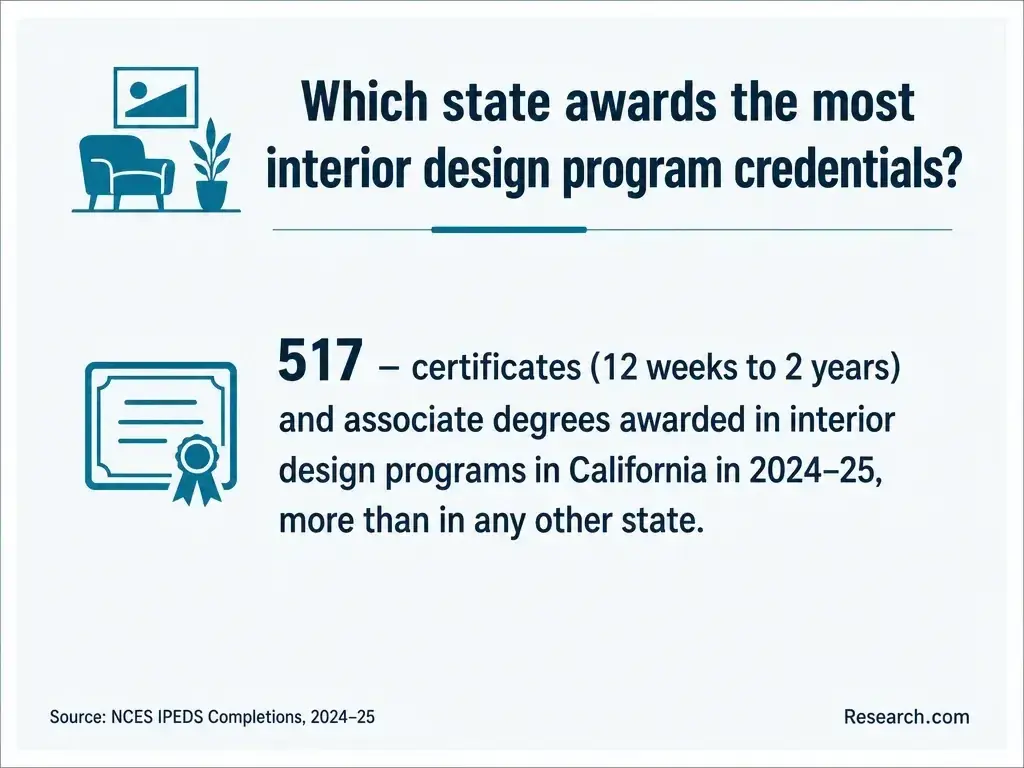
There is no defensible single Monterey average without a defined set of currently available programs and comparable published charges. For a useful estimate, request a written cost sheet for your intended enrollment year. Public-college resident tuition can differ from nonresident charges, and a low per-unit price does not tell you what it will cost to finish the credential.
Build a job-ready budget that includes tuition and mandatory fees, books, drafting and presentation supplies, software and a suitable computer, printing or portfolio production, transportation, and earnings you may forgo while studying. Include optional certification costs only if that credential serves your goal. California residents should check California College Promise Grant eligibility for community-college enrollment-fee assistance, as well as applicable federal and state aid; eligibility and covered expenses vary, according to the California Community Colleges and Federal Student Aid.
An affordable online master program is not a like-for-like price benchmark for entry-level trade training. Compare the total cost to complete relevant certificates or associate programs instead, including the cost of any courses that are not offered when you need them.
The award depends on the program: a single course may provide a completion record, a defined series may lead to a certificate, and a qualifying community-college program may award an associate degree. None is interchangeable with an occupational license. Ask the provider for the exact award name, required courses, and whether completed units can apply to a longer credential at that institution.
Institutional accreditation concerns the school; specialized program accreditation, where available, concerns a particular curriculum. Neither should be confused with California school authorization, voluntary professional certification, or an employer's assessment of your portfolio. A list of national accredited college options is not evidence that a particular interior design certificate has specialized recognition or prepares students for a specific certification. Verify each claim with the school and the relevant accreditor or credentialing organization.
Requirements vary by provider and credential. Check the current application for general admission, course prerequisites, placement procedures, software or computer specifications, and any portfolio request. A beginner-friendly course need not require an existing design portfolio; a more advanced studio may expect drawing or software skills. Confirm the requirements with the program rather than relying on a schoolwide admissions page.
If you are changing careers, ask whether prior coursework can satisfy prerequisites or count toward a credential, and get the answer in writing before enrolling. Searches for 1 year masters degree programs do not answer the entry question here: what matters is whether an accessible trade-training pathway starts at your skill level and leads to the work samples your target employers request.
A useful entry-level curriculum connects drawing and digital drafting with space planning, materials, lighting, color, and client presentations. It should also introduce accessibility and the limits of a designer's responsibility when a project needs architectural or engineering work. The U.S. Bureau of Labor Statistics notes that designers work with plans, materials, and other building professionals; a portfolio should show those decisions, not just attractive images.
Compare completed-project requirements closely. A residential room concept, for example, tests a different set of decisions from a hospitality or commercial brief. If your intended work is in lodging or guest-facing spaces around Monterey, ask whether projects require durable material choices, circulation planning, and a reasoned response to a client brief. Software proficiency is valuable, but employers also need to see how you solve spatial problems.
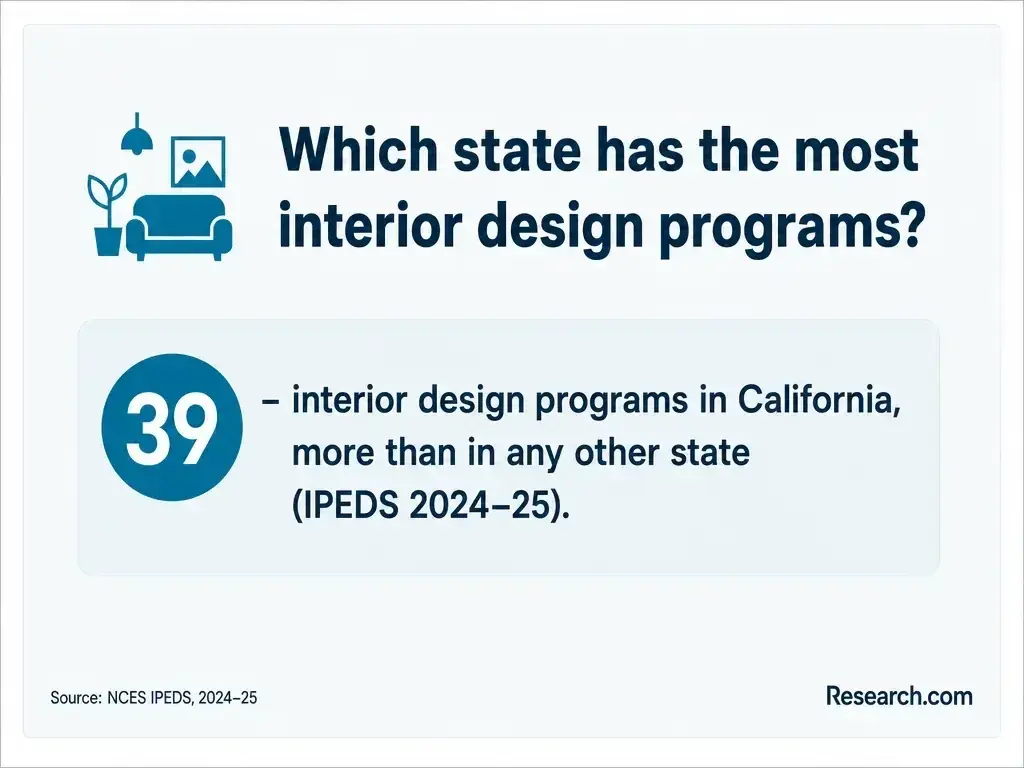
California does not generally require an occupational license simply to work as an interior designer, according to the California Architects Board. That does not authorize someone to perform work reserved to licensed professionals. California's Certified Interior Designer title is separately regulated; the California Council for Interior Design Certification administers certification. Do not assume a school certificate grants that title.
Professional credentials can matter for a particular employer or career goal, but their education, experience, and examination rules must be checked with the credentialing organization. For example, eligibility for the NCIDQ examination is set by the Council for Interior Design Qualification, not by a school's marketing description. Before paying for training, ask the credentialing body whether your exact curriculum and subsequent work experience could meet its current requirements.
Start with the job you want, then work backward to the skills and credential it calls for. An inexpensive software-only course can be worthwhile for an experienced worker; it may be a poor investment for a beginner who needs sustained studio critique. Likewise, a longer program is not automatically better if its schedule prevents you from completing it.
Use these checks to turn a ranking into an enrollment decision:
A search for best accredited non-profit online colleges can inform a broader school search, but neither nonprofit status nor delivery mode establishes value for this occupation. To assess return on investment, weigh aid, debt, completion probability, lost earnings during study, and plausible earnings after training over a realistic time horizon.
A certificate plus a strong portfolio may support applications for assistant, showroom, or drafting-related work. With relevant experience, a worker might take on more responsibility for client presentations, project coordination, or a design specialty. Independent client work is another possible path, but it adds business-development responsibilities and does not remove limits on work reserved to licensed professionals.
Choose portfolio projects for the path you intend to pursue. Residential work benefits from clear client needs and practical layouts; hospitality-facing work calls for attention to circulation, materials, and maintenance. If you can gain those skills through supervised employment, compare that paid route with the cost and pace of a formal program. A job may provide valuable experience, but ask whether it will offer broad design practice rather than only sales tasks.
The U.S. Bureau of Labor Statistics projects 2.7% growth nationally for interior designers from 2025 to 2035. That projection does not measure openings in Monterey, and modest national growth does not mean every design specialty or nearby market will move at the same pace.
For a local decision, review recent Monterey County-area postings and note which duties recur: drafting, client communication, product knowledge, or project coordination. Then compare those requirements with a program's required projects. If the roles you want consistently ask for experience you cannot yet show, a supervised entry-level job or a program with substantial project feedback may be more useful than the fastest credential.
Investing in training is a consequential decision, especially when the least expensive option may not provide the portfolio work or career preparation a student needs. Research.com evaluates programs against others in the same occupation and geography, so the accompanying affordability ranking is intended to support comparison among relevant local options. Only programs with completions reported to the Integrated Postsecondary Education Data System (IPEDS) are eligible; an absent apprenticeship, employer training option, or other provider should not be assumed to be inferior.
The most affordable ranking scores costs and debt: tuition, cost of attendance, median student debt, and federal loan default rate. Indicator weights are assigned using an entropy-based method, which gives more weight to measures that differ more across included programs. Accreditation and other quality measures are not part of this affordability score. Research.com's separate best programs rankings also consider completion and retention, earnings and return on investment, student support, accreditation, and occupation-relevant recognition. Their current weights are 20% for programmatic accreditation or industry recognition, 10% for institutional accreditation, 10% for student support, and 60% for outcomes, earnings, and costs, with the last group weighted by the entropy-based method.
The team draws on the following sources to check institutional, program, cost, outcome, and occupation-related information. Some are relevant to other trades in Research.com's broader ranking work rather than to interior design specifically:
These checks help readers narrow a list, not replace verification of a current program's curriculum, published charges, and outcomes. See Research.com's methodology for more about how rankings are created.
# 1 position
# 2 position
Not necessarily. Compare the full cost to finish with studio access, portfolio feedback, course availability, and the jobs the training prepares you to pursue.
Check its current catalog and ask an advisor for the exact award, required courses, and schedule. Do not assume that related design courses add up to an interior design certificate.
Some coursework can be remote. For job readiness, verify how the program assesses measurements, materials, complete projects, and presentations - and whether you receive substantive critique.
No. A school awards its own credential; California Certified Interior Designer status has separate requirements administered by the California Council for Interior Design Certification.
Potentially. A supervised showroom or design-support role can provide paid experience, but compare its training and portfolio opportunities with those of a structured program.