# 1 position
Las Positas College - Interior Design.
associate

Audited and Verified:
Our Editorial and Data Verification Process
Research.com uses government datasets, official education statistics and primary institutional information to support its career and degree guides. Our review process checks factual accuracy, occupational definitions, source dates and the requirements associated with the credentials discussed.
How This Article Was Fact-Checked
Our editorial team verifies salary estimates, employment projections, education requirements and program information against original data providers and official organizations. Salary figures are checked against the relevant occupational definitions and reporting periods. Information about licensure, accreditation and required in-person training is reviewed separately.
Fact-checked and verified on:

Co-Founder and Chief Data Scientist

Reviewed by Karolina Broda
Fact-Checker and Data Verification
Choosing an affordable interior design program near Livermore means looking beyond tuition: a low-cost credential is useful only if its projects and technical training match the work you want. The U.S. Bureau of Labor Statistics projects 2.7% national growth for interior designers from 2025 to 2035, making preparation and portfolio quality important considerations. The Research.com team of data scientists created the Most Affordable Interior Design Trade Schools in Livermore for 2027 ranking to help students identify programs worth considering. This guide explains costs, credentials, career options, and California's certification rules.
Expect applied work: measuring rooms, developing plans, selecting finishes, using design software, and explaining choices to a client. Interior design addresses how a space functions as well as how it looks; a decorating-focused course may concentrate more narrowly on furnishings and appearance. That distinction matters if you want to work on commercial layouts or build documentation for a design team.
For a Livermore student, the practical choice is whether nearby coursework provides enough studio feedback and portfolio development without an expensive commute. Ask Las Positas College about its current catalog and any relevant courses or credentials; do not assume it offers a complete interior design program. Compare that answer with the actual curriculum of any program you are considering. A useful final portfolio should show your process, not just polished images.
Possible workplaces include residential design businesses, furniture and kitchen or bath showrooms, construction and remodeling firms, and commercial design teams across the wider East Bay. Livermore students should assess the commute to both training and work: limiting a search to city boundaries may exclude relevant project-based opportunities.
A short certificate may fit showroom sales or a decorating-assistant role; firms assigning plans, specifications, or client projects may expect a stronger technical portfolio and experience. Before choosing a program, review the tasks in local job postings rather than assuming that every position labeled "designer" has the same requirements. For a wider comparison of occupational routes, see best trade school jobs.
The Bureau of Labor Statistics reports a $67,190 U.S. median annual wage for interior designers in May 2025. This is the midpoint for employed workers nationally, across experience levels; it is not a Livermore wage or a realistic quote for a newly trained applicant. Showroom sales and assistant roles also should not be priced using the interior designer occupation's median.
For a local decision, compare current East Bay job postings for the specific role you could qualify for after training. Account for hours, commissions, commuting, and whether a position requires experience or software skills you have yet to acquire.
Duration depends on the credential and schedule. A focused certificate can be shorter than an associate degree, while part-time attendance extends either path. There is no single California clock-hour requirement for every interior design training program. Compare total courses and scheduled studio hours, not just a provider's advertised completion time.
An accelerated option makes sense when you already have useful design skills and need targeted software or portfolio training. If you need to learn drafting, materials, and client presentation from the ground up, a longer pathway may provide more opportunities to revise work. Listings of quick degrees that make good money are not a substitute for checking what an interior design employer expects.
Online study can work well for design history, software demonstrations, and some critique sessions. In-person studios make it easier to examine materials, measure real spaces, collaborate, and receive immediate feedback on drawings and presentations. A hybrid program may offer a workable compromise for someone commuting from Livermore, provided its required campus sessions are feasible.
Ask to see how students complete site measurements, material evaluations, critiques, and portfolio reviews. An entirely online format should not be assumed to satisfy the education or experience criteria for an optional professional certification. Evaluate the work produced and assessed, not just where lectures are delivered.
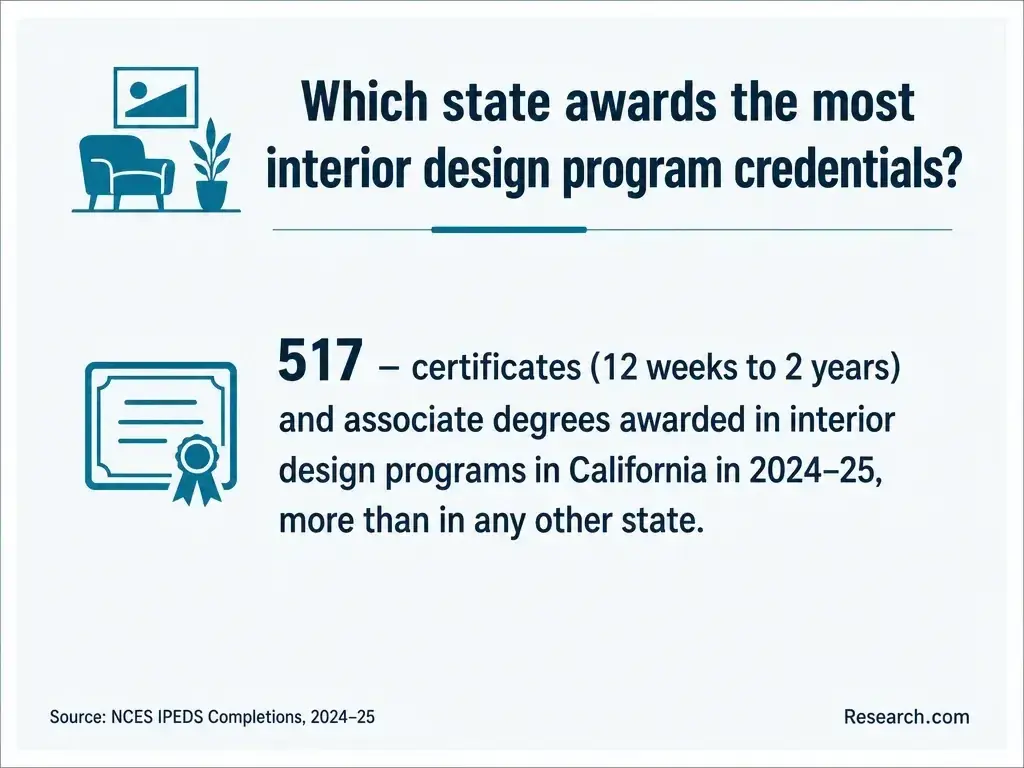
There is no defensible single average price for Livermore interior design training: certificate, course-based, and associate-degree options can have different lengths and fee structures. Request a written estimate for the entire credential, including required software, materials, books, printing, and any portfolio or examination expenses. Add travel costs and earnings you may give up while attending.
Compare the resulting net cost after grants or other aid, not a headline tuition figure. Federal Student Aid eligibility depends on the institution and program; a stand-alone course or unreported provider should not be assumed eligible. If you are considering Las Positas College, confirm the current catalog, applicable tuition classification, program availability, and aid eligibility directly. A low-cost option is good value only if it teaches the skills needed for your intended job.
The award might be a course completion record, certificate, diploma, or associate degree. These are education credentials, not interchangeable statements of professional certification. A brief certificate can document focused skills; an associate degree generally represents a broader sequence of coursework. Ask whether completed courses can count toward a later credential before enrolling in stand-alone classes.
Choose the smallest credential that still covers the work you want to do and lets you demonstrate it in a portfolio. A general comparison such as what is the easiest 2 year degree to get? cannot tell you whether a particular interior design curriculum includes the drafting and studio work you need.
Requirements vary by provider and credential. Ask about application deadlines, placement or prerequisite courses, computer and software access, and whether a portfolio is needed to enter or only to complete the program. Also check whether required studio courses are offered often enough to finish on your planned schedule.
For a career change, ask whether prior coursework or relevant work can receive credit; do not assume experience automatically shortens a credential. If you intend to study part time, confirm the sequence of prerequisites before paying an enrollment deposit.
A substantial interior design curriculum should connect spatial planning with drafting, materials and finishes, lighting, color, digital modeling, presentations, and client communication. For technical roles, examine whether assignments also introduce accessibility, building-code concepts, and the limits of work that requires licensed design or construction professionals. The program should make clear what students actually produce and how instructors evaluate it.
Ask to review sample student projects. A portfolio containing measured plans, revisions, specifications, and a clear explanation of design decisions offers more evidence of job readiness than attractive renderings alone. Software matters, but the durable skill is using it to solve a real space-planning problem.
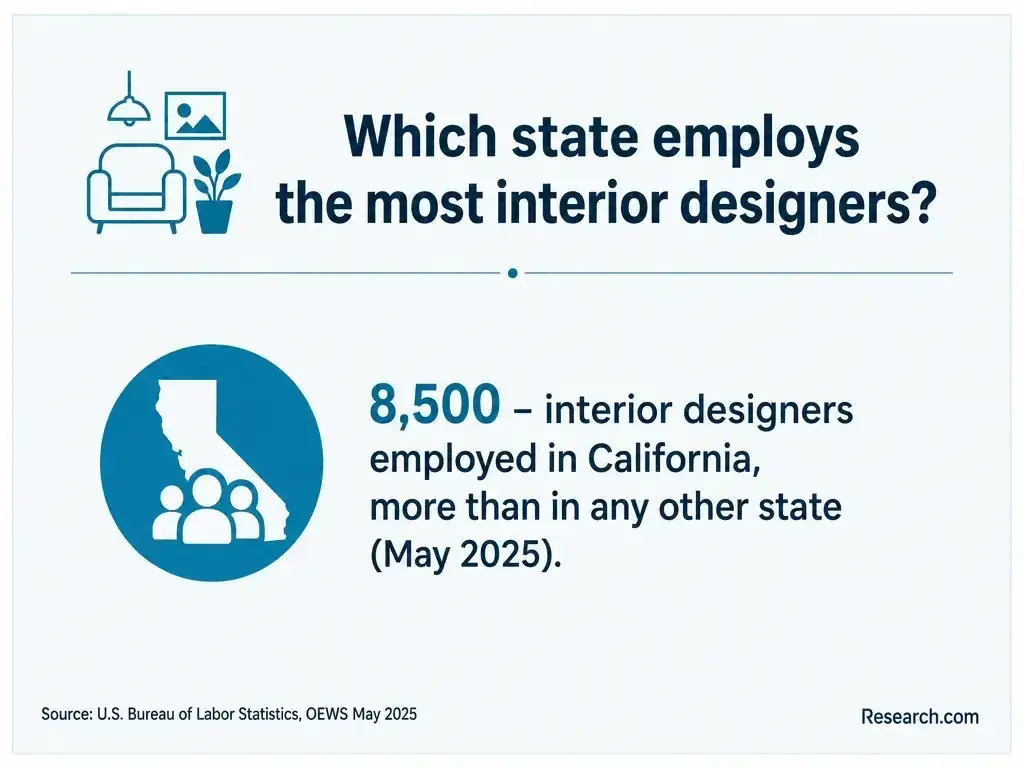
California does not impose a general occupational license simply to work as an interior designer. "Certified Interior Designer" is a distinct, regulated title: the California Council for Interior Design Certification administers certification under California law and sets education, experience, and examination requirements. Completing a school program does not itself confer that title or establish eligibility; confirm the current criteria with the council before selecting training for that goal.
Likewise, an institution's accreditation, a school's authorization to operate, and an individual's professional certification answer different questions. If your intended work involves plans or approvals, ask employers which tasks require coordination with licensed professionals. Do not pay more for a program solely because its advertising calls graduates "certification ready" without identifying the credential and its requirements.
Start with your target role, then compare programs against the work that role requires. A useful sequence keeps a cheap but poorly matched course from becoming an expensive detour:
Compare the investment over a realistic time horizon: include completion probability, aid, debt, earnings forgone during study, your present earnings, and plausible earnings after training. A ranking narrows the search; it cannot establish that a particular program fits your portfolio or employment goal. Searches for easiest phd without dissertation online address a different educational goal and should not influence a hands-on interior design training choice.
A focused program may help someone pursue showroom, furnishings, or design-assistant work. More technical training and a developed portfolio can support applications for drafting or interior design team roles. Progression may involve managing projects, specializing in a type of space, or working independently after building experience and a client base; no credential guarantees that progression.
Compare career paths by the work you want to do each day. Someone who enjoys product selection and client sales may not need the same curriculum as someone aiming to produce detailed plans. The broader discussion of college majors employment prospects should not replace evidence about the specific interior design jobs and entry requirements available to you.
The Bureau of Labor Statistics projects 2.7% U.S. employment growth for interior designers from 2025 to 2035. This is a national occupational projection, not a forecast of Livermore openings. It suggests students should plan for competition and treat a strong portfolio, practical experience, and flexibility about commuting across the East Bay as part of their entry strategy.
Before enrolling, test demand against recent postings for the roles your proposed credential could support. Note whether employers seek technical plans, showroom experience, or client-facing skills; that evidence is more useful for choosing courses than a national growth figure alone.
Investing in training is an important decision, so the Research.com team uses documented education and cost data to make the ranking more consistent and verifiable. Programs are compared with other programs in the same occupation and location. Only programs with completions reported to IPEDS qualify; that rule does not mean an excluded provider is unapproved or unsuitable.
The most affordable ranking scores tuition, cost of attendance, median student debt, and federal loan default rate. Indicator weights are assigned using an entropy-based method; accreditation and other quality measures are not part of this affordability score. Research.com's separate best programs rankings also consider completion, retention, earnings, student support, accreditation, and occupation-relevant recognition. Those rankings assign 20% to programmatic accreditation or industry recognition, 10% to institutional accreditation, 10% to student support, and the remaining 60% to outcomes, earnings, and costs using entropy-based weights. Readers should therefore use an affordability ranking as a cost comparison, not as proof of career readiness.
The ranking draws on the following sources. Some support Research.com's broader trade-program evaluation process rather than interior design specifically:
For more detail on the ranking process, see Research.com's methodology. Before enrolling, confirm a program's current price, curriculum, and credential directly with its provider.
# 1 position
# 2 position
Check current provider catalogs rather than assuming a local school offers a complete interior design credential. Ask Las Positas College specifically about relevant courses, current awards, and scheduling, then compare any available options with programs you can realistically commute to or complete in a hybrid format.
It can be if it teaches a specific skill you need for decorating, showroom, or assistant work at a manageable total cost. It is a weaker fit if your target job requires extensive technical projects or experience the certificate does not provide.
Some coursework can be completed online, but check how a program assesses measurements, materials, critiques, and portfolio projects. An online credential alone does not establish eligibility for California's optional "Certified Interior Designer" title.
There is no general California interior designer license required to work under that occupation name. Use of the "Certified Interior Designer" title is separately regulated; verify its current requirements with the California Council for Interior Design Certification.
Request the exact credential name, full cost, required software and materials, sample student work, course schedule, transfer-credit policy, and a written explanation of any certification claim. Match those answers to the jobs you intend to pursue.