
# 1 position
Most Affordable Interior Design Schools & Degrees in Goodman for 2027
Audited and Verified:
Our Editorial and Data Verification Process
Research.com uses government datasets, official education statistics and primary institutional information to support its career and degree guides. Our review process checks factual accuracy, occupational definitions, source dates and the requirements associated with the credentials discussed.
How This Article Was Fact-Checked
Our editorial team verifies salary estimates, employment projections, education requirements and program information against original data providers and official organizations. Salary figures are checked against the relevant occupational definitions and reporting periods. Information about licensure, accreditation and required in-person training is reviewed separately.
Fact-checked and verified on:

Co-Founder and Chief Data Scientist

Reviewed by Karolina Broda
Fact-Checker and Data Verification
Choosing affordable interior design training near Goodman means looking beyond tuition: the program must also help you build a portfolio and learn the technical skills employers expect. The U.S. Bureau of Labor Statistics reports a $67,190 national median annual wage for interior designers in May 2025, but that is not a starting-pay estimate. This guide compares training paths, costs, career prospects, and credential requirements. It also features a Most Affordable Interior Design Trade Schools in Goodman for 2027 ranking created by the Research.com team of data scientists to help students make informed choices.
Key findings about interior design degrees in Goodman
- Start with total job-ready cost, not tuition alone: compare fees, design software, materials, travel, and time away from work before treating a Goodman-area program as affordable.
- Interior design and interior decorating are not identical career targets. A short course may support decorating or sales work, while technical design roles may require stronger training in drawings, codes, materials, and a portfolio.
- The May 2025 U.S. median wage for interior designers was $67,190, with employment projected to grow 2.7% from 2025 to 2035 (U.S. Bureau of Labor Statistics). Neither figure predicts pay or hiring in Goodman.
Table of Contents
- Most Affordable Interior Design Schools & Degrees in Goodman for 2027
- What can I expect from an interior design trade school program in Goodman?
- Where can I work with an interior design trade school training in Goodman?
What can I expect from an interior design trade school program in Goodman?
An interior design trade program should teach students to turn a client's needs into a workable space plan, drawings, material selections, and a presentation. That is broader than choosing furniture or colors. Before enrolling near Goodman, decide whether your goal is decorating and retail consultation, technical support in a design firm, or eventual professional interior design practice; those goals call for different depth of training.
Expect project-based work with drafting or computer-aided design software, samples, budgets, and critiques. Ask to see the actual course sequence and student projects. A program that advertises design software but offers little feedback on completed plans may leave you with a credential but a weak entry-level portfolio.
Goodman's rural location makes delivery especially important. Confirm where classes and computer labs actually meet: a college serving Goodman may offer a program at another campus, and an online option may still require travel for studio work or employer experience. Ask Holmes Community College directly whether interior design training is offered for the intended 2027 entry term and at which location.
Where can I work with an interior design trade school training in Goodman?
Training can support applications to interior design firms, furniture and kitchen showrooms, residential remodeling businesses, and commercial furnishings suppliers. Roles may include design assistant, showroom consultant, space-planning assistant, or drafting support; employers decide which skills and credentials they accept. The U.S. Bureau of Labor Statistics describes interior designers as working with clients and coordinating plans with other building professionals, so communication and accurate drawings matter alongside creativity.
Goodman students should plan for a wider job search than the town alone. Ask prospective programs where recent students completed projects, internships, or employer placements and whether those opportunities require a commute. If your main goal is immediate retail sales or decorating work, direct entry with employer training may cost less than a longer program; compare that route against the technical skills and portfolio access a school offers.
The U.S. median annual wage for interior designers was $67,190 in May 2025 (U.S. Bureau of Labor Statistics). This national figure covers workers at different experience levels and should not be treated as a Goodman wage, an entry-level offer, or the likely return from a particular certificate.
Pay comparisons are most useful when the job titles match your intended work. A showroom sales position, drafting-support role, and interior designer position can have different duties and pay structures. Request recent placement titles and available wage information from a program, then compare actual local job postings for those titles before borrowing for training.
Completion time depends on the credential, course schedule, and amount of studio work. A focused certificate may take less time than an associate degree, while part-time study extends the calendar even if required coursework stays the same. There is no single Goodman-wide clock-hour requirement for interior design training; obtain each program's published credit or contact-hour requirements and expected completion schedule.
An accelerated option makes sense if it still provides enough supervised practice to produce usable drawings and a portfolio. For working adults, a slower schedule may protect current earnings and allow more time for projects. Ask how often required courses run, because a missed studio course could delay completion beyond the advertised timeline.
Online study can work well for design history, theory, software demonstrations, and some digital drafting assignments. Campus or hybrid study can make it easier to access computers, physical material samples, live critiques, and collaborative projects. Neither format is automatically better: compare the projects students finish and the feedback they receive, not just the delivery label.
If travel from Goodman is difficult, ask an online provider how students access required software, present work for critique, and complete any in-person activities. Also check the institution's accreditation and the program's actual credential before assuming an online course meets a future employer's or registration board's expectations. A nonprofit online university comparison can inform a provider search, but nonprofit status and institutional accreditation alone do not establish that a particular interior design program fits your goal.
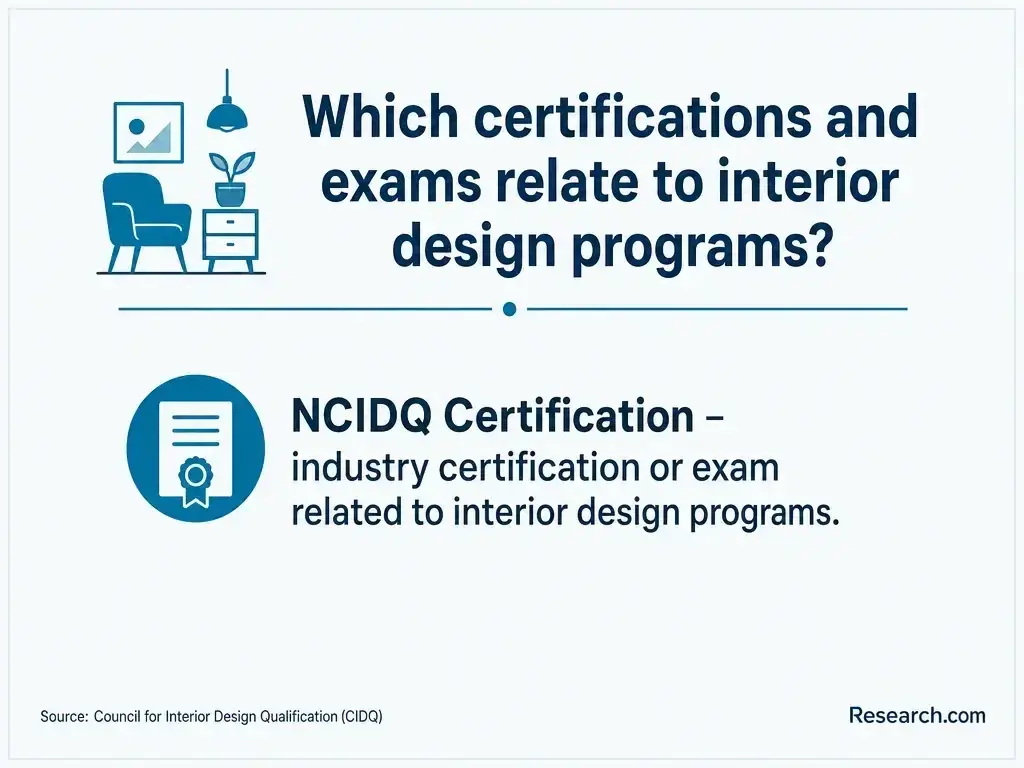
There is no reliable single average price for an interior design trade program in Goodman: prices depend on the provider, credential, residency rules, and where classes are delivered. Before comparing offers, request an itemized estimate for the entire program rather than one term. For Holmes Community College, confirm current tuition classification and all program-specific charges directly with the college.
The table separates costs that are easy to overlook from the advertised tuition. It also shows why a shorter program is not necessarily the cheaper route to the job you want.
| Cost component | What to verify | Why it affects the decision |
| Tuition and mandatory fees | Full-program charges and applicable residency rate | Published per-term prices may not reflect the complete credential. |
| Software and equipment | Computer specifications, subscriptions, printing, and supplies | Technical design work can add substantial costs outside tuition. |
| Travel and lost earnings | Campus trips, project meetings, and schedule changes | These may weigh heavily for a student commuting from Goodman. |
| Financing and offsets | Eligible aid, scholarships, employer support, and likely borrowing | The amount financed matters more than the sticker price alone. |
Check federal-aid eligibility for the specific institution and program through Federal Student Aid; eligibility is not automatic for every short course. Compare any available grants or employer assistance with expected debt and the income you would give up while studying. An apprenticeship-style route is not a standard substitute for interior design school, but paid employer training in a showroom or design-support role may be a lower-cost entry point for some goals.
The credential depends on the provider: options may include a course certificate, an occupational certificate or diploma, or an associate degree. These are not interchangeable. A short certificate can demonstrate targeted software or decorating skills; a broader program may provide more drawing, technical, and portfolio work. Ask what appears on the final transcript and what completed projects you can show employers.
An associate degree is an academic credential, while a professional certification or state-issued registration is a separate designation with its own rules. If you are comparing associate-level routes, information about online associate degree options may help frame the workload question, but do not choose an interior design program because it appears easy. Choose it for the training and portfolio your intended role requires.
Entry requirements vary by school and credential. Ask whether applicants need a high school diploma or equivalent, placement assessment, prior coursework, or a portfolio; do not assume a portfolio is required or waived. Also check whether software courses have prerequisites and whether the program admits new students every term.
Before accepting a place, request the current catalog and ask admissions to identify the program's campus, start date, total required courses, and any restricted-entry sequence. If you already have relevant coursework or work experience, ask for a written evaluation of transfer or prior-learning credit. Credit can shorten training only if it applies to required courses and does not remove portfolio practice you still need.
Useful interior design training connects visual decisions to function. Students should practice interviewing clients, measuring spaces, preparing floor plans and presentations, selecting materials, estimating costs, and revising proposals after critique. More technical pathways should also address accessibility, building-code awareness, construction documents, and coordination with contractors; the precise scope belongs in the program syllabus (U.S. Bureau of Labor Statistics; O*NET).
Software instruction matters, but proficiency with one application is not the whole occupation. Ask whether students complete several distinct projects and leave with drawings, specifications, and presentation materials they are permitted to include in a portfolio. That evidence is particularly valuable when applying beyond Goodman, where an employer may not know the training provider.
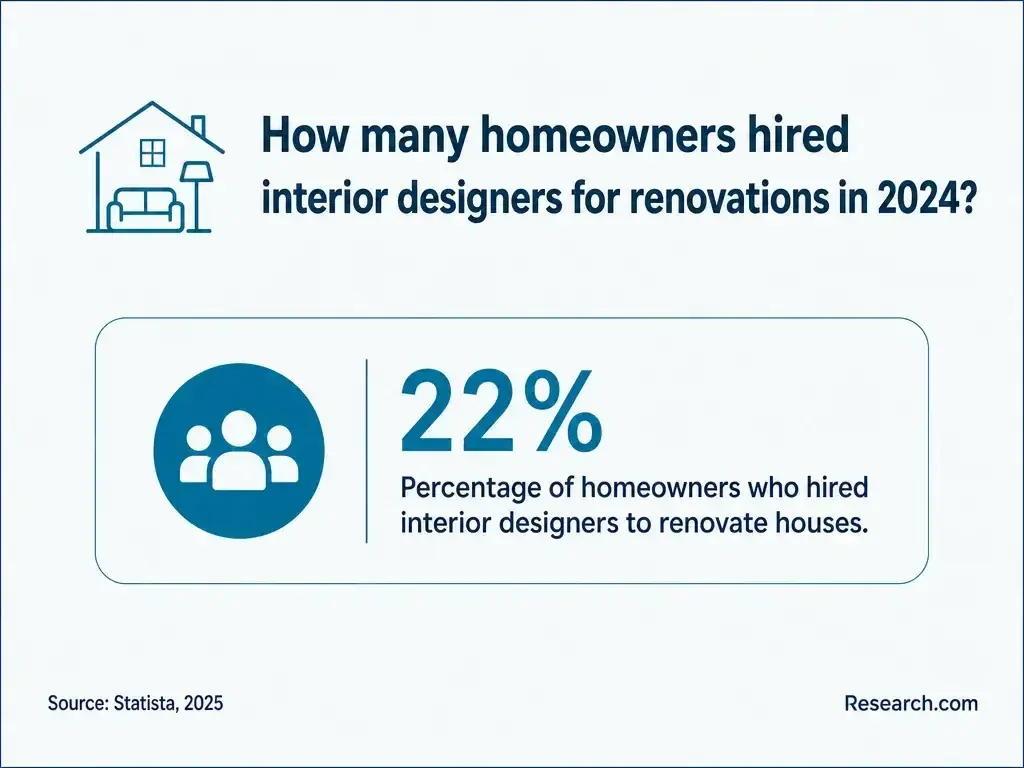
Do not assume that finishing an interior design program grants a state credential. Mississippi's rules for professional registration and use of protected titles should be checked with the Mississippi State Board of Architecture before selecting training for that purpose. The Council for Interior Design Qualification (CIDQ) sets separate requirements for its professional examination; a school certificate is not the same as passing that examination or receiving state registration.
Decorating, showroom, and design-support roles may have different entry expectations from positions seeking professional registration. Tell the school the exact title and duties you want, then ask it to document how its coursework relates to any applicable education, experience, and examination requirements. Institutional accreditation, state authorization to operate, program-specific recognition, examination eligibility, and occupational registration are distinct checks - not substitutes for one another.
The best-value program is the least costly option that actually prepares you for your intended role - not necessarily the one with the lowest tuition or shortest schedule. Compare the ranking with current catalogs and employer expectations, especially because an affordability score does not measure studio quality or placement support.
Use these questions when speaking with programs; written answers make competing offers easier to compare:
- Which credential will I receive, and what interior design jobs is its curriculum designed to support?
- How many supervised studio projects will I finish, and can I use them in a portfolio?
- Where must I attend in person, and what will software, supplies, fees, and travel cost through completion?
- What are the program's current completion and job-placement definitions, and which job titles do they count?
- If I may seek professional registration later, which requirements does this training meet, and which remain?
Be cautious if a provider cannot identify its credential, itemize costs, show representative student work, or distinguish a professional credential from a course-completion certificate. For a return-on-investment comparison, consider your current earnings, aid, borrowing, chance of finishing, likely post-training role, and the time it would take for any earnings gain to outweigh costs.
Interior design training can lead to several starting points, but advancement usually depends on demonstrated work rather than the credential name alone. Someone interested in furnishings may start in a showroom; someone drawn to technical plans may seek drafting or design-assistant work. With experience, designers may take on larger projects, specialize, supervise others, or pursue self-employment, subject to the rules governing the work and titles they use.
A direct-entry showroom job may suit someone who needs to earn immediately and wants to test the field. A project-heavy trade program makes more sense for someone who needs structured instruction, technical practice, and a portfolio. If professional registration is the long-term goal, verify that path before choosing a short decorating course; an appealing first job and an eligible route to a later credential are different decisions.
U.S. employment of interior designers is projected to grow 2.7% from 2025 to 2035 (U.S. Bureau of Labor Statistics). That national projection suggests continuing opportunities, not rapid growth or a guaranteed vacancy near Goodman. Students should assess the reachable labor market and be prepared to show employers work samples that match residential, commercial, or showroom needs.
Digital drawing and presentation skills remain useful, but software can also change how routine concepts are produced. The stronger career investment is learning to check dimensions, interpret client needs, evaluate materials, and explain decisions - not relying on a single tool. Compare current job postings for their requested software and project experience before committing to a curriculum.
Most Affordable Interior Design Schools & Degrees in Goodman for 2027
Investing in training is an important decision, especially when a low advertised price may not reflect the full cost of becoming job-ready. Research.com evaluates programs against others in the same occupation and location so readers can compare relevant options. Only programs with completions reported to the Integrated Postsecondary Education Data System (IPEDS) are eligible; a provider's absence does not establish that its training is unavailable or poor quality.
For a most affordable ranking, the score uses tuition, cost of attendance, median student debt, and federal loan default rate. An entropy-based method gives more weight to measures that differ more across eligible programs. Unlike a best-programs ranking, the affordability score does not include accreditation or other quality indicators. Readers should therefore use the ranking as a cost-comparison starting point, not as proof of interior design training quality or career fit.
The Research.com team draws on the following sources to check program, institutional, cost, and related information. Some occupation-specific sources in this shared research framework concern other trades; their inclusion does not imply that they accredit interior design programs.
- IPEDS database - reported completions, enrollment, and institutional cost information.
- National Center for Education Statistics - federal education data and definitions.
- College Scorecard database - available institutional cost, debt, and outcome measures.
- Peterson's database - supplementary institution and program information.
- Commission on Accreditation of Allied Health Education Programs (CAAHEP) - occupation-specific accreditation checks where relevant to other trades.
- Accrediting Bureau of Health Education Schools (ABHES) - health-training accreditation checks where relevant.
- Commission on Dental Accreditation (CODA) - dental-program accreditation checks where relevant.
- Dental Assisting National Board (DANB) - dental-assisting credential information where relevant.
- National Center for Construction Education and Research (NCCER) - construction-training recognition information where relevant.
- Apprenticeship.gov Partner Finder - registered-apprenticeship sponsor information where relevant.
The resulting comparison can help readers identify programs worth investigating, while leaving room to check current prices, curriculum, portfolio support, and local access directly. More detail about Research.com's approach appears on its methodology page.
# 2 position
Holmes Community College - Interior Design.
certificate or diplomaFrequently asked questions about interior design programs in Goodman
Is there an interior design trade school in Goodman?
Do not assume a program is offered at a Goodman campus because a college serves the area. Ask Holmes Community College whether the intended interior design credential is available for your entry term and where required classes meet.
What is the cheapest way to enter the field?
For decorating or showroom work, direct entry with employer training may cost less than school. For technical design roles, compare that route with the cost and portfolio benefits of a structured program.
Can I complete interior design training entirely online?
Some instruction and digital projects can be completed remotely. Check how the program provides critiques, software access, material work, and any required in-person experience; online delivery alone does not establish professional credential eligibility.
Do I need a license to decorate homes in Mississippi?
Decorating and professional interior design registration are not identical. Check the Mississippi State Board of Architecture's current rules for the title and work you intend to perform rather than assuming every design-related job has the same requirement.
Should I choose a certificate or an associate degree?
Choose based on the target job and completed work. A focused certificate may suit a narrow skill goal; an associate program may offer more time for technical coursework and portfolio development. Compare actual curricula and total costs.
Does the lowest-ranked price mean the best return?
No. Include fees, software, travel, lost earnings, likely debt, completion prospects, and whether the credential prepares you for the job you want.
- U.S. Bureau of Labor Statistics - Interior Designers
Used to verify salary, employment outlook, and typical education requirements.
https://www.bls.gov/ooh/arts-and-design/interior-designers.htm - NCES College Navigator (IPEDS)
Used to verify programs offered and institutional accreditation.
https://nces.ed.gov/collegenavigator/ - CIDQ - NCIDQ Certification
Professional certification reference for graduates of this occupation.
https://www.cidq.org/ - Holmes Community College - official website
Official school website (programs, tuition, admissions).
https://www.holmescc.edu/