# 1 position
Orange Coast College - Interior Design.
associate

Audited and Verified:
Our Editorial and Data Verification Process
Research.com uses government datasets, official education statistics and primary institutional information to support its career and degree guides. Our review process checks factual accuracy, occupational definitions, source dates and the requirements associated with the credentials discussed.
How This Article Was Fact-Checked
Our editorial team verifies salary estimates, employment projections, education requirements and program information against original data providers and official organizations. Salary figures are checked against the relevant occupational definitions and reporting periods. Information about licensure, accreditation and required in-person training is reviewed separately.
Fact-checked and verified on:

Co-Founder and Chief Data Scientist

Reviewed by Karolina Broda
Fact-Checker and Data Verification
Choosing an affordable interior design program in Costa Mesa means comparing more than tuition: the training must also help you build a portfolio and qualify for the work you want. The Research.com team of data scientists created the Most Affordable Interior Design Trade Schools in Costa Mesa for 2027 ranking to help students identify programs worth considering. With the national median pay for interior designers at $67,190 in May 2025, according to the U.S. Bureau of Labor Statistics, this guide helps career starters and working adults weigh cost, credentials, practical training, and career prospects.
Expect a mix of design fundamentals and job-ready production: space planning, drawing, materials, lighting, presentation, and computer-aided drafting. Strong training asks students to turn a client brief into measured plans, specifications, and a portfolio - not simply choose finishes. Orange Coast College is the local public-college starting point; ask which interior design certificates or associate-degree pathways are offered in the catalog year you intend to enter.
A short certificate may suit someone seeking showroom, drafting-support, or decorating work. An associate-degree program generally provides more time for technical coursework and portfolio development, but takes longer and costs more in total. Employer training can be a better-priced route into sales or showroom support, though it may offer less structured design instruction. Neither a similarly named credential nor a short course establishes equivalent practical competence.
Interior design is not ordinarily entered through a registered apprenticeship in the way some construction trades are. Instead, ask about studio critiques, client projects, internships, and chances to observe installation or construction coordination. Those experiences can reveal whether you enjoy the technical and client-facing work before you commit to a longer program.
Potential workplaces include residential design studios, furniture and finish showrooms, kitchen-and-bath businesses, and firms serving commercial interiors across Orange County. Costa Mesa's access to nearby clients and suppliers makes travel for site measurements, product sourcing, and presentations a practical consideration when choosing class times or an internship.
Match the training to the setting. Showroom roles may emphasize product knowledge and customer service; a design-assistant role may call for drawings, specifications, and revisions. Commercial projects can demand greater familiarity with accessibility, building codes, and coordination with licensed professionals. An employer may train a promising salesperson, but a portfolio-based program is more useful if your goal is technical design work.
The U.S. Bureau of Labor Statistics reports a $67,190 national median annual wage for interior designers in May 2025. This is a midpoint for employed designers across experience levels and locations - not a Costa Mesa starting salary or an earnings estimate for a certificate holder. Showroom sales, design-assistant, and self-employed roles may have different pay structures.
Before calculating whether training will pay off, look up the latest BLS wage estimate for the relevant occupation in the Anaheim-Santa Ana-Irvine metropolitan area and compare actual local job postings for the role you could enter. Check whether advertised compensation includes commission and whether the employer expects prior experience or a portfolio. The national median is useful context, but local entry-level offers are the better basis for a personal budget.
Duration depends on the credential's required units, course sequence, and whether you attend full time. A focused certificate can be shorter than an associate-degree pathway, while part-time study may make either more manageable for someone working. Ask Orange Coast College for the current catalog requirements and a term-by-term plan: a course offered only in certain terms can matter more to your finish date than the advertised number of units.
There is no universal interior-design clock-hour requirement for entry-level work in California. Count scheduled studio or lab time, software practice, and any internship separately. If an associate degree is your goal, comparisons of the quickest associates degree options can clarify the appeal of a faster schedule, but speed is a poor trade if it leaves too little time to build a credible design portfolio.
Online study can work for design history, software demonstrations, research, and some drawing assignments. In-person studio work is valuable for material samples, measurements, critiques, presentations, and collaboration. A hybrid option may reduce commuting while preserving those activities; confirm its actual attendance schedule rather than assuming "hybrid" means occasional campus visits.
The distinction is especially important for working adults comparing the cheapest online colleges for job holders with local training. An online price is not a like-for-like bargain if you must independently obtain software, samples, feedback, and supervised project experience. Ask to see portfolio examples and learn how remote students receive detailed critiques. Online delivery alone does not establish eligibility for California's protected certification title.
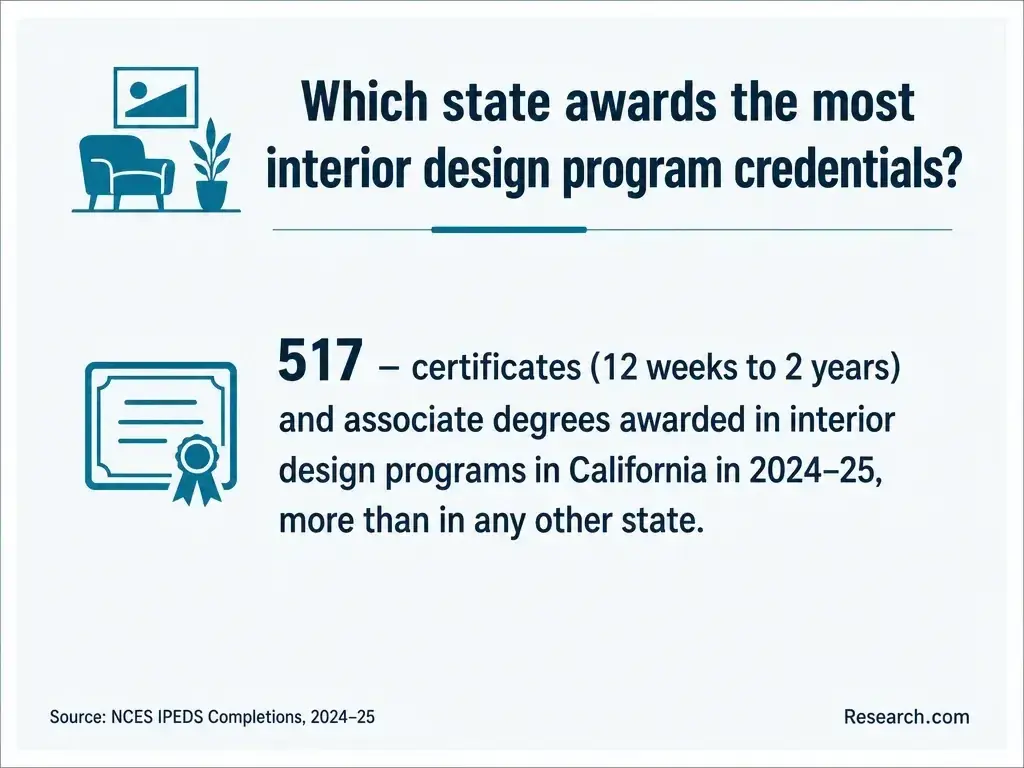
There is no reliable single average price for a Costa Mesa interior design training program: a short certificate, an associate-degree pathway, and employer-sponsored instruction have different lengths and cost structures. For a usable estimate, request a current, program-specific total from Orange Coast College and confirm your residency classification and aid eligibility. Published tuition alone does not show what it will cost to become job-ready.
Build your comparison from required tuition and fees; textbooks, samples, printing, drafting materials, and software or computer access; travel to campus, suppliers, and internships; and income you may give up while studying. Add any optional certification application or examination expense only if that credential is part of your plan. Federal or California aid, scholarships, and employer tuition assistance may lower what you pay, but eligibility and awards are individual. Compare net cost with the likely entry-level role - not the national median wage - and account for completion risk, debt, and how long it may take earnings to exceed your current income.
The award depends on the exact program: a college pathway may award a certificate or an associate degree, while a short course may provide only a completion document. An employer's training may build useful skills without awarding an academic credential. Confirm the award's official title and requirements in the current Orange Coast College catalog before enrolling.
These credentials should not be confused with institutional accreditation or professional certification. Accreditation evaluates an institution or program against an accreditor's standards; California's "Certified Interior Designer" designation is a separate professional title with its own eligibility process. Ask whether completed courses can apply toward a longer credential if you later continue, and get any transfer or prior-learning decision in writing rather than assuming credits will count.
Entry requirements vary by credential. Check the current college application, placement and course-prerequisite rules, residency documentation for tuition purposes, and whether a portfolio is required for the program or only later for employment. Studio courses may also require access to specified software or equipment. Do not confuse admission to a college with admission to every course in a sequenced program.
Application cost is worth checking, but it is a small part of total training cost. Lists of accredited schools that offer free online applications can help applicants spot that distinction; verify the current application policy directly with your chosen provider. If you already have drafting, retail, or design experience, ask whether prior coursework or documented learning can shorten your plan without removing essential portfolio projects.
A useful curriculum connects visual choices to usable space. Look for instruction in measured drawing, layouts, furniture and finish selection, lighting, color, materials, digital drafting, presentation, and communicating revisions to clients and contractors. For projects that involve construction, students should learn when accessibility, codes, permits, and licensed professionals become relevant; a design course does not authorize someone to perform regulated building work.
Compare programs by examining the work students produce. A portfolio showing a client brief, a scaled plan, material specifications, and a revised presentation is more informative than a software list alone. Ask how often instructors critique work, whether students handle physical samples and site measurements, and who provides feedback on the final project.
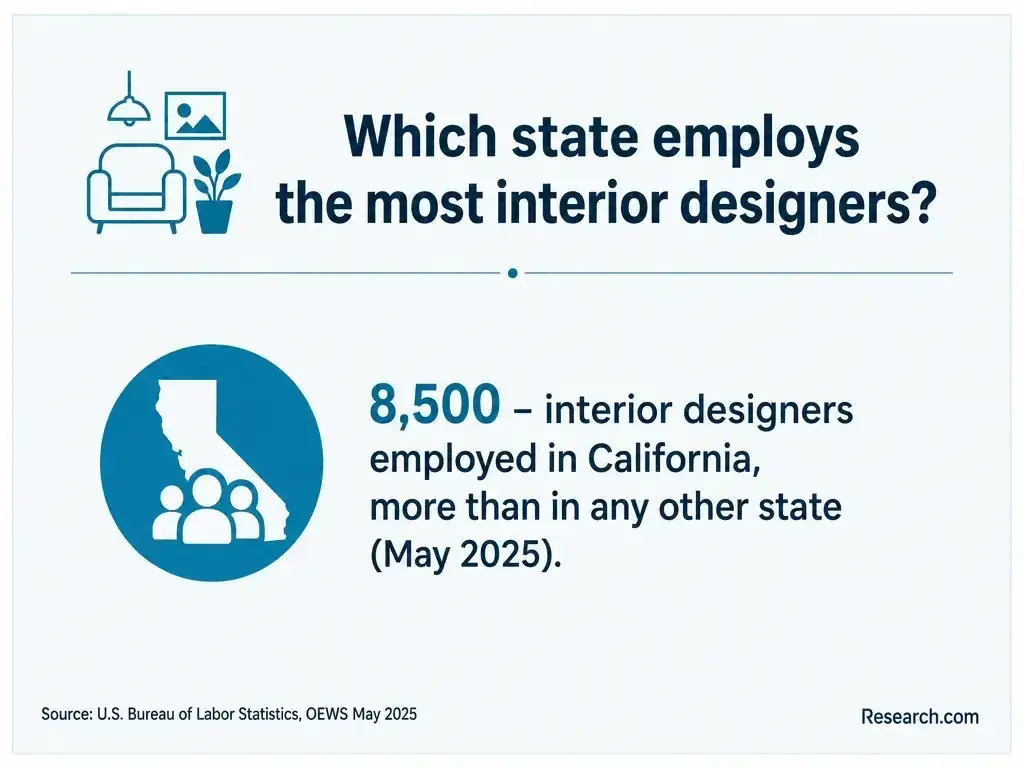
California does not require a state interior designer license for general interior design practice, according to the California Council for Interior Design Certification (CCIDC). California does, however, regulate use of the "Certified Interior Designer" title. CCIDC sets education-and-experience eligibility routes and an examination process; completing a college program alone does not grant certification.
If you want that title, check CCIDC's current requirements against the specific credential and courses you plan to take before paying tuition. Ask what documented work experience you would still need. Certification is distinct from college accreditation, and it does not replace any permits or licensed professional services required for a construction project.
Start with the work you want to do, then compare the least costly training that can realistically prepare you for it. For showroom sales, employer training plus targeted coursework may be enough. For technical design-assistant work, prioritize drawing practice, critiques, and a substantial portfolio over the shortest advertised schedule.
Use these checks before committing; each addresses a cost or career-entry mistake that an affordability ranking cannot catch:
Be wary of a program that promises certification or a salary simply for enrolling. Guides to accelerated degree programs may help frame the time-versus-cost question, but an accelerated schedule is worthwhile here only if it preserves the studio practice your intended job requires.
Training can lead toward showroom or furniture sales, design assistance, drafting support, kitchen-and-bath specialization, or, with a developed portfolio and experience, independent design work. These are different entry points: a showroom position may provide paid product training, while an assistant role is more likely to test drawings and project coordination. Advancement depends on the work you can demonstrate and the clients or employers you serve, not just the credential's name.
Professional certification can be an optional later goal for an eligible designer; it is not the same as a mandatory entry license. If your main objective is to move quickly into a credentialed occupation rather than design specifically, comparing certified jobs that pay well may clarify your priorities. Do not choose interior design solely on the expectation that certification will produce a particular wage.
The U.S. Bureau of Labor Statistics projects 2.7% growth in U.S. interior designer employment from 2025 to 2035. That national projection signals some growth, not a forecast of Costa Mesa vacancies or a guarantee of work after training.
For a local decision, examine current Orange County postings and separate full interior designer roles from sales and assistant positions. Note which employers ask for a portfolio, drafting software, client experience, or certification. If most appealing openings expect experience, a program with strong project work and a feasible route into an assistant role may be a better investment than a shorter course with no practical feedback.
Education is a consequential investment, so Research.com designed this ranking to help readers compare interior design programs against relevant local options rather than against unrelated trades. The team checks multiple education and outcomes sources for credibility and accuracy. Only programs with completions reported to IPEDS are eligible; a provider's absence from the ranking does not establish that its training is unavailable or poor quality.
The most affordable ranking scores tuition, cost of attendance, median student debt, and federal loan default rates. An entropy-based method assigns more weight to cost and debt indicators that differ more across eligible programs. Unlike Research.com's separate best-program rankings, this affordability score does not include accreditation, student support, completion, or earnings. Readers should therefore use the ranking as a cost comparison, then check training quality and career fit independently.
The ranking draws on the following sources. Some cover provider types or occupations beyond interior design and serve as cross-checks rather than evidence that every source accredits or evaluates an interior design program:
This approach can narrow a student's cost search, but it cannot replace a current program quote or a review of coursework and portfolio opportunities. Research.com explains its broader ranking practices on its methodology page.
# 1 position
# 2 position
Compare Orange Coast College's current certificate and associate-degree requirements with targeted coursework or paid employer training. Request total costs and match each option to the entry-level job you want; the lowest tuition is not necessarily the lowest cost to become job-ready.
A certificate can help you build foundational skills and a portfolio, particularly for support roles. Employers assess the work you can do, and a college certificate does not automatically qualify you for California's "Certified Interior Designer" title.
It may teach theory and software, but check how you will practice measurements, materials, presentations, and project revisions. Verify any professional certification eligibility separately with CCIDC.
No state interior designer license is required for general practice. The protected "Certified Interior Designer" title has separate CCIDC requirements, and construction work may involve permits or other licensed professionals.
It may be if its projects, portfolio feedback, and credential fit the roles you plan to pursue at a manageable net cost. Compare that cost and the time spent training with realistic local job requirements and pay - not the national median for experienced and entry-level workers combined.