# 1 position


Audited and Verified:
Our Editorial and Data Verification Process
Research.com uses government datasets, official education statistics and primary institutional information to support its career and degree guides. Our review process checks factual accuracy, occupational definitions, source dates and the requirements associated with the credentials discussed.
How This Article Was Fact-Checked
Our editorial team verifies salary estimates, employment projections, education requirements and program information against original data providers and official organizations. Salary figures are checked against the relevant occupational definitions and reporting periods. Information about licensure, accreditation and required in-person training is reviewed separately.
Fact-checked and verified on:

Co-Founder and Chief Data Scientist

Reviewed by Karolina Broda
Fact-Checker and Data Verification
Choosing an affordable interior design program in Lakewood, Washington, means looking beyond tuition: the right training must also build a portfolio and fit the work you want to do. The U.S. Bureau of Labor Statistics reports a $67,190 national median annual wage for interior designers in May 2025, but that is not a starting-pay estimate. This guide explains costs, credentials, practical training, and career prospects. It accompanies the Most Affordable Interior Design Trade Schools in Lakewood for 2027 ranking, created by Research.com's team of data scientists to help students make an informed choice about programs worth considering.
Expect a mix of design studio work and technical preparation. Interior designers plan how spaces function and look, then communicate decisions through drawings, specifications, presentations, and coordination with clients or contractors. A useful occupational program should let you practice those tasks and leave with work you can show an employer, not just a credential name.
For a Lakewood student, Clover Park Technical College is the named local school to investigate. Confirm its current interior design offerings directly before comparing them with other routes; program titles, schedules, and required courses can change. A shorter course can make sense if you already have design experience and need a specific drafting skill. Someone seeking broader design responsibilities should compare the depth of studio instruction, construction-document work, and portfolio review rather than assume the fastest option is sufficient.
Potential workplaces include residential design practices, commercial interiors teams, furniture and finish showrooms, kitchen-and-bath businesses, and firms serving renovation or construction clients. The Tacoma-Seattle employment area gives Lakewood students a wider commuting market than the city alone, but travel time and access to an internship or worksite should be part of the program decision.
Employers may hire for different tasks under titles such as design assistant, CAD drafter, showroom consultant, or interior designer. Check the actual duties before treating those titles as interchangeable: selling furnishings, producing technical drawings, and managing a full client project require different evidence of skill. Relevant work experience or employer-sponsored software training may be a better first step than another broad credential if you already have a strong portfolio.
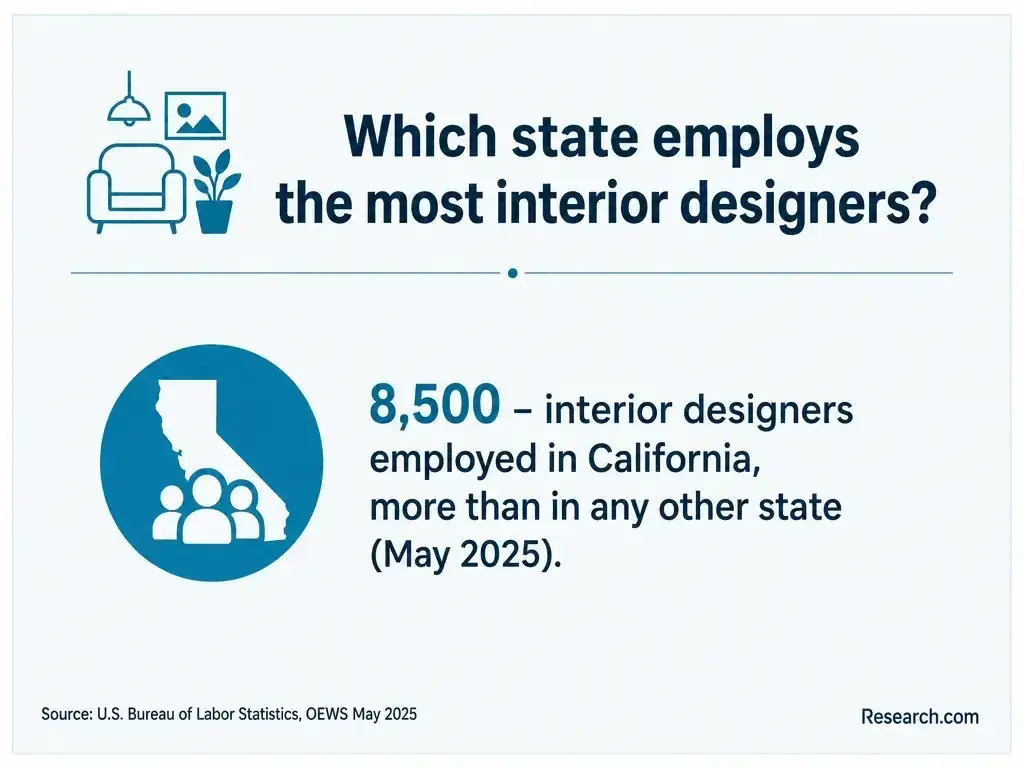
A defensible Lakewood-specific starting salary is not established by the national figures. The U.S. Bureau of Labor Statistics' May 2025 national median annual wage for interior designers was $67,190. A median covers experienced workers as well as newer ones and excludes the distinct pay patterns of some sales or drafting positions. Use it as occupational context, not as a forecast of your first job.
For a practical return-on-investment estimate, compare actual entry-level postings within a commute you would accept. Then weigh expected pay against tuition, aid, borrowing, completion probability, lost earnings during training, and how long you expect to work in the field. A program that costs less but does not produce the technical work requested in local openings may be the more expensive choice in the long run.
Duration depends on the credential, course sequence, and whether you attend full time. A focused software or design certificate may take substantially less time than an associate-degree program with multiple studios and general coursework. Ask for the current catalog's required credits or contact hours, course rotation, and an individualized completion plan; do not assume every required studio is offered each term.
Accelerated schedules reduce time away from work only if you can complete the projects and attend required sessions. If speed is your priority, compare a proposed interior design schedule with the broader idea of a quickest associate degree online - but verify that the design program actually teaches the software, drawing, and presentation skills you need. Prior learning or transfer credit may shorten a plan if the school accepts it; neither should be assumed before a written credit evaluation.
Online instruction can suit design history, research, some software demonstrations, and digital submissions. Campus or scheduled hybrid instruction can make physical materials, measured spaces, critiques, and collaborative presentations easier to practice. Neither format is automatically better: compare the actual assignments and access to feedback.
Working adults may value the scheduling ideas in a guide to cheap online schools for job holders, but should judge an interior design program by its studio delivery. Ask whether you must attend critiques, visit sites, use campus equipment, or complete an internship in person. An online label does not establish that all practical work can be done remotely or that a credential meets any professional certification requirements.
There is no defensible single average for Lakewood interior design training without a defined set of current programs and comparable published prices. A tuition-only comparison can also understate what it takes to become job-ready. Request an itemized estimate for your intended schedule and residency status before deciding which option is most affordable.
The following cost categories matter because design projects can require purchases beyond ordinary course fees.
| Cost category | What to verify |
| Enrollment | Tuition, mandatory fees, and charges for required repeat courses |
| Design work | Computer specifications, software licenses, printing, models, samples, and other materials |
| Career entry | Portfolio preparation and any optional certification application or examination costs |
| Attendance | Commuting, parking, and earnings forgone while completing studios or work experience |
Ask about grants, scholarships, eligible federal or Washington state aid, and payment timing; eligibility depends on the student and program. Employer-funded training can reduce out-of-pocket cost, although it may teach a narrower set of tasks. General comparisons of top non profit accredited universities do not substitute for a design-specific, all-in price quote or a check of the credential you would receive.
Depending on the program, you may earn a short-course completion credential, a certificate, or an associate degree. Those awards are not equivalent. A targeted certificate may fit someone moving into showroom support or adding CAD skills; an associate-degree pathway generally gives more room for sequenced studio work and a developed portfolio. Compare course requirements and finished projects, not the award label alone.
Institutional accreditation concerns the school. Programmatic accreditation concerns a particular program, while state authorization concerns permission to operate; none, by itself, promises employment or professional-certification eligibility. Confirm each status that matters to your goal with the relevant institution, accreditor, regulator, or certifying organization. A guide to what is the easiest online degree to get cannot answer whether a specific interior design credential prepares you for the technical work an employer wants.
Entry requirements vary by provider and credential. Check the current admissions page for application steps, placement or prerequisite rules, technology requirements, and whether a portfolio is required at entry or built during the program. Also check whether courses must be taken in sequence; a missed prerequisite can delay completion even if initial admission is straightforward.
For a career pivot, request a written assessment of previous coursework and relevant experience before paying an enrollment deposit. Transfer or prior-learning credit may reduce repeated study, but credit toward a required design studio is not guaranteed. Ask how the program supports students who need to learn drawing or design software from the beginning.
Look for instruction that connects visual decisions to usable spaces: space planning, color and materials, lighting concepts, client presentations, digital drafting or modeling, and construction documentation. Coursework should also address relevant building and accessibility requirements at a level appropriate to the work students will perform. The U.S. Bureau of Labor Statistics describes interior designers as coordinating functional and aesthetic decisions with clients and other project participants; that coordination is a workplace skill, not merely an artistic one.
Request examples of student projects and ask what feedback students receive on drawings, specifications, and revisions. Rapid image-generation tools may help with early concepts, but an attractive rendering does not demonstrate accurate dimensions, feasible materials, or buildable documentation. Choose a program that requires students to explain and revise their decisions, not one that assesses visuals alone.
Do not assume that a school credential is an occupational license. Before enrolling for a regulated title or a particular scope of work, check current Washington Department of Licensing rules and any applicable professional-board requirements. Work reserved for licensed architects or other regulated professionals is not made permissible by completing an interior design course. Ask a provider to identify the specific rule - and the credential or experience it requires - if it advertises licensing eligibility.
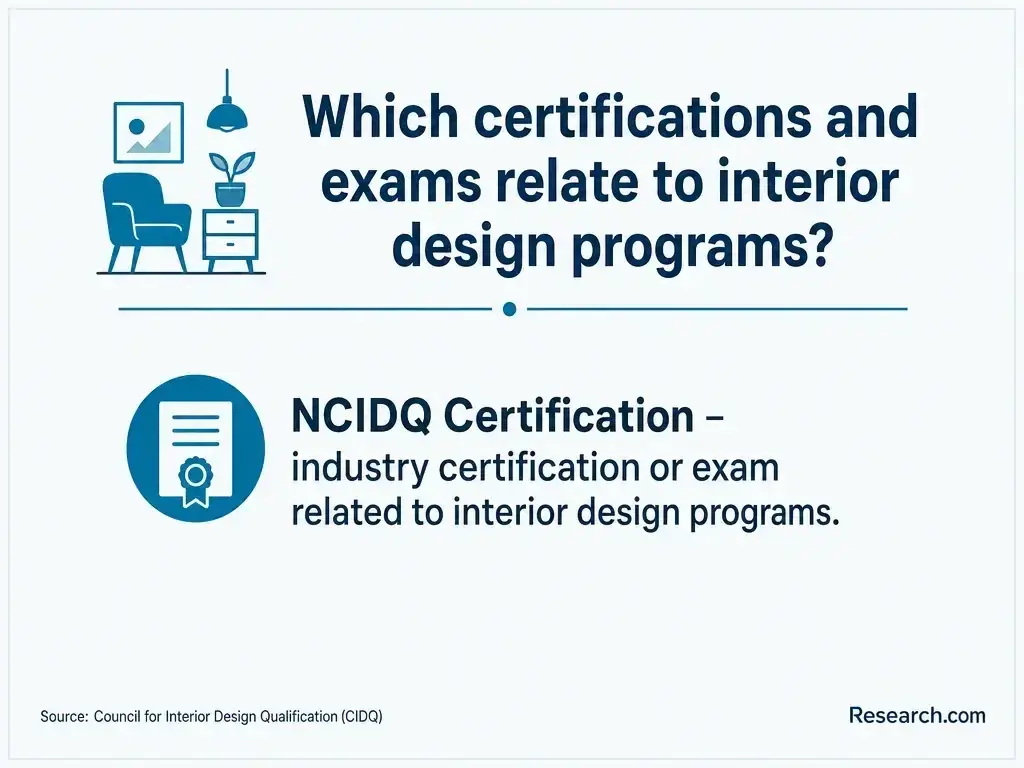
Professional interior design certification is a separate, potentially useful advancement goal, not an automatic graduation benefit. The Council for Interior Design Qualification sets eligibility rules for its NCIDQ examination, including education and work-experience considerations. Verify how your proposed program's coursework would be evaluated and what experience you would still need; program completion alone should not be treated as exam approval.
The best-value option is the one that prepares you for your intended work at a manageable total cost. Start with job postings for the role you want, then compare their requested skills against each program's required projects. A low-cost course can be a sensible choice for one missing skill; it is a poor substitute for comprehensive studio training if your goal requires technical drawings and a substantial portfolio.
Use these checks to turn a ranking shortlist into an enrollment decision:
Avoid relying solely on a ranking, a promotional starting-salary claim, or the word "online." If you are comparing a longer training investment with other career routes, a guide to what bachelor degrees make the most money addresses a different question; for this choice, the decisive evidence is the interior design program's cost, practical work, and fit with your target job.
A student may begin in design assistance, drafting, showroom support, or a focused residential-design role and take on more complex projects with experience. The route depends on portfolio quality, technical skills, employer needs, and any requirements governing the work. Certification or specialization can support later advancement, but should not be confused with an entry requirement for every position.
Match the first credential to the first job you can realistically pursue. Showroom work may reward product knowledge and client communication; drawing-intensive roles call for accurate plans and software fluency. Freelance work adds client acquisition, estimating, and project-management responsibilities, so it is not necessarily the easiest immediate step after training.
The U.S. Bureau of Labor Statistics projects 2.7% national growth in interior designer employment from 2025 to 2035. This is a modest national projection, not a Lakewood hiring forecast. It makes portfolio quality, relevant software skills, and willingness to consider the broader Tacoma-Seattle commuting market particularly important when weighing training costs.
Check recent openings for the specific title you want and note whether employers request sales experience, technical documentation, or prior project work. If most suitable openings require experience, ask a program how students obtain client-based projects, internships, or other work samples. An occupational growth figure alone cannot establish that a particular program will lead to a job.
Investing in occupational training is an important decision. Research.com created its affordability ranking to help readers compare programs against other options in the same occupation and location, rather than against unrelated schools. The team evaluates reported data for quality, credibility, and accuracy; the ranking includes only programs with completions reported to IPEDS. It therefore cannot represent every short course, employer training opportunity, or provider outside that dataset.
Most affordable rankings evaluate costs and debt: tuition, cost of attendance, median student debt, and federal loan default rate. Weights are distributed using an entropy-based method, which gives more weight to indicators that differ more across programs. Accreditation and other quality indicators are not part of the affordability score. Research.com's separate best-program rankings also consider student outcomes, earnings, support, and relevant recognition; readers should not mistake the two scores for the same assessment.
The ranking draws on the following data sources. Some cover occupations beyond interior design; their inclusion in the research process does not mean their occupational approvals apply to interior design programs.
Use the ranking to narrow an affordable shortlist, then confirm current program availability, the complete price, and the portfolio work you will produce. Research.com explains its broader approach on its methodology page.
# 1 position
# 2 position
It may be if its total cost is manageable and its projects build the skills your target jobs require. Compare the written price and completion schedule with portfolio outcomes and realistic entry-level openings, not the ranking position alone.
Some coursework can be remote, but critiques, materials work, site activities, or internships may require in-person participation. Confirm each requirement with the program before enrolling.
A certificate may suit a focused support or software role. For broader design responsibilities, compare its studio and documentation work with that of a longer credential and with actual job requirements.
Not automatically. The Council for Interior Design Qualification sets separate education and experience eligibility rules. Verify how your specific coursework counts before choosing a program for that goal.
Get current, itemized quotes that include fees, software, materials, and required travel. Then compare available aid and the time you would spend away from paid work; the lowest advertised tuition need not mean the lowest total cost.