# 1 position


Audited and Verified:
Our Editorial and Data Verification Process
Research.com uses government datasets, official education statistics and primary institutional information to support its career and degree guides. Our review process checks factual accuracy, occupational definitions, source dates and the requirements associated with the credentials discussed.
How This Article Was Fact-Checked
Our editorial team verifies salary estimates, employment projections, education requirements and program information against original data providers and official organizations. Salary figures are checked against the relevant occupational definitions and reporting periods. Information about licensure, accreditation and required in-person training is reviewed separately.
Fact-checked and verified on:

Co-Founder and Chief Data Scientist

Reviewed by Karolina Broda
Fact-Checker and Data Verification
Choosing an affordable interior design program in Spokane means looking beyond tuition: will the training build a portfolio and prepare you for the work you want? The U.S. Bureau of Labor Statistics reports a $67,190 national median annual wage for interior designers in May 2025, but that is not a starting-pay estimate. This guide compares credentials, costs, practical training, and career prospects. It also accompanies the Most Affordable Interior Design Trade Schools in Spokane for 2027 ranking, created by the Research.com team of data scientists to help students identify programs worth considering.
Expect a mix of design fundamentals and production work: space planning, drafting, materials, lighting, presentation, and feedback on projects. A useful program should produce drawings and a portfolio that demonstrate what you can do, not just teach decorating concepts. The U.S. Bureau of Labor Statistics describes interior designers as planning functional and safe interior spaces and coordinating with clients, architects, and builders; that scope is broader than selecting finishes.
Ask to see the current course sequence and sample student work. For a design-assistant goal, frequent studio critiques and proficiency with the software used by prospective employers may be more valuable than a short credential with little assessed project work. For commercial interiors, ask whether projects address accessibility, construction documents, and code-related coordination. Do not assume similarly named programs provide the same amount of hands-on instruction.
Potential settings include interior design firms, architecture practices, kitchen and bath businesses, furniture and finishes showrooms, residential remodeling companies, and commercial property teams. The fit depends on the work in your portfolio: a showroom may value product knowledge and client communication, while a firm producing construction documents may expect stronger drafting and technical coordination. These are possible workplaces, not verified vacancies.
Spokane's local market also affects the value of specialization. Before committing to a program, review current area job postings for the software, portfolio samples, and experience employers request. If the roles you want are scarce locally, consider whether remote design-support work or a wider commuting and relocation search is realistic for you.
The U.S. Bureau of Labor Statistics reports a $67,190 national median annual wage for interior designers in May 2025. A median describes workers across experience levels and locations; it is neither a Spokane-specific figure nor a likely first-job offer. Design assistants, showroom staff, and people doing only some interior design tasks may also fall under different occupational classifications.
For a local pay decision, compare current Spokane-area postings for the exact role and required experience, then consult the latest available Spokane-Spokane Valley wage estimate from the Bureau of Labor Statistics Occupational Employment and Wage Statistics program. Keep the occupation, geographic area, and reference year consistent when comparing figures. Ask prospective employers whether compensation includes commissions or project-based work before using an advertised range in your budget.
Duration depends on the credential and course schedule. A focused certificate can take less time than an associate degree, while part-time attendance extends the calendar even if required coursework stays the same. There is no single Spokane-wide clock-hour requirement for interior design training; request each program's published credits, studio hours, course sequence, and availability of required classes. Ask how many hours involve supervised drafting or project critique rather than independent reading.
Be skeptical of a speed claim that leaves too little time to develop a portfolio. A guide to a best 6 month associate degree online may help frame questions about acceleration, but it does not establish that a particular interior design credential can be completed on that schedule. If you have prior coursework or relevant work, ask Spokane Falls Community College whether it awards applicable transfer or prior-learning credit before assuming it will shorten your path.
Online study may make design history, research, software demonstrations, and some drafting assignments easier to fit around work. On-campus instruction makes it simpler to examine materials, build physical samples, use studio equipment, and receive immediate critique. A hybrid program can combine those strengths, but its required campus visits may still create a substantial commute.
Ask how instructors evaluate drawings and portfolios, what software and computer specifications students must supply, and whether any studio or worksite activity is mandatory in person. A listing among the cheapest online university options is not evidence that an interior design program offers the practical feedback or local connections you need. Neither an online format nor institutional accreditation by itself establishes eligibility for an optional professional credential.
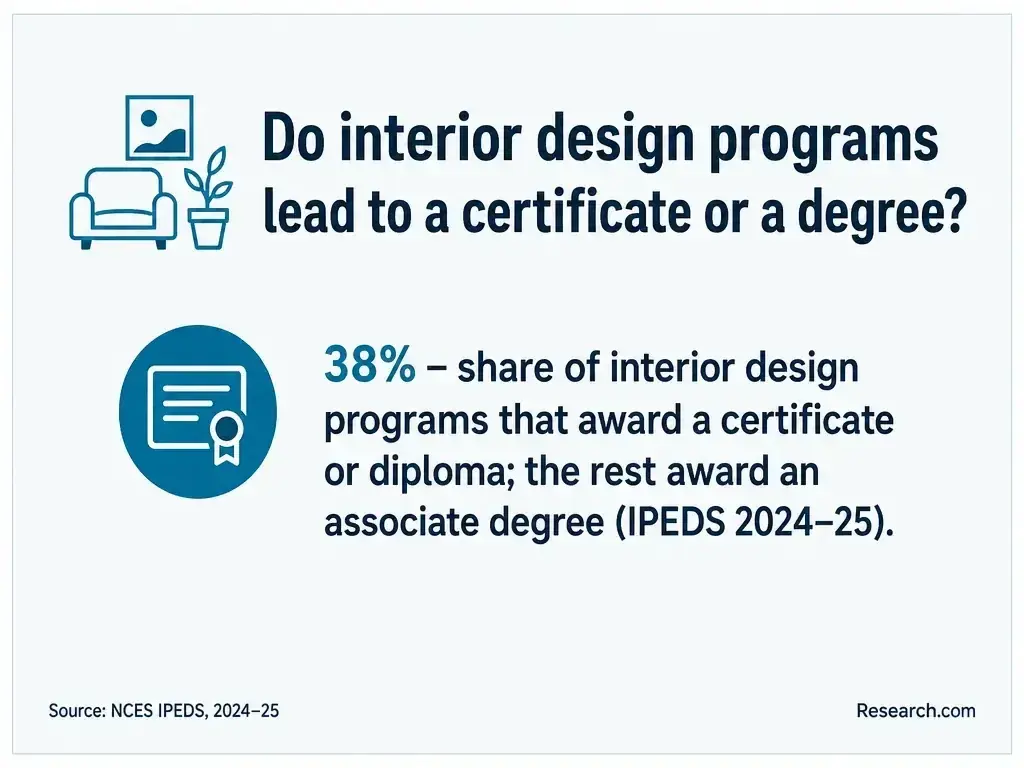
There is no defensible single average for every Spokane-area interior design training route: programs differ in length and credential, and published tuition may omit expenses needed to finish a portfolio. Rather than treating the ranking's affordability score as a final bill, request a current, itemized estimate from each eligible program.
Include tuition and mandatory fees; software and a capable computer; drafting, printing, and presentation supplies; books; travel to campus or project sites; and earnings you may give up while studying. Subtract grants and scholarships you are actually eligible to receive, not aid you merely hope to get. Federal Student Aid notes that federal aid eligibility depends on both the student and the eligible school and program; confirm eligibility directly rather than assuming every short course qualifies. Compare the resulting cost with what you can pay while completing the program, and check whether a lower-cost course sequence would still provide sufficient portfolio work.
Depending on the specific offering, a training provider may award a certificate, diploma, or associate degree. Those are educational credentials, not interchangeable proof of professional certification or occupational licensure. Confirm the precise award on the program's current catalog before applying; a short software course, for example, should not be described as an interior design associate degree.
A certificate may fit someone adding drafting or design-presentation skills to existing experience. An associate degree may fit someone who needs a broader sequence of studio and technical coursework, provided the program's work samples align with the intended job. If you are weighing which associate degree is easiest, prioritize the projects and skills employers request over perceived ease. Also ask whether credits transfer if you later change programs; transfer is determined by the receiving institution, not promised by the credential's name.
Requirements vary by provider and credential. Check the current Spokane Falls Community College admissions and program materials for application steps, placement or prerequisite rules, and any portfolio expectations; do not assume general college admission automatically reserves a place in every course. Ask about course start dates and whether foundational drafting or computer-skills classes must precede studio work.
Before enrolling, confirm that you can access the required software and meet the stated computer specifications. If your goal is immediate employment rather than a longer credential, ask local employers whether a demonstrable portfolio and relevant work experience could qualify you for an assistant or showroom role. Direct entry may be a better-priced route for some applicants, though it may provide less structured feedback than a program.
Relevant training develops both design judgment and deliverables: measuring a space, preparing plans and elevations, selecting materials, documenting choices, presenting options to a client, and revising work after critique. Programs may also address lighting, accessibility, building systems, budgeting, and coordination with construction professionals. Check the actual syllabus; these subjects are not guaranteed in every short course.
Look for assessed projects that show how a student moves from a client brief to a documented proposal. Digital rendering is useful for communicating ideas, but attractive images alone do not demonstrate accurate dimensions or constructible details. Ask how the program teaches students to check software-generated work, including AI-assisted images, against measurements, specifications, and client requirements.
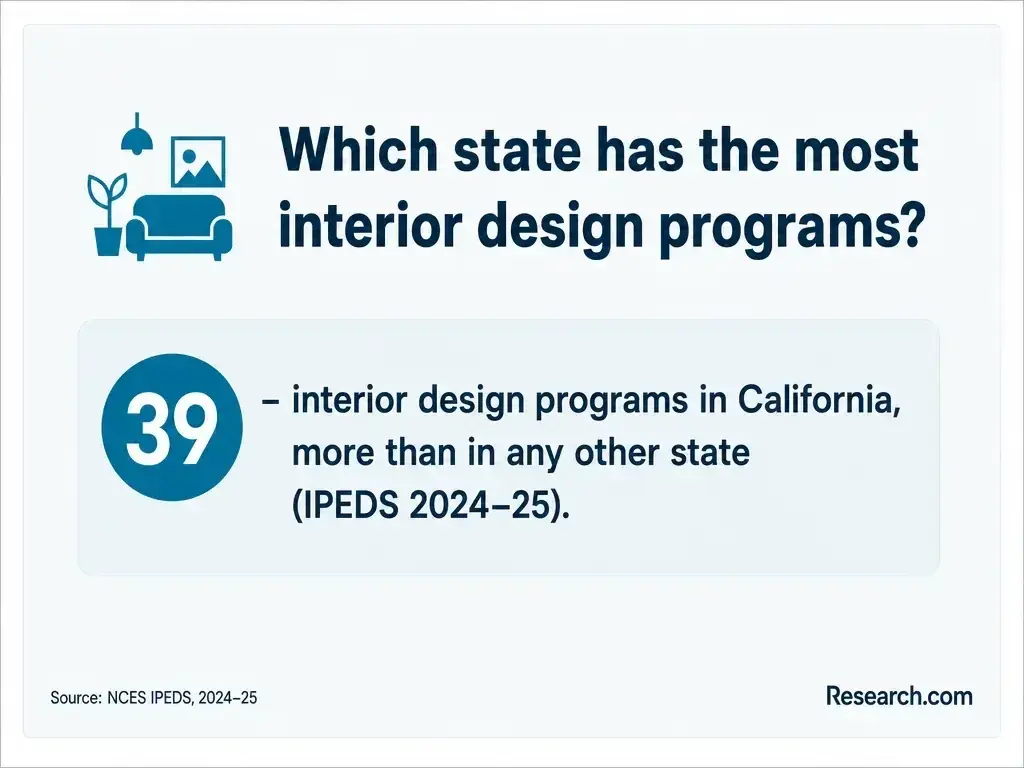
Do not assume an interior design training credential is an occupational license. Washington's Department of Licensing does not list a general interior designer license among its professional licenses; work that legally constitutes architecture remains subject to Washington's separate architecture rules. Confirm the scope of any proposed independent practice with the relevant Washington regulator rather than relying on a school's marketing description.
Professional certification is a separate, generally optional consideration for career advancement. The Council for Interior Design Qualification sets education and work-experience routes for its NCIDQ examination; finishing a certificate or associate degree alone does not establish exam eligibility. Institutional accreditation concerns the school, while programmatic accreditation concerns a particular program. Neither substitutes for the certification body's requirements. If NCIDQ is your goal, obtain a written explanation of how your exact coursework would count before enrolling.
Start with the job, then work backward to the training. An affordability ranking can identify programs to investigate, but it does not score portfolio quality or guarantee employment. Use these checks to test whether a lower-priced option is also the right investment:
For a working student, schedule feasibility can determine whether an inexpensive program is completable. Comparisons of affordable online schools for working students can suggest useful questions about flexibility, but verify the interior design program's actual studio schedule and support services. Avoid selecting a program on tuition alone or assuming its advertised wage represents an entrant's likely pay. A sound return-on-investment comparison also considers completion probability, aid, debt, your current earnings, possible earnings afterward, and how long you expect to use the training.
A portfolio-based start might lead to design assistant, drafting support, showroom consultant, or kitchen and bath design work. With stronger technical skills and experience, a worker may take on more responsibility for client projects or specialize in residential or commercial interiors. Titles do not establish identical duties: ask employers whether a role involves sales, documentation, project coordination, or independent design decisions.
Interior design is also distinct from licensed architecture. A quickest masters degree comparison does not answer whether a trade-level interior design program provides the portfolio and practical skills needed for an entry role. For many applicants, the more useful first step is to compare the work samples produced by a program with the samples requested in local openings.
The U.S. Bureau of Labor Statistics projects 2.7% national employment growth for interior designers from 2025 to 2035. That is an occupation-wide projection, not a Spokane hiring forecast, and openings may also arise when existing workers leave the occupation. It supports planning for competition rather than assuming a credential will lead directly to a job.
Use local postings to test demand for your intended specialty before paying for specialized training. If most suitable openings require experience, ask a prospective program how students obtain critiques, portfolio-ready projects, and contacts for entry-level work. A smaller local search may make broader geographic flexibility valuable, but only if moving or commuting fits your circumstances.
Investing in training is a consequential decision, so the Research.com team uses multiple sources and checks program comparisons against the occupation and location students are actually considering. Only programs with completions reported to the Integrated Postsecondary Education Data System (IPEDS) are eligible for the ranking. That boundary matters: an employer training opportunity or other provider absent from IPEDS is not necessarily unavailable or low quality.
Most affordable rankings score costs and debt only: tuition, cost of attendance, median student debt, and federal loan default rate. Weights use an entropy-based method, which gives more weight to measures that vary more across eligible programs. Accreditation and other quality measures are not part of the affordability score. Separately, Research.com's best-program rankings assess student outcomes; earnings and return on investment; costs and debt; and quality and recognition. Their current weights assign 20% to relevant programmatic accreditation or industry recognition, 10% to institutional accreditation, 10% to student support, and 60% to outcomes, earnings, and costs, distributed by the entropy-based method.
The ranking draws on the following sources. Some cover occupations other than interior design and should not be mistaken for interior design accreditors or entry requirements:
Use the ranking to narrow a cost-conscious shortlist, then verify each program's current price, curriculum, portfolio opportunities, and career fit directly. More detail on the approach appears on the Research.com methodology page.
# 1 position
# 2 position
It may be if its projects build the portfolio and technical skills required for your target role at a cost you can manage. Compare the full price and schedule with direct-entry opportunities, not just with other tuition figures.
Not necessarily. You can also investigate online training, individual skills courses, and employer-provided learning. Compare each route's practical feedback, credential, cost, and relevance to local jobs rather than assuming all are equivalent.
Some coursework can be completed remotely, but you still need credible, assessed project work and a portfolio. Check in-person requirements and any professional certification goals before selecting an online program.
Interior design does not have a general Spokane apprenticeship requirement comparable to licensed construction trades. An employer may still provide valuable paid, supervised learning; confirm the duties and training offered before treating a job as a substitute for structured coursework.
Not automatically. The Council for Interior Design Qualification evaluates education and work experience under its eligibility routes. Check your exact program and planned experience against its current requirements.