# 1 position
Highline College - Interior Design.
associate

Audited and Verified:
Our Editorial and Data Verification Process
Research.com uses government datasets, official education statistics and primary institutional information to support its career and degree guides. Our review process checks factual accuracy, occupational definitions, source dates and the requirements associated with the credentials discussed.
How This Article Was Fact-Checked
Our editorial team verifies salary estimates, employment projections, education requirements and program information against original data providers and official organizations. Salary figures are checked against the relevant occupational definitions and reporting periods. Information about licensure, accreditation and required in-person training is reviewed separately.
Fact-checked and verified on:

Co-Founder and Chief Data Scientist

Reviewed by Karolina Broda
Fact-Checker and Data Verification
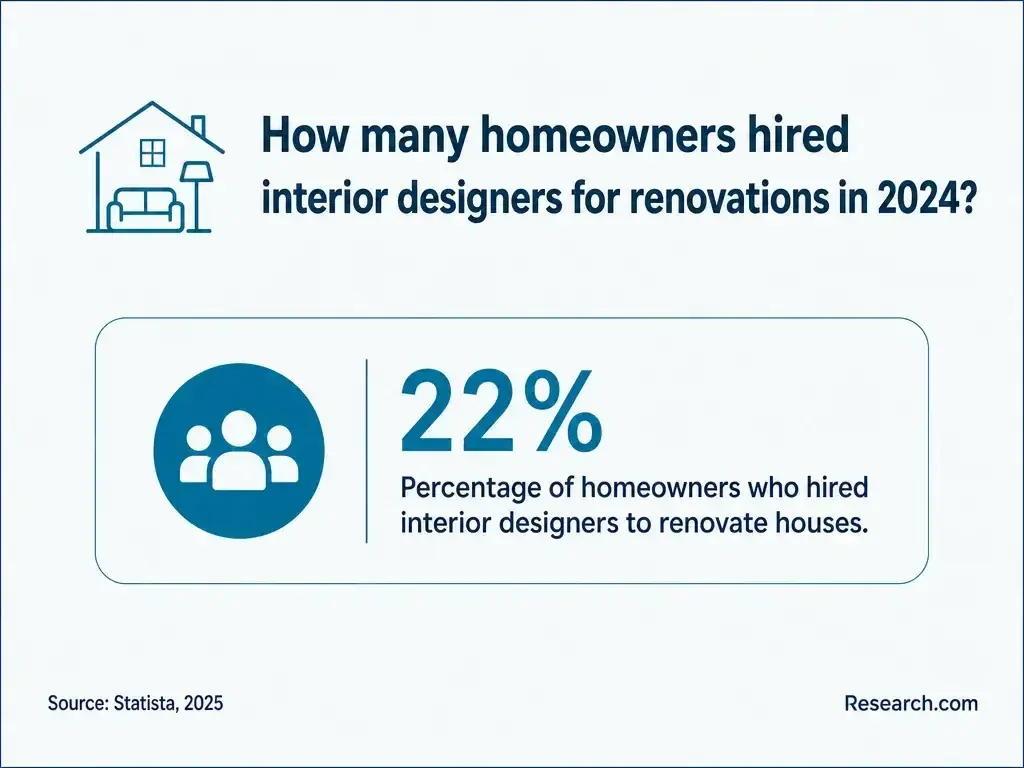
Choosing an affordable interior design program in Des Moines means comparing more than tuition: the credential, portfolio training, and route into paid work must fit your goal. The U.S. Bureau of Labor Statistics reports a $67,190 national median annual wage for interior designers in May 2025, but that is not a starting salary or a local wage. This guide explains costs, training options, and career requirements. It also accompanies the Research.com team of data scientists' Most Affordable Interior Design Trade Schools in Des Moines for 2027 ranking, created to help you decide which programs are worth considering.
Expect a mix of design principles and practical production: measuring rooms, drawing plans, selecting finishes, preparing presentations, and revising work to meet a client brief. For someone seeking an affordable route into the Des Moines market, the central question is whether the program produces evidence of the work local employers want to see - not simply whether its title includes "interior design."
These pathways differ in scope and the roles they best prepare you to pursue. Duration and hands-on requirements vary by provider, so verify them in the current catalog.
| Pathway | Typical credential or outcome | Best fit | Important limitation |
| Focused career training | Certificate or diploma, where offered | Showroom sales, design support, or a specific drafting skill | May offer limited studio breadth or transfer credit |
| Community college program | Associate degree, where offered | Students seeking sustained studio practice and a broader portfolio | Takes longer; confirm the curriculum matches the intended role |
| Employer-sponsored training | Work experience and employer-specific skills | People able to enter through retail, furnishing, or design-assistant work | May not provide a portable credential or comprehensive design instruction |
There is no reason to assume a formal apprenticeship is required for interior design. If a provider advertises one, ask who sponsors it, whether it is registered, what work is paid, and what credential it awards. A showroom job paired with deliberate portfolio development may be a better low-cost starting point for a career changer than an ill-matched program.
Potential workplaces include residential design businesses, furniture and kitchen-and-bath showrooms, architectural and commercial interiors teams, homebuilders, and businesses that plan office or hospitality spaces. These are different jobs: a showroom role may emphasize product knowledge and sales, while commercial project work may require stronger drawing, documentation, and building-code skills (U.S. Bureau of Labor Statistics, Occupational Outlook Handbook).
Use local postings to test your intended route. Note whether employers request a portfolio, CAD proficiency, client-facing experience, or familiarity with a particular product category. If most appealing openings require skills absent from a proposed program, its lower price may not make it the better choice.
The national median annual wage for interior designers was $67,190 in May 2025 (U.S. Bureau of Labor Statistics, Occupational Outlook Handbook). A median describes employed workers across experience levels and locations; it is neither a verified Des Moines wage nor a reasonable promise for a new certificate holder.
Before borrowing, compare current Des Moines-area postings for the exact entry role you could qualify for - such as design assistant, showroom consultant, or drafter - and check whether advertised pay includes commission. Estimate repayment against a conservative entry wage, not the national occupational median. A program that prepares you for sales support should not be judged using the earnings of an experienced commercial interior designer.
A focused certificate can take less time than an associate degree, but the calendar alone is a poor measure of readiness. Studio projects, software practice, and portfolio revisions take time even when lectures are accelerated. Part-time study can preserve income while extending the time before you can apply for more demanding roles.
There is no single interior design clock-hour requirement that applies to every Des Moines training program. Request the current catalog's total credits or contact hours, the hours spent in supervised studio or labs, and any internship requirement. If speed is your priority, compare that information before choosing an accelerated schedule; completing coursework quickly is useful only if you can demonstrate the required skills. Readers considering a different educational route can separately review accelerated bachelors degree online options, which are not trade-school substitutes.
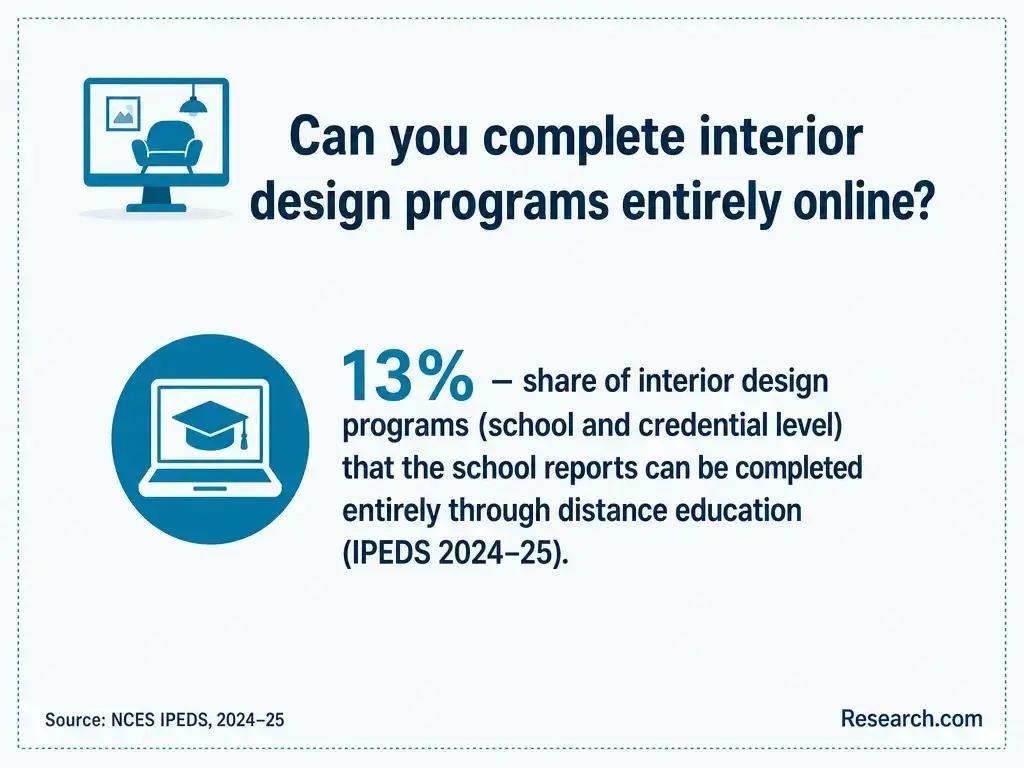
Online delivery can work for design history, product research, software demonstrations, and feedback on digital drawings. Campus studios can make it easier to handle samples, measure physical spaces, use shared equipment, and receive immediate critique. A hybrid program may offer both, but "online" does not tell you whether site visits, studio sessions, or an internship are required in person.
If you will study from Des Moines, ask where any practical sessions occur and what equipment you must supply at home. Compare software access, instructor critique, and portfolio reviews rather than format labels alone. Institutional accreditation concerns the school; it does not, by itself, establish the quality of its interior design training. If you are comparing online institutions more broadly, top accredited non-profit online schools is a separate resource, not a substitute for checking this program's studio requirements.
There is no defensible single average for Des Moines certificates, associate degrees, and employer training: they differ in length, what is included, and whether training is paid. Published tuition alone will not tell you the cost of becoming ready to apply for work.
Build a comparable estimate using each provider's current written figures. Include tuition and mandatory fees; a computer and required design software; drawing and presentation materials; textbooks; travel to studios or worksites; and lost earnings from time away from work. Ask whether an internship is paid and whether software or materials are already covered. Financial aid can reduce the amount you pay, but confirm eligibility with the provider and Federal Student Aid rather than assuming every short program qualifies.
For return on investment, weigh net cost and likely debt against completion probability, earnings you would give up while studying, your current income, plausible entry pay, and the time it may take to advance. Discounting future earnings matters when comparing a short course with a longer program: later potential gains are not interchangeable with income you must forgo now.
The award may be a certificate, diploma, or associate degree; employer training may award no academic credential. Get the exact credential name in writing. Also ask whether completed courses transfer, whether prior learning can reduce required coursework, and whether the provider has a documented transfer agreement. A similarly named award at another school may contain very different amounts of supervised design work.
Institutional accreditation, specialized program accreditation, professional certification, and state authorization answer different questions. For example, the Council for Interior Design Accreditation evaluates eligible interior design programs, while the Council for Interior Design Qualification administers the NCIDQ credential under its own education, experience, and examination rules (Council for Interior Design Accreditation; Council for Interior Design Qualification). Neither institutional accreditation nor a school certificate should be described as automatic certification or permission to perform regulated work.
Requirements depend on the provider and credential. Ask whether admission requires a high school credential, placement assessment, prior coursework, portfolio, or a minimum computer specification. A program may admit beginners yet expect them to purchase software and begin making digital drawings early; knowing that before enrollment prevents an avoidable equipment expense.
Open admission does not mean a program fits every goal. Confirm the next start date, course sequence, evening availability, and whether classes you need are offered often enough to finish on schedule. If flexible admission is essential, online schools with open enrollment can help frame that separate search, but verify any interior design program's practical components independently.
Useful training connects visual decisions to a buildable, usable space. Look for instruction in space planning, measurements, drafting and CAD, lighting, materials, furnishings, accessibility, construction documents, budgeting, and client presentations. Commercial ambitions call for particular attention to documentation and relevant code concepts; retail-oriented work puts greater weight on products, specification, and customer communication (U.S. Bureau of Labor Statistics, Occupational Outlook Handbook).
Ask to see a sample assignment and the expected final portfolio. A strong project requires students to explain constraints, revise a plan after critique, and present specifications - not just produce attractive images. If you want to combine design with another field, dual major programs describe a different educational approach; judge trade training on the job skills and work samples it actually delivers.
Do not assume a school credential is an occupational license. The work you may perform, the title you may use, and responsibility for regulated building documents are separate questions. Before choosing training for a particular title or type of project, check current Iowa requirements with the state's professional licensing authority and clarify which documents must be prepared or approved by another licensed professional. Rules for work outside Iowa may differ.
NCIDQ certification is a professional credential, not an automatic result of graduation. Its education, qualifying experience, and examination requirements should be checked directly with the Council for Interior Design Qualification before enrolling in a program advertised as "NCIDQ preparation." If your immediate goal is an entry-level showroom role, ask the employer what it requires rather than paying for a credential on the assumption that every design job demands it.
Start with the role you want, then compare the least costly routes that can credibly prepare you for it. A ranking can identify lower-cost candidates, but it cannot decide whether their studio access, schedule, and credential suit your circumstances.
Use the following checks with each provider before committing money:
Red flags include a promised salary, vague "industry certification" claims, or a portfolio-based program that cannot show how students receive critique. A shorter course may be the right investment for a narrow skill gap; it is a poor bargain if it cannot help you qualify for the work you actually want.
An entry route might be showroom sales support, design assistance, or drafting. With a stronger portfolio and relevant work experience, a person may pursue residential projects or more complex commercial interiors. Advancement depends on demonstrated work, employer needs, and any applicable credential or regulatory requirements - not on a certificate alone (U.S. Bureau of Labor Statistics, Occupational Outlook Handbook).
Choose training backward from that progression. Someone already employed in furnishings may benefit most from targeted CAD and space-planning instruction; someone aiming for commercial documentation should look for deeper technical studio work and opportunities to learn alongside experienced project teams. shortest masters programs addresses a different educational goal and should not be used to evaluate an entry-level trade pathway.
U.S. employment of interior designers is projected to grow 2.7% from 2025 to 2035 (U.S. Bureau of Labor Statistics, Employment Projections). That national projection is not a forecast of Des Moines openings. It suggests students should prepare to compete on portfolio quality and practical skills rather than count on rapid overall occupational growth.
Local opportunities also vary by specialty and project activity. Review recent openings across design firms, showrooms, and related businesses before selecting electives or software training. Treat an employer's stated requirements as stronger evidence for your immediate job search than a national growth rate.
Education is a consequential investment, so Research.com evaluates affordable programs against other programs in the same occupation and location rather than against unrelated training options. For this ranking, only programs with completions reported to IPEDS are eligible. The affordability score uses tuition, cost of attendance, median student debt, and federal loan default rate; an entropy-based method gives more weight to measures that differ more across eligible programs. Accreditation and other quality measures do not enter this particular score. A low rank number therefore does not establish that a program offers the right studio training, credential, or career preparation for you.
The Research.com team uses the following sources in its ranking research. Some cover other occupations and should not be mistaken for interior design accrediting or licensing authorities:
These sources support a consistent cost comparison, but IPEDS does not capture every career school, employer training route, or apprenticeship. Use the ranking to narrow your search, then confirm current program prices and practical training directly. More detail is available on Research.com's methodology page.
# 1 position
# 2 position
If you can enter a showroom or design-support role and learn on the job, that may limit upfront school costs. Compare its training and advancement opportunities with a focused certificate before deciding.
It may support some entry roles, but employers and projects differ. Check the credential, portfolio expectations, and any applicable Iowa rules for the work or title you want.
Some coursework can be remote. Confirm how the program handles measurements, materials, studio critique, and any site or workplace experience before assuming it can be completed from home.
Only if its full cost, practical training, and likely job outcomes fit your goal. Add software, materials, travel, and lost earnings to the comparison.
No. The BLS median covers employed designers nationwide at different experience levels. Use local entry-level postings to plan a realistic budget.