
# 1 position
Best Interior Design Training Programs & Schools in San Francisco for 2027
Audited and Verified:
Our Editorial and Data Verification Process
Research.com uses government datasets, official education statistics and primary institutional information to support its career and degree guides. Our review process checks factual accuracy, occupational definitions, source dates and the requirements associated with the credentials discussed.
How This Article Was Fact-Checked
Our editorial team verifies salary estimates, employment projections, education requirements and program information against original data providers and official organizations. Salary figures are checked against the relevant occupational definitions and reporting periods. Information about licensure, accreditation and required in-person training is reviewed separately.
Fact-checked and verified on:

Co-Founder and Chief Data Scientist

Reviewed by Karolina Broda
Fact-Checker and Data Verification
Choosing interior design training in San Francisco means deciding what you need to do after class: build a portfolio, qualify for a particular role, or pursue professional certification. The U.S. Bureau of Labor Statistics (BLS) projects 2.7% national employment growth for interior designers from 2025 to 2035, making preparation and job fit worth examining. This guide accompanies the Best Interior Design Trade Schools in San Francisco for 2027 ranking, created by the Research.com team of data scientists to help students identify programs worth considering and compare their costs, credentials, and practical training.
Key findings about interior design degrees in San Francisco
- The BLS reports a $67,190 national median annual wage for interior designers in May 2025. That is an occupational median, not an expected starting salary in San Francisco.
- California does not require a general occupational license to work as an interior designer, but its "Certified Interior Designer" title has separate eligibility rules, according to the California Council for Interior Design Certification (CCIDC).
- Compare a short design-software or portfolio certificate with a broader associate-degree program by examining studio work, documented costs, and the jobs each prepares you to seek - not the credential name alone.
Table of Contents
- Best Interior Design Training Programs & Schools in San Francisco for 2027
- What can I expect from an interior design trade school program in San Francisco?
- Where can I work with an interior design trade school training in San Francisco?
What can I expect from an interior design trade school program in San Francisco?
Expect a mix of design decisions and technical production: space planning, drawing and digital modeling, materials, lighting, accessibility, presentations, and a portfolio. Interior design goes beyond decoration when work must account for how people use a space and how a proposed layout can be built. Ask to see student projects that move from a client brief through revisions to a documented final proposal.
These pathways serve different goals; the credential alone does not show how much studio practice a student receives:
| Pathway | Typical credential or outcome | Best fit and principal limitation |
| Focused career-school or college training | Certificate or diploma, depending on provider | Useful for targeted drafting, visualization, or portfolio skills; check whether it covers the broader design work required by your target job. |
| Community-college program | Certificate or associate degree, as listed in the current catalog | Useful for structured studio study and an academic credential; compare course sequencing and time away from paid work. |
| Employer-based learning | Work experience; any formal credential depends on the employer | Useful for learning products and client workflows while working; access to comprehensive design instruction may vary. |
A paid assistant role is a realistic alternative for someone who already has drawing or design skills. Do not assume it is a registered apprenticeship: confirm registration, classroom instruction, wages, and the resulting credential with the sponsor if a program uses that term (U.S. Department of Labor, Apprenticeship.gov).
Where can I work with an interior design trade school training in San Francisco?
Possible workplaces include residential design studios, commercial interiors firms, furniture and kitchen-and-bath showrooms, architecture firms, and companies that furnish or renovate offices and hospitality spaces. The BLS describes interior designers as coordinating with architects, builders, and clients; an entry-level hire may instead begin with drafting, specifications, samples, or showroom support.
San Francisco applicants should decide which work setting they want before choosing projects for a portfolio. A residential portfolio can demonstrate client communication and materials selection; commercial work may demand stronger construction documentation and accessibility knowledge. Check job postings across the wider Bay Area, since commuting distance can change both the positions available and the real cost of taking one.
The BLS reports a $67,190 national median annual wage for interior designers in May 2025. It is not a San Francisco wage, a measure of new graduates' pay, or a reliable estimate for showroom and drafting jobs classified under other occupations. Use the latest BLS Occupational Employment and Wage Statistics for the San Francisco-area occupation alongside actual local job postings when setting a pay target.
For an investment decision, compare realistic entry-level offers with your current earnings and expected debt payments - not with the national median. A lower-paid assistant position with supervised project work may also have different long-term value from a sales role with higher immediate pay but limited design responsibility.
A focused certificate can take less time than an associate-degree program, but calendars alone conceal important differences. Studio courses may be offered in sequence, and working students may need a part-time schedule. Request the required credits or contact hours, actual course rotation, expected weekly studio time, and the earliest realistic completion date from each provider.
Be wary of treating accelerated associate degrees as interchangeable with a well-paced design program. An accelerated schedule makes sense if you can still complete critiques, technical drawings, and a credible portfolio. Ask whether existing coursework or documented prior learning can count toward requirements; get any transfer or advanced-standing decision in writing before enrolling.
Software instruction, design history, lectures, and some critiques can work online. On-campus or hybrid study makes it easier to examine materials, test spatial ideas, use shared equipment, and receive live studio feedback. Neither format automatically supplies site visits, client-facing practice, or supervised employment.
Choose online study if travel or work hours are the constraint and the program can show how you will receive detailed critique and produce portfolio-ready work. Choose campus or hybrid study if access to studios, physical samples, and local collaborators matters more. For either format, confirm any in-person requirements and software costs before paying; online delivery does not establish eligibility for an optional certification (CCIDC; Council for Interior Design Qualification).
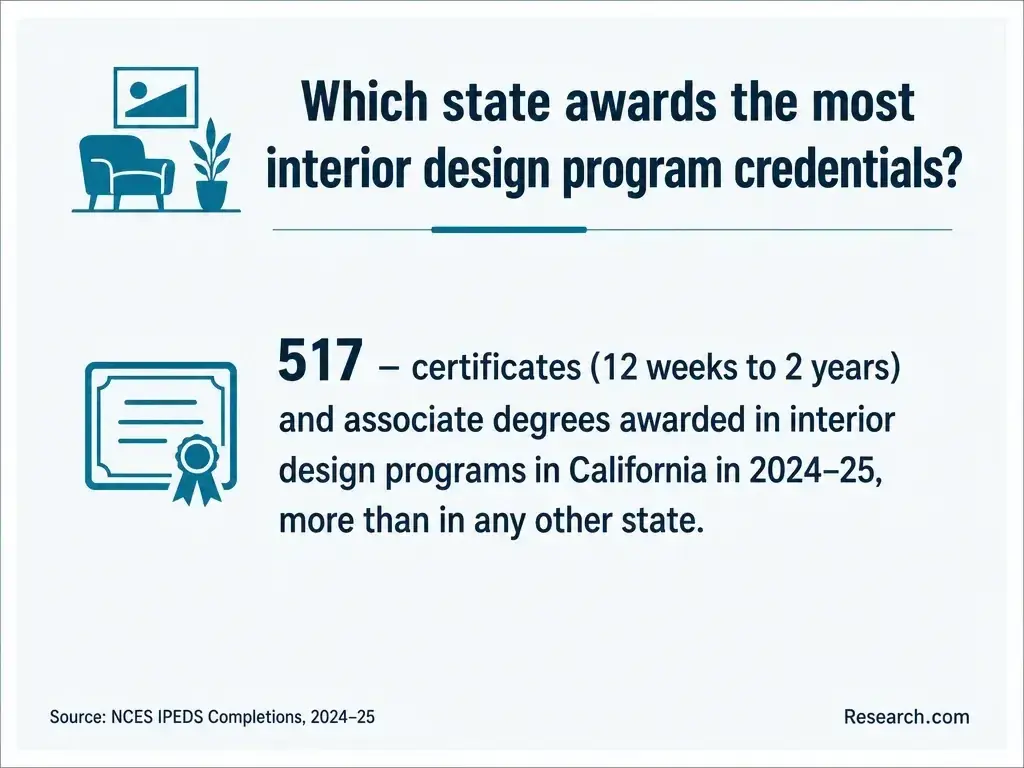
There is no dependable single average that represents San Francisco certificate, associate-degree, private-provider, and employer-based routes alike. Published tuition may exclude mandatory fees, software and a capable computer, printing and presentation materials, books, travel to studios or job sites, and earnings forgone while studying. Obtain a written, credential-specific cost estimate rather than using an institution-wide price as the program price.
City College of San Francisco is one public option to investigate, but confirm its current interior design offerings, eligibility for resident tuition, and program-specific fees directly. Compare its full estimate with any private provider's price on the same completion timeline. Eligible students can check federal aid with Federal Student Aid and California aid with the California Student Aid Commission; availability depends on the student and program. A search for accelerated associate degree programs may identify faster schedules, but only a program-level quote reveals whether speed actually reduces total cost.
The award may be a certificate, diploma, or associate degree; a short software course may provide only a course-completion document. Verify the exact credential on the current catalog and transcript. A school credential is separate from institutional accreditation, state authorization to operate, programmatic accreditation, and an individual's professional certification.
Institutional accreditation can matter for aid and transfer, but it does not by itself establish that a program meets a certifier's education rules. Check the institution's recognized accreditation, the California Bureau for Private Postsecondary Education's information where a private provider falls under its oversight, and any claimed program-specific recognition with the relevant organization (U.S. Department of Education; California Bureau for Private Postsecondary Education). Even when comparing non profit accredited universities, the decisive question here remains what the particular interior design training awards and prepares you to do.
Requirements depend on the provider and credential. A community-college pathway may start with college enrollment and course placement, while a selective studio course or career-school program may ask for prerequisites, work samples, or a portfolio. Ask admissions which requirements apply before the first design course, not merely before general enrollment. If you plan to study part time, confirm whether evening sections and required software or computer access are available.
For employer-based entry, a portfolio of drawings, a sample space plan, or familiarity with drafting tools may matter more than a school application. An applicant without that work can build samples through a focused course, then seek assistant or showroom positions; ask prospective employers which tasks they actually give entry-level hires.
Strong occupational training connects concepts to deliverables: measured plans, furniture layouts, material schedules, digital drawings, renderings, presentations, and revisions after critique. The BLS identifies drawing, computer-aided design, building-code awareness, and communication as relevant to interior designers' work. For a Bay Area commercial goal, examine how coursework handles accessibility, documentation, and collaboration with building professionals; for residential work, assess client briefs, finishes, and budgeting.
Ask how many projects you will finish and which ones you may show employers. A certificate teaching only a rendering tool can be valuable for a specific skill gap, but it is not equivalent to training that also develops planning, technical communication, and a reviewed portfolio.
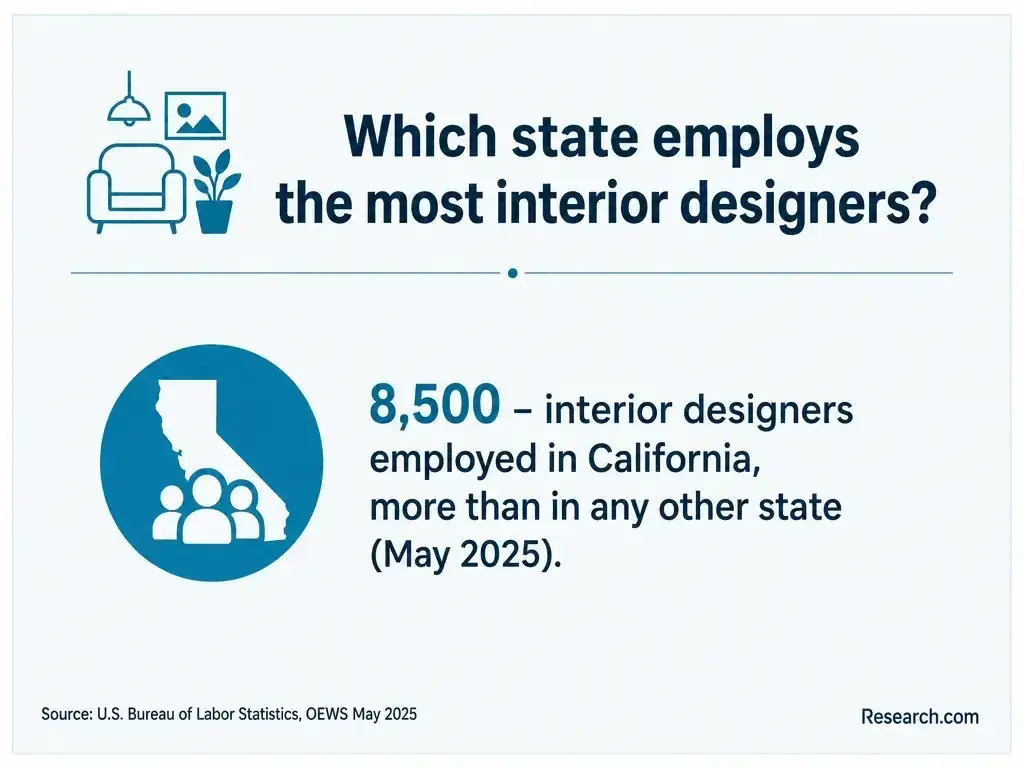
No general California occupational license is required to work as an interior designer. California separately regulates use of the "Certified Interior Designer" title through CCIDC. Its eligibility pathways involve qualifying education and experience and the IDEX California examination; finishing a school program does not automatically confer the title (CCIDC). Check the current CCIDC rules against your exact credential and planned work experience if that title is your goal.
The NCIDQ credential has its own education-and-experience eligibility and examination rules; it is not a California occupational license (Council for Interior Design Qualification). Design work must also stay within applicable building-permit and professional-practice rules. Ask what tasks an employer permits an assistant to perform and when a licensed building professional must take responsibility rather than assuming a certificate authorizes every project.
Start with the job you want, then compare programs against the work and credential that job requires. Rankings help narrow a search, but they cannot tell you whether a particular studio schedule, portfolio, or commute fits your circumstances. Use the same questions with each admissions office so the answers are comparable:
- Request the current curriculum, credential name, required hours or credits, course sequence, and examples of completed student portfolios.
- Ask who critiques technical work, what studio or site experience is included, and whether employers review projects or offer placements.
- Get a written total-cost estimate, aid eligibility, withdrawal terms, and any costs for software, materials, travel, or certification exams.
- Verify accreditation and applicable school oversight independently; ask a certifying body whether this specific training supports your intended eligibility pathway.
- Compare completion and placement claims by cohort, job type, and measurement period, and ask whether the reported jobs involve design work.
A common mistake is buying the fastest credential before checking portfolio quality and employment fit. Searches for an easiest master degree address a different goal altogether; for this decision, prioritize occupational skills, verifiable costs, and a feasible route into interior design work.
Entry points can include design assistant, drafting or visualization support, showroom specialist, and residential or commercial project support. With stronger project experience, an individual may pursue designer responsibilities, a specialty such as kitchen-and-bath work, or independent client work. Job titles are not standardized: read duties closely to distinguish a position centered on sales from one that develops technical design experience.
Training can help you demonstrate skills, but does trade school help you get a job is best answered by examining a program's portfolio support and documented outcomes alongside local openings. Before borrowing, consider your current pay, the likelihood of finishing, aid and debt, time out of work, plausible starting pay, and how long it could take for any earnings gain to offset the investment. Optional certification can support a later goal; it should not be mistaken for an entry-level job guarantee.
The BLS projects 2.7% national employment growth for interior designers over 2025-2035. That projection describes an occupation across the United States, not the number of openings available to a new applicant in San Francisco. It is a reason to build transferable technical and client-facing skills rather than assume demand alone will secure a position.
Local prospects also depend on the kinds of projects firms are hiring for and whether you can reach jobs elsewhere in the Bay Area. Compare recent postings for your target role, noting requested software, portfolio evidence, and experience, before committing to a curriculum. Digital tools can speed drawing and visualization, but applicants still need to demonstrate judgment about space, materials, documentation, and client needs (BLS).
Best Interior Design Training Programs & Schools in San Francisco for 2027
Education is a consequential investment. Research.com created its ranking to help readers compare interior design programs with other programs serving the same occupation and location, rather than treating every school as interchangeable. Only programs reporting completions to the Integrated Postsecondary Education Data System (IPEDS) are eligible; a provider's absence does not establish that its training is poor or unavailable.
For its best-program rankings, Research.com evaluates student outcomes, earnings and return on investment, costs and debt, and quality and recognition. Programmatic accreditation or occupation-relevant industry recognition accounts for 20% of the score, institutional accreditation for 10%, and student support services for 10%. The remaining 60% covers completion and full-time and part-time retention, earnings one year after completion and relative to annual attendance cost, tuition and attendance cost, median debt - including for students who withdrew - and federal loan default rates. An entropy-based method gives more weight to indicators that distinguish programs more strongly. Separate most-affordable rankings score only tuition, attendance cost, debt, and default rates using that method; they do not score accreditation or other quality indicators.
The team uses the following sources to check education, outcome, recognition, and training information. Several cover other trades and are not evidence that an interior design program holds a healthcare or construction credential:
- IPEDS database - reported program completions and institutional information.
- National Center for Education Statistics - federal education data and definitions.
- College Scorecard database - available student cost, debt, and earnings measures.
- Peterson's database - supplementary institutional and program information.
- Commission on Accreditation of Allied Health Education Programs (CAAHEP) - occupation-specific recognition checks where applicable.
- Accrediting Bureau of Health Education Schools (ABHES) - occupation-specific recognition checks where applicable.
- Commission on Dental Accreditation (CODA) - occupation-specific recognition checks where applicable.
- Dental Assisting National Board (DANB) - certification information where applicable.
- National Center for Construction Education and Research (NCCER) - trade-training recognition where applicable.
- Apprenticeship.gov Partner Finder - apprenticeship-provider information where applicable.
The ranking is a starting point, not a substitute for checking a current catalog, portfolio opportunities, total price, and the credential needed for your intended job. See Research.com's methodology for more about how the rankings are created.
# 2 position
City College of San Francisco - Interior Design.
certificate or diplomaFrequently asked questions about interior design programs in San Francisco
Is a certificate enough to start working in interior design?
It may support an assistant, showroom, or drafting application if it produces relevant skills and a strong portfolio. Check target job postings: a narrow software certificate may not prepare you for broader design duties.
Is City College of San Francisco an option?
It is a public college worth checking. Confirm its current interior design offerings, award requirements, course availability, and your total cost directly with the college before comparing it with other training.
Can I qualify as a California Certified Interior Designer after graduating?
Not automatically. CCIDC sets education, experience, and examination requirements for its protected title. Check your intended pathway with CCIDC before enrolling.
Should I choose the shortest or cheapest program?
Only if it also supplies the practical work and credential your target job needs. Compare total cost, time away from work, portfolio outcomes, and the consequences of not completing - not advertised tuition or duration alone.
- U.S. Bureau of Labor Statistics - Interior Designers
Used to verify salary, employment outlook, and typical education requirements.
https://www.bls.gov/ooh/arts-and-design/interior-designers.htm - NCES College Navigator (IPEDS)
Used to verify programs offered and institutional accreditation.
https://nces.ed.gov/collegenavigator/ - CIDQ - NCIDQ Certification
Professional certification reference for graduates of this occupation.
https://www.cidq.org/ - City College of San Francisco - official website
Official school website (programs, tuition, admissions).
https://www.ccsf.edu/