2027 Exercise Science Degree Clinical Placement Report: Hours, Site Access, and Completion Bottlenecks

Co-Founder and Chief Data Scientist
Clinical placement can be the difference between finishing an exercise science degree on time and losing a semester to site shortages, onboarding delays, or scheduling conflicts. This matters because exercise-related healthcare roles are growing: the U.S. Bureau of Labor Statistics reported a $58,160 median annual wage for exercise physiologists in May 2024, with demand supported by preventive care and chronic disease management. This guide is for students comparing campus, hybrid, or online exercise science programs. You will learn how clinical hours work, where placements happen, what delays completion, and how to choose a program with stronger placement support.
Key Things You Should Know
- Most exercise science programs require an internship, practicum, fieldwork course, or clinical experience; many bachelor's programs fall around 120 to 400 hours, while pre-professional or rehabilitation-focused tracks may require more.
- Site access is not automatic in every program: school-arranged placements reduce risk, while student-arranged placements can work well only when the program has clear approval rules, affiliation agreements, and responsive clinical coordination.
- Completion bottlenecks usually come from limited site capacity, background checks, immunization records, CPR certification, supervisor availability, transportation, and conflicts between clinical schedules and paid work.
- What Clinical Placement Requirements Do Exercise Science Degree Programs Have?
- How Are Clinical Placement Sites Assigned in Exercise Science Degree Programs?
What Clinical Placement Requirements Do Exercise Science Degree Programs Have?
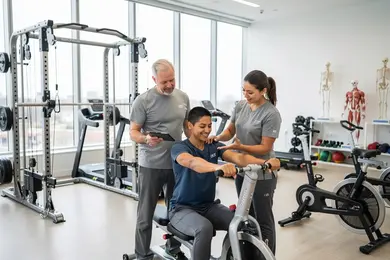
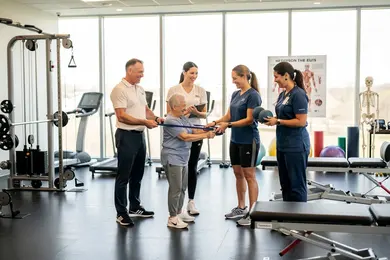
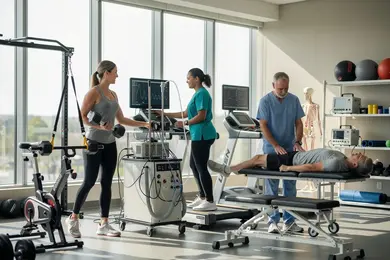
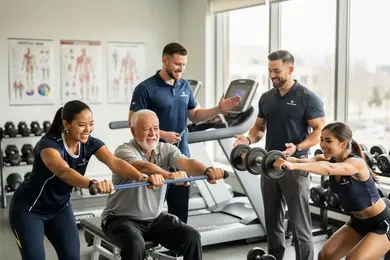
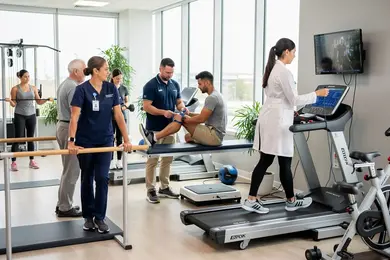
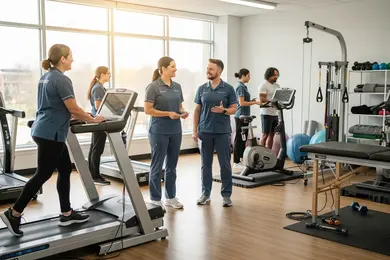
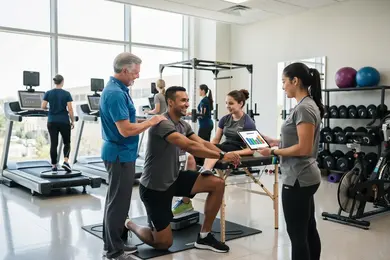
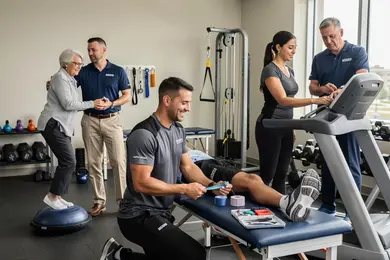
Clinical placement in an exercise science degree is supervised, hands-on learning completed outside a regular classroom. Depending on the school, it may be called an internship, practicum, field experience, clinical rotation, professional experience, or capstone placement. The goal is to help students apply anatomy, physiology, biomechanics, exercise testing, program design, health behavior, and safety protocols with real clients, athletes, patients, or community participants.
Requirements vary because exercise science is not a single licensed pathway in the same way nursing or pharmacy is. Some programs are designed for fitness, wellness, and strength and conditioning careers. Others prepare students for graduate study in physical therapy, occupational therapy, physician assistant studies, athletic training, cardiac rehabilitation, or exercise physiology. Students comparing exercise science with more tightly regulated healthcare pathways, such as PharmD programs, should expect exercise science placement rules to depend more heavily on institutional policy and employer expectations.
The table below summarizes common clinical or fieldwork expectations by program type. Use it as a comparison tool, not as a substitute for a school's catalog, because exact hour requirements and eligible sites are set by each program.
| Program type | Common placement format | Typical hour expectation | Best fit for students seeking |
| Associate degree in exercise science or fitness | Introductory practicum, observation, or local internship | Often 60 to 180 hours | Entry-level fitness, recreation, wellness, or transfer preparation |
| Bachelor's degree in exercise science | Junior or senior internship, practicum, or capstone | Often 120 to 400 hours | Fitness leadership, wellness coaching, rehabilitation support, or graduate school preparation |
| Pre-professional exercise science track | Clinical observation plus internship or practicum | Can exceed standard internship hours when shadowing is added | Physical therapy, occupational therapy, athletic training, PA, or medical school preparation |
| Master's degree in exercise science or clinical exercise physiology | Advanced practicum, supervised testing, rehabilitation, or research-applied placement | Often 300 or more hours, depending on specialization | Clinical exercise physiology, research support, cardiac rehab, or advanced performance roles |
Students should look beyond the total number of hours and ask what counts toward those hours. Some programs count observation, administrative preparation, and case documentation; others count only direct client contact. That distinction can affect weekly scheduling and how quickly a student can finish.
How Are Clinical Placement Sites Assigned in Exercise Science Degree Programs?
Exercise science clinical sites are usually assigned in one of three ways: the school places students, the student finds a site that the school approves, or both parties share responsibility. The placement model matters because it determines how much risk the student carries if a preferred site is full, too far away, or unwilling to sign an affiliation agreement.
The table below compares the most common placement models. It can help students decide whether a program's support level matches their location, work schedule, transportation access, and tolerance for uncertainty.
| Placement model | How it works | Advantages | Risks to verify before enrolling |
| School-arranged placement | The program uses established site partners and assigns students based on availability and learning goals. | Lower administrative burden and usually clearer timelines. | Students may have limited choice of location, schedule, or specialty area. |
| Student-arranged placement | The student identifies a site, then the school reviews and approves it. | More geographic flexibility, especially for online or commuter students. | Delays can occur if the site lacks a qualified supervisor or agreement with the school. |
| Hybrid placement model | The school maintains partner sites but also allows students to request alternatives. | Balances support with flexibility. | Approval deadlines and paperwork rules must be clear to avoid late-semester delays. |
The strongest programs treat placement as a managed academic process, not a last-minute job search. Students should ask whether the program has a clinical coordinator, how early placements are discussed, what happens if a site cancels, and whether the school has enough active partners for each cohort.
When a program requires students to identify their own site, the safest approach is to start early and document every requirement. A practical sequence is:
- Ask the program for the official list of eligible site types, supervisor qualifications, deadlines, and prohibited settings.
- Contact potential sites at least one term before placement and confirm whether they accept students from your school.
- Verify that the site can provide the required activities, not just general observation.
- Submit supervisor credentials, affiliation paperwork, liability forms, and learning objectives before the approval deadline.
- Keep a backup site option in case the original site loses capacity or changes staffing.
Clinical placement bottlenecks happen when student demand exceeds available site capacity or when administrative requirements are not completed on time. In exercise science, bottlenecks are especially common near hospitals, sports performance centers, physical therapy clinics, university athletics departments, and cardiac rehabilitation programs because those sites may also host students from nursing, physical therapy, athletic training, occupational therapy, and other health programs.
The table below identifies common delay points and why each one matters for graduation planning. Students should treat these as program-comparison factors, not minor administrative details.
| Bottleneck | Why it happens | Possible impact on completion |
| Limited clinical site capacity | Sites restrict how many students they can supervise at one time. | Students may be moved to a later term or a less preferred setting. |
| Affiliation agreement delays | Legal or risk-management offices must approve school-site agreements. | A site may be unavailable even if it verbally agrees to host the student. |
| Incomplete health documentation | Sites may require immunization records, TB screening, flu vaccination, or other clearances. | Students can be blocked from starting until records are complete. |
| Background checks and drug screening | Healthcare and youth-serving sites often require screening before access. | Processing delays can reduce available placement weeks. |
| Schedule mismatch | Clinical sites may operate during weekday business hours, while students may work or commute. | Students may need to reduce work hours or extend the placement timeline. |
| Supervisor turnover | A qualified preceptor may leave, change roles, or lose availability. | The school may need to reassign the student or renegotiate site approval. |
One recent labor-market factor adds pressure: the BLS reported that healthcare support occupations had a median annual wage of $37,180 in May 2024, which reflects a large, lower-wage workforce that many clinical environments depend on. For students, this matters because understaffed facilities may want help but still lack the time to train and supervise interns safely.
Students can reduce delay risk by treating onboarding like a course with hard deadlines. The most common mistakes are avoidable:
- Assuming that admission to the degree automatically guarantees a clinical site near home.
- Waiting until the placement semester to ask whether evenings or weekends are available.
- Submitting immunization, CPR, or background-check documents after the site's onboarding window closes.
- Choosing an online program without confirming how local site approval works in the student's state.
- Relying on one preferred site without asking the program what backup options exist.
Supervision and evaluation standards protect students, clients, sites, and the school. In exercise science placements, the site supervisor is often an exercise physiologist, strength and conditioning coach, physical therapist, athletic trainer, wellness director, cardiac rehabilitation specialist, or other qualified professional. The school determines which credentials, degrees, work experience, or certifications are acceptable.
Evaluation typically measures both technical competence and professional behavior. Students are not just logging hours; they are being assessed on safety, communication, documentation, ethics, reliability, and ability to apply academic knowledge in real settings.
The table below summarizes common supervision and evaluation elements. These are the details students should review before starting placement so expectations are clear from the first day.
| Standard | What it usually includes | Why it matters |
| Qualified supervisor | A professional approved by the program who can oversee student work. | Unapproved supervision may cause hours to be rejected. |
| Learning contract | Written goals, duties, schedule, and evaluation criteria. | Prevents mismatch between site tasks and academic requirements. |
| Hour verification | Timesheets, logs, digital tracking, or supervisor signatures. | Creates documentation needed for course credit. |
| Midterm and final evaluations | Supervisor feedback on performance and professionalism. | Allows problems to be corrected before the placement ends. |
| Safety and scope limits | Rules about what students may do independently. | Protects clients and reduces liability risk. |
Students should be cautious if a site offers exciting exposure but cannot provide active supervision. For example, observing in a busy sports medicine clinic may be valuable, but it may not satisfy an internship requirement if the student cannot participate in approved tasks or receive documented feedback.
Before accepting a site, students should confirm:
- Who will supervise the student day to day and who signs final evaluations.
- Whether the supervisor's credentials meet program requirements.
- Which activities are allowed, restricted, or observation-only.
- How performance concerns are reported and resolved.
- Whether the site has policies for confidentiality, emergency procedures, and client safety.

Exercise science students can often complete placements part-time or near home, but "online" does not usually mean "no in-person clinical requirement." Online and hybrid exercise science programs may deliver lecture courses remotely while still requiring local fieldwork at an approved gym, clinic, school, community health organization, corporate wellness site, or rehabilitation setting.
Students who need flexibility should distinguish between online coursework and local placement support. A program may be academically online but still expect the student to find an approved site. For students exploring flexible credentials, a kinesiology certification online may be useful for skill-building, but it is not the same as a degree program with supervised clinical or internship requirements.
The table below compares common scheduling formats. It can help students identify whether a program is realistic alongside work, family, athletics, or commuting demands.
| Format | How it usually works | Best for | Potential limitation |
| Full-time semester placement | Student completes a large number of hours over one term. | Students who can reduce work commitments temporarily. | Hard to manage with full-time employment. |
| Part-time placement | Student completes fewer hours per week over a longer period. | Working adults, caregivers, and commuters. | May extend graduation if the program has fixed course sequencing. |
| Summer placement | Hours are completed when regular classes are lighter. | Students who need weekday daytime availability. | Summer tuition, housing, or site availability may be issues. |
| Local placement for online students | Student works with a site near home after school approval. | Distance learners outside the campus region. | Approval can take longer if the school lacks existing agreements nearby. |
Evening and weekend placements exist, especially in fitness centers, sports performance facilities, recreation programs, and some wellness settings. However, hospital-based rehabilitation and clinical exercise physiology sites often operate primarily during weekday daytime hours. Students should not assume that a site can redesign its schedule around them.
Part-time or near-home placement makes the most sense when the student has reliable transportation, early approval from the program, and enough calendar time to finish hours before graduation deadlines. It makes less sense when the program requires a full-time capstone block, when local sites are scarce, or when the student needs a highly specialized setting such as cardiac rehab.
Clinical placements can create costs beyond tuition. These costs are often scattered across departments, vendors, and site requirements, so students should ask for a clinical-cost estimate before enrolling. College Board's 2024 Trends in College Pricing reported average published tuition and fees of $11,610 for in-state students at public four-year institutions in 2024-25, which means even modest placement expenses can matter when added to tuition, transportation, and lost work hours.
Common placement-related costs include:
- Background check and drug screening fees required by healthcare, school, or youth-serving sites.
- Immunizations, TB testing, physical exams, or health documentation not fully covered by insurance.
- CPR, Basic Life Support, first aid, or other safety certifications required before site access.
- Professional attire, lab clothing, name badges, closed-toe shoes, or site-specific uniforms.
- Transportation, parking, tolls, fuel, rideshare costs, or temporary housing if the site is far from home.
- Liability insurance or professional membership fees, if the program or site requires them.
- Reduced income if clinical hours conflict with paid work.
Students comparing programs should ask whether clinical fees are included in tuition or billed separately. They should also ask whether the school has discounted vendor arrangements for screenings, CPR courses, or health documentation.
It can be worth paying more for a program with strong placement support if that support reduces the risk of delayed graduation, repeated fees, extra commuting, or a lost job offer. However, a higher price is not automatically better. The value comes from concrete services: dedicated coordinators, active site agreements, transparent placement timelines, and documented backup procedures.
Clinical placements affect career readiness because they translate classroom knowledge into workplace evidence. Employers and graduate programs often want to see that students can communicate with clients, follow safety protocols, document sessions, adapt exercise prescriptions, and work within a professional team.
The value of a placement depends heavily on setting. A student interested in physical therapy preparation may benefit from a rehabilitation clinic or hospital-based wellness environment, while a student targeting strength and conditioning may gain more from collegiate athletics, tactical fitness, or sports performance sites. Students considering faster direct-care pathways, such as a 9 month LPN program, should understand that exercise science placements usually build wellness, performance, and rehabilitation-support skills rather than nursing scope-of-practice skills.
The table below shows how different placement sites support different career goals. Students should use this to align site choice with the job or graduate program they are targeting.
| Placement setting | Typical learning experience | Career-readiness value |
| Physical therapy or rehabilitation clinic | Observation of therapeutic exercise, patient flow, mobility support, and documentation routines. | Useful for students considering PT, OT, rehabilitation aide roles, or graduate health programs. |
| Cardiac rehabilitation or hospital wellness | Exercise monitoring, risk awareness, chronic disease considerations, and interdisciplinary care exposure. | Strong fit for clinical exercise physiology or preventive health interests. |
| Sports performance or strength and conditioning | Training session design, athlete monitoring, coaching cues, and performance testing. | Useful for coaching, performance, and certification-aligned career goals. |
| Corporate wellness or community health | Health promotion, screening events, behavior-change programming, and group education. | Helpful for wellness coordinator, health coach, and public health-adjacent roles. |
| Fitness center or personal training studio | Client intake, exercise instruction, sales/service environment, and program progression. | Useful for students entering commercial fitness or entrepreneurship. |
Salary expectations should be realistic and role-specific. BLS data from May 2024 placed the median annual wage for fitness trainers and instructors at $46,480, while exercise physiologists had a higher median wage at $58,160. The difference shows why students should connect their placement choice to the exact role they want, not just to the broad exercise science major.
A strong placement can help students build references, portfolio evidence, interview stories, and clearer career direction. It should not be viewed as a guaranteed job pipeline, but as a structured opportunity to prove readiness and identify next-step credentials.
Clinical placement opportunities are changing as exercise science moves further into preventive health, remote coaching, wearable technology, data-informed training, and interdisciplinary care. Employers increasingly expect students to understand not only exercise technique but also documentation, basic data interpretation, client engagement, and technology-supported monitoring.
AI and analytics are beginning to influence fitness assessment, exercise programming, movement analysis, and client communication. This does not eliminate supervised practice; it makes supervision more important because students must learn when technology is useful, when it is limited, and how to protect privacy and safety. Students who like the data side of health careers may also want to explore adjacent pathways such as what to do with a bioinformatics degree, especially if they are interested in health data, research, or computational biology rather than direct exercise coaching.
Program partnerships are also becoming more important. Large healthcare systems may offer exposure to rehabilitation, chronic disease management, and professional documentation, but they often have stricter onboarding and less flexible scheduling. Community-based sites may offer broader hands-on activity and closer mentoring, but they may have fewer formal training systems.
The table below summarizes how placement opportunities are evolving and what students should look for when comparing programs.
| Trend | What is changing | What students should look for |
| More preventive health focus | Exercise professionals are increasingly connected to wellness, chronic disease prevention, and lifestyle programs. | Sites that expose students to screening, coaching, and safe exercise modification. |
| More technology use | Wearables, apps, force platforms, and digital tracking tools are more common. | Programs that teach data interpretation and ethical use of client information. |
| More competition for healthcare sites | Multiple health majors may compete for the same clinical environments. | Schools with active affiliation agreements and backup placement options. |
| More hybrid learning | Lectures may move online while fieldwork remains local and in person. | Clear policies for approving sites near the student's home. |
Students should favor programs that update placement options as the field changes. A program that relies only on a small set of traditional gym internships may be less useful for students targeting clinical, corporate wellness, technology-supported, or graduate health pathways.
Clinical placement quality should be a major factor in choosing an exercise science degree program. A lower-tuition program can become more expensive if weak placement support delays graduation. A more expensive program can be a better value if it has reliable site partnerships, transparent timelines, strong advising, and placement options aligned with the student's career goal.
Students should compare programs using evidence, not marketing language. Ask for specifics and listen for clear answers.
- How many clinical or internship hours are required, and when are they completed?
- Does the school arrange placements, approve student-found sites, or use a hybrid model?
- How many active site partners does the program have in the student's preferred region?
- What percentage of recent students completed placements on the original timeline, if the school tracks that information?
- What types of sites are available for rehabilitation, cardiac rehab, strength and conditioning, wellness, and community health?
- Who handles affiliation agreements, background checks, health documents, and site onboarding?
- Are evening, weekend, summer, or part-time placements available?
- What happens if a site cancels after the semester begins?
- Are placement-related costs disclosed before enrollment?
- Can online students complete placements near home, and what states or regions are excluded?
The table below gives a practical way to score program placement support. It is especially useful when comparing online, hybrid, and campus programs that advertise similar curricula.
| Program feature | Strong signal | Red flag |
| Placement coordination | Dedicated coordinator with published deadlines and advising checkpoints. | Students are told to "find an internship" with little guidance. |
| Site partnerships | Active agreements across multiple setting types. | Only a few sites, or no clear list of eligible settings. |
| Online student support | Clear local-site approval process and state-specific guidance. | No explanation of how distant students secure approved placements. |
| Cost transparency | Screening, travel, certification, and insurance expectations are disclosed early. | Placement costs appear only after admission or course registration. |
| Backup planning | Written process for site cancellation, supervisor loss, or onboarding delay. | No clear answer when students ask what happens if a site falls through. |
The best choice depends on the student's situation. Campus programs may be better for students who want access to university athletics, labs, and local employer networks. Online or hybrid programs may be better for working adults who already have local contacts, but only if the school has a reliable site-approval process. Students aiming for graduate healthcare programs should prioritize clinical relevance and documentation quality over convenience alone.
Clinical hour requirements affect degree completion because they convert academic progress into scheduled time at an approved site. A student may have completed all classroom courses and still be unable to graduate if the internship, practicum, or capstone hours are unfinished. This is why students should evaluate clinical logistics as early as they evaluate tuition, curriculum, or admissions requirements.
A 300-hour placement sounds manageable until it is translated into a weekly schedule. At 20 hours per week, it takes about 15 weeks, which fits a traditional semester. At 10 hours per week, it takes about 30 weeks, which can push completion into another term if the program does not allow extended placement windows.
The table below shows how the same hour requirement can create very different completion timelines. This is useful for students who work, parent, commute, or need financial aid to align with enrollment status.
| Total clinical hours | 15 hours per week | 20 hours per week | 30 hours per week | Planning concern |
| 120 hours | About 8 weeks | About 6 weeks | About 4 weeks | Usually manageable within a term if onboarding is complete. |
| 240 hours | About 16 weeks | About 12 weeks | About 8 weeks | Can become tight if the site starts late. |
| 400 hours | About 27 weeks | About 20 weeks | About 14 weeks | Often difficult for students who need part-time scheduling. |
Completion risk increases when clinical hours are tied to a single final-semester course. If the site falls through, the student may not be able to substitute another course to stay full time. This can affect financial aid eligibility, housing plans, job start dates, and graduate school timelines.
Students should ask programs these questions before committing:
- Are clinical hours completed in one semester, across multiple semesters, or during summer?
- Can students begin placement only after finishing prerequisite courses, or can some observation hours start earlier?
- What is the minimum number of weekly hours a student must complete to stay on track?
- Can a student complete hours at more than one site if a single site cannot provide enough time?
- What happens academically and financially if a placement is delayed after tuition is billed?
Other Things You Should Know About Exercise Science
Requirements vary by school and degree level. Many bachelor's programs require about 120 to 400 internship or practicum hours, while clinical, rehabilitation, or graduate-level tracks may require more. Always confirm whether observation, direct client contact, and documentation time count toward the total.
Usually, yes. Online coursework may be remote, but internships, practicums, and fieldwork typically require in-person experience at an approved local site. Students should ask how the school approves sites near their home before enrolling.
The outcome depends on the program's policy. Some schools help reassign students to partner sites, while others expect students to keep searching until an acceptable site is approved. If placement is required for graduation, a delay can push completion into a later term.
Yes. Placement support can affect graduation timing, costs, career preparation, and stress level. Strong programs provide clear deadlines, approved site options, supervisor standards, onboarding guidance, and backup plans if a site becomes unavailable.
- A snapshot of placement activities and learning outcomes ... https://fohpe.org/FoHPE/article/view/208/79
- Managing clinical placements for online programs https://corehighered.com/en/blog/managing-clinical-rotations-for-online-programs
- Streamline Clinical Placement Management Process: 5 Tips https://cliniciannexus.com/resources/clinical-placement-management-process
- https://cuinvolved.creighton.edu/organization/pte/... https://cuinvolved.creighton.edu/organization/pte/documents/view/225806
- The Hidden Challenges of NP Clinical Placement https://www.nphub.com/blog/np-clinical-placement-challenges
- Exercise Science https://exercisescience.lwwhealthlibrary.com/content.aspx
- Clinical Exercise & Rehabilitation (VUCER) placements https://www.vu.edu.au/current-students/your-course/placements-work-integrated-learning/clinical-exercise-rehabilitation-vucer-placements
- Untitled https://econferencezone.org/index.php/ecz/citationstylelanguage/get/turabian-fullnote-bibliography
- ESSA Hours: What They are and Why You Need Them https://www.exerciseresearch.com.au/insights/essa-hours
- Clinical Placement Bottlenecks Are Limiting Advanced Practice Nursing Growth https://healthmanagement.org/c/hospital/guest-post/clinical-placement-bottlenecks-are-limiting-advanced-practice-nursing-growth