2027 Exercise Science Degree Underemployment Report: Which Graduates Are Most Likely to Work Below Their Education Level

Co-Founder and Chief Data Scientist
Exercise Science graduates often face a hard first-job choice: accept a low-credential fitness, aide, or recreation role now, or keep building toward a degree-level clinical, performance, or wellness position. Federal Reserve Bank of New York data shows that roughly 40% of recent college graduates are underemployed, making overqualification a real risk across majors. This guide is for Exercise Science students, recent graduates, and career changers. It explains who is most exposed, which roles use the degree well, and how to reduce the odds of getting stuck below your education level.
Key Things to Know About Underemployment in Exercise Science Industry
- Exercise Science underemployment risk is highest for graduates who leave school with only general coursework, no internship, no recognized certification, and no clear target role beyond "fitness" or "health."
- BLS May 2024 wage data shows a meaningful pay spread: exercise physiologists had a median wage of $58,720, while fitness trainers and instructors had a median wage of $46,480, before considering benefits, scheduling stability, or advancement paths.
- The best-positioned graduates usually combine the degree with role-specific proof: ACSM, NSCA, or related credentials, supervised field hours, patient or athlete-facing experience, and measurable outcomes from internships or projects.
- How likely is it for Exercise Science graduates to become underemployed?
- Is the college curricula for Exercise Science keeping up with employer expectations?
How likely is it for Exercise Science graduates to become underemployed?
Underemployment means working in a job that does not typically require a bachelor's degree or does not substantially use college-level training. For Exercise Science graduates, this often means working as a general fitness trainer, front-desk wellness employee, recreation assistant, physical therapy aide, or sales associate when the student intended to enter clinical exercise physiology, strength and conditioning, occupational health, cardiac rehabilitation, athletic performance, or graduate-level health care.
The risk is real because the Exercise Science labor market is split. Some roles use the degree directly, while others are accessible with a short certification, employer training, or experience instead of a bachelor's degree. That does not make the degree useless, but it means students need a more deliberate career plan than "graduate first, specialize later."
The table below summarizes how underemployment risk differs by graduate profile. It is most useful for identifying whether a student is on track for a degree-level role or drifting toward a job that may not use the degree fully.
| Graduate profile | Typical first-job outcome | Underemployment risk | Why the risk changes |
| General Exercise Science degree with no internship | Fitness center, recreation, sales, aide, or administrative wellness role | High | Employers see academic exposure but limited evidence of job-ready skills. |
| Degree plus supervised clinical or performance internship | Exercise physiology assistant, strength and conditioning support, cardiac rehab support, wellness coordinator | Moderate | Field experience helps translate coursework into employer-relevant responsibilities. |
| Degree plus recognized certification and documented outcomes | Exercise physiologist, strength and conditioning coach, corporate wellness specialist, tactical performance support | Lower | Credentials and measurable experience reduce uncertainty for hiring managers. |
| Exercise Science degree used as a pre-health pathway | Graduate school, professional program, or licensed health career pipeline | Variable | The degree can be valuable, but delays or rejection from graduate programs can create fallback-job risk. |
Students should treat the bachelor's degree as a foundation, not as the final credential for every target job. If a posting asks for independent clinical decision-making, rehabilitation authority, diagnosis, or licensed care, a bachelor's degree alone may not meet the employer's requirements.
Is the college curricula for Exercise Science keeping up with employer expectations?
Exercise Science curricula are usually strong in anatomy, physiology, biomechanics, motor learning, nutrition basics, and research literacy. The mismatch appears when employers expect graduates to apply that knowledge immediately with real clients, patients, athletes, data systems, documentation standards, and risk-screening protocols.
BLS occupational descriptions updated with May 2024 wage data make this divide clear: exercise physiologists typically need a bachelor's degree, while fitness trainers and instructors often enter through certification, experience, or employer-specific preparation. That means a graduate can know advanced physiology but still lose out to a non-degree applicant who has more practical coaching hours, sales experience, or a stronger certification.
The table below shows common curriculum strengths and where employers often expect more. Use it as a checklist when evaluating a program, elective plan, internship, or senior-year upskilling strategy.
| What Exercise Science programs often teach well | What employers often want to see | Why the gap matters |
| Human anatomy, physiology, and biomechanics | Ability to screen clients, modify exercise safely, and explain decisions clearly | Knowledge alone does not prove the graduate can manage real-world risk. |
| Exercise testing concepts | Hands-on use of assessment tools, protocols, and documentation | Clinical and performance employers want evidence of supervised practice. |
| General strength, conditioning, and wellness principles | Program design for specific populations, athletes, or medical conditions | Specialization makes the graduate easier to place into a defined role. |
| Research methods and statistics | Ability to use data from wearables, force plates, HRV tools, or EHR-adjacent systems | Technology is raising expectations for entry-level analytical ability. |
| Capstone or classroom projects | Internship outcomes, client case notes, presentations, or performance dashboards | Employers weigh applied proof more heavily than course titles. |
A strong curriculum is still valuable, but students should not assume that course completion equals job readiness. The safest strategy is to map every semester to a target job family and identify the missing evidence employers will ask for.
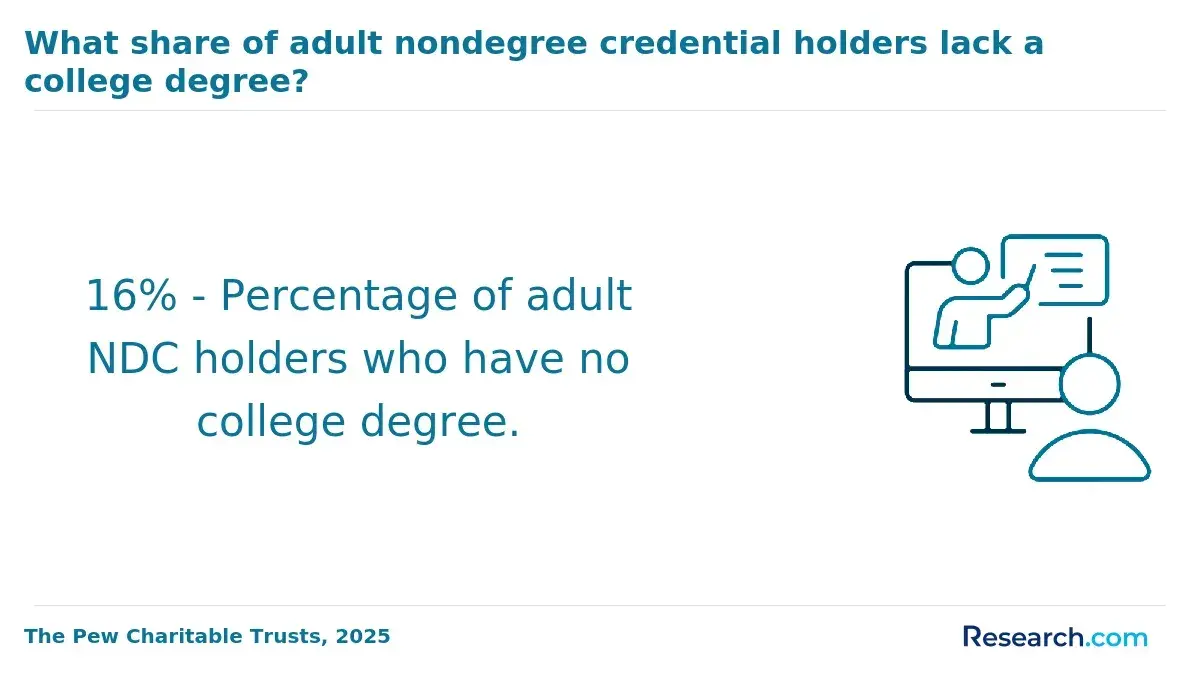
Exercise Science tends to carry more underemployment risk than majors with direct licensure, tightly defined technical pipelines, or strong employer recruitment structures. It is usually less risky than some broad humanities or general social science pathways if the student adds certifications and field experience, but risk rises sharply when the graduate has no specialization.
Federal Reserve Bank of New York data on recent college graduates shows underemployment remains a broad college-to-career issue, not a problem unique to Exercise Science. The practical takeaway is that students should compare the major not only by interest, but by how clearly it connects to specific occupations after graduation.
The table below compares Exercise Science with several adjacent or alternative pathways. It focuses on degree-to-job alignment rather than personal fit, because alignment strongly affects the chance of working below education level.
| Major or pathway | Typical degree-to-job alignment | Underemployment comparison | Decision implication |
| Exercise Science | Moderate when paired with internship and certification | Often above the overall recent-graduate benchmark when graduates lack specialization | Best for students who actively build a clinical, performance, wellness, or pre-health pathway. |
| Nursing | High because licensure creates a defined occupational pipeline | Generally lower mismatch risk after licensure | Better fit for students who want direct patient care and a clear credential-to-job route. |
| Public Health | Variable depending on analytics, community health, or policy skills | Comparable risk if the degree remains general | Students need data, program evaluation, or field placement experience. |
| Biology | Variable without graduate school or lab specialization | Can be similar when graduates do not pursue clinical, lab, or technical roles | Often requires additional credentials, research experience, or a health-profession plan. |
| Kinesiology | Similar to Exercise Science, with overlap in movement science and human performance | Similar risk profile | Outcomes depend heavily on applied experience, certification, and target industry. |
For students comparing adjacent fields, program design matters as much as the major label. A student exploring a movement-science pathway may want to compare Exercise Science options with a kinesiology certification online or kinesiology-focused program to see which option better matches their target role.
Taking a low-credential role can affect career growth, but the effect depends on how the graduate uses the role. A fitness trainer job with documented programming, assessment, and client outcomes can support advancement. A role focused mainly on front-desk coverage, membership sales, or equipment cleaning may not.
The biggest long-term risk is skill signaling. Employers may assume that a graduate who spent several years in a non-degree role has not practiced clinical documentation, testing protocols, athlete monitoring, or health-risk communication at the expected level. That makes it harder to compete with candidates who completed internships, fellowships, assistantships, or graduate programs.
Technology is also changing what "entry-level" means. Wearables, telehealth-adjacent wellness platforms, remote coaching systems, and data dashboards are pushing some employers to prefer candidates who can interpret performance or health metrics, not just lead workouts. Graduates interested in more technical health-data pathways can compare movement-science skills with adjacent options such as what to do with a bioinformatics degree, especially if they enjoy analytics more than direct coaching.
Graduates can reduce the negative effects of a low-credential role by setting a deadline and building a parallel advancement plan. The role should generate better applications, not replace the job search entirely.

The salary gap between underemployed and degree-level Exercise Science graduates depends on the exact occupation, location, employer type, schedule, benefits, and credentials. Still, BLS May 2024 wage data shows that roles using more specialized health, performance, or clinical skills tend to pay more than broad fitness or support roles.
The table below compares selected US occupations that Exercise Science graduates commonly consider. It does not mean every graduate qualifies for every role immediately; licensure, certification, graduate education, and state rules may apply.
| Role | Typical relationship to Exercise Science degree | May 2024 median wage | 2024-2034 outlook signal |
| Exercise physiologist | Direct degree-level fit for many bachelor's graduates, especially with clinical experience | $58,720 | Projected growth above the all-occupation average |
| Athletic trainer | Closely related, but typically requires accredited athletic training education, certification, and state regulation | $60,250 | Projected growth above the all-occupation average |
| Fitness trainer or instructor | Common fallback or stepping-stone role; bachelor's degree may not be required | $46,480 | Projected growth above the all-occupation average |
| Coach or scout | May use performance knowledge, but degree requirements vary widely | $45,910 | Projected growth above the all-occupation average |
| Physical therapist | Advanced clinical path requiring a DPT and state licensure | $101,020 | Projected growth well above the all-occupation average |
The wage gap matters because many graduates carry loan payments while trying to build experience. A lower-paid fallback role may be reasonable for a short period if it provides supervised experience or prerequisite exposure, but it can become financially costly if it delays entry into better-aligned work for several years.
Students should also compare wages with local cost of living. A degree-level role in a hospital system, university athletics department, occupational health program, or corporate wellness setting may offer stronger benefits and advancement even when the starting wage looks only modestly higher than a fitness job.
Exercise Science graduates are often pushed into low-credential roles by a combination of labor-market structure, credential expectations, and timing. The degree is relevant to many fields, but relevance is not the same as direct qualification.
The most common barriers are not always academic ability. They are usually gaps between what the student can prove and what the employer needs on day one.
- No defined target role: Students who apply broadly to "health," "fitness," and "sports" jobs often look unfocused compared with candidates who target exercise physiology, strength and conditioning, wellness coordination, or pre-PT roles.
- Limited supervised field hours: Employers often trust internship experience more than classroom-only knowledge because it shows the graduate can work with real clients or patients.
- Missing certifications: Some employers screen for ACSM, NSCA, NASM, ACE, CPR/AED, first aid, or population-specific credentials before reading the rest of the resume.
- Licensure confusion: Graduates sometimes apply for roles that require athletic training, physical therapy, occupational therapy, nursing, or other regulated credentials they do not yet hold.
- Weak employer geography strategy: Hiring volume varies by region, with more options near hospital systems, rehab networks, universities, sports organizations, military contractors, and large corporate wellness employers.
- Late job-search timing: Waiting until after graduation to build references, complete certification, or secure internship documentation can force graduates into immediate fallback work.
Some graduates decide they want a faster direct-care credential rather than a longer pre-health route. In that case, comparing options such as a 9 month LPN program can make sense, but only if the student's goal is nursing-oriented patient care rather than exercise testing, performance, or wellness programming.
A strong Exercise Science resume should make the degree look applied, not abstract. Hiring managers need to see who the graduate has worked with, what assessments they can perform, what tools they have used, and what outcomes they helped produce.
The best resumes are built around target roles. A cardiac rehab resume should not look identical to a strength and conditioning resume, and neither should look like a general fitness resume.
Use the following steps to reposition the resume for degree-level Exercise Science roles. Each step helps translate academic experience into employer-readable evidence.
- Choose one primary target role, such as exercise physiologist, wellness coordinator, strength and conditioning assistant, performance specialist, or rehab support specialist.
- Rewrite the summary around that role, including population experience, assessment skills, certifications, and internship setting.
- Move certifications, CPR/AED, software, testing protocols, and specialized lab skills near the top of the resume.
- Convert coursework into applied evidence by naming projects, protocols, case studies, or lab assessments rather than listing course titles alone.
- Quantify experience where honest and verifiable, such as number of clients supported, sessions observed, assessments completed, or programs designed.
- Use job-description language naturally, including terms such as exercise prescription, risk stratification, movement assessment, program adherence, documentation, and client education.
- Create different resume versions for clinical, performance, wellness, and graduate-school support roles instead of sending one generic version everywhere.
Common mistakes include overemphasizing passion for sports, listing too many unrelated service jobs without transferable skills, and failing to show hands-on experience. A degree-level resume should prove readiness for responsibility, not simply enthusiasm for exercise.
Certifications can reduce underemployment risk when they match the target role. They are not magic shortcuts, and they do not replace licensure where licensure is required, but they can help employers trust that a graduate meets a recognized professional standard.
The table below summarizes common credentials Exercise Science graduates consider. Requirements can change, so students should verify eligibility, exam rules, continuing education, and employer preferences before paying for a credential.
| Certification or credential | Best fit | How it may reduce underemployment risk |
| ACSM Certified Exercise Physiologist | Clinical exercise, wellness, cardiometabolic health, hospital-adjacent settings | Signals degree-aligned exercise testing and prescription knowledge. |
| NSCA Certified Strength and Conditioning Specialist | Strength and conditioning, athletics, tactical performance, performance facilities | Helps separate performance-focused graduates from general fitness applicants. |
| NASM or ACE Certified Personal Trainer | Fitness, coaching, wellness, entry-level client work | Can support employment, but may not by itself make a role degree-level. |
| CPR/AED and first aid | Most client-facing exercise, sport, and wellness settings | Often functions as a baseline screening requirement. |
| Registered Clinical Exercise Physiologist or advanced clinical credentials | More specialized clinical exercise settings | Can strengthen candidacy when paired with required education and supervised experience. |
Students should choose credentials strategically. For example, a graduate targeting cardiac rehabilitation may get more value from an exercise physiology credential than from a general personal training certification, while a graduate targeting collegiate strength work may prioritize NSCA preparation and internship hours.
If you are comparing credentials and degree pathways, reviewing a kinesiology certification online can help clarify whether your goal is broad movement-science knowledge, a specialized credential, or a more structured academic program.
The best way to avoid Exercise Science underemployment is to start career positioning before senior year. Students who wait until after graduation often discover that employers want proof they have not yet collected.
Use this sequence to build a stronger path toward degree-level employment. It is designed for students who want a practical plan, not just general career advice.
- Pick a target job family by the end of sophomore year, such as clinical exercise physiology, strength and conditioning, corporate wellness, occupational health, tactical performance, or pre-health.
- Collect 10 to 15 job postings for that target and highlight repeated requirements, including certifications, populations served, software, protocols, and experience hours.
- Meet with faculty or career services to compare those requirements against your courses, electives, labs, and internship options.
- Secure an internship before the final year if possible, prioritizing supervised work over brand-name settings with limited hands-on responsibility.
- Choose one certification that fits your target role and schedule the exam before or shortly after graduation.
- Build a small portfolio with de-identified case summaries, sample programs, assessment explanations, presentations, or internship projects that show applied judgment.
- Network with alumni, local clinics, hospital wellness programs, college athletic departments, and performance facilities before jobs are posted.
- Apply early and track results by role type so you can identify whether your resume, experience, or credential mix needs adjustment.
- If you accept a fallback job, set a six-month exit plan with specific milestones for certification, references, applications, and skill development.
Some students ultimately decide that their strongest return comes from a licensed health profession rather than a bachelor's-level Exercise Science role. If medication therapy, clinical pharmacy, or advanced patient-care systems are the goal, comparing PharmD programs may be more relevant than continuing to stack fitness credentials.
The smartest path depends on the student's goal. Certifications can offer a faster return when the target job is exercise physiology, performance, or wellness. Graduate school may make sense when the target role legally requires it, such as physical therapy, occupational therapy, athletic training in many cases, physician assistant studies, or other licensed clinical fields.
Some Exercise Science graduates use low-credential roles as short bridges, but others remain there longer than planned because the job builds only part of the skill profile needed for degree-level work. A physical therapy aide role, for example, can offer useful patient exposure, but it may not automatically qualify a graduate for exercise physiologist, athletic trainer, or rehabilitation specialist positions.
The first year after graduation is especially important. If a graduate accepts a fallback role, the role should have a clear exit path, such as supervised assessment experience, referral access, documented client outcomes, certification preparation, or direct exposure to clinicians and performance staff.
Before accepting a low-credential role, graduates should evaluate whether it contains any of the following career-building features. These criteria help separate a legitimate stepping-stone job from a position that may keep the graduate underemployed.
- It provides supervised experience with assessments, exercise prescriptions, documentation, or client progress tracking.
- It connects the graduate to licensed clinicians, strength coaches, wellness managers, or alumni who can provide references.
- It allows the graduate to collect measurable outcomes, such as client adherence, performance improvements, return-to-activity milestones, or program participation data.
- It supports certification, continuing education, or schedule flexibility for graduate-school prerequisites.
- It has a written promotion path into a coordinator, specialist, clinical, or performance role.
A low-credential job becomes risky when it consumes full-time energy but does not add new evidence for the next application cycle. Graduates should reassess after three to six months and ask whether the job is improving their resume or simply paying bills.
Other Things You Should Know About Exercise Science
No. Exercise Science can be a strong major for students who plan intentionally. The risk rises when students treat it as a general health degree without selecting a target role, internship, certification, or graduate-school pathway.
Sometimes, especially in wellness, exercise physiology support, cardiac rehab support, or research-related roles. However, hospitals may require specific certifications, clinical experience, CPR/AED, and in some cases additional credentials or licensure.
Not always. Graduate school makes sense when the desired role requires it or when the student has a clear professional plan. It is less advisable if the student is using graduate school mainly to delay the job search without confirming the career target.
The biggest red flag is a role that sounds health-related but mainly involves sales, front-desk duties, or unsupervised general fitness work with no path to assessment, programming, documentation, certification support, or advancement.