2027 Exercise Science Degree Internship Outcomes Report: Paid Experience, Placement Rates, and Career Impact

Co-Founder and Chief Data Scientist
Exercise Science students face a practical question: which internship will actually lead to paid experience, stronger placement odds, and better career options after graduation? This matters because entry-level health, fitness, rehabilitation, and performance roles increasingly favor applicants with supervised client-contact experience.
The U.S. Bureau of Labor Statistics reported a May 2024 median wage of $58,160 for exercise physiologists, showing the value of targeted preparation. This guide helps students, parents, and career changers compare internship formats, pay expectations, conversion potential, and strategies for choosing placements that build real career leverage.
Key Things to Know About Internship Outcomes in Exercise Science Industry
- Paid Exercise Science internships exist, but they are more common in corporate wellness, sports performance, clinical research, strength and conditioning, and large health systems than in small gyms or observation-heavy rehabilitation sites; NACE's 2024 internship reporting places bachelor's-level intern pay broadly in the low-$20s per hour across fields, which is a useful comparison point rather than an Exercise Science guarantee.
- Internship quality matters more than the title alone: placements with supervised assessments, client documentation, outcome tracking, exercise prescription, and feedback loops tend to create stronger job-readiness than roles limited to front-desk work, shadowing, or unpaid observation.
- There is no single national Exercise Science internship placement rate, so students should judge programs by employer partnerships, required clinical or field hours, return-offer history, certification alignment, and whether the experience maps to target roles such as exercise physiologist, strength coach, wellness coordinator, rehabilitation aide, or performance data assistant.
- How important are internships for Exercise Science degree students?
- How early should a Exercise Science student look for internship opportunities?
How important are internships for Exercise Science degree students?
Internships are highly important because Exercise Science is an applied field. Employers rarely evaluate candidates on coursework alone; they want evidence that a student can coach movement safely, communicate with clients, document sessions, use assessment tools, and adapt exercise plans within a supervised setting.
For many students, the internship is also the bridge between a broad major and a specific career lane. A hospital-based cardiac rehabilitation internship points in a different direction than a college strength and conditioning placement, a corporate wellness internship, or a biomechanics lab role.
The table below summarizes how internship outcomes differ by work setting. Use it to compare not just prestige, but the type of experience that will matter for your intended first job.
| Internship setting | Common responsibilities | Best career fit | Outcome signal to look for |
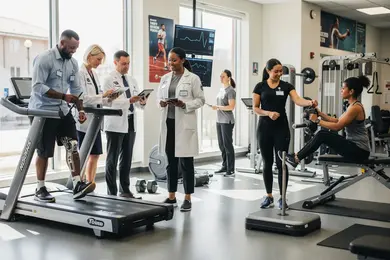
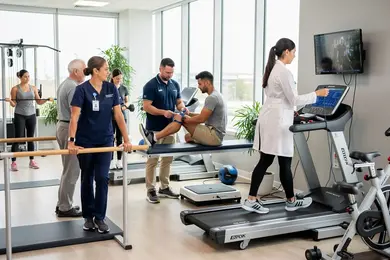
| Clinical exercise physiology or cardiac rehab | Patient intake support, monitored exercise sessions, vitals, documentation, education | Exercise physiologist, cardiac rehab assistant, graduate health pathway | Supervised patient-contact hours and exposure to clinical protocols |
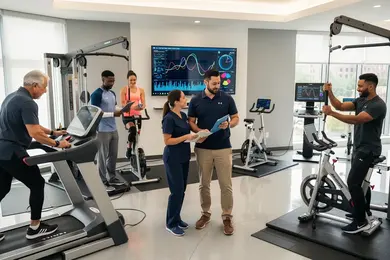
| Strength and conditioning | Program setup, athlete monitoring, movement coaching, data entry, facility operations | Strength coach, performance specialist, athletic development assistant | Coaching hours, testing experience, and mentor feedback |
| Corporate wellness | Fitness assessments, wellness campaigns, group sessions, participation tracking | Wellness coordinator, health promotion assistant, benefits/wellness roles | Measurable project outcomes and employee engagement data |
| Physical therapy or rehabilitation clinic | Patient flow support, exercise setup, documentation support, observation | Rehab aide, PT/OT graduate school preparation | Hands-on boundaries, mentorship, and documented observation hours |
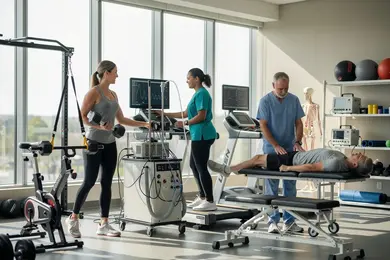
| Research or biomechanics lab | Data collection, equipment calibration, participant testing, literature support | Research assistant, graduate school, performance analytics | Software exposure, poster/paper contribution, and data-quality training |
Internships are especially valuable when they produce evidence. A resume line saying "Exercise Science intern" is weaker than one showing that you assisted with 80 movement screenings, contributed to a wellness participation dashboard, or supported athlete testing using force plates or GPS workload tools.
Students comparing health-related paths may also find that Exercise Science internships differ from licensed clinical training tracks. For example, students researching PharmD programs will see much more formalized experiential education requirements than most Exercise Science bachelor's programs, which means Exercise Science students must be more proactive in vetting internship quality.
How early should a Exercise Science student look for internship opportunities?
Exercise Science students should start looking at least two semesters before they need the internship, and competitive clinical, sports performance, and research placements often require earlier planning. Waiting until spring can work for local gyms or smaller wellness employers, but it usually reduces choice and increases the chance of accepting a weak placement.
Early planning matters because many internships require background checks, CPR/AED certification, immunization documentation, liability paperwork, site approvals, or faculty signatures. Clinical and university athletic settings may also limit the number of students they supervise each term.
The table below shows a practical search timeline. It is not a rigid rule, but it helps students avoid the most common timing mistake: beginning the search only after their academic program asks for placement paperwork.
| Timing | What should be happening | Why it affects outcomes |
| First year | Explore career paths, join relevant clubs, complete CPR/AED if available | Builds early direction before internship applications become urgent |
| Sophomore year | Volunteer, shadow, assist with campus fitness or research projects | Creates experience for competitive internship resumes |
| Junior fall | Identify target employers, prepare resume, ask faculty about approved sites | Positions students for stronger spring and summer openings |
| Junior spring | Apply to clinical, performance, wellness, and research placements | Many structured summer opportunities fill before late spring |
| Senior year | Use internship to build references, document outcomes, and discuss post-grad roles | Turns the placement into a job-search asset |
If you are deciding between applying early and waiting, the trade-off is simple: early applicants usually face more uncertainty about schedules, but they get access to better-supervised sites. Late applicants may find openings faster, but they often have fewer paid options and less time to negotiate duties.
A smart internship search sequence can help you stay organized and avoid missed deadlines. Use the following steps before you send applications:
- Choose one primary target track, such as clinical exercise physiology, strength and conditioning, corporate wellness, rehabilitation support, or research.
- Confirm your program's requirements for credit hours, supervisor credentials, liability insurance, and approved site paperwork.
- Prepare a one-page resume that highlights labs, certifications, client-facing work, coaching, data tools, and relevant coursework.
- Build a short evidence portfolio with sample exercise programs, assessment summaries, research posters, or anonymized project results when permitted.
- Contact faculty, alumni, campus recreation leaders, athletic departments, clinics, and wellness vendors before public postings appear.
The best internship program depends on the student's intended outcome. A student aiming for graduate school in physical therapy may need documented observation and rehabilitation exposure, while a student seeking immediate employment may benefit more from paid wellness, performance, or fitness operations experience.
Look for internships that provide supervised practice, not just presence. Strong programs define duties, explain how performance is evaluated, and give interns enough responsibility to develop confidence without putting clients or patients at risk.
The following comparison helps students decide which internship format fits their goals. Use it to weigh learning value, pay potential, and long-term career relevance.
| Program type | Strengths | Limitations | Best choice when |
| Semester internship for credit | Easy to align with degree requirements and faculty oversight | May be unpaid and tied to local site availability | You need approved academic hours to graduate |
| Paid summer internship | Better income potential and concentrated experience | More competitive and often requires early application | You can relocate or commit full-time during summer |
| Extended co-op | Deeper employer integration and stronger project ownership | May delay graduation or reduce course load flexibility | You want substantial experience before entering the job market |
| Micro-internship or project placement | Short, focused, and useful for portfolio building | Usually less client contact and weaker mentoring | You need targeted experience in data, wellness campaigns, or research support |
| Research assistantship | Strong for graduate school and analytical roles | May not build coaching or client management skills | You are considering biomechanics, physiology research, or health data work |
One extended co-op can be stronger than multiple short placements when the employer gives real project ownership and documented feedback. Multiple shorter internships can be better when a student is still comparing career paths, such as clinical rehabilitation versus sports performance.
Students interested in movement science but unsure whether they need a full degree pathway can also compare internship-ready preparation with a kinesiology certification online, especially if their goal is to strengthen coaching, anatomy, or exercise programming knowledge before applying.
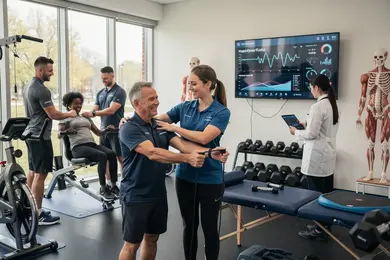
A good Exercise Science internship should move students from theory to supervised practice. The strongest placements teach students how to assess movement, communicate with different populations, adapt exercise plans, document work, and use technology responsibly.
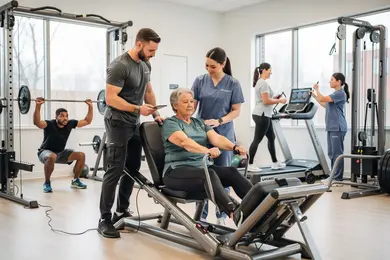
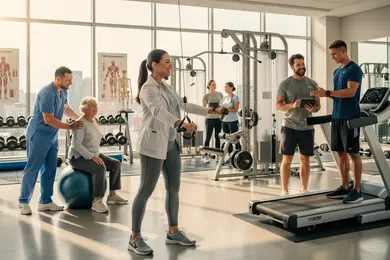
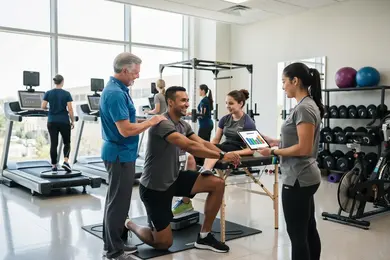
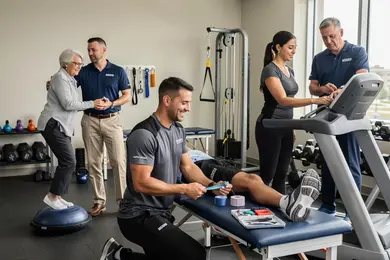
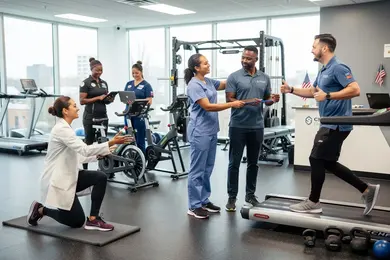
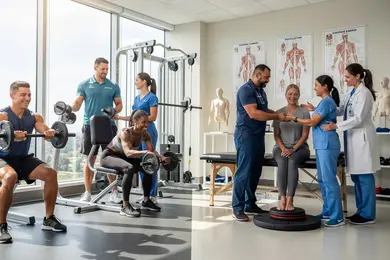
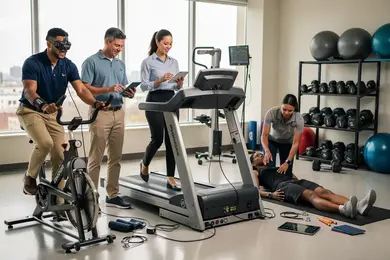
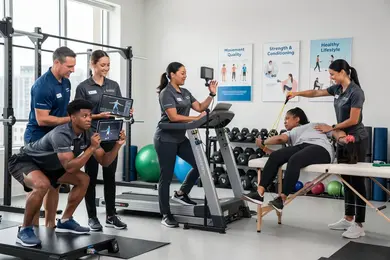
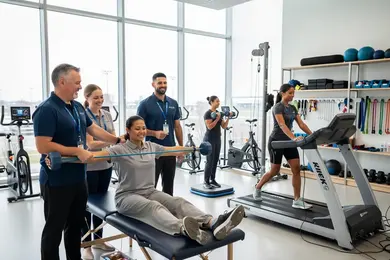
Day-to-day responsibilities vary, but many interns assist with warmups, testing sessions, exercise demonstrations, client education, equipment setup, progress tracking, and administrative documentation. In clinical settings, interns may also observe vitals, patient safety protocols, and interdisciplinary communication, depending on site rules and supervisor permissions.
The table below summarizes skills by internship role. This helps students check whether a placement is aligned with the work they want after graduation.
| Internship role | Core skills to build | Technology or tools often used | Career value |
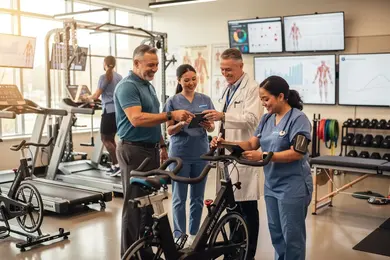
| Clinical exercise intern | Vitals awareness, exercise tolerance observation, patient communication, documentation | Heart-rate monitors, electronic records, blood pressure equipment, treadmill or cycle protocols | Supports entry into exercise physiology, cardiac rehab, and graduate health pathways |
| Strength and conditioning intern | Coaching cues, program setup, movement screening, athlete motivation | Timing gates, force plates, velocity trackers, workload spreadsheets | Builds evidence for performance coaching roles |
| Corporate wellness intern | Program planning, group facilitation, health education, participation tracking | Wellness platforms, survey tools, wearable data dashboards | Prepares students for wellness coordinator and population health support roles |
| Biomechanics or research intern | Data collection, measurement reliability, literature review, participant protocols | Motion capture, EMG, statistical software, spreadsheets | Strengthens graduate school and research assistant applications |
Current employer expectations are moving toward skill verification. School reputation helps, but many supervisors care more about whether students can show a sample program, explain assessment logic, use data carefully, and communicate professionally with clients.
AI and automation are also changing internships. Students may see automated scheduling, wearable-data summaries, AI-assisted documentation drafts, or performance dashboards, but they still need human judgment to interpret movement quality, motivation, contraindications, and client goals.

In-person internships usually deliver stronger hands-on skill development because Exercise Science often depends on observing movement, coaching technique, setting up equipment, and interacting with clients or patients. Remote internships can still be valuable when they focus on research, wellness programming, data analysis, health education content, or virtual coaching support.
The key question is not whether remote is "good" or "bad." The better question is whether the format matches the outcome you need. A remote data project may be excellent for a student interested in performance analytics, but weak for a student who needs supervised clinical or coaching hours.
The table below compares internship formats by learning value and placement impact. Use it before assuming that an in-person role is automatically superior or that a remote role is automatically flexible enough to be worthwhile.
| Format | Best uses | Main risks | Return-offer potential |
| In-person | Clinical observation, coaching, testing, rehabilitation support, facility operations | Commute costs, limited schedule flexibility, site capacity limits | Often stronger when the employer hires from its own intern pool |
| Hybrid | Wellness programs, performance reporting, research, client education plus periodic site work | Can become disorganized if remote and site duties are not defined | Good when the intern has a supervisor and measurable deliverables |
| Remote | Research support, health education materials, data dashboards, virtual wellness campaigns | Less hands-on coaching, weaker relationship building, fewer observed skills | Depends heavily on project visibility and manager feedback |
Remote internships make the most sense when a student can produce a concrete deliverable. Examples include a workplace stretching program, a literature review, a wearable-data summary, a wellness newsletter sequence, or a cleaned dataset from a research project.
Students drawn to data-heavy health careers may also want to explore adjacent fields. For example, understanding what to do with a bioinformatics degree can help Exercise Science majors see how biological data, analytics, and health research roles differ from coaching-centered internships.
Yes, paid internships are available for Exercise Science students, but availability varies widely by employer type, region, funding model, and whether the role produces direct operational value. Paid roles are more likely when interns support wellness programming, sports performance operations, research projects, health tech, or large institutional programs.
Unpaid internships remain common in observation-heavy clinical, physical therapy, small fitness, and nonprofit settings. An unpaid role may still be worth considering if it offers required academic hours, strong supervision, documented patient or client exposure, and references that support graduate school or employment.
The table below helps students judge the economic trade-off. It uses practical cost categories rather than assuming every unpaid internship is either exploitative or worthwhile.
| Cost or compensation factor | Why it matters | How to evaluate it |
| Hourly pay or stipend | Offsets lost work hours and commute expenses | Compare the offer with local part-time wages and NACE's recent low-$20s hourly benchmark for bachelor's-level interns across fields |
| Academic credit tuition | Some students pay tuition for required internship credits | Ask whether credit is required and whether financial aid applies |
| Transportation | Clinical and performance sites may require frequent travel | Estimate weekly fuel, transit, parking, and time costs before accepting |
| Certification requirements | CPR/AED, first aid, background checks, and screenings may cost extra | Ask which costs are covered by the site, school, or student |
| Opportunity cost | An unpaid internship can replace paid work hours | Accept only if the learning value, required hours, or career access is clear |
When deciding whether to accept an unpaid internship, focus on the return you can verify. A good unpaid placement should offer structured supervision, meaningful duties, documented hours, and a reference from someone credible in your target area.
Be cautious if an employer cannot explain your duties, offers no supervisor access, expects open-ended unpaid labor, or assigns tasks unrelated to Exercise Science learning. A role that does not build skills, references, or required hours is usually a poor trade, even if the organization sounds impressive.
Direct conversion varies because Exercise Science does not have one centralized national hiring system. Large employers, health systems, universities, corporate wellness vendors, and sports organizations all track internships differently, and many do not publish conversion rates.
For planning purposes, students should treat national internship conversion data as a broad benchmark, not a promise. NACE's recent employer research consistently shows that internships are a major pipeline for entry-level hiring, but Exercise Science students should ask each site about its own history of hiring interns.
The table below gives practical conversion benchmarks by setting. These are best used as decision signals rather than guaranteed probabilities.
| Setting | Conversion likelihood signal | Why it may convert | Why it may not convert |
| Corporate wellness vendor | Moderate to strong when the company has recurring client contracts | Interns can move into coordinator or program assistant roles | Hiring depends on client budgets and location openings |
| Hospital or clinical program | Moderate when entry-level support roles exist | Interns already know procedures and patient-flow expectations | Some roles require certifications, graduate degrees, or limited openings |
| Strength and conditioning program | Variable and often competitive | Coaches prefer interns who understand team culture and systems | Full-time roles are limited and may require certification or relocation |
| Physical therapy clinic | Moderate for rehab aide roles | Interns may already understand clinic routines | Professional advancement usually requires graduate clinical education |
| Research lab | Variable | Interns can continue as assistants if grants or projects continue | Funding cycles and faculty needs change quickly |
Students can improve conversion odds by treating the internship like an extended interview. The goal is to become easy to trust: punctual, safe, coachable, accurate with documentation, and proactive without exceeding scope.
Use these steps during the internship to increase the chance of a return offer or strong referral:
- Ask your supervisor in the first week what excellent performance looks like in that setting.
- Track measurable contributions, such as assessments assisted, sessions supported, reports completed, or programs delivered.
- Request feedback at the midpoint instead of waiting until the final evaluation.
- Build relationships with multiple staff members while respecting client and patient confidentiality.
- Ask about post-internship roles before the final week, when hiring conversations may be too late.
Exercise Science internships can shape long-term outcomes by helping students choose a specialization, build references, clarify graduate school plans, and prove readiness for applied work. The biggest impact often comes from direction: students learn whether they prefer clinical populations, athletes, general fitness clients, research participants, or workplace wellness programs.
The U.S. Bureau of Labor Statistics reported a May 2024 median wage of $58,160 for exercise physiologists, but that figure should be interpreted carefully. It reflects a specific occupational category, not every Exercise Science graduate, and outcomes can differ by state, employer, certification, graduate education, and clinical scope.
Internships also help students avoid costly career mismatch. A student may discover that physical therapy clinic work is appealing, that hospital documentation feels too restrictive, or that strength and conditioning requires a highly competitive coaching ladder. Learning this before graduation can save time and money.
The long-term career value of an internship is strongest when it creates three assets: a credible reference, a verified skill set, and a clearer next step. That next step may be a full-time role, graduate school, certification, research experience, or a different health career path.
Students should also remember that internships are not substitutes for credentials where credentials are required. Some roles may require ACSM, NSCA, NASM, or other certifications; clinical and licensed healthcare roles may require graduate degrees, state licensure, or board-specific requirements.
Internships can improve starting salary potential indirectly, but they do not guarantee a higher wage. The effect usually comes from better job fit, stronger references, relevant technical skills, and access to employers that prefer hiring candidates they have already supervised.
Paid internships may also reduce financial pressure before graduation. If a student can earn income while building field experience, they may be able to be more selective after graduation instead of accepting the first available job regardless of fit.
The salary impact is usually strongest when the internship builds skills tied to paid responsibilities. Examples include exercise testing, client retention support, employee wellness programming, athlete monitoring, data reporting, group instruction, and documentation in regulated settings.
Students should compare internship offers by asking which one builds the highest-value evidence for the first job they want. A paid front-desk-heavy role may be less useful than a modestly paid or unpaid clinical placement if the student is applying to graduate school, while a paid corporate wellness internship may be better for someone seeking immediate employment.
The best way to translate an internship into salary leverage is to document outcomes. Instead of saying "worked with clients," a graduate can say they assisted with fitness assessments, supported individualized exercise plans, helped run group wellness sessions, or contributed to data tracking for program participation.
Competitive Exercise Science internships go to students who show readiness before the interview. Employers want applicants who understand safety, can communicate clearly, and can point to relevant experience beyond classroom theory.
Your application should connect your background to the employer's setting. A strength and conditioning resume should emphasize coaching, testing, and athlete communication; a clinical resume should emphasize professionalism, documentation, patient interaction, and physiology coursework.
Use the following approach to improve your chances without relying only on online postings:
- Tailor every resume to the site type by moving the most relevant labs, certifications, and practical experiences into the top half of the page.
- Ask faculty and alumni for warm introductions to approved clinics, athletic departments, wellness vendors, and research labs.
- Create a concise portfolio with 2 to 4 artifacts, such as a sample training plan, wellness campaign outline, assessment protocol, or research abstract.
- Prepare for scenario questions about client safety, confidentiality, motivation, exercise regression, and responding to discomfort during activity.
- Follow up professionally within 24 hours after interviews and restate the specific skills you hope to build at that site.
Common mistakes include applying too late, using the same resume for every employer, overstating clinical authority, and accepting vague roles that mainly involve cleaning equipment or checking people in. These mistakes matter because internships are short; if duties are unclear, students may finish with little more than hours logged.
When comparing offers, ask direct questions before accepting. Strong questions include what percentage of time is spent observing versus assisting, who supervises the intern, whether feedback is scheduled, whether pay or stipend support is available, and whether successful interns have been hired into entry-level roles.
Students considering faster healthcare entry routes should also understand that Exercise Science internships are not the same as licensed practical nursing preparation. A 9 month LPN program is designed around nursing licensure preparation, while Exercise Science internships generally build applied movement, wellness, rehabilitation support, or performance experience.
Other Things You Should Know About Exercise Science
It can be worth it if the internship provides required academic credit, supervised client or patient exposure, strong mentorship, and a credible reference. It is usually not worth it if duties are vague, mostly administrative, or unrelated to your target career path.
The best option is usually the one closest to your intended job. Corporate wellness, clinical exercise, strength and conditioning, rehabilitation support, and research internships all lead to different outcomes, so choose based on the role you want next.
Yes, if they produce meaningful deliverables such as wellness programming, research support, data analysis, or virtual coaching materials. They are weaker for students who need hands-on assessment, coaching, or clinical observation hours.
Ask who supervises you, what tasks you will perform, whether the role is paid, how feedback is provided, whether academic requirements are supported, and whether past interns have been hired or referred into full-time roles.
- Sport & Exercise Science Internships | Intern Abroad HQ https://www.internhq.com/fields/sport-and-exercise-science/
- Internships | Research Institute of Sport & Exercise http://risesportsinstitute.org/internships/
- Forge a Successful Fitness Career with Internships - IDEA Health & Fitness Association https://www.ideafit.com/forge-a-successful-fitness-career-with-internships/
- Exercise Science Degree Careers: The complete list https://traineracademy.org/blog/exercise-science-careers/