2027 Exercise Science Degree Automation Exposure Report: Which Career Paths Face the Most AI and Technology Disruption

Co-Founder and Chief Data Scientist
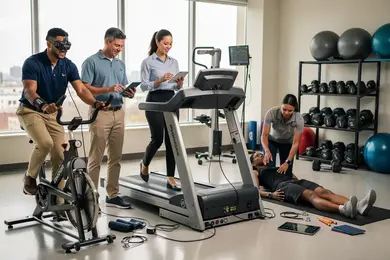
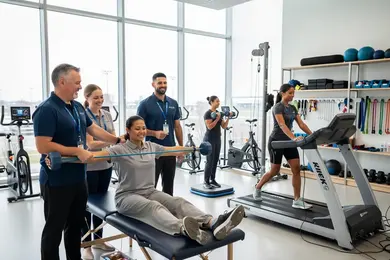
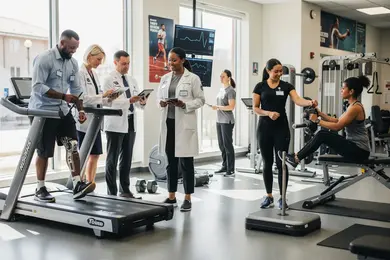
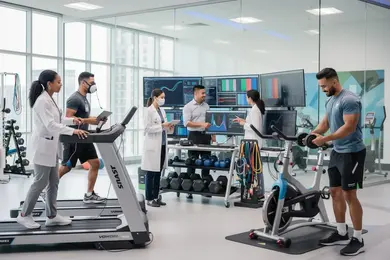
Exercise science students are choosing careers while AI tools, wearable sensors, telehealth platforms, and automated coaching apps are changing how fitness and healthcare services are delivered. The U. S. Bureau of Labor Statistics projects healthcare occupations will add about 1.9 million jobs from 2023 to 2033, but not every role will be affected the same way. This guide helps students, career changers, and degree planners compare automation risk, salaries, skills, industries, and specializations so they can choose a path that stays valuable as technology reshapes the field.
Key Things You Should Know
- Exercise science roles with routine programming, basic fitness tracking, scheduling, and standardized client check-ins face higher AI exposure than roles requiring clinical judgment, manual assessment, emergency response, or licensed patient care.
- BLS 2023-2033 projections show strong demand in several adjacent paths, including 14% growth for physical therapists, 13% for athletic trainers, and 10% for exercise physiologists, meaning technology is more likely to reshape many jobs than erase them.
- The most resilient graduates combine movement science, communication, ethics, data literacy, wearable technology interpretation, and hands-on assessment skills instead of relying only on general fitness knowledge.
- Which Exercise Science Career Paths Face the Greatest Risk of AI and Automation?
- Which Job Tasks Are Most Likely to Be Automated in Exercise Science Careers?
Which Exercise Science Career Paths Face the Greatest Risk of AI and Automation?
The exercise science careers most exposed to AI are not always the careers with the weakest outlook. Automation exposure depends on how much of the work is repetitive, software-based, standardized, or data-driven. A role can be high-exposure and still offer opportunity if professionals learn to supervise, interpret, and personalize technology rather than compete with it.
The table below ranks common exercise science career paths by likely AI and technology disruption. The ranking is qualitative because exposure varies by employer, state rules, client population, care setting, and whether the role is entry-level or advanced.
| Career path | Typical education or credential | Automation exposure | Why exposure differs | Decision takeaway |
| General fitness trainer or online coach | Certification, associate degree, or bachelor's degree | High | Workout templates, habit tracking, app-based coaching, progress dashboards, and basic nutrition prompts are increasingly automated. | Best for students who can build a strong client relationship niche, serve special populations, or combine coaching with business and technology skills. |
| Corporate wellness coordinator | Bachelor's degree often preferred | Moderate to high | Screenings, wellness challenges, dashboards, and engagement messaging can be software-driven, but culture change and program design still need people. | Stronger when paired with data analysis, benefits knowledge, behavior change strategy, and vendor management. |
| Strength and conditioning coach | Bachelor's degree plus certification often expected | Moderate | Wearables can track load, recovery, and velocity, but coaching technique, motivation, injury prevention, and athlete trust remain human-centered. | More resilient in athletic, tactical, rehabilitation-adjacent, or high-performance settings than in generic programming roles. |
| Exercise physiologist | Bachelor's degree; certification often helpful | Moderate | Testing equipment can automate measurement, but interpretation, risk screening, clinical coordination, and patient education remain important. | A strong option for students interested in cardiopulmonary rehabilitation, chronic disease prevention, and clinical exercise programming. |
| Athletic trainer | Professional master's degree and state licensure or certification requirements | Low to moderate | Documentation tools may automate paperwork, but injury evaluation, emergency care, return-to-play judgment, and hands-on treatment are hard to replace. | More stable for students comfortable with licensure, high accountability, and direct care responsibilities. |
| Physical therapist or occupational therapist pathway | Graduate professional degree and licensure | Low to moderate | AI may support documentation, home exercise monitoring, and outcome prediction, but diagnosis, treatment planning, manual care, and patient trust require licensed clinicians. | Higher education cost and time, but stronger resilience when students want clinical authority and long-term healthcare mobility. |
| Biomechanics, human performance, or sport technology analyst | Bachelor's or graduate degree; technical portfolio valuable | Moderate | AI can process motion data, but employers need specialists who know whether the data makes biomechanical and clinical sense. | Good fit for students who enjoy analytics, sensors, research methods, and performance optimization. |
The highest-risk path is usually general, template-based fitness coaching because AI can produce basic workouts quickly and cheaply. The lowest-risk paths are usually licensed, clinical, or hands-on roles where the professional must evaluate risk, respond to symptoms, communicate with care teams, and adjust interventions based on real-time human behavior.
Which Job Tasks Are Most Likely to Be Automated in Exercise Science Careers?
AI disruption in exercise science is best understood at the task level. Most careers contain a mix of automatable tasks and human-centered responsibilities, so students should ask which parts of a job are being automated rather than whether the entire occupation will disappear.
The following table separates tasks that are more exposed from tasks that are more protected. This helps students identify where to build skills that complement technology.
| Task category | Automation exposure | Examples in exercise science careers | Human value that remains important |
| Routine workout generation | High | Generic strength plans, cardio schedules, mobility templates, progression reminders | Adapting plans to pain, motivation, medical history, equipment limits, and real-world adherence |
| Basic data tracking | High | Step counts, heart rate zones, sleep summaries, attendance, workout completion | Interpreting whether the data is meaningful, accurate, and safe for the individual |
| Administrative communication | High | Appointment reminders, intake forms, basic follow-up messages, documentation drafts | Explaining sensitive information, resolving concerns, and maintaining trust |
| Movement screening support | Moderate | Video-based posture analysis, range-of-motion estimates, performance metrics | Hands-on confirmation, clinical reasoning, and recognizing when referral is needed |
| Performance analytics | Moderate | Force plate reports, GPS load data, velocity-based training, recovery scores | Connecting numbers to coaching decisions, injury history, sport demands, and athlete feedback |
| Clinical exercise prescription | Low to moderate | Cardiac rehab progression, pulmonary rehab, chronic disease exercise plans | Risk assessment, symptom monitoring, interprofessional communication, and patient education |
| Emergency response and hands-on care | Low | Acute injury management, concussion response, return-to-play decisions, manual therapy support | Real-time judgment, licensure-based accountability, ethics, and physical presence |
The practical lesson is simple: avoid building a career only around tasks that software can perform cheaply. Build toward assessment, interpretation, coaching relationship, safety, leadership, and specialized populations.
AI adoption is uneven across the exercise science labor market. Hospitals, rehabilitation networks, large fitness platforms, sports organizations, insurers, and corporate wellness vendors often have more resources to implement AI-enabled systems than small studios or local community programs.
The table below compares major employment settings for exercise science graduates. It shows where technology is moving quickly and how that changes the value of human workers.
| Industry or setting | Technology adoption pace | Common AI or automation uses | Impact on graduates |
| Hospitals and rehabilitation systems | Fast | Electronic health record automation, remote patient monitoring, predictive risk tools, documentation assistants | Graduates need data literacy, privacy awareness, and the ability to work within clinical workflows. |
| Outpatient physical therapy and sports medicine clinics | Fast | Home exercise platforms, movement tracking, patient messaging, outcome dashboards | Entry-level workers may do less routine follow-up and more patient engagement, setup, and technology support. |
| Collegiate, professional, and tactical performance programs | Fast | Wearables, GPS tracking, load management, motion capture, recovery analytics | Human performance roles increasingly favor candidates who can translate data into coaching and injury-prevention decisions. |
| Corporate wellness and benefits vendors | Moderate to fast | Health risk dashboards, automated nudges, biometric screening platforms, engagement analytics | Program coordinators need communication, behavior change, privacy, and vendor evaluation skills. |
| Commercial fitness chains and digital fitness companies | Fast | App-based programming, automated progress tracking, AI-generated workouts, virtual coaching | Generic training roles face more price pressure; niche coaching and high-touch service become more valuable. |
| Community health, schools, and local recreation | Slower to moderate | Scheduling systems, participation tracking, basic health education tools | Automation may arrive more slowly, but funding constraints can still favor efficient, tech-comfortable employees. |
Students should not assume slower adoption means better long-term security. A small employer may use less AI today, but budget pressure can still reduce demand for routine roles. The safest strategy is to become the person who can help a workplace use technology responsibly while still delivering human-centered service.
AI resilience comes from combining technical fluency with work that depends on judgment, trust, and physical context. Exercise science graduates do not need to become software engineers, but they do need to understand the tools shaping fitness, rehabilitation, sport performance, and preventive health.
The strongest skill mix includes both human-centered and technical abilities. The table below shows how those skills protect employability as AI becomes more common.
| Skill area | Why it improves resilience | Where it is useful |
| Exercise assessment and risk screening | Helps professionals identify contraindications, warning signs, and referral needs that generic apps may miss. | Clinical exercise, cardiac rehab, fitness assessment, senior fitness, return-to-activity programs |
| Behavior change coaching | Supports adherence, motivation, confidence, and long-term lifestyle change beyond automated reminders. | Wellness, personal training, chronic disease prevention, community health |
| Data literacy | Allows graduates to question device accuracy, interpret trends, and avoid making decisions from weak signals. | Sports performance, corporate wellness, rehabilitation, research, digital health |
| Communication and education | Turns complex information into safe, understandable guidance for clients, athletes, and patients. | Nearly all exercise science careers |
| Ethics and privacy awareness | Reduces risk when working with sensitive health, biometric, or performance data. | Healthcare systems, wellness vendors, sports organizations, telehealth platforms |
| Interprofessional collaboration | Helps graduates work effectively with licensed clinicians and know when to escalate concerns. | Hospitals, rehabilitation clinics, sports medicine, occupational health |
The most resilient graduates are not anti-AI. They are AI-aware professionals who can ask better questions, check outputs, communicate limitations, and apply movement science to individual human needs.

Specialization matters because broad exercise science roles can be easier to automate than roles tied to a specific population, credential, care setting, or performance problem. A specialization is most valuable when it creates a clear reason an employer or client needs human expertise.
The following specializations tend to offer stronger long-term stability because they involve safety, regulation, complex assessment, or high-stakes decision-making.
| Specialization | Stability outlook | Why it is more resilient | Best fit for |
| Clinical exercise physiology | Strong | Involves chronic disease, cardiopulmonary monitoring, graded progression, and coordination with healthcare teams. | Students interested in hospitals, rehabilitation, preventive care, or graduate health programs |
| Athletic training and sports medicine | Strong | Requires injury evaluation, emergency response, return-to-play judgment, and state-regulated practice. | Students who want hands-on care with athletes or physically active populations |
| Geriatric fitness and fall prevention | Strong | Requires adaptation for balance, frailty, medications, fear of falling, and functional independence. | Students interested in aging, community health, rehabilitation support, or senior wellness |
| Strength and conditioning for performance populations | Moderate to strong | Technology can track performance, but coaching decisions require sport context, technique feedback, and athlete management. | Students interested in athletes, tactical workers, or high-performance training |
| Biomechanics and sport technology | Moderate to strong | AI can process data, but specialists are needed to validate findings and translate them into training or product decisions. | Students who enjoy analytics, research, technology, and human movement mechanics |
| General personal training | Variable | Basic programming is exposed, but niche populations and high-touch coaching can remain valuable. | Entrepreneurial students who can differentiate through service quality, specialization, and client outcomes |
Some students use exercise science as a foundation for other licensed healthcare paths. If you are comparing movement science with medication-focused clinical training, researching PharmD programs can help clarify whether your long-term interest is exercise-based care, pharmacy practice, or a broader healthcare pathway.
AI can affect salaries in two opposite ways. It can put pressure on routine roles by making basic services cheaper, but it can also raise the value of professionals who use technology to improve outcomes, manage larger caseloads, analyze performance data, or move into clinical and leadership roles.
The table below combines U.S. salary context with automation exposure for common exercise science-related paths. Median wages are useful benchmarks, but they should not be treated as promises because pay varies by region, employer, credential, experience, and setting.
| Role or pathway | Recent BLS median wage context | BLS 2023-2033 projected growth | AI salary effect | Career advancement note |
| Fitness trainers and instructors | $46,480 in May 2024 | 14% | Routine services may face pricing pressure from apps and virtual coaching. | Higher value usually comes from specialization, private clients, management, or high-retention coaching models. |
| Exercise physiologists | $58,160 in May 2024 | 10% | Testing and documentation tools may improve productivity, but interpretation remains important. | Clinical experience, certification, and chronic disease expertise can improve mobility. |
| Athletic trainers | $60,250 in May 2024 | 13% | AI may reduce paperwork but is unlikely to replace real-time injury evaluation. | Advancement may come through sports medicine leadership, physician practice settings, or specialized populations. |
| Physical therapists | $101,020 in May 2024 | 14% | AI may support outcomes tracking and home exercise adherence, but licensed clinical judgment remains central. | Requires a doctoral professional degree and licensure, so students must weigh cost and time carefully. |
| Medical and health services managers | $117,960 in May 2024 | 29% | AI can increase demand for leaders who manage digital workflows, compliance, staffing, and quality improvement. | Often requires experience and may require graduate education or management training. |
The best salary strategy is not simply choosing the highest-paying role. Students should compare expected education cost, time to credential, licensure requirements, debt risk, job growth, and how much of the role depends on judgment that technology cannot easily duplicate.
AI is not only a disruption risk; it is also creating new roles for exercise science graduates who understand human movement and can work with data. The opportunity is strongest for students who are willing to cross boundaries between exercise science, healthcare, analytics, product design, and behavior change.
Emerging opportunities often sit between traditional job titles. These paths may not always appear as "exercise science" roles, but the degree can be relevant when paired with technical skills or graduate training.
- Digital health implementation specialist supporting remote monitoring, exercise adherence platforms, and patient engagement tools.
- Human performance data analyst interpreting wearable, GPS, force plate, or motion capture data for teams, clinics, or tactical programs.
- Clinical technology coordinator helping rehabilitation or wellness teams use outcome dashboards and home exercise platforms safely.
- Biomechanics or movement technology associate working with product teams that develop sensors, footwear, equipment, or performance software.
- Population health and preventive care coordinator using exercise, screening, and lifestyle data to support chronic disease prevention programs.
Students attracted to data-heavy roles may also explore adjacent fields where biology, computing, and health analytics overlap. A guide on what to do with a bioinformatics degree can help compare movement-focused analytics with more laboratory, genomic, or computational health paths.
The key trade-off is that AI-enabled careers may require more continuous learning than traditional roles. However, they can also offer stronger advancement potential for graduates who become translators between technology teams and human health or performance teams.
Students can prepare for AI-driven change without abandoning exercise science. The goal is to build a career plan in which technology improves your work rather than replaces your core value.
The following steps help students choose courses, internships, credentials, and projects that make them more competitive in an AI-enabled workforce.
- Choose coursework that includes exercise testing, anatomy, physiology, biomechanics, statistics, research methods, and behavior change instead of relying only on general fitness classes.
- Get hands-on experience in settings where safety and individual adaptation matter, such as cardiac rehab, physical therapy clinics, athletic training rooms, senior fitness programs, or strength and conditioning facilities.
- Learn common tools in the field, including wearable devices, heart rate systems, force plates, motion analysis apps, electronic documentation systems, and telehealth platforms.
- Build a small portfolio that shows how you interpret data, adapt a program, communicate findings, and evaluate outcomes for a real or simulated client.
- Earn credentials that match your target role, but verify whether the employer, state, or graduate program recognizes the credential before paying for it.
- Practice explaining technology limitations, such as device error, incomplete data, bias, privacy concerns, and the difference between correlation and causation.
If you want a movement-focused credential but are not ready for a full graduate clinical pathway, comparing a kinesiology certification online can help you evaluate flexible options for adding structured training in exercise science, performance, or wellness.
A major red flag is a program that talks about "AI-proof careers" without explaining employer demand, licensure, internship access, lab experience, or technology training. No degree can eliminate automation risk, but a strong program can help you build adaptable skills.
Students should evaluate exercise science careers using a balanced framework: automation exposure, human judgment, salary, education cost, credential requirements, job growth, and personal fit. A high-exposure role may still be a smart choice if it offers entrepreneurship, flexible work, or a strong niche. A low-exposure role may not be ideal if the required education cost or work setting does not match your goals.
Use the following questions before committing to a career path, specialization, or graduate program. They are designed to reveal whether a role is likely to be automated, augmented, or protected by human expertise.
- How much of the work is routine programming, tracking, scheduling, or documentation that software can perform?
- Does the role require hands-on assessment, emergency response, licensure, clinical judgment, or accountability for safety?
- Will the employer expect me to use wearables, AI documentation, telehealth, remote monitoring, or performance analytics?
- Does the career offer advancement into clinical practice, management, research, specialized coaching, or technology-enabled roles?
- What education, certification, licensure, internship, and exam costs are required before I can earn in the field?
- Can I build a niche around a population or problem that requires trust, adaptation, and human communication?
Common mistakes include choosing a path only because it sounds high-paying, avoiding AI tools out of fear, assuming all fitness careers have the same risk, or believing headlines that claim entire professions will vanish. A better approach is to identify which tasks are changing, then build toward tasks that require expertise, empathy, judgment, and accountability.
Some students discover that they want a faster route into direct patient care rather than a longer exercise science or graduate clinical pathway. In that case, comparing options such as a 9 month LPN program can help clarify whether nursing support, rehabilitation support, fitness, or clinical exercise is the better fit.
The best long-term choice is usually not "avoid AI" or "chase AI." It is to choose a career where technology expands your reach while your human expertise remains central to outcomes.
Employer expectations are shifting from "Can you write an exercise plan?" to "Can you use evidence, technology, and communication to improve outcomes?" This is especially true in clinical and performance environments where graduates may handle wearable data, patient-reported outcomes, scheduling systems, telehealth tools, and documentation platforms.
For many exercise science graduates, entry-level hiring is becoming more skills-based. Employers may still value the degree, but they increasingly look for proof that candidates can work with real people, interpret data, follow safety procedures, and learn new systems quickly.
Common employer expectations now include the following competencies. Students should treat these as career-readiness targets, not optional extras.
- Comfort using wearable technology, heart rate systems, force plates, motion analysis tools, or exercise testing equipment.
- Ability to explain AI-generated or device-generated information in plain language without overstating what the data proves.
- Understanding of privacy, consent, documentation quality, and professional boundaries when working with health or performance data.
- Experience adapting exercise plans for older adults, athletes, people with chronic conditions, injured clients, or clients with low exercise confidence.
- Strong communication with patients, clients, coaches, nurses, physical therapists, physicians, and administrators.
A common mistake is assuming technical skills can replace interpersonal skills. In exercise science, the opposite is often true: as software handles more routine tracking, the human professional becomes more responsible for motivation, safety, explanation, empathy, and behavior change.
Other Things You Should Know About Exercise Science
AI is more likely to change exercise science jobs than replace them entirely. Routine programming, tracking, and messaging are more exposed, while assessment, safety decisions, coaching relationships, and licensed clinical care remain more dependent on people.
General fitness coaching is usually the most exposed because AI apps can generate basic workouts, track progress, and send automated reminders. Trainers can reduce risk by specializing in medical fitness, senior fitness, sports performance, behavior change, or high-touch coaching.
Clinical exercise physiology, athletic training, physical therapy pathways, geriatric fitness, and specialized strength and conditioning tend to be more stable because they involve safety, individual assessment, hands-on work, or regulated healthcare settings.
Yes. Students should learn how to use AI and wearable technology responsibly, but they should also learn how to question outputs, protect privacy, explain limitations, and apply professional judgment to real clients or patients.
- Top 6 Emerging Technologies for Digital Transformation in 2026 https://www.imd.org/blog/digital-transformation/emerging-technologies/
- AI Skills for Life and Work: Labour market and skills projections https://www.gov.uk/government/publications/ai-skills-for-life-and-work-labour-market-and-skills-projections/ai-skills-for-life-and-work-labour-market-and-skills-projections
- How AI Is Replacing Personal Trainers: Future of Adaptive Fitness https://www.polarismarketresearch.com/blog/how-ai-is-replacing-the-personal-trainer-inside-the-future-of-adaptive-fitness-coaching
- How AI impacts the wearable technology market https://www.marketsandmarkets.com/ResearchInsight/how-ai-impacts-wearable-technology-market.asp
- The Role of AI in Sport Science: Enhancing Physiological Modelling https://hiitscience.com/ai-sport-science-enhancing-modelling/
- Which occupations are at highest risk of being automated? https://www.ons.gov.uk/employmentandlabourmarket/peopleinwork/employmentandemployeetypes/articles/whichoccupationsareathighestriskofbeingautomated/2019-03-25
- How Fitness Trends are Changing with AI and Technology Advancements https://www.theclubathammockbeach.com/blogs/fitness-trends-technology-ai
- The Role of AI and Wearables in Injury Prediction and Performance Optimization - Premier Science https://premierscience.com/pjai-25-971/
- AI use in sports science https://www.essa.org.au/Web/Web/Resources/Articles/2025/ai-use-in-sports-science.aspx
- Reviewing the Top 10 Fitness Trends for 2025 – Number 1. Wearable Technology https://fitness.edu.au/the-fitness-zone/reviewing-the-top-10-fitness-trends-for-2025-number-1-wearable-technology/