2027 Exercise Science Degree Earnings by Sector Report: Which Industries Reward Graduates the Most

Co-Founder and Chief Data Scientist
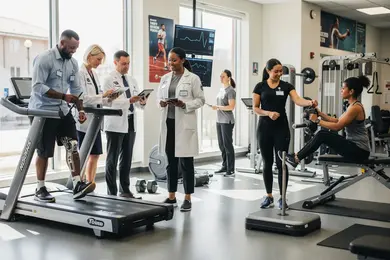
Exercise science graduates face a real earnings question, choose fitness, healthcare, sports performance, corporate wellness, or another sector? The answer matters because pay varies widely by role, credentials, and employer type. The U.S. Bureau of Labor Statistics reports a May 2024 median salary of $58,160 for exercise physiologists, while related licensed roles such as physical therapists report much higher medians.
This guide helps students, graduates, and career changers compare sectors, understand trade-offs, and choose an industry path based on pay, stability, advancement, and fit.
Key Things You Should Know
- Healthcare and rehabilitation generally offer the strongest long-term earning potential for exercise science graduates, especially when the role requires licensure or graduate education; the May 2024 BLS median for physical therapists was $101,020.
- Fitness, recreation, and personal training are easier to enter but usually have lower base pay; the May 2024 BLS median for fitness trainers and instructors was $46,480, with earnings often depending on clients, commissions, and location.
- The best sector is not always the highest-paying one: students should compare salary, credential cost, job stability, advancement routes, schedule demands, and whether the sector rewards certifications, graduate degrees, or sales ability.
- Which Industries Pay Exercise Science Graduates the Highest Salaries?
- How Do Salary Levels Compare Across Industries for Exercise Science Graduates?
Which Industries Pay Exercise Science Graduates the Highest Salaries?
The highest-paying industries for exercise science graduates are usually those that convert movement science knowledge into clinical care, injury prevention, performance optimization, or specialized health services. A bachelor's degree in exercise science can open the door, but the highest salaries often require a graduate degree, state licensure, board certification, or several years of experience.
For salary comparisons, it is more useful to compare sectors through common role benchmarks than to assume one "exercise science salary." The table below shows how major sectors typically translate into careers and earning potential using current U.S. labor-market benchmarks where available.
| Sector | Common roles for exercise science graduates | Current salary signal | Best fit for |
| Clinical healthcare and rehabilitation | Exercise physiologist, cardiac rehab specialist, physical therapist pathway, occupational therapy pathway | Exercise physiologists had a May 2024 median salary of $58,160; physical therapists had a May 2024 median salary of $101,020 | Graduates willing to pursue clinical credentials and work with patients |
| Sports medicine and athletic training | Athletic trainer, strength and conditioning coach, return-to-play specialist | Athletic trainers had a May 2024 median salary of $60,250 | Students interested in injury prevention, sports teams, schools, and performance settings |
| Corporate wellness and occupational health | Wellness coordinator, health coach, ergonomics assistant, employee health specialist | Pay varies by employer, but large companies may offer stronger benefits than small fitness employers | Graduates who want stable schedules, prevention-focused work, and business exposure |
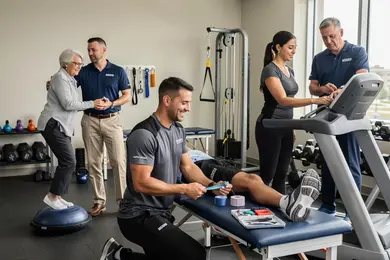
| Commercial fitness and recreation | Personal trainer, group exercise instructor, fitness manager, gym owner | Fitness trainers and instructors had a May 2024 median salary of $46,480 | Entrepreneurial graduates who can build clients, sell services, and specialize |
| Public safety, tactical, and government performance | Tactical strength coach, wellness staff for police, fire, or military-adjacent programs | Compensation is highly employer-specific and may include public-sector benefits | Graduates interested in physically demanding populations and long-term injury prevention |
Healthcare is usually the strongest earnings lane because it links exercise science to reimbursable care, clinical documentation, and licensed practice. Commercial fitness can produce high individual earnings for strong business developers, but base pay is less predictable and benefits may be weaker.
How Do Salary Levels Compare Across Industries for Exercise Science Graduates?
Salary differences across industries come from three main factors: whether the role is clinical, whether it is licensed, and whether revenue is tied to billable care or client sales. An exercise science graduate working in a hospital-based rehabilitation role faces a different pay structure than a graduate working as a personal trainer in a private gym.
The table below organizes sectors by typical earnings pattern rather than promising exact outcomes. This helps readers compare where compensation tends to be more stable, more scalable, or more dependent on individual performance.
| Industry category | Typical pay pattern | Why earnings differ | Main caution |
| Licensed healthcare pathways | Higher ceiling and more structured salary bands | Advanced credentials, licensure, insurance reimbursement, and clinical responsibility | Graduate school cost and time can be substantial |
| Hospital and outpatient wellness programs | Moderate to strong stability | Employers value patient safety, health metrics, and interdisciplinary care | Some roles require clinical experience or certifications |
| College, school, and sports organizations | Moderate salary with mission-driven work | Pay depends heavily on budget, division level, and contract structure | Schedules can include nights, travel, and weekends |
| Corporate wellness | Moderate pay with stronger benefits at larger employers | Organizations invest in prevention, retention, and employee health | Roles may blend coaching, reporting, vendor management, and HR tasks |
| Private fitness and coaching | Wide range from low starting pay to high self-employment income | Income often depends on sales, client retention, specialization, and local market demand | Revenue volatility and limited benefits are common early-career issues |
The practical takeaway is that salary averages can hide risk. A lower advertised salary with health insurance, retirement contributions, predictable hours, and tuition assistance may be worth more than a higher commission-based role with unstable income.
The broadest hiring markets for exercise science graduates are fitness, healthcare support, rehabilitation, wellness, and school or community sports settings. These sectors hire for different reasons: some need hands-on coaching, while others need people who understand anatomy, physiology, health behavior, testing, and safe exercise progression.
Students should separate "easy to enter" from "best long-term value." Fitness and recreation may have more entry points, but healthcare pathways often provide clearer advancement once the graduate has the required license or credential.
| Hiring sector | Common entry-level titles | Why employers hire exercise science graduates | Entry barrier |
| Fitness centers and recreation organizations | Personal trainer, fitness coach, group instructor, member wellness associate | Employers need staff who can assess movement, coach safely, and retain clients | Low to moderate; certification is often expected |
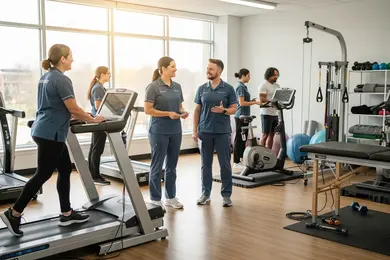
| Hospitals and outpatient clinics | Rehabilitation aide, exercise physiologist, cardiac rehab assistant, therapy technician | Clinical teams need support for exercise testing, patient education, and supervised activity | Moderate; clinical experience and credentials help |
| Schools, colleges, and athletic departments | Strength coach assistant, athletic training aide, performance intern | Programs need support for conditioning, injury prevention, and athlete monitoring | Moderate to high; competition can be strong |
| Corporate wellness vendors and employers | Wellness coordinator, health coach, biometric screening assistant | Employers use wellness programs to support employee health and reduce preventable risks | Moderate; communication and data skills matter |
| Healthcare education pathways | Pre-PT, pre-OT, pre-PA, nursing or allied health candidate | Exercise science provides a strong science foundation for advanced clinical training | High; prerequisites, admissions, and licensure vary |
Some graduates decide that a faster clinical credential is a better fit than a long graduate pathway. For example, students comparing direct patient-care options may research a 9 month LPN program if they want a quicker route into nursing-related employment rather than fitness or rehabilitation support work.
Exercise science salaries are highly local. A role in a major metro hospital, a university athletic department, a suburban private clinic, and a rural recreation center may carry very different pay, benefits, and promotion timelines even when the job title sounds similar.
Location affects earnings in three practical ways: local demand, employer budgets, and cost of living. A higher salary in an expensive city may not improve take-home value if rent, transportation, and taxes absorb the difference.
| Factor | How it affects earnings | What to compare before accepting an offer |
| Metro versus rural market | Large metro areas may offer more hospitals, sports organizations, and corporate employers | Salary after housing, commuting, and parking costs |
| Healthcare concentration | Regions with major hospital systems may offer more clinical and rehabilitation openings | Credential requirements, shift expectations, and internal promotion routes |
| Fitness market density | Affluent or wellness-oriented markets may support higher personal training rates | Client acquisition expectations, commission split, and cancellation policies |
| Public-sector presence | Schools, universities, and government employers may offer stronger benefits | Pension, retirement match, health insurance, and contract length |
| State licensure rules | Clinical titles and scope of practice can vary by state | Whether the role requires licensure, certification, supervision, or continuing education |
A common mistake is comparing only the headline salary. To estimate real value, calculate monthly take-home pay, subtract core living costs, then add the value of benefits such as health insurance, retirement contributions, paid time off, tuition reimbursement, and certification support.

Higher earnings usually come from skills that make an exercise science graduate harder to replace. Employers tend to pay more when a graduate can work safely with complex clients, document outcomes, manage programs, generate revenue, or use technology to improve decisions.
The most valuable skills vary by sector, but the following categories are consistently useful across healthcare, performance, wellness, and fitness roles:
- Assessment and programming: Movement screening, exercise testing, periodization, safe progression, and regression for different ability levels.
- Clinical communication: Explaining exercise plans clearly to patients, athletes, clients, caregivers, coaches, and healthcare providers.
- Data literacy: Interpreting wearable data, performance metrics, health-risk screenings, and progress reports without overstating what the data proves.
- Behavior change coaching: Helping clients build habits, improve adherence, and navigate barriers instead of only prescribing workouts.
- Business and revenue skills: Client retention, ethical sales, program design, referral partnerships, and service packaging.
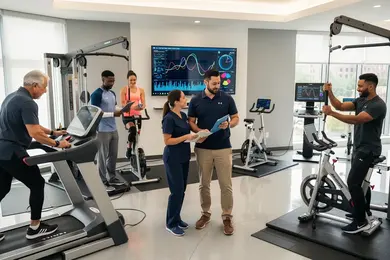
- Technology fluency: Using electronic health records, coaching platforms, force plates, heart-rate systems, motion capture tools, or wellness dashboards when relevant.
AI and automation are changing this field, but they are not replacing the need for human coaching, safety judgment, and relationship-building. Graduates who can use technology to personalize programs, summarize progress, and communicate results will be better positioned than those who rely only on generic exercise knowledge.
Certifications matter because many exercise science jobs are skill-based and safety-sensitive. A degree can show academic preparation, but employers often use certifications to verify applied competence, professional standards, and readiness to work with specific populations.
The best credential depends on the industry you want to enter. Students should choose certifications based on role requirements, employer recognition, renewal costs, continuing education rules, and whether the credential supports long-term advancement.
| Industry goal | Credentials commonly valued | How it can affect earnings |
| Personal training and commercial fitness | Nationally recognized personal training certification, CPR/AED, specialty certifications | Can improve hiring eligibility, client trust, and access to higher-rate services |
| Strength and conditioning | Strength and conditioning certification, sport performance credentials, CPR/AED | Can help candidates compete for school, college, tactical, or private performance roles |
| Clinical exercise and cardiac rehab | Clinical exercise physiology credential, basic life support, advanced cardiac life support when required | Can support clinical credibility and eligibility for hospital or rehabilitation roles |
| Corporate wellness and health coaching | Health coaching, wellness program management, nutrition-adjacent credentials within legal scope | Can support movement into coordinator, manager, or vendor-facing roles |
| Licensed healthcare careers | Graduate degree, state licensure, board exam, supervised clinical experience | Often required for higher-paying clinical roles such as physical therapy or occupational therapy |
Students who want flexible training in movement science may compare a kinesiology certification online with a full degree, but they should check whether employers in their target sector prefer a certification, bachelor's degree, graduate degree, or state license.
Company size and organization type can affect total compensation as much as industry choice. A small private gym, a hospital system, a university, a professional sports organization, and a corporate wellness vendor may all hire exercise science graduates, but their pay structures are very different.
Large organizations often provide stronger benefits and clearer promotion ladders, while smaller employers may offer faster responsibility, flexible roles, or revenue-sharing opportunities. Neither is automatically better; the right choice depends on your risk tolerance and career stage.
| Employer type | Potential advantages | Potential drawbacks | Best for |
| Large hospital or health system | Benefits, clinical exposure, internal mobility, structured policies | Credential requirements and less schedule flexibility | Graduates seeking stable healthcare careers |
| University or school system | Mission-driven work, benefits, athletic environment, academic networks | Budget limits and seasonal workload spikes | Graduates interested in sports, education, or youth development |
| Corporate employer or wellness vendor | Business experience, regular hours, benefits at larger organizations | Program outcomes and reporting may matter more than hands-on coaching | Graduates who like prevention, communication, and program management |
| Private clinic or performance facility | Specialized mentorship, client relationships, faster skill development | Benefits and advancement may depend on business performance | Graduates building a niche in performance or rehabilitation support |
| Self-employment | High autonomy and scalable income potential | No guaranteed clients, benefits, or paid leave | Experienced professionals with strong marketing and retention skills |
A major red flag is accepting a role without understanding how compensation works. Ask whether pay is hourly, salaried, commission-based, per session, per client, or tied to membership sales, and compare that structure with your need for income stability.
Emerging industries are expanding the ways exercise science graduates can earn beyond gyms and clinics. The strongest future opportunities are likely to sit at the intersection of human performance, digital health, prevention, aging, workplace safety, and data-informed coaching.
These emerging areas are worth watching because they reward graduates who can combine exercise science with technology, communication, and measurable outcomes:
- Digital health and remote coaching: Employers and consumers increasingly use apps, wearables, and virtual programs to track activity, recovery, and adherence.
- Longevity and healthy aging: An aging U.S. population increases demand for safe strength, balance, mobility, and chronic disease prevention programs.
- Wearable technology and performance analytics: Teams, clinics, and wellness programs need professionals who can interpret data without turning every metric into a diagnosis.
- Occupational health and injury prevention: Employers may invest in ergonomics, movement training, and conditioning to reduce workplace injuries and improve productivity.
- Tactical performance: Fire, police, military-adjacent, and public safety populations need strength, conditioning, readiness, and injury-prevention support.
Graduates interested in the data side of health and performance may also explore adjacent fields such as health informatics or computational biology. If you are comparing science-heavy career options, a guide on what to do with a bioinformatics degree can help clarify how data-focused paths differ from hands-on exercise science careers.
The smartest industry choice depends on your target role, tolerance for additional education, preferred work environment, and income needs. Exercise science is flexible, but that flexibility can become a problem if students graduate without a specific sector strategy.
Use the following process to compare industries before choosing internships, certifications, graduate programs, or entry-level jobs:
- Pick a target outcome first: Decide whether you want clinical care, athletic performance, fitness entrepreneurship, wellness management, public health, or technology-enabled coaching.
- Identify the required credential: Check whether the role needs only a bachelor's degree, a certification, supervised experience, graduate school, or state licensure.
- Compare total compensation: Look beyond base pay and include benefits, retirement, paid time off, tuition support, bonuses, commissions, and schedule stability.
- Estimate education ROI: Compare the cost and time of certifications or graduate school with the salary range and promotion path in that sector.
- Test the work environment early: Use internships, observation hours, part-time jobs, or volunteer roles to see whether the daily work matches your expectations.
- Avoid single-metric decisions: Do not choose a sector only because one salary number looks high; consider demand, burnout risk, advancement, and whether you enjoy the population served.
Choose healthcare or rehabilitation if you want structured advancement and are willing to complete additional credentials. Choose corporate wellness if you prefer prevention, communication, and program management. Choose performance or fitness if you enjoy coaching, client relationships, and a more entrepreneurial income model.
The best long-term growth usually comes from sectors where exercise science knowledge can be layered with licensure, leadership, analytics, or specialized populations. The U.S. Bureau of Labor Statistics projects faster-than-average growth for several health and fitness-related roles, but advancement depends on moving beyond basic entry-level coaching tasks.
These are the growth paths that tend to create stronger career mobility for exercise science graduates:
- Clinical advancement: Moving from rehabilitation aide or exercise physiologist into physical therapy, occupational therapy, physician assistant studies, nursing, or another licensed healthcare role.
- Performance specialization: Building expertise in strength and conditioning, tactical populations, return-to-play programming, biomechanics, or sport technology.
- Wellness leadership: Progressing from health coach to wellness manager, benefits consultant, population health coordinator, or employee health program director.
- Entrepreneurship: Creating a private training practice, online coaching business, specialty clinic partnership, or performance facility.
- Data and technology: Combining exercise science with wearable analytics, human performance testing, digital health, or health informatics.
A lower-paying first job can make sense if it gives you supervised clinical hours, graduate-school prerequisites, strong references, or exposure to a specialized population. By contrast, a higher-paying sales-heavy fitness role may not be the best choice if it does not build transferable skills or recognized credentials.
Students who want a clinical career but are still comparing healthcare fields may also look at options such as PharmD programs, especially if they are interested in medication management, chronic disease care, and a more pharmacy-centered professional track.
Other Things You Should Know About Exercise Science
It can be, but the degree alone does not determine earnings. Higher pay usually comes from pairing exercise science with clinical licensure, advanced education, specialized certifications, management skills, or a strong client base.
Licensed healthcare pathways often offer the strongest salary potential. Physical therapy, occupational therapy, physician assistant studies, and related clinical roles may pay more than entry-level fitness or wellness jobs, but they require additional education and licensure.
They can be worth it for graduates who enjoy coaching, sales, and relationship-building. Fitness jobs are often easier to enter, but income may be less stable unless the professional develops a specialty, retains clients, or moves into management or business ownership.
Use both, but do not ignore fit. A high-growth field is more valuable if you can meet the credential requirements, handle the schedule, and see a realistic advancement path. The best choice balances pay, stability, education cost, and long-term interest.
- ESSA's career guide for Accredited Exercise Physiologists https://www.essa.org.au/Web/Web/Resources/Tools-and-templates/ESSA-AEP-Guide.aspx
- Exercise Science Degree Careers: The complete list https://traineracademy.org/blog/exercise-science-careers/
- Sports Science Degree Careers and Salary in Europe - StudyinEurope.eu https://www.studyineurope.eu/sports-science/sports-science-degree-careers-salary-europe/
- Exercise Science Jobs | Career Information https://www.nutritioned.org/exercise-science-jobs/
- Top 20 Careers With a Master’s in Exercise Science | PLNU https://www.pointloma.edu/resources/health-sciences/top-20-careers-masters-exercise-science