2027 Electrical Engineering Degree Automation Exposure Report: Which Career Paths Face the Most AI and Technology Disruption

Co-Founder and Chief Data Scientist
Electrical engineering students now face a harder question than "Which job pays well?" They also need to know which roles are being reshaped by AI, automation, digital twins, robotics, and intelligent design tools. The U.S. Bureau of Labor Statistics projects electrical and electronics engineering employment to grow 9% from 2024 to 2034, but that growth will not affect every role equally.
This guide helps students, graduates, and career changers compare electrical engineering paths by automation exposure, salary potential, stability, and skill strategy.
Key Things You Should Know
- The highest exposure generally falls on repetitive design support, drafting, testing documentation, routine quality checks, and entry-level simulation tasks. Lower exposure is found in power systems, safety-critical hardware, embedded systems, field engineering, and regulated infrastructure roles.
- BLS May 2024 wage data places electrical and electronics engineers in a high-earning category, with median pay above $115,000, but long-term value depends on whether the role requires judgment, systems thinking, compliance knowledge, and cross-functional problem solving.
- The strongest strategy is not avoiding AI-heavy fields; it is choosing electrical engineering work where AI augments productivity while human engineers remain accountable for architecture, safety, validation, trade-off decisions, and stakeholder communication.
- Which Electrical Engineering Career Paths Face the Greatest Risk of AI and Automation?
- Which Job Tasks Are Most Likely to Be Automated in Electrical Engineering Careers?
Which Electrical Engineering Career Paths Face the Greatest Risk of AI and Automation?
Automation exposure means the extent to which software, AI models, robotics, or automated workflows can perform parts of a job. In electrical engineering, the risk is usually task-level rather than occupation-level: AI may generate schematics, summarize test data, or optimize layouts, while licensed engineers, senior designers, and technical leads still make decisions about safety, reliability, cost, and system behavior.
The table below ranks common electrical engineering career paths by relative AI and automation exposure. It is a decision-support view, not a prediction that any role will disappear; exposure varies by employer, product complexity, regulation, and how much the role depends on repeated procedures versus original engineering judgment.
| Career path | Typical work | Automation exposure | Why it matters for students |
| Electrical drafting and CAD support | Preparing drawings, updating layouts, revising documentation | High | Generative design, automated layout checks, and template-driven documentation can reduce demand for purely production-focused drafting work. |
| Test technician or routine validation support | Running standard tests, logging results, preparing reports | Medium to high | Automated test benches and AI-assisted anomaly detection can handle repeatable steps, but troubleshooting remains valuable. |
| PCB layout and electronics design support | Board layout, component placement, design rule checks | Medium | AI tools can accelerate layout and verification, while complex signal integrity, thermal, manufacturability, and cost trade-offs still need expert review. |
| Controls and automation engineering | PLC systems, robotics, factory automation, process control | Medium | The work uses automation rather than being simply replaced by it; engineers who can integrate AI-enabled equipment are likely to remain valuable. |
| Embedded systems engineering | Firmware, sensors, microcontrollers, real-time systems | Low to medium | AI can assist coding, but timing constraints, hardware interaction, debugging, cybersecurity, and safety requirements protect the role from full automation. |
| Power systems and grid engineering | Transmission, distribution, renewables integration, protection systems | Low to medium | Modern grid planning uses AI, but reliability, regulation, field constraints, and public safety keep human expertise central. |
| Safety-critical hardware engineering | Aerospace, medical devices, defense, transportation electronics | Low | Verification, traceability, certification, and accountability limit the extent to which AI can replace qualified engineers. |
The most automation-prone paths are not necessarily bad choices. They can be strong entry points if you use them to build systems knowledge, tool fluency, and domain expertise rather than remaining limited to repetitive production tasks.
Which Job Tasks Are Most Likely to Be Automated in Electrical Engineering Careers?
AI changes electrical engineering most quickly when tasks are digital, repeatable, rule-based, and easy to verify. It changes work more slowly when tasks require field judgment, safety accountability, physical inspection, multidisciplinary coordination, or approval under regulatory standards.
The task comparison below helps students look past job titles and evaluate what they would actually do each week. A title with "engineer" in it can still be automation-exposed if most duties involve repetitive documentation, while a technician role may be resilient if it involves complex field troubleshooting.
| Task category | Automation likelihood | Examples in electrical engineering | Human value that remains |
| Documentation and report drafting | High | Test summaries, design change notes, requirements summaries | Interpreting results, explaining risk, defending recommendations |
| Routine simulation setup | High | Running standard circuit, thermal, or electromagnetic models | Choosing assumptions, validating models, spotting unrealistic outputs |
| Design rule checking | High | PCB clearance checks, electrical rule checks, standard compliance scans | Resolving trade-offs when rules conflict with performance, cost, or manufacturability |
| Automated testing | Medium to high | Production test sequences, pass/fail logging, signal capture | Root-cause analysis when systems fail in unexpected ways |
| System architecture | Low to medium | Defining hardware platforms, interfaces, power budgets, redundancy | Balancing performance, reliability, safety, schedule, and cost |
| Field commissioning | Low to medium | Installing, validating, and troubleshooting equipment in real environments | Adapting to site constraints, coordinating with operators, making safe decisions |
| Safety and compliance judgment | Low | Protection studies, medical device validation, aerospace traceability | Professional accountability, documentation integrity, and risk ownership |
A useful rule is to ask whether the task has a clear input, a standard procedure, and an easily checked output. If yes, it is more likely to be automated; if it involves ambiguous constraints, physical systems, safety consequences, or competing stakeholder priorities, it is more likely to be AI-augmented rather than replaced.
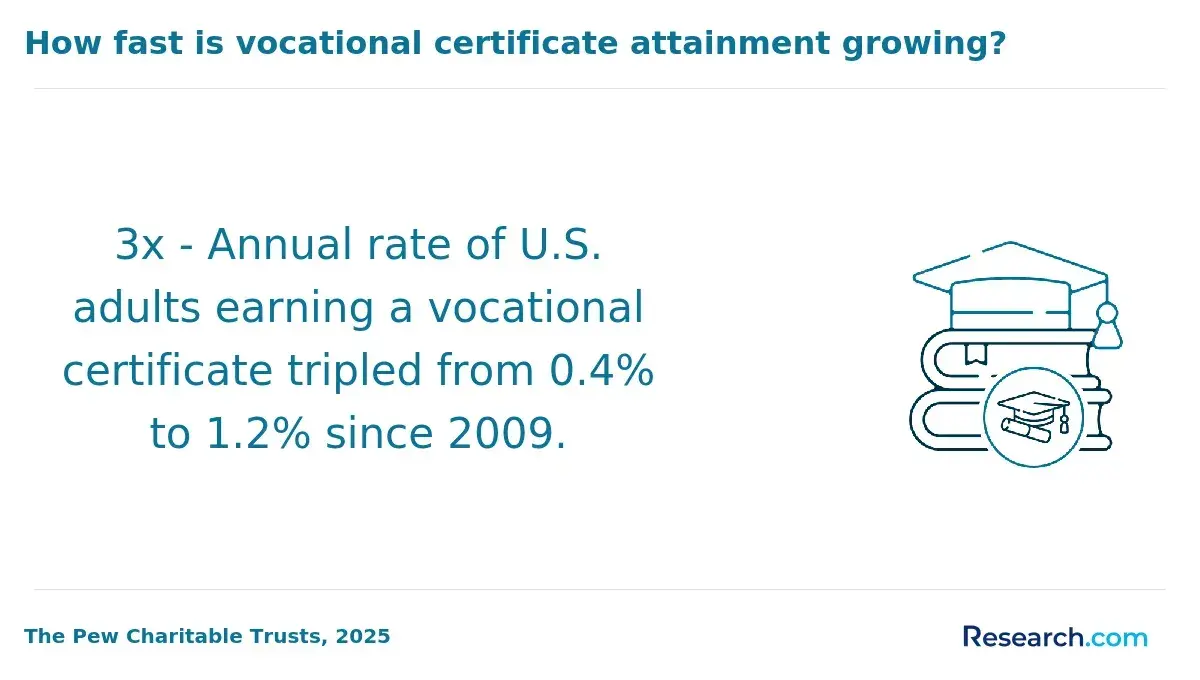
Industry matters because the same electrical engineering skill can have different automation exposure depending on where it is used.
A controls engineer in a highly automated semiconductor plant may need advanced data and robotics knowledge, while a power engineer at a utility may face slower AI adoption because reliability, compliance, and field infrastructure change more gradually.
The table below compares major U.S. industries that hire electrical engineering graduates and shows how AI adoption changes the opportunity-risk balance. Use it to identify where AI is likely to create new work, compress routine work, or raise the skill bar.
| Industry | AI adoption pattern | Likely effect on electrical engineering roles | Career-readiness implication |
| Semiconductors and electronics manufacturing | Fast adoption in inspection, process control, yield optimization, and design automation | Routine testing and layout work become more tool-driven; hardware, process, and reliability expertise become more important | Build skills in device physics, statistical analysis, EDA tools, and manufacturing constraints |
| Automotive and electric vehicles | Fast adoption in autonomous systems, battery management, sensing, and simulation | Growth in embedded systems, power electronics, safety validation, and systems integration | Learn embedded C/C++, functional safety, controls, batteries, and sensor fusion |
| Utilities and energy infrastructure | Moderate adoption in forecasting, grid monitoring, predictive maintenance, and distributed energy management | AI supports engineers but does not remove the need for protection, planning, compliance, and field reliability work | Focus on power systems, grid modernization, renewables integration, and regulatory context |
| Aerospace, defense, and medical devices | Careful adoption because of certification, security, and safety requirements | AI assists design and verification, but accountability and documentation standards preserve demand for skilled engineers | Develop verification, traceability, cybersecurity, reliability, and systems engineering skills |
| Telecommunications and data centers | Fast adoption in network optimization, power management, monitoring, and capacity planning | Demand rises for engineers who understand hardware, energy efficiency, RF systems, and automated operations | Study communications, power distribution, thermal systems, automation, and cybersecurity |
For many students, the best long-term value is in industries where AI increases complexity rather than simply reducing labor. Semiconductor, EV, grid, aerospace, and data center employers often need engineers who can connect electrical fundamentals with software, data, reliability, and real-world deployment.
The most resilient electrical engineering graduates combine technical depth with judgment, communication, and adaptability. AI can generate outputs quickly, but employers still need people who understand physics, constraints, risk, and the consequences of a system failing in the real world.
The comparison below separates skills that help engineers use AI productively from skills that protect them from becoming dependent on automated outputs. The strongest candidates usually develop both categories.
| Skill area | Why it improves resilience | Examples of evidence employers can evaluate |
| Electrical fundamentals | AI tools are easier to verify when the engineer understands circuits, electromagnetics, signals, power, and devices | Design projects, lab work, simulations validated against measurements |
| Programming and scripting | Automation rewards engineers who can build workflows rather than only use menus | Python, MATLAB, C/C++, test automation scripts, version-controlled code |
| Embedded systems | Hardware-software integration remains difficult to automate fully because it involves timing, constraints, sensors, and physical behavior | Microcontroller projects, RTOS exposure, debugging logs, firmware repositories |
| Data analysis | Modern labs, factories, grids, and devices produce large data streams that require interpretation | Signal processing, statistical analysis, anomaly detection projects |
| Systems thinking | AI may optimize one component while missing system-level trade-offs | Architecture documents, capstone projects, reliability analyses |
| Communication | Engineers must explain technical uncertainty, safety trade-offs, and design choices to non-specialists | Presentations, design reviews, technical writing, stakeholder-facing project work |
| Ethics and safety judgment | AI cannot hold professional accountability for public safety and compliance decisions | Standards-based work, safety analysis, documented verification procedures |
Communication deserves special attention because automation can make technical output cheaper while making clear judgment more valuable. Engineers who want to move into product leadership, public-facing technical roles, or stakeholder-heavy infrastructure work sometimes explore options such as online masters in communications, though most students should first ensure they have strong engineering fundamentals and project evidence.
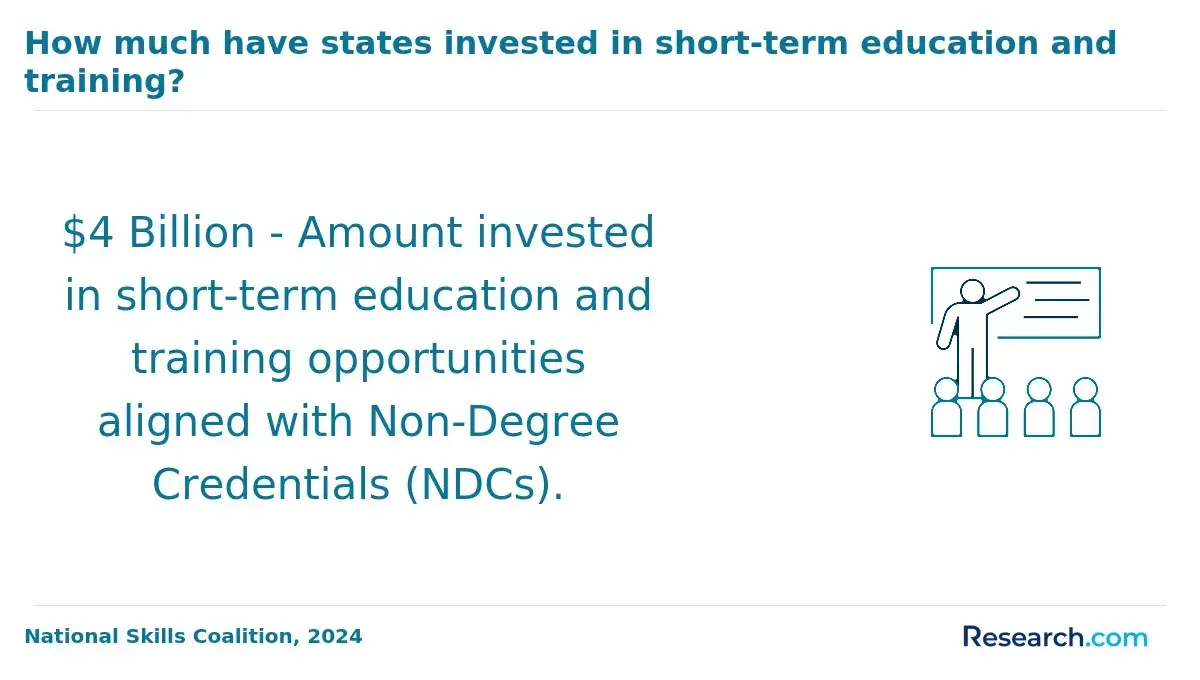
The most stable electrical engineering specializations are usually those tied to physical infrastructure, safety-critical systems, regulation, scarce technical expertise, or hardware-software integration. These areas can still be transformed by AI, but they are less likely to become fully automated because mistakes can be expensive, dangerous, or legally significant.
The table below summarizes specializations that tend to offer a favorable balance of demand, salary potential, and automation resilience. Students should use it to compare fit, not to assume any specialization is risk-free.
| Specialization | Stability outlook | Why AI is more likely to augment than replace it | Best fit for students who like |
| Power systems and grid modernization | Strong | Electric reliability, renewables integration, protection systems, and regulatory requirements require accountable engineering judgment | Infrastructure, energy, field systems, public-impact work |
| Power electronics | Strong | EVs, renewable energy, data centers, and industrial systems need efficient conversion hardware that must be physically validated | Circuits, thermal constraints, devices, hardware testing |
| Embedded systems | Strong | Real-time constraints, sensors, firmware, cybersecurity, and physical integration create complex debugging demands | Coding close to hardware, robotics, IoT, devices |
| Controls and robotics | Strong but competitive | AI expands automation projects, but engineers are needed to integrate sensors, actuators, safety systems, and production constraints | Math, motion, automation, manufacturing |
| RF and communications hardware | Moderate to strong | Wireless systems require specialized knowledge of signals, antennas, propagation, and hardware limitations | Telecom, aerospace, defense, signal processing |
| Semiconductor engineering | Strong but demanding | AI accelerates design and inspection, but device physics, fabrication, yield, and reliability remain specialized | Physics, materials, chips, manufacturing technology |
Specializations with the weakest long-term positioning are usually narrow support roles that do not develop ownership of design decisions. If your early job is drafting, testing, or documentation-heavy, treat it as a platform for moving toward design validation, systems integration, compliance, or customer-facing engineering.
AI can affect salaries in two opposite ways. It can reduce the market value of routine tasks by making them faster and cheaper, but it can also raise the value of engineers who use AI to manage more complex systems, shorten design cycles, improve reliability, or connect hardware with data and software.
The salary comparison below uses BLS May 2024 wage context for occupations closely related to electrical engineering graduates. Salaries vary by location, industry, clearance requirements, education, overtime, and experience, so use these figures as labor-market benchmarks rather than personal income guarantees.
| Occupation | 2024 U.S. median wage context | AI-related salary implication | Automation exposure takeaway |
| Electrical and electronics engineers | Above $115,000 | Strong pay is more defensible when the role includes design ownership, systems judgment, safety, and validation | Medium overall; lower for complex systems and regulated work |
| Computer hardware engineers | Above $150,000 | High-value roles often sit at the intersection of chips, architecture, acceleration hardware, and systems performance | Low to medium; AI assists design but does not remove hardware accountability |
| Software developers | Above $130,000 | Electrical engineers with strong embedded or systems software skills may access higher-growth hybrid roles | Medium; routine coding is exposed, but architecture and domain-specific engineering remain valuable |
| Electrical and electronic engineering technologists and technicians | Above $70,000 | Pay can improve when technicians move into automated test development, field service, or specialized troubleshooting | Medium to high for routine tests; lower for complex lab and field problem solving |
| Drafters | Above $60,000 | Pure drafting may face wage pressure as automated design and documentation tools improve | High when work is template-driven and detached from design decisions |
For advancement, AI tends to reward engineers who move from task execution to decision ownership. That may mean becoming a senior design engineer, systems engineer, technical program manager, engineering manager, product leader, or founder. Some engineers pursuing leadership in technology organizations compare executive MBA programs online, but the strongest ROI usually comes when business training builds on credible engineering experience.
AI is not only a threat to electrical engineering careers; it is also creating new work. Many of the fastest-changing products and infrastructure systems need people who understand sensors, circuits, power, embedded software, data, and physical constraints.
The examples below show where AI is expanding opportunities for electrical engineering graduates. These are not always entry-level job titles, but they point to skills and industries worth targeting through electives, internships, projects, and graduate study.
- AI hardware and accelerator systems: Engineers contribute to chips, boards, power delivery, thermal design, memory interfaces, and high-performance computing infrastructure.
- Smart grid and energy analytics: Utilities and energy companies use AI for demand forecasting, grid monitoring, distributed energy resources, and predictive maintenance.
- Robotics and autonomous systems: Electrical engineers work on sensors, motor control, embedded systems, safety circuits, battery systems, and real-time control.
- AI-enabled test engineering: Automated labs need engineers who can build test platforms, analyze signals, detect anomalies, and validate model outputs.
- Cyber-physical security: Connected devices, industrial controls, power systems, and vehicles need engineers who understand both hardware and security risk.
- Computer vision and sensing systems: Imaging devices, drones, medical equipment, manufacturing inspection, and autonomous vehicles require sensor, optics, signal processing, and embedded expertise.
Students interested in visual systems should distinguish creative imaging careers from engineering roles. A photography degree online may support creative or media-oriented goals, while electrical engineering roles in imaging usually require deeper preparation in sensors, optics, circuits, signal processing, and embedded software.
Preparation should start before graduation because AI is already changing internships, capstone projects, lab work, and entry-level expectations. The goal is to graduate with evidence that you can use modern tools, verify results, and solve messy engineering problems.
The steps below help electrical engineering students build a more resilient profile without trying to learn every new tool at once:
- Choose projects with physical validation: Build circuits, embedded systems, power converters, robotics prototypes, or sensor platforms where you compare simulation results with measured behavior.
- Learn at least one automation-friendly programming stack: Python is useful for data analysis and test automation, while C or C++ is important for embedded systems.
- Use AI tools, but document verification: If AI helps draft code, summarize data, or generate design ideas, keep notes showing how you checked accuracy and safety.
- Target internships in AI-adopting industries: Look for roles in semiconductors, utilities, EVs, aerospace, manufacturing automation, data centers, robotics, or medical devices.
- Build a portfolio: Include schematics, test plans, measured results, code repositories, design trade-offs, and lessons learned rather than only final screenshots.
- Study standards and constraints: Exposure to safety, reliability, cybersecurity, manufacturability, and compliance makes your work harder to automate.
- Practice explaining technical risk: In design reviews, focus on why a choice is safe, reliable, cost-effective, and appropriate for the user or system.
Common mistakes can weaken a student's career resilience even with a strong GPA. Avoid choosing electives only because they seem easy, using AI tools without understanding outputs, ignoring lab skills, assuming salary alone defines career quality, or dismissing communication as "soft" when it often determines who gets trusted with higher-level engineering decisions.
Students should evaluate electrical engineering careers by combining automation exposure with salary, growth, personal fit, skill transferability, and the pace of technology adoption in the target industry. A high-exposure role may still be worthwhile if it leads quickly to systems knowledge, while a low-exposure role may be a poor fit if it does not match your interests or location needs.
Use the following framework when comparing career paths, internships, graduate programs, or job offers. It helps you avoid both extremes: ignoring AI risk completely or overreacting to headlines that suggest entire professions will vanish.
- Break the job into tasks: Identify how much time is spent on repetitive documentation, standard testing, design review, field work, stakeholder coordination, and original problem solving.
- Check whether the role owns decisions: Jobs with responsibility for architecture, safety, validation, customer requirements, or compliance are usually more resilient.
- Look at the industry context: AI adoption is faster in semiconductors, software-adjacent hardware, manufacturing, and data centers than in some regulated infrastructure settings.
- Compare salary with learning value: A slightly lower-paying role that builds embedded systems, power, controls, or reliability expertise may offer better long-term mobility than a higher-paying repetitive support role.
- Ask employers specific questions: Ask what AI tools the team uses, how outputs are verified, which tasks are being automated, and what skills distinguish high-performing engineers.
- Evaluate transferability: Favor skills that travel across industries, such as circuits, programming, data analysis, systems thinking, testing, controls, power, and communication.
The best choice is usually an AI-augmented career path, not an AI-avoidant one. Electrical engineering graduates who understand both physical systems and intelligent tools are positioned to work on the infrastructure, devices, energy systems, and hardware platforms that make AI possible.
Employers are increasingly treating AI fluency as a professional baseline rather than a niche skill. That does not mean every electrical engineering graduate must become a machine learning engineer; it means graduates should know how to use AI-enabled tools responsibly, verify outputs, protect confidential information, and explain technical decisions clearly.
BLS May 2024 wage data places electrical and electronics engineers among higher-paid technical occupations, but employers typically reserve the strongest advancement opportunities for engineers who can move beyond narrow task execution. In an AI-enabled workplace, the graduate who can question a model, validate a simulation, communicate risk, and collaborate with manufacturing or software teams has an advantage over someone who only follows tool outputs.
Employer expectations are shifting in several practical ways. These expectations affect internships, entry-level hiring, and promotion readiness:
- Tool literacy: Graduates are expected to learn modern EDA platforms, simulation environments, scripting, automated test systems, and AI-assisted documentation tools without treating them as black boxes.
- Verification mindset: Employers value engineers who can prove whether an AI-generated circuit suggestion, test script, or design summary is correct, safe, and appropriate for the application.
- Cross-functional communication: Electrical engineers increasingly work with software, mechanical, data, product, legal, safety, and operations teams.
- Security and ethics awareness: AI-assisted design raises concerns around intellectual property, model reliability, cyber-physical security, and traceability.
- Continuous learning: Employers may expect engineers to update skills through short courses, certifications, graduate certificates, or advanced degrees as tools evolve.
Students aiming for R&D, faculty, or specialized technical leadership may eventually compare PhD programs, especially if they want to work on power electronics, semiconductor devices, control theory, photonics, or AI-enabled hardware research. For most entry-level industry roles, however, demonstrated project experience and tool competence matter more immediately than the highest credential.
Other Things You Should Know About Electrical Engineering Degree Automation Exposure
AI is more likely to automate parts of electrical engineering work than replace the profession. Routine drafting, documentation, test reporting, and standard simulations are more exposed, while system design, safety validation, field troubleshooting, and regulated engineering decisions still require human expertise.
Power systems, embedded systems, safety-critical hardware, controls, robotics integration, RF systems, and semiconductor roles tend to be more resilient because they involve physical systems, specialized judgment, validation, and accountability. No role is risk-free, but these paths are less dependent on easily automated tasks.
They should do both. Electrical fundamentals make it possible to verify AI-generated outputs, while AI and programming skills help engineers work faster and handle modern tools. A student who understands circuits, systems, data, and verification is generally better positioned than one who focuses on tools alone.
It can be worth it for students who want to work with hardware, energy, electronics, automation, infrastructure, or embedded systems. The degree is strongest when paired with practical projects, internships, programming, lab experience, and a specialization that builds durable expertise rather than only routine support skills.
- The Role of AI in Shaping the Future of Electrical Engineering https://petroknowledge.com/articles/the-role-of-ai-in-shaping-the-future-of-electrical-engineering
- 5 Ways AI is Shaping the Future of Electrical Design | WSCAD-BLOG https://blog.wscad.com/en/ai-power/
- The Impact of AI on Engineering Jobs - Intuit Blog https://www.intuit.com/blog/innovative-thinking/ai-impact-engineering-jobs/
- Top 10 AI Tools for Electrical Engineers https://forumautomation.com/t/top-10-ai-tools-for-electrical-engineers/13885
- Artificial Intelligence (AI) Integration Trends that are Revolutionizing Electrical Engineering https://glomacs.com/articles/ai-integration-trends-revolutionizing-electrical-engineering
- News: How Al Is Revolutionizing Mechanical and Electrical Engineering https://www.automate.org/news/how-al-is-revolutionizing-mechanical-and-electrical-engineering
- How Electrical Engineering Drives Automation Innovation https://icadautomation.com/how-electrical-engineering-drives-automation-innovation/