2027 Electrical Engineering Degree Time-to-Completion Report: How Long Students Actually Take to Finish

Co-Founder and Chief Data Scientist
Choosing an electrical engineering degree is partly a time decision: can you finish in four years, or should you plan for longer? The answer matters because engineering curricula have strict prerequisite chains, labs, math sequences, and capstone requirements. The U. S. Bureau of Labor Statistics reports a May 2024 median annual wage of $109,010 for electrical and electronics engineers, which makes timely graduation financially important but not worth rushing at the expense of learning. This guide helps prospective, transfer, online, and working students estimate a realistic path to completion.
Key Things You Should Know
- A traditional bachelor's in electrical engineering is usually designed for four years of full-time study, but students commonly need closer to four to six years when prerequisites, co-ops, reduced course loads, or repeated technical courses are involved.
- Time to completion depends most on enrollment intensity, math and science readiness, transfer-credit fit, course sequencing, lab availability, and whether the program is ABET-accredited.
- The career upside can be substantial, but extra semesters increase tuition, fees, living costs, and delayed earnings, so the fastest realistic pathway is not always the same as the best-value pathway.
- What Is the Actual Time to Complete a Electrical Engineering Degree?
- Which Factors Have the Greatest Impact on Electrical Engineering Degree Completion Time?
What Is the Actual Time to Complete a Electrical Engineering Degree?
The actual time to complete an electrical engineering degree depends on the credential. An associate degree may take about two years full time, a bachelor's degree is typically planned for four years, a master's degree often takes one to three years, and a doctorate can take several additional years. For most students searching this topic, the key question is the bachelor's timeline because it is the standard entry credential for many electrical engineering roles.
A bachelor's in electrical engineering usually requires a tightly sequenced curriculum: calculus, physics, circuits, electronics, signals and systems, embedded systems, power systems, labs, technical electives, and a senior design or capstone project. Because many upper-division courses require earlier courses as prerequisites, missing or failing one course can delay graduation by a semester or more if that course is only offered once per year.
National completion data helps explain why the published four-year plan should be treated as a target, not a guarantee. NCES reporting released in 2024 shows that bachelor's degree completion is often measured over a six-year window, not just a four-year window, because many students change pace, stop out, transfer, or need additional terms.
For electrical engineering students, this is especially relevant because the curriculum leaves less room for off-sequence electives than many non-engineering majors.
The table below summarizes realistic completion ranges by degree level. Use it as a planning tool, not as a promise; actual timelines vary by school, credit load, course availability, and student circumstances.
| Electrical engineering pathway | Common full-time design length | Realistic completion range | Main reason timelines vary |
| Associate degree or pre-engineering transfer pathway | 2 years | 2 to 3 years | Math placement, transfer articulation, and completion of calculus-based science courses |
| Bachelor's degree | 4 years | 4 to 6 years | Prerequisite sequencing, lab schedules, co-ops, repeated courses, and credit load |
| Master's degree | 1 to 2 years | 1 to 3 years | Thesis choice, part-time enrollment, employer sponsorship, and prerequisite gaps |
| Doctoral degree | Varies by research plan | 4 to 7+ years after bachelor's or 3 to 6+ years after master's | Research progress, funding, advisor fit, publication expectations, and dissertation scope |
If your goal is to enter engineering practice quickly, focus less on the catalog length and more on the program's actual course rotation, advising quality, transfer policies, and whether you can consistently carry the technical course load required for on-time progress.
Which Factors Have the Greatest Impact on Electrical Engineering Degree Completion Time?
The greatest timeline drivers are not always obvious when students compare degree pages. Electrical engineering is sequential, which means one missed prerequisite can have a bigger effect than one low-stakes elective in a more flexible major. This makes planning accuracy especially important.
These are the factors most likely to extend or shorten your completion time:
- Math readiness: Students who begin below calculus may need one or more additional terms before they can start the engineering sequence.
- Course sequencing: Circuits, electronics, electromagnetics, controls, and signal-processing courses often build on each other and may not be offered every term.
- Lab and equipment capacity: Some required labs have enrollment caps, which can delay students who register late or enter the major after changing programs.
- Credit load realism: A 15-credit engineering semester can feel heavier than a 15-credit general education semester because lab time, problem sets, and project work are intensive.
- Co-op or internship participation: Paid engineering experience can improve employability, but full-time co-ops may add a semester or year unless built into the plan.
- Academic policies: Minimum grades in calculus, physics, and core engineering courses can require retakes even when students technically pass a course.
Electrical engineering timelines also differ from longer research-intensive pathways. Students comparing engineering bachelor's timelines with PhD programs should understand that doctoral completion is driven less by credit totals and more by research milestones, funding, and dissertation progress.
A useful rule of thumb is to map the longest prerequisite chain first. If Calculus I leads to Calculus II, then differential equations, circuits, electronics, signals, and senior design, your graduation timeline depends on staying on that chain every term.
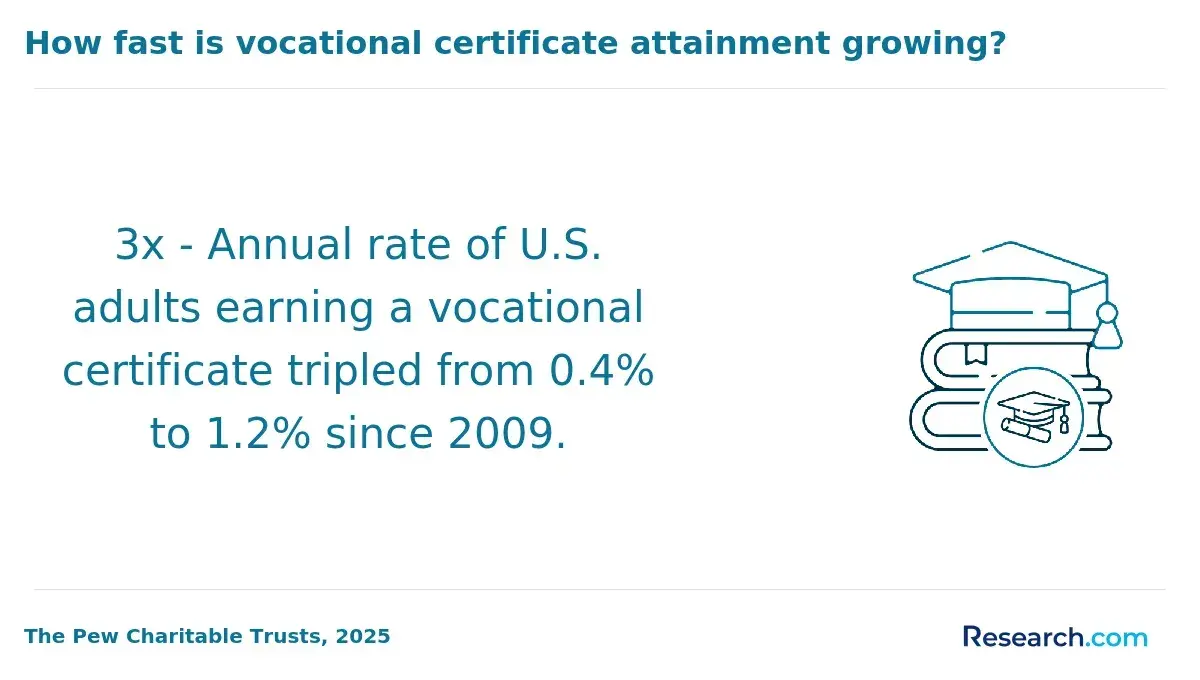
Enrollment status and learning format can change completion time dramatically. Full-time students usually have the shortest route because they can take courses in the intended sequence. Part-time students can still finish successfully, but they need a more deliberate plan because many electrical engineering courses are offered in fixed rotations.
The table below compares common enrollment and format choices. It shows why "online," "part-time," and "flexible" are not automatically faster; they are useful only when the course schedule matches your life and prerequisite needs.
| Format or enrollment choice | Typical effect on completion time | Best fit | Main risk |
| Full-time campus bachelor's program | Shortest standard path, often 4 years if the student stays on sequence | Students who can prioritize school and attend scheduled labs | Heavy technical workload can lead to withdrawals or retakes |
| Part-time bachelor's program | Often extends the timeline to 5 to 8 years depending on credits per term | Working adults, caregivers, and students managing financial constraints | Prerequisite gaps may create long waits between required courses |
| Hybrid electrical engineering program | Can be similar to campus timelines if labs are scheduled predictably | Students who need some flexibility but can travel for labs or intensives | Lab weekends or residencies may conflict with work schedules |
| Online engineering-completion pathway | Can shorten time for prepared transfer students, but not for students missing prerequisites | Students with prior calculus, physics, and lower-division engineering credits | Limited lab options, proctored exams, and synchronous technical sessions |
Online education can be valuable, but electrical engineering is harder to deliver fully online than many business or communication programs because students often need lab access, design tools, hardware kits, and supervised projects. If you are comparing online flexibility across fields, note that executive MBA programs online usually serve working professionals with different scheduling models and fewer lab-based technical sequences.
Before choosing a format, ask the school for a term-by-term plan based on your expected start date, not a generic sample plan. A program that looks flexible on paper may still require one in-person lab or annual course rotation that determines your true graduation date.
Accelerated electrical engineering programs can shorten graduation timelines, but they are not automatically better. Acceleration usually comes from heavier course loads, summer terms, combined bachelor's-to-master's coursework, credit for prior learning, or a cohort model that reduces scheduling gaps. Those features can work well for prepared students but can be difficult for students balancing work, caregiving, or foundational math gaps.
The most realistic accelerated options fall into a few categories:
- Summer and winter terms: These can help students complete general education, math, programming, or technical electives without overloading fall and spring.
- Five-year bachelor's-to-master's pathways: These may allow graduate credits to count toward both degrees, but admission requirements and GPA standards are often strict.
- Engineering-completion programs: These are designed for transfer students who already completed lower-division prerequisites.
- High-credit full-time plans: These can reduce total terms but increase the risk of burnout, withdrawals, and lower grades in key technical courses.
Acceleration looks different in other disciplines. For example, some online masters in communications programs can compress coursework into shorter sessions because they typically do not require the same lab infrastructure, hardware projects, or prerequisite math sequence as electrical engineering.
The table below compares traditional and accelerated approaches. It can help you judge whether a shorter timeline is realistic or whether it simply shifts more risk into each semester.
| Program model | Potential time advantage | Best candidate | When it may not be worth it |
| Traditional four-year bachelor's plan | Predictable sequencing and manageable pacing | Students entering directly from high school with strong math preparation | Students who need to work many hours or begin below calculus |
| Accelerated bachelor's plan | May reduce completion time through heavier loads or extra terms | Students with strong grades, few outside obligations, and high study capacity | Students likely to repeat courses if overloaded |
| Transfer-completion pathway | Can shorten upper-division time if prerequisites align | Community college or military students with engineering-ready credits | Students whose credits transfer mainly as electives |
| Combined bachelor's-to-master's pathway | Can reduce total time for two credentials | Students planning advanced technical roles, research, or specialized engineering work | Students who need to enter the workforce quickly after the bachelor's degree |
Accelerated study makes the most sense when it removes idle time, not when it forces an unsustainable workload. A student who graduates one semester later with stronger project experience, better grades, and an internship may be in a better position than a student who finishes faster but lacks evidence of applied skills.
Work, family, health, transportation, and financial responsibilities can strongly affect electrical engineering completion time. This does not mean students with responsibilities should avoid the major; it means they need a schedule that matches the workload. Engineering courses often require long problem sets, lab reports, group projects, software practice, and exam preparation outside class time.
The most common mistake is treating course credits as the only measure of time. A three-credit circuits course with lab preparation may require far more weekly effort than a three-credit survey course. Students who work substantial hours should be cautious about stacking several high-demand technical courses in the same term.
These planning strategies can reduce delay without ignoring real-life constraints:
- Build a "must-not-miss" course map: Identify required courses offered only once per year and schedule work obligations around them when possible.
- Protect math and core engineering courses: If you must reduce credits, keep the prerequisite chain moving and postpone flexible electives instead.
- Use summer terms strategically: Take general education, programming, or lighter technical electives in summer to keep fall and spring manageable.
- Meet with an advisor before dropping a course: Withdrawing from one prerequisite can shift senior design, graduation, and financial aid timing.
- Plan around caregiving and commute realities: A slightly longer but stable plan is often better than an overloaded plan that leads to stop-outs.
Taking longer can be a rational choice when it protects your grades, mental health, family income, or ability to complete an internship. The goal is not simply to finish fast; it is to finish with the technical competence and transcript strength needed for the roles you want.
Completion time affects cost in two ways: direct education costs and opportunity costs. Direct costs include tuition, fees, books, supplies, transportation, housing, and additional terms. Opportunity cost includes delayed full-time earnings if an extra semester or year pushes back your entry into the engineering workforce.
For context, College Board data published for the 2024-2025 academic year reports average published tuition and fees of $11,610 for in-state students at public four-year institutions and $43,350 at private nonprofit four-year institutions. That difference matters because one extra year at a higher-priced institution can change the ROI calculation even if the academic program is strong.
The table below shows how timing choices can affect financial trade-offs. It does not estimate a universal total cost because tuition, aid, housing, and residency status vary widely; instead, it highlights the decision logic students should use.
| Timeline scenario | Cost effect | ROI consideration | Best use case |
| Four-year full-time completion | Limits extra terms and may reduce living-cost exposure | Earlier workforce entry can improve payback timing | Students who can sustain the planned course load |
| Five-year plan with internship or co-op | Adds time but may include paid experience | Career experience may improve job readiness and employer connections | Students targeting competitive technical roles |
| Part-time six-year or longer plan | May reduce annual tuition pressure but extend fees and time in school | Can preserve income while studying, which may reduce borrowing | Working adults and caregivers |
| Accelerated high-credit plan | May reduce terms but can increase short-term workload and summer tuition | Works best if it does not increase retake risk | Academically prepared students with strong support systems |
Do not assume the shortest timeline has the best ROI. If accelerating causes repeated courses, lost scholarships, lower grades, or missed internships, it can backfire. On the other hand, staying enrolled longer than necessary can raise costs and delay earnings. The best financial plan is the shortest timeline you can complete successfully.
Students should also compare financial aid rules carefully. Some scholarships require full-time status, some aid has lifetime limits, and some employer tuition benefits only reimburse completed courses with minimum grades. These policies can make a slower but steadier path more affordable than a faster plan paid mostly out of pocket.
Graduation timing can influence career outcomes, but not in a simple "faster is always better" way. Employers hiring electrical engineering graduates often look for a combination of degree completion, ABET-aligned preparation, technical projects, internships, software or hardware skills, teamwork, and communication ability.
The labor market context is favorable enough to make planning worthwhile. The Bureau of Labor Statistics projects employment for electrical and electronics engineers to grow 9% from 2023 to 2033, faster than the average for all occupations. For students, this means that finishing efficiently can help them enter a market with solid demand, but the quality of preparation still matters.
Electrical engineering graduates may pursue roles such as design engineer, controls engineer, power systems engineer, electronics engineer, embedded systems engineer, test engineer, field applications engineer, or systems engineer. Students interested in regulated work, public infrastructure, or consulting may eventually consider the Fundamentals of Engineering exam and Professional Engineer licensure, though requirements vary by state and job function.
Timing affects career outcomes in several practical ways:
- Internship cycles: Many engineering internships recruit months in advance, so students who delay key junior-level courses may also delay eligibility for stronger internships.
- Capstone readiness: Senior design projects can become portfolio evidence for employers, especially when they involve power, communications, robotics, embedded systems, or hardware testing.
- Skill currency: Students should leave with current exposure to tools such as MATLAB, Python, SPICE, CAD tools, microcontrollers, instrumentation, and version control when relevant to their track.
- Graduate school timing: Students considering research or specialized areas such as semiconductor devices, power electronics, communications, or controls may benefit from undergraduate research even if it extends the timeline.
If finishing one term later allows you to complete a strong internship, senior project, or undergraduate research experience, the delay may be worthwhile. If delays come from poor advising, unavailable courses, or unnecessary credits, they are red flags to address quickly.
Electrical engineering completion timelines are changing because programs are adapting to student mobility, online learning demand, employer expectations, and rapidly evolving technologies. Students increasingly arrive with dual-enrollment credits, community college coursework, military training, or prior college experience, which can shorten time when credits align but complicate advising when they do not.
Technology is also changing what students need to learn before graduation. AI-enabled design tools, embedded intelligence, electric vehicles, grid modernization, semiconductor demand, renewable energy integration, robotics, and cybersecurity-aware hardware design are influencing electives and project work. These trends do not necessarily make degrees longer, but they can make course selection more important.
Another important change is the growth of hybrid and online support. Even campus-based engineering programs may now use online simulations, remote lab preparation, digital collaboration tools, and recorded lectures. Still, hands-on lab verification remains important in electrical engineering, so students should be cautious about programs that appear to remove too much practical work from the curriculum.
Students comparing education timelines across fields should remember that online-friendly majors can operate differently from engineering. For instance, a photography degree online may emphasize portfolio development and digital production, while electrical engineering must still verify mastery of math, physics, circuits, instrumentation, and design constraints.
The main trend for students is personalization. More schools offer transfer pathways, accelerated terms, industry projects, and flexible formats, but those options only help when paired with accurate advising. The students most likely to finish efficiently are those who build a customized degree map early and update it every term.
To choose an electrical engineering program based on time to completion, look beyond the advertised program length. A four-year plan is useful, but it does not tell you whether the school offers required courses every term, whether labs have enough seats, how transfer credits apply, or how often students in your situation actually graduate on time.
Use the following questions when comparing programs. They are designed to reveal the real timeline, not just the catalog timeline:
- Is the program ABET-accredited, and does that accreditation apply to the exact campus or online format I am considering?
- What is the required math starting point for staying on the four-year plan?
- Which required electrical engineering courses are offered only once per year?
- How many students are delayed by lab capacity, senior design scheduling, or prerequisite bottlenecks?
- Can I see a term-by-term plan based on my transfer credits, work schedule, and intended start term?
- How do co-ops, internships, undergraduate research, and capstone projects fit into the graduation timeline?
- What happens if I need to drop or repeat calculus, physics, circuits, or electronics?
- Are summer, winter, evening, hybrid, or online sections available for bottleneck courses?
- How often will I meet with an engineering advisor rather than only a general academic advisor?
- What percentage of students in this major complete within four, five, and six years?
Watch for red flags: vague transfer answers, no published course rotation, limited lab access, advisors who cannot map prerequisites clearly, or pressure to enroll before you receive a credit evaluation. These issues can add time and cost even when the tuition price looks attractive.
The best program is the one that gives you the shortest realistic path while protecting academic quality, accreditation value, career preparation, and your personal responsibilities. For a well-prepared full-time student, that may be a traditional campus program.
For a transfer student, it may be a completion pathway with strong articulation. For a working adult, including those exploring electrical engineering programs online for veterans, it may be a slower hybrid plan that avoids stop-outs and retakes.
Transfer credits can save significant time, but only when they apply to the right requirements. General education credits may reduce total credits needed, while calculus, physics, programming, and lower-division engineering credits can shorten the actual engineering sequence. The second type usually has a larger impact on graduation timing.
The table below shows how different transfer-credit situations may affect a bachelor's completion plan. The key issue is not just the number of credits accepted, but whether those credits satisfy prerequisites in the electrical engineering major.
| Transfer-credit situation | Likely time saved | Why it matters | What to verify before enrolling |
| Mostly general education credits | 1 semester to 1 year | Reduces elective and distribution requirements but may not unlock engineering courses | Whether credits meet specific degree categories rather than only counting as electives |
| Calculus and calculus-based physics completed | 1 to 2 semesters | Allows faster entry into circuits and upper-division engineering courses | Minimum grade requirements and whether courses are considered equivalent |
| Associate degree in pre-engineering | 1 to 2 years | Can place students into junior-level coursework if articulation is strong | Whether the sending and receiving schools have a current engineering articulation agreement |
| Prior technical or military training | Varies widely | May help with electives but often does not replace ABET-aligned engineering theory courses | Whether credits apply to major requirements or only free electives |
Students often lose time because they wait until after admission to learn how credits apply. That is risky in electrical engineering because a course labeled "physics" or "programming" at one school may not meet the engineering department's standard at another.
To use transfer credits effectively, take these steps before committing to a program:
- Request an official or pre-admission transfer evaluation that separates general education, major, prerequisite, and elective credits.
- Ask whether transferred math and science courses satisfy engineering progression requirements, not just university graduation requirements.
- Compare your accepted credits against a term-by-term electrical engineering plan and identify the first semester when you can enter the core sequence.
- Confirm whether any required labs, capstones, or residency courses must be completed through the new institution.
- Get the evaluation in writing, especially if you are choosing between multiple schools based on projected graduation date.
The best transfer pathway is usually the one with the cleanest prerequisite match, not the one that accepts the most credits overall.
Other Things You Should Know About Electrical Engineering
Yes, but it usually requires starting in calculus or higher, taking full-time course loads, passing prerequisites on schedule, and following the engineering sequence closely. Students who work many hours, transfer credits, change majors, or repeat technical courses may need longer.
Not necessarily. Online or hybrid formats can help prepared transfer students, but electrical engineering still requires labs, projects, exams, and sequenced technical courses. The fastest option is the format with the best course availability for your specific degree plan.
Many bachelor's programs require roughly 120 to 130 credits, depending on the school and curriculum. The exact number matters less than the sequence of required math, science, engineering, lab, and capstone courses.
No. A five-year timeline can be reasonable if it includes co-op experience, internships, undergraduate research, part-time work, or a manageable course load. It becomes a concern when delays are caused by poor planning, unavailable courses, or credits that do not apply to the degree.
- Is Electrical Engineering Hard? - Delta Wye Electric https://deltawye.com/how-difficult-is-electrical-engineering/
- Average time to graduate in engineering? - University of Michigan - College Confidential Forums https://talk.collegeconfidential.com/t/average-time-to-graduate-in-engineering/3603092
- How Long Does It Take to Become an Electrical Engineer? https://bestelectriczone.com/how-long-does-it-take-to-become-an-electrical-engineer/
- Close to finishing my Bachelor's degree in electrical engineering and am lost https://www.physicsforums.com/threads/close-to-finishing-my-bachelors-degree-in-electrical-engineering-and-am-lost.514388/
- Full-time vs Part-time students: A Comparison - TutorChase https://www.tutorchase.com/blog/full-time-vs-part-time-students-a-comparison
- Short Circuited: Electrical Engineering Degrees in the United States https://itif.org/publications/2023/04/24/short-circuited-electrical-engineering-degrees-in-the-united-states/
- How long does it take to get an Engineering Degree? - The Study Abroad Portal https://thestudyabroadportal.com/studyabroadblog/how-long-does-it-take-to-get-an-engineering-degree/
- Full-Time Student Hours vs. Part-Time: What's the Difference? https://www.citizensbank.com/student/articles/full-time-student-hours.aspx