2027 Electrical Engineering Degree Bachelor's-Level ROI Report: Best Career Returns Without Graduate School

Co-Founder and Chief Data Scientist
Electrical engineering students often face a costly question: Should they start earning after their bachelor's degree or delay income for graduate school? The bachelor's path can already be strong. BLS projections published in 2024 show employment for electrical and electronics engineers growing 9% from 2023 to 2033, faster than the average for all occupations.
This guide is for students, parents, and career changers comparing bachelor's-level returns. You'll learn which EE careers, industries, skills, locations, and credentials can improve ROI without assuming a master's or doctorate is required.
Key Things You Should Know
- The strongest bachelor's-level ROI usually comes from roles that combine electrical engineering with software, hardware, semiconductor, power, defense, data center, or automation skills.
- BLS wage data published in 2024 places several EE-accessible occupations above the six-figure median range, including electrical engineers, electronics engineers, computer hardware engineers, and software developers.
- Graduate school is most financially useful when it unlocks a specific target such as advanced R&D, faculty work, specialized chip design, or leadership-not when it is used as a default delay before entering the labor market.
- Which Electrical Engineering Bachelor's Degree Careers Deliver the Highest ROI Without Graduate School?
- Which Industries Reward Electrical Engineering Bachelor's Graduates the Most?
Which Electrical Engineering Bachelor's Degree Careers Deliver the Highest ROI Without Graduate School?
The highest-ROI bachelor's-level electrical engineering careers are usually computer hardware engineering, electronics engineering, embedded systems engineering, power systems engineering, controls engineering, semiconductor test or design support, and software-adjacent engineering roles. These paths tend to pay well because they sit close to revenue-producing products, infrastructure reliability, national security, energy transition projects, or scalable technology platforms.
ROI means more than salary. For an electrical engineering bachelor's degree, it should include tuition and debt, time to full-time employment, internship access, local cost of living, career growth, employer-paid training, and whether a graduate degree is truly necessary for advancement. The best ROI path is often the one that lets you start earning quickly while building specialized skills that employers value.
The table below summarizes bachelor's-level career paths that commonly offer strong returns for EE graduates. Use it as a comparison tool, not as a promise of income, because pay varies by employer, location, clearance requirements, and experience.
| Career path | Why ROI can be strong with a bachelor's degree | Typical bachelor's-level entry route | Graduate school usually needed? |
| Computer hardware engineer | High compensation potential in chips, servers, devices, embedded hardware, and AI infrastructure | EE, computer engineering, digital logic, computer architecture, internships | Not always; useful for advanced architecture or research roles |
| Electronics engineer | Strong fit for defense, aerospace, communications, medical devices, and semiconductors | Circuits, RF, signal processing, lab experience, test equipment skills | Usually not required for applied engineering roles |
| Embedded systems engineer | Blends hardware and software, expanding options across automotive, robotics, IoT, and industrial systems | C/C++, microcontrollers, real-time systems, sensors, internships | Rarely required if the portfolio is strong |
| Power systems engineer | Supported by grid modernization, electrification, renewables, utilities, and data center demand | Power courses, internships with utilities or energy firms, EIT path | Not usually required; PE licensure may matter more |
| Controls or automation engineer | Good returns in manufacturing, robotics, process industries, and industrial automation | Control systems, PLCs, Python or MATLAB, instrumentation | Usually not required |
| Software-adjacent EE role | Higher upside when EE knowledge is paired with firmware, systems software, simulation, or test automation | Programming, data structures, embedded projects, Git portfolio | Not usually required for entry-level roles |
A common mistake is assuming the "best" EE job is simply the one with the highest median pay. A role with a slightly lower starting salary but faster promotion cycles, employer-paid certifications, lower cost of living, or stock compensation can produce better real ROI than a higher-paying job in a very expensive region.
Which Industries Reward Electrical Engineering Bachelor's Graduates the Most?
Industries matter because the same bachelor's degree can produce different financial outcomes depending on what the employer sells, regulates, builds, or protects. EE graduates often see stronger bachelor's-level ROI in industries where technical failure is expensive and where hardware, power, software, safety, or compliance knowledge directly affects business performance.
The table below compares industries that commonly reward electrical engineering graduates without requiring graduate school for the first major career step.
| Industry | Why it can reward EE graduates | Best-fit bachelor's skills | ROI watchout |
| Semiconductors | Chip design, validation, yield, packaging, and test roles support high-value products | Circuits, digital design, verification, Python, lab tools | Advanced design roles may prefer a master's |
| Aerospace and defense | Mission-critical systems, secure communications, radar, avionics, and electronics testing create stable demand | RF, signal processing, systems engineering, documentation, security clearance eligibility | Hiring can depend on citizenship, clearance, and contract cycles |
| Utilities and energy | Grid reliability, renewables integration, electrification, and substations require EE talent | Power systems, protection, load flow, safety standards | Salary growth may be steadier than explosive |
| Data centers and cloud infrastructure | Power distribution, backup systems, cooling coordination, and reliability are central to operations | Power, controls, monitoring, troubleshooting, reliability engineering | Some roles require on-call or site-based work |
| Medical devices | Electronics, sensors, safety testing, and regulatory documentation support high-compliance products | Analog circuits, signal processing, quality systems, embedded systems | Regulated documentation work may be heavier than students expect |
| Industrial automation | Manufacturers pay for engineers who reduce downtime and improve throughput | PLCs, controls, instrumentation, robotics, troubleshooting | Plant environments can involve travel or shift support |
The current trend working in favor of EE graduates is the convergence of electrification, AI infrastructure, advanced manufacturing, and energy resilience. Data centers need power engineers, chip companies need validation engineers, manufacturers need automation engineers, and utilities need grid modernization talent. A bachelor's graduate who can connect theory to practical systems can compete well without immediately adding graduate tuition.
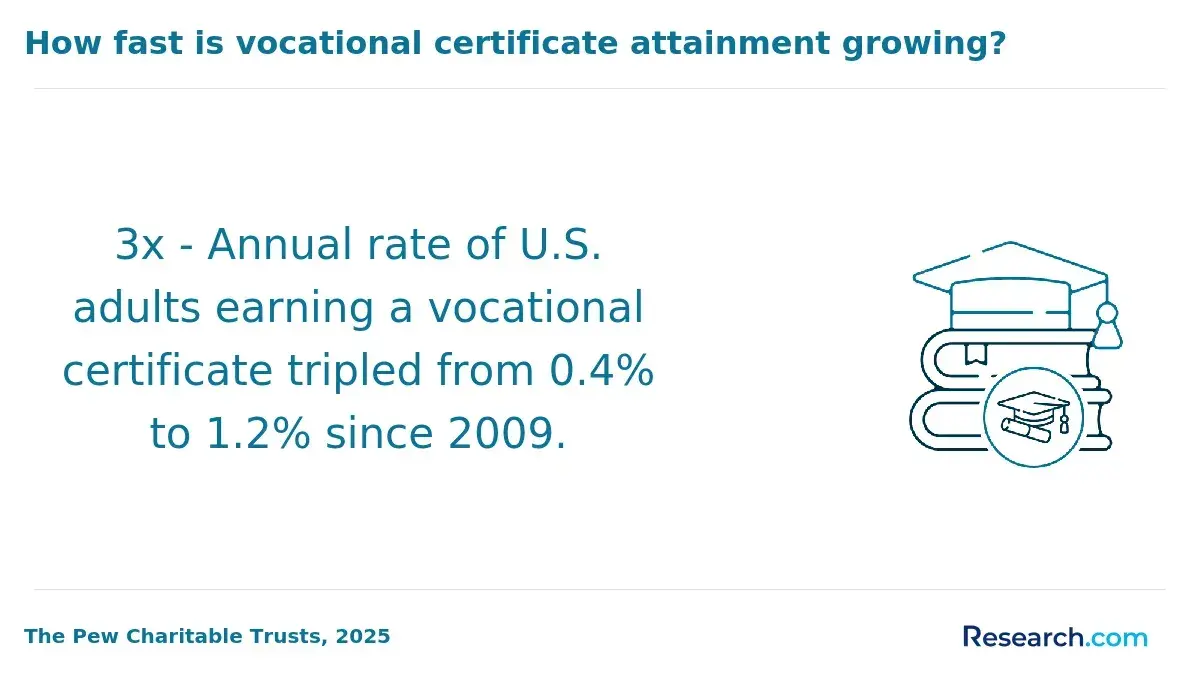
The fastest financial return usually comes from careers that offer full-time employment soon after graduation, do not require licensure before entry, and build marketable experience quickly. For many EE graduates, that means taking an engineering role first and using employer-paid training, certifications, or rotation programs instead of self-funding graduate school right away.
Fast ROI does not always mean the highest lifetime ceiling. It means the graduate begins earning earlier, pays down debt sooner, and gains experience that compounds into promotions or lateral moves.
| Entry-level role | Why payback can be fast | Best early evidence to show employers | Good fit for students who like |
| Electrical design engineer | Direct use of bachelor's coursework in circuits, systems, and design tools | Capstone project, CAD or simulation work, internship | Product design and technical problem-solving |
| Test engineer | Many employers hire bachelor's graduates to validate products, automate tests, and diagnose failures | Lab reports, Python scripts, oscilloscopes, test plans | Hands-on debugging and measurable results |
| Field applications engineer | Combines technical knowledge with customer-facing problem solving and can lead to sales engineering or product roles | Communication skills, circuit knowledge, project demos | Technical consulting and travel |
| Controls engineer | Industrial employers need practical automation skills and often value experience over graduate credentials | PLC projects, control loops, robotics labs | Manufacturing systems and troubleshooting |
| Power engineer trainee | Utilities and energy firms often provide structured development and licensure support | Power coursework, EIT preparation, internship | Infrastructure, reliability, and long-term stability |
| Firmware or embedded engineer | Software-hardware hybrid skills can accelerate earnings and mobility | C/C++, microcontroller project, Git repository | Coding close to hardware |
Students who want the fastest return should prepare before senior year. The most practical sequence is straightforward:
- Choose electives that match a paying market such as power, embedded systems, semiconductors, controls, RF, or signal processing.
- Complete at least one internship, co-op, research assistantship, or industry-sponsored capstone before graduation.
- Build a small portfolio that shows test results, schematics, simulations, code, measurements, and engineering trade-offs.
- Apply to both engineering titles and adjacent titles such as systems engineer, test engineer, applications engineer, and automation engineer.
- Compare offers using total compensation, relocation cost, benefits, training, promotion path, and local rent-not salary alone.
A red flag is delaying job entry because a first offer does not sound like a "perfect" EE title. Many high-ROI careers begin in test, validation, field engineering, or systems support and later move into design, product, management, or specialized technical roles.
Location can change ROI dramatically because engineering salaries and living costs do not rise evenly. A higher offer in a high-cost metro may leave less disposable income than a moderate offer near a lower-cost manufacturing, energy, or defense hub. Students should compare after-rent income, taxes, commute costs, relocation assistance, and long-term employer density.
According to College Board's 2024 Trends in College Pricing and Student Aid, published in-state tuition and fees at public four-year institutions averaged $11,610 for full-time undergraduates in 2024-25.
That figure matters because lower education cost gives graduates more flexibility: they can accept a strong training role, move to a better labor market, or pay debt faster instead of chasing only the highest first salary.
| Location type | Common EE opportunities | ROI advantage | ROI risk |
| High-cost technology metro | Semiconductors, consumer electronics, AI hardware, cloud infrastructure | High compensation upside and dense employer networks | Rent and competition can absorb salary gains |
| Defense and aerospace hub | Avionics, radar, communications, systems engineering, electronics testing | Stable demand and structured advancement | Clearance, citizenship, and contract requirements can limit options |
| Utility and energy region | Power distribution, grid modernization, renewables, substations | Stability, benefits, and licensure support | Geographic mobility may be narrower |
| Manufacturing corridor | Controls, automation, robotics, instrumentation, quality engineering | Fast hands-on experience and lower living costs in many areas | Plant schedules or travel may affect lifestyle |
| Remote or hybrid-friendly employer | Software-adjacent, simulation, documentation, systems support | Potentially better cost-of-living balance | Many hardware roles still require lab or site access |
A practical ROI test is to compare offers using a simple monthly view: expected take-home pay minus rent, loan payment, transportation, insurance, and required savings. This prevents a common mistake: accepting a prestigious location while underestimating how much it costs to live near the job.
Skills raise ROI when they make a bachelor's graduate productive sooner and promotable faster. Employers value EE fundamentals, but the strongest candidates can also simulate, code, test, document, troubleshoot, and communicate trade-offs to non-specialists.
The highest-value skills usually sit at the intersection of electrical theory and real systems. Students should prioritize skills that appear repeatedly in job descriptions for their target industry:
- Programming for engineers: Python, C, C++, MATLAB, Git, test automation, and data analysis help graduates move into embedded systems, validation, controls, and simulation roles.
- Hardware and lab competence: Oscilloscopes, spectrum analyzers, soldering, PCB review, signal integrity basics, and failure analysis show employers that the graduate can work beyond textbooks.
- Power and energy tools: Load flow analysis, protection concepts, renewable integration, safety standards, and power electronics support roles in utilities, EVs, data centers, and grid modernization.
- Controls and automation: PLCs, sensors, industrial networks, robotics, and process control are valuable in manufacturing and infrastructure environments.
- Systems thinking: Requirements, reliability, risk, documentation, and cross-functional coordination become increasingly important as engineers advance.
- Communication: Clear writing, presentations, customer explanations, and technical documentation can separate future leads from individual contributors.
For graduates who discover they prefer stakeholder-facing work, technical marketing, product communication, or documentation-heavy roles, comparing engineering experience with options such as an online masters in communications may make more sense than pursuing a purely technical graduate degree.
The mistake to avoid is collecting random tools without a career target. A student aiming for power systems should not build the same portfolio as a student aiming for firmware. ROI rises when coursework, projects, internships, and job applications tell one coherent story.
Certifications can increase earnings without graduate school when they signal job-ready competence, support licensure, or qualify the graduate for regulated or high-trust work. They are not a substitute for engineering ability, but they can make a bachelor's graduate more competitive for specific roles.
The table below focuses on credentials that can help electrical engineering graduates without assuming immediate graduate enrollment. Requirements, exam rules, and employer value vary, so students should verify details with state boards, certifying bodies, and target employers.
| Credential | Best for | How it can improve ROI | Important limitation |
| FE exam and EIT status | Power, utilities, consulting, public infrastructure | Starts the path toward PE licensure and can strengthen early-career credibility | PE rules vary by state and require supervised experience |
| PE license | Power systems, consulting, public-facing engineering work | Can unlock signing authority, senior responsibility, and consulting opportunities | Not necessary for every EE role, especially many electronics or software-adjacent jobs |
| IPC electronics certifications | PCB design, electronics manufacturing, quality, assembly | Signals familiarity with electronics production and inspection standards | Most valuable when tied to hands-on electronics work |
| PLC or automation vendor certifications | Controls, manufacturing, robotics, industrial automation | Can help graduates qualify for plant, integrator, or automation roles faster | Vendor-specific credentials may not transfer equally across employers |
| CompTIA Security+ or similar security credential | Defense, embedded systems, industrial control security, systems engineering | Supports roles where cybersecurity awareness and compliance matter | Does not replace engineering or clearance requirements |
| Project management training | Engineering coordination, technical lead, product or program roles | Helps engineers move toward leadership and schedule ownership | Usually more valuable after some project experience |
Certification ROI is strongest when the credential appears in job postings you are already targeting. Before paying for any exam, compare the cost, study time, renewal rules, and whether employers in your target region actually request it.
Employer type affects ROI because compensation is only one part of the return. Large companies may offer rotation programs, relocation support, tuition assistance, stock, and structured promotions. Smaller companies may offer broader responsibility earlier. Government and utilities may offer stability and benefits, while startups may offer speed, equity, and risk.
Company size also changes what a bachelor's graduate learns. A large employer may make you a specialist; a smaller employer may make you handle design, testing, vendors, customers, and troubleshooting in the same week. Both can be high-ROI if they match your risk tolerance and career goal.
| Employer type | ROI strengths | Trade-offs | Best fit |
| Large technology or semiconductor company | Strong compensation potential, deep technical teams, advanced tools | Competitive hiring and narrower early responsibilities | Students with strong internships, projects, and specialization |
| Defense contractor | Stability, complex systems, clearance-driven career value | Clearance rules, documentation, and contract dependence | Students interested in aerospace, RF, systems, security, or electronics |
| Utility or public infrastructure employer | Benefits, stability, PE pathway, long-term demand | Salary growth may be more structured and less flexible | Students who value reliability and public-impact work |
| Manufacturing or automation firm | Fast practical learning and visible business impact | Plant support, travel, or urgent troubleshooting may be required | Hands-on problem solvers |
| Startup or small engineering company | Broad responsibility, rapid learning, product exposure | Higher business risk and less formal training | Self-directed graduates comfortable with ambiguity |
| Government lab or agency | Mission-driven work, stability, research exposure | Hiring timelines and pay structures can be rigid | Students interested in public service, research, or national infrastructure |
As engineers move toward leadership, business education can sometimes offer better ROI than another technical degree. Mid-career professionals comparing management tracks may consider executive MBA programs online only after confirming that their employer values business leadership credentials for promotion.
A common red flag is choosing an employer based only on brand name. Ask what you will actually work on, who will mentor you, how promotions happen, whether tuition assistance is available, and how quickly early-career engineers take ownership of meaningful work.
Emerging career paths can increase the future ROI of an electrical engineering bachelor's degree because they expand where EE knowledge is used. The most promising paths are not purely theoretical; they connect electricity, hardware, data, software, reliability, and physical infrastructure.
These emerging areas are worth watching because they align with large investment trends in the U.S. labor market, including electrification, advanced manufacturing, AI infrastructure, cybersecurity, and energy resilience:
- AI hardware and data center power: EE graduates can work on power distribution, backup systems, thermal coordination, hardware validation, and reliability for AI computing infrastructure.
- Semiconductor manufacturing and packaging: Roles in test, yield, process integration, validation, and packaging can reward bachelor's graduates who understand circuits and measurement.
- Electric vehicles and battery systems: Power electronics, charging infrastructure, motor drives, battery management, and safety testing create EE-relevant roles beyond traditional automotive work.
- Grid modernization: Utilities and energy firms need engineers for protection, smart grid systems, renewable integration, substations, and resilience planning.
- Industrial cybersecurity: Engineers who understand operational technology, controls, and security can support safer factories, utilities, and infrastructure systems.
- Robotics and autonomous systems: Sensors, controls, embedded systems, motor control, and real-time processing make EE graduates valuable in automation-heavy environments.
- Imaging, sensors, and computer vision hardware: Students drawn to cameras, optics, and visual systems should distinguish engineering roles from creative media paths such as a photography degree online.
The best strategy is to build a foundation that can move across emerging fields: circuits, programming, signal processing, controls, power, statistics, and systems documentation. Specialize enough to get hired, but avoid becoming so narrow that a single technology cycle controls your career.
Students should evaluate ROI by comparing the full cost of the degree with realistic bachelor's-level outcomes, not by assuming every EE graduate follows the same path. The smartest analysis includes education cost, debt, internships, time to employment, industry, location, employer type, and whether graduate school would unlock a specific role.
A practical ROI review should answer the following questions before enrollment, before senior year, and before deciding on graduate school:
- What is the total net cost after grants, scholarships, transfer credits, family support, and likely borrowing?
- Is the program accredited by ABET or otherwise recognized by employers and licensing pathways relevant to your goals?
- Does the curriculum include the concentration you want, such as power, electronics, embedded systems, controls, RF, or computer engineering?
- What internship, co-op, senior design, undergraduate research, and employer recruiting opportunities are available?
- Which local or national industries hire from the program, and for what job titles?
- How much debt would you carry compared with conservative entry-level pay in your target occupation and region?
- Would graduate school create access to a specific role, or would work experience produce a better return first?
- Does the school publish outcomes by major, not just institution-wide employment numbers?
For most students, a bachelor's degree in electrical engineering is enough to begin a strong engineering career if the program is credible and the student graduates with practical experience. Graduate school makes the most financial sense when it is funded, employer-supported, or clearly tied to a specialized role with higher compensation or access.
The biggest mistake is treating ROI as a single salary number. Better questions are: How fast can I get employed? How much debt will I carry? Which skills will compound? What industries are hiring? Can I advance without leaving the workforce? If those answers are strong, the bachelor's-level route can deliver excellent returns without graduate school.
The best salary growth over time often comes from roles where an EE graduate becomes difficult to replace: systems architect, senior hardware engineer, principal controls engineer, power systems lead, semiconductor validation lead, engineering manager, or technical product leader.
These paths reward experience because engineers learn not only the equations, but also failure modes, manufacturing constraints, safety standards, supplier issues, and customer requirements.
BLS wage data published in 2024 shows that engineering management and computer hardware roles sit among the higher-paying destinations connected to engineering experience. For the reader, the takeaway is that the bachelor's degree can be enough to enter the ladder, but long-term ROI depends on moving from task execution to ownership of systems, budgets, teams, or product decisions.
| Growth path | How salary growth typically happens | What to build after the bachelor's degree | When graduate school may help |
| Senior technical specialist | Deep expertise in circuits, power, RF, controls, embedded systems, or verification | Advanced projects, patents, design reviews, technical leadership | Useful for research-heavy or theory-heavy roles |
| Systems engineer or architect | Broader responsibility for how hardware, software, power, safety, and reliability fit together | Cross-functional project experience and requirements ownership | Helpful but not always required |
| Engineering manager | Growth comes from leading people, budgets, schedules, and technical risk | Mentoring, project planning, stakeholder communication | MBA or management training may be more relevant than an EE master's |
| Product or applications leadership | Combines technical credibility with customer, market, and business judgment | Customer-facing experience, documentation, competitive analysis | Usually optional |
| Advanced R&D | Payoff comes from specialized innovation in chips, communications, energy, or devices | Research experience, publications, advanced math, simulation | Often valuable and sometimes expected |
Graduate school can improve ROI when it is targeted. For example, students aiming for research labs, university teaching, or highly specialized technical leadership may eventually compare master's options or PhD programs, but the financial case should include lost wages, tuition, funding, and the specific roles the credential unlocks.
The most avoidable mistake is treating a master's degree as a universal salary booster. Employers often pay more for demonstrated responsibility, scarce technical skills, clearance eligibility, customer trust, or leadership impact than for an additional credential by itself.
Other Things You Should Know About Electrical Engineering Bachelor's Degree ROI
Yes, for many roles. A bachelor's degree is the standard entry credential for electrical, electronics, controls, power, test, embedded, and systems engineering jobs. Graduate school is more important for specialized research, some advanced chip design roles, academia, or certain leadership tracks.
Computer hardware, embedded systems, electronics, power systems, controls, semiconductor validation, and software-adjacent engineering roles often provide strong ROI. The best choice depends on your skills, location, internships, employer access, and tolerance for hands-on, software, field, or design work.
Often, yes. Working first helps students learn which specialization pays off, reduces the risk of paying for the wrong graduate program, and may lead to employer tuition assistance. A master's makes more sense when it clearly supports a target role or is funded.
The biggest mistake is choosing based only on starting salary or assuming graduate school is always required. Students should compare debt, local cost of living, industry demand, internships, skill fit, promotion paths, and whether credentials such as EIT, PE, automation, or security certifications matter in their target field.
- BS in Electrical Engineering Outcomes | University of Bridgeport https://www.bridgeport.edu/news/what-can-you-do-with-bs-in-electrical-engineering/
- Does College Pay Off? A Comprehensive Return On Investment Analysis - FREOPP https://freopp.org/whitepapers/does-college-pay-off-a-comprehensive-return-on-investment-analysis/
- How Much Student Loan Debt Is Too Much? https://www.savingforcollege.com/article/how-much-student-loan-debt-is-too-much
- The Long-Term Effects of Student Loans | ACE Blog https://ace.edu/blog/the-long-term-effects-of-student-loans/
- Career Prospects of an Electrical Engineering Graduate https://sureexpo.com.my/post/career-prospects-of-an-electrical-engineering-graduate
- Is Rising Student Debt Harming the U.S. Economy? | Council on Foreign Relations https://www.cfr.org/backgrounders/us-student-loan-debt-trends-economic-impact
- How Student Loan Debt Impacts Your College ROI https://www.lendkey.com/blog/student-loans/how-student-loan-debt-impacts-your-college-roi/
- Electrical Engineer Salary in the United States 2026 | Cake https://www.cake.me/resources/industry-job-overview/electrical-engineer-salary