
2027 Most Valuable Online Master's in Counseling Degree Programs Ranking in the Midwest

Co-Founder and Chief Data Scientist
Exploring online master's degree programs in counseling can be a big step, especially for students in the Midwest. This article introduces the 2027 Most Valuable Online Master's in Counseling Degree Programs Ranking in the Midwest, created by the Research.com team of data scientists. It's designed to help you make an informed choice about which programs truly stand out.
Discovering the right counseling degree can open doors to rewarding careers and personal growth. Reading this guide will give you clear insights and confidence as you plan your educational journey.
Key benefits of getting online counseling degree in the Midwest
- Counseling degree graduates in the Midwest can earn competitive salaries, such as $60,080 annually for Licensed Mental Health Counselors and Substance Abuse Counselors, or up to $134,440 for Clinical Supervisors, providing strong financial stability.
- Graduates from Midwest universities often find diverse career paths, including roles as Licensed Professional Counselors, Marriage and Family Therapists, and Clinical Supervisors, offering flexibility and growth opportunities.
- Online counseling degrees from well-known Midwestern schools offer convenience and the ability to balance work, family, and study, making it easier to achieve career goals at your own pace.
- Key benefits of getting online counseling degree in the Midwest
- What can I expect from online counseling degree in the Midwest?
- Where can I work with online counseling degree in the Midwest?
- How much can I make with online counseling degree in the Midwest?
- 2027 Most Valuable Online Master's in Counseling Degree Programs Ranking in the Midwest
- Key Findings
- How long does it take to complete online counseling degree in the Midwest?
- Licensure and Certification Requirements for Online Counseling Graduates
- What's the difference between online and on-campus counseling degree?
- Licensure and Certification Requirements for Online Counseling Graduates in the Midwest
- What is the average cost of online counseling degree in the Midwest?
- Licensure Requirements for Counselors in the Midwest
- What financial aid is available to online counseling degree students in the Midwest?
- Licensure and Clinical Requirements
- What are the prerequisites for enrolling in online counseling degree program in the Midwest?
- Licensure Requirements in the Midwest
- What courses are typically in online counseling degree programs in the Midwest?
- What types of specializations are available in online counseling degree programs in the Midwest?
- How do you choose the best online counseling degree in the Midwest?
- What career paths are available for online counseling degree students in the Midwest?
- What is the job market for online counseling degree in the Midwest?
- Top Trending Counseling Rankings
- See What Experts Have To Say About Studying Counseling
What can I expect from online counseling degree in the Midwest?
The average cost of an online counseling degree in the Midwest generally swings between $15,000 and $35,000 for full completion. Imagine a graduate from a well-recognized Midwestern university juggling family life and a part-time job while diving into coursework that feels personally enriching and professionally promising-all without the burden of sky-high tuition. Many students find this investment manageable thanks to scholarships and financial aid tailored for working adults aiming to shift careers or deepen their expertise.
One graduate from a prominent state university shared how accessing affordable, accredited programs made pursuing licensure not just a dream but a practical step forward. These programs frequently balance rigorous clinical training with flexible schedules, offering a lifeline to those living in both bustling cities and rural expanses of the Midwest. With CACREP-accreditation often guaranteed, the money spent aligns with quality education and meaningful career growth.
Where can I work with online counseling degree in the Midwest?
Graduates from popular Midwest universities offering online counseling degrees often find themselves woven into the vibrant tapestry of community mental health centers in Illinois, Michigan, or Ohio - places where hope and healing are daily currencies. Imagine joining a team in Detroit, providing therapy and case management in neighborhoods that pulse with resilience.
Others dive into school counseling, supporting young minds in Indiana or Wisconsin schools, where educators and families lean on licensed counselors to champion students' emotional and social growth. It's more than a job; it's guiding futures in hallways buzzing with potential.
Some graduates craft private practices, blending urban and rural perspectives unique to the Midwest. Envision a counselor in Minnesota offering marriage therapy one day and substance abuse support the next, adapting to the patchwork needs of communities.
Hospitals in Missouri beckon counselors skilled in behavioral health integrations, collaborating with healthcare teams to transform patient care. Meanwhile, social service agencies in Iowa and Nebraska celebrate counselors as frontline heroes in crisis intervention, fueled by expanded funding and unwavering purpose.
Such paths, carved from credentials earned online through trusted institutions, bring the Midwest's diverse needs to life - a playground of opportunity where passion meets profession.
How much can I make with online counseling degree in the Midwest?
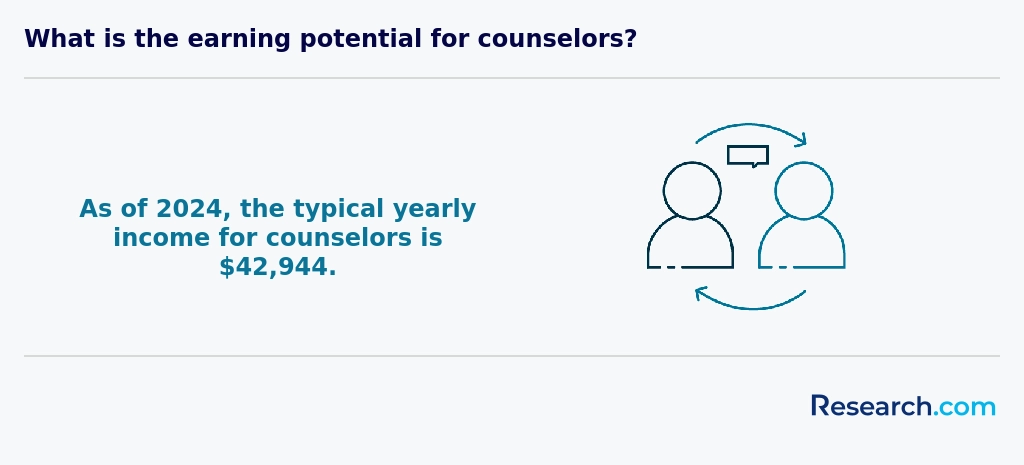
Graduates from Midwestern universities like the University of Iowa or Illinois State often find their online counseling degrees open doors to rewarding salaries that reflect both regional economies and their growing expertise. For instance, a Licensed Professional Counselor (LPC) in this area typically earns a mean annual wage around $52,360, enough to support a comfortable lifestyle in cities like Des Moines or Springfield.
Step into specialized roles, and the paycheck brightens. Licensed Mental Health Counselors or Substance Abuse Counselors, common career paths for Midwestern grads, earn near $60,080 annually. Imagine a recent graduate applying state-of-the-art therapy techniques learned online, now earning this while building community in places like Minneapolis or St. Louis.
Marriage and Family Therapists command even more, with a mean wage of $68,730-a reflection of their critical role in strengthening families across Chicago's suburban neighborhoods. Meanwhile, clinical supervisors, often veteran counselors from programs at universities like Michigan State, can reach impressive earnings exceeding $130,000, combining deep expertise with leadership.
Across the Midwest, the journey from student to professional is not only financially promising but deeply fulfilling, as graduates enter rewarding careers that pay well and impact lives daily.
2027 Most Valuable Online Master's in Counseling Degree Programs Ranking in the Midwest
How do we rank schools?
Investing in your education is a significant decision that can profoundly impact your future, and the Research.com team recognizes the importance of supporting you in making well-informed choices. To aid prospective students seeking quality online master's degrees in counseling across the Midwest, we have carefully developed the "2027 Most Valuable Online Master's in Counseling Degree Programs Ranking in the Midwest." Our dedication to quality, credibility, and accuracy is demonstrated through rigorous research and analysis.
We utilized the following reputable data sources to ensure a comprehensive evaluation of counseling programs:
By consulting this ranking, readers will gain valuable insights into the most valuable online counseling degrees in the Midwest, empowering them to select programs that best align with their career goals and personal circumstances. For a detailed description of our evaluation process, please visit our Research.com methodology page.


# 8 position
Walden University
Master of School Counseling


Key Findings
- The cost of a master's degree in counseling in the Midwest typically ranges from $15,000 to $30,000, depending on the type of institution and program format.
- Most states require a master's degree, 2,000 to 3,000 supervised clinical hours, and passing the National Counselor Examination (NCE) for licensure.
- CACREP accreditation is important to ensure the program meets state licensure requirements.
- The job market for mental health counselors in the Midwest is expected to grow by about 16% over the next decade.
- Starting salaries for graduates are usually between $40,000 and $50,000 annually, with experienced counselors earning $60,000 to $70,000 per year.
- Many online programs offer practical experiences like virtual simulations and local practicum placements to develop counseling skills.
How long does it take to complete online counseling degree in the Midwest?
Imagine juggling a full-time job in bustling Chicago while diving into the rigorous yet rewarding world of counseling courses at a respected Midwestern university. Most online counseling degrees here unfold over about two years if you're studying full-time, roughly four semesters packed with 60 to 70 credit hours. Graduates from popular schools in Illinois and Ohio often describe this journey as a marathon paced with bursts of intense learning and reflective pauses, perfectly syncing with personal commitments.
For those weaving studies around busy family lives, a part-time route stretches the timeline to three years or more, allowing the comfort of flexibility without rushing the depth of knowledge. Some brave souls tackle accelerated programs, finishing in as little as 18 months, embracing a whirlwind of coursework that demands sweat and sheer determination.
Midwestern schools also blend in about 600 hours of hands-on clinical practicum, making the degree not just a paper chase but a lived experience. This blend of study and real-world practice builds confidence and connection, crafting counselors ready to make a heartfelt difference.
Licensure and Certification Requirements for Online Counseling Graduates
After earning an online master’s in counseling, graduates must navigate state licensure processes to practice legally. Each Midwest state has its own board of counseling with specific criteria, but most follow these core steps: 1. Degree and Accreditation: Graduate from a CACREP-accredited program to ensure your coursework meets licensure prerequisites. 2. Supervised Experience: Complete 2,000–3,000 post-degree clinical hours under a board-approved supervisor. For example, Illinois requires 3,000 hours over no less than two years, while Indiana mandates 2,000 hours. 3. Examination: Pass the National Counselor Examination (NCE) administered by the National Board for Certified Counselors (NBCC). Some states also require the National Clinical Mental Health Counseling Examination (NCMHCE). 4. State Application: Submit official transcripts, verification of supervised hours, exam scores, and a licensure fee to your state board. Processing times range from 4 to 12 weeks. 5. Continuing Education: After initial licensure, counselors typically renew every two years, completing 20–40 continuing education units (CEUs) on ethics, cultural competence, or specialty topics. Choosing a program that aligns with licensure timelines can simplify this journey. Prospective students often ask which counseling degree program easy track minimizes bureaucratic hurdles-look for offerings with built-in practicum placements and exam prep modules. By understanding and planning for these requirements early, online counseling graduates in the Midwest can transition smoothly into licensed professional roles.
What's the difference between online and on-campus counseling degree?
Imagine juggling a full-time job in Chicago while attending Northern Illinois University's online counseling program - the flexibility is a game-changer. Online students in the Midwest often praise the ability to log in after dinner, avoiding the snowed-in campus commute, yet still completing crucial in-person practicum hours close to home in places like Peoria or Grand Rapids. This blend creates a hybrid rhythm that feels tailored to real life.
Contrast that with on-campus learners at the University of Michigan, thriving amid face-to-face mentorship, spontaneous hallway chats, and immediate access to campus counseling labs, where learning pulses with energy. Their mornings revolve around structured schedules and community vibes, fostering connections not just with professors but with local agencies offering internships.
Cost-wise, online at public Midwestern schools often softens the financial load, hovering around $8,000 yearly, while private campuses can stretch beyond $20,000. Online learners savor saving on commuting and housing, cushioning budgets for coffee-fueled study nights.
Ultimately, Midwest online counseling students weave education into their existing ecosystems, crafting personalized journeys filled with both digital innovation and grounded local experience.
Licensure and Certification Requirements for Online Counseling Graduates in the Midwest
To practice as a counselor in the Midwest, graduates of online counseling programs must meet specific licensure and certification requirements, which can vary by state. Generally, these requirements include earning a master's degree in counseling from an accredited program, completing a certain number of supervised clinical hours, and passing a licensure exam. In the Midwest, states such as Illinois, Indiana, and Ohio require counselors to be licensed as Licensed Professional Counselors (LPCs) or Licensed Mental Health Counselors (LMHCs). The licensing process typically involves submitting an application, paying a fee, and passing the National Clinical Mental Health Counselor Examination (NCMHCE) or the National Counselor Examination (NCE). Some states may also require additional certifications, such as the Certified Clinical Mental Health Counselor (CCMHC) or the Certified Professional Counselor (CPC). It is essential for graduates! to research the specific requirements in their state and understand the steps needed to become a licensed counselor. Additionally, many employers require or prefer candidates with certifications like the Certified Rehabilitation Counselor (CRC) for rehabilitation counseling roles or the National Certified School Counselor (NCSC) for school counseling positions. By obtaining the necessary licensure and certifications, online counseling graduates in the Midwest can demonstrate their expertise and commitment to the field, enhancing their job prospects and career advancement opportunities.
What is the average cost of online counseling degree in the Midwest?
Imagine a graduate from a well-regarded Midwestern university sharing how they navigated the financial path of their online counseling degree. For many like them, the average cost settles around $29,700 in total tuition, a figure that balances ambition with accessibility. Residents attending an in-state public college typically find the experience more wallet-friendly, investing roughly $16,752 over their course of study. This makes pursuing an affordable online counseling master's program in the Midwest a realistic dream for those determined to make a difference in mental health.
Out-of-state students often encounter steeper price tags, with costs soaring to about $43,056 for the full online counseling degree journey. Private Midwestern institutions, known for their premium resources and specialized faculty, can push tuition even higher. Yet graduates frequently reflect fondly on the value they received, highlighting flexibility and program quality as key benefits that justify the investment.
One notable aspect is how these students manage their tuition burden-many tap into financial aid or explore flexible payment options offered by their schools, crafting a path tailored to their unique needs. For those curious about beginning their counseling studies without undue strain, exploring a counseling degree program easy to enter is often a vital step. Overall, the average cost of online counseling degrees in the Midwest weaves together affordability, opportunity, and purposeful education in an encouraging mosaic.
Licensure Requirements for Counselors in the Midwest
Obtaining licensure is a pivotal step after earning your online master’s in counseling, ensuring you meet state-mandated standards for professional practice. Most Midwest states require graduation from a CACREP-accredited program, completion of 2,000–3,000 supervised clinical hours, and a passing score on a recognized exam such as the National Counselor Examination (NCE) or the state-specific jurisprudence exam. These requirements safeguard client welfare and enhance your credibility as a mental health professional. While each state sets its own timelines and documentation procedures, common elements include:
- Accredited Degree: Completion of a master’s in counseling from a CACREP-accredited institution is accepted in Illinois, Indiana, Michigan, Minnesota, Ohio, Wisconsin, and Iowa.
- Supervised Experience: Post-graduation, candidates must accrue 2,000–3,000 hours of supervised clinical practice under a licensed supervisor, often within two to three years.
- Examination: Passing the NCE or a state jurisprudence exam is mandatory; some states also offer the Counseling Performance Assessment (CPA).
- Application and Fees: Submission of official transcripts, supervision logs, background checks, and application fees (typically $100–$300) to the state licensing board. State Variations and Resources:
- Ohio: Requires 3,000 hours of supervised work and passage of both the NCE and the Ohio Counselor, Social Worker, and Marriage and Family Therapist jurisprudence exam. For students in Ohio looking to minimize costs while meeting CACREP accreditation standards, see Cheapest Counseling Degree Programs Ranking in Ohio.
- Illinois: Mandates 3,000 supervised hours and the Illinois Jurisprudence Exam in addition to the NCE.
- Indiana and Wisconsin: Each requires 2,000–2,500 post-graduate hours plus successful NCE completion; both states accept telehealth experience toward clinical hours.
- Michigan, Minnesota, and Iowa: Typically require 2,000 hours and the NCE, with Minnesota also offering the option of the Counseling and Psychotherapy Theory and Practice licensure exam. Planning Ahead: Early engagement with your program’s licensing advisor can streamline the process-track supervision hours meticulously, prepare for your exam with dedicated study materials, and schedule your jurisprudence exam promptly after degree completion. Staying informed on re-licensure and continuing education requirements (often 20–30 hours of approved CEUs every two years) will ensure your credentials remain active and in good standing across the Midwest.
What financial aid is available to online counseling degree students in the Midwest?
Picture yourself logging into your online counseling course from a cozy Midwest café, knowing that the financial weight isn't crushing your spirit. Many graduates from the University of Missouri and The Ohio State University recall how merit-based scholarships, sometimes over $5,000 annually, lifted their burdens, letting them focus on learning rather than loans. The FAFSA is your portal to federal aid like Direct Unsubsidized Loans and Grad PLUS Loans-tools with interest rates around 6% to 7% that, while real, feel manageable when you see the road ahead.
State programs in Illinois, Indiana, and Michigan often act like unseen allies, offering grants that whisper encouragement from the sidelines. Imagine a Michigan counseling student applying the Illinois MAP grant to supplement her tuition, feeling her financial puzzle slowly assembling. Meanwhile, the American Counseling Association opens exclusive treasure chests of $500 to $3,000 scholarships, acknowledged by many as essential stepping stones.
And don't underestimate the power of your employer-whether in healthcare or education-to invest in your dreams through tuition reimbursement, turning your daily grind into a victory march toward your degree.
Licensure and Clinical Requirements
Graduating with an online master’s in counseling is just the first step toward practicing professionally. In the Midwest, you must meet specific accreditation, exam, and supervised-practice standards to earn licensure.
- Accreditation: Enroll in a CACREP-accredited program to satisfy most state board eligibility. For affordable options, see cacrep accredited online counseling programs.
- Practicum/Internship: Complete 600–1,000 supervised hours, integrating virtual coursework with in-person placements in clinical or school settings.
- Licensing Exam: Pass the National Counselor Examination (NCE) or the National Clinical Mental Health Counseling Examination (NCMHCE), as required by your state.
- Post-Graduate Supervision: Accrue 2,000–3,000 additional supervised hours under a licensed counselor before applying for independent licensure.
Planning for these steps early ensures a smoother transition from student to licensed practitioner.
What are the prerequisites for enrolling in online counseling degree program in the Midwest?
Ready to step into the counseling realm from your Midwest living room? Most online counseling programs here, like those at popular universities such as the University of Illinois or Michigan State University, ask for a solid bachelor's degree first. It doesn't always have to be psychology, but imagine a graduate reflecting on their foundational human development courses and how those early lessons paved the way for their master's journey.
Official transcripts with a respectable GPA-usually around 3.0-act as your academic passport. One graduate recalls nervously sending hers off, only to feel triumph when it opened doors to her dream program. GRE scores? Some schools ask, others don't-so think of it as a surprise twist in your application story; check with your chosen school to avoid surprises.
Professional or volunteer experience in counseling or community service can turn your application from ordinary to compelling. A student from a Midwestern college shared how volunteering at a local shelter gave her practical insight, enriching her studies profoundly.
Most importantly, ensure the program holds CACREP accreditation. This seal of approval, required by states like Illinois and Michigan, guarantees your hard work translates into real licensure opportunities without unexpected detours.

Licensure Requirements in the Midwest
Most Midwest states require these core components to become a licensed professional counselor:
- Accredited degree: Completion of a regionally and CACREP-accredited master’s program; see our cacrep accredited online counseling programs to ensure eligibility.
- Supervised practice: 2,000–3,000 hours of supervised clinical experience under a qualified supervisor.
- Licensure exam and application: Passing the NCE or NCMHCE, submitting official transcripts, background checks, and any state-specific jurisprudence exams.
State boards vary in hour requirements, exam formats, and renewal procedures. Always verify guidelines with your state licensing board to meet all criteria for full credentialing and practice authority.
What courses are typically in online counseling degree programs in the Midwest?
Imagine diving into a counseling program offered by a respected Midwest university, where courses aren't just lessons but journeys into human complexity. Graduates from these programs often recall navigating Human Growth and Development as if mapping the emotional rollercoaster of life itself, from childhood curiosity to the wisdom of late adulthood. At institutions known across the Midwest, Counseling Theories and Techniques feels less like study and more like learning the secret languages of minds through cognitive-behavioral or person-centered approaches.
One graduate described Group Counseling as an eye-opening pulse on real human connection, where the virtual classroom felt alive with shared stories and breakthroughs. Career Counseling courses prepare students to become navigators for those bewildered by life's vocational crossroads. Meanwhile, Multicultural Counseling opens doors to empathy through vivid tales of diverse Midwest communities, from bustling cities to quiet farms.
Research and Program Evaluation equip learners with detective skills to decode what works in counseling, and Ethics brings a grounding compass of legal wisdom. Practical Assessments teach you to read clients' needs like an open book, preparing students to serve their varied, vibrant neighborhoods across the Midwest.
What types of specializations are available in online counseling degree programs in the Midwest?
In the realm of Midwest online counseling degree specializations, students often find themselves drawn into vibrant roles that echo real human stories. Graduates from universities known for their counseling programs frequently share how clinical mental health counseling awakened their passion, preparing them to guide individuals overcoming deeply personal mental health battles in community centers or private practices. Imagine the empathy cultivated when working through the emotional labyrinths faced by patients, shining light where shadows once prevailed.
Another favored trajectory, school counseling, equips learners with tools to nurture the growth of children and adolescents within K-12 settings across Midwestern states. Graduates speak of profound satisfaction supporting young minds through academic and social challenges, especially when their programs integrate state licensure with sensitivity to local educational demands-perfect for those exploring Midwest online counseling programs focus areas.
Marriage and family therapy opens windows into the intricate dynamics of relationships, inspiring counselors to restore harmony in families and couples. Meanwhile, addiction counseling tackles tough substances use disorders head-on, a vital mission given the opioid crisis in the heartland. Those who pursue these paths often report a deep sense of purpose and community impact.
For those budgeting their education, the Cheapest Counseling Degree Programs Ranking in Ohio highlights affordable options that balance cost with CACREP accreditation, ensuring graduates enter the field with credibility and confidence.
How do you choose the best online counseling degree in the Midwest?
Choosing the best online counseling degree programs Midwest requires more than just scanning websites; it's about stepping into the shoes of those who've walked the path. Imagine a graduate navigating the winding curves of licensure in Illinois, relieved to find their CACREP-accredited program not only met but exceeded the clinical hours mandated by the state. The comfort of a curriculum tailored for local licensure can be the difference between confusion and confidence.
Then there's tuition-one graduate fondly recalls swapping pricey programs for an affordable online counseling degree in Midwest offered by a public university, where in-state discounts made a transformative education feel remarkably within reach. Picture balancing late-night study sessions with weekend work, energized by asynchronous classes that fit into hectic schedules, yet connected to community through hands-on internships nearby.
These students often ponder career choices, exploring paths maybe like you, curious about careers for introverts that pay well. Success blooms when program flexibility, state requirements, and personal goals intertwine seamlessly, shaping a journey as unique as your future clients' stories.
What career paths are available for online counseling degree students in the Midwest?
Graduates with an online counseling degree in the Midwest find themselves stepping into a vibrant mosaic of career paths that echo the heartbeats of their communities. From bustling classrooms in Ohio's universities to serene outpatient clinics scattered across Minnesota's plains, these professionals breathe life into the roles of mental health counselors, school counselors, marriage and family therapists, and substance abuse specialists. One graduate from a well-known Midwest college shares how their online journey empowered them to support rural families grappling with addiction, turning hope into healing with every session.
In bustling schools across Illinois, online counseling career seekers thrive as school counselors guiding young minds through academic challenges and emotional growth. Midwest universities renowned for their flexible online programs equip students with skills tailored to regional needs, making these roles deeply meaningful. For those curious about accessible education avenues, exploring the easiest master degree online options can open doors to a promising future in counseling. The Midwest's demand for compassionate, skilled counselors ensures graduates become anchors of support in neighborhoods seeking understanding and change.
What is the job market for online counseling degree in the Midwest?
The job market for online counseling degree graduates in the Midwest pulses with opportunity. Graduates from popular schools like Northwestern or the University of Michigan often share stories of landing roles in busy urban schools or community health centers, where their skills help shape brighter futures. The demand is tangible; counseling positions in healthcare, education, and social services are steadily opening, fueled by a rising awareness of mental health needs across suburban and city landscapes. This positive landscape reflects the broader Midwest online counseling degree job outlook, where steady salaries and growth prospects bring fresh hope to new counselors.
One graduate recalled how their online education seamlessly met the state's licensure demands, enabling fast entry into local practice. Another found excitement in telehealth opportunities, expanding access to clients beyond traditional settings.
Tuition for online Master's degrees in counseling often ranges competitively, making them a practical choice for many. For those exploring options, it's also wise to consider certifications for jobs that pay well alongside their degree to maximize career versatility and salary growth.
Frequently Asked Questions About counseling
Online counseling degree students in the Midwest can maximize their learning by actively engaging with their program's virtual resources. Many Midwestern schools offer synchronous classes, allowing real-time interaction with instructors and peers, which enhances understanding and networking.
Students should take advantage of practical experiences such as internships or practicum placements approved by their university, as hands-on work is crucial for counseling licensure in states like Illinois and Ohio. According to the Council for Accreditation of Counseling & Related Educational Programs (CACREP), accredited programs in the region emphasize fieldwork to meet state requirements.
Additionally, joining regional counseling associations, like the Ohio Counseling Association, can provide networking, mentorship, and professional development opportunities tailored to local licensure laws and job markets.
The counseling field is evolving, with several emerging niches gaining prominence in the Midwest. One fast-growing area is addiction counseling, driven by ongoing opioid and substance use challenges in states like Ohio and Indiana. The U.S. Bureau of Labor Statistics projects a 25% growth for addiction counselors through 2031.
Another expanding niche is telehealth counseling, which gained momentum during the COVID-19 pandemic and remains popular due to accessibility in rural Midwest communities.
Also notable is trauma-informed counseling, addressing the mental health impacts of economic shifts and environmental disasters common to the region. Specialized training in these areas is increasingly integrated into online counseling degrees.
Preparing for the job market after earning an online counseling degree in the Midwest involves several key steps. First, graduates should obtain relevant state licensure, as each Midwestern state requires specific credentials for professional counselors.
Networking is also crucial; joining organizations like the American Counseling Association's Midwest chapter can provide valuable connections and job leads. According to the Bureau of Labor Statistics, the Midwest region is expected to see a 10% growth in mental health counseling jobs through 2030, signaling increasing opportunities.
Internships or supervised clinical experiences completed during the degree program remain vital for practical skills and employability.
Enhancing resumes with certifications in areas like substance abuse or school counseling can also improve job prospects in this competitive field.
Employers in the Midwest seek counseling graduates who demonstrate strong communication and interpersonal skills. These abilities help counselors build trust and effectively support diverse clients. According to the National Board for Certified Counselors, empathy and active listening rank among the most valued traits.
Additionally, problem-solving and critical thinking are essential for navigating complex mental health issues. Many roles require knowledge of evidence-based therapeutic techniques and ethical practices, complying with state licensing requirements common across Midwestern states.
Familiarity with cultural competence is increasingly important due to the region's growing diversity, with counselors expected to tailor approaches accordingly. Technological proficiency, particularly in telehealth platforms, is also a rising priority as online counseling expands in the Midwest.
Finding internships relevant to a counseling degree in the Midwest involves leveraging both educational resources and regional networks. Many online counseling programs in this region collaborate with local health clinics, schools, and mental health agencies to provide internship placements. According to the National Board for Certified Counselors, approximately 60% of counseling internships occur in community-based organizations, which are abundant in Midwest metropolitan areas such as Chicago and Minneapolis.
Students should contact their program's internship coordinator early to explore available placements. Additionally, professional associations like the American Counseling Association's Midwest branches host career fairs and networking events that can help secure internships.
Utilizing online platforms, such as Handshake or regional job boards, also broadens access to placements. Exploring state licensing boards' websites can reveal approved internship providers, ensuring the experience meets licensure requirements.
Obtaining an online counseling degree in the Midwest can significantly enhance career mobility and advancement opportunities. Many states in this region, including Illinois, Indiana, and Ohio, recognize online degrees from accredited institutions, allowing graduates to qualify for licensure exams such as the Licensed Professional Counselor (LPC) credential.
The flexibility of online programs enables working professionals to continue employed while advancing their credentials, which increases their competitiveness in the job market. According to the Bureau of Labor Statistics, counseling jobs in the Midwest are projected to grow by 12% from 2020 to 2030, faster than average growth nationwide.
Additionally, graduates often find roles in diverse settings such as schools, healthcare facilities, and private practice. Online degrees also provide networking opportunities through virtual cohorts, which can facilitate career advancement across state lines.
Studying for a counseling degree in the Midwest offers strong preparation for interdisciplinary roles by emphasizing collaboration across healthcare, education, and social services. Many online programs incorporate coursework in psychology, social work, and public health, reflecting real-world team settings. For example, the Council for Accreditation of Counseling and Related Educational Programs (CACREP) standards, widely adopted by Midwest universities, require training in consultation and interdisciplinary approaches.
Midwestern programs often partner with local health systems, providing virtual internships that allow students to work alongside professionals from various fields. According to the National Board for Certified Counselors, this region sees growing demand in integrated care settings, making such skills essential for graduates.
Choosing between a thesis and a non-thesis counseling degree program in the Midwest depends largely on your career goals and learning preferences. Thesis programs typically focus on research, requiring a formal project that may benefit those interested in academic or clinical research roles. Non-thesis options often emphasize practical skills and coursework, suitable for professionals aiming to enter counseling practice more quickly.
In the Midwest, states like Illinois and Minnesota offer both options, with around 60% of counseling master's students opting for non-thesis paths, according to the National Center for Education Statistics. Consider your time commitment and interest in research before deciding.
Students in the Midwest seeking to study counseling abroad through online programs have limited direct options, as most U.S. universities focus on domestic accreditation and licensure requirements. However, some Midwestern institutions offer partnerships or study-abroad components that supplement online counseling degrees with international experiences. These opportunities are generally framed within U.S. accreditation standards, such as CACREP, ensuring graduates meet licensure criteria across states.
According to the Council for Accreditation of Counseling and Related Educational Programs (CACREP), nearly 40% of accredited online counseling programs are housed in or accessible to Midwestern students, but fully foreign-based online counseling degrees recognized by U.S. states remain rare.
Students interested in international exposure may pursue additional internships abroad or combine local online curricula with overseas field experiences, often facilitated by Midwestern universities with global outreach initiatives.
In the Midwest, part-time job opportunities that complement counseling degree studies often include peer mentoring, crisis hotline support, and behavioral health technician roles. These positions provide hands-on experience with diverse client populations, enhancing practical skills critical for counseling careers. According to the Bureau of Labor Statistics, the demand for mental health counselors in states like Illinois, Ohio, and Michigan is projected to grow by over 15% through 2030, increasing job availability.
Many universities in the region encourage students to engage in internships or assistantships within community mental health centers. Additionally, roles as research assistants in psychology or social work departments offer valuable exposure to counseling theories and practices.
Online counseling students in the Midwest benefit from various networking opportunities that enhance their professional growth. Many universities offer virtual events, discussion boards, and alumni networks designed specifically for remote learners.
Regional counseling associations, such as the Illinois Counseling Association and the Ohio Counseling Association, provide online workshops and conferences accessible to students across states. These platforms encourage students to connect with practicing professionals and peers.
Additionally, internships and practicum placements often connect students with local counseling facilities. These hands-on experiences promote in-person networking despite the online format of the degree. According to the National Board for Certified Counselors, over 30% of Midwest counseling students report engaging in such community partnerships during their programs.
Alumni networks play a crucial role for students pursuing online counseling degrees in the Midwest. These networks provide valuable professional connections that help graduates access job opportunities in states such as Illinois, Ohio, and Michigan, where demand for licensed counselors is growing. According to the Bureau of Labor Statistics, the Midwest has seen a steady increase in counseling positions, making networking essential for career advancement.
Through alumni events, mentorship programs, and online forums, students can engage with experienced professionals. This support often leads to internships and practicum placements, which are vital for attaining licensure. Additionally, alumni networks offer guidance on state-specific certification requirements, ensuring students are well-prepared for licensing exams.
Customizing an online counseling degree program in the Midwest allows students to align their studies with specific career goals. Many Midwestern universities offer elective courses that focus on areas like school counseling, mental health, or substance abuse treatment. By selecting relevant electives, students tailor their knowledge to meet state licensure requirements and local workforce demands.
Additionally, some programs provide flexible practicum and internship placements in nearby communities, enabling hands-on experience in preferred counseling settings. According to the Council for Accreditation of Counseling & Related Educational Programs (CACREP), over 60% of accredited programs in the Midwest offer such customization. This flexibility supports diverse career paths, from clinical counseling to community outreach.
Online counseling students in the Midwest face several notable challenges. One major issue is limited access to reliable high-speed internet, especially in rural areas where nearly 20% of Midwestern households lack broadband, according to the FCC's 2022 report. This can affect the ability to participate fully in synchronous classes and telehealth practicums.
Another challenge is balancing hands-on clinical requirements with remote learning. Many counseling programs require in-person internships, which can be difficult to arrange locally for distance learners. A survey by the National Board for Certified Counselors found that 35% of Midwestern students reported delays completing clinical hours due to location constraints.
Additionally, some Midwestern states have varying licensing rules that complicate multi-state practice for online students, which adds complexity to future career planning.
With an online counseling degree earned in the Midwest, graduates can pursue several recognized professional certifications. The most common credential is the Licensed Professional Counselor (LPC), which many states in the region, such as Illinois, Ohio, and Missouri, require for independent practice. Each state's licensing board sets specific post-degree supervised experience hours, typically ranging from 2,000 to 3,000, plus passing the National Counselor Examination (NCE).
Additionally, graduates can seek certification as a National Certified Counselor (NCC) through the National Board for Certified Counselors, a credential respected across many Midwest states. Some professionals may also specialize with credentials in school counseling or addiction counseling, depending on their career focus and state regulations.
A study by the Midwest Higher Education Compact highlights a growing demand for licensed counselors, making these certifications valuable for employment in various healthcare, social service, and educational settings.
To write a winning application for an online counseling program in the Midwest, start by carefully researching each school's specific admission requirements. Most programs require a bachelor's degree, a minimum GPA-often around 3.0-and relevant experience or volunteer work in counseling or mental health fields.
Personal statements are vital; clearly explain your goals, motivations, and why you want to study counseling online in the Midwest. Mention regional aspects, such as addressing rural mental health challenges, which is a significant focus in many Midwestern programs per data from the National Board for Certified Counselors.
Strong letters of recommendation from professional or academic contacts can also boost your application. Finally, ensure you meet any prerequisite coursework requirements and submit all materials before deadlines to improve your chances.
The counseling profession holds strong global significance, with increasing recognition of mental health's importance. In the United States, particularly the Midwest, counseling careers are growing steadily. The U.S. Bureau of Labor Statistics projects a 23% job growth for mental health counselors nationally from 2021 to 2031, reflecting rising demand.
Globally, many countries emphasize counseling education through rigorous accreditation standards, similar to U.S. requirements. However, differences exist in licensure and practice scope. For Midwest students, understanding international trends enhances the value of their degree in a connected world.
The expansion of online counseling degrees in the Midwest offers flexibility, meeting regional and global workforce needs. According to the National Board for Certified Counselors, Midwest states maintain strong certification support aligned with global best practices, making the region attractive for prospective counselors.
Gaining practical experience is essential when pursuing an online counseling degree in the Midwest. Most programs require students to complete supervised internships or practicum placements, which can often be arranged locally. These experiences allow students to apply theoretical knowledge in real-world settings under licensed professionals' supervision.
Midwestern universities typically collaborate with community mental health centers, schools, and hospitals to provide these opportunities. According to the Council for Accreditation of Counseling and Related Educational Programs (CACREP), hands-on training hours usually range from 700 to 1,000, depending on the degree level.
Additionally, some states, such as Illinois and Minnesota, offer specific counseling licensure pathways recognizing online practicum experiences completed within their jurisdiction.
Choosing the right concentration within an online counseling degree program in the Midwest depends largely on your career goals and regional demand. Common concentrations include school counseling, mental health counseling, and marriage and family therapy. According to the Bureau of Labor Statistics, counseling jobs in the Midwest are expected to grow by 12% through 2031, with school counselors and mental health counselors leading the demand.
Research Midwest job market trends to understand which specialties employers seek. Many online programs also align their concentrations with state licensure requirements, which vary between states such as Illinois, Ohio, and Michigan. This alignment ensures you meet qualifications for local certification.
Consider personal aptitude and interest in the population you aim to serve; for example, school counseling often requires working with children, while mental health counseling may focus on adults. Contacting program advisors can provide tailored insight based on your goals and regional workforce data.
Top Trending Counseling Rankings
See What Experts Have To Say About Studying Counseling
Read our interview with Counseling experts

Meredith A. Rausch
Counseling Expert
Associate Professor
University of Alabama

References
- On-Campus vs. Online Master’s in Counseling | University of Bridgeport https://www.bridgeport.edu/news/on-campus-vs-online-counseling-degree/
- How to Write a School Counselor Cover Letter | VocoVision https://www.vocovision.com/resources/uncategorized/how-to-write-a-strong-school-counselor-cover-letter/
- 25+ Affordable Online Masters in School Counseling Programs https://schoolcounselingmasters.org/cheapest-school-counseling-programs/
- Know more about thesis vs non- thesis: what is the difference? https://studyfans.com/en/blogs/816
- Study Counseling Abroad - Top Universities for Masters, MBA, PhD Degree Programs https://studee.com/degree/abroad/counseling
- The Challenges of Guidance Counselors in Supporting Students’ Mental Health https://theaspd.com/index.php/ijes/article/view/2406
- Paid Clinical Internship https://www.pathwaysmhs.org/internship-program.html
- Homepage https://onlinecounselingprograms.com/
- Networking for Therapists: Building Connections for Career Success & Client Care https://www.mentalyc.com/blog/networking-for-therapists
- Creating Your Niche In Counseling Private Practice https://practiceoftherapy.com/creating-niche-counseling-private-practice/


