2027 Easiest Online Communication Degree Programs Ranking in Virginia

Co-Founder and Chief Data Scientist
Choosing the right communication degree program can be overwhelming, especially with so many online options available. This article introduces the 2027 Easiest Online Communication Degree Programs Ranking in Virginia, carefully crafted by the Research.com team of data scientists to guide you in making an informed decision.
Whether you're starting fresh or advancing your career, a communication degree opens doors to diverse opportunities. Reading this ranking will help you find programs that fit your lifestyle and goals, making your educational journey smoother and more rewarding.
Key benefits of getting online communication degree in Virginia
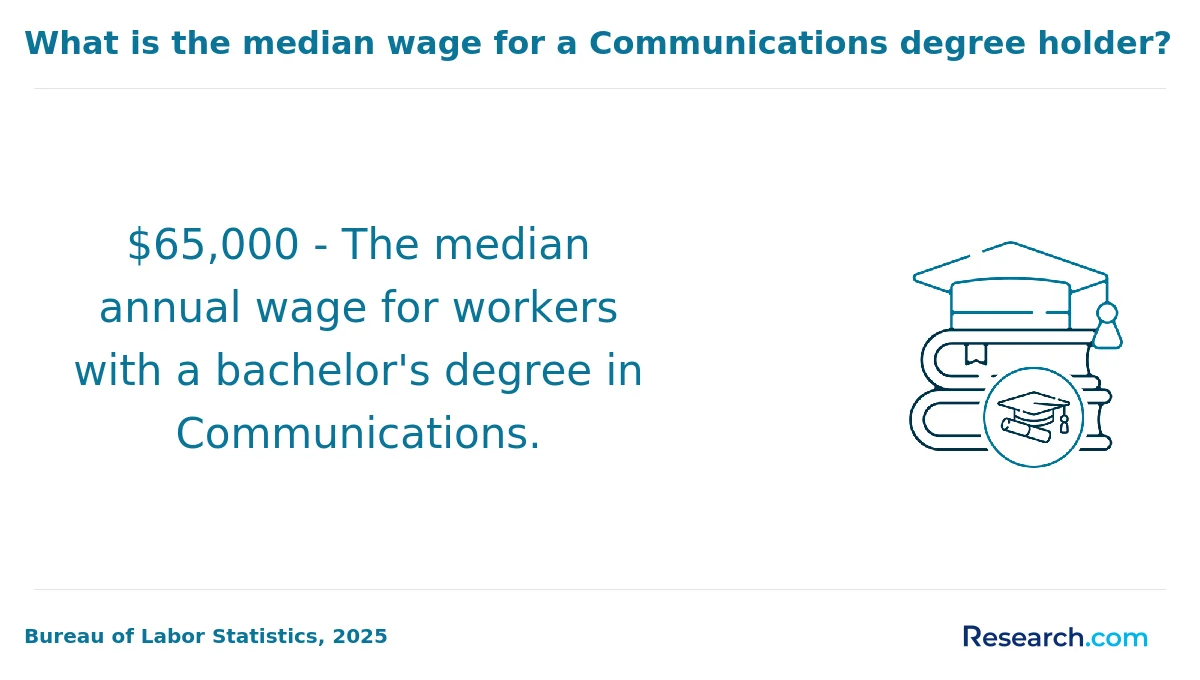
- The average salary for communication degree graduates in related fields in the US ranges from $50,000 to $70,000 annually, offering a solid financial foundation for entry-level roles.
- Communication graduates from universities like the University of Virginia often pursue careers in public relations, marketing, or media, showing diverse and dynamic job opportunities.
- Completing a communication degree online through institutions such as George Mason University allows flexible scheduling and the chance to balance work and study effortlessly, making education more accessible and personalized.
- Key benefits of getting online communication degree in Virginia
- What can I expect from online communication degree in Virginia?
- Where can I work with online communication degree in Virginia?
- How much can I make with online communication degree in Virginia?
- 2027 Easiest Online Communication Degree Programs Ranking in Virginia
- Key Findings
- How long does it take to complete online communication degree in Virginia?
- What's the difference between online and on-campus communication degree?
- What is the average cost of online communication degree in Virginia?
- What financial aid is available to online communication degree students in Virginia?
- What are the prerequisites for enrolling in online communication degree program in Virginia?
- What courses are typically in online communication degree programs in Virginia?
- What types of specializations are available in online communication degree programs in Virginia?
- How do you choose the best online communication degree in Virginia?
- What career paths are available for online communication degree students in Virginia?
- What is the job market for online communication degree in Virginia?
- Related Communication Rankings for Nearby States
- Top Trending Communication Rankings
What can I expect from online communication degree in Virginia?
The average cost of an online communication degree in Virginia typically ranges from $8,000 to $20,000 per year, depending on the institution and whether the program is at the undergraduate or graduate level. Graduates from schools like George Mason University or Old Dominion University often remark on the value they received relative to this investment, appreciating the balance between affordable tuition and high-quality instruction tailored to real-world media environments.
Many students find that the flexibility offered through these programs allows them to maintain part-time jobs or internships, effectively offsetting costs and gaining practical experience simultaneously. For instance, a graduate might juggle coursework alongside a remote internship in digital marketing, applying lessons from strategic communication classes to live campaigns, which makes each dollar invested feel purposeful and rewarding.
Online learners in Virginia frequently highlight smaller class sizes and personalized support as unexpected benefits that enhance the value of their tuition, fostering a sense of community despite the virtual format. This supportive atmosphere helps students stay motivated and confident throughout their degree journey, offering a sense of accomplishment that extends beyond mere cost considerations.
Where can I work with online communication degree in Virginia?
Graduates with an online communication degree in Virginia often find themselves immersed in dynamic careers across public relations, marketing, corporate communication, and media industries. Imagine a graduate from the University of Virginia stepping into a role at a Richmond-based tech company, crafting clear, compelling messaging that bridges complex technical ideas with broad audiences-this reflects the growing demand for communicators adept at translating innovation.
Others, perhaps from George Mason University, leverage their skills in Northern Virginia's federal sector, managing media relations for government contractors or non-profits. This proximity to Washington, D.C., offers a unique advantage, creating hands-on opportunities that mold versatile communication professionals.
Richmond's vibrant business scene and Charlottesville's entrepreneurial spirit also inspire graduates to dive into marketing and digital media roles, where creativity meets analytics to shape impactful campaigns. These real-world roles bring the theory learned in class into environments full of energy, challenge, and growth, proving that communication degrees in Virginia unlock diverse, fulfilling career paths.
How much can I make with online communication degree in Virginia?
Graduates holding an online communication degree in Virginia often find themselves navigating a salary landscape that, while somewhat varied, offers promising opportunities. Many starting out as communications assistants or public relations coordinators across the state report entry-level salaries near $50,000 annually. These figures, though modest, reflect the initial steps into a dynamic field.
Students from institutions like George Mason University or James Madison University often share excitement about advancing to roles such as public relations managers, where mean salaries can reach around $85,000 in Virginia. Similarly, communications directors frequently earn upwards of $95,000, particularly in Northern Virginia's bustling corporate environments. These numbers challenge the notion that communication degrees limit earning potential.
Envision a graduate leveraging social media management expertise gained through coursework who secures a corporate communication role in Arlington with a competitive salary. The combination of Virginia's growing demand and metropolitan job markets reveals a rewarding trajectory for graduates willing to specialize and explore.
2027 Easiest Online Communication Degree Programs Ranking in Virginia
How do we rank schools?
Investing in your education is a significant decision that can shape your future, and the Research.com team understands the importance of making informed choices. To support prospective students interested in communication degrees in Virginia, we have carefully developed the "2027 Easiest Online Communication Degree Programs Ranking in Virginia." Our dedication to quality, credibility, and accuracy is demonstrated through thorough research and detailed analysis.
We utilized the following reputable data sources to ensure a comprehensive evaluation of online communication degree programs:
By exploring this ranking, readers will gain valuable insights that simplify their search for accessible and reputable online communication programs in Virginia, enabling informed decisions about their education. For more information on how this ranking was compiled, please visit our Research.com methodology page.


Key Findings
- Tuition for online communication degrees in Virginia ranges from about $7,000 to $15,000 per year for public in-state students, with private institutions generally charging more.
- Entry-level salaries for communication graduates in Virginia start around $45,000 annually.
- Mid-career communication professionals typically earn between $60,000 and $75,000 per year.
- The job market is expected to grow about 5% through 2030, reflecting steady demand in government, business, and digital media sectors.
- Programs often include training in social media strategy, digital content creation, and intercultural communication to prepare students for evolving industry needs.
How long does it take to complete online communication degree in Virginia?
Completing an online communication degree in Virginia often defies the traditional four-year expectation. Many graduates from institutions like James Madison University and George Mason University found that flexibility in online programs allowed them to tailor their pace. Some accelerated through extra courses or summer sessions, finishing in as little as three years, fueling a sense of accomplishment and momentum. Others balancing work and family chose part-time study, extending their timeline to four years or more, yet still feeling empowered by the ability to manage life's demands.
Transfer students frequently share how their prior credits cut their path shorter, with some completing their bachelor's degree in about two years through degree completion programs offered by schools such as Old Dominion University. For those pursuing a master's degree online, the usual two-year full-time commitment can stretch to three or more years when balancing other responsibilities, but many appreciate the depth and flexibility this affords.
Understanding these varied experiences challenges the one-size-fits-all mindset and reveals the personalized journey behind each communication degree earned in Virginia's evolving online education landscape.
What's the difference between online and on-campus communication degree?
The difference between online and on-campus communication degrees in Virginia often comes down to how you experience learning and connection. Online students at institutions like George Mason University appreciate the flexibility to juggle work, family, and coursework on their own schedules, often feeling empowered by the autonomy. They picture themselves tuning into lectures after a busy day without the stress of commuting, saving money on housing, and avoiding campus fees.
On the other hand, graduates from James Madison University remember sitting in lively classrooms, engaging in instant debates, or collaborating in media labs-moments that helped sharpen their interpersonal skills in ways an online platform can struggle to replicate. Face-to-face feedback and real-time group presentations foster confidence and networking that many find hard to match virtually.
Yet, the core knowledge-media theory, strategic communication-remains consistent across both formats. The real question for Virginia students is how much personal interaction versus flexibility matters to their learning style and career vision.
What is the average cost of online communication degree in Virginia?
The average cost of an online communication degree in Virginia challenges common assumptions about affordability and value. While many expect private institutions to dominate expenses, data shows that median total tuition hovers around $47,400, with in-state students paying closer to $31,500 on average. This gap highlights the significant financial benefit of enrolling in public universities well-known in Virginia, such as those with strong communication programs. Graduates often recall the sense of accomplishment in balancing costs while engaging deeply with coursework, proving that price does not always dictate quality or satisfaction.
Students pursuing an online communication degree in Virginia often discover that the financial realities intertwine with their educational choices. Many are pleasantly surprised that affordable online communication degree programs Virginia-wide offer a practical path without compromising academic rigor or career prospects. For instance, learners report how manageable tuition paired with additional support services created a rewarding journey, even when juggling careers or family commitments.
It's also essential to factor in fees beyond tuition; technology fees and resource access can add several hundred dollars each semester. However, some institutions participate in regional programs that offset these costs for online learners. Aspiring communicators who want to explore flexible, cost-effective routes might find value in considering the easiest online communication degree program options, blending convenience, affordability, and recognized curricula designed to prepare them for the evolving communication landscape.
What financial aid is available to online communication degree students in Virginia?
Many students pursuing an online communication degree in Virginia find financial aid to be a lifeline rather than a mere option. Graduates from institutions like James Madison University often share how completing the FAFSA unlocked access to crucial federal resources such as the Pell Grant, which can offer up to $7,395 annually. This grant, combined with federal work-study opportunities, transforms daunting tuition costs into manageable investments.
Others attending Virginia Tech recount how state-specific programs, like the Virginia Tuition Assistance Grant (VTAG), significantly eased the burden when attending private colleges, offering up to $3,450 per year. Meanwhile, public university students benefit from scholarships such as the Virginia Commonwealth Award, which target financial need and help sustain focus on studies without overwhelming debt.
Institutional scholarships tailored for online learners, including veterans and adult students, add another layer of support. Beyond colleges, local nonprofits and private scholarships connected to communication fields also fuel ambitions, proving that with persistence and awareness, financial barriers can be surmounted on the path to earning a Virginia communication degree.
What are the prerequisites for enrolling in online communication degree program in Virginia?
Enrolling in an online communication degree program in Virginia demands more than just filling out an application-it requires demonstrating readiness through clear academic thresholds. Graduates from George Mason University often recall the relief of knowing their high school transcripts, coupled with test-optional policies, simplified the path to admission. A solid high school diploma or GED is essential, yet Virginia's institutions like Old Dominion University recognize diverse experiences by deeming standardized tests optional, easing anxiety for many applicants.
For graduate programs, possessing a bachelor's degree with at least a 3.0 GPA becomes a tangible benchmark, anchoring expectations in measurable achievement. Many students reflect on how their backgrounds outside traditional communication fields were welcomed, highlighting the inclusive admissions culture in the Commonwealth.
Language proficiency emerges as a silent gatekeeper: international students often find TOEFL or IELTS scores bring confidence in their ability to engage fully with coursework. These requirements, while stringent, foster a community of learners prepared to communicate effectively across diverse settings-a core value at Virginia's top online programs.
What courses are typically in online communication degree programs in Virginia?
Online communication degrees in Virginia dive straight into courses that reshape how students understand and engage with the media landscape. Graduates from popular institutions like Virginia Commonwealth University recall how foundational classes such as Introduction to Communication challenged their assumptions about everyday interactions, unveiling the complexity behind even the simplest conversations.
Core subjects like Media Writing and Public Relations Principles don't just teach theory-they prepare you for practical challenges, from crafting compelling press releases to managing crises that can make or break brand reputations. Students often find these courses directly applicable during internships with local media outlets or nonprofits.
The inclusion of Intercultural Communication and Digital Media and Communication Technology reflects Virginia's diverse and digitally connected world. One graduate shared how mastering social media tools and cultural nuances helped them confidently navigate global campaigns. Rigorous training in Communication Research Methods and Persuasion and Audience Analysis arms students with skills to decode real audience behaviors, turning abstract concepts into actionable insights.
What types of specializations are available in online communication degree programs in Virginia?
Online communication degree specializations Virginia students choose reveal a landscape far richer than traditional views suggest. Graduates from institutions like Old Dominion University and George Mason University often reflect on how concentrations such as Public Relations and Strategic Communication empowered them to navigate complex media relations and crisis scenarios in real workplaces. Others find that focusing on Digital Media and Multimedia Communication turns abstract skills into tangible content creation and social media strategies they use daily in marketing roles. For many, diving into Organizational Communication transforms how they approach leadership and team collaboration within corporate or nonprofit settings, giving them confidence to drive meaningful change.
Students who pursue Health Communication express fulfillment in crafting messages that genuinely impact public health awareness, a need deeply felt in Virginia's healthcare facilities. Meanwhile, specializations like Interpersonal and Intercultural Communication equip learners to thrive in Virginia's increasingly globalized job market, sensitizing them to cultural nuances that enhance personal and professional interactions. This intricate variety highlights why choosing the right focus is vital for career success and why exploring Virginia communication degree concentration options can open unexpected doors.
Understanding how each specialization fits into the broader career spectrum is key. For those seeking to align passion with practical outcomes, it's helpful to explore how these paths translate into communication career opportunities nationwide.
How do you choose the best online communication degree in Virginia?
Choosing the best online communication degree in Virginia goes beyond just picking a school with a good name. Graduates from Virginia's well-regarded universities often reflect on how accreditation was a pivotal factor-attending institutions recognized by bodies like SACSCOC ensured their credits transferred smoothly and their degree held real value. This is crucial when comparing the best affordable online communication degrees in Virginia, where program quality varies widely.
Curriculum also shapes your experience. Many students recall navigating programs offering specialized tracks, such as digital media or public relations, which connected classroom lessons to practical, real-world projects. For instance, programs in Virginia Beach or Northern Virginia frequently emphasize hands-on internships, a key difference that prepares students to enter the competitive market confidently.
Cost often surprises prospective students. Alumni sometimes wish they had done a thorough top online communication programs Virginia cost comparison early on, as tuition can swing dramatically between public and private schools. For those exploring specific focuses like public relations, explore degrees in public relations carefully to balance fees and career preparation.
Finally, envision the kind of support system you'll need. Many online students praise Virginia's schools for robust tech support and tailored advising which kept them motivated and connected, even while juggling life's other demands.
What career paths are available for online communication degree students in Virginia?
Graduates holding an online communication degree in Virginia often find themselves stepping into diverse roles that defy narrow expectations. From managing social media for dynamic startups in Richmond to crafting influential narratives within government agencies near Washington, D.C., the possibilities reflect the region's unique economic landscape. Those studying at well-known institutions quickly discover that positions such as Public Relations Specialist or Corporate Communications Manager are just starting points, with some expanding into technical writing or media production to broaden their real-world impact. The appeal lies in applying communication skills to varied industries, not just traditional media.
One common experience among online communication degree jobs in Virginia is the blend of creativity and strategy graduates employ to boost local nonprofits or lead marketing campaigns for growing businesses. With competitive wages-like the $94,000 median for marketing management in the state-graduates feel motivated to innovate and lead. Some even pursue advancement guided by data on master's in public relations salary trends to ensure their career steps align with growth.
What is the job market for online communication degree in Virginia?
The job market for online communication degree jobs Virginia reveals a landscape rich with opportunities, fueled by sectors like government, technology, and healthcare. Graduates from universities such as George Mason or Virginia Commonwealth often describe how their flexible online education enabled them to secure remote internships and freelance roles, giving them a foot in the door of competitive industries. This reflects a reality where communication skills are not only valued but necessary for crafting impactful messages in fast-moving environments.
Virginia job outlook for communication graduates is stable, with about a 9% growth rate expected through 2032 according to national projections. For students, this means that pursuing a communication degree online in Virginia is more than just earning a credential-it's about immersing oneself in real-life challenges, whether managing public relations at a healthcare provider or designing campaigns for local tech firms. Those advantages strengthen their readiness for a dynamic job market.
Many graduates also point out the value of affordable tuition offered by these programs, alongside opportunities to connect with established professionals. Exploring a master's degree public relations can further heighten career trajectories, especially for those eager to deepen expertise while balancing commitments.
Frequently Asked Questions About communication
Online communication degree students in Virginia can maximize their learning by actively engaging with course materials and participating in virtual discussions. According to the Virginia Department of Education, collaboration enhances understanding and retention in online environments. Students should also leverage available resources like virtual writing centers and career services offered by their institutions.
Setting a consistent study schedule is essential for managing coursework effectively. The Bureau of Labor Statistics projects a 13% growth in communication-related jobs in Virginia by 2030, highlighting the importance of practical skills alongside theory. Internships and networking through online platforms can further enhance real-world experience.
Staying informed on Virginia's specific communication industries, such as media and public relations hubs in Richmond and Northern Virginia, also provides valuable context for coursework. Utilizing these strategies helps students build skills that meet local job market demands.
Emerging niches in the communication field reflect rapid technological and societal changes, offering promising opportunities for students pursuing online communication degrees in Virginia. Digital communication, including social media management and content strategy, is growing, driven by the state's expanding tech and media sectors. According to the Virginia Employment Commission, jobs in digital marketing and public relations are expected to increase by over 10% through 2030.
Another expanding niche is health communication, where professionals focus on crafting messages to improve public health outcomes. This sector has gained significance during recent public health challenges. Additionally, areas like data analytics in communication and virtual reality applications are shaping new career paths. These growing fields demand strong technical skills alongside traditional communication expertise.
After completing an online communication degree in Virginia, graduates should focus on building a strong professional network. Virginia hosts numerous media outlets, government agencies, and nonprofits that value graduates with communication skills. Joining local chapters of national organizations like the Public Relations Society of America (PRSA) can offer valuable connections.
Internships remain crucial, even post-graduation. The Virginia Employment Commission reports that internships help increase job placement rates by 20%. Graduates should seek virtual or local internships to gain hands-on experience.
Additionally, honing digital communication skills such as social media management and content creation is essential. The U.S. Bureau of Labor Statistics identifies digital proficiency as a key factor for communications professionals' success.
Finally, leveraging Virginia-based job boards, such as Virginia Workforce Connection, ensures access to region-specific opportunities relevant to recent graduates.
Employers in Virginia highly value communication degree graduates who demonstrate strong interpersonal and digital communication skills. According to the Virginia Employment Commission, skills such as public speaking, writing, and social media management rank among the most requested in job postings for communication roles across the state.
Adaptability is also essential, as the media landscape rapidly evolves with new technologies. Graduates who can create clear, persuasive messages tailored to diverse audiences tend to stand out. Critical thinking and problem-solving capabilities are frequently emphasized, particularly in roles connected to public relations and corporate communication.
Additionally, familiarity with collaboration tools and basic data analysis enhances a candidate's profile in Virginia's job market, supporting evidence-based communication strategies.
Finding internships in Virginia for communication degree students involves targeting sectors like media, public relations, and corporate communication. Major cities such as Richmond, Norfolk, and Arlington offer opportunities through local newspapers, marketing agencies, and government offices.
Students should explore internship listings on university career portals and statewide platforms like Virginia Workforce Connection. Additionally, the Public Relations Society of America (PRSA) Virginia Chapter provides networking events and internship resources specifically for communication students.
Many Virginia schools partner with local businesses, allowing students to gain experience through credited internships. According to the National Association of Colleges and Employers, about 60% of communication majors nationwide secure internships during their studies, enhancing job prospects post-graduation.
An online communication degree in Virginia can significantly enhance career mobility and advancement. Graduates gain versatile skills in public relations, media, and digital communication, which are in demand across various industries in the state. According to the Virginia Employment Commission, communication-related jobs are projected to grow by 7% between 2022 and 2032, reflecting steady opportunities for advancement.
Employers in Virginia value formal education combined with practical digital competencies. An online degree allows working professionals to upskill without interrupting their careers, making promotions more accessible. Furthermore, many Virginia companies seek candidates with strong communication backgrounds to lead marketing, corporate communication, and media strategy roles.
The flexibility and accreditation of online programs in Virginia ensure that degree holders meet industry standards, increasing their competitiveness in the local job market. This makes an online communication degree a strategic choice for those aiming to climb the career ladder in communication fields within Virginia.
Studying for an online communication degree in Virginia equips students with versatile skills relevant to interdisciplinary roles. Programs often integrate coursework in media, business, psychology, and technology, reflecting the diverse communication needs across industries.
Virginia's universities emphasize practical learning, including projects that foster collaboration across fields like marketing and public health. According to the Virginia Department of Education, over 60% of communication graduates find employment in sectors requiring cross-disciplinary knowledge.
The state's growing tech and government sectors create demand for communicators who understand both technical content and audience engagement. This interdisciplinary approach enhances graduates' adaptability and prepares them for roles in corporate communication, digital strategy, and beyond.
When choosing between a thesis and a non-thesis online communication degree program in Virginia, consider your career goals. Thesis programs emphasize original research, preparing students for doctoral studies or research-heavy roles. Non-thesis options focus on practical skills, allowing quicker completion and suitability for those targeting professional communication jobs.
Virginia universities often require about 30 to 36 credit hours for both types. The thesis route usually demands an additional research project, which can extend the timeline. According to the Virginia Department of Education, students pursuing communication roles in business or media benefit from applied experience common in non-thesis tracks.
Another factor is faculty interaction; thesis students work closely with advisors, which suits those seeking mentorship. Non-thesis programs offer more coursework flexibility. In 2023, about 60% of Virginia's communication graduates entered professional roles directly, favoring non-thesis pathways, per the National Center for Education Statistics.
Students in Virginia interested in online communication degrees have multiple pathways to gain international experience. Many Virginia institutions partner with foreign universities, allowing students to participate in study-abroad exchanges while progressing toward their degrees remotely. For example, George Mason University offers programs with affiliated global campuses, enabling communication students to access diverse cultural perspectives without disrupting their coursework.
Additionally, programs accredited by the Accrediting Council on Education in Journalism and Mass Communications (ACEJMC) often include opportunities for virtual international collaboration. Since 2021, the number of Virginia students participating in study-abroad programs related to communication increased by 12%, according to the Institute of International Education. These options make it possible for students to gain global competence without leaving their online studies behind.
Students pursuing online communication degrees in Virginia can find numerous part-time job opportunities that enhance their education and build relevant skills. Roles such as social media assistant, content writer, and public relations intern are common. These positions develop practical experience in digital marketing, writing, and media relations-key areas in communication careers.
The Virginia Employment Commission highlights that communication-related jobs in marketing and public relations grow steadily, with a projected 5% increase through 2030. Many businesses in cities like Richmond and Virginia Beach offer flexible part-time roles suitable for students balancing coursework.
Additionally, work with local nonprofits or campus media outlets can provide valuable networking and portfolio-building opportunities. These experiences complement academic learning and improve job readiness in Virginia's competitive communication field.
Online communication students in Virginia benefit from various networking opportunities tailored to virtual learners. Many universities, such as Virginia Commonwealth University and Christopher Newport University, offer access to professional organizations like the Virginia Communication Association. These groups host events and webinars that allow students to connect with industry professionals statewide.
Students can also engage in virtual internships and collaborative projects, which are increasingly promoted by Virginia's higher education institutions to build practical experience and professional contacts. According to the Virginia Department of Education, these opportunities have grown by 15% over the past five years.
Additionally, online students often participate in alumni networks, providing access to career services and mentorship programs that are valuable for job placement and growth within Virginia's communication sector.
Alumni networks offer significant benefits to online communication degree students in Virginia. These networks connect current students with graduates who work in media, public relations, and digital marketing across the state. According to the Virginia Department of Education, over 20,000 communication professionals are employed statewide, making alumni connections a valuable resource for career opportunities.
Through alumni events, mentorship programs, and online platforms, students gain insights into industry trends and receive guidance on navigating Virginia's competitive job market. Additionally, alumni often provide internship leads and job referrals, which enhance a student's chances of employment after graduation. Networking through these channels helps students build professional relationships crucial for career growth.
Students pursuing an online communication degree in Virginia can often customize their studies by selecting specialized courses or concentrations aligned with their career goals. Many Virginia institutions offer options such as public relations, digital media, or corporate communication. Tailoring your program allows you to gain skills relevant to industries thriving in the region, including government, healthcare, and technology.
Some programs also provide opportunities for internships and practical experiences, which Virginia's growing communication sector highly values. According to the Virginia Employment Commission, communication jobs in the state are projected to grow by approximately 7% through 2030, highlighting the importance of relevant expertise. By choosing electives and experiential learning aligned with industry demands, students can better position themselves for success in their desired field.
Online communication students in Virginia commonly face challenges related to balancing coursework with personal and professional responsibilities. Many learners juggle jobs or family duties while completing demanding academic tasks. According to the National Center for Education Statistics (NCES), nearly 30% of Virginia's online students report time management as a primary struggle.
Technical issues also pose obstacles. Reliable internet access varies across the state, affecting participation in live discussions and submission of assignments. Furthermore, students may experience limited networking opportunities compared to traditional on-campus programs, which can impact career development.
Adjusting to self-directed learning is another hurdle. Without in-person support, students must cultivate strong motivation and discipline to stay on track. Virginia institutions have been working to enhance virtual advising to mitigate these difficulties.
An online communication degree from Virginia prepares graduates for various professional certifications that enhance career prospects. Common certifications include the Accredited Business Communicator (ABC) offered by the Association for Business Communication and the Communication Management Professional (CMP) credential through the International Association of Business Communicators. These certifications validate skills in strategic communication, media relations, and organizational communication.
Additionally, digital marketing certifications such as Google Analytics and HubSpot Content Marketing can complement a communication degree, especially in Virginia's growing tech and media industries. According to the Virginia Employment Commission, communication roles are expected to grow 7% by 2028, increasing demand for certified professionals.
Students should research specific certifications that match their career goals and check eligibility requirements carefully.
To write a winning application for an online communication program in Virginia, start by thoroughly researching the specific requirements of each university. Many Virginia institutions value clear, concise personal statements that demonstrate your passion for communication and outline your career goals.
Highlight relevant experience, such as internships, volunteer work, or professional roles in media or public relations. According to the Virginia Community College System, applicants with practical experience often have a competitive edge.
Ensure your letters of recommendation come from supervisors or professors familiar with your communication skills. Strong academic records also matter; Virginia public universities typically look for a minimum GPA of 3.0 for these programs, as reported by the State Council of Higher Education for Virginia (SCHEV).
Careers in communication are increasingly valued worldwide for their adaptability and relevance in diverse industries. In the United States, including Virginia, communication skills are crucial in fields such as public relations, marketing, media, and corporate communication. According to Virginia's Employment Commission, jobs in this sector are projected to grow by 8% over the next decade, reflecting strong demand.
Global companies seek professionals who can navigate cross-cultural interactions effectively, making communication degrees highly relevant internationally. U.S.-based programs often emphasize global communication strategies, preparing students for work in multinational environments.
Virginia's online communication degrees offer flexible learning paths that incorporate these global perspectives, helping students develop skills applicable both locally and internationally.
Gaining practical experience while studying for an online communication degree in Virginia is essential to enhance job readiness. Many Virginia universities offering online communication programs encourage internships, which can often be completed remotely with local media outlets, nonprofits, or corporate communication departments. According to the Virginia Department of Labor, internships in communications-related fields can increase employment chances by over 20% post-graduation.
Additionally, students can join virtual student organizations or participate in online workshops focused on digital media skills. Some programs include capstone projects simulating real-world communication campaigns, providing hands-on experience.
Choosing the right concentration within an online communication degree program in Virginia involves assessing your career goals and personal interests. Common concentrations include public relations, digital media, journalism, and corporate communication.
Virginia's strong media and government sectors offer ample opportunities for students focusing on public relations and political communication. For example, the U.S. Bureau of Labor Statistics notes that the Richmond metropolitan area employs many communication specialists.
Consider programs accredited by the Accrediting Council on Education in Journalism and Mass Communication (ACEJMC) to ensure quality education. Researching job market trends can also help; digital media roles are growing rapidly nationwide, including in Virginia.
Ultimately, choosing a concentration that aligns with local industry demand and national trends will enhance your employability after graduation.
Related Communication Rankings for Nearby States
- 2027 Easiest Online Communication Degree Programs Ranking in North Carolina
- 2027 Easiest Online Communication Degree Programs Ranking in Kentucky
- 2027 Easiest Online Communication Degree Programs Ranking in Pennsylvania
- 2027 Easiest Online Communication Degree Programs Ranking in Ohio
- 2027 Easiest Online Communication Degree Programs Ranking in Georgia
- 2027 Easiest Online Communication Degree Programs Ranking in New York
- 2027 Easiest Online Communication Degree Programs Ranking in Florida
- 2027 Easiest Online Communication Degree Programs Ranking in Missouri
- 2027 Easiest Online Communication Degree Programs Ranking in Illinois
- 2027 Easiest Online Communication Degree Programs Ranking in Arkansas
Top Trending Communication Rankings
References
- Why Young People Are Struggling to Communicate https://time.com/7339501/young-people-struggling-to-communicate/
- Communications Degree Salary Guide https://online.maryville.edu/online-bachelors-degrees/communications/careers/communications-degree-salary-guide/
- Gaining practical experience with PR and Digital Communications - Made in Salford https://blogs.salford.ac.uk/made-in-salford/2021/05/06/studying-pr-digital-communications-university-of-salford/
- Top 6 Communication Skills for Career Growth and Organizational Impact https://www.callutheran.edu/programs/articles/top-communication-skills-career-growth-organizational-impact/
- Know more about thesis vs non- thesis: what is the difference? https://studyfans.com/en/blogs/816
- © 2024 Journal of Global Perspectives in Communication and Media https://journalofgpcm.wixsite.com/global-perspective-1
- Communications Specialist Certifications: Best Credentials to Advance Your Career | Teal https://www.tealhq.com/career-paths/communications-specialist-certifications
- Communication Frequently Asked Questions | Central Methodist University https://centralmethodist.edu/academics/undergraduate/communication/communication-faq.html
- What skills will I get with a communication degree? - CIS University https://www.cis-spain.com/en/blog/what-skills-will-i-get-with-a-communication-degree/
- Communication & Journalism Study Abroad Programs - Media, PR https://www.ceastudyabroad.com/academic-discipline/communication-journalism