2027 Online Community Health Degrees With Health Advocacy Coursework

Co-Founder and Chief Data Scientist
Healthcare organizations increasingly demand professionals who blend community health expertise with effective advocacy skills, yet many prospective students struggle to find programs that offer this dual focus with sufficient scheduling flexibility. According to the National Center for Education Statistics, enrollment in fully online health-related bachelor's programs surged by over 40% since 2022, driven largely by working adults balancing career and family obligations. This trend signals that accessibility and adaptability in online program design significantly influence learners' ability to transition or advance their careers in community health without compromising current responsibilities. This article evaluates online community health degrees featuring health advocacy coursework to guide strategic educational decisions aligned with evolving workforce needs.
Key Things You Should Know
- Online community health degrees with health advocacy coursework average 24% lower tuition than in-person programs in 2026, but extended degree durations reduce short-term workforce entry, complicating timing-sensitive career pivots per NCES data.
- Employers prioritize graduates with demonstrable advocacy project experience; programs lacking integrated practicum components yield 18% fewer hire-ready candidates, according to a 2024 Bureau of Labor Statistics workforce survey.
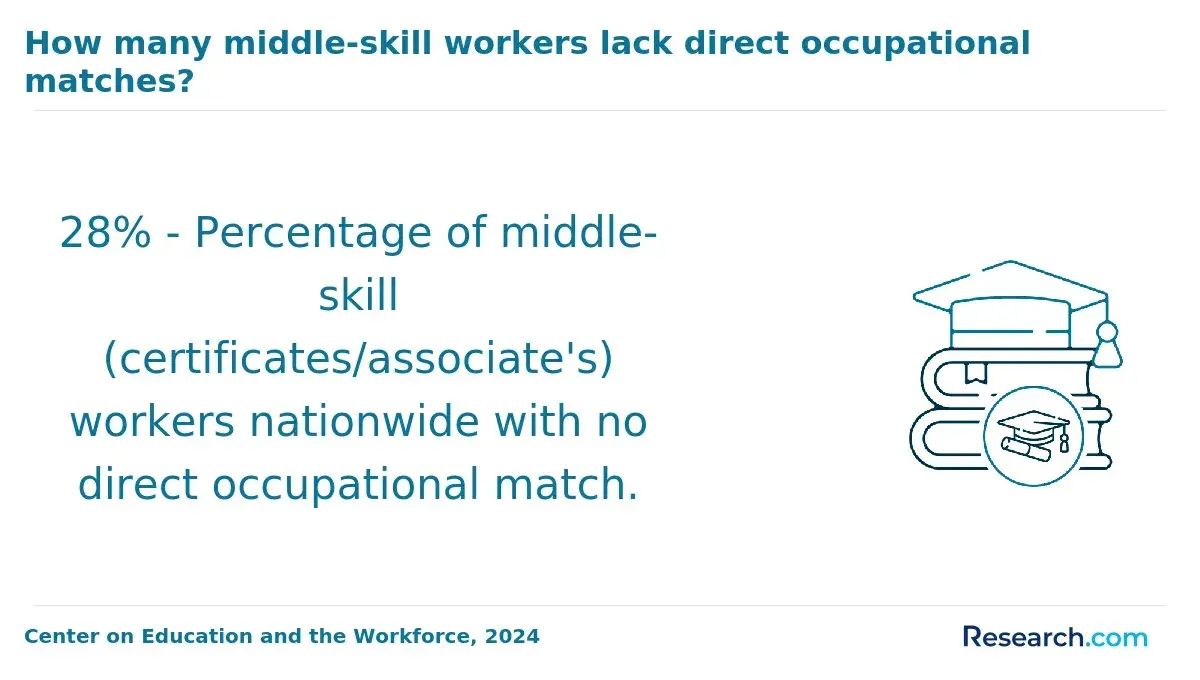
- Certification alignment gaps persist as 42% of online curricula omit current CHW credentialing requirements, creating skill mismatches that affect midcareer professionals' advancement prospects in federally funded community health organizations.
What is an online community health degree with health advocacy coursework and who is it for?
An online community health degree with health advocacy coursework positions graduates to confront systemic barriers by designing and implementing targeted public health interventions. This pathway particularly suits those pursuing a strategic pivot into nonprofit sectors, public health agencies, or government roles where influencing policy and guiding community initiatives are paramount. For example, a program graduate working in a local nonprofit might apply advocacy tactics to secure funding and shape outreach efforts tailored to vulnerable populations, balancing operational priorities with grassroots engagement.
Professionals considering who should pursue a community health degree online must weigh practical tradeoffs. While these degrees offer robust preparation in health disparities and communication strategies, securing relevant internships remains a logistical hurdle. The online format compounds challenges like limited field experience and reduced networking opportunities, demanding proactive time management and initiative.
Graduates typically enter community and social service occupations which reported a median annual wage of $57,530 in 2024, outpacing the general U.S. median by nearly 20%. This wage premium reflects employer demand for professionals who combine health expertise with advocacy skills capable of navigating complex policy environments.
Curricula integrate foundational public health knowledge with advocacy training, enabling graduates to lobby for legislative changes or manage health campaigns at various levels. Workforce outcomes improve when programs emphasize practical engagement and linkages to agencies. Students also benefit from exploring accredited online environmental health and safety programs to complement their training and broaden career options.
How do online community health degrees compare with campus programs for quality and outcomes?
Online community health degree program outcomes closely parallel those of campus degrees when students fully engage with interactive coursework and secure quality fieldwork placements. The chief challenge for online learners lies in obtaining supervised internships that meet health advocacy requirements. Campus programs often ease this process through robust local partnerships, offering easier access to diverse healthcare settings. This difference can affect the experiential learning essential for employer recognition and practical skill development.
Working professionals pursuing an online community health degree balance flexibility with limitations on networking and mentorship opportunities common on campus. Face-to-face interactions foster stronger relationship-building and nuanced understanding of local community dynamics-critical in community health sectors. Consequently, students should weigh the convenience of remote study against potential gaps in communication and advocacy skill cultivation.
The Bureau of Labor Statistics forecasts an 11% growth in community health jobs from 2024 to 2034, adding approximately 7,800 openings annually-classified as much faster than average growth. This demand stresses programs to integrate employer-valued skills like cultural competence, data literacy, and policy advocacy. Prospective students must assess program alignment with local labor markets and experiential quality to avoid poor employment outcomes despite workforce needs.
For those seeking flexible pathways, programs such as a healthcare administration degree online California exemplify options that balance cost and accessibility with practical skill development crucial in public health roles.
Which accreditations should online community health programs have to be recognized and respected?
Accreditation status profoundly shapes the viability of online community health programs in workforce integration. Recognized accreditations for online community health degrees, such as those from the Higher Learning Commission or the Southern Association of Colleges and Schools Commission on Colleges, provide a verified benchmark of academic rigor employers expect. Public health organizations like the Council on Education for Public Health (CEPH) add further industry alignment when programs include health advocacy coursework.
Graduates lacking credentials from accredited programs risk diminished employability, especially in settings where grant-funded rural health clinics or government agencies require verifiable qualifications. For instance, a community health worker in such a clinic benefits directly from a degree recognized by these regional agencies, facilitating credential maintenance and career stability.
State licensure, federal financial aid eligibility, and credit transfer options often hinge on accreditation, complicating trajectories for students choosing nonaccredited alternatives. This regulatory framework transforms accreditation from a formality into an essential strategic factor in decision-making.
With median pay at $51,030, workforce competition intensifies around credential legitimacy, making recognized accreditation a non-negotiable aspect for candidates targeting hospitals, nonprofits, and advocacy groups.
Students should consider whether the program's accreditation aligns not only with academic standards but also with concrete employment outcomes. For those exploring pathways including a masters in healthcare administration, verifying accreditation ensures that investments yield transferable, employer-trusted qualifications.
What types of online community health degrees are available and which level should you choose?
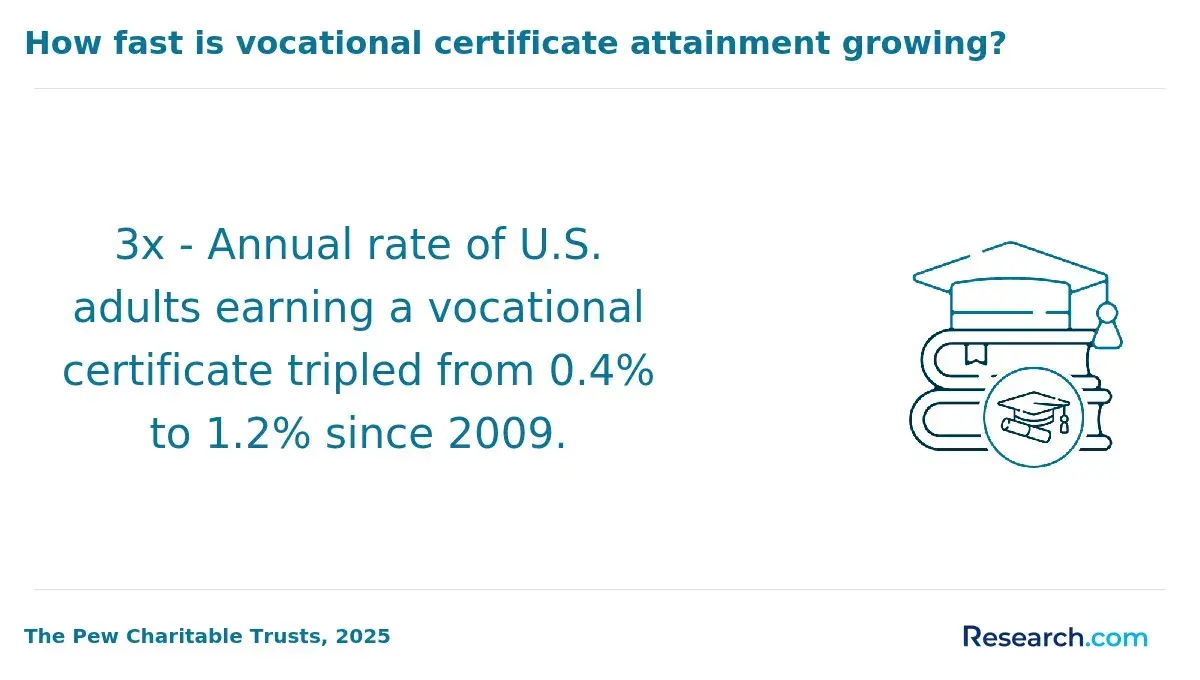
Choosing the appropriate degree level in online community health degree programs fundamentally shapes one's career trajectory and earning potential. Certificates and associate degrees serve as swift career pivots or cost-conscious entry points, placing graduates into roles like outreach coordinators with limited salary upside. Conversely, bachelor's degrees represent the baseline for most public health educator roles and provide pathways to supervisory positions with median salaries typically between $48,000 and $58,000, based on U.S. Bureau of Labor Statistics 2024 data.
Master's degrees, especially those emphasizing health advocacy, open doors to leadership and policy-making roles commanding salaries often exceeding $70,000 but entail significantly more time and financial commitment. For instance, a community health worker with a social services background will find a bachelor's degree essential to access stable employment with benefits, while a nonprofit professional targeting leadership roles should weigh the return on investment of a master's program carefully.
Students must scrutinize program curricula for advocacy-related content matched to employer expectations across governmental, nonprofit, or healthcare sectors, where specialized electives and practicum opportunities materially influence employability. Tuition stability is a real-world factor: Liberty University, cited for tuition growth under 5% over a decade and ranked in the top 35% for affordability in 2025-2026, exemplifies cost considerations in selecting programs.
Practical evaluation of degree options also involves balancing length, accreditation, and career lattice opportunities beyond mere convenience. Those analyzing the best degree levels for community health careers should consider field-specific demands rather than generic convenience metrics. For a deeper look at affordable progression pathways, including advanced degrees, explore BSN to MSN online.
What health advocacy courses and skills are typically included in online community health curricula?
Community health degrees with a focus on health advocacy equip students with policy analysis, cultural competency, and program planning skills that directly impact social determinants of health. These programs prioritize applied competencies such as legislative advocacy, health literacy promotion, and grassroots organizing-skills essential to developing interventions that address health behaviors on both local and systemic levels.
Graduates often navigate the tension between immediate community needs and broader policy changes, requiring adaptability across environments like government agencies, nonprofits, and healthcare systems. For instance, a nonprofit advocate might leverage data interpretation and coalition building to influence funding decisions benefiting underserved populations, while a clinical educator may focus on workshops to improve patient engagement.
Practical skills such as grant writing and stakeholder engagement are necessary for securing resources and driving public health initiatives, yet they demand tradeoffs in prioritizing limited attention and capacity. The labor market for health advocacy roles-community health educators and program coordinators-is expanding faster than general public health fields, signaling strong demand for these capabilities in evolving workforce landscapes.
Understanding these specialized coursework components clarifies the value proposition for candidates: graduates with robust advocacy skillsets are better positioned for leadership roles emphasizing policy and community engagement rather than clinical or epidemiological paths.
What are the common admission requirements for online community health degree programs?
Admission to online community health degree programs generally demands a bachelor's degree with a minimum GPA of 2.5 to 3.0 from an accredited institution. Standardized test scores, such as the GRE, are often requested but are increasingly optional or waived, reflecting shifts toward accessibility. Professional experience in healthcare or social services provides a competitive edge and may be mandatory for master's programs centered on health advocacy.
Key application components include goal-driven personal statements demonstrating commitment to community health principles, along with letters of recommendation from academic or professional sources to validate readiness for graduate-level work. Some programs request evidence of current health-related certifications or licenses, underscoring the advantage of formal credentials.
Working professionals face a tradeoff when programs require synchronous participation; asynchronous options and flexible start times mitigate this friction, enabling students to balance education with employment. Those pivoting from unrelated fields must present transferable skills and a clear rationale to justify the transition, which influences admission likelihood.
Cost remains a practical consideration influencing choices. For example, Southeastern Oklahoma State University's online Master of Science in community health charges $425 per credit hour, totaling $14,025-significantly below many national averages. Such pricing structures offer financially viable routes without sacrificing accreditation or curriculum rigor.
How long do online community health degrees take and what do they typically cost?
Choosing between degrees and certificates in community health hinges on the balance between depth of expertise and immediacy of workforce entry. Associate programs, typically requiring 60-65 credits and 1.5 to 2 years full-time, prepare individuals for foundational roles such as health educators or outreach coordinators. Bachelor's degrees expand this scope with 120-130 credits over 3 to 4 years, equipping graduates for program management and policy advocacy positions. Master's degrees, spanning 36-42 credits and about 1.5 to 2 years, are often prerequisites for senior leadership roles. Tuition varies widely by degree level, program length, and institution type: associate degrees range roughly $10,000 to $20,000, bachelor's $30,000 to $60,000, and master's from $20,000 to $50,000 or more.
For professionals targeting skill advancement without extensive time or financial commitment, focused certificate programs serve as pragmatic alternatives. For example, a 12-credit online Public Health Advocacy and Leadership certificate offers specialized training in advocacy within a condensed timeframe and budget, aligning with employers' growing acceptance of micro-credentials. However, certificates often do not substitute for graduate degrees when vying for senior roles.
Decision-makers should weigh:
- Longer-term degree credentials enabling broader career mobility;
- Short certificates expediting reentry or pivoting into advocacy but with limited senior role eligibility;
- Program length, credit requirements, and actual employer expectations relative to professional goals.
This strategic evaluation helps clarify which pathway best serves distinct career transitions and workforce integration challenges in community health.
What jobs can you get with an online community health degree focused on health advocacy?
Graduates holding an online community health degree with a focus on health advocacy navigate job roles requiring a blend of policy acumen, outreach capabilities, and practical service delivery. Competition intensifies as employers increasingly value candidates with distinct advocacy credentials, such as those offered by Johns Hopkins University's Public Health Advocacy Certificate, which signal proficiency in influencing health policy frameworks.
Typical positions include community outreach coordinators, who must coordinate multiple stakeholders-nonprofits, clinics, government agencies-to address access and equity challenges within local populations. Patient advocate roles within healthcare providers demand negotiation skills with insurers and regulators to secure care for vulnerable groups. Policy analyst and program evaluator roles in public health agencies rely heavily on graduates' ability to interpret legislation and develop evidence-based guidance.
Nonprofit advocacy specialists face the tradeoff of mastering legal and communication strategies while building experience through internships or field placements to effectively lead grassroots campaigns. Higher-level positions often require supplementary skills such as grant writing and data analytics, which can be critical differentiators.
Starting wages for entry-level roles generally hover around $45,000, with a 10-15% salary premium available to those who hold formal advocacy credentials, based on recent government workforce reports. Decision-making around additional certifications or specialized experience directly impacts employability and earnings trajectories for these graduates.
What salary ranges and job outlook can community health and health advocacy graduates expect?
Entry-level salaries for those with degrees in community health and health advocacy generally start between $45,000 and $60,000 annually, with median pay near $55,000, reflecting data from the U.S. Bureau of Labor Statistics. Professionals holding advanced qualifications like a Master of Public Health often access positions offering $65,000 to $90,000, especially in sectors such as nonprofit management, government, or healthcare.
Choosing between direct service roles and administrative or policy positions reveals notable tradeoffs: a community health worker in a rural setting might earn around $45,000, whereas an urban advocacy coordinator could surpass $75,000 but typically requires additional experience or specialized credentials.
Key employer priorities include analytical skills, cultural competency, and project management, which focused online MPH programs can deliver affordably-for example, Texas State University charges approximately $21,019 for its online MPH in Community Health and Behavior. Steering job searches toward metropolitan areas improves access to better-paying roles due to concentration of public health infrastructure.
Job seekers should expect to supplement education with internships and certifications to bridge experience gaps and navigate sector-specific credentialing or grant-writing demands. Online programs provide crucial flexibility for working professionals aiming to pivot or upskill without income interruption.
How can you evaluate and choose a reputable online community health program for your goals?
Choosing a community health program requires prioritizing accreditation from bodies like the Council on Education for Public Health (CEPH) or regional agencies, ensuring curriculum rigor and employer recognition. Aligning coursework with specific career objectives is essential-for instance, professionals targeting health policy roles in government should favor programs emphasizing legislative knowledge and data analytics rather than clinical interventions. This decision shapes both skill acquisition and employability.
Graduate outcomes provide critical insight; programs reporting placement rates near the $57,530 median wage for community and social service roles (per PublicHealthOnline's 2026 analysis, based on BLS data) suggest relevant employer validation and effective practical training. Flexibility options such as asynchronous classes and part-time tracks help mitigate dropout risk for those balancing external responsibilities.
Faculty credentials matter significantly when they actively engage in current research or community advocacy, as these connections often open pathways for internships and employer networking. Workforce demand in community health remains stable, but some programs focus heavily on theory with limited practicum exposure, which can impede early career momentum.
Cost versus return on investment is a tangible tradeoff; high tuition without direct employer engagement may increase debt burden and delay financial progress. Prospective students benefit from direct dialogue with alumni or employer panels to validate a program's effectiveness in supporting real-world outcomes.
Other Things You Should Know About Community Health
Employers in government and nonprofit public health sectors often value hands-on experience and practical skills over the mode of education delivery. Online community health degrees with robust health advocacy components can be respected if they integrate practicums or internships that demonstrate applied skills relevant to employer needs. Candidates should prioritize programs that incorporate real-world projects or fieldwork to align academic learning with employer expectations and improve job competitiveness.
Online community health programs offer flexibility that suits working professionals, but less structured schedules can reduce direct engagement with peers and instructors, impacting collaborative advocacy skills. Students must manage self-discipline to keep pace with complex coursework, especially for assignments involving community assessments or policy analysis. Programs with synchronous sessions or cohort models better support skill development critical to health advocacy by fostering interaction and timely feedback.
Credit transfer policies vary widely and can complicate progression from online associate to bachelor's degrees, often requiring course content alignment and accreditation match. Students must evaluate programs' articulation agreements to avoid redundant coursework or delay. Prioritizing programs with clear transfer pathways minimizes extra time and expense, ensuring smoother advancement and maintaining momentum toward career goals in community health advocacy.
References
- Public Health and Community Health Education Degree (PHCH) https://mcla.edu/academics/academic-departments/phch/
- Community Health Career - Public Health https://www.publichealthonline.org/community-health-career/
- What does a nursing assistant do? https://apexlearning.org.uk/online-health-and-social-care-courses-are-they-recognised-by-employers/
- Six ways to improve your community health assessment (CHA) with better data practices https://www.surveycto.com/data-collection-quality/community-health-assessment-best-practices/
- Top 10 Online Bachelor’s Degree Public Health Programs https://www.masterspublichealth.net/best/online-bachelors-public-health/
- Online Bachelor's Degrees in Public Health: Find the Right School https://www.edumed.org/online-schools/public-health-degrees/
- Bachelor of Science in Community Health https://plusalliance.org/bachelor-science-community-health
- Step 9: Evaluate Progress | ACHI https://www.healthycommunities.org/resources/toolkit/files/step9-evaluate-progress
- Online Public Health Degrees: Find Your Program https://www.degreesforgood.org/online-degrees/public-health-programs/
- Online Bachelor’s Degree in Community Health and Wellness https://www.monroeu.edu/academics/undergraduate-programs/school-allied-health-professions/online-bachelors-degree-community