2027 Nursing Informatics Career Outcomes by Degree Level Report: Pay, Employment, and Advancement Patterns

Co-Founder and Chief Data Scientist
Deciding whether to pursue an associate, bachelor's, or graduate degree in nursing informatics often hinges on understanding the tangible career returns each level offers. Recent 2024 data indicates that professionals with graduate degrees in nursing informatics are 35% more likely to attain leadership roles within healthcare IT departments compared to those holding only a bachelor's.
This trend highlights how degree level can shape not just earnings but critical advancement potential and job stability-key factors for adult learners balancing education costs against career ambitions. This article analyzes pay, employment rates, and promotion patterns across degree tiers to clarify these practical outcomes for informed decision-making.
Key Things to Know About Nursing Informatics Career Outcomes by Degree Level
- Associate degrees offer entry-level access but limit advancement; a 2024 workforce report shows only 22% of informatics managers hold associate credentials, indicating constrained leadership potential.
- Bachelor's and master's degrees align with employer expectations for complexity in data management roles, reflecting a trend where 67% of job postings require at least a bachelor's, influencing hiring competitiveness.
- Doctoral and certificate programs entail greater time and cost commitments without consistently higher immediate pay returns, emphasizing the need to weigh credential value against career stage and financial capacity.
- Key Things to Know About Nursing Informatics Career Outcomes by Degree Level Key Things to Know About Nursing Informatics Career Outcomes by Degree Level
- What Career Outcomes Can Students Expect From Each Nursing Informatics Degree Level? Career Outcomes by Degree
- How Much Do Nursing Informatics Graduates Earn by Degree Level? Salary by Degree Level
- Which Nursing Informatics Degree Level Offers the Strongest Employment Prospects? Best Degrees for Employment
- What Entry-Level Jobs Can You Get With a Nursing Informatics Degree? Entry-Level Career Opportunities
- How Do Nursing Informatics Degree Levels Affect Career Advancement and Promotion Opportunities? Career Growth by Degree
- Is a Nursing Informatics Degree Worth It Based on Salary, Employment, and ROI? Salary, ROI, and Value
- How Do Associate, Bachelor's, Master's, and Doctoral Nursing Informatics Degrees Compare? Comparing Degree Levels
- Which Industries and Employers Hire Nursing Informatics Graduates by Degree Level? Which Industries and Employers Hire Nursing Informatics Graduates by Degree Level?
- What Skills, Credentials, and Experience Improve Nursing Informatics Career Outcomes? What Skills, Credentials, and Experience Improve Nursing Informatics Career Outcomes?
- Which Nursing Informatics Degree Level Is Best for Your Career Goals? Choosing the Right Degree
What Career Outcomes Can Students Expect From Each Nursing Informatics Degree Level?
Career outcomes in nursing informatics degree level career outcomes vary sharply with credential depth, affecting access to roles, advancement paths, and leadership potential. For example, an associate degree graduate may enter technician or assistant positions supporting health IT departments but often encounters barriers to managerial roles that require a bachelor's degree or higher, reflecting widespread employer preferences. Those balancing work and study might consider this tradeoff carefully, as bachelor's-prepared candidates not only gain RN licensure eligibility but also smoother transitions into clinical systems specialist or data analyst roles, aligning with findings from the National Center for Education Statistics on employment stability. Transfer students or military-affiliated learners often pursue RN to BSN online programs to bridge foundational nursing knowledge with informatics expertise while minimizing clinical requirements and time investment.
Advanced degrees further delineate career trajectories by emphasizing specialization and leadership, with master's programs fostering strategic informatics management and practicum experience often required for clinical informatics manager or director posts. This level expands upward mobility but demands significant time and prior credits, positioning graduates for roles not just in operational support but in system design and data-driven decision-making amid growing healthcare complexity.
Doctoral degrees, conversely, cater to those targeting research, policy influence, or executive leadership, though their lengthy pathways and selective entry-level opportunities mean gains often manifest over the longer term, emphasizing innovation and sector-wide impact. Understanding these employment and advancement patterns nursing informatics degrees necessitates weighing immediate job market access against eventual leadership and influence outcomes.
How Much Do Nursing Informatics Graduates Earn by Degree Level?
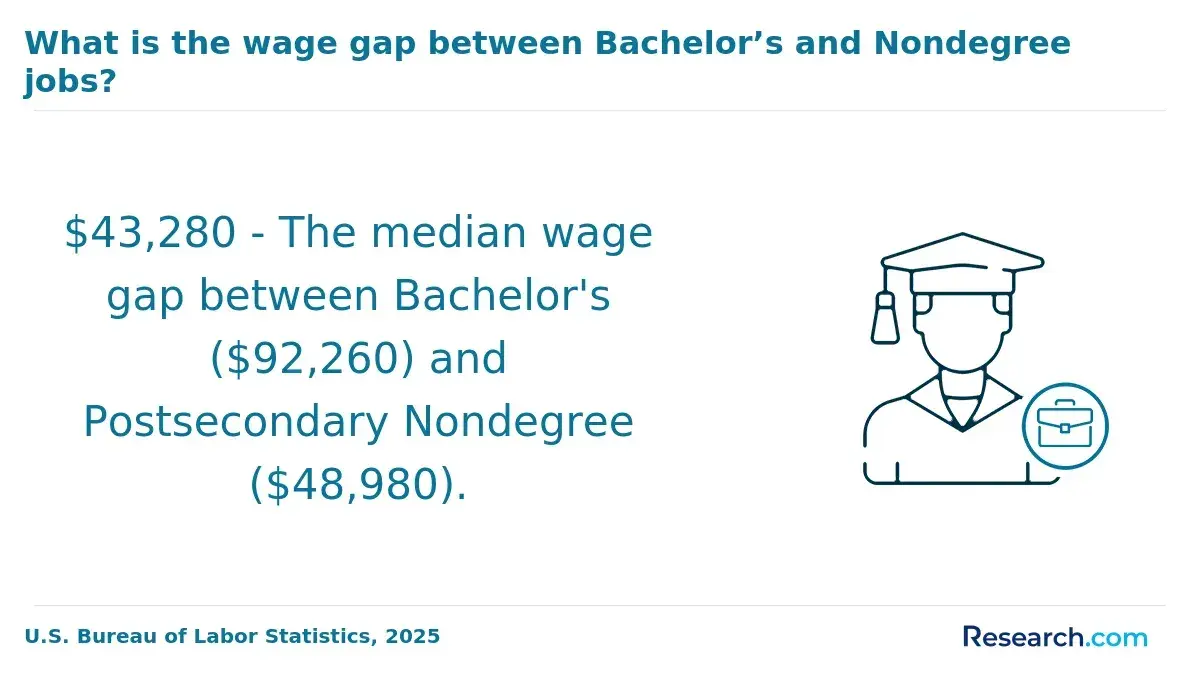
Pay in nursing informatics varies considerably by degree level, with earnings reflecting not just education but role scope, employer demands, and location. Entry-level certificates typically lead to technician or support roles earning between $60,000 and $70,000 annually but offer limited upward mobility without further qualifications. Associate degree holders often achieve salaries near $70,000 to $80,000, leveraging applied clinical skills, yet many find leadership or analytic positions require a bachelor's degree, which commands $85,000 to $95,000 median pay and broader job stability. Master's graduates break into higher-tier roles earning $110,000 to $130,000 by combining clinical mastery and leadership capabilities, while doctoral holders-though less common-occupy strategic or executive roles often exceeding $140,000. Beyond salary, prospective students should weigh time and cost of advancing degrees against job market realities like certification demands and regional hiring standards, as progression often correlates with increased responsibility and job security rather than immediate pay jumps alone.
For adults balancing work or transfer credits, the decision to pursue further education requires assessing local employer preferences and longer-term earnings potential. For example, a professional with an associate degree in a state with high demand for informatics nurses might choose to gain entry-level work experience before committing time and tuition toward a bachelor's or master's program that unlocks leadership roles.
Meanwhile, rapidly evolving technologies and certification expectations can shift employer priorities, making it critical to consider how each credential aligns with career goals and market conditions. Data from the U.S. Bureau of Labor Statistics (2024) confirms that while higher degrees open doors, workforce factors such as experience, sector, and location substantially shape actual compensation and advancement speed. Exploring online pharmacist programs can also be part of evaluating how different credentials align with evolving healthcare career opportunities.
One student initially pursued a certificate program to enter the field quickly but soon realized local employers preferred bachelor's degrees for analyst roles. After comparing job postings and discussing advancement pathways with mentors, the student paused to evaluate whether investing additional years and tuition for a bachelor's or master's made sense given their family responsibilities and budget. This cautious approach helped them avoid overextending financially and guided them toward positions that valued practical skills and offered tuition reimbursement, illustrating how pay data and employer criteria intersect with personal circumstances in shaping realistic career decisions.
Which Nursing Informatics Degree Level Offers the Strongest Employment Prospects?
Bachelor's and master's degrees in nursing informatics consistently yield the strongest employment outcomes due to employer preferences and credential requirements that align with technical complexity and clinical integration. Many healthcare organizations set a bachelor's degree as the minimum entry-level standard, especially for roles involving broad informatics functions combined with patient care knowledge. For instance, a candidate with an associate degree may secure support roles more quickly, but advancing to specialized analyst or project management positions typically requires at least a bachelor's, with growing demand favoring master's-level training. According to 2024 data from the U.S. Bureau of Labor Statistics, nearly 90% of master's graduates find relevant employment within a year, underscoring the value of advanced credentials that include practicum experience and depth in clinical informatics.
While certificates and associate degrees provide practical pathways for immediate workforce entry, they often restrict advancement to technical support rather than leadership or policy roles, where licensure and certification standards tend to demand higher degrees. Doctoral graduates, although fewer, often shift into academia, research, or regulatory positions that offer long-term influence but fewer direct hires in frontline informatics jobs. This creates a tradeoff: quicker employability versus specialized career focus. Prospective students weighing their options must consider whether to enter the workforce early with lower-level credentials and later transfer credits or pursue advanced degrees upfront to access higher-paying and more stable positions in a field experiencing degree inflation and skill scarcity across many regions.
What Entry-Level Jobs Can You Get With a Nursing Informatics Degree?
Entry-level nursing informatics jobs tend to vary substantially based on degree level, clinical experience, and certifications held by candidates. Bachelor's degree holders often begin with roles that support health IT systems or assist clinical teams in data management, while those with master's degrees typically qualify for positions involving more advanced data analysis or project leadership responsibilities. Employers increasingly seek applicants who have combined academic knowledge with hands-on internships or relevant certifications such as CPHIMS, as these experiences enhance a graduate's ability to navigate clinical workflows and technology integration effectively. For example, a bachelor's graduate with prior nursing licensure and practicum exposure in a metropolitan hospital may access hybrid roles supporting electronic health record (EHR) optimization, highlighting the growing influence of geographic and experiential factors in job accessibility and functionality.
Choosing between associate, bachelor's, or advanced nursing informatics degree pathways requires assessing not only immediate employability but also longer-term mobility within healthcare systems. While associate degrees might open doors to entry-support roles, these positions often offer limited upward progression compared to bachelor's or master's credentials, which are better aligned with leadership pipelines and analytical demands. Approximately 60% of entry-level job postings prefer or require licensure or health-related certifications, underscoring the advantage of clinical credentials paired with informatics expertise. Those weighing degree options should also consider the impact of practicum involvement and technical competencies in tools such as data management software, as these factors directly influence job stability and skill development potential. Prospective students can explore accelerated college programs that integrate these elements strategically to improve placement outcomes and align education with evolving market needs.
How Do Nursing Informatics Degree Levels Affect Career Advancement and Promotion Opportunities?
Faster access to leadership roles in nursing informatics is closely linked to earning a master's degree, reflecting employers' preference for advanced credentials in strategic and managerial positions. While associate and bachelor's degrees typically qualify candidates for entry- to mid-level jobs, many organizations set a master's degree as the baseline for supervisory responsibilities, especially in environments emphasizing data analytics and clinical decision support systems. This credential threshold means practitioners with only a bachelor's often face slower career progression, limited internal mobility, and fewer promotions without further education or certifications. According to a 2024 analysis by Lightcast, job listings requiring a master's in nursing informatics have increased by 15% compared to those seeking only bachelor's-level credentials, underscoring the growing demand for advanced expertise in these roles.
The availability of transfer credits and flexible graduate programs benefits working professionals aiming to achieve this higher qualification without extended career disruption, a significant consideration for mid-career learners balancing job demands. However, decisions to pursue a master's should weigh the tradeoff between immediate work experience and the delayed but necessary credential upgrade that employers increasingly require to qualify for leadership or specialized functions such as health information governance. For adult learners or military-affiliated students with prior college credits, these pathways can accelerate leadership readiness, but they must also consider whether their current roles truly require or reward the investment in graduate education, as not all employers advance candidates solely on degree level.
One nursing informatics student working full-time in a hospital setting evaluated whether obtaining a master's would truly influence her promotion prospects. Initially hesitant due to the workload, she discovered her employer's recent shift toward preferring master's-prepared candidates for supervisory roles. This shift made her cautious optimism grow, viewing graduate study not only as a credential but as preparation for complex team management. Still, she remained aware that experience and certifications would also shape her advancement chances, illustrating the nuanced balance between formal education and practical skill development in this field.
Is a Nursing Informatics Degree Worth It Based on Salary, Employment, and ROI?
Salary prospects and job stability in nursing informatics vary notably by degree level, making a clear distinction in return on investment for prospective students. Those holding advanced degrees-such as master's or doctoral credentials-tend to access higher-paying, leadership, and specialized roles that demand both clinical and IT expertise, while bachelor's degree holders often face more limited upward mobility and correspondingly modest salary growth. For working adults evaluating a degree path, it is critical to consider how additional study time and tuition costs, including potential debt, compare against expected salary improvements and the availability of roles in their local labor market. Students with transfer credits or part-time options can reduce opportunity costs and maintain income flow, which often makes graduate-level education more attainable and financially rational.
Employment projections support the value of more advanced credentials, with faster growth expected in nursing informatics-related management roles, reflecting healthcare's increasing digitization. However, practical workforce realities mean that a degree's worth also hinges on employer preferences for graduate credentials and certifications that secure access to project leadership and stable positions. Adult learners, military-affiliated students, and career changers should weigh these employment outcomes carefully against program length, hidden expenses, and labor demand variability. For some, alternatives like a CCMA to LPN bridge program may offer a more cost-effective or timely route into healthcare fields while maintaining stable employment.
Ultimately, assessing nursing informatics salary and employment outcomes requires a nuanced understanding of how degree level influences career trajectory and earnings potential within a dynamic labor market. Prospective students must align their educational investment with realistic employment retention prospects and advancement pathways, recognizing that higher degree levels often come with greater debt but also stronger long-term career mobility. This balancing act is central when determining the return on investment for nursing informatics degrees, especially for learners balancing existing work commitments and financial constraints.
How Do Associate, Bachelor's, Master's, and Doctoral Nursing Informatics Degrees Compare?
Employment access and role scope in nursing informatics closely track degree level, impacting both immediate job placement and long-term career trajectories. Those with associate degrees typically enter as support staff-such as health IT technicians or assistant roles-with limited advancement potential; about 65% secure jobs within six months according to U.S. Department of Education data from 2024, yet many find upward mobility constrained by employer preferences for higher credentials. For working professionals, the ability to transfer associate credits toward a bachelor's degree offers a strategic path, as bachelor's holders see roughly a 10% higher employment rate and qualify for specialized roles like clinical informatics specialists or quality coordinators, where licensure and foundational informatics knowledge are critical.
Master's degrees in nursing informatics markedly expand leadership and specialized analyst opportunities, as well as eligibility for advanced certifications valued in roles involving system design or data governance. Despite longer programs and greater financial investment, nearly 85% of master's graduates find employment within a year per National Center for Education Statistics data from 2024, reflecting strong demand for advanced expertise. Doctoral credentials, including PhD and DNP, while less common due to program length and intensity, open academic, executive, and policy-making roles with significant influence but fewer directly clinical positions, often requiring a clear intention to pursue research or senior leadership rather than immediate clinical informatics practice. Deciding whether to pause after a bachelor's or master's degree hinges on weighing the time and cost against realistic opportunities for role expansion and stability in a labor market that increasingly values stacked qualifications and specialized informatics skills.
Which Industries and Employers Hire Nursing Informatics Graduates by Degree Level?
Employment opportunities in nursing informatics differ significantly across degree levels, a distinction that has direct implications for job functions and advancement potential. Associate degree holders often engage in roles centered on technical support and basic data handling within hospitals or outpatient clinics, where hands-on system maintenance and clinical documentation support predominate. However, these positions rarely demand advanced licensure or substantial clinical knowledge, making them accessible but limiting later mobility into leadership or specialized analytic roles. For example, a graduate with an associate degree might be effective managing EHR data entry tasks but would need to pursue further education to qualify for project coordination roles in large integrated health systems.
Bachelor's degree graduates typically gain access to a wider employer spectrum, including government health agencies and private health IT vendors, aligning with expectations for combined clinical and IT proficiency. They often fill roles such as clinical analysts or quality improvement coordinators, where familiarity with compliance frameworks like HIPAA and EHR systems is crucial. Master's-level nurses are highly sought by hospitals, pharmaceutical companies, and academic centers for leadership and research-intensive roles, commanding salaries that are 20-30% higher, according to data from the U.S. Bureau of Labor Statistics. Doctoral graduates, while fewer, enter research institutions and consulting firms focusing on system-wide innovation and policy, illustrating how advanced academic training correlates with strategic influence and complex problem-solving responsibilities.
What Skills, Credentials, and Experience Improve Nursing Informatics Career Outcomes?
Achieving meaningful advancement in nursing informatics depends less on degree title alone and more on the deliberate accumulation of role-relevant skills, certification, and applied experience. Employers consistently seek candidates fluent in health information technologies, data analytics, and interoperability standards who can demonstrate these proficiencies through internships or clinical placements, which often distinguish entry-level graduates. For instance, a bachelor's degree graduate combining RN licensure with informatics certification typically gains quicker employment access and improved retention rates compared to those lacking such credentials, reflecting strategic credential stacking's impact on hiring and job security. This alignment of skills and certifications addresses the essential credentials and experience to improve nursing informatics job outcomes effectively.
As professionals progress, master's and doctoral candidates leverage advanced technical and leadership training to transition into specialized or managerial roles, but this requires balancing substantial educational investment against realistic pay and promotion prospects. Certifications like CPHIMS and RN-BC are strongly correlated with enhanced screening success and upward mobility, yet their value is maximized when complemented by demonstrable project leadership and cross-disciplinary teamwork, especially in environments valuing communication and adaptability. Military healthcare experience or previous roles in healthcare technology industries can also boost candidacy by blending clinical insight with system navigation skills. For those evaluating whether to pursue higher degrees, assessing how such credentials and experience interact with long-term outcomes-including DNP salary transparency-is critical to making informed decisions aligned with career goals and practical realities.
Which Nursing Informatics Degree Level Is Best for Your Career Goals?
Choosing the appropriate nursing informatics degree level requires balancing immediate employment access against long-term specialization and leadership goals. Associate degrees and certificates often enable faster entry into technical or support roles but typically restrict eligibility for clinical nurse informaticist positions, which increasingly require at least a bachelor's degree. This bachelor's credential opens doors to wider employer pools and some supervisory roles, while also benefiting from transfer credits that can shorten the time to completion for many learners, including working adults and military-affiliated students. Many employers expect a bachelor's degree as a baseline credential, influencing pay and employment prospects directly.
Master's degrees offer substantial advantages in specialization, eligibility for advanced practice roles, and management track positions, but these come with higher tuition and longer completion times. According to a 2024 National Center for Education Statistics report, graduates with master's degrees in nursing informatics attain a 15% higher employment rate within six months post-graduation than those with bachelor's degrees, highlighting employer preferences for advanced skills and credentials. Part-time or accelerated master's programs provide practical options for adults balancing work and study, although student debt often doubles compared to undergraduate pathways. For those targeting research, policy influence, or academic careers, doctoral programs have distinct value but are less crucial for clinical leadership.
Decision-making about nursing informatics education should factor in regional employer credential demands and potential certification requirements that may extend beyond degree qualifications. For individuals evaluating pay and employment by degree level, understanding these tradeoffs is critical. Students aiming for efficient completion might explore transfer pathways, while those focused on leadership or specialized roles should anticipate the necessity of graduate education. Prospective learners interested in cost-effective doctoral options may consider resources like the cheapest DSW program as a model for balancing advanced credentials with affordability.
References
- How to Become an Informatics Nurse Specialist https://nursinglicensemap.com/nursing-specialties/registered-nurse/informatics-nurse/
- What Are the Opportunities in Nursing Informatics? | NursingEducation https://nursingeducation.org/insights/nursing-informatics/
- Nursing Informatics Specialist Job Description (Roles & Duties) https://www.allnursingschools.com/nursing-informatics/job-description/
- Nursing Informatics | Ultimate Guide to Career Paths & Salaries | Maryville Nursing https://nursing.maryville.edu/blog/nursing-informatics
- Nursing Informatics: Definition, Career, Salary & Degree Guide https://smarthealthasia.com/blog/nursing-informatics/
- Nursing Informatics Careers in 2026 | Betternurse.org https://betternurse.org/nursing-informatics-career/
- Health Informatics Jobs Outlook and Education Requirements https://www.usfhealthonline.com/resources/health-informatics/health-informatics-career-outlook/
- Nursing Informatics & Nurse Informaticists Career Guide: How to Become One - Nurseslabs https://nurseslabs.com/nursing-informatics-nurse-informaticists/
Other Things You Should Know About Nursing Informatics
Longer programs such as master's or doctoral degrees often provide deeper specialization but can impose significant time and workload demands, which may conflict with ongoing job responsibilities. Those currently employed should weigh whether part-time or online formats maintain quality while allowing manageable pacing. Prioritizing programs designed with flexible learning schedules helps minimize career disruption without sacrificing essential skills needed by employers.
More advanced degree levels typically cover broader theory and research perspectives, which improve long-term career advancement prospects but may delay entry into the workforce compared to shorter bachelor's programs. Choosing a degree level aligned with current market demands-such as proficiency in specific informatics technologies at the bachelor's level-can improve near-term job placement. However, less comprehensive programs may limit opportunities in leadership roles, making degree depth a critical factor for career trajectory decisions.
Employers commonly expect bachelor's graduates to demonstrate solid operational knowledge and competency with clinical information systems, suitable for technical or analyst roles. Master's graduates, by contrast, are often assumed to possess leadership skills and strategic insight necessary for managing projects or departments. This expectation gap means that master's degree holders face higher performance benchmarks but also gain access to more decision-making responsibilities, which should guide candidates considering additional education.
Curriculum relevance, especially hands-on skills with healthcare IT systems and analytics tools, tends to have a stronger impact on employability than institutional prestige alone. Students should prioritize programs with up-to-date content aligned to employer needs and industry standards rather than reputation or rankings. Practical experience embedded in coursework often leads directly to job readiness, making it the more crucial factor for career advancement in this rapidly evolving field.