
2027 Which Applied Psychology Degree Careers Have the Lowest Unemployment Risk?

Co-Founder and Chief Data Scientist
Choosing an applied psychology degree specialization can seem daunting-especially when employment stability is a top priority amid economic shifts and automation. Some career paths within applied psychology-such as industrial-organizational psychology and clinical specialties with state licensure-show markedly lower unemployment risk across experience levels. For example, employment rates for board-certified clinical psychologists remain above 95% even during economic downturns.
Geographic regions with robust healthcare and corporate sectors also sustain demand. This article explores which applied psychology career specializations, industries, credentialing strategies, and geographic markets consistently minimize unemployment risk, offering a data-driven roadmap to secure long-term professional resilience.
Key Things to Know About the Applied Psychology Degree Careers With the Lowest Unemployment Risk
- Historical unemployment rates are lowest among licensed clinical psychologists and counseling professionals-licensure acts as a significant employment shield, especially during recessions and economic downturns.
- Ten-year forecasts show rising demand for industrial-organizational psychologists-automation's limited ability to replicate complex human-behavior analysis bolsters role longevity across diverse geographic markets.
- Advanced degrees and professional certifications substantially reduce unemployment risk-graduate education expands career flexibility, while certifications facilitate entry into recession-resilient healthcare and human factors specialties.
What Makes Applied Psychology Degree Jobs More or Less Resistant to Unemployment?
Unemployment risk for applied psychology degree careers varies by the type of unemployment involved. Structural unemployment results from lasting industry shifts or automation replacing human roles, causing prolonged job loss. Frictional unemployment is temporary-workers moving between jobs experience short gaps. Cyclical unemployment fluctuates with economic cycles, rising in recessions and falling during growth periods. These distinctions are crucial for evaluating job security in applied psychology.
Key factors that predict lower unemployment risk among applied psychology graduates include:
- Occupational Licensing: Roles like clinical psychologists or licensed counselors requiring credentialing face fewer unemployment risks due to strict barriers limiting oversupply.
- Employer Concentration: Careers spread across diverse employers or sectors reduce vulnerability to layoffs tied to a single company or industry downturn.
- Sector Growth Rate: Expanding sectors-healthcare and education, for example-sustain demand and lower structural and cyclical risks.
- Role Replaceability: Positions demanding emotional intelligence, interpersonal skills, or complex judgment show less susceptibility to automation, enhancing stability.
Degree level and specialization also influence employment resilience factors for applied psychology degree jobs. Advanced degrees offer advantages in competitive markets, while specializations such as industrial-organizational psychology or neuropsychology tend to align with fast-growing sectors. Geographic labor markets impact unemployment risk significantly-regions with diverse economies and strong healthcare or social service sectors provide better career durability.
This guide applies a systematic framework-with data from historical unemployment rates, ten-year demand projections, automation vulnerability, economic downturn resilience, licensure protections, geographic labor market dynamics, and credentialing benefits-to objectively assess applied psychology unemployment risk. Readers can thus evaluate career paths using consistent risk criteria rather than anecdotal advice.
For those considering further education options aligned with career stability, this includes researching pathways such as the list of DNP programs that complement applied psychology expertise. Ultimately, prioritizing unemployment risk over interest or salary alone dramatically improves long-term career security, offering a solid evidence base for confident specialization decisions.
Which Applied Psychology Career Paths Have the Lowest Historical Unemployment Rates?
Among careers related to applied psychology, several occupational categories have shown consistently lower-than-average unemployment rates over more than a decade, according to BLS Current Population Survey data, NACE First-Destination Survey outcomes, and Federal Reserve labor market research. These specialties demonstrate notable resilience through major economic disruptions such as the 2008-2009 recession, the 2020 COVID-19 pandemic, and the 2022-2024 labor market normalization, making them attractive options for students and professionals seeking stability.
- Clinical Psychology: Strong regulatory frameworks requiring licensure restrict supply and sustain steady demand.
- Licensing and certification requirements serve as significant barriers to entry, supporting job stability.
- A chronic undersupply of qualified clinicians fuels ongoing demand.
- Its essential service status, alongside growing mental health awareness, drives demand even during recessions.
- Industrial-Organizational Psychology: Consistent employer focus on employee well-being, productivity, and talent management cushions against downturns.
- Demand is structurally pushed by corporate efforts to improve workforce efficiency.
- Compliance with labor laws and diversity initiatives requires expert consultation.
- These roles often transition toward remote or contract work, enhancing resilience to market changes.
- School Psychology: Employment demand remains steady due to mandatory educational requirements and special education services.
- Federal and state regulations mandate psychological services in schools.
- Demographic trends in child populations influence consistent need.
- Schools maintain essential support services even in economic disruptions, protecting employment.
- Rehabilitation Psychology: Focus on assisting individuals with disabilities and chronic health issues supports sustained labor market demand.
- An aging population and increased emphasis on inclusive healthcare drive growth.
- Government programs and insurance reimbursements require licensed practitioners.
- Services tend to be less discretionary, preserving jobs during downturns.
- Health Psychology: Increasing integration in healthcare and management of chronic diseases sustains employment.
- Healthcare regulations and insurance require credentialed professionals.
- Population aging and rising healthcare utilization sustain demand.
- Economic shocks have minimal effect as these services remain essential.
This ranking of top applied psychology specialties by historical employment stability offers a defensible rationale for their long-term resilience-driven by demographic patterns, regulatory requirements, and essential service designations rather than short-term labor market cycles. Prospective students and early-career practitioners should combine these insights with ten-year demand projections and assessments of automation vulnerability to build a comprehensive career risk profile.
In evaluating programs to prepare for careers with the lowest historical unemployment rates in the United States, considering factors like licensure and geographic market conditions is vital. For those exploring educational options, resources such as nursing schools that don't require TEAS may offer parallel insights into credentialing landscapes worth noting when planning careers intertwined with health and psychological services.
How Does the Applied Psychology Job Market Compare to the National Unemployment Average?
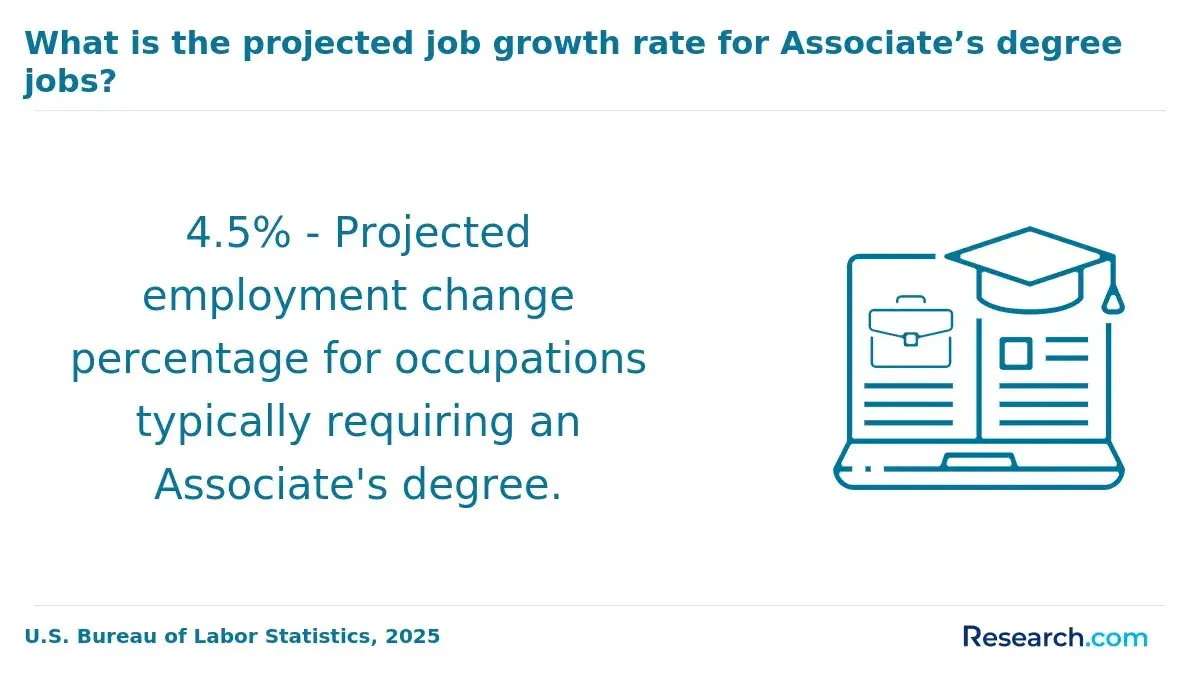
The unemployment rate for applied psychology degree holders-around 1.3% in many career paths-is notably lower than the national average for college graduates, which sits near 2.5%. This gap can translate into shorter job searches and steadier early to mid-career income, fostering increased financial stability and momentum for professionals in this field.
- Employment Security: Demand remains strong in specialized areas like clinical, counseling, and industrial-organizational psychology, where required skills and certifications limit competition and reinforce job stability.
- Underemployment Risks: Official unemployment rates don't capture those working in roles unrelated to their training. Applied psychology graduates frequently face underemployment, which can dampen long-term earnings and slow career progress.
- Data Variability: Due to the small size of many niche applied psychology occupations, unemployment figures often fluctuate annually. Evaluating multi-year trends is essential to understanding actual structural risks.
- Contextual Interpretation: A low unemployment rate in a given year might conceal persistent underemployment or geographic disparities. Graduates should consider licensing requirements, credentialing advantages, and regional labor demands for a clearer picture of sustainable employment.
- Long-Term Stability: Combining graduate education with professional certification typically offers stronger resistance to automation and economic downturns, further reducing unemployment and underemployment risks over a career span.
When asked about his experience, a professional who successfully graduated with an applied psychology degree reflected on the job hunt as "challenging yet manageable." He described spending months tailoring applications to careers that matched his certifications, emphasizing that patience and strategic networking were crucial. "I found that relying solely on unemployment statistics wasn't enough-I had to balance those numbers with understanding the specific credentialing and location-based demands," he explained, highlighting how practical decisions shaped his steady advancement despite initial uncertainty.
Employers exhibit strong demand for specific applied psychology specializations shaped by technological advances, demographic trends, and regulatory factors-creating unequal job market opportunities across subspecialties. Industrial-Organizational Psychology remains highly sought after as organizations navigate digital transformation and remote work, requiring experts in workforce productivity, change management, and employee well-being. Human Factors Psychology is propelled by industries adopting complex technologies, where user-centered design enhances safety and complies with regulatory standards.
- Health Psychology: Growing chronic disease rates and aging populations increase demand for behavioral health interventions that improve outcomes and reduce costs, supported by public health policies and insurance frameworks.
- Clinical Neuropsychology: Advances in brain imaging and rising cases of neurological injuries drive the need for specialists skilled in cognitive assessment and rehabilitation, particularly in older demographics.
- Forensic Psychology: Legislative reforms and expanded roles in legal systems sustain steady hiring despite economic shifts, emphasizing expertise in criminal justice and correctional settings.
- Educational Psychology: Focus on learning disabilities and inclusive education fuels demand, though growth varies by region and funding priorities.
Such concentration in applied psychology specializations reflects complex labor market dynamics rather than uniform growth. Students and professionals should verify demand trends by comparing job postings with practitioner salary reports, association data, and direct insights from hiring managers to ensure alignment with local markets and career goals.
Building competitive profiles entails pursuing specialized coursework, relevant internships, and recognized credentials-like board certification or licensure-tailored to these in-demand career paths. For example, those interested in behavioral health might explore coursework or certifications related to medical coding certification pathways to complement their expertise in health psychology.
Despite the stability offered by these sectors, concentrating solely on one raises exposure to industry-specific risks-such as regulatory shifts or technological advances. Developing cross-sector capabilities can buffer against such volatility, thereby enhancing career mobility and long-term resilience.
Healthcare: This industry benefits from its essential-service designation, shielding it considerably from economic fluctuations. Applied psychology graduates are pivotal in clinical, behavioral health, and rehabilitation settings, where demand consistently surpasses supply.
Government and Public Safety: Stability stems from mandated services and regulatory oversight. Graduates work primarily within law enforcement, corrections, and veteran support, focusing on behavioral evaluations and crisis response.
Education: Relatively steady enrollment and policy-driven budgets maintain demand. Graduates serve as school psychologists and counselors, focusing on student mental health and educational support.
Financial Services and Compliance: Intensified regulation drives ongoing demand for applied psychology expertise in fraud detection, risk management, and behavioral analysis.
Human Resources and Organizational Development: Persistent need for workforce optimization fuels hiring. Graduates contribute to talent management, employee well-being, and leadership cultivation. Primary roles encompass employee assessments, designing training programs, and enhancing organizational culture.
Competencies include psychometrics, change management, and effective communication. Generally reporting to HR directors or organizational leads. Education focusing on industrial-organizational psychology and research methods is essential.
Reflecting on her career path after completing an applied psychology degree, a professional shared how navigating early employment involved evaluating industry stability carefully. She noted, "I quickly realized that relying on one sector felt risky-regulatory changes in my initial role prompted me to pursue certifications applicable across industries." She described the transition as challenging yet enriching, emphasizing that this strategic diversification allowed her to adapt to evolving labor demands confidently. Her experience illustrates the value of broadening expertise alongside leveraging core competencies to secure enduring professional growth.
Applied psychology professionals working in government and public-sector roles face markedly lower unemployment risks compared to their private-sector peers. Data collected from BLS, OPM, and NASPE highlights several contributing factors to this enhanced job stability that merit careful consideration.
- Unemployment Rates: Public-sector positions generally maintain consistently lower unemployment rates. Civil service regulations cushion these roles from abrupt cuts during economic downturns, offering more predictable employment continuity.
- Layoff Frequency: While government budgets may shrink, resulting in some layoffs, these adjustments tend to happen slowly and are often governed by seniority and union protections. This measured approach contrasts sharply with the rapid, large-scale layoff patterns common in the private sector.
- Career Tenure: Employees in public roles typically enjoy longer tenure, supported by defined pension plans and systematic promotion pathways that encourage retention and reduce voluntary attrition.
- Government Role Categories:
- Federal Agencies: Jobs across health, education, and veterans affairs sectors provide strong employment safeguards and benefits, although salaries may be lower than private equivalents.
- State and Local Governments: Positions within mental health, corrections, and workforce development benefit from civil service protections enhancing job security.
- Public Universities and Research Institutions: These settings offer relative stability aided by institutional backing and grant cycles, despite some roles tied to external funding streams.
- Quasi-Governmental Organizations: Operating between government and private enterprise, these organizations carry moderate employment risk levels.
- Trade-Offs of Public-Sector Employment: Initial pay often lags behind private-sector offers, yet comprehensive benefits-such as pensions, ample leave, and loan forgiveness programs-boost total compensation and long-term financial security.
- Employment Security Premium: Applied psychology graduates prioritizing job stability will find public roles advantageous, while those accepting higher risk may pursue greater income and advancement in private-sector roles.
- Financial and Career Considerations: Assessing personal risk tolerance and financial goals is critical-though public employment may start with lower earnings, its stable benefits often yield stronger protection against economic fluctuations over the career lifespan.
Licensure requirements for applied psychology roles-such as clinical psychologists, school psychologists, and professional counselors-are governed by state licensing boards and represent a legal prerequisite for practicing in these fields. This mandatory credentialing system functions as a structural barrier to entry, limiting labor supply exclusively to fully credentialed practitioners. As a result, employers cannot substitute unlicensed workers, which creates a stable demand floor for licensed applied psychology professionals even during economic downturns.
Economic research, including findings from the U.S. Bureau of Labor Statistics, confirms that licensed psychologists consistently experience unemployment rates below national averages. This trend reflects reduced labor market competition generated by licensure restrictions that sustain durable employment resilience irrespective of broader market disruptions such as automation or demographic shifts.
- Mandatory Licensure: Essential for clinical, counseling, and school psychologists, encompassing state-specific board exams, supervised clinical hours, and educational prerequisites.
- Voluntary Certifications: Professional designations like Certified Rehabilitation Counselor (CRC) or Board Certified Coach (BCC) are not legally required but serve as practical hiring filters within competitive markets.
- Credential Strategy: Candidates should prioritize obtaining required licenses for legal practice, pursue recognized certifications relevant to their specialty, and avoid investing in credentials with negligible labor market value.
- Employment Trends: Recent data indicates stable employment growth in licensure-dependent applied psychology roles, highlighting the protective impact of credentials in a transforming labor market.
Geographic disparities in unemployment risk for applied psychology graduates stem from how regional economic structures shape labor demand. Data from BLS metropolitan area unemployment statistics, ACS geographic employment data by occupation, and Lightcast regional demand analytics reveal that metropolitan areas with strong healthcare corridors, government service centers, technology hubs, and financial clusters provide the most stable and abundant opportunities. Washington D.C., Boston, and San Francisco illustrate this trend with below-average unemployment rates due to dense concentrations of hospitals, federal agencies, biotech firms, and financial institutions relying on psychological expertise for workforce development, organizational effectiveness, and mental health support.
Regional employment trends for applied psychology degree holders also highlight that areas with sparse employer density in psychology-related sectors-often rural regions or locations focused on industries less reliant on psychological services-face longer job search durations and heightened exposure to local economic downturns. This structural imbalance results in uneven unemployment risk across states and metropolitan areas.
The rise of remote work further reshapes geographic risk by expanding access to national and international job markets. Applied psychology specializations such as organizational consulting, user experience research, and telehealth counseling are particularly suited for remote work, allowing graduates to reduce dependency on local labor markets. This geographic flexibility acts as effective risk management, buffering professionals from regional economic fluctuations.
Prospective applied psychology professionals should perform detailed geographic labor market analyses tailored to their career targets. Leveraging BLS area-specific employment data, LinkedIn job posting geography filters, and regional wage benchmarks helps evaluate whether staying put, relocating to demand hotspots, or pursuing remote-eligible roles offers the optimal balance between unemployment risk and personal circumstances. For those considering advanced options, exploring online MHA programs may complement applied psychology career paths and diversify employment opportunities.
- Demand Hotspots: Metropolitan areas like Washington D.C., Boston, and San Francisco lead in stable demand linked to healthcare, government, and tech industry clusters.
- Structural Risk Factors: Regions with few applied psychology employers experience elevated unemployment risk driven by limited local opportunities and greater economic volatility.
- Remote Work Advantage: Remote-capable roles in counseling, organizational psychology, and UX research reduce geographic dependence and expand labor market access.
- Strategic Market Analysis: Utilizing BLS and online job posting data supports informed decisions about relocation or remote career pathways to mitigate regional employment risk.
- Recent Trend: National remote job listings for applied psychology-related positions have increased by over 45% in the last three years, underscoring growing geographic flexibility.
Applied psychology careers at highest risk of automation tend to involve routine data processing, pattern-matching, and standardized client service interactions. Drawing on research from the McKinsey Global Institute, Oxford Martin School, and MIT's Work of the Future initiative, roles dominated by repetitive tasks face significant vulnerability to automation technologies such as artificial intelligence, machine learning, and robotic process automation.
- Data Analysts and Test Administrators: These positions rely heavily on routine data collection, scoring, and initial interpretation of psychological assessments. The repetitive nature and structured data handling make these jobs highly susceptible to replacement by faster, more consistent automation systems.
- Client Intake Coordinators and Administrative Support: Roles focused on standardized client interactions, documentation, appointment scheduling, and follow-up communication are increasingly automated through chatbots, scheduling software, and document management tools.
- Behavioral Technicians in Standardized Interventions: Jobs delivering scripted interventions or behavioral supports with limited complex judgment face automation threats from AI-guided treatment protocols and digital therapeutics.
Conversely, careers in applied psychology requiring complex problem-solving, nuanced interpersonal judgment, and ethical oversight-such as clinical psychologists, organizational consultants, and research scientists-remain far less vulnerable. These roles demand adaptive reasoning and deep domain expertise that current AI cannot replicate effectively. This evolving dynamic makes specialization and credentialing critical in managing technological disruption impact on applied psychology jobs in the US.
Applied psychology students and early-career professionals should anticipate possible mid-career shifts if pursuing high automation-risk roles. Developing skills in managing and integrating automated systems positions them as supervisors or collaborators with technology rather than displaced workers. Moreover, geographic market selection, graduate education, and professional certification increasingly serve as buffers to unemployment risk across career stages.
Automation risk scores provide probabilistic estimates influenced by employer adoption, regulation, technology maturity, and cost-efficiency-factors varying by organization and location. For those seeking diversified education options, exploring programs at top rated online nursing schools WGU may offer insights into resilient health and allied professional pathways.
Advanced degrees significantly improve job stability for applied psychology graduates by enhancing qualifications, broadening career options, and boosting earnings. Data from Georgetown University Center on Education and the Workforce show that those with graduate credentials face unemployment rates about 1.5 to 2 percentage points lower than bachelor's degree holders. Alongside this, salary increases often range between 20% and 40%, varying by specialization and industry.
Three graduate degree categories are particularly effective at reducing unemployment risk:
- Professional Master's Degrees: Clinical, legal, or engineering psychology master's programs frequently provide licensure eligibility, which safeguards employment through regulatory protections and consistent demand for licensed professionals.
- Research-Focused Master's and Doctoral Programs: These prepare graduates for specialized practitioner or research positions in areas with limited labor supply, sustaining low unemployment risk in emerging subfields.
- MBA Programs: MBAs enable applied psychology graduates to enter management and leadership roles in diverse sectors, overcoming career progression barriers common to bachelor-only peers.
- Investment Cost: Graduate studies typically span 2 to 5 years, with tuition costs ranging from $30,000 to over $100,000 depending on institution and format.
- Opportunity Cost: Lost wages during study-especially in full-time programs-add to overall expenses.
- Return on Investment: Break-even periods generally fall between 3 and 7 years post-graduation, based on higher salaries and fewer unemployment spells.
While graduate education can offer substantial employment security, alternatives like targeted certifications, selecting employers in high-demand sectors, relocating to strong labor markets, or focusing on emerging specialties may deliver similar resilience with less cost and time. Evaluating these options alongside career goals and market conditions aids in making informed strategies to reduce long-term unemployment risk in applied psychology careers.
Entry-level roles that lead to long-term stability in applied psychology careers typically share several critical features: clear advancement ladders, strong employer retention, transferable credentials, and valuable professional networks supporting resilience through industry shifts. Analysis of workforce trends indicates these pathways enable graduates to develop durable career equity rather than cycling through unstable positions.
- Human Factors Technician: Positioned within sectors like aerospace, healthcare, and technology, these roles offer hands-on experience in optimizing system designs and user interfaces. Career progression often occurs within 2-4 years from technician to analyst or specialist roles, supported by employers who emphasize certification and internal promotion-creating a stable mid-career foothold.
- Behavioral Health Technician: Embedded in mental health and rehabilitation settings, these positions build recognized clinical credentials and networking opportunities essential for advancing toward licensure or specialized counseling roles. Typical advancement spans 3-5 years, with reliable long-term prospects due to sustained demand in healthcare and social services, sectors less exposed to automation.
- Organizational Development Analyst: Entry points into corporate HR and consulting firms focus on workforce efficiency and culture enhancement. Strong internal mobility coupled with data-driven responsibilities produces advancement to consultant or project manager roles within 3-6 years. Employers offering robust professional development further reduce unemployment risk by fostering career security.
Choosing roles with documented career lattices-verified through tenure and promotion benchmarks-aligns graduates with more resilient employment trajectories. Decisions about geographic markets, functional specialization, and employer characteristics interact significantly with long-term career stability, underscoring the importance of early strategic planning beyond initial wage considerations.
What Graduates Say About the Applied Psychology Degree Careers With the Lowest Unemployment Risk
- Kian: "Pursuing applied psychology truly opened my eyes to the diversity of career specializations available-especially clinical, industrial-organizational, and forensic psychology. I found that securing certifications like the Licensed Professional Counselor credential early on made a huge difference in lowering unemployment risk at the entry level. Living and working in urban centers with growing healthcare sectors also provided numerous opportunities that kept me employed and challenged throughout my career."
- Leonard: "Reflecting on my journey, I realized the power of geographic flexibility-working in emerging markets such as the Pacific Northwest and the Southeast significantly increased my chances of stable employment. Focusing on educational psychology and obtaining board certification were crucial moves for mid-career advancement. The applied psychology degree served as a solid foundation, but combining it with specialized industry knowledge in healthcare and tech truly set me apart in senior roles."
- David: "From a professional standpoint, I can confidently say that emphasizing credentialing strategies-like becoming a Certified Rehabilitation Counselor-was pivotal at every career stage. Entering fields like human factors and counseling psychology brought steady demand, with government and nonprofit sectors offering some of the most resilient job markets. Having an applied psychology degree gave me the tools, but it was aligning credentials and industries that kept unemployment risk remarkably low."
Other Things You Should Know About Applied Psychology Degrees
The 10-year employment outlook for many applied psychology careers is generally positive, especially for those roles tied to healthcare, education, and organizational development. Careers such as clinical psychologists, school psychologists, and industrial-organizational psychologists are projected to grow faster than the average for all occupations. Growth is driven by an increasing awareness of mental health needs and a growing demand for organizational efficiency and employee well-being.
Mid-career demand is particularly strong for applied psychology professionals with specialized credentials-such as licensed clinical psychologists or certified industrial-organizational psychologists-working in healthcare settings, corporate environments, or government agencies. Roles focused on mental health treatment, human factors, and workplace productivity are consistently in high demand due to ongoing needs for psychological expertise in solving complex human behavior challenges.
State licensure lowers unemployment risk for roles such as school psychologist and clinical psychologist. School psychologists usually need a specialist-level degree plus a state credential, while clinical roles require a doctoral degree, supervised hours, and the Examination for Professional Practice in Psychology, or EPPP.
Economic recessions tend to affect applied psychology employment unevenly. Roles linked to mental health services often see stable or increased demand during downturns, as psychological stress rises. Conversely, positions heavily reliant on corporate budgets-such as organizational development consultants-may experience temporary cutbacks. Overall, applied psychology fields with licensure and direct service provision tend to demonstrate greater resilience during recessions.
- The 65 Jobs With the Lowest Risk of Automation by Artificial Intelligence and Robots - USCI https://www.uscareerinstitute.edu/blog/65-jobs-with-the-lowest-risk-of-automation-by-ai-and-robots
- College Majors With Highest (and Lowest) Unemployment - 24/7 Wall St. https://247wallst.com/special-report/2017/06/15/college-majors-with-highest-and-lowest-unemployment/
- These 10 majors had the lowest unemployment rates for recent college graduates https://thehill.com/business/5738341-college-majors-lowest-unemployment-rate/
- Fastest Growing Careers In Psychology | Psychology.org https://www.psychology.org/resources/fastest-growing-careers-in-psychology/
- How the Geography of Jobs Affects Unemployment https://www.richmondfed.org/publications/research/econ_focus/2014/q3/feature2
- These college majors have the highest earning potential and lowest unemployment rates, study finds https://www.cbsnews.com/news/college-majors-unemployment-rate-wage/
- Microsoft Study Reveals Which Jobs Are Most Vulnerable to AI. Is Your Position at Risk? https://www.investopedia.com/which-jobs-are-most-vulnerable-to-ai-11862053
- College Majors with the Lowest Unemployment Rates https://www.savingforcollege.com/article/college-majors-with-the-lowest-unemployment-rates
- 7 Highest-Paying Careers You Can Pursue With a Psychology Degree https://www.ndnu.edu/articles/psychology/seven-highest-paying-careers-you-can-pursue-with-a-psychology-degree.html
- Career Paths in Psychology to Help You Get Started https://www.snhu.edu/about-us/newsroom/social-sciences/psychology-entry-level-jobs-to-start-your-career


