2027 What Careers Can You Pursue With an Applied Psychology Degree? Salary Potential, Job Outlook, and Next Steps

Co-Founder and Chief Data Scientist
When a recent graduate with an applied psychology degree surveys the competitive job market, questions about salary potential and stable career paths often arise. Although many assume such degrees lead solely to clinical roles, the reality is broader.
In fact, employment in psychology-related fields is projected to grow by 8% from 2022 to 2032, reflecting rising demand in diverse industries, including human resources, market research, and organizational development. Understanding these opportunities and their financial prospects is crucial for career planning.
This article explores practical career paths, salary expectations, job outlook, and essential next steps for applied psychology graduates.
Key Things to Know About the Careers You Can Pursue With a Applied Psychology Degree
- Applied psychology graduates find diverse roles in healthcare, human resources, marketing, and education, reflecting broad industry applicability and growing interprofessional demand.
- Skills like research methods, data analysis, and interpersonal communication developed in applied psychology programs transfer well to leadership, consulting, and policy-making careers.
- Advanced degrees and certifications in applied psychology enhance salary prospects and prepare graduates for evolving roles in clinical, organizational, and academic settings.
What Careers Can You Pursue With a Applied Psychology Degree?
An applied psychology degree opens doors to diverse career options across multiple industries by emphasizing the practical use of psychological principles to address everyday challenges. Employment opportunities related to this field are projected to grow steadily, with the U.S. Bureau of Labor Statistics estimating about an 8% increase in psychology-related jobs between 2022 and 2032.
Several career paths commonly pursued by graduates with an applied psychology degree include:
- Human Factors Specialist: These professionals analyze how individuals interact with products, systems, or environments to improve safety and usability. Applying psychological techniques, they enhance user experience in sectors such as technology, transportation, and manufacturing.
- Industrial-Organizational Psychologist: Focused on workplace dynamics, I-O psychologists study employee behavior to boost productivity, job satisfaction, and organizational effectiveness. They design interventions based on behavioral data to support business goals.
- Rehabilitation Specialist: This role involves helping people with physical, emotional, or developmental challenges gain independence. Practitioners use applied psychology principles to create tailored treatment plans and coping strategies.
- Market Research Analyst: Leveraging psychological insights, these analysts examine consumer behavior and preferences to guide companies in developing effective marketing approaches and products. Their work bridges psychology with business strategy.
For those interested in expanding their skills, combining an applied psychology degree with other certifications, such as a medical billing and coding certificate, can further enhance job opportunities in healthcare-related administrative roles.
What Are the Highest-Paying Careers With a Applied Psychology Degree?
An applied psychology degree opens up higher-paying opportunities across diverse sectors including healthcare, business, and technology. The U.S. Bureau of Labor Statistics projects above-average wage growth for psychology-related roles, highlighting increasing demand for expertise in human behavior. Salary ranges for top positions span broadly, often exceeding $100,000 annually.
Below are some of the highest-paying careers with an applied psychology degree:
- Industrial-Organizational Psychologist: Specialists in workplace productivity and employee well-being, they design training programs and streamline hiring processes. Salaries typically range from $70,000 to $120,000 per year, with senior roles and consultants earning more.
- Clinical Psychologist: Focused on assessing and treating mental health disorders, these professionals usually require a doctoral degree but benefit from an applied psychology foundation. Earnings range between $60,000 and $110,000 depending on location and specialty.
- User Experience (UX) Researcher: Applying psychological principles to enhance digital product design and user interfaces, UX researchers earn from $75,000 to $130,000 annually, reflecting strong tech industry compensation.
- Human Factors Specialist: These experts improve safety and usability by designing systems considering human behavior, earning between $65,000 and $115,000 per year.
- Market Research Analyst: Using behavioral insights and data analysis to guide business decisions, they earn from $55,000 to $95,000 annually.
For prospective students interested in healthcare administration, exploring programs like the cheapest online healthcare administration degree can complement applied psychology studies and expand career prospects.
What Is the Job Outlook for Applied Psychology Degree Careers?
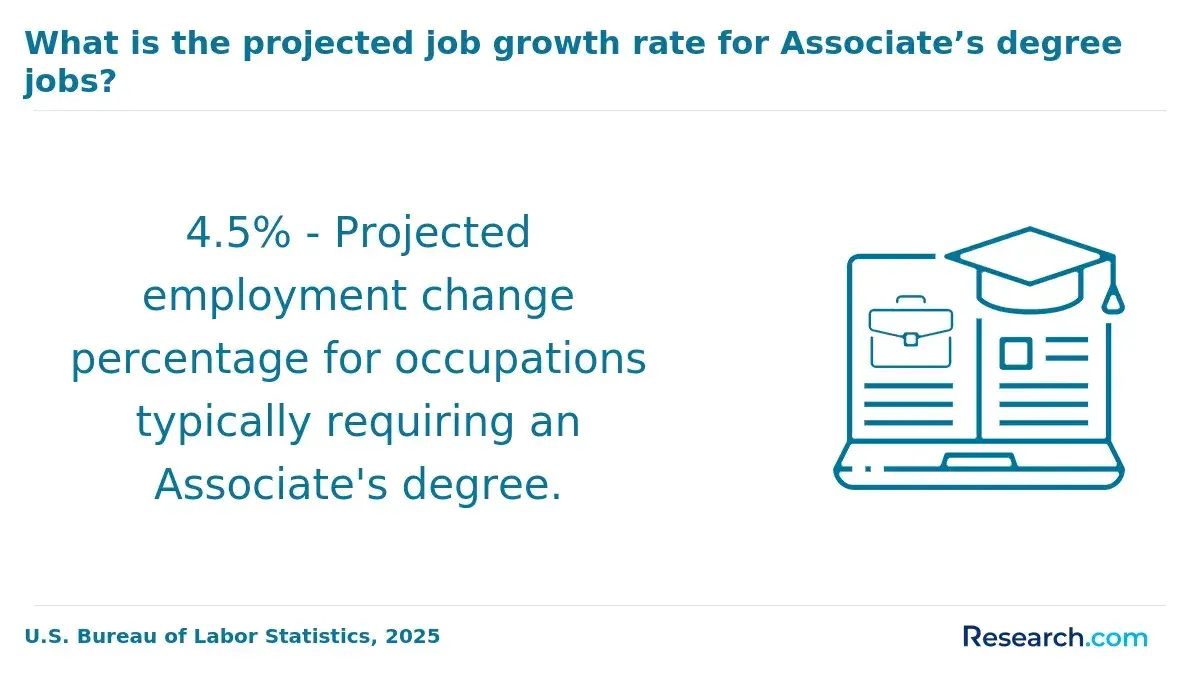
Careers related to an applied psychology degree are expected to experience steady growth, driven by increasing recognition of mental health's role across various sectors. Employment in psychology-related occupations is projected to grow by about 6% from 2022 to 2032.
Organizations are placing greater emphasis on workplace well-being, diversity, and evidence-based strategies, expanding opportunities for those skilled in applied psychology. Advances in technology and data analysis are reshaping these roles, requiring adaptability and cross-disciplinary skills, while continuing to diversify potential career paths.
A professional with an applied psychology degree shared that navigating the job market was more complex than expected. "It wasn't just about having the degree; understanding evolving employer needs took time," he explained.
The process involved balancing technical skills with real-world applications, and he highlighted moments of doubt regarding career direction. However, witnessing how psychological concepts improve organizational dynamics ultimately reinforced his confidence in the field's long-term prospects.
He advised recent graduates to stay curious and flexible as workforce demands continue to shift.
An applied psychology degree provides a comprehensive understanding of human behavior, research techniques, and psychological theories, preparing graduates for entry-level roles across fields like healthcare, business, education, and social services. Data shows that nearly 65% of applied psychology graduates find relevant employment within six months.
Exploring top entry-level careers for applied psychology graduates reveals diverse opportunities:
- Behavioral Health Technician: Supporting mental health professionals, these technicians implement therapeutic plans and track patient progress. The hands-on training in behavioral theories from the degree ensures readiness for this role.
- Human Resources Assistant: Leveraging knowledge of workplace psychology, individuals in this position assist with recruitment, employee relations, and staff training, contributing to effective organizational dynamics.
- Research Assistant: Graduates apply research methodologies learned during their studies to help design experiments, gather data, and analyze findings under senior researchers' guidance.
- Case Manager: This role involves coordinating client services and care, utilizing insights into cognitive and social processes gained from applied psychology studies to assess client needs and plan interventions.
- Market Research Analyst: Using expertise in consumer behavior and statistical analysis, analysts interpret data to inform product development and marketing strategies.
For those exploring education and career options, considering accredited medical billing and coding schools online may expand opportunities in health-related fields.
An applied psychology degree equips students with versatile skills that extend beyond psychology into sectors such as healthcare, business, education, and social services. A 2023 workforce study revealed that more than 70% of employers in behavioral and social sciences prioritize both analytical and interpersonal capabilities for successful job performance.
Key skills developed include:
- Research and Data Analysis: Students learn to design experiments, collect and analyze data, and interpret results using statistical techniques. Coursework in research methods and statistics enhances the ability to systematically evaluate human behavior and outcomes.
- Critical Thinking: The ability to scrutinize complex psychological concepts, question assumptions, and integrate diverse information is fostered through case studies and analytical writing assignments.
- Communication: Emphasis is placed on articulating psychological ideas clearly in both written and verbal formats. Group projects, presentations, and report writing build this essential skill.
- Ethical Reasoning: Students are trained to apply professional ethical standards to real-world scenarios, preparing them to handle sensitive issues responsibly.
- Interpersonal Skills: Through practical exercises like role-playing and supervised interactions, learners develop empathy, active listening, and conflict resolution capabilities necessary for team and client engagement.
Reflecting on her journey, an applied psychology degree graduate shared how mastering these skills demanded patience and perseverance, especially during research projects that required meticulous attention to detail and collaboration with peers.
She found that navigating ethical dilemmas in coursework helped build confidence for professional settings. "It was challenging at times, balancing data analysis with interpersonal sensitivity," she explained, "but those experiences taught me resilience and adaptability that I now rely on every day."
A bachelor's degree in applied psychology frequently enables graduates to move into mid-level or professional roles without needing additional formal education or certifications.
Data from the U.S. Bureau of Labor Statistics suggests that about 30% of individuals with psychology-related bachelor's degrees achieve this advancement through practical experience and demonstrated workplace performance.
Several career paths capitalize on the applied psychology background to support elevated responsibilities and decision-making duties:
- Human Resources Specialist: This role focuses on managing employee relations, recruitment, and training initiatives. The understanding of motivation and organizational behavior gained through applied psychology helps optimize workforce engagement and foster positive company culture.
- Market Research Analyst: Professionals in this position analyze consumer behavior and market trends to guide business strategy. Applied psychology contributes expertise in data interpretation and human behavior critical to informed business recommendations.
- Behavioral Health Coordinator: These coordinators design and implement programs aimed at enhancing mental health services within organizations. Knowledge from applied psychology supports effective behavioral interventions and client support efforts without clinical licensure.
- Training and Development Specialist: Specialists in this capacity develop and deliver employee training based on learning theories and cognitive psychology. Applied psychology equips them to improve skill acquisition and workplace productivity through targeted education.
Many careers connected to applied psychology require more than just a bachelor's degree to practice legally or progress professionally. According to the U.S. Bureau of Labor Statistics, approximately 70% of psychology-related jobs mandate at least a master's degree due to licensure and professional standards.
The following list highlights several applied psychology careers where additional certifications or advanced degrees are generally essential:
- Licensed Clinical Psychologist: This position demands a doctoral degree (PhD or PsyD) and state licensure. Such extensive education ensures practitioners can competently diagnose and treat complex mental health disorders while adhering to strict ethical standards.
- School Psychologist: Typically requiring a specialist-level degree (EdS or higher) plus certification, these professionals support diverse student populations through behavioral assessments and intervention strategies.
- Counseling Psychologist or Licensed Professional Counselor: A master's or doctoral degree alongside state licensure is necessary. Certification confirms expertise in therapeutic techniques and compliance with confidentiality and client safety requirements.
- Industrial-Organizational Psychologist: While some roles accept a master's degree, many research, consulting, or leadership positions require a doctorate. Advanced credentials enable application of psychological principles to improve workplace productivity and employee well-being.
- Neuropsychologist: This specialty calls for a doctoral degree plus postdoctoral training and board certification, reflecting the advanced skills needed to assess and treat brain-behavior relationships.
Obtaining advanced degrees or certifications in applied psychology aligns with occupational regulations and ensures practitioners have the necessary expertise to support client welfare and uphold scientific integrity.
Graduates with an applied psychology degree often find themselves well-prepared to explore alternative career options beyond traditional counseling or clinical roles. Research indicates that over 30% of psychology graduates transition to interdisciplinary fields, reflecting the degree's versatility across diverse industries.
Several promising directions for applied psychology graduates include:
- Human Resources Specialist: This role involves recruiting, employee training, and conflict resolution. Graduates apply their knowledge of motivation and organizational behavior to enhance employee engagement and foster positive workplace cultures.
- Market Research Analyst: Focused on analyzing consumer behavior and market trends, this position benefits from applied psychology expertise in research design and statistical methods to inform marketing strategies and product development.
- Occupational Health and Safety Consultant: Professionals in this area work to improve workplace conditions and reduce risks. Applied psychology insights into human factors and ergonomics support creating safer, more efficient environments.
- User Experience (UX) Researcher: UX researchers study interactions with digital products like websites and apps to improve usability. Skills in cognitive psychology and behavioral analysis enable graduates to design effective studies and translate findings into actionable design changes.
For students interested in further expanding their skills or exploring pathways involving health sciences, options such as an online ASN program may complement their foundational knowledge and augment career flexibility.
Salary potential for applied psychology graduates varies widely based on several professional and educational factors. According to the U.S. Bureau of Labor Statistics, the median annual wage for psychologists was about $82,180 in 2022, but actual earnings can differ significantly depending on job role and sector.
The key factors influencing salary potential include the following:
- Industry Choice: Applied psychology professionals working in healthcare or corporate consulting often receive higher compensation than those in nonprofit or educational settings. Industry-specific demands and funding levels strongly affect earning potential.
- Experience Level: Entry-level graduates commonly start with modest salaries, while experienced individuals, especially those in supervisory or specialized roles, tend to command higher wages. Career advancement and accumulated skills greatly impact income.
- Geographic Location: Salaries are generally higher in urban areas and regions with elevated living costs, such as California or New York. Location-based differences reflect variations in job demand and cost of living.
- Field Specialization: Graduates focusing on industrial-organizational psychology, clinical assessment, or human factors typically earn more than those in generalist roles. Expertise in research methods and data analysis further enhances value to employers.
- Responsibility Level: Positions involving leadership, strategic decision-making, or project management usually provide greater remuneration compared to tasks centered solely on data collection or support.
For those interested in further education, exploring the cheapest online MBA healthcare management programs can enhance career prospects in healthcare-related sectors where applied psychology skills are valuable.
Graduates with an applied psychology degree often face multiple routes to begin their careers or continue their education. Data from the National Center for Education Statistics indicates that about 58% of bachelor's degree holders enter the workforce immediately. The common next steps include:
- Workforce Entry: Many graduates take positions in human resources, social services, mental health support, or organizational development. These roles utilize psychology principles and offer practical experience critical for professional growth.
- Graduate Studies: Pursuing master's or doctoral programs allows for deeper specialization and access to advanced career opportunities in clinical, counseling, or research fields, often required for licensure.
- Professional Experience: Internships, fellowships, or entry-level jobs provide hands-on learning, networking, and skill-building essential for career advancement.
- Specialized Certifications: Some individuals seek credentials in areas like behavioral analysis or organizational psychology to increase competitiveness and focus on niche sectors.
What Graduates Say About the Careers You Can Pursue With a Applied Psychology Degree
- Kian: "Choosing to study applied psychology was driven by my curiosity about human behavior and a desire to make a tangible difference in people's lives. The degree opened doors to diverse career paths, from counseling to organizational development, helping me realize that my passion lay in workplace well-being. This program gave me practical skills and a strong foundation that proved invaluable in my role as a corporate consultant."
- Leonard: "Reflecting on my journey through applied psychology, I found that the real challenge was deciding which career path resonated most with my values. The field's versatility allowed me to explore options like clinical support, educational psychology, and social research before committing. Ultimately, earning this degree provided me with critical insights and a professional network that have propelled my work in community mental health forward."
- David: "In my experience, earning a degree in applied psychology profoundly shaped my understanding of human motivation and decision-making. The knowledge and analytical skills I gained have been essential in my role as a behavioral analyst. I appreciate how the program emphasized both theory and practice, which gave me the confidence to pursue a career focused on evidence-based interventions."
Other Things You Should Know About Applied Psychology Degrees
In 2027, internships in clinical settings, research facilities, or community-based organizations are beneficial for applied psychology students. These opportunities provide hands-on experience in behavioral analysis, counseling, and research, enhancing skills relevant to careers like mental health counseling, human resources, and organizational development.
The Society for Human Resource Management offers the SHRM-CP and SHRM-SCP credentials, which can strengthen applications for employee training and development jobs. Some employers also value ATD’s Certified Professional in Talent Development. These certifications usually require work experience, an exam, and continuing education for renewal.
Graduates in applied psychology often collaborate in interdisciplinary teams across healthcare, business, education, and social services. Their ability to understand human behavior makes them valuable contributors in settings requiring diverse expertise to solve complex problems.
- Top 5 Highest-Paying Psychology Careers - Rivier Academics https://www.rivier.edu/academics/online/resources/program-resources/top-5-highest-paying-psychology-careers-rivier-university/
- 10 transferable skills you gain by studying psychology https://online.essex.ac.uk/blog/ten-transferable-skills-gain-studying-psychology/
- 8 Career Paths You Can Consider With A Masters In Applied Psychology - Spirit of Change Magazine https://www.spiritofchange.org/8-career-paths-you-can-consider-with-a-masters-in-applied-psychology/
- Interested in applied positive psychology? Explore 5 exciting career paths enhanced by positive psychology | Penn LPS Online https://lpsonline.sas.upenn.edu/features/interested-applied-positive-psychology-explore-5-exciting-career-paths-enhanced-positive
- Fastest Growing Careers In Psychology | Psychology.org https://www.psychology.org/resources/fastest-growing-careers-in-psychology/
- Entry Level Psychology Jobs - PsychologyJobs.com https://psychologyjobs.com/entry-level-psychology-jobs/
- Career Paths in Psychology to Help You Get Started https://www.snhu.edu/about-us/newsroom/social-sciences/psychology-entry-level-jobs-to-start-your-career
- Applied Psychology Career Scope, Skills & Salary – 2025 Stats https://www.upes.ac.in/blog/liberal-studies/applied-psychology-scope-and-careers
- After Your Psychology Degree https://www.buckingham.ac.uk/psychology/after/
- Applied Psychology Salary Outlook https://mastersinpsychologyguide.com/articles/applied-psychology-salary-masters-graduate-students/