2027 What Does a Clinical Informatics Manager Do: Responsibilities, Requirements, and Salary
Audited and Verified:
Our Editorial and Data Verification Process
Research.com uses government datasets, official education statistics and primary institutional information to support its career and degree guides. Our review process checks factual accuracy, occupational definitions, source dates and the requirements associated with the credentials discussed.
How This Article Was Fact-Checked
Our editorial team verifies salary estimates, employment projections, education requirements and program information against original data providers and official organizations. Salary figures are checked against the relevant occupational definitions and reporting periods. Information about licensure, accreditation and required in-person training is reviewed separately.
Fact-checked and verified on:

Co-Founder and Chief Data Scientist
A Clinical Informatics Manager plays a crucial role in modern healthcare, combining clinical knowledge, technology, and data management to improve patient care and operational efficiency. They oversee electronic health records (EHRs), analyze clinical data, optimize workflows, and ensure that healthcare teams can use technology effectively. For professionals with an MBA or a background in healthcare administration, this role offers a unique opportunity to apply leadership and strategic skills in a technology-driven environment.
This article breaks down the responsibilities, education and certification requirements, and salary expectations for Clinical Informatics Managers. Whether you are exploring a career in health IT, considering advanced degrees like an MBA, or looking to understand the impact of informatics on patient care, this guide provides clear, expert insights. By reading this article, you will gain a full understanding of what the role entails and how to prepare for a successful career in clinical informatics.
Key Benefits of Learning About The Responsibilities, Requirements, and Salary of Clinical Informatics Managers
- Understanding the role of a Clinical Informatics Manager helps you identify potential career paths in healthcare IT, hospital administration, and health data management.
- Knowing the responsibilities and required skills allows you to prepare effectively for leadership positions and enhance your professional qualifications.
- Awareness of salary ranges and factors affecting pay helps you make informed career and negotiation decisions.
- Learning about educational requirements, including online degree options, highlights flexible pathways to gain the expertise needed for this in-demand role.
What is a clinical informatics manager?
A clinical informatics manager oversees how healthcare organizations use digital tools, electronic health records, and clinical data to improve patient care. They bridge the gap between clinical staff and IT teams, making sure technology supports safe, accurate, and efficient workflows. Their work includes managing EHR upgrades, improving documentation processes, and ensuring systems follow healthcare regulations and data standards.
They also analyze clinical data, guide quality improvement projects, and train medical staff on new technologies. Their goal is to turn data and digital systems into tools that help clinicians make better decisions and deliver better outcomes. In short, they manage the people, processes, and technologies that shape how healthcare uses information.
What are the daily tasks of a Clinical Informatics Manager?
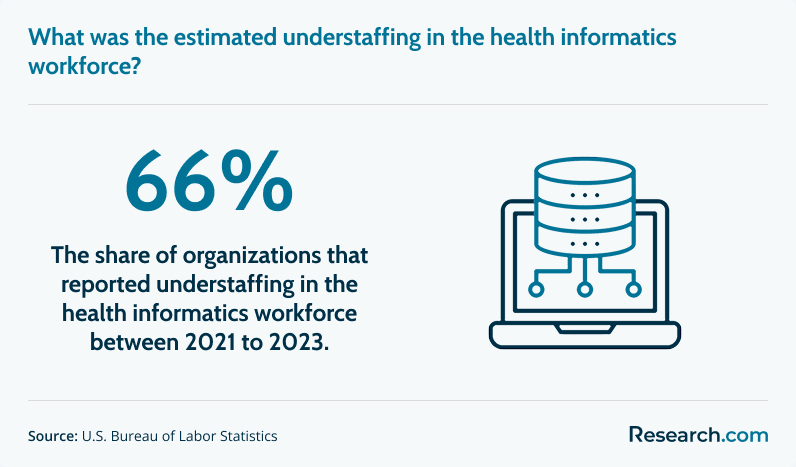
A Clinical Informatics Manager handles a mix of technical, clinical, and leadership tasks each day, making it one of the most dynamic roles in health informatics careers. They review system performance, address EHR issues, and coordinate with IT teams to fix bugs or implement updates. They also evaluate workflow problems reported by nurses, physicians, and other staff, then translate those needs into system changes that streamline documentation and improve accuracy. Between 2021 and 2023, 66% of organizations reported understaffing in the health informatics workforce, with 53% citing a shortage of qualified talent as a major recruitment challenge, emphasizing the ongoing need for skilled professionals in this sector.
Clinical Informatics Managers run data reports to track quality metrics, check for compliance gaps, and spot trends that could affect patient care. Training is another key task—they help onboard staff to new systems, create user guides, and lead sessions on best practices. They also meet with department leaders to plan upgrades, discuss policy changes, and ensure the technology supports organizational goals. Their day revolves around keeping digital systems stable, optimizing workflows, and supporting clinicians in using data effectively.
What problems do Clinical Informatics Managers typically solve?
Clinical Informatics Managers solve problems that sit at the intersection of clinical workflows and technology, a core part of any clinical informatics job description. They fix issues with electronic health record (EHR) usability, such as confusing screens, missing fields, or inefficient steps that slow down clinicians. They also address data accuracy problems, duplicate records, and documentation errors that can affect patient care. When staff struggle with new systems or updates, they design training, offer support, and refine workflows so tools fit the way clinicians actually work.
They also solve broader operational challenges. This includes reducing charting time, improving clinical decision support alerts, and closing gaps that could lead to compliance issues or safety risks. They help teams interpret data, identify trends, and adjust processes to improve outcomes. Overall, they troubleshoot technical issues, streamline workflows, and ensure digital systems support high-quality, efficient care.
The average salary for a Clinical Informatics Manager in the U.S. is approximately $138,900 per year, according to recent data.
Of course, the actual salary depends on several factors such as location, years of experience, size of the healthcare organization, and whether the role includes direct reports or major responsibilities. For instance, the 25th–75th percentile range is about $128,000 to $154,000/year.
Several factors influence salary in clinical informatics careers, especially for management-level roles. Experience plays the biggest part—professionals with a strong clinical background, advanced IT skills, or years spent managing EHR projects typically earn more. Education also matters. A master's in health informatics salary can be significantly higher than entry-level roles, and certifications like CPHIMS or clinical informatics board certification add value.
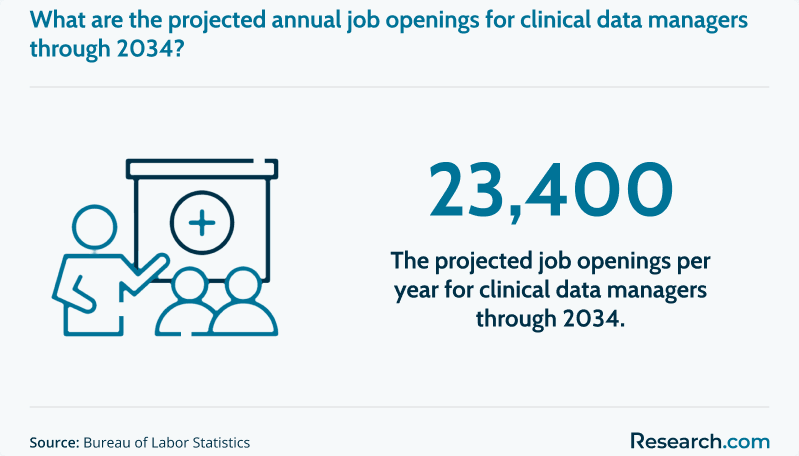
Location and employer type shape pay as well. Major hospital systems, academic medical centers, and large health networks tend to offer higher salaries than small clinics or rural facilities. Specializing in high-demand EHR platforms like Epic or Cerner can also raise compensation. Finally, leadership responsibilities—such as overseeing teams, managing major system upgrades, or leading organization-wide data initiatives—often come with higher pay. The field of clinical data management is projected to see 23,400 job openings per year through 2034, highlighting sustained growth and career opportunities.
A typical career path toward becoming a Clinical Informatics Manager starts with gaining experience in either a clinical role or an IT/health informatics position. Many begin as nurses, pharmacists, or allied health professionals who transition into informatics through EHR super-user roles or project work. Others come from the IT side, starting as health informatics analysts, data analysts, or EHR specialists. This early stage helps build hands-on experience with clinical workflows, data systems, and healthcare operations.
The next step often involves taking on titles like Clinical Informatics Specialist, EHR Analyst, or Clinical Workflow Analyst. These roles provide deeper exposure to system optimization, training, and project management. From there, professionals move into senior specialist or lead analyst roles before advancing into management. By the time they reach Clinical Informatics Manager, they’ve typically led projects, coordinated with cross-functional teams, and gained strong knowledge of major EHR platforms. Many also complete advanced degrees through accelerated health informatics master's programs online or pursue informatics certifications to strengthen leadership and technical credibility.
Most Clinical Informatics Managers hold at least a bachelor’s degree in a health-related or technology-focused field. Common majors include nursing, health information management, healthcare administration, computer science, or health informatics. This gives you a solid foundation in clinical workflows, data systems, and healthcare operations.
However, many employers prefer or strongly favor candidates with a master’s degree, especially in Health Informatics, Nursing Informatics, Healthcare Administration (MHA), or a related IT discipline. Some professionals even explore paths connected to masters in bioinformatics jobs to strengthen their data and analytical skills in healthcare settings. A clinical background—such as an RN, pharmacist, or allied health degree—can also be a major advantage because it helps bridge communication between clinicians and IT teams. In short, a bachelor’s is the entry point, but a master’s makes you more competitive for management roles.
You usually need a mix of clinical, technical, and project experience before stepping into an informatics manager role. Most employers look for several years of work with electronic health records, clinical workflows, or healthcare data systems. This often comes from roles like Clinical Informatics Specialist, EHR Analyst, Nursing Informatics Specialist, or Health IT Analyst.
Hands-on experience with major EHR platforms—such as Epic, Cerner, or Meditech—is especially important. You should also have a history of supporting system implementations, leading training, improving workflows, or solving documentation issues. Project management experience helps, particularly if you’ve coordinated upgrades, optimized processes, or worked with cross-functional teams. Leadership experience, even at a small scale, strengthens your application because informatics managers often guide teams and oversee organization-wide initiatives. Some professionals also boost their qualifications through fastest bioinformatics master's programs online to deepen their technical and analytical expertise.
A Clinical Informatics Manager needs a mix of technical, clinical, and soft skills to succeed. Technical skills include proficiency with electronic health record (EHR) systems like Epic or Cerner, data analytics tools, and basic knowledge of databases or SQL. They should also understand clinical workflows, health information standards, and regulatory requirements such as HIPAA.
Clinical knowledge is crucial, especially for managers with a healthcare background, because it helps them translate clinician needs into technical solutions. Soft skills are equally important: strong communication, leadership, problem-solving, and project management abilities are needed to coordinate teams, train staff, and implement system changes effectively. Adaptability and attention to detail are also critical, as healthcare environments and technologies evolve constantly.
Certifications are not always strictly required for Clinical Informatics Managers, but they significantly improve job prospects and credibility. The American Board of Preventive Medicine (ABPM) Clinical Informatics Board Certification is widely recognized for professionals who want formal validation of their informatics expertise.
Other valuable certifications include CPHIMS (Certified Professional in Healthcare Information and Management Systems) and CAHIMS (Certified Associate in Healthcare Information and Management Systems), which demonstrate knowledge in health IT and management. For those with a nursing background, RN informatics certifications can also be advantageous. Overall, certifications signal expertise in healthcare IT, EHR systems, and data management, making candidates more competitive for managerial roles.
- Rachel: "Transitioning from bedside nursing to a Clinical Informatics Manager was life-changing. I now combine my clinical experience with technology to improve patient care every day, and the leadership opportunities keep me motivated. The impact I make across the hospital is incredibly rewarding. "
- David: "Pursuing a career in clinical informatics gave me the chance to work on cutting-edge EHR systems and data analytics projects. Seeing how my work streamlines workflows and reduces errors brings a real sense of accomplishment and purpose. "
- Monica: "Becoming a Clinical Informatics Manager opened doors I never imagined, from leading cross-functional teams to shaping hospital policies. The combination of problem-solving, technology, and healthcare makes every day challenging but fulfilling. "
Key Findings
- In 2024, medical and health services managers held approximately 616,200 jobs nationwide, with hospitals (state, local, and private) employing the largest share at 29%.
- New York is among the top-paying states for medical and health services managers, offering an annual mean wage of $179,160 and an hourly mean wage of $86.14.
- Clinical data managers earned an annual mean income of $112,590 in 2024, reflecting strong demand and compensation in health informatics roles.
- The field of clinical data management is projected to see 23,400 job openings per year through 2034, highlighting sustained growth and career opportunities.
- Between 2021 and 2023, 66% of organizations reported understaffing in the health informatics workforce, with 53% citing a shortage of qualified talent as a major recruitment challenge, emphasizing the ongoing need for skilled professionals in this sector.
Other Things You Should Know About The Responsibilities, Requirements, and Salary of Clinical Informatics Manager.
No state licenses are required for this role, but many employers prefer board certification such as the American Board of Preventive Medicine’s Clinical Informatics subspecialty for physicians or the AMIA Health Informatics certification. Employers also expect a bachelor’s degree, several years of clinical or health IT experience, and knowledge of EHR systems.
In 2027, Clinical Informatics Managers can expect a salary range typically between $90,000 to $130,000 annually, depending on factors such as experience, location, and educational background. Those in more urban or high-demand areas may see higher salaries, while entry-level positions might start on the lower end of the scale.
Yes, a combination of clinical and IT experience is highly valuable for Clinical Informatics Managers. Understanding healthcare workflows and patient care needs allows them to translate clinical requirements into effective technology solutions. At the same time, technical skills in EHR systems, data analysis, and project management help them implement changes that improve efficiency and compliance.
- American Health Information Management Association & NORC at the University of Chicago. (2023). Health information workforce survey: Survey results on workforce challenges and the role of emerging technologies [Whitepaper]. https://7932134.fs1.hubspotusercontent-na1.net/hubfs/7932134/Whitepapers/Workforce-AI%20Study%20Final.pdf
- British Computer Society. (2023). Summary report: Clinical informatics workforce FCI2023. https://www.bcs.org/media/g5fjfaoq/summary-report-clinical-informatics-workforce-fci2023.pdf
- U.S. Bureau of Labor Statistics. (2023). Occupational employment and wages, May 2023: 11‑9111 Medical and health services managers. https://www.bls.gov/oes/2023/may/oes119111.htm
- ONET OnLine. (n.d.). 11‑9111.00 – Medical and Health Services Managers. National Center for ONET Development. https://www.onetonline.org/link/summary/11-9111.00
- University of Washington, Department of Family Medicine, Center for Health Workforce Studies. (2023). RRR on health informatics [Report]. https://www.familymedicine.uw.edu/chws/wp-content/uploads/sites/5/2023/04/RRR-on-Health-Informatics-final-v2.pdf
- University of Washington, Department of Family Medicine, Center for Health Workforce Studies. (2023). RRR on health informatics [Report]. https://www.familymedicine.uw.edu/chws/wp-content/uploads/sites/5/2023/04/RRR-on-Health-Informatics-final-v2.pdf
- U.S. Bureau of Labor Statistics. (n.d.). Medical and health services managers: Occupational Outlook Handbook. https://www.bls.gov/ooh/management/medical-and-health-services-managers.htm#tab-3
- ONET OnLine. (n.d.). 15‑2051.02 – Clinical Data Managers. National Center for ONET Development. https://www.onetonline.org/link/summary/15-2051.02