2027 SLP Master's Programs With Voice and Swallowing Clinic Access: Program Selection Guide

Co-Founder and Chief Data Scientist

Reviewed by Rhea Paul, PhD
SLP Education & Research Expert
Voice and swallowing disorders are high-stakes areas of speech-language pathology, yet not every master's program provides the same depth of supervised clinical exposure. This guide helps prospective SLP students distinguish a general campus clinic from a program with credible access to dysphagia and voice evaluation and treatment. You will learn what to verify, how university and hospital experiences differ, and which questions reveal whether a program can support your clinical goals before you enroll.
Key Things You Should Know
- CCC-SLP eligibility requires a graduate degree from a program accredited by ASHA's Council on Academic Accreditation (CAA), at least 400 supervised clinical clock hours, and other certification requirements; a voice or swallowing specialty clinic is valuable but not required for certification.
- Look beyond the phrase "on-campus clinic": strong access means supervised exposure to adult and pediatric voice or swallowing cases, a defined referral pathway, and appropriate instrumentation or partnerships for procedures such as FEES and videofluoroscopy.
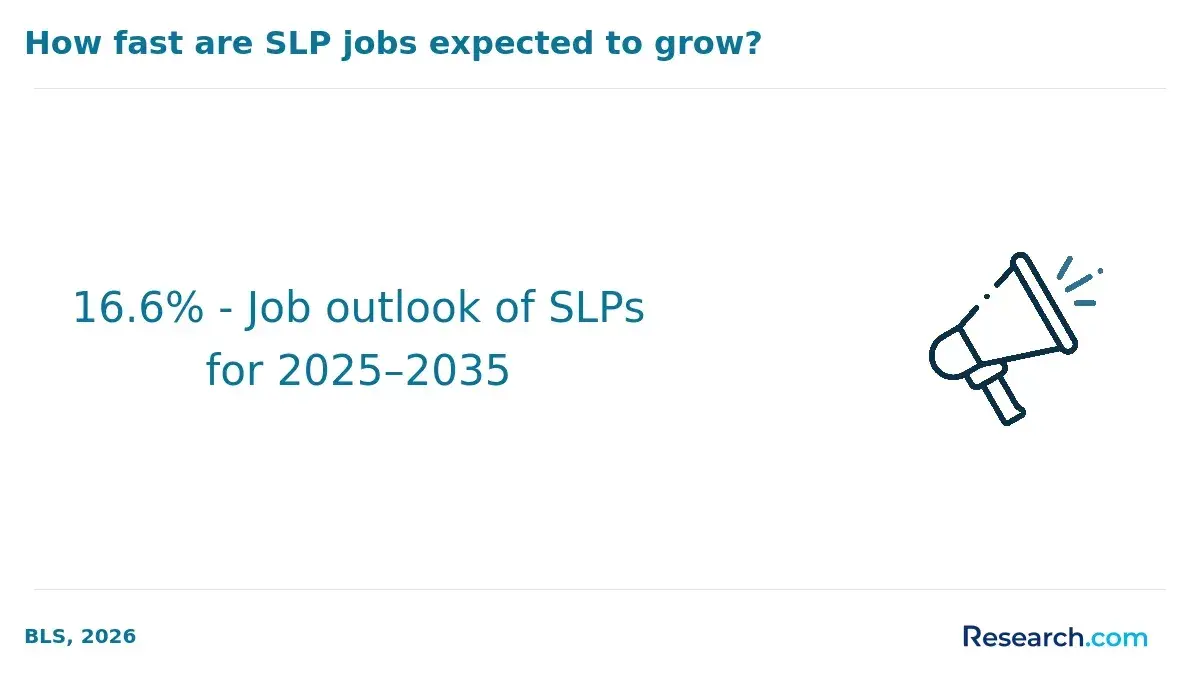
- Speech-language pathologists had a median annual wage of $97,870 in May 2025, and the occupation is projected to grow 17% from 2025 to 2035; clinical breadth can help students pursue competitive medical, voice, and dysphagia-focused positions after licensure.
How do SLP master's programs integrate dedicated voice and swallowing clinic training into the curriculum?
Programs usually build voice and swallowing preparation across coursework, simulation, university clinic practica, and external medical placements. The strongest models do not treat dysphagia or voice as a single lecture topic. Instead, students learn anatomy and physiology, differential diagnosis, evidence-based intervention, counseling, documentation, and interprofessional care before treating clients under supervision.
A dedicated clinic may be a university speech and hearing center, an affiliated medical center, or a specialty service jointly staffed by SLP faculty and otolaryngology, gastroenterology, neurology, pulmonology, or radiology professionals. Access matters more than branding: applicants should determine whether master's students actually evaluate and treat patients or only observe specialty cases.
Clinical integration commonly follows a developmental sequence:
- Students complete foundational coursework in voice, dysphagia, neurological communication disorders, anatomy, and clinical methods.
- They practice interviewing, perceptual voice assessment, oral-mechanism examination, chart review, clinical documentation, and treatment planning in simulation or lower-complexity cases.
- They enter supervised practicum with voice, feeding, swallowing, or medically complex clients as their preparation and caseload availability permit.
- They progress to specialty external placements, often in hospitals, rehabilitation facilities, ENT clinics, or outpatient medical centers.
Not every student needs an early specialization. A broad generalist curriculum is often the better choice for students who are still deciding among schools, pediatrics, rehabilitation, and medical practice. Students who already know they want medical SLP, professional voice, head-and-neck cancer rehabilitation, or neurogenic dysphagia should give greater weight to the availability of specialty supervision and referral volume.
Program pace can also affect access. A speech pathology accelerated program may reduce time to graduation, but applicants should confirm that a compressed sequence still provides sufficient time for progressive clinical preparation rather than assuming all specialty experiences can be fit into an abbreviated schedule.
Which accredited SLP master's programs currently offer on-campus voice and swallowing clinic access?
There is no single national directory that ranks CAA-accredited SLP programs by voice and swallowing clinic intensity. The programs below are examples of universities with publicly identified speech-language pathology graduate education and a university-based or university-affiliated voice and/or swallowing clinical resource. They are not a ranking, and applicants should confirm current CAA status, student eligibility for the clinic, and specialty caseload availability directly with each program.
This comparison separates a specialty clinic's presence from guaranteed student participation, which is the distinction that matters most for program selection.
| University and graduate program context | Published voice/swallowing clinical resource | What an applicant should verify |
| Vanderbilt University Master of Science in Speech-Language Pathology | Vanderbilt University Medical Center and the Vanderbilt Voice Center provide a medical setting for voice and swallowing care. | Whether first-year and second-year students rotate through the service, required prerequisites, and whether the placement is observation, direct care, or both. |
| University of Iowa Master of Arts in Speech-Language Pathology | The university's speech and hearing clinical infrastructure and academic medical center support voice and swallowing-related services. | The specific clinic assignment process, access to instrumental swallowing studies, and whether adult medical cases are available to all interested students. |
| University of Wisconsin-Madison Master of Science in Speech-Language Pathology | University clinical and health-system resources include voice and swallowing-focused care. | Whether specialty cases are housed in the campus clinic, health system, or external placement network and how students are selected for rotations. |
| University of Arizona Master of Science in Speech, Language, and Hearing Sciences | The university's clinical programs and health-sciences environment support speech, voice, and swallowing-related training opportunities. | The number of dysphagia and voice clients typically served, medical-site agreements, and the role of graduate clinicians in evaluations. |
| University of Pittsburgh Master of Arts in Speech-Language Pathology | University and UPMC clinical settings offer access to voice and swallowing-focused medical services. | Whether an affiliated medical placement is available in a given cohort and whether travel, health clearances, or competitive selection are required. |
CAA accreditation applies to the graduate education program, not to an individual clinic. A school can have an impressive affiliated voice center while assigning only a limited number of students there. Conversely, a smaller university clinic may offer substantial hands-on therapy experience even if advanced instrumental studies occur at an external hospital.
Applicants comparing these and other programs should request a current practicum map showing the settings available during each term. Students seeking flexibility may also compare online speech language pathology programs, but should not assume that online delivery includes local dysphagia or voice placements without written confirmation from the program.
What inclusion criteria and verification steps define a legitimate voice and swallowing clinic in SLP training?
A legitimate training clinic is more than a room where graduate students provide general speech services. For selection purposes, it should have an identifiable patient population, qualified supervision, an established referral process, documented clinical procedures, and a defined role for student clinicians. It also must operate within the scope of practice and medical referral requirements applicable to its state and setting.
Use the following criteria to distinguish meaningful specialty access from marketing language:
- CAA accreditation of the master's program is current, and the school can identify its status in the ASHA CAA or EdFind directory.
- The clinic treats voice, swallowing, feeding, airway, or related medical communication concerns rather than merely listing those topics in course descriptions.
- Graduate students have a defined opportunity for direct supervised care, not only occasional observation or guest lectures.
- Supervisors have relevant clinical expertise and hold the credentials and state authorization required for their role.
- The program can explain its referral sources, typical client age groups, case mix, and how specialty cases are assigned.
- Instrumental procedures, when offered, are conducted under appropriate medical protocols with trained personnel and clear student roles.
- The program has procedures for medical emergencies, infection control, documentation, privacy, and interprofessional communication.
Ask for evidence that is specific and current. A clinic webpage can remain online after staffing, contracts, or caseload patterns change. The best verification is a written response from the clinical education director describing the current academic year's placement model, rather than a broad assurance that "students may have opportunities."
A common mistake is equating a faculty member's research specialty with a student clinic opportunity. A professor may publish extensively on swallowing physiology or voice science while master's students have little access to that faculty member's patients. Research strength can be a valuable signal, but it should not replace evidence of supervised practicum availability.
How does voice and swallowing clinic experience affect preparation for CCC-SLP and state licensure?
Voice and swallowing clinic experience can strengthen clinical reasoning, but it does not create a separate pathway to the Certificate of Clinical Competence in Speech-Language Pathology. For CCC-SLP, applicants generally need a qualifying graduate degree from a CAA-accredited program, required supervised clinical experience, a passing Praxis examination score, and a completed clinical fellowship. State licensure rules may add or interpret requirements differently.
ASHA certification standards require at least 400 supervised clinical clock hours, including 25 guided clinical observation hours and 375 direct client or patient contact hours. Those hours must be appropriately supervised and documented; a school cannot substitute a specialty clinic's reputation for compliant clinical education. Students should ask how direct hours, simulation activities, observation, and instrumental-procedure participation are recorded.
Specialty experience is most valuable when it improves transferability to the clinical fellowship and first job. A student who has reviewed medical charts, collaborated with physicians, documented swallowing treatment, and recognized when an instrumental assessment is indicated may be better prepared for a medical setting than a student whose exposure was entirely classroom-based. Still, hiring depends on the employer, local labor market, fellowship training, and demonstrated competence - not simply the name of a clinic on a résumé.
The labor market provides useful context for this decision. The U.S. Bureau of Labor Statistics projects 17% employment growth for speech-language pathologists from 2025 to 2035, with about 12,500 openings each year on average. That outlook supports demand for the profession broadly, but it does not guarantee a specialty medical position or eliminate the need to meet state-specific licensure requirements.
Students considering medical practice should contact the licensing board in the state where they expect to work before enrolling. Confirm whether the program's curriculum, supervised clinical hours, distance education model, and clinical fellowship plans align with that state's requirements. Schools may provide professional licensure disclosures, but the licensing board makes the final determination.
What clinic-based competencies in dysphagia and voice disorders should SLP students expect to master?
Master's students should expect to develop entry-level competence under supervision, not independent expertise in every procedure or diagnosis. A high-quality program gradually moves students from foundational knowledge to safe clinical decision-making, with supervisors determining which activities are appropriate for each student's preparation.
The competencies below are reasonable markers of substantive clinical preparation in voice and swallowing:
| Clinical area | Core entry-level competency | Why it matters |
| Case history and chart review | Identify relevant medical, surgical, medication, nutrition, respiratory, and communication information. | Voice and swallowing problems may be affected by conditions outside speech-language pathology. |
| Clinical swallowing evaluation | Conduct an appropriately supervised bedside or clinical assessment, recognize risk indicators, and document findings. | Safe recommendations require careful observation and awareness of clinical limits. |
| Instrumental assessment literacy | Understand indications, limitations, and basic interpretation principles for procedures such as modified barium swallow studies and FEES. | Students should know when instrumental information may be needed, even if they do not independently perform every procedure. |
| Dysphagia intervention | Select, trial, and adjust evidence-informed compensatory and rehabilitative approaches under supervision. | Treatment decisions should connect to a patient's physiology, goals, medical status, and quality of life. |
| Voice evaluation | Use perceptual assessment, case history, patient-reported information, and appropriate referral practices. | Voice symptoms can require medical evaluation by an otolaryngologist before or alongside therapy. |
| Voice therapy | Provide supervised behavioral intervention, education, vocal hygiene counseling, and home-program support when appropriate. | Effective treatment requires individualized goals and consistent carryover beyond the session. |
| Interprofessional practice | Communicate appropriately with physicians, dietitians, nurses, occupational therapists, physical therapists, and families. | Medical dysphagia and voice care often depend on coordinated decisions across disciplines. |
Instrumentation is an important but easily misunderstood factor. A program does not need to own every device for students to receive sound education. What matters is whether students receive safe, structured exposure to instrumental-assessment decision-making and whether referral relationships give them meaningful opportunities to learn from those studies.
Students who want a career trajectory with substantial medical specialization should compare this foundation with the roles described in guides to becoming a highest paid speech pathologist. Higher-paying roles often involve additional experience, location-specific demand, advanced clinical skills, management responsibilities, or specialized settings; they are not automatic outcomes of a master's concentration.
How do university speech and hearing clinics differ from hospital-based placements for swallowing and voice?
University clinics and hospital placements can complement each other. A university clinic often offers sustained supervision, repeated therapy sessions, and space to build core skills. A hospital or medical-center placement may provide higher-acuity cases, faster interdisciplinary workflows, and closer exposure to diagnostic procedures. Neither setting is universally better; the right mix depends on a student's goals and readiness.
This comparison highlights the trade-off applicants should consider when judging a program's clinical model.
| Factor | University speech and hearing clinic | Hospital or medical-center placement |
| Typical service model | Outpatient assessment and therapy, often with scheduled recurring appointments. | Acute, inpatient rehabilitation, outpatient specialty, and consultative care depending on the site. |
| Supervision | Often intensive and designed specifically for student learning. | Can be highly specialized, though supervisors balance patient-care demands with teaching. |
| Case continuity | Students may follow clients across multiple sessions and observe progress over time. | Length of contact may be brief in acute care but can involve complex clinical decisions. |
| Instrumentation exposure | Varies widely; some centers refer to medical partners for instrumental studies. | May offer closer access to radiology, ENT, FEES, and other diagnostic workflows where available. |
| Clinical complexity | Often appropriate for progressive skill development, though complexity varies by clinic. | Often includes medically complex cases and stronger interprofessional exposure. |
| Practical trade-off | May provide deeper direct therapy continuity. | May require travel, health clearances, variable schedules, and competitive placement assignment. |
Applicants should be cautious of two assumptions: that hospital-based automatically means better training, and that campus-based automatically means limited training. An excellent university clinic may have long-standing medical referral relationships and specialized faculty. A prestigious hospital affiliation may offer only a small number of student placements in a given term.
For most students, the strongest program is one that deliberately sequences both environments: foundational supervised care first, followed by increased exposure to medically complex populations when the student is prepared.
What questions should applicants ask programs about caseloads, supervision, and instrumentation for swallowing therapy?
Admissions staff can explain broad curriculum requirements, but clinical education directors are usually better positioned to answer operational questions. Ask for current practices rather than relying on a clinic description written for a previous cohort.
These questions can reveal whether an advertised specialty experience is accessible, supervised, and relevant to your goals:
- How many graduate students in the most recent cohort received direct clinical experience with swallowing disorders, voice disorders, or both?
- Are specialty assignments required, elective, competitive, or dependent solely on client availability?
- What age groups and diagnoses are most common in the clinic's voice and swallowing caseload?
- How are students matched to medical, ENT, rehabilitation, or hospital placements?
- What is the usual supervisor-to-student arrangement during specialty practicum?
- Can students observe or participate in videofluoroscopic swallowing studies or FEES, and what is the student's permitted role?
- Does the program own relevant equipment, use university health-system resources, or depend on external site agreements?
- What happens if a student seeks a dysphagia placement but specialty caseloads or sites are unavailable that term?
- Are travel, parking, background checks, immunizations, drug screening, uniforms, or medical-site fees additional student costs?
- Can the program provide examples of recent clinical fellowship settings chosen by graduates interested in medical SLP?
Do not ask only whether a program "has dysphagia." Nearly every accredited SLP curriculum addresses swallowing disorders academically. The decision-driving questions concern direct patient contact, case complexity, supervision, access to diagnostic information, and the reliability of the placement pipeline.
Applicants also should not confuse admissions accessibility with specialty depth. Resources discussing the easiest SLP masters programs to get into can help frame admissions options, but a program should still be evaluated separately for accreditation, placement quality, affordability, and fit with your intended clinical setting.
How can students verify ASHA CAA accreditation and clinical quality at voice and swallowing clinics?
Start with accreditation, then investigate the clinical experience. CAA accreditation is the threshold issue because it supports the educational requirement for ASHA certification and is widely important for licensure and employment. A compelling specialty clinic cannot offset enrollment in a program that lacks appropriate accreditation for your goals.
Follow this verification process before submitting a deposit:
- Search the ASHA CAA program directory or ASHA EdFind for the exact graduate program name, degree level, location, and accreditation status.
- Check whether the status is accredited, candidacy, or another designation, and read any published notes that affect expected completion or eligibility.
- Review the university graduate catalog to confirm that the degree is the professional entry-level SLP master's program rather than a related communication-sciences degree.
- Ask the program for its current clinical handbook, practicum sequence, and written explanation of voice and swallowing opportunities.
- Request clarification on whether specialty clinic participation is direct treatment, observation, simulation, or an external placement.
- Review the program's professional licensure disclosures for the state where you intend to seek initial licensure.
- Contact the relevant state licensing board if any requirement, state authorization issue, or disclosure is unclear.
Clinical quality is harder to reduce to a single credential. Look for transparent answers about supervisor qualifications, client populations, safety protocols, documentation standards, referral networks, and contingency planning when a placement site changes. Programs that can clearly explain these systems are generally easier to evaluate than programs that make broad promises without operational detail.
One practical red flag is a school that refuses to distinguish observation from clinical clock-hour credit. Observation can be educational, especially for instrumental procedures, but applicants deserve to know what counts toward direct client contact and what is simply exposure.
How do online or hybrid SLP master's programs provide equivalent voice and swallowing practicum access?
Online and hybrid entry-level SLP master's programs can deliver academic coursework remotely, but clinical education remains location-dependent. Students generally complete supervised practica at approved sites near their location, travel to assigned sites, attend required immersions, or use a combination of these approaches. "Online" does not mean that specialty clinical placement can be completed entirely from home.
Equivalence should be evaluated by outcomes and supervision, not by whether lectures are live or recorded. A well-designed hybrid program may arrange high-quality local placements and provide intensive campus simulation. A weak model may leave students responsible for finding their own sites without enough support, particularly for hard-to-secure medical dysphagia placements.
Before choosing a distance-based option, verify these practical issues:
- Whether the program is authorized to enroll students in your state and provides a licensure disclosure for that state.
- Who secures clinical placements and what support is available if a site withdraws.
- Whether the program can identify previous voice or swallowing placements available to students in your region.
- How many required campus visits, clinical intensives, or synchronous sessions apply and what travel costs they create.
- Whether medical-site schedules could require daytime weekday availability despite online academic courses.
- How clinical supervisors communicate with university faculty and how the program monitors direct supervision.
- Whether the school expects students to arrange medical observation opportunities independently.
For working adults, the main trade-off is usually predictability rather than academic legitimacy. Remote coursework can reduce relocation pressure, while clinic schedules, health-system onboarding, and specialty-site travel may still require substantial flexibility. Get all travel and placement expectations in writing before treating an online format as the lower-cost option.
What consumer-protection risks arise when SLP programs lack robust voice and swallowing clinic experience?
The central risk is not that every student must specialize in voice or dysphagia. Generalist preparation is appropriate for many future SLPs. The risk arises when a program markets specialty preparation without providing enough transparent, supervised, and repeatable access for students to make an informed enrollment decision.
Weak clinical infrastructure can leave students with limited exposure to medically complex cases, fewer opportunities to test their interest in medical SLP, and less confidence when applying for clinical fellowships. It may also create financial and scheduling consequences if students must travel unexpectedly, wait for a placement, extend enrollment, or pay costs associated with distant medical sites.
Watch for the following red flags before committing:
- Claims of "medical" or "dysphagia" training without a description of direct client care, external affiliations, or student roles.
- No clear answer about whether all students can access specialty placements or only a small, selected group.
- Confusion between a research lab, a faculty specialty, and an actual student practicum clinic.
- Unclear responsibility for securing placements, especially for students in online or hybrid formats.
- Missing or difficult-to-find CAA accreditation and state licensure disclosures.
- Promises that a clinic experience will ensure certification, licensure, employment, salary, or hospital placement.
- Pressure to enroll before the school provides clinical handbook details, estimated non-tuition costs, or travel expectations.
Protect yourself by comparing the total educational experience rather than selecting a school solely because it advertises a voice center or swallowing lab. Consider tuition, fees, travel, program length, licensure compatibility, clinical support, and the probability of receiving the experience you value. If a program cannot document how students move from coursework to supervised specialty care, consider a school with a more transparent clinical plan.
Other Things You Should Know About Speech Language Pathology
No. You need to complete an accredited graduate program and meet applicable certification and licensure requirements. Dysphagia exposure can be especially helpful for medical careers, but many SLPs begin clinical fellowships in schools, early intervention, outpatient therapy, or other settings and build specialty expertise later.
Student roles depend on training, supervision, state rules, facility policies, and the procedure. Students may observe, assist, or participate under qualified supervision, but they should not assume independent performance is available or appropriate during graduate school.
An ENT affiliation can be valuable because it supports medical evaluation and interdisciplinary voice care. Also verify that graduate students receive direct supervised voice therapy experience, learn appropriate referral practices, and have access to clients with the populations you hope to serve.
Ask whether it can guarantee dysphagia coursework, medical observation, simulation, and a process for requesting relevant external placements. If direct swallowing experience is essential to your career plan, compare programs with a documented specialty-placement pipeline and avoid relying on informal assurances.
References
- Master of Science in Speech-Language Pathology https://chp.musc.edu/programs/master-science-speech-language-pathology
- Master of Science in Speech Language Pathology https://catalog.uthscsa.edu/schoolofhealthprofessions/csd/speechlanguagepathology/
- Master's Degree in Communication Sciences & Disorders... https://education.gsu.edu/csd/academics-admissions/courses-required-to-get-an-m-s-degree-from-csd/
- Best Speech-Language Pathology Programs in America https://www.usnews.com/best-graduate-schools/top-health-schools/pathology-rankings