2027 Purdue Global vs. Columbia Southern University for a BS in Business Administration: Credits, Cost, and Degree Fit
Audited and Verified:
Our Editorial and Data Verification Process
Research.com uses government datasets, official education statistics and primary institutional information to support its career and degree guides. Our review process checks factual accuracy, occupational definitions, source dates and the requirements associated with the credentials discussed.
How This Article Was Fact-Checked
Our editorial team verifies salary estimates, employment projections, education requirements and program information against original data providers and official organizations. Salary figures are checked against the relevant occupational definitions and reporting periods. Information about licensure, accreditation and required in-person training is reviewed separately.
Fact-checked and verified on:

Co-Founder and Chief Data Scientist
Purdue Global and Columbia Southern University both offer online bachelor's degrees in business administration, but their credit systems can make a direct comparison misleading. For a transfer or returning student, the more important question is how much coursework remains after each school evaluates prior learning.
This comparison explains the degree requirements, cost questions, accreditation, curricula, and scheduling factors that matter most. Use it to decide which school merits a formal degree audit—and what to ask before committing your time or money.
Key Things You Should Know
- Purdue Global lists its BS in Business Administration in quarter credits; Columbia Southern University (CSU) uses semester credits. Convert the units before comparing degree size.
- The lower advertised tuition rate may not produce the lower completion cost. Compare each school's written audit of credits that satisfy degree requirements, then price the remaining courses and fees.
- Both offer online business study, but accreditation, concentrations, course schedules, and career fit deserve separate checks; neither degree guarantees a management job.
How Do Purdue Global and Columbia Southern University Compare for Business Administration Degrees?
Both schools offer a Bachelor of Science in Business Administration (BSBA). The useful comparison is not which diploma has fewer credits on paper, but which program applies more of your prior coursework to required classes and offers the business focus you need.
This table separates the principal program differences from details that require an individualized evaluation:
| Decision factor | Purdue Global | Columbia Southern University |
| Degree and credit system | BSBA; quarter credits | BSBA; semester credits |
| Delivery | Online; confirm the schedule and assessments for selected courses | Online; confirm the schedule and assessments for selected courses |
| Best comparison document | Degree audit showing remaining quarter credits and requirements | Degree audit showing remaining semester credits and requirements |
| Likely deciding factor | Fit of applied credits, curriculum, schedule, and total remaining charges | Fit of applied credits, curriculum, schedule, and total remaining charges |
If neither audit is favorable, compare ranked accelerated undergraduate business schools using the same completed-credit and schedule assumptions. A faster advertised calendar is not necessarily a faster route for a student whose required courses do not transfer.
How Many Credits Are Required for Each Business Administration Bachelor's Degree?
Purdue Global's BSBA is listed at 180 quarter credits; CSU's BSBA is listed at 120 semester credits. Under the standard conversion, 180 quarter credits equal 120 semester credits. The displayed totals therefore represent comparable amounts of credit—not evidence that Purdue Global requires more study.
A transfer evaluation can still produce different remaining totals. For example, a school may accept a previous accounting course as elective credit but require its own business-core accounting course. Ask each adviser to identify accepted credits, credits applied to general education or the major, and credits left to graduate. Confirm the requirements for your intended enrollment term.
If a project-focused degree is also under consideration, credit mapping for online project management programs offers a useful parallel: accepted credits save the most time when they replace required coursework rather than fill unused electives.
How Much Does Each Business Administration Degree Cost?
There is no reliable winner on price without current tuition terms and two completed transfer evaluations. Purdue Global prices undergraduate study using quarter credits, while CSU uses semester credits; comparing the two per-credit figures without converting the units can distort the result. Tuition and fees can also change by enrollment term or eligibility for a reduction.
Request an itemized estimate from each school. The figures to compare are:
- Purdue Global: the applicable price per quarter credit, multiplied by quarter credits remaining, plus required fees and materials.
- Columbia Southern University: the applicable price per semester credit, multiplied by semester credits remaining, plus required fees and materials.
Ask whether books, software, technology charges, and any assessment costs are included. Then account separately for grants, verified employer benefits, and loan interest. An extra required course can erase an apparent per-credit bargain; an employer reimbursement paid after a successful term may reduce eventual cost without easing the upfront bill. For another price benchmark, affordable online business program comparisons are useful only when measured against your remaining requirements.
Purdue Global is institutionally accredited by the Higher Learning Commission; Columbia Southern University is institutionally accredited by the Southern Association of Colleges and Schools Commission on Colleges. Institutional accreditation applies to the university. Business-specific accreditation is a separate question: ask each school whether its current business accreditation covers the BSBA, rather than assuming that accreditation of a school or another business degree covers this program.
Accreditation is important for evaluating academic oversight, but it does not guarantee that another university will accept a course, that an employer will favor a degree, or that a professional licensing board will count particular classes. Verify each accreditor's current listing and program scope before enrolling. Apply that same check when you compare the least expensive business administration schools; low tuition alone does not settle degree fit.
Both BSBA programs are intended to provide broad business preparation rather than a single occupation's training. Expect to examine each catalog for accounting, economics, finance, marketing, management, quantitative work, and business communication, then compare the required course titles and learning outcomes. Similar subject labels do not establish that a transfer course will satisfy a particular requirement.
For a returning student, concentration fit can matter more than another introductory elective. If your goal is HR, compare the number and level of HR-related courses with human resources degree planning basics; distinguish an officially recorded concentration from a handful of electives. For operations or analytics, check the actual quantitative and applied assignments. Ask whether a capstone or other project is required and whether workplace materials may be used only with approval.
For either university, an applicant should be prepared to document secondary-school completion or its accepted equivalent and submit records of prior college study for transfer review. Ask admissions for the requirements that apply to your applicant category and enrollment term, including any documentation rules for military learning or study completed outside the United States. Do not mistake admission to the university for approval of prior courses toward the BSBA.
Submit official transcripts early and request a written evaluation before choosing classes. If an adviser identifies a missing mathematics, accounting, or other required course, ask whether an existing class can satisfy it or whether a substitution is available; only the school can approve that decision. Applicants primarily seeking HR study can also examine HR bachelor's programs with flexible transfer pathways rather than assuming a general BSBA is their shortest route.
Online access does not by itself establish that every assignment is self-paced. Before registering at either school, request a sample course schedule and ask about weekly deadlines, live sessions, group work, presentations, exams, and required software. A working student may be able to study evenings but still struggle with a team assignment that requires meetings during business hours.
For transfers, compare credit accepted with degree requirements satisfied. Ask each school for a requirement-by-requirement audit covering general education, business core, any concentration, electives, and remaining institutional coursework. Also confirm how quarter and semester credits are converted.
If supply chain is your goal, compare economical supply chain study timelines only after checking whether a specialized curriculum would use your previous credits more effectively.
Neither school's published degree total establishes your graduation date. Time depends on credits applied to requirements, the courses you can take together, prerequisite order, course availability, and the workload you can sustain. Converting both degree totals to the same credit system is a starting point, not a completion forecast.
Ask each adviser for a term-by-term plan showing when every remaining required course is offered. Test that plan against work or caregiving commitments, and ask what happens if you take fewer courses or pause enrollment. Flexible fast-track routes in business education provide a useful comparison, but an accelerated schedule helps only if the required courses are available and its pace is manageable.
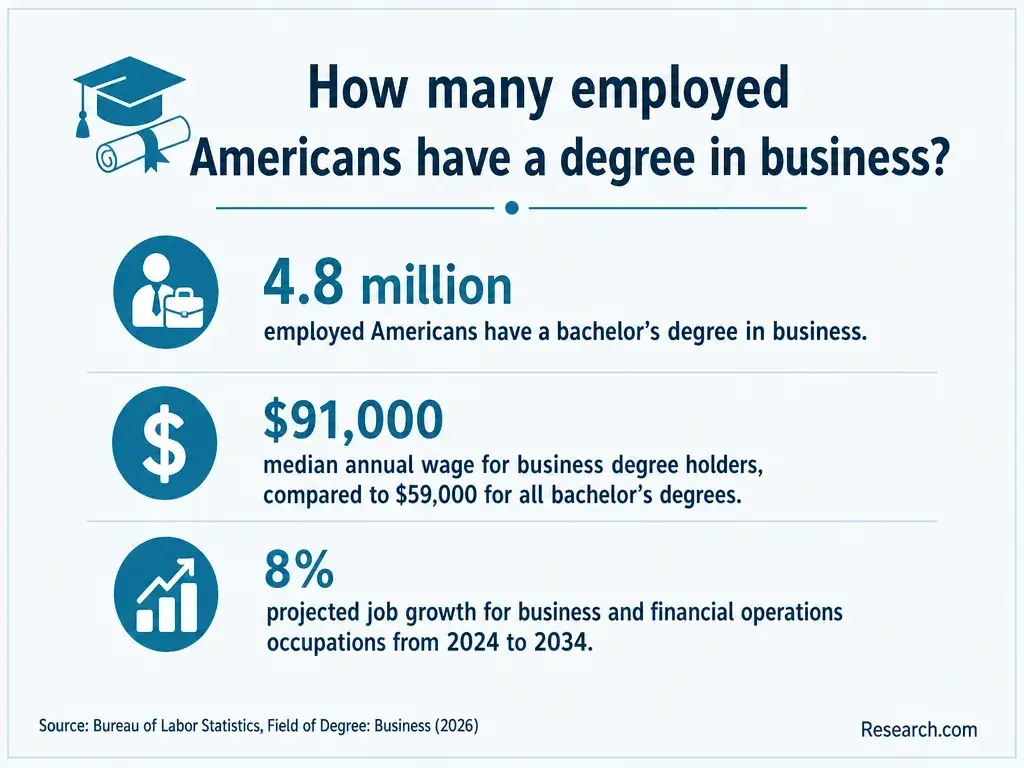
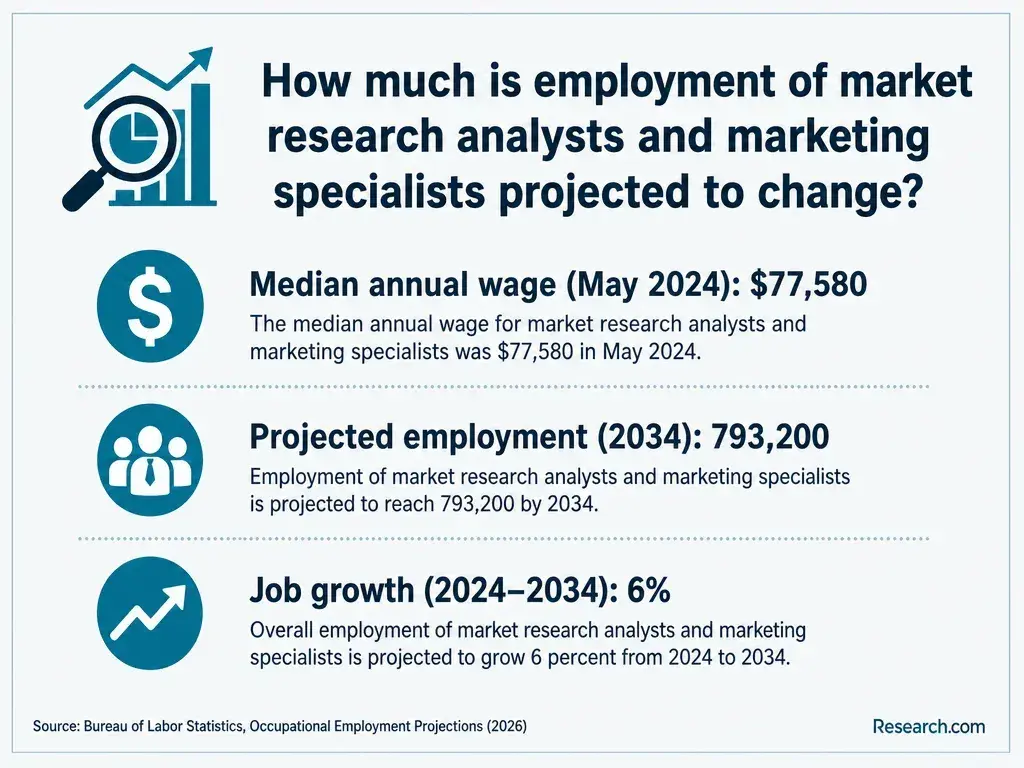
A BSBA can support applications for business operations, HR, marketing, purchasing, and project-coordination work. Entry depends on the role and the applicant's evidence: spreadsheets and reporting for operations, hiring-process knowledge for HR, or research and campaign work for marketing. An undergraduate business course does not substitute for the experience normally needed to manage staff or a major budget.
For salary context, the U.S. Bureau of Labor Statistics reports a $75,940 median annual wage for human resources specialists in May 2025, with employment projected to grow 6% from 2025 to 2035. That is an occupation-wide median, not a starting salary or an outcome promised by either university.
If logistics is your target, compare the BSBA curriculum with fast undergraduate routes into supply chain management and seek relevant purchasing, inventory, or process-improvement experience alongside coursework.
Which University Offers the Better Fit for Your Career Goals?
Choose based on the written completion plan, not the displayed credit total. Purdue Global is the better fit if its audit applies more of your prior learning to requirements, its course sequence works with your schedule, and its curriculum supports the function you want to enter. The same test favors CSU if its audit leaves fewer costly or difficult-to-schedule requirements. Neither school should be declared cheaper or faster for you before those comparisons are complete.
Give both schools the same transcripts and intended career direction. Request a degree audit, an itemized remaining-cost estimate, a term-by-term schedule, and confirmation of the applicable accreditation scope. Compare the plans side by side; resolve any course-equivalency dispute before enrolling. If your goal is specifically people leadership rather than broad business study, compare three-year-or-less leadership degree pathways as an alternative—but remember that a leadership degree, like a BSBA, does not replace managerial experience.
Other Things You Should Know About Business Administration
A BSBA can provide undergraduate preparation for an MBA application. The graduate school decides admission and may impose its own academic or work-experience requirements.
Possibly. Ask each university about second-degree eligibility, which previous credits may apply, and the minimum coursework you must complete there.
Not by itself. CPA eligibility is governed by state boards and includes specific education and other requirements. Check your state's rules before relying on business electives for accounting preparation.
That depends on your employer's policy. Confirm school eligibility, annual limits, grade requirements, reimbursement timing, and whether leaving the job triggers repayment.
- DAPIP | Homepage - ed https://ope.ed.gov/dapip/
- Options for Financing Higher Education | Military OneSource https://www.militaryonesource.mil/education-employment/for-service-members/money-for-higher-education/
- Cost of Attendance (Budget) | 2025-2026 Federal Student Aid Handbook https://fsapartners.ed.gov/knowledge-center/fsa-handbook/2025-2026/vol3/ch2-cost-attendance-budget
- Education and Training - About This Tool https://www.benefits.va.gov/gibill/comparison_tool/about_this_tool.asp
- How Do You Plan a College Schedule? | University at Albany https://www.albany.edu/how-do-you-plan-a-college-schedule
- Time-Cost Calculator - Tuition & Aid | UMass Global https://www.umassglobal.edu/tuition-and-aid/time-cost-calculator
- B.S. Business Administration/International Management | Columbia Southern University https://www.columbiasouthern.edu/online-degree/view-all-programs/bachelors/bs-business-administration-international-management
- Undergraduate and Graduate Tuition and Fees | Purdue Global https://www.purdueglobal.edu/tuition-financial-aid/undergraduate-graduate-tuition-and-fees/
- Bachelor of Science in Business Administration | Purdue University Global Academic Catalog https://catalog.purdueglobal.edu/undergraduate/business-information-technology/business-administration-bs/
- Transfer of Credits | ccp.edu https://www.ccp.edu/college-catalog/college-policies-and-procedures/transfer-credits