2027 Online BS in Business Administration vs. an Undergraduate Business Certificate: Which Route Fits Your Career Plan?
Audited and Verified:
Our Editorial and Data Verification Process
Research.com uses government datasets, official education statistics and primary institutional information to support its career and degree guides. Our review process checks factual accuracy, occupational definitions, source dates and the requirements associated with the credentials discussed.
How This Article Was Fact-Checked
Our editorial team verifies salary estimates, employment projections, education requirements and program information against original data providers and official organizations. Salary figures are checked against the relevant occupational definitions and reporting periods. Information about licensure, accreditation and required in-person training is reviewed separately.
Fact-checked and verified on:

Co-Founder and Chief Data Scientist
An undergraduate business certificate can help you build a specific skill, while an online BS in Business Administration can meet a bachelor's-degree requirement and provide broader preparation. Choosing the wrong route can mean paying for coursework you do not need - or discovering that a shorter credential does not qualify you for the job you want.
This comparison is for students, working adults, and career changers weighing those trade-offs. It shows how to match each option to a target role, evaluate total completion cost, and check whether the credential will count where it matters.
Key Things You Should Know
- Choose the BS when your target jobs require a bachelor's degree and you do not already have one; choose a certificate when you need a defined skill and the credential meets your goal.
- A certificate does not automatically count toward a later BS. Ask for a written evaluation of how its courses would apply to degree requirements before enrolling.
- The U.S. Bureau of Labor Statistics reports a $75,940 median annual wage for human resources specialists in May 2025, but that occupation-wide figure is not a starting salary or a return promised by either credential.
What is the difference between an online business degree and an undergraduate certificate?
An online BS in Business Administration is a bachelor's degree covering general education, a business core, and often electives or a concentration. An undergraduate business certificate is a shorter, more focused academic credential. It is not a bachelor's degree, even if a college awards it or teaches its courses alongside degree courses.
The comparison below focuses on what each credential can do for a career plan. Actual course requirements and whether certificate credits apply to a degree depend on the institution.
| Decision factor | Online BS in Business Administration | Undergraduate business certificate |
| Scope | Broad business preparation alongside other bachelor's requirements | Focused study in a defined business area |
| Credential awarded | Bachelor's degree | Certificate, which may be credit-bearing or noncredit |
| Best fit | Jobs or advancement paths requiring a bachelor's degree | A specific skill gap when another degree is unnecessary |
| Main limitation | Greater commitment of time and money | Does not satisfy a bachelor's-degree requirement |
If you already hold a bachelor's degree, a targeted certificate may be the more direct route. If you do not, compare the certificate's limited scope with the full degree requirement in your target job postings. Students whose chief concern is calendar time can also examine undergraduate programs with faster pacing, while checking whether that pace is manageable alongside work.
Which career goals require a bachelor's degree in business administration?
Few occupations require a BS in Business Administration specifically. Employers may require any bachelor's degree, prefer a business-related major, or place more weight on experience and technical skills. Read the education requirement and the actual duties in several postings for your target role; a certificate cannot substitute for a stated bachelor's requirement unless the employer explicitly accepts an alternative.
The BS is often the stronger choice if you lack a bachelor's degree and repeatedly encounter degree requirements for analyst, specialist, or advancement roles. A certificate may be enough to support a move into sales operations, bookkeeping support, or project coordination when the employer accepts your existing education and experience. Neither credential alone makes a new graduate ready to supervise staff or own a major budget.
For a substantial shift into project work, compare the business degree with experience requirements and function-specific study, including budget-friendly online project management programs. A specialized degree is worthwhile only if its added depth matches the positions you intend to pursue.
Is an online BS in Business Administration worth the time and cost?
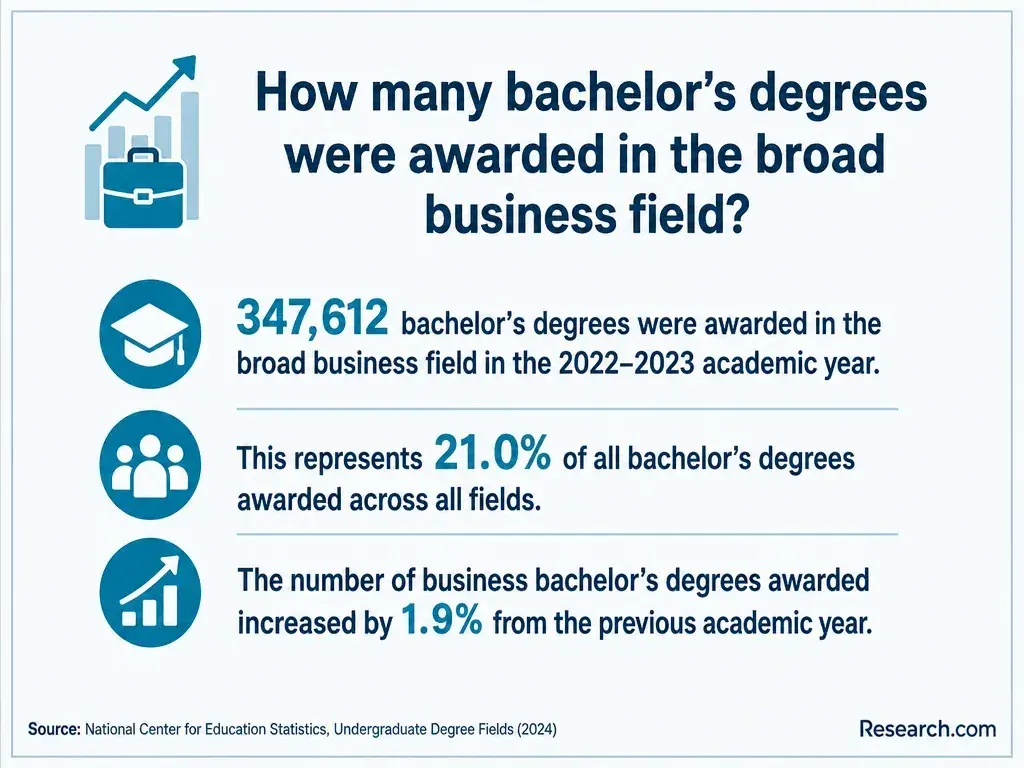
The BS is most likely to justify its cost when it clears a genuine degree barrier, applies substantial prior credit, or supports several plausible career paths. A certificate is more economical when the goal is narrow and employers accept it alongside your current qualifications. Neither option has a reliable personal return based on an occupation's national median wage.
Compare the cost to finish, not just advertised tuition. Include remaining required credits, mandatory fees, books and software, potential travel or proctoring, loan costs, and work hours you might forgo. Check whether employer tuition assistance reimburses you only after you pass a course. A low per-credit price can still produce a costly degree if few prior courses satisfy its requirements.
If project management is your intended function, comparing project management tuition and mandatory fees can provide a useful specialized-program benchmark. Request a personalized degree audit and written cost estimate before deciding that a BS - or a certificate - is the cheaper route.
Online and campus BS programs can award the same type of degree, but their learning arrangements may differ. Online delivery removes a regular commute; it does not necessarily remove live classes, fixed deadlines, proctored exams, group presentations, internships, or required visits. Campus study may make in-person recruiting and collaboration easier, while online study may allow a working student to remain employed.
Ask each school which requirements are asynchronous, when required courses are offered, how students complete team projects, and whether career services and internships are accessible to online learners. Compare those answers with your weekly availability rather than treating "online" as a guarantee of self-paced study. Explore online business degree school rankings in America to identify programs to investigate, then verify their current delivery rules directly.
A BS commonly combines general education with accounting, economics, finance, marketing, management, operations, quantitative methods, and business law or ethics. Some programs add a concentration, internship, or capstone. A certificate selects a smaller set of courses - for example, accounting fundamentals or marketing analytics - so its title alone cannot tell you how much functional depth it provides.
Compare syllabi against the tasks you want to perform. A student aiming at operations might value process analysis and spreadsheet work more than a broad set of introductory electives. Someone pursuing supply chain roles should compare a general business core with specialized logistics and procurement coursework; tuition and time comparisons for supply chain students can help frame that alternative. An elective is not necessarily an official concentration, and an introductory course is not proof of specialist competence.
Requirements vary by school and credential. A bachelor's applicant generally needs evidence of secondary-school completion or prior college study; a transfer applicant also needs transcripts for credit evaluation. Some schools admit students directly to the business major, while others require preparatory courses or a separate major declaration. Certificates may be open to new undergraduates or restricted to students already enrolled at the institution.
Before applying, distinguish admission from credit that satisfies a requirement. Ask admissions about eligibility, then ask the registrar or business adviser how previous mathematics, accounting, economics, and other courses would apply. For a closer look at qualifying for a business administration college program, compare the general guidance with the current catalog of each school on your shortlist.
A certificate usually involves fewer courses than a BS, but neither credential has a universal completion time. The degree timeline depends on applicable transfer credit, course sequencing, enrollment intensity, and how often requirements are offered. A short certificate can also take longer than expected if a required course runs infrequently.
Ask for a term-by-term plan showing your remaining requirements - not merely the number of credits a school accepts. Then compare that plan with your work schedule and financial-aid eligibility. Shorter pathways to an online business degree may be attractive, but an accelerated calendar does not necessarily reduce total coursework or leave enough time for every student to complete it successfully.
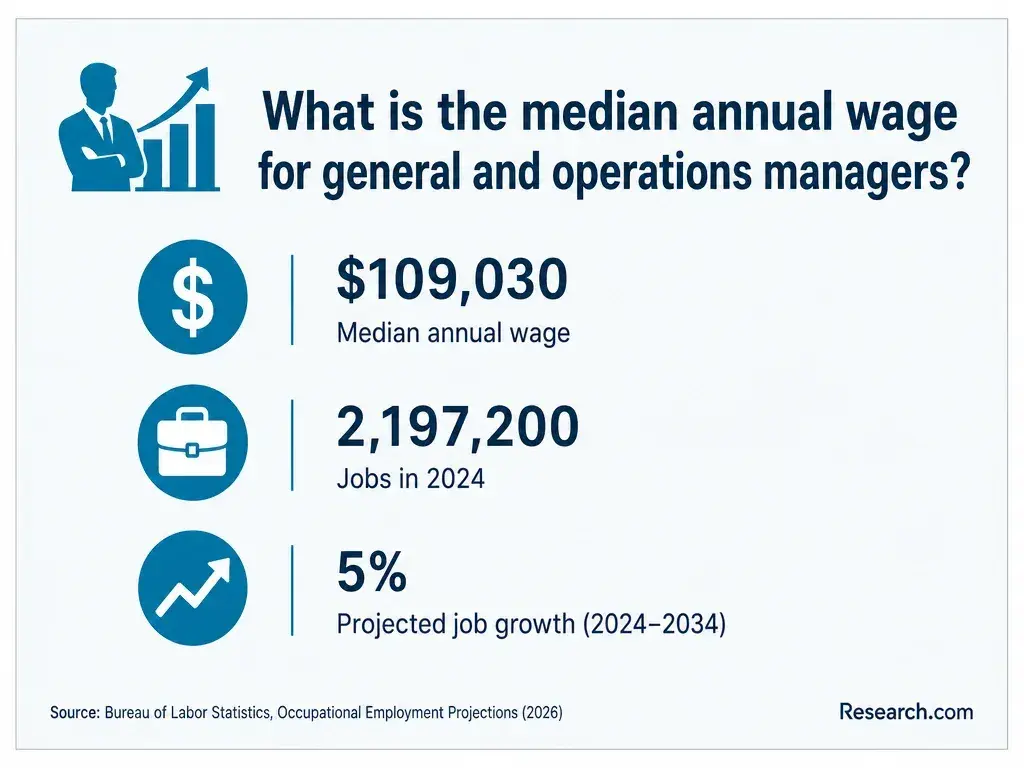
Business graduates may pursue coordinator, specialist, analyst, sales, or operations-support roles, depending on their skills and experience. A certificate can strengthen a candidacy for a specific function, while a BS can meet employers' bachelor's requirements. Hiring decisions also depend on evidence of relevant work: spreadsheets, written analysis, customer communication, projects, or internships.
For perspective, the U.S. Bureau of Labor Statistics reports a $75,940 median annual wage for human resources specialists in May 2025. That figure covers workers across experience levels, industries, and education backgrounds; it is not a likely first salary for either credential. If HR is your goal, compare job duties and required experience before choosing a general business route or reviewing colleges accepting credits toward human resources study.
Many general business roles have no occupational license, but requirements change with the work. A business BS or certificate does not itself grant CPA eligibility, a financial-services license, or a professional project-management designation. Certification organizations, state boards, and employers - not the degree title alone - determine eligibility.
If your target is HR, distinguish an academic certificate from a voluntary professional certification and check any experience or examination requirements with the certifying organization. A guide to studying human resources can help you compare academic routes, but confirm the credential rules for the particular role you want before paying for either program.
How can you choose an accredited online business program?
First, confirm that the institution holds recognized institutional accreditation and that the exact online BS or certificate is offered under the current catalog. Then check whether any advertised AACSB, ACBSP, or IACBE accreditation covers the relevant business school or program; these are not substitutes for checking the institution's status or the credential you will receive.
Make the final comparison using written answers about credit applicability, remaining courses, total charges, scheduling, academic support, and access to applied work. If speed matters, compare fast-track business bachelor's schools, but request an individual completion plan before relying on a published timeline. Choose the certificate if it closes the skill gap at a reasonable cost; choose the BS if the bachelor's credential is necessary and the path to finishing is feasible.
Other Things You Should Know About Business Administration
Sometimes. Ask whether the certificate is credit-bearing and request a written evaluation showing which courses would satisfy the BS requirements. Transfer acceptance alone does not establish that a business-core requirement is met.
Not automatically. Compare the target employer's requirements with a certificate, targeted coursework, and relevant experience. Also ask schools about second-degree rules if another BS remains under consideration.
Some schools permit it, but policies differ. Confirm whether courses can satisfy both credentials, whether a separate application is required, and whether adding the certificate changes costs or graduation timing.
List its official title, awarding institution, and completion status accurately. Do not describe a short course sequence as a bachelor's degree or claim a professional certification that was not separately awarded.
- Accreditation in the U.S. | ed.gov http://www.ed.gov/laws-and-policy/higher-education-laws-and-policy/college-accreditation/accreditation-in-the-us
- BS in Business Administration | Online Bachelor's Degree | Capella University https://www.capella.edu/online-business-degrees/bs-business-program/bachelors-business-administration/
- Business Administration Bachelor's Degree Online | The Pennsylvania Institute of Technology https://www.pit.edu/programs/b-s-business-administration/
- Online Business Administration Degree (BS) | University of Florida Online https://ufonline.ufl.edu/degrees/undergraduate/business-administration-bs/
- How Many Credits Do You Need to Graduate College? | snhu.edu https://www.snhu.edu/about-us/newsroom/education/how-many-credits-to-graduate-college
- Business Bachelor's Degree Programs Online | WGU https://www.wgu.edu/online-business-degrees/bachelors-programs.html
- What Is an Accredited University? Understanding Accreditation | National University https://www.nu.edu/blog/what-is-an-accredited-university/
- Why Is Accreditation Important? | ACE Blog https://ace.edu/blog/why-is-accreditation-important/
- Cost of attendance: Incoming Freshmen - Student Financial Aid | The Ohio State University https://sfa.osu.edu/incoming-freshmen/about-aid/financial-aid-eligibility
- A Career in Business | Accredited Online Business Degrees | UMass Global https://www.umassglobal.edu/interest/business