2027 Online Sociology Master's Programs Under $20,000: Total Tuition and Required Fees

Co-Founder and Chief Data Scientist
An advertised tuition rate can make an online sociology master's degree look affordable while required fees, extra credits, and residency charges push the actual bill above $20,000. This guide is for prospective graduate students comparing low-cost online options.
The U.S. Bureau of Labor Statistics projects 4% employment growth for sociologists from 2024 to 2034, making careful program and career alignment especially important. Learn how to calculate total cost, verify quality, compare formats, and decide whether a low-price program fits your goals.
Key Things You Should Know
- An online sociology master's degree is genuinely under $20,000 only when the required credits, mandatory institutional fees, and unavoidable program charges fit within that limit - not when tuition alone does.
- Multiply the published per-credit rate by every required credit, then add mandatory fees; a 36-credit program at $500 per credit costs $18,000 in tuition before fees.
- Low cost is valuable only if the institution is appropriately accredited, the curriculum supports your target role, and the schedule lets you finish without extra terms or dropped courses.
How Much Does an Online Sociology Master's Degree Under $20,000 Cost in Total?
The total cost of an online sociology master's degree includes more than the number a school labels "tuition." For a program to qualify as under $20,000, use the published graduation requirements and add tuition, required university fees, program fees, and any required campus or residency costs. Books, optional travel, and a personal computer may matter to your budget, but they should be separated from mandatory institutional charges.
The basic calculation is: (required credits × applicable tuition per credit) + mandatory fees + required program expenses = estimated total direct cost. Ask the admissions or student accounts office whether the rate is locked for continuing students. A program initially below the threshold can exceed it if rates rise before graduation.
The examples below show why total credits matter as much as a low advertised rate. They are calculations, not quotes from specific universities.
| Illustrative structure | Required credits | Tuition rate | Tuition total | Room remaining below $20,000 for required fees |
| Lower-rate, longer program | 42 | $400 per credit | $16,800 | $3,200 |
| Moderate-rate program | 36 | $500 per credit | $18,000 | $2,000 |
| Higher-rate, shorter program | 30 | $600 per credit | $18,000 | $2,000 |
Compare the direct cost with the kind of graduate training you need. Students considering management-focused alternatives can also compare the credit load and price structure of cheapest MBA programs; an MBA and a sociology master's degree serve different career purposes, even when their prices are similar.
A useful comparison worksheet should include the academic year of the price quote, credit requirement, tuition basis, mandatory fees, transfer-credit assumption, and expected completion term. Do not use an estimated "cost per year" as the total degree cost unless the school confirms how many years or terms the program requires.
What Required Fees Can Increase the Cost of an Online Sociology Master's Degree Beyond $20,000?
Required fees are charges a student cannot reasonably avoid while completing the degree. They can be assessed once, each term, per credit, per course, or for a specific requirement such as graduation. Because a small recurring fee is multiplied across several terms, it can be the difference between an $18,900 tuition estimate and a total above $20,000.
Review the institution's graduate tuition-and-fee schedule and program page for the following charges before treating a program as an under-$20,000 option.
- Application, enrollment, matriculation, or new-student fees
- Mandatory technology, distance-learning, learning-platform, or online-course fees
- Student services, library, wellness, activity, or university fees charged to online learners
- Per-course charges for research methods, software, proctoring, practica, field experiences, or a thesis/capstone
- Graduation, transcript, degree-audit, or comprehensive-examination fees
- Required in-person orientation, residency, travel, lodging, background-check, or placement expenses
Fee labels vary, so the key question is not whether a charge sounds optional. Ask whether it is required for enrollment, course access, graduation, or completion of the program's stated curriculum. Also confirm whether online students are charged campus-based fees and whether those charges are assessed in summer terms.
A common mistake is subtracting only tuition discounts from the advertised price while overlooking fees that are not discountable. Request a written estimate based on your planned enrollment pattern, including part-time or accelerated terms, and retain it for comparison.
How Does Per-Credit Tuition Affect the Total Cost of an Online Sociology Master's Degree Under $20,000?
Per-credit tuition determines the tuition portion of the bill, but it does not by itself show value. A $450 rate can be more expensive overall than a $550 rate if the lower-priced program requires substantially more credits. Start with the catalog's graduation requirement, not the minimum number of credits an applicant may transfer.
This comparison illustrates the breakpoints that matter when keeping direct charges below $20,000.
| Required credits | Maximum average tuition per credit before fees | Interpretation |
| 30 | $666.67 | Fees must fit within the difference between tuition and $20,000. |
| 33 | $606.06 | A modest per-term fee can remove the remaining margin. |
| 36 | $555.56 | Rates above this amount exceed $20,000 before fees. |
| 42 | $476.19 | Longer curricula require a lower rate to remain under the threshold. |
Schools may charge a flat rate per term instead of per credit. A flat-rate model can be economical for a student who can take more courses each term, but only if course availability supports that pace. Taking one course in a flat-rate term may produce a higher effective per-credit cost than expected.
Curriculum structure also affects the calculation. A thesis, internship, independent study, prerequisite, or repeated course may add credits or terms. Examine whether research methods, statistics, theory, electives, and a culminating experience are included in the stated credit total.
Students interested in a clinical helping profession should not assume an inexpensive sociology degree substitutes for a cheapest online counseling degree, because counseling preparation and licensure requirements are different.
How Long Does It Take to Complete an Online Sociology Master's Degree Under $20,000?
Most online sociology master's programs are designed for roughly 30 to 42 credits, but completion time depends on course sequencing, transfer credits, and how many credits a student takes each term. A full-time student may finish in about 12 to 24 months, while a working professional taking one course at a time may need longer. The school's published maximum time to complete is also important, particularly for students balancing work or caregiving.
Format can change both convenience and final cost. Asynchronous courses allow students to complete weekly work on their own schedules, while synchronous courses require live attendance at set times. Hybrid programs add in-person elements. None is automatically better: asynchronous delivery may suit rotating work schedules, but live sessions can provide useful structure and faculty access. A required campus visit adds travel costs even when tuition is low.
Before enrolling, verify these scheduling details because delays can create extra fee-paying terms.
- Map every required course by term and identify whether any course is offered only once per year.
- Confirm whether prerequisites, thesis courses, or capstones must be taken in sequence.
- Ask how often electives and concentrations are available and whether enrollment caps delay progress.
- Calculate the number of terms needed at your intended pace, including summer enrollment if required.
- Check whether taking a leave, failing a course, or changing concentration affects the tuition rate or completion deadline.
A faster schedule can reduce recurring fees and shorten the time before career use, but it is not always the best value. Choose a pace that allows strong performance in research, writing, quantitative analysis, and applied projects. For students who decide their goal is a finance or operations credential rather than sociological research, short bookkeeping courses may offer a more direct and lower-cost alternative.
How Can Students Verify Accreditation for an Online Sociology Master's Degree Under $20,000?
Accreditation verifies the institution's academic oversight; it is not the same as a school's marketing claim that a program is respected or career-focused. For an online sociology master's degree, institutional accreditation is generally the central credential to check. Sociology does not commonly rely on a universal programmatic accreditor in the way some regulated clinical fields do.
Verify accreditation through the U.S. Department of Education's Database of Accredited Postsecondary Institutions and Programs and the accreditor's own directory. Check the exact institution name, campus or online division when applicable, current accreditation status, and any public actions noted in the record. A school should be able to identify its recognized institutional accreditor clearly.
Accreditation matters because it can affect federal financial-aid eligibility, credit transfer decisions, employer confidence, and admission to doctoral programs. It does not guarantee that another university will accept credits, that an employer will prefer the degree, or that the curriculum meets a particular job requirement.
Also evaluate academic fit. Review faculty backgrounds, research-methods training, statistics coursework, elective choices, thesis or capstone expectations, and career services. A sociology degree may prepare students for research, policy, community-program, nonprofit, education, market-research, and people-analytics paths, but individual employers set their own qualifications.
Do Out-Of-State Students Pay More for an Online Sociology Master's Degree Under $20,000?
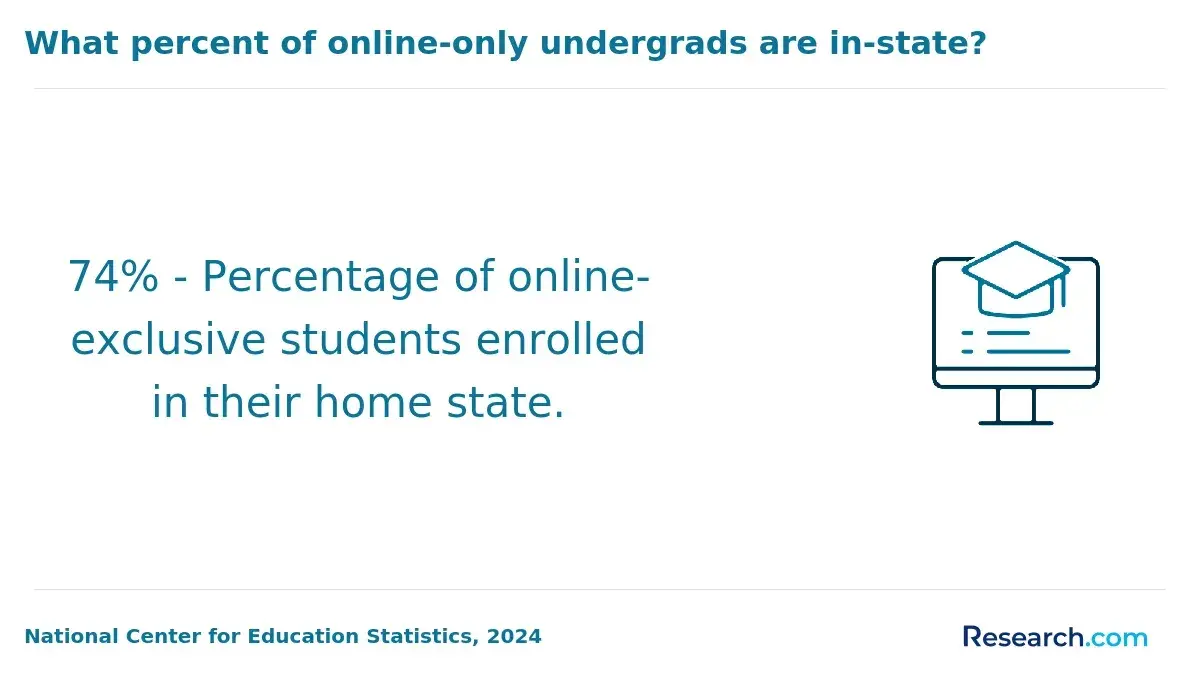
Out-of-state students may pay more when an online program uses separate resident and nonresident tuition rates. Other institutions publish one online rate for all U.S. students, while some charge a distance-learning rate that differs from both campus rates. Never assume that "online" means the resident price applies nationally.
Compare the residency policy alongside the tuition chart. The table highlights the questions that determine whether a listed rate is usable for your situation.
| Tuition policy | Potential effect on out-of-state students | What to confirm |
| Single online rate | May provide predictable pricing regardless of residence | Whether all required online courses use that rate |
| Resident and nonresident rates | Nonresident tuition may exceed the under-$20,000 target | Residency definition and total nonresident estimate |
| Regional reciprocity or tuition discount | May reduce the nonresident price for eligible students | Eligibility, application process, and renewal conditions |
| Flat-rate term tuition | Cost depends on terms needed rather than residence alone | Whether online learners pay additional distance fees |
Residency is usually determined by institutional policy, not simply by where you work or own property. Moving shortly before enrollment may not create resident eligibility, and military affiliation, employer partnerships, and reciprocity agreements can have separate rules. Obtain written confirmation of your classification before paying a deposit.
Students weighing an online degree against a design-oriented career change should also recognize that pricing and residency rules can differ greatly across fields; an online architecture degree may involve studio, technology, or licensure-path considerations that sociology programs generally do not.
Can Transfer Credits Keep the Total Cost of an Online Sociology Master's Degree Under $20,000?
Transfer credits can lower both tuition and time to completion, but they are not guaranteed. Graduate programs commonly limit the number of credits they will accept, require a minimum grade, and evaluate whether prior coursework matches current learning outcomes. Some programs accept only credits from accredited institutions, courses completed within a stated time window, or credits not previously applied to another completed degree.
Transfer credit keeps a program below $20,000 only when the receiving institution approves it in writing and reduces the remaining graduation requirement. Do not subtract credits based on an unofficial conversation or a transcript review that is still pending.
Use this process to evaluate transfer savings without creating an inaccurate budget.
- Request the program's written graduate transfer-credit policy before applying.
- Identify the maximum transferable credits and any courses that must be taken at the institution.
- Submit official transcripts, syllabi, course descriptions, and assignments if the department requests them.
- Ask whether transferred credits replace required courses or only count as electives.
- Recalculate tuition and terms after receiving the final transfer evaluation.
There is a trade-off: transferring a broad elective may save money, while retaking or taking an equivalent course may better build skills needed for a research-intensive concentration or doctoral study. Prioritize the knowledge required for your intended role over the maximum possible transfer award.
Can Financial Aid Bring the Cost of an Online Sociology Master's Degree Below $20,000?
Financial aid can reduce what you pay out of pocket, but it does not change the institution's published total price. Start with the Free Application for Federal Student Aid (FAFSA), then review school-based scholarships, graduate assistantships, employer tuition benefits, veterans' education benefits, and payment plans. Eligibility, award amounts, and whether aid applies to online enrollment vary by student and institution.
Federal Direct Unsubsidized Loans are a common graduate funding source. For the 2024-25 award year, the annual borrowing limit for eligible graduate and professional students was $20,500. That figure is a borrowing ceiling rather than a recommended amount, and loans must be repaid with interest.
Build an aid comparison that separates gift aid from debt and confirms when funds are available.
- List tuition and mandatory fees before subtracting grants, scholarships, employer payments, or veteran benefits.
- Separate scholarships and grants, which generally do not require repayment, from loans and payment-plan obligations.
- Ask whether awards are renewable and whether a minimum enrollment level or GPA is required.
- Confirm whether assistantships are available to fully online students and whether they require campus work.
- Compare the net direct cost with your borrowing plan, emergency savings, and expected enrollment timeline.
Employer support can be particularly valuable when the degree strengthens research, community engagement, human services, program evaluation, or data-analysis work relevant to your current role. A student moving toward commercial communications may find that a master's in marketing aligns more directly with an employer's needs, but it should be evaluated as a different academic and career investment.
Is an Online Sociology Master's Degree Under $20,000 Worth the Cost for Career Advancement?
An online sociology master's degree under $20,000 can be worthwhile when it builds skills and credentials directly connected to a realistic career goal. Sociology graduate study commonly emphasizes social theory, research design, qualitative and quantitative methods, statistical interpretation, ethics, writing, and analysis of institutions and communities.
Those skills can support positions in research, program evaluation, nonprofit administration, community development, policy support, education, and market or workforce research.
The degree is not a universal substitute for a license, technical certification, or specialized professional program. For example, clinical mental-health counseling, social work licensure, and many teaching roles have state-specific education, supervised-practice, examination, or program-accreditation requirements. Verify requirements with the relevant employer, graduate school, or state board before enrolling.
For labor-market context, the U.S. Bureau of Labor Statistics reports that sociologists had a median annual wage of $101,690 in May 2024. This occupation is small and typically requires at least a master's degree, so the figure should not be treated as an expected salary for every sociology graduate or for broader social-service roles. Use it as evidence that advanced social research expertise can have value, then examine job postings in your region and desired sector.
An under-$20,000 program is often a strong choice when you need an accredited graduate credential, can complete it without extensive borrowing, and can demonstrate applied skills through projects, internships, research assistance, or work experience.
Paying more may make sense when a program offers a concentration, faculty expertise, local placement network, thesis support, or schedule that materially improves fit for your goal. The cheapest option is not a bargain if it lacks the coursework or support your next step requires.
How Should Students Choose the Best-Value Flat-Rate Online Sociology Master's Program?
The best-value flat-rate online sociology master's program is not necessarily the one with the lowest listed term price. In a flat-rate structure, students pay one amount for a specified enrollment level or term. Its value depends on whether they can enroll in enough required courses, receive adequate support, and finish on schedule without incurring extra terms.
Use the following comparison sequence to select a program based on total value rather than a headline price.
- Confirm the institution's accreditation and verify that the program's curriculum supports your target role, doctoral plans, or employer requirements.
- Request a written total-cost estimate using your residency status, expected start term, course load, transfer credits, and all mandatory fees.
- Compare required credits, term structure, course availability, thesis or capstone requirements, and any campus visits across at least two programs.
- Calculate the effective cost per completed credit under the flat-rate model at your realistic course load, not the maximum possible load.
- Review faculty access, advising, technical support, accessibility services, and career resources alongside price.
- Read tuition-lock, withdrawal, leave-of-absence, and rate-increase policies before accepting admission.
Red flags include vague fee information, a price that excludes required courses, no clear accreditation disclosure, an unrealistic accelerated schedule, and claims of guaranteed jobs or salaries. A transparent school should explain total credits, delivery format, required experiences, and the conditions under which tuition may change.
For many students, the best low-cost choice is a flexible, appropriately accredited program with enough methods training and a manageable course sequence. For others, a higher-priced option can be justified if it solves a specific problem - such as access to a desired specialization, a required placement, or faculty expertise that supports a defined professional objective.
Other Things You Should Know About Sociology
Depending on experience and the curriculum, graduates may pursue research, program evaluation, policy support, nonprofit management, community outreach, education, market research, or people-analytics roles. Review job postings to identify the methods, software, and industry knowledge employers expect.
Some require a thesis, while others use a capstone project, comprehensive examination, internship, or applied research project. A thesis may be especially useful for students considering doctoral study, but it can add scheduling and advising demands.
Requirements often include a bachelor's degree, official transcripts, a statement of purpose, recommendations, and a résumé. Schools may also expect prior social-science coursework or evidence of research and statistics preparation. Requirements and minimum GPA policies vary by institution.
No. Sociology focuses on social structures, research, institutions, groups, and social change. A Master of Social Work is a professional practice degree that may support social-work licensure when completed through an appropriate program and combined with state-specific requirements.
References
- How Long Does It Take to Complete a Master's Degree Program? https://www.calsouthern.edu/articles/how-long-is-a-masters-degree
- Sociology (M.A.) https://gs.howard.edu/sociology-ma
- Sociology (MA/MS) https://www.etamu.edu/programs/sociology-ms/
- The Hidden Costs of Higher Education http://perspectives.acct.org/stories/the-hidden-costs-of-higher-education-0
- 9 College Costs Students Forget About https://www.collegedata.com/resources/money-matters/9-college-costs-students-forget-about
- Best Online Master's Programs in Sociology for 2025 https://www.onlinemastersdegrees.org/best-programs/sociology/
- Scholarships for Online Grad School | OEDb.org https://www.oedb.org/graduate-scholarship/