2027 Does a Public Health BS Prepare You for Disease Surveillance Support Roles?

Co-Founder and Chief Data Scientist
A public health BS can prepare you to support disease surveillance, but it does not automatically qualify you to work as an epidemiologist. Health departments and other organizations need staff who can help maintain records, check data quality, summarize patterns, and support follow-up under supervision. If you are choosing a bachelor's program or preparing for your first public health job, the distinction matters: it affects which courses and experiences are worth pursuing. This guide shows where the degree fits, which skills you should demonstrate, and when a different pathway may be more direct.
Key Things You Should Know
- Yes, for support work: A public health BS can be relevant to surveillance assistant, program support, and junior data roles; independent epidemiologist positions commonly call for more advanced preparation.
- Evidence matters more than the degree title alone: Employers may look for spreadsheet and data-quality skills, basic epidemiology, careful documentation, and supervised experience with sensitive information.
- Check the actual posting: Surveillance support is not one standardized occupation, so required education, technical tools, and pay vary substantially by employer and responsibilities.
What disease surveillance support roles can public health BS graduates pursue?
Disease surveillance is the ongoing collection, analysis, interpretation, and communication of health information for public health action. A support worker might help a team process reports or prepare routine summaries, while an epidemiologist designs analyses, evaluates unusual patterns, and advises on their interpretation. Job titles are inconsistent, so compare duties rather than assuming that every position containing "surveillance" has the same entry requirements.
The following distinctions can help you identify realistic first jobs and avoid applying an advanced title to entry-level tasks.
| Possible role | Typical support responsibilities | What to check in the posting |
| Surveillance or epidemiology assistant | Review reports for completeness, maintain tracking records, and prepare routine summaries under supervision | Whether the employer requires health department experience or specific reporting-system training |
| Public health program assistant | Coordinate reporting workflows, document follow-up, and support communication among partners | Whether the job includes data work or is primarily administrative |
| Junior public health data or research assistant | Clean datasets, check definitions, and produce descriptive tables for review | Required software, quantitative coursework, and data-access conditions |
A community health worker or health educator may also use surveillance findings, but those jobs generally focus on outreach or education rather than maintaining surveillance data. If you want to move beyond support tasks later, compare the preparation associated with public health master's concentrations and careers rather than assuming every surveillance-related job requires the same degree.
Does a public health BS provide the skills needed for disease surveillance?
It can provide the foundation, not necessarily job-ready technical proficiency. Relevant coursework should help you understand populations and case definitions, calculate and interpret descriptive measures, recognize missing or inconsistent records, and explain findings without overstating what the data show. These skills are useful when checking a line list or helping prepare a routine report.
Coursework alone may not show that you can work within an agency's reporting workflow. Employers may also need you to follow data-use rules, document changes, use their software, and know when a questionable record should be escalated rather than silently corrected. A supervised project using permitted data can demonstrate those habits better than a course title. If you are aiming for advanced modeling or specialist analysis, balancing employment with a biostatistics master's is a separate decision from preparing for a bachelor's-entry support role.
What education and training are required for disease surveillance support careers?
There is no single national educational requirement for every surveillance support job. Some employers accept a relevant bachelor's degree and train new hires on their systems; others request particular software skills, healthcare records experience, or prior public health work. A job titled epidemiologist is a different target: the US Bureau of Labor Statistics identifies a master's degree as the typical entry-level education for that occupation.
For an initial support position, read postings closely for the work you would perform and the authority you would have. Training in confidentiality, secure data handling, reporting procedures, and local systems often happens after hiring. If a posting calls for independent study design or advanced statistical analysis, short workplace training is unlikely to replace the requested preparation. Graduate programs have their own admissions rules; online public health master's entry requirements matter if you later pursue that route, not as a universal condition for support work.
Prioritize courses by the tasks you want to perform, not by whether a catalog uses the word "surveillance." Introductory epidemiology teaches measures, case definitions, and interpretation; statistics builds comfort with denominators, variation, and uncertainty. Research methods can strengthen documentation and data-quality judgment, while health informatics or database coursework may offer more direct practice with structured records. Public health ethics and communication matter because surveillance information must be handled carefully and explained clearly.
Ask whether those courses include applied assignments: checking a dataset for missing values, producing a reproducible descriptive summary, or writing a short interpretation for a nontechnical audience. Use public or appropriately authorized data, and never place identifiable records in a student portfolio. If graduate study is a possible later step, entry flexibility in public health master's programs may help you evaluate future options; it is not a reason to skip useful quantitative preparation now.
CEPH accreditation is a useful indicator that a public health school or program has been reviewed against public health education standards. It is not the same as an institution's accreditation, and a university's CEPH-accredited graduate offering does not, by itself, establish that its bachelor's degree is covered. Check the accreditor's listing for the exact school, unit, or program and ask the institution how the bachelor's degree falls within that scope.
Do not treat accreditation as a substitute for examining epidemiology coursework, applied opportunities, and graduate outcomes relevant to your goal. Nor should you assume every support employer requires a CEPH-covered undergraduate degree. If you later compare graduate study, the scope question also applies to CEPH-accredited Master of Public Health programs.
Yes, if the program offers meaningful quantitative practice and you can obtain supervised experience. Online study can teach epidemiology, statistics, and data documentation, but check whether you will actually use data tools and receive feedback on your work. Also ask how the school helps online students find internships or projects; virtual attendance alone does not create access to health department data.
Check scheduled class meetings, group-work expectations, exam arrangements, and any campus or fieldwork obligations before calling a program flexible. An internship may still require weekday availability or an approved site. If you already hold a bachelor's degree, compare the time and cost of a second BS with targeted training or an appropriate graduate route; an online public health master's value guide can inform that different decision.
Requirements depend on whether you are applying as a first-year student, transferring, or entering a separately admitted major. A school may assess general admission first and then require prerequisite courses or a separate application for the public health major. Ask specifically whether statistics or biology must be completed before entry, rather than assuming either is universally required.
For transfer students, accepted credits do not necessarily satisfy major requirements. Request a degree audit showing where prior courses apply, which required courses remain, and whether an internship has eligibility prerequisites. Application documents also vary by degree level: advice about online graduate public health options without letters should not be mistaken for the admissions policy of a bachelor's program.
A traditional full-time bachelor's pathway commonly spans four academic years, but a transfer student's remaining time depends on the school's degree audit, course sequence, and availability. Part-time study, required fieldwork, or a course offered infrequently can extend the timeline; an accelerated course does not necessarily reduce the number of requirements. Compare public health bachelor's pacing and course length against the time you can realistically devote to quantitative assignments and supervised experience.
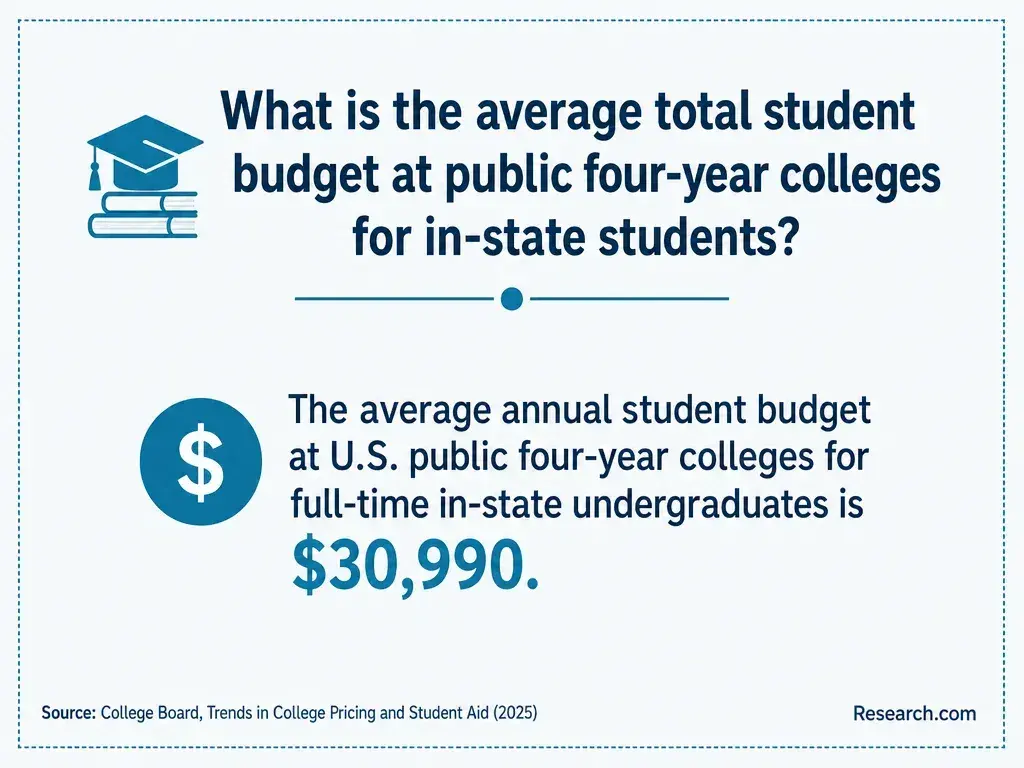
No responsible total-price estimate applies to every program. Before enrolling, ask for the tuition rate that applies to you, mandatory fees, remaining required credits, expected terms, and any internship-related travel or lost work time. A lower advertised tuition rate may not mean a lower completion cost if fewer transfer courses apply or required courses delay graduation. Compare those costs with a shorter route - such as employer training or focused coursework - if you already have a bachelor's degree and meet support-job education requirements.
There is no reliable single salary figure for "disease surveillance support professional": the label covers administrative, program, and data tasks across different employers and locations. The Bureau of Labor Statistics reports wages for defined occupations, not for graduates of a particular degree or for every locally used job title. In particular, an epidemiologist's occupational median should not be presented as the expected starting pay of a surveillance assistant.
Use posted pay ranges for jobs whose duties and qualification requirements match yours. Compare government pay grades, benefits, contract duration, and whether a role is temporary or grant-funded. If you are considering additional education for an epidemiologist pathway, a public health master's graduate pay guide provides context, but graduate-level occupational figures still cannot predict an individual offer or establish the return on your tuition.
Do disease surveillance careers require certification or graduate study?
Entry-level support work does not have one universal certification requirement. An employer may prefer a credential or train staff in its own procedures, but a public health BS does not itself confer certification. Check each posting before paying for a general credential, and distinguish employer training from a separately awarded professional certification.
Graduate study becomes more relevant if your target is an epidemiologist position or a role requiring independent analysis and research design. First identify the tasks you cannot yet demonstrate: supervised data work or a focused methods course may be a more direct next step than an immediate master's degree. If your undergraduate record makes graduate study seem uncertain, MPH applications after uneven undergraduate grades can help you evaluate that option without assuming admission rules are identical across programs.
Other Things You Should Know About Public Health
Yes. Public health agencies also monitor topics such as chronic conditions, injuries, and environmental exposures. The records, reporting partners, and measures differ by surveillance system.
Usually not. Some positions involve contacting healthcare facilities or helping with follow-up, but clinical assessment and treatment require separate professional authority and qualifications.
Yes, if you use public or otherwise permitted data and follow any project or employer restrictions. Show your methods and a clear summary; do not disclose identifiable or restricted records.
That need not rule out every support job. Show evidence that you can learn structured workflows, check data carefully, document decisions, and protect confidential information; then confirm whether the employer trains new hires on its system.
- HIPAA Privacy Rule | cdc.gov https://www.cdc.gov/nhsn/hipaa/index.html
- Summary of the HIPAA Security Rule | hhs.gov https://www.hhs.gov/hipaa/for-professionals/security/laws-regulations/index.html
- Public health surveillance | who.int https://www.emro.who.int/health-topics/public-health-surveillance/
- Principles of Epidemiology | Lesson 1 - Section 4 https://archive.cdc.gov/www_cdc_gov/csels/dsepd/ss1978/lesson1/section4.html
- 4A08 - DISEASE SURVEILLANCE INVESTIGATOR 1 | City of Philadelphia https://www.phila.gov/departments/office-of-human-resources/job-specs/4A08.htm
- 7. Subdisciplines and Careers in Epidemiology | Windsor & Downs Press https://iopn.library.illinois.edu/pressbooks/epidemiologyaprimer/chapter/chapter-7-subdisciplines-and-careers-in-epidemiology-2/
- Bachelor of Arts in Public Health - Academics | UT Dallas https://academics.utdallas.edu/fact-sheets/epps/bachelor-of-arts-in-public-health/
- Which Aspects of a Surveillance System Can Be Assessed? | INSIGHT Surveillance Toolkit https://sites.uw.edu/surveillancetoolkit/surveillance-overview/which-aspects-of-a-surveillance-system-can-be-assessed/