2027 Online Organizational Leadership Doctorate Programs with Capstone or Applied Project Options

Co-Founder and Chief Data Scientist
Choosing an online organizational leadership doctorate often comes down to one question: do you want to produce traditional research or solve a real workplace problem? The distinction matters because the U.S. Bureau of Labor Statistics reported a May 2024 median annual wage of $122,090 for management occupations, making advanced leadership training a high-stakes investment.
This guide is for working professionals comparing capstone, applied project, and dissertation-in-practice pathways. You will learn which formats exist, how they affect time and cost, and how to choose a credible program that fits your career goals.
Key Things You Should Know
- Online organizational leadership doctorates with capstone or applied project options are usually EdD or applied doctorate programs; PhD programs more often require a traditional dissertation designed for scholarly research.
- Capstone and dissertation-in-practice pathways are not automatically easier or faster: students still complete doctoral research, writing, faculty review, and often an oral defense or presentation.
- Cost and ROI depend heavily on tuition, transfer credits, employer support, and borrowing; federal graduate loans first disbursed July 1, 2025, through June 30, 2026, carry fixed interest rates of 7.94% for Direct Unsubsidized Loans and 8.94% for Grad PLUS Loans.
Which Online Organizational Leadership Doctorate Programs Offer Capstone or Applied Project Options?
Many online organizational leadership doctorates use applied final projects, but schools use different labels: capstone, applied doctoral project, dissertation in practice, problem of practice, or strategic change project. The key is not the name but whether the final requirement asks you to investigate a real organizational problem, apply evidence, and produce a defensible solution.
The table below summarizes examples of online or mostly online programs that publicly describe an applied final requirement related to organizational leadership, organizational change, or leadership practice. Program requirements can change, so use this as a starting point and confirm the current catalog before applying.
| School | Program | Final doctoral requirement | Best fit | Format notes |
| Vanderbilt University Peabody College | Online EdD in Leadership and Learning in Organizations | Capstone project focused on a practical organizational challenge | Professionals who want a highly applied leadership doctorate from a research university | Online coursework with required live components and intensive experiences |
| University of Southern California Rossier School of Education | Online EdD in Organizational Change and Leadership | Dissertation in practice tied to a problem of practice | Leaders working in education, nonprofit, business, public, or mission-driven organizations | Online program with structured cohorts and synchronous engagement |
| Baylor University | Online EdD in Learning and Organizational Change | Problem-of-practice dissertation | Professionals focused on leading change, learning systems, and organizational improvement | Online coursework with program-specific immersion or residency expectations |
| University of Dayton | Online EdD in Leadership for Organizations | Dissertation in practice or applied research requirement | Working leaders who want to connect doctoral inquiry with organizational decisions | Online delivery with cohort-based coursework |
| New York University Steinhardt | Online EdD in Leadership and Innovation | Dissertation in practice centered on a problem of practice | Senior professionals seeking innovation and systems-change preparation | Online format designed for working professionals |
| Creighton University | Online EdD in Interdisciplinary Leadership | Dissertation in practice with applied leadership emphasis | Students who want leadership preparation across sectors rather than a single industry track | Online coursework with program-specific residency or milestone expectations |
| Drexel University | Online EdD in Educational Leadership and Management with organizational leadership-related pathways | Dissertation in practice | Professionals interested in leadership, management, change, and applied education systems | Online format with structured research sequence |
Students who are comparing broader affordability and format options can also review doctorate in organizational leadership online guides to understand how tuition, delivery format, and doctoral structure differ across institutions.
When reviewing programs, look for the official final-project language in the academic catalog, not only on marketing pages. A credible applied doctorate should explain the project sequence, faculty supervision model, research methods expectations, committee review process, and final defense or presentation requirements.
What Does a Capstone or Applied Project Involve in an Online Organizational Leadership Doctorate?
A capstone or applied project in an online organizational leadership doctorate is a culminating doctoral assignment that uses research-informed methods to address a real leadership, change, culture, performance, learning, or strategy problem. It is different from a course project because it usually spans multiple terms, requires faculty approval, and must meet doctoral standards for evidence, analysis, and professional contribution.
Although formats vary, most applied doctoral projects move through several stages. These stages help schools ensure that the project is not just a workplace report but a rigorous doctoral product.
- Problem identification: The student defines a specific organizational issue, such as low employee engagement, ineffective change adoption, leadership pipeline gaps, poor cross-functional collaboration, or equity-related barriers.
- Literature and evidence review: The student examines scholarly research and professional evidence to understand what is already known about the issue.
- Method or inquiry design: The student selects an appropriate way to gather or analyze evidence, such as interviews, surveys, document analysis, needs assessment, program evaluation, or mixed methods.
- Applied analysis: The student interprets findings in relation to organizational context, stakeholder needs, and leadership theory.
- Recommendation or intervention: The student proposes a practical solution, implementation plan, evaluation model, or strategic change framework.
- Final defense or presentation: The student presents the work to faculty, and in some programs, to organizational stakeholders.
The best projects are narrow enough to complete but important enough to matter. A topic such as "improving leadership communication during a merger in a regional healthcare organization" is usually stronger than a broad topic such as "improving leadership."
Students should also check whether the school requires access to an organization for data collection. Some programs allow students to use their own workplace, while others require formal site approval, institutional review board review, or alternative data sources if the employer will not participate.
How Do Capstone-Based and Dissertation-Based Online Organizational Leadership Doctorates Compare?
Capstone-based and dissertation-based doctorates can both be rigorous, but they are built for different outcomes. The most important distinction is whether the student's final work is intended primarily to contribute to scholarly knowledge or to improve practice in a defined organizational setting.
The comparison below shows how capstone, applied project, dissertation-in-practice, and traditional dissertation models typically differ. Use it to match the doctoral pathway to your career goal rather than assuming one format is universally better.
| Final requirement | Primary purpose | Common degree types | Research expectation | Best for | Potential limitation |
| Capstone project | Apply research to a practical organizational problem | EdD, applied doctorate | Moderate to high, depending on program design | Practitioners, executives, consultants, learning leaders, nonprofit leaders | May be less ideal for tenure-track academic research roles |
| Applied doctoral project | Design, evaluate, or improve a workplace intervention | EdD, DBA-adjacent leadership programs, professional doctorates | Moderate to high with emphasis on practical evidence | Students who want a portfolio-ready leadership project | Quality varies by school and faculty supervision |
| Dissertation in practice | Investigate a problem of practice using scholarly inquiry | EdD | High, but focused on applied improvement rather than theory generation | Senior professionals solving complex organizational or educational problems | Can still be time-intensive and writing-heavy |
| Traditional dissertation | Produce original research that contributes to academic knowledge | PhD, some EdD programs | High, with stronger emphasis on theory, methodology, and scholarly contribution | Future researchers, faculty, policy analysts, or students considering academic careers | May feel less directly connected to immediate workplace implementation |
A capstone pathway may be better if your goal is to become a stronger organizational change leader, internal consultant, chief learning officer, HR executive, nonprofit executive, or senior manager. A traditional dissertation may make more sense if you want to publish scholarly research, pursue a faculty career, or enter a role where advanced research design is central to the job.
The common mistake is assuming "capstone" means "less academic." In reputable programs, capstones still require literature review, research ethics, analytical methods, doctoral writing, and faculty evaluation. The difference is usually the endpoint: an actionable solution instead of a theory-focused research contribution.
Online organizational leadership doctorate capstone programs can be accredited and respected when they are offered by properly accredited institutions and maintain clear doctoral standards. Accreditation matters because it affects transferability, federal financial aid eligibility, employer recognition, and whether the credential is taken seriously in hiring or promotion decisions.
For U.S. students, the first checkpoint is institutional accreditation from an accreditor recognized by the U.S. Department of Education or the Council for Higher Education Accreditation. Organizational leadership doctorates usually do not require programmatic accreditation in the same way that nursing, psychology, counseling, or teacher licensure programs may, but business-related leadership programs may also hold business accreditation from organizations such as AACSB, ACBSP, or IACBE.
Respect depends on more than the word "online." Employers increasingly evaluate online graduate credentials by the school's accreditation, reputation, curriculum relevance, and the candidate's ability to apply the learning. A well-supervised applied project can be especially valuable when it gives students a concrete example of strategic analysis, stakeholder engagement, and evidence-based leadership.
Before enrolling, students should verify several quality markers. These checks help distinguish legitimate applied doctoral preparation from programs that use capstone language without strong academic support:
- Confirm institutional accreditation through official accreditors or federal databases, not only the school website.
- Read the academic catalog description of the capstone, applied project, or dissertation-in-practice sequence.
- Ask whether the final project is reviewed by a committee, faculty chair, or doctoral project team.
- Check whether students complete research methods, statistics or qualitative analysis, ethics, and scholarly writing coursework before the project.
- Ask whether the program requires residencies, synchronous sessions, internships, site permissions, or employer participation.
- Review faculty backgrounds to see whether mentors have experience in organizational leadership, change management, human systems, research methods, or your target sector.
Licensure is usually not the central issue for organizational leadership doctorates because the degree is commonly used for leadership, consulting, management, or academic advancement. However, students working in education, healthcare, counseling, or public administration should confirm whether their employer, state agency, or licensing board has specific degree or accreditation requirements.
Most online organizational leadership doctorates take about three to five years, but the final project can significantly affect the actual timeline. Capstone and applied project models may feel more structured than traditional dissertations, yet delays still happen when students choose a topic that is too broad, cannot secure data access, or need multiple revisions.
The table below summarizes common timeline patterns by doctoral completion model. These are planning ranges, not promises, because each school controls its own credit load, milestone schedule, transfer policy, and maximum time-to-degree rules.
| Pathway | Typical structure | Common completion window | Main timeline risk | How to reduce delays |
| Capstone-based EdD | Coursework plus project design, implementation or analysis, and final presentation | Often about 3 to 4 years | Choosing a project that is too large for the program timeline | Start with a focused workplace problem and confirm available data early |
| Applied doctoral project | Coursework plus practice-focused inquiry or intervention project | Often about 3 to 5 years | Employer or site access problems | Ask whether alternate project sites or public datasets are allowed |
| Dissertation in practice | Coursework plus problem-of-practice research and formal defense | Often about 3 to 5 years | Underestimating research and writing expectations | Use writing center support and meet regularly with the project chair |
| Traditional dissertation | Coursework, comprehensive exams or proposals, original research, and defense | Often about 4 to 7 years | Extended proposal, data collection, or committee revision cycles | Choose a feasible research design and clarify committee expectations early |
Transfer credits can shorten coursework, but they rarely eliminate the culminating project. Some programs allow previous doctoral credits, education specialist credits, or relevant graduate credits to reduce total credit requirements, while others require students to complete the full doctoral sequence in residence at the institution.
Students should be cautious with advertised "finish in three years" messaging. Ask whether that timeline assumes continuous enrollment, full course loads, no project delays, no transfer-credit review issues, and completion of each milestone on the first attempt.
Strong support is one of the biggest differences between a manageable online doctoral project and a frustrating one. Because capstone and applied projects require students to integrate research, workplace context, data, and professional recommendations, effective programs provide structured mentoring rather than leaving students to figure out the process alone.
When comparing schools, look for support systems that begin before the final term. The most useful programs scaffold the project across multiple courses so students gradually build the problem statement, literature review, methods plan, analysis, and final product.
- Faculty chair or project mentor: Guides topic development, research design, analysis, and final revisions.
- Committee or reviewer model: Provides additional academic oversight and helps ensure the work meets doctoral standards.
- Research methods sequence: Prepares students to use qualitative, quantitative, mixed-methods, evaluation, or improvement-science approaches appropriately.
- Writing and editing support: Helps students meet doctoral writing expectations, citation requirements, and revision deadlines.
- Library and database access: Gives students access to peer-reviewed research needed for evidence-based recommendations.
- IRB or ethics guidance: Helps students understand participant protection, consent, data privacy, and workplace research boundaries.
- Cohort and peer review opportunities: Keeps students accountable and reduces isolation in an online format.
Ask direct questions about mentor availability. For example, find out how often students meet with project chairs, whether faculty respond within a stated timeframe, what happens if a chair leaves, and whether students can choose mentors based on topic alignment.
A red flag is a program that promotes a practice-based doctoral project but cannot explain how students are supervised. Another warning sign is a curriculum that postpones all project planning until the end, leaving students with little time to refine a feasible topic.
Employer Confidence in Online vs. In-Person Degree Skills, Global 2024

Capstone projects can build career-ready skills because they require students to move beyond theory and demonstrate how they diagnose problems, use evidence, lead stakeholders, and recommend change. This is especially useful in organizational leadership, where senior roles often require judgment, communication, systems thinking, and the ability to lead across departments.
The labor market context makes these skills relevant. The U.S. Bureau of Labor Statistics reported a May 2024 median annual wage of $122,090 for management occupations, but that figure covers many roles and experience levels; a doctorate does not guarantee access to those salaries. Instead, students should view the degree as one possible way to strengthen leadership credibility, applied research skill, and advancement readiness.
A strong applied doctoral project can help students document advanced competencies that are difficult to show through coursework alone. These competencies are especially valuable when the project connects to measurable organizational needs:
- Strategic problem framing: Defining the real issue behind symptoms such as turnover, resistance to change, or weak performance.
- Evidence-based decision-making: Using scholarly literature, organizational data, and stakeholder input rather than relying only on intuition.
- Change leadership: Designing recommendations that consider culture, communication, power, incentives, and implementation barriers.
- Executive communication: Translating complex findings into concise recommendations for senior leaders or boards.
- Program evaluation: Assessing whether an initiative is working and identifying what should change.
- Ethical leadership: Handling data, confidentiality, organizational politics, and stakeholder impact responsibly.
Students who are not ready for doctoral-level work may benefit from a master's pathway first, especially if they need stronger foundations in organizational behavior, leadership theory, and research-informed practice. Comparing the best organizational development master's programs online can help prospective students decide whether a master's degree or doctorate is the better next step.
For career use, the final project should be aligned with your professional direction. A healthcare administrator might study leadership communication during clinical workflow change, while a corporate learning leader might evaluate leadership development outcomes. The more relevant the project is to your target role, the more useful it becomes in interviews, consulting proposals, promotion discussions, or executive portfolios.
The cost of an online organizational leadership doctorate with a capstone option depends on tuition per credit, total credits, technology fees, residency travel, books, transfer credits, and how long the final project takes. A program with lower tuition can become more expensive if it requires extra terms, while a higher-tuition program may be more predictable if it has strong milestone support and clear completion pacing.
Students who borrow should pay close attention to current federal graduate loan rates because interest can materially change the total cost of attendance. For loans first disbursed from July 1, 2025 through June 30, 2026, the fixed federal rates are:
- Direct Unsubsidized Loans for graduate and professional students: 7.94%
- Direct PLUS Loans for graduate and professional students: 8.94%
Those rates mean the sticker price is not the full cost if you finance the degree. Before enrolling, calculate what you will owe under realistic borrowing assumptions, including fees, interest accrual, and whether you will make payments while enrolled.
The table below shows the major cost categories to compare. It is more useful than comparing tuition alone because doctoral programs differ in credit load, residency expectations, and how they bill project or dissertation continuation terms.
| Cost factor | Why it matters | What to ask the school |
| Tuition per credit | Sets the base price, but does not show the full program cost by itself | What is the total required credit count after transfer review? |
| Continuation or project fees | Some students pay extra if the capstone or dissertation extends beyond the planned sequence | What fees apply if I need additional project terms? |
| Residency or immersion costs | Online programs may still require travel, lodging, meals, and time away from work | How many in-person or synchronous intensive sessions are required? |
| Transfer credits | Approved credits can reduce tuition, but policies vary widely | How many doctoral or graduate credits can be transferred, and what is the review process? |
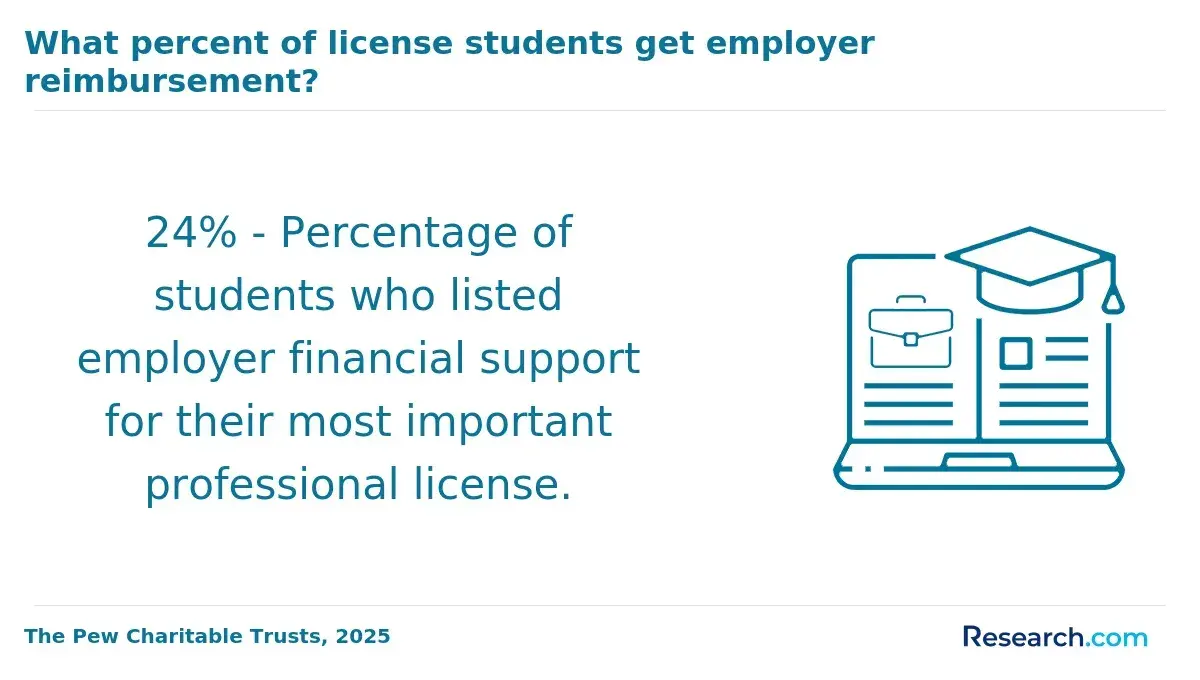
| Employer tuition assistance | Can reduce out-of-pocket cost and improve ROI | Does the program schedule align with reimbursement deadlines? |
| Time to completion | Extra terms can increase tuition, fees, and opportunity cost | What is the average time to finish the final project, not just the advertised minimum? |
ROI should be evaluated conservatively. Consider whether the doctorate is needed for your target role, whether your employer values doctoral credentials, whether the project can support promotion or consulting work, and whether a less expensive credential could achieve the same goal.
An online organizational leadership doctorate with an applied project is often best for experienced professionals who already lead teams, programs, divisions, schools, agencies, or organizational change initiatives. These students usually benefit from being able to turn workplace problems into doctoral inquiry and then apply findings directly to their professional environment.
This pathway is especially useful for students in several situations. The common thread is that the student wants doctoral-level learning that can be translated into practice rather than a purely theoretical research agenda.
- Mid-career and senior managers: Professionals who want stronger strategic leadership, change management, and evidence-based decision-making skills.
- HR, talent, and learning leaders: Professionals responsible for leadership development, culture, workforce planning, coaching, or organizational effectiveness.
- Consultants and coaches: Practitioners who want a rigorous framework for diagnosing organizational problems and designing interventions.
- Education and nonprofit leaders: Professionals managing complex systems, stakeholder groups, and mission-driven change.
- Public-sector and healthcare administrators: Leaders who need to improve processes, communication, service delivery, or cross-functional coordination.
This pathway may not be the best fit for everyone. Students seeking tenure-track research roles, discipline-specific faculty positions, advanced statistical research careers, or preparation for a research-intensive PhD should compare dissertation-based programs carefully before choosing a capstone model.
Some students may also be earlier in the academic pipeline. If you still need an undergraduate credential, an online business degree may provide a more appropriate foundation before moving into graduate leadership study.
The applied project is most valuable when you have access to real organizational problems and enough professional context to interpret them. Students with limited leadership experience can still succeed, but they may need to be more intentional about choosing a project site, mentor, and topic.
How Should Students Choose an Online Organizational Leadership Doctorate With a Capstone or Applied Project?
Choosing the right online organizational leadership doctorate requires more than finding a program that says "capstone." You need to understand what replaces the dissertation, how the project is supervised, whether the program is accredited, and whether the final product supports your career goals.
Use the following steps to compare programs systematically. This process helps you avoid common mistakes such as assuming all applied projects are equivalent or focusing only on advertised completion time.
- Define your career goal first: Decide whether you want executive advancement, consulting credibility, organizational development expertise, higher education leadership, nonprofit leadership, or academic research preparation.
- Match the degree type to the goal: Consider an EdD or applied doctorate for practice-oriented leadership goals and a PhD or dissertation-heavy pathway for research-intensive academic goals.
- Verify accreditation: Confirm institutional accreditation and any relevant business, education, or professional accreditation that matters to your employer or field.
- Read the catalog language: Identify whether the final requirement is a capstone, applied project, dissertation in practice, traditional dissertation, or another culminating experience.
- Ask about project scope: Find out whether you must collect data, implement an intervention, evaluate a program, write a full dissertation-style document, or present to a committee.
- Evaluate mentoring: Ask how chairs are assigned, how often students meet with faculty, and what support exists if a project stalls.
- Check residency requirements: Confirm whether the online program requires campus visits, intensives, synchronous sessions, or travel for presentations.
- Calculate total cost: Include tuition, fees, continuation terms, travel, books, lost work time, loan interest, and employer reimbursement limits.
- Review completion data carefully: Ask for average time to completion and project completion expectations, not just minimum advertised timelines.
- Test topic alignment: Before enrolling, sketch two or three possible project topics and ask admissions or faculty whether they fit the program model.
Watch for red flags. A program may be a poor fit if it cannot explain the final project process, avoids direct answers about accreditation, provides little faculty mentoring, has unclear continuation fees, or claims that a doctoral capstone is simple because it is "not a dissertation."
Also compare alternatives. For example, professionals focused on process improvement, logistics, supply chain, or operational strategy may find that an MBA operations management online pathway aligns better with their goals than a leadership doctorate.
The best choice is the program whose final project, faculty expertise, cost, timeline, and credential value align with what you want to do after graduation. A capstone-based doctorate can be a strong investment when it produces a rigorous, relevant project that advances your leadership practice; it is a weaker investment if the format does not match your career path or if the program lacks credible academic structure.
Other Things You Should Know About Organizational Leadership
In most professional settings, graduates of accredited doctoral programs may use the title "Doctor," but norms vary by industry and workplace. Be clear about the degree type, such as EdD or PhD, especially in academic, clinical, or regulated environments.
Many programs no longer require the GRE, especially professional doctorates designed for working adults. Admissions teams may instead review graduate GPA, leadership experience, writing samples, recommendations, interviews, and a statement of purpose.
Many online programs are designed for working professionals, but full-time work can still make the capstone or applied project demanding. Students should plan for heavy reading, writing, research meetings, and project deadlines, especially during the final year.
No. Organizational leadership is broader and focuses on leading people, systems, strategy, change, and culture. Human resources is a related field focused more specifically on workforce policies, talent management, compliance, compensation, employee relations, and organizational development.
- 1-2 Year Doctoral Programs Online: Top Schools & More https://www.phds.me/online-programs/one-year-doctoral-programs/
- The Best EdD in Organizational Leadership Programs of 2025 https://www.eddprograms.org/schools/organizational-leadership/
- 2026 Online EdD Programs No Dissertation Required (Applied Capstone Projects) https://www.onlineeddprograms.com/faqs/edd-programs-no-dissertation
- Capstone vs Dissertation? 5 Things to Consider Before Making a Decision - Dissertation Success https://dissertationsuccess.com/blog/capstone-vs-dissertation/
- What Can You Do With an EdD in Leadership? Top Careers https://www.ucumberlands.edu/blog/what-can-you-do-with-an-edd-in-leadership
- Doctorate of Education in Educational and Organizational Leadership | York College of Pennsylvania https://www.ycp.edu/academics/programs/doctor-education-educational-organizational-leadership
- Advance Your Leadership Career with a Doctorate in Organizational Leadership https://www.umassglobal.edu/blog-news/advance-your-leadership-career-a-doctorate-organizational-leadership
- Capstone Options in Master's in Communication Programs (Thesis vs Project) https://www.mastersincommunications.com/features/guide-to-graduate-communication-capstone-options