2027 Shortest Online Organizational Leadership Doctorate Programs: Fast PhD, DBA, EdD, DNP, PsyD, and Professional Doctorate Options

Co-Founder and Chief Data Scientist
Choosing the fastest online organizational leadership doctorate is really a trade-off between speed, credibility, workload, and career value. The stakes are practical: the U. S. Bureau of Labor Statistics reports a May 2024 median annual wage of $103,840 for top executives, but senior roles often reward both experience and advanced credentials.
This guide is for working professionals comparing accelerated PhD, DBA, EdD, DNP, PsyD, and professional doctorate options. You will learn which formats finish fastest, what slows students down, and how to choose a program that saves time without weakening long-term ROI.
Key Things You Should Know
- The fastest realistic online organizational leadership doctorates are usually applied EdD, DBA, and professional doctorate programs with structured capstones; many advertise completion in about 2 to 3 years, while research-heavy PhD pathways commonly take longer.
- Speed depends more on dissertation or capstone design, course sequencing, transfer-credit policy, residency rules, and advising support than on the degree title alone.
- Cost and workload can rise in accelerated formats; graduate and professional students can borrow up to $20,500 per year in Direct Unsubsidized Loans, so comparing total tuition and time-to-completion is essential.
Which Online Organizational Leadership Doctorate Programs Can Be Completed the Fastest?
The fastest online organizational leadership doctorate programs are usually designed for experienced professionals who already have a master's degree and a clear leadership problem to study. A doctorate in organizational leadership online may be offered as an EdD, DBA, PhD, or professional doctorate, but the shortest programs tend to share a cohort structure, year-round courses, and a capstone or practice-based dissertation.
The table below compares common doctorate types by realistic accelerated timelines. These ranges are not guarantees; they describe what students may see when they enter with a relevant master's degree, stay continuously enrolled, and avoid delays in research approval or project completion.
| Doctorate type | Common organizational leadership fit | Fastest realistic online completion pattern | Best for |
| EdD in Organizational Leadership | Education, nonprofit, public-sector, training, and change leadership | About 2 to 3 years in accelerated cohort formats | Practitioner-leaders who want applied research, change management, or executive education roles |
| DBA in Organizational Leadership or Management | Business strategy, executive leadership, consulting, operations, and organizational performance | About 2.5 to 3 years when dissertation support is embedded early | Managers, entrepreneurs, executives, and consultants focused on business problems |
| Professional Doctorate in Organizational Leadership | Cross-sector leadership, organizational change, human capital, and executive practice | About 2 to 3 years if the program uses a capstone instead of a traditional dissertation | Professionals seeking senior leadership credibility without a research-academic career path |
| PhD in Organizational Leadership | Theory, research, faculty preparation, and advanced scholarship | Often 3 to 5 years or longer, even online | Students aiming for research, tenure-track teaching, or scholarly publication |
| DNP with Organizational or Executive Leadership Focus | Nursing leadership, healthcare systems, quality improvement, and executive nursing practice | Often 2 to 3 years post-master's | Licensed nurses pursuing executive healthcare leadership or systems improvement |
| PsyD with Organizational or Consulting Focus | Leadership psychology, consulting, assessment, and workplace behavior | Usually longer and may include clinical or supervised requirements depending on design | Students focused on applied psychology, not general management leadership |
The shortest advertised path is not always the shortest real path. A two-year program can become a four-year experience if courses are unavailable, the dissertation process starts late, or the student changes research topics after enrollment.
Which Type of Online Organizational Leadership Doctorate Offers the Fastest Path to Graduation?
For most working professionals, the fastest path is an applied doctorate rather than a research doctorate. EdD, DBA, DNP, and professional doctorate programs often use practical projects tied to workplace problems, while PhD programs typically require deeper theory development, original scholarship, and more extensive dissertation work.
Degree type matters because it shapes the final requirement. The table below summarizes how each option usually balances speed, academic depth, and career direction.
| Degree type | Typical final project | Speed advantage | Potential trade-off |
| EdD | Applied dissertation or dissertation-in-practice | Strong option for fast completion when research is tied to a real organizational problem | Less ideal for students whose primary goal is a traditional research career |
| DBA | Applied business dissertation or consulting-style research project | Good fit for executives who can study a problem from their current workplace or industry | May not align with academic hiring expectations as strongly as a PhD in some fields |
| PhD | Traditional dissertation based on original research | Can be accelerated only when the student has strong research preparation and faculty alignment | Often the longest path because the dissertation is more theory-focused |
| DNP | Evidence-based practice or quality-improvement project | Efficient for nurses who already hold an MSN and meet clinical or leadership prerequisites | Not a general organizational leadership doctorate; it is tied to nursing practice |
| PsyD | Applied psychology project, dissertation, or supervised practice component | Useful only for leadership psychology or consulting goals | Licensure-related elements can extend timelines if clinical practice is involved |
| Professional doctorate | Capstone, portfolio, or applied research project | Often the most streamlined if the school has a clear milestone calendar | Employer recognition varies by field and institution |
Students who are not ready for doctoral-level research may be better served by strengthening their foundation first through an online business degree or a leadership-focused master's program. Finishing a doctorate faster is easier when the student already understands research methods, budgeting, analytics, and organizational strategy.
What Program Features Help Students Finish an Online Organizational Leadership Doctorate Faster?
The fastest programs are not simply shorter on paper; they are designed to reduce bottlenecks. A strong accelerated program makes the research process visible from the first term, gives students predictable course access, and minimizes administrative waiting time.
When comparing programs, look for features that directly affect time-to-degree rather than vague promises of flexibility:
- Year-round enrollment: Programs with fall, spring, and summer courses help students avoid long gaps between required classes.
- Embedded dissertation or capstone milestones: The best accelerated formats require topic selection, literature review, methods planning, and proposal development before coursework is finished.
- Lockstep cohort scheduling: A set sequence can prevent students from losing time because a required course is not offered.
- Transfer-credit or advanced-standing policy: Some schools allow relevant post-master's credits to reduce total required coursework, but limits vary widely.
- Asynchronous course access: Flexible weekly deadlines are often easier for working adults than fixed live sessions, especially across time zones.
- Clear residency rules: Fully online or short virtual residencies can save travel time, while multi-day campus requirements may complicate work schedules.
- Dedicated doctoral advising: Fast completion usually requires consistent faculty feedback, not just independent study.
A red flag is a program that advertises a short completion time but cannot explain the dissertation calendar. Ask whether students begin the capstone in year one, how often committees meet, and how long proposal and institutional review processes typically take.
Most delays happen after coursework, not during it. Students often complete classes on schedule but lose momentum when they enter the independent research phase and must secure approvals, collect data, revise chapters, or recruit participants.
These requirements most commonly extend completion time, especially in programs that advertise an accelerated path:
- Traditional dissertation: Original research can take longer than an applied capstone because the student must define a gap in scholarship, design a defensible method, and produce a committee-approved study.
- Institutional Review Board approval: Any study involving human participants may require ethics review before data collection begins.
- Residency or intensive requirements: Online does not always mean fully remote; some doctorates require campus visits, leadership labs, or in-person defenses.
- Clinical or supervised practice expectations: DNP and PsyD pathways may include field-based requirements that depend on placement availability or licensure rules.
- Weak topic alignment: Students lose time when their topic does not fit faculty expertise or cannot be studied with available data.
- Committee feedback delays: Slow review cycles can add months, especially when faculty workloads are high.
The most common mistake is assuming that "36 credits" or "two years" describes the whole doctorate. Always ask whether the advertised timeline includes dissertation completion, defense, revisions, and graduation processing.
Enrollment pace can shorten or lengthen the doctorate as much as the degree type itself. Full-time enrollment may reduce calendar time, but part-time enrollment may be more realistic for students who cannot reduce work, caregiving, or travel obligations.
The table below compares common enrollment choices so students can estimate whether an accelerated pace is sustainable. The best choice is the fastest schedule the student can maintain without repeatedly stopping out.
| Enrollment choice | Typical effect on time | Who it fits best | Main risk |
| Full-time accelerated | Shortest calendar path when courses and research milestones are continuous | Students with flexible jobs, employer support, or reduced outside obligations | High workload can lead to burnout or rushed research planning |
| Part-time continuous | Longer than full-time but often steady and realistic | Working professionals with demanding leadership roles | Momentum can slow if the dissertation is postponed too long |
| One course at a time | Manageable but may add several terms | Students balancing work, family, and limited tuition reimbursement | Required course sequences may delay graduation |
| Stop-out or intermittent enrollment | Usually the slowest path | Students facing unpredictable life or work disruptions | Policies, faculty availability, and research topics may change during breaks |
Graduate and professional students may use federal Direct Unsubsidized Loans up to $20,500 per year, subject to eligibility and aggregate limits. That annual structure matters because taking longer can increase borrowing years, while moving too quickly can increase short-term cash-flow pressure.
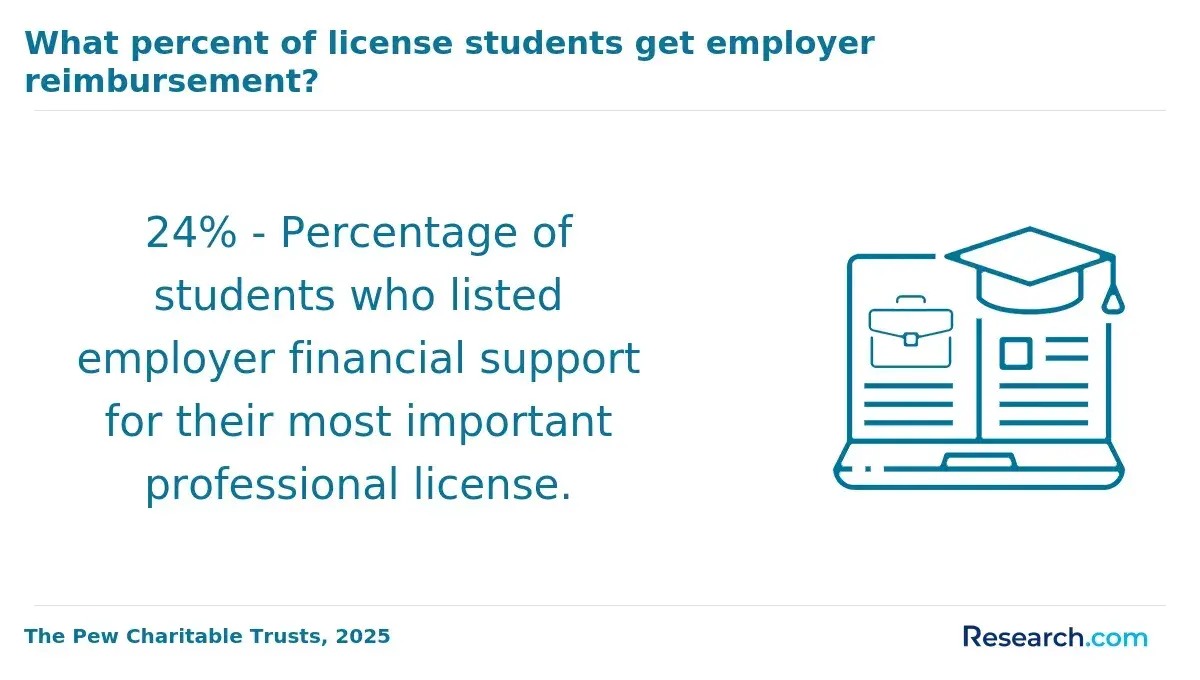
The best online organizational leadership doctorate for a working professional is not always the shortest one. It is the program that lets the student make consistent progress while applying assignments to real workplace problems, protecting job performance, and avoiding unnecessary travel.
Working adults should prioritize formats that reduce friction week after week. The following features are especially important for managers, educators, healthcare leaders, military personnel, consultants, and HR professionals:
- Asynchronous weekly modules: These allow students to study around meetings, travel, shift work, or executive responsibilities.
- Applied assignments: Projects based on a current workplace or industry problem can reduce duplicated effort and improve relevance.
- Short residencies or virtual intensives: Limited in-person requirements are easier to plan than repeated campus visits.
- Predictable tuition billing: Flat-rate or locked tuition can make employer reimbursement and budgeting simpler.
- Responsive faculty access: Fast feedback is essential when students have limited study windows.
- Clear leave-of-absence policies: Working professionals should know what happens if they change jobs, relocate, or face a temporary workload spike.
Professionals whose leadership goals are tied to business process improvement may also compare doctoral options with an MBA operations management online. In some cases, a specialized MBA can deliver faster career utility than a doctorate if the target role does not require doctoral-level research or executive scholarship.
Finishing faster can lower total opportunity cost, but it does not automatically make a program cheaper or better. Accelerated doctorates may charge the same total tuition in fewer terms, require heavier course loads, or limit the time students have to refine their research.
The cost-quality trade-off is easiest to evaluate by separating tuition structure from academic design. The table below shows how speed can affect value in different ways.
| Factor | How faster completion can help | How faster completion can hurt | What to verify |
| Tuition | Fewer enrolled terms may reduce fees and living-related study costs | Compressed programs may still charge high total tuition | Total program cost, not just cost per credit |
| Employer reimbursement | Shorter timelines can help students finish before job or benefit changes | Annual reimbursement caps may make a slower pace more affordable out of pocket | Whether tuition timing matches reimbursement limits |
| Academic quality | Structured milestones can improve completion discipline | Too little research time can weaken topic development | Faculty qualifications, dissertation support, and accreditation |
| Career ROI | Earlier completion may support earlier eligibility for leadership, teaching, or consulting opportunities | The credential may have limited value if it does not match the target field | Employer recognition and alumni outcomes |
Accreditation is the non-negotiable quality check. For U.S. students, institutional accreditation recognized by the U.S. Department of Education or the Council for Higher Education Accreditation is usually the baseline for federal aid eligibility, credit transfer, and employer acceptance. Programmatic accreditation may also matter in nursing, psychology, education administration, or healthcare leadership.
Completing an organizational leadership doctorate quickly is most useful when the credential removes a near-term barrier: promotion eligibility, executive credibility, consulting authority, college teaching qualifications, or access to senior practice roles. The degree is less valuable when the target job primarily rewards technical certifications, licensure, or direct industry experience.
BLS May 2024 data provides useful salary context, although it does not isolate doctorate holders. These figures should be used as labor-market reference points, not as promises of what a graduate will earn.
| Career area | Relevant doctorate fit | May 2024 BLS median annual wage | How faster completion may help |
| Top executive | DBA, EdD, PhD, or professional doctorate in leadership | $103,840 | May strengthen executive profile for strategy, transformation, or C-suite competition |
| Medical and health services manager | DNP, DBA, EdD, or professional doctorate with healthcare leadership focus | $117,960 | Can support advancement into systems leadership, quality improvement, or executive administration |
| Human resources manager | EdD, DBA, PhD, or professional doctorate with organizational development focus | $140,030 | May support senior HR, talent strategy, organizational culture, or change leadership roles |
| Training and development manager | EdD or PhD in leadership, learning, or organizational development | $127,090 | Can strengthen credibility for enterprise learning, leadership development, and workforce transformation |
| Management analyst or consultant | DBA, PhD, or professional doctorate | $101,190 | May improve positioning for specialized consulting, especially with a strong applied research portfolio |
Students focused on consulting, process improvement, or organizational change should compare doctorate options with master's-level pathways such as the best organizational development master's programs online. A master's degree can be the better short-term investment when the career goal does not require doctoral status.
Program design matters, but student readiness often determines whether an accelerated doctorate is realistic. The fastest completers usually enter with a defined purpose, strong writing habits, reliable weekly study time, and a research topic connected to their professional environment.
Students are more likely to finish quickly when they have the following traits and supports:
- A specific career reason for the doctorate: Clear goals make it easier to choose the right degree type and avoid changing direction mid-program.
- Doctoral-level writing readiness: Students who can synthesize research, revise quickly, and write consistently lose less time during dissertation or capstone work.
- Access to a study site or professional problem: Applied projects move faster when the student can gather data ethically and practically.
- Employer or family support: Protected study time is often more important than motivation alone.
- Comfort with statistics or qualitative methods: Research-methods confidence reduces delays during proposal development and analysis.
- Resilience during revision: Doctoral work requires repeated feedback; students who treat revision as normal usually progress faster.
Students should avoid accelerated doctorates if they are uncertain about their field, dislike independent research, need frequent in-person support, or cannot reserve weekly writing time. Taking an extra year in a stronger-fit program is often better than rushing into a short program that does not match the student's goals.
How Should Students Compare the Shortest Online Organizational Leadership Doctorate Programs?
The best comparison process starts with the student's end goal and works backward. A future professor, healthcare executive, school leader, consultant, nonprofit director, and corporate strategist may all search for organizational leadership doctorates, but they should not all choose the same degree.
Use this step-by-step checklist to compare accelerated programs without overvaluing speed:
- Confirm the degree type fits the goal: Choose a PhD for research-heavy academic goals, a DBA for business leadership, an EdD for education or applied organizational change, a DNP for nursing leadership, and a professional doctorate for practice-based executive work.
- Verify institutional accreditation: Do not enroll in the shortest program unless the school holds recognized institutional accreditation.
- Ask for actual completion data: Request average time-to-degree, dissertation completion rates, and the share of students who finish within the advertised timeline.
- Map every requirement: List courses, residencies, comprehensive exams, proposal approval, research review, capstone or dissertation defense, and graduation deadlines.
- Compare total cost: Include tuition, fees, books, residencies, travel, technology charges, and extra terms if the dissertation runs long.
- Review faculty fit: Look for faculty who publish or practice in leadership, organizational change, strategy, HR, education, healthcare, or the student's intended research area.
- Check flexibility rules: Ask whether students can slow down, pause, transfer credits, or change topics without losing major progress.
- Evaluate career alignment: Confirm whether employers, licensing boards, promotion committees, or academic institutions in the target field value that specific doctorate.
The common mistake is choosing the shortest advertised timeline before checking whether the program's final project, faculty expertise, and professional recognition match the student's long-term plan. A fast doctorate is only a good investment when it is also credible, finishable, and relevant.
Other Things You Should Know About Organizational Leadership
Many online organizational leadership doctorates do not require the GRE, especially applied EdD, DBA, and professional doctorate programs for experienced professionals. However, some schools may request test scores, writing samples, interviews, or evidence of graduate research readiness.
In most cases, diplomas do not state that a degree was completed online, but policies vary by institution. Students should ask the admissions office how the program appears on the diploma and transcript before enrolling.
Often yes, but accelerated schedules can create timing issues if tuition is charged faster than the employer's annual reimbursement limit. Students should compare the school's billing calendar with their employer's reimbursement policy before choosing a pace.
Many do, but some shortest-path options use a capstone, applied project, or dissertation-in-practice instead of a traditional dissertation. Programs often require 45 to 70 credits, and doctoral research requirements may be tied to regional accreditation standards and the university’s graduate school rules.
- Scholarships for Doctor of Education (EdD) Students | Teach.com https://teach.com/online-ed/education-degrees/online-edd-programs/scholarships/
- Online Doctorate in Organizational Leadership | Indiana Wesleyan University https://www.indwes.edu/program/phd-organizational-leadership/
- 1-2 Year Doctoral Programs Online: Top Schools & More https://www.phds.me/online-programs/one-year-doctoral-programs/
- 25 Best Online EdD Programs of 2025 https://www.eddprograms.org/schools/best-online-doctor-of-education-programs/
- 2 Year Online EdD Programs: Accelerated Doctor of Education Programs https://www.onlineeddprograms.com/faqs/two-year-online-edd-programs
- How to Secure Funding for Your PhD https://simaglobal.ch/how-to-secure-funding-for-your-phd/
- DBA vs PhD in Business: Which Doctorate Is Better for Working Professionals? - Acacia https://acacia.edu/blog/dba-vs-phd-in-business-which-doctorate-is-better-for-working-professionals/
- Top 28 PhD Scholarships to Apply for in July 2026 https://bold.org/scholarships/by-year/phd-scholarships/
- Funding and Scholarships Options for Online PhD Programs 2026 - GTR Blogs | Career Guidance Articles https://gtracademy.org/blog/scholarships-options-for-online-phd-programs/
- Professional Doctorate SOP: How to Write for EdD, DBA, DNP, and PsyD Programs https://gradpilot.com/news/professional-doctorate-sop-edd-dba-dnp-psyd-guide