
2027 Are Online Organizational Leadership Doctorate Degrees Respected by Employers? Hiring Trends and Career Outcomes

Co-Founder and Chief Data Scientist
Many professionals wonder whether an online doctorate will help them move into executive, consulting, teaching, or change-management roles-or whether employers will discount the format. The answer depends less on "online" and more on accreditation, school credibility, work history, and career fit. BLS data shows management occupations had a median annual wage of $122,090 in May 2024, making advanced leadership credentials relevant for professionals targeting senior roles. This guide explains employer perceptions, ROI, salaries, costs, alternatives, and practical ways to choose a respected program.
Key Things You Should Know
- Employers are most likely to respect an online organizational leadership doctorate when it is from a regionally accredited institution, clearly aligned with the target role, and supported by strong professional experience.
- The financial upside is strongest in senior management, consulting, higher education, organizational development, and training leadership roles; BLS reported a $122,090 median annual wage for management occupations in May 2024.
- The degree is usually optional rather than required, so ROI depends on total cost, time to completion, employer tuition support, networking access, and whether the credential solves a real career barrier.
What Is the True ROI of an Online Organizational Leadership Doctorate?
An online organizational leadership doctorate is a terminal degree focused on leading people, systems, change, culture, strategy, ethics, and organizational performance. Programs are often offered as a PhD, EdD, DBA, or DSL, and the right type depends on whether the student wants research, executive practice, consulting, or academic work.
The true ROI is not just salary after graduation. It is the total career value of the credential compared with tuition, fees, time, debt, opportunity cost, and the likelihood that the degree helps the student qualify for roles they could not realistically reach with a master's degree alone.
For many working professionals, the strongest ROI comes when the doctorate is used as an advancement tool rather than a career-reset tool. A professional already managing teams, budgets, change initiatives, or organizational development projects can often connect doctoral coursework and applied research directly to workplace outcomes. Someone with limited leadership experience may find that employers still prioritize demonstrated results over the credential.
Readers comparing a doctorate in organizational leadership online should evaluate whether the program helps them build evidence employers can see: a dissertation or capstone tied to measurable organizational problems, faculty with industry experience, alumni in relevant senior roles, and a curriculum that covers change leadership, analytics, communication, and ethical decision-making.
This table summarizes the factors that usually influence whether an online doctorate produces strong, moderate, or weak ROI. It is useful because employer respect is rarely based on delivery format alone.
| ROI factor | Strong ROI signal | Weak ROI signal |
| Accreditation | The university holds recognized institutional accreditation, and any relevant business or education accreditation fits the student's field. | The school lacks recognized accreditation or uses unclear accreditation language. |
| Career alignment | The doctorate directly supports senior leadership, consulting, academic, training, or organizational development goals. | The student is pursuing roles where employers mainly require technical licenses, clinical credentials, or field-specific doctorates. |
| Professional background | The student already has management, HR, education, nonprofit, military, healthcare, or corporate leadership experience. | The student expects the doctorate alone to compensate for limited work experience. |
| Program outcomes | The school can discuss alumni roles, dissertation topics, employer partnerships, and career support. | The program relies mainly on testimonials, broad salary claims, or vague "executive" language. |
| Total cost | Tuition is manageable through employer support, scholarships, savings, or low borrowing. | The student must take on high debt without a realistic path to higher earnings or promotion. |
A respected online doctorate can be worth it, but it is not automatically worth it. The degree works best when it strengthens an already credible leadership profile and helps the student produce visible expertise that employers, clients, or academic hiring committees can evaluate.
How Much Does an Online Organizational Leadership Doctorate Increase Earning Potential?
An online organizational leadership doctorate can increase earning potential, but the increase is indirect. Most employers do not pay more simply because the degree was earned; they pay more when the credential helps a professional move into higher-responsibility roles, consulting opportunities, executive tracks, academic appointments, or specialized leadership positions.
BLS reported a median annual wage of $122,090 for management occupations in May 2024. That figure does not represent doctoral graduates specifically, but it shows why leadership-focused education can matter: the occupations most aligned with this doctorate already sit in a higher-paying labor market than many nonmanagement roles.
Salary impact varies by occupation. A doctorate may be more financially useful for a training director seeking chief learning officer roles than for a supervisor whose employer does not require graduate education for promotion. It may also matter more in higher education, consulting, healthcare administration, government, large nonprofits, and complex corporate environments where advanced credentials can help establish authority.
This table gives a practical salary context for common career directions. The figures are occupation-level medians, not promises for doctorate holders, so readers should use them as market signals rather than guaranteed outcomes.
| Career direction | How the doctorate may help | Recent U.S. salary context |
| Training and development manager | Supports roles involving leadership development, workforce learning, culture change, and executive coaching. | BLS reported a May 2024 median annual wage of $125,040. |
| Human resources manager | Can strengthen qualifications for senior talent strategy, employee relations, organizational effectiveness, and change leadership roles. | BLS reported a May 2024 median annual wage of $140,030. |
| Management analyst or consultant | Can help establish expertise in organizational diagnosis, change management, leadership systems, and evidence-based consulting. | BLS reported a May 2024 median annual wage of $101,190. |
| Top executive | May add credibility for senior leadership, strategy, governance, and organizational transformation roles. | BLS reported a May 2024 median annual wage of $107,670. |
| Postsecondary teacher | May qualify graduates for teaching leadership, management, HR, or organizational studies courses, depending on institution and degree type. | BLS reported a May 2024 median annual wage of $83,980 for postsecondary teachers overall. |
The most important limitation is that these occupations do not uniformly require a doctorate. Employers may value the credential, but they still weigh experience, industry knowledge, communication ability, measurable leadership results, and cultural fit.
Which Careers Provide the Best Financial Return With an Online Organizational Leadership Doctorate?
The best financial return usually appears in careers where leadership expertise is directly monetized. These include roles where professionals manage organizational change, advise executives, lead learning systems, build talent strategy, teach adult learners, or guide complex institutions through transformation.
The following career paths often provide the clearest connection between an organizational leadership doctorate and financial value. The strongest options typically combine the doctorate with substantial experience and a record of solving organizational problems.
- Executive leadership and senior administration: The degree may support advancement into roles such as vice president, chief operating officer, chief learning officer, or senior director, especially when paired with measurable leadership achievements.
- Organizational development consulting: The doctorate can strengthen credibility with clients by showing advanced preparation in change theory, systems thinking, leadership assessment, and applied research.
- Higher education teaching or administration: The credential can help with adjunct, full-time faculty, program director, dean, or academic leadership roles, though requirements vary by institution and discipline.
- Human resources and talent leadership: Doctoral study may support senior roles in workforce strategy, leadership development, employee engagement, and organizational effectiveness.
- Healthcare, nonprofit, government, and military leadership: These sectors often value advanced leadership training when roles involve complex stakeholders, policy, compliance, and institutional change.
A common mistake is assuming the doctorate has the same payoff in every leadership job. In some fields, employers prefer an MBA, MPA, MHA, JD, clinical doctorate, engineering degree, or industry license. The online organizational leadership doctorate is strongest when the role rewards broad leadership expertise rather than narrow technical authorization.
Another red flag is choosing a program based only on prestige or convenience. Employer recognition is often strongest when the program's curriculum, faculty, alumni network, and capstone work match the industry where the student wants to advance.
How Does an Online Organizational Leadership Doctorate Affect Career Advancement?
An online organizational leadership doctorate can affect career advancement by signaling advanced leadership preparation, research ability, persistence, and readiness to handle complex organizational problems. Employers may view it positively when the degree complements a clear career narrative: "I lead teams, I study organizational systems, and I can apply evidence to improve results."
Career advancement is most likely when the student uses the doctorate to create professional proof, not just an academic credential. Employers often respond better to concrete evidence than to the word "doctorate" on its own.
- Use the dissertation or capstone to solve a real workplace or industry problem that can be discussed in interviews.
- Build a portfolio of leadership frameworks, assessment tools, change plans, presentations, publications, or consulting deliverables.
- Ask faculty and peers to support professional networking, conference participation, referrals, and collaborative research.
- Translate doctoral work into business language on a résumé, focusing on outcomes such as retention, engagement, process improvement, culture change, or leadership development.
- Prepare a concise explanation of why the online format strengthened rather than weakened the experience, such as allowing full-time leadership practice while completing doctoral research.
Hiring trends also matter. Many employers are becoming more comfortable with online graduate education, especially from established nonprofit and public universities, because remote work, hybrid teams, digital collaboration, and online professional development are now common. However, employers can still be skeptical of programs with weak admissions standards, unclear accreditation, limited faculty interaction, or overly aggressive marketing.
The degree may help a professional move from manager to director, from internal specialist to consultant, from practitioner to professor, or from functional leader to enterprise-level strategist. It is less effective when used as a substitute for leadership experience, industry knowledge, or relationship-building.
How Does the Cost of an Online Organizational Leadership Doctorate Affect Its Overall Value?
Cost has a major effect on overall value because doctoral study can be expensive and time-consuming. The same credential may be a strong investment at a low net price and a weak investment if it requires heavy borrowing without a realistic path to higher compensation.
Graduate students should pay attention to net cost rather than advertised tuition. Net cost includes tuition, fees, books, technology fees, travel for residencies, dissertation continuation fees, lost income from reduced work hours, and interest on loans. Federal Student Aid currently sets the annual Direct Unsubsidized Loan limit for most graduate and professional students at $20,500, which is a useful reminder that doctoral borrowing can accumulate quickly if students rely heavily on loans.
Before enrolling, students should compare the full financial picture across programs. These questions help reveal whether the school is being transparent about cost and completion risk.
- What is the total estimated program cost for students who finish on time, including dissertation or capstone fees?
- How many credits are required, and can prior doctoral credits or graduate coursework transfer?
- Are tuition rates locked, or can they increase during the program?
- Does the program require residencies, travel, intensives, or professional conference participation?
- What percentage of students complete the doctorate, and what is the typical time to completion?
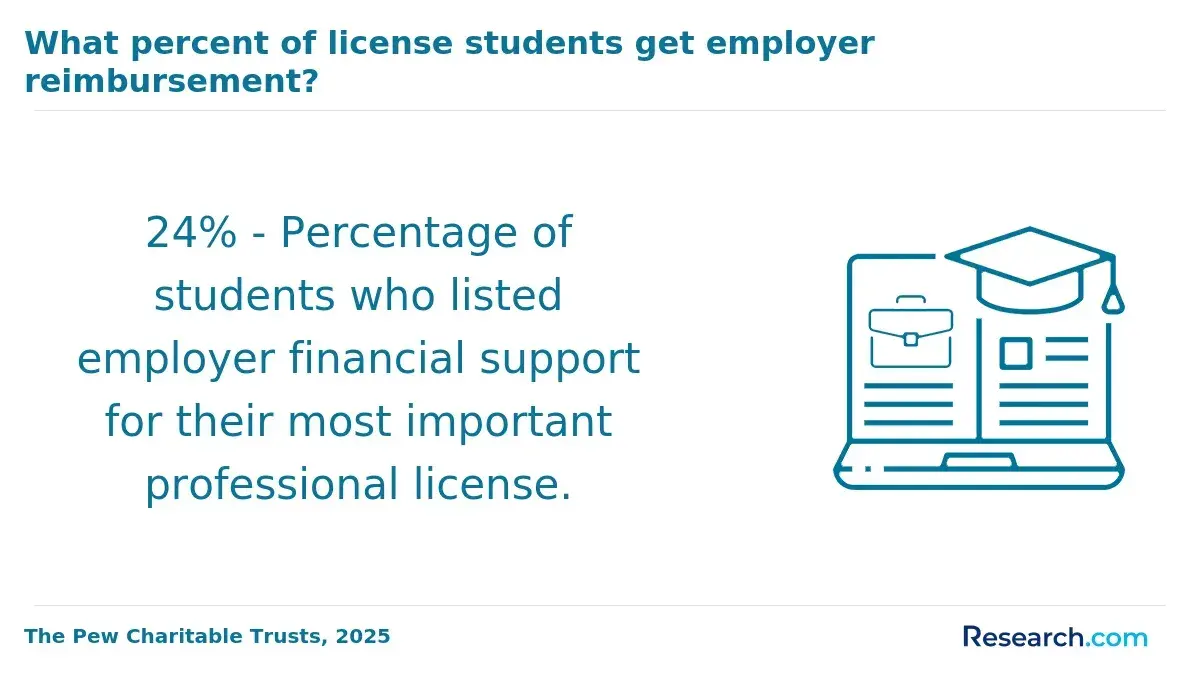
- Do employers, alumni, or assistantships provide tuition support, research opportunities, or paid leadership projects?
Higher cost is not automatically a bad sign, and lower cost is not automatically the best choice. A more expensive program may be worthwhile if it has stronger employer relationships, better faculty mentoring, more rigorous research support, and a network that directly supports the student's target career. But students should avoid paying a premium for vague brand claims that are not tied to outcomes.
How Does the Time Commitment of an Online Organizational Leadership Doctorate Affect Its ROI?
Time commitment affects ROI because most online organizational leadership doctoral students are working adults. A program that takes longer than expected can increase tuition, delay promotion, add stress, and reduce the practical value of the degree.
Many programs are designed for part-time study and commonly require coursework, comprehensive exams or milestones, research methods, a dissertation or applied capstone, and sometimes short residencies. Even when classes are online, the workload can be significant because doctoral study requires independent research, writing, revision, and faculty feedback.
Students should plan for the time commitment before enrolling. The following steps can reduce the risk of extending the program beyond the expected timeline.
- Ask the school for median time to completion for the specific online organizational leadership doctorate, not the university-wide average.
- Review dissertation or capstone requirements before enrollment and identify whether the program supports applied workplace research.
- Confirm how often required courses are offered, because limited course rotation can delay progress.
- Talk with current students about faculty responsiveness, dissertation chair availability, and research support.
- Choose a topic connected to existing professional access, such as a workplace, industry group, or leadership population you can realistically study.
Time can also improve ROI when managed well. Students who remain employed can apply coursework immediately, test leadership ideas at work, and avoid losing income. This is one reason an online format can be attractive: it may allow professionals to keep progressing in their careers while earning the credential.
Does an Online Organizational Leadership Doctorate Have the Same Career Value as a Campus-Based Degree?
An online organizational leadership doctorate can have the same career value as a campus-based degree when it comes from a recognized, accredited institution and the program is academically rigorous. Most employers care more about the school, accreditation, degree type, curriculum, research quality, and candidate experience than whether each course was delivered online or in person.
That said, online and campus-based programs can differ in networking, faculty access, research culture, cohort relationships, and visibility to employers. These differences can affect outcomes even when the diploma does not say "online."
This comparison highlights where online and campus formats often differ in practical career value. The goal is not to declare one format superior, but to help readers identify which format better supports their target outcome.
| Factor | Online doctorate | Campus-based doctorate |
| Employer perception | Often respected when the institution is accredited and recognizable, especially for experienced professionals. | Often familiar to employers, particularly when the school has a strong regional or academic reputation. |
| Flexibility | Usually stronger for working adults, military students, caregivers, and professionals outside major metro areas. | Often less flexible, especially when classes, teaching roles, or research meetings require regular campus presence. |
| Networking | Can be strong if the program intentionally builds cohorts, residencies, alumni events, and employer connections. | Can be stronger for local networks, research groups, faculty visibility, and assistantship-based academic pathways. |
| Academic career preparation | May fit teaching-focused or practitioner-scholar roles, depending on research rigor and faculty mentoring. | May be stronger for research-intensive academic careers if the program includes assistantships, publications, and campus research culture. |
| Opportunity cost | Often lower because students can remain employed and avoid relocation. | May be higher if students reduce work hours, relocate, or give up income. |
Employers may still ask about online study if the university is unfamiliar or if the role requires substantial research, teaching, or executive presence. Students can answer effectively by emphasizing accreditation, doctoral rigor, applied research, faculty mentorship, and continued full-time professional leadership experience during the program.
How Does an Online Organizational Leadership Doctorate Compare With Other Career Advancement Options?
An online organizational leadership doctorate is not the only route to career advancement. For some professionals, a master's degree, MBA, graduate certificate, professional certification, executive coaching credential, or industry-specific license may provide faster or better ROI.
Professionals who still need foundational business training may benefit from an online business degree before considering doctoral study. A doctorate is usually most appropriate after a student already has graduate-level preparation and a clear leadership direction.
This table compares common alternatives. It can help readers avoid overinvesting in a doctorate when a shorter credential better matches the employer's expectations.
| Option | Best fit | When it may be better than a doctorate |
| Master's in organizational leadership or organizational development | Professionals seeking management, HR, training, or change leadership roles. | When the target role requires graduate education but not doctoral-level research or terminal credentials. |
| MBA | Professionals seeking broader business leadership, finance, operations, strategy, or executive management roles. | When employers emphasize business analytics, finance, operations, and cross-functional management over leadership theory. |
| Graduate certificate | Professionals who need targeted skills in change management, coaching, HR analytics, DEI, project management, or leadership development. | When a fast, lower-cost credential solves the immediate skills gap. |
| Professional certification | HR, project management, coaching, training, or change-management professionals. | When the industry recognizes certifications more clearly than academic doctorates. |
| Online organizational leadership doctorate | Experienced professionals seeking senior leadership, consulting, teaching, scholarship, or thought-leadership credibility. | When the student needs a terminal credential and can connect doctoral work to measurable career goals. |
A common mistake is choosing the highest credential rather than the most relevant one. Employers rarely reward education in the abstract; they reward education that helps the candidate perform the work better, solve higher-level problems, or qualify for a specific credential expectation.
Which Professionals Benefit Most From an Online Organizational Leadership Doctorate?
The professionals who benefit most are those who already operate near the level where doctoral-level leadership knowledge becomes useful. The degree tends to work best for experienced managers, directors, consultants, educators, HR leaders, military officers, nonprofit executives, healthcare administrators, and public-sector leaders.
Professionals considering best organizational development master's programs online may be better served by a master's first if they are earlier in their career or still building management experience. A doctorate usually makes more sense once the student can apply advanced research and leadership theory to complex organizational problems.
The strongest candidates often share several characteristics. These traits help employers see the online doctorate as an extension of professional credibility rather than a disconnected academic credential.
- They have substantial leadership experience: Employers can connect the doctorate to a real record of managing teams, programs, budgets, strategy, or change.
- They know their target outcome: The student can name the roles, industries, or consulting markets where the degree may create value.
- They need advanced credibility: The doctorate may help them teach, publish, advise executives, lead transformation, or compete for senior roles.
- They can manage independent work: Online doctoral study requires discipline, research persistence, writing ability, and comfort with ambiguity.
- They can control cost: Employer tuition assistance, scholarships, savings, or low-debt enrollment improve the chance of positive ROI.
Professionals who may want to avoid or delay the doctorate include those seeking entry-level management jobs, those who need a license in a regulated field, those with unclear career goals, or those who would need high debt without a realistic path to higher-level work.
How Can Students Decide Whether an Online Organizational Leadership Doctorate Is Worth It?
Students can decide whether an online organizational leadership doctorate is worth it by testing the degree against employer expectations before applying. The best decision starts with the target role, not the program brochure.
If the student's goal is broader operational leadership, an MBA operations management online may be a more direct fit than a doctorate. If the goal is consulting, higher education, organizational development, executive leadership, or scholarship-informed practice, the doctorate may be more relevant.
Use the following decision process before enrolling. It is designed to reveal whether employers in your target field are likely to value the credential.
- Identify 10 to 20 job postings for your target roles and note whether a doctorate is required, preferred, optional, or not mentioned.
- Review LinkedIn profiles of people currently holding those roles and look for common degree types, universities, certifications, and career paths.
- Ask hiring managers, mentors, recruiters, or senior leaders whether an online doctorate from your target school would be viewed positively.
- Verify institutional accreditation through the U.S. Department of Education or the Council for Higher Education Accreditation databases.
- Ask programs for completion rates, median time to completion, alumni roles, dissertation support, faculty qualifications, and career services for doctoral students.
- Calculate total net cost and compare it with realistic promotion, consulting, teaching, or career-change scenarios.
- Evaluate whether the program offers networking, residencies, research opportunities, employer partnerships, or applied projects that build marketable proof.
- Prepare a résumé strategy that presents the degree alongside leadership outcomes, not as a standalone achievement.
Several red flags should make students pause. Avoid programs that cannot clearly explain accreditation, overpromise salaries, rely heavily on vague testimonials, provide little dissertation support, hide fees, or imply that online delivery alone makes the degree easier. A respected doctorate should be challenging, transparent, and connected to real career outcomes.
The bottom line: online organizational leadership doctorates can be respected by employers, but respect is earned through accreditation, program quality, career alignment, and the candidate's ability to demonstrate leadership impact. The smartest students verify employer demand before enrolling and choose the program that best supports the work they actually want to do.
Other Things You Should Know About Organizational Leadership
Often, no. Many universities issue the same diploma for online and campus students, though policies vary by school. Students should ask the registrar how the diploma and transcript identify the program before enrolling.
It depends on the goal. A PhD is often best for research-intensive academic paths, an EdD may fit education and institutional leadership, a DBA may suit business leadership and consulting, and a DSL often emphasizes applied strategic leadership.
Usually not by itself. Organizational leadership doctorates are generally not licensure programs. Students seeking licensed roles in counseling, psychology, education administration, healthcare, or other regulated fields should check state and professional requirements separately.
List the university, degree title, field, and completion date the same way you would list a campus degree. If the program is accredited and relevant, focus résumé bullets on dissertation research, leadership outcomes, consulting projects, publications, and measurable workplace impact.
References
- Quality Indicators for Online Doctoral Programs - HECSE https://hecse.net/quality-indicators-for-online-doctoral-programs/
- EU Ranked #3 Among Forbes’ Best Online Doctorates in Organizational Leadership https://www.eastern.edu/news/phd-management-forbes
- What Employers Actually Think About Online Degrees https://www.onlineu.com/magazine/what-employers-think-about-online-degrees
- Advance Your Leadership Career with a Doctorate in Organizational Leadership https://www.umassglobal.edu/blog-news/advance-your-leadership-career-a-doctorate-organizational-leadership
- Understanding the Ph.D. in Leadership Studies Online: Programs, Features, and Key Skills https://www.ucumberlands.edu/blog/understanding-the-phdin-leadership-studies-online
- How Employers View Online Degrees: Interviews with Nine Hiring Executives https://www.onlineeducation.com/features/how-employers-view-online-degrees
- The Best EdD in Organizational Leadership Programs of 2025 https://www.eddprograms.org/schools/organizational-leadership/
- Employer Attitudes on Traditional Degrees vs. Online Degrees https://mrinetwork.com/career-resources/employer-attitudes-on-traditional-degrees-vs-online-degrees/


