2027 Online Organizational Leadership Doctorate Programs for Experienced Professionals Without Research Backgrounds

Co-Founder and Chief Data Scientist
Many experienced managers, consultants, educators, military leaders, and nonprofit executives hesitate to pursue an Organizational Leadership doctorate because they have never written a formal study. That gap is common-and not automatically disqualifying. Practitioner-focused doctorates are built to teach research methods while connecting inquiry to real workplace problems.
The timing is practical: the U.S. Bureau of Labor Statistics projects management occupations to add about 1.2 million openings each year from 2023 to 2033. This guide explains admissions, curriculum, research expectations, program fit, and whether this doctorate supports your next career move.
Key Things to Know About Organizational Leadership Doctorates for Professionals with No Research Background
- You can be admitted without prior academic research experience if you show graduate-level writing ability, leadership experience, a clear problem of practice, and readiness to learn research methods during the program.
- Work experience can strengthen your application, but it does not replace doctoral research training; most online Organizational Leadership doctorates still require qualitative, quantitative, or mixed-methods coursework before the dissertation or applied project.
- The best fit for non-researchers is usually a regionally accredited EdD, DOL, or PhD with an applied leadership focus, embedded research support, faculty mentoring, and a realistic 3- to 5-year completion path.
Can you get into Organizational Leadership doctorate programs without a research background?
Yes. Many online Organizational Leadership doctorate programs admit experienced professionals who have not conducted formal academic research. These programs typically care less about whether you have published research and more about whether you can think analytically, write clearly, connect leadership problems to evidence, and commit to a multi-year doctoral process.
An Organizational Leadership doctorate is usually a practitioner-oriented doctoral degree focused on how leaders improve people, systems, culture, strategy, ethics, change, and organizational performance. Depending on the school, the degree may be an EdD in Organizational Leadership, a Doctor of Organizational Leadership, a PhD with an applied leadership concentration, or a related doctorate in leadership studies.
Admissions committees usually look for evidence that you can succeed in doctoral-level work. For applicants without a research background, that evidence often comes from professional accomplishments rather than scholarly output.
Common admissions requirements for non-research applicants include the following items. These requirements vary by school, but they show what programs usually use to judge readiness.
- A master's degree from a regionally accredited institution, often with a minimum graduate GPA requirement
- A professional resume showing leadership, management, training, consulting, education, military, healthcare, nonprofit, or organizational change experience
- A statement of purpose explaining your career goals and the workplace problem you want to study
- Writing samples or admissions essays that show graduate-level communication and critical thinking
- Letters of recommendation from supervisors, faculty, executives, or professional mentors who can speak to your leadership capacity
- An interview, especially in cohort-based programs that want to assess fit, motivation, and expectations
The key distinction is that "no research background" does not mean "no preparation needed." If you have never read peer-reviewed literature, interpreted data, or written a structured evidence-based paper, you may still be admitted, but you should expect a steep learning curve in the first year. A strong program will not assume you already know research design; it will teach it in a sequence that leads toward a dissertation, capstone, or applied doctoral project.
Be cautious with programs that market the degree as if research is minimal or optional. Organizational Leadership doctorates are applied, but they are still doctoral degrees. The best programs make research more usable for working professionals, not less rigorous.
Can you substitute work experience for research experience in Organizational Leadership doctorate admissions?
Work experience can substitute for research experience in admissions readiness, but not for the research requirements of the degree itself. In other words, your career can help you get in, but it will not remove the need to learn how to frame a researchable problem, review literature, collect or analyze evidence, and defend conclusions.
This is especially true in Organizational Leadership because the field values real organizational context. A senior HR leader, school administrator, healthcare manager, military officer, operations director, entrepreneur, or nonprofit executive may bring rich experience with change, conflict, culture, communication, and performance. Those experiences can become the foundation for a strong doctoral project.
The table below shows how work experience can and cannot replace research preparation. Use it to assess whether your professional background gives you a strong starting point or whether you should build academic skills before applying.
| Professional experience you may have | How it helps admissions | What it does not replace |
| Leading teams or departments | Shows practical leadership exposure and decision-making responsibility | Formal research design, sampling, and data analysis |
| Managing organizational change | Helps you identify real problems of practice for doctoral inquiry | Literature review methods and academic argumentation |
| Using business metrics or dashboards | Shows comfort with evidence-informed decisions | Statistical reasoning, validity, reliability, and research ethics |
| Writing reports, proposals, or strategy documents | Demonstrates professional communication and synthesis skills | Doctoral-level scholarly writing and citation practices |
| Training, coaching, or consulting | Connects well to leadership development and organizational learning topics | Independent study execution and committee defense expectations |
For admissions, work experience is most powerful when you translate it into a focused purpose. A weak statement says, "I have managed people for 15 years and want to become a better leader." A stronger statement says, "I want to study how frontline supervisors adopt coaching behaviors after leadership development interventions in multi-site service organizations." The second version shows that you can convert experience into a researchable leadership problem.
One useful benchmark is whether your current role regularly requires evidence-based decisions. If you already interpret employee engagement data, turnover trends, client outcomes, operational metrics, or program evaluations, you may be closer to doctoral readiness than you think. You may not know academic research language yet, but you already understand why evidence matters.
What are the best online Organizational Leadership doctorate programs for professionals without research experience?
The best online Organizational Leadership doctorate for a professional without research experience is not necessarily the most famous or fastest program. It is the program that gives you enough structure, mentoring, research instruction, and applied relevance to complete the degree without being overwhelmed by the dissertation or capstone stage.
If affordability is part of your decision, you can start by comparing options for a doctorate in organizational leadership online, then narrow your list based on research support rather than tuition alone.
For non-researchers, program type matters. Some doctorates are designed mainly for scholars who want to produce original theoretical research. Others are designed for practitioners who want to solve leadership problems in schools, businesses, healthcare systems, public agencies, ministries, or nonprofits. The second type is usually more approachable for experienced professionals who are new to research.
The table below compares common online doctoral formats and how well they typically fit applicants without prior research training. It is not a ranking of schools; it is a decision framework for choosing the right type of program.
| Program format | Best for | Research fit for non-researchers | Potential drawback |
| EdD in Organizational Leadership | Practitioners in education, business, nonprofit, healthcare, and public-sector leadership | Often strong because many EdD programs use problems of practice and applied projects | May be less ideal for research-intensive academic faculty roles |
| Doctor of Organizational Leadership | Experienced leaders seeking executive, consulting, organizational change, or leadership development roles | Usually strong when the program includes step-by-step applied research mentoring | Degree title and recognition can vary by employer, so accreditation and curriculum clarity matter |
| PhD in Organizational Leadership or Leadership Studies | Students interested in theory, scholarship, teaching, or research-heavy roles | Possible, but usually more demanding for applicants without research experience | May require a traditional dissertation with heavier methodological expectations |
| DBA with leadership or organizational development concentration | Business professionals focused on strategy, performance, change, and executive leadership | Good fit when the curriculum emphasizes applied business research | May focus more on business administration than broader leadership theory |
When evaluating specific programs, look closely at how the doctoral research sequence is built. A non-researcher should favor programs that do not leave the dissertation or project until the final year without preparation. Stronger programs integrate research gradually.
Before applying, ask admissions advisors and faculty these questions. The answers will reveal whether the program is designed for students like you.
- How many research methods courses are required before the dissertation or applied project begins?
- Do students choose a dissertation chair early, or only after coursework is finished?
- Is the final project a traditional dissertation, an applied dissertation, a doctoral capstone, or another practice-based project?
- Are research design templates, writing labs, statistics support, library consultations, or methodology specialists available?
- How does the program support students who have not used academic databases or formal citation systems in years?
- Are online students grouped into cohorts, and do cohorts include working professionals?
- What is the expected weekly time commitment during coursework and during the final research phase?
Be skeptical of programs that emphasize speed but provide little detail about research mentoring. A shorter timeline can be useful only if the curriculum is well structured and the final project expectations are transparent.
What does the curriculum look like for an online Organizational Leadership doctorate?
An online Organizational Leadership doctorate usually combines leadership theory, organizational behavior, ethics, change management, research methods, and a final doctoral project. The curriculum is designed to move you from practitioner experience to evidence-based leadership inquiry.
Students who are not ready for doctoral study but want a graduate leadership foundation first may consider options such as the best organizational development master's programs online. A master's route can help career changers build academic confidence before committing to a doctorate.
Most Organizational Leadership doctorates include four curriculum layers. The first builds leadership knowledge. The second develops organizational analysis. The third teaches research skills. The fourth moves the student into a dissertation, capstone, or applied project.
The table below summarizes common curriculum areas and why each one matters for students without research backgrounds.
| Curriculum area | What you study | Why it matters if you are new to research |
| Leadership theory | Transformational leadership, servant leadership, adaptive leadership, systems leadership, power, influence, and decision-making | Gives you the scholarly language to analyze leadership issues beyond personal opinion |
| Organizational behavior and culture | Motivation, communication, team dynamics, conflict, diversity, inclusion, and organizational climate | Helps you connect workplace experience to established research concepts |
| Change and strategy | Organizational change, strategic planning, innovation, learning organizations, and performance improvement | Supports applied projects focused on measurable organizational improvement |
| Ethics and governance | Ethical leadership, stakeholder responsibility, policy, governance, and social impact | Prepares you to handle human-subjects research and leadership decisions responsibly |
| Research methods | Qualitative methods, quantitative methods, mixed methods, program evaluation, data interpretation, and literature reviews | Builds the core skills you may not have developed in your career |
| Doctoral project or dissertation | Proposal, committee review, data collection or evidence gathering, analysis, findings, defense, and revision | Turns your professional problem into a structured, defensible doctoral study |
Online delivery can be asynchronous, synchronous, or hybrid. Asynchronous courses are useful if your work schedule changes frequently, but they require self-discipline. Synchronous courses provide more direct interaction and may help non-researchers ask questions in real time. Low-residency programs may require short campus visits or virtual intensives, which can be valuable for proposal development and faculty relationship-building.
For career outcomes, the curriculum should connect to your target role. For example, aspiring executive coaches may need courses in adult learning and organizational development. Healthcare administrators may value change management, ethics, and interprofessional leadership. Corporate leaders may need strategic management and analytics. Higher education professionals may benefit from policy, governance, and assessment coursework.
How much research will you need to do in an online Organizational Leadership doctorate program?
You should expect a meaningful amount of research, even in practitioner-focused online programs. The difference is that the research is often applied to real organizational problems rather than designed only to advance theory. You may study turnover, leadership development, culture change, communication breakdowns, employee engagement, succession planning, training effectiveness, or organizational learning.
Most programs require research in three stages: learning methods, designing a study, and completing the final project. For non-researchers, the workload often feels manageable during coursework but becomes more demanding during proposal development because you must make many decisions that earlier classes introduced separately.
The table below shows the types of research tasks you are likely to encounter and how they usually appear across the program.
| Stage | Typical research task | What it feels like for a non-researcher |
| Early coursework | Reading peer-reviewed articles and writing literature-based papers | Challenging at first because academic writing is dense and unfamiliar |
| Methods courses | Learning qualitative, quantitative, and mixed-methods designs | Manageable if the program uses practical examples from workplaces |
| Statistics or data analysis | Interpreting survey results, descriptive statistics, or basic inferential tests | Often intimidating, but many leadership projects use accessible applied analysis |
| Proposal phase | Defining the problem, research questions, literature review, methods, and ethics plan | Usually the first major bottleneck because your idea must become precise and researchable |
| Final project phase | Collecting evidence, analyzing findings, writing chapters or project sections, and defending results | Time-intensive and highly dependent on advisor feedback and personal consistency |
The research load also depends on the final project model. A traditional PhD dissertation may require a more original contribution to theory. An applied dissertation or capstone may focus on a problem of practice and produce recommendations for a real organization. Both require rigor, but the applied model is often easier for experienced professionals to connect to their daily work.
A useful way to judge whether the research load is realistic is to read recent dissertation or capstone titles from the program. If the topics sound like problems you could observe or influence in your workplace, the program may fit your background. If the topics are highly theoretical, statistical, or discipline-specific, you may need more preparation or a different program type.
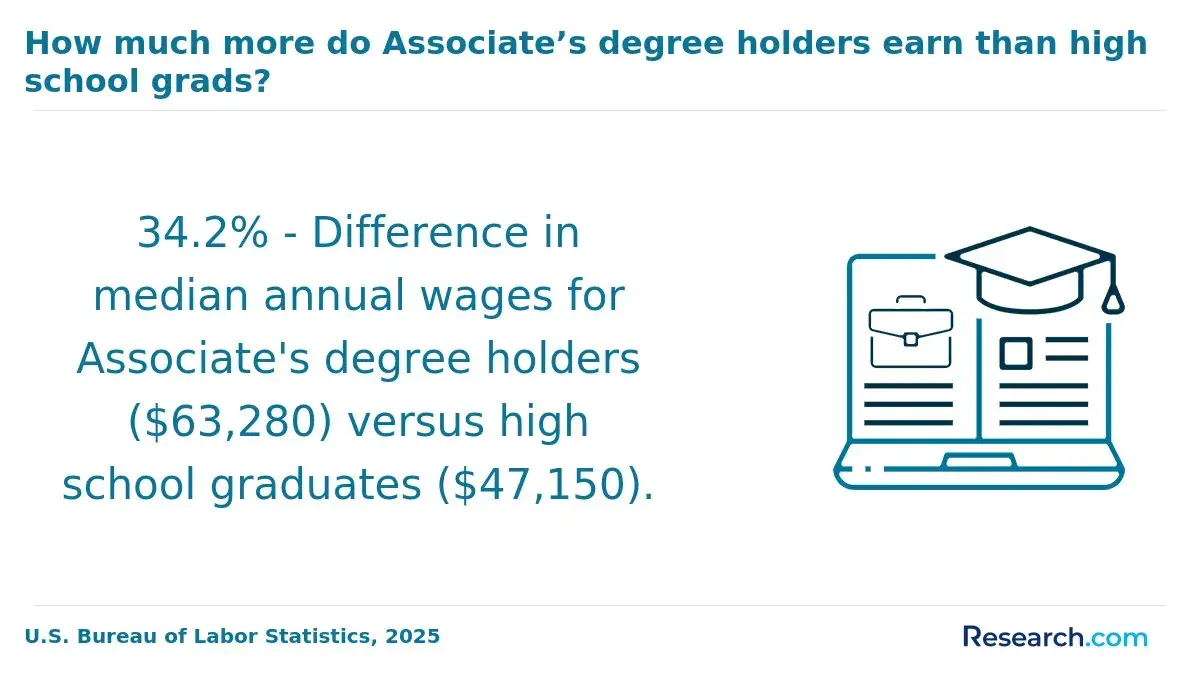
Income potential should be evaluated carefully. A doctorate can support advancement into senior leadership, consulting, higher education, or organizational development roles, but it does not guarantee a raise. The BLS reported a median annual wage of $116,880 for management occupations in May 2023 in data published in 2024. That figure reflects a broad occupational group, not doctorate holders specifically, so use it as labor-market context rather than a promise of individual return on investment.
Can applied research projects replace traditional dissertations in Organizational Leadership doctorates?
Yes, in some Organizational Leadership doctorate programs, an applied research project, applied dissertation, doctoral capstone, or problem-of-practice study can replace a traditional dissertation. The exact terminology matters because schools define these options differently.
An applied research project is not a shortcut. It still requires a clear problem, literature review, methodology, evidence, analysis, ethical review, and a defensible conclusion. The main difference is purpose. A traditional dissertation often aims to contribute to scholarly theory, while an applied project aims to improve practice in a real organization or professional setting.
The comparison below can help you decide which final-project model is more realistic for your goals and research background.
| Feature | Traditional dissertation | Applied dissertation or capstone |
| Primary goal | Contribute to scholarly knowledge or theory | Solve or analyze a real leadership problem in practice |
| Best fit | Future researchers, faculty candidates, or students pursuing scholarly publication | Executives, consultants, administrators, trainers, and organizational change leaders |
| Research intensity | Usually higher theoretical and methodological expectations | Still rigorous but often more connected to workplace evidence |
| Common outputs | Dissertation chapters, defense, and possible publication | Applied study, intervention analysis, evaluation report, or organizational recommendations |
| Fit for non-researchers | Possible with strong mentoring and preparation | Often better aligned with professional experience |
Choose an applied project if your primary goal is to improve leadership practice, qualify for senior practitioner roles, strengthen consulting credibility, or lead evidence-based organizational change. Choose a traditional dissertation if you want to teach full time, conduct scholarly research, publish in academic journals, or pursue roles where methodological depth is central.
Before choosing a program, ask for examples of completed final projects. Look at their scope, length, methods, and professional relevance. A program that claims to be applied but requires a traditional five-chapter dissertation with limited practitioner flexibility may not be the easiest fit for a non-researcher.
How can you gain research skills to prepare for a Organizational Leadership doctorate?
You do not need to become a statistician before applying, but you should build enough research confidence to avoid being surprised in the first year. The goal is to understand how scholarly evidence works, how workplace problems become research questions, and how data supports leadership decisions.
If your academic background is outside business or leadership, an online business degree can also provide useful exposure to management, operations, analytics, and organizational decision-making before doctoral study.
Start with practical preparation rather than trying to master every method. These steps can help you enter a doctorate with stronger confidence and fewer early setbacks.
- Read 10 recent peer-reviewed articles on one leadership topic you care about, such as employee engagement, leadership development, organizational culture, or change resistance.
- Practice summarizing each article in plain language by identifying the problem, method, sample, findings, and limitations.
- Learn the difference between qualitative, quantitative, and mixed-methods research so you can recognize which approach fits different workplace questions.
- Review basic statistics concepts such as mean, median, correlation, significance, confidence, and survey reliability without trying to become advanced too quickly.
- Use your workplace experience to draft three possible problems of practice, then narrow each one into a researchable question.
- Take a short graduate-level research methods, statistics, evidence-based management, or program evaluation course if you have been out of school for many years.
- Schedule a conversation with a librarian, writing tutor, or doctoral admissions advisor to learn how scholarly databases and citation tools work.
AI tools are changing how professionals learn research basics, but they should be used carefully. They can help explain terminology, generate study questions, or summarize complex methods in simpler language. They should not replace reading original studies, verifying sources, protecting confidential workplace data, or doing your own analysis. Doctoral programs increasingly expect students to understand appropriate academic integrity boundaries around AI use.
A good readiness test is whether you can explain a workplace problem without relying only on personal opinion. If you can connect the problem to evidence, stakeholders, measurable effects, and possible causes, you are beginning to think like a doctoral practitioner.
What challenges will non-researchers face in Organizational Leadership doctorate programs?
Non-researchers can succeed in Organizational Leadership doctorates, but they should enter with a realistic view of the challenges. The hardest parts are usually not intelligence-related. They involve time, persistence, academic writing, research precision, feedback tolerance, and moving from professional authority to scholarly humility.
One common challenge is learning to write in a doctoral voice. Workplace writing often rewards speed, persuasion, and executive summaries. Doctoral writing rewards evidence, structure, citation, limitations, and careful claims. Experienced leaders may need to slow down and support statements more explicitly than they do at work.
Another challenge is narrowing the research topic. Professionals often begin with broad issues such as "poor communication," "low morale," or "change resistance." Doctoral faculty will push those ideas into focused, researchable problems. That can feel frustrating, but it is necessary for completion.
Watch for these common mistakes. Avoiding them can save time, money, and unnecessary stress.
- Choosing a program based only on reputation or tuition without checking dissertation support, advisor access, and research-methods sequencing
- Assuming years of leadership experience automatically make doctoral writing and research easy
- Selecting a topic that is too broad, too personal, too confidential, or too hard to study with available data
- Waiting until the final year to learn citation management, literature search strategies, or basic data analysis
- Underestimating how long faculty feedback, institutional review, revisions, and committee approvals can take
- Ignoring family, work, health, and travel demands when estimating weekly study time
- Assuming a doctorate alone will produce promotion, tenure, consulting clients, or executive advancement without a broader career strategy
There are also emotional challenges. High-performing professionals are used to being experts. Doctoral study places you back in the learner role, where faculty may critique your logic, writing, and methods repeatedly. Students who interpret feedback as improvement rather than failure tend to progress more steadily.
The best protection is structure. Set a weekly study schedule, join writing groups, use faculty office hours, save feedback in a revision log, and choose a research topic close enough to your professional world that you can stay motivated for several years.
Is it possible to balance the demands of online Organizational Leadership doctorates with work responsibilities?
Yes, but balance depends on program design, job flexibility, family responsibilities, and your ability to protect study time. Online does not mean light. It means the learning format is more accessible to working adults. The workload can still be substantial, especially during research design, proposal approval, and final project writing.
Most working professionals should expect the degree to require sustained weekly effort. Coursework may be predictable, while the dissertation or capstone phase can be more uneven. Some weeks involve reading and discussion posts; others involve major revisions, data collection, advisor meetings, or committee deadlines.
The table below helps you evaluate whether a program's format fits your work life. This is especially important if you travel, manage crisis-driven work, or have limited control over your schedule.
| Program feature | Best for working professionals when | Possible concern |
| Asynchronous courses | You need flexibility across time zones, travel, or rotating work hours | Requires strong self-management and may feel isolating |
| Live online meetings | You benefit from direct faculty interaction and structured discussion | Can be difficult if work emergencies conflict with class times |
| Cohort model | You want peer accountability and a built-in support network | Less flexibility if the sequence is fixed |
| Self-paced model | You have irregular availability but strong independent learning habits | May provide less momentum for dissertation progress |
| Low-residency model | You can attend short intensives that support networking and research planning | Travel costs and time away from work may add pressure |
Balancing the doctorate with work becomes more realistic when you plan before enrollment rather than after the first missed deadline. Consider the following steps before committing.
- Estimate your weekly study capacity honestly, including reading, writing, discussion, research, and revision time.
- Talk with your employer about schedule flexibility during major milestones such as comprehensive exams, proposal defense, data collection, and final defense.
- Ask the program whether courses are offered year-round and whether stopping out affects financial aid, cohort placement, or completion timelines.
- Create a household support plan for predictable high-demand periods instead of treating every week as normal.
- Choose a topic connected to your professional expertise but not dependent on data you may lose access to if you change jobs.
If your current role is unstable, requires constant travel, or leaves no predictable writing time, waiting may be wiser than enrolling immediately. A doctorate rewards consistency more than intensity. Students who can reserve small, regular blocks of time often progress better than those who rely on occasional marathon sessions.
How can you select the best Organizational Leadership doctorate program for your career goals?
Select the program by starting with your career goal, then working backward to degree type, curriculum, research model, support, cost, accreditation, and schedule. A program that is excellent for a future professor may not be the best choice for a corporate change leader. A program that works for an executive may not fit someone seeking higher education faculty roles.
If your goals are more operations-focused than leadership-research-focused, compare doctoral study with alternatives such as an MBA operations management online. A doctorate is a major investment, so it should match a role that truly benefits from doctoral-level inquiry, not just a desire for an advanced credential.
Use these criteria to build a practical shortlist. Each item affects whether the program will be realistic and valuable for a professional without research experience.
- Accreditation: Prioritize regionally accredited institutions. For business-oriented programs, programmatic accreditation may also matter, but institutional accreditation is the baseline.
- Degree type: Choose an EdD or applied doctorate for practitioner leadership goals, and consider a PhD if scholarly research or full-time academic work is central to your plan.
- Research model: Look for an applied dissertation, capstone, or problem-of-practice option if you want research tied directly to workplace improvement.
- Mentoring structure: Ask when advisor matching happens, how often students meet with chairs, and what support exists if a faculty member leaves.
- Curriculum alignment: Match courses to your field, such as healthcare leadership, organizational development, education leadership, nonprofit leadership, consulting, or corporate strategy.
- Online format: Decide whether asynchronous flexibility, live discussion, cohort accountability, or low-residency networking best fits your learning style.
- Total cost: Compare tuition, fees, residencies, books, software, travel, continuation credits, and the cost of extra semesters if the final project takes longer.
- Career services: Look for support with executive positioning, consulting portfolios, teaching preparation, research presentation, or alumni networking.
Return on investment should be personal and role-specific. A doctorate may make sense if it supports a transition into executive leadership, organizational consulting, senior learning and development, higher education administration, faculty work, or evidence-based change leadership. It may not make sense if your employer rewards certifications, industry results, or specialized technical skills more than doctoral credentials.
Before enrolling, create a one-page decision brief for yourself. State your target role, why a doctorate is needed, which research model fits your background, how you will fund the degree, how you will protect time, and what career outcomes would make the investment worthwhile. If you cannot answer those questions clearly, keep researching before you apply.
Other Things You Should Know About Organizational Leadership
Many practitioner-focused online Organizational Leadership doctorates do not require the GRE, but policies vary by institution. Schools that waive standardized tests often place more weight on graduate GPA, professional experience, writing samples, recommendations, and admissions interviews.
In most cases, the diploma does not specify that the program was completed online, but this varies by school. The transcript may list the program name, campus, or delivery format depending on institutional policy, so ask the registrar before enrolling if this matters to you.
It can support teaching opportunities, especially in leadership, management, organizational development, or adult education, but hiring standards vary. Full-time tenure-track roles often prefer a PhD or strong research record, while adjunct and practitioner faculty roles may value professional leadership experience plus a doctorate.
No. An Organizational Leadership doctorate is an academic credential, not a professional license. It does not automatically qualify you for licensed roles in counseling, psychology, school administration, or human resources unless you also meet the specific licensure or certification requirements for that field.
References
- New IDP research: Career goals take precedence over soft skills for international students https://www.airc-education.org/new-idp-research-career-goals-take-precedence-over-soft-skills-for-international-students
- The Best EdD in Organizational Leadership Programs of 2025 https://www.eddprograms.org/schools/organizational-leadership/
- Undergraduate Research Experiences Grow Career-Ready Transferable Skills - The Council on Undergraduate Research https://www.cur.org/journal-article/undergraduate-research-experiences-grow-career-ready-transferable-skills/
- EU Ranked #3 Among Forbes’ Best Online Doctorates in Organizational Leadership https://www.eastern.edu/news/phd-management-forbes
- The Role of Professional Doctorates in Bridging Academia ... https://jies.cultechpub.com/index.php/jies/article/download/16/11/94
- Eligibility - Graduate School for Social Research https://www.gssr.edu.pl/admissions/eligibility/
- Doctorate of Education in Educational and Organizational Leadership | York College of Pennsylvania https://www.ycp.edu/academics/programs/doctor-education-educational-organizational-leadership
- Do College Career Development Programs Help Students Get Jobs? https://www.scholaro.com/db/News/do-college-career-development-programs-help-263
- Requirements https://www.hec.edu/en/mba-executive-mba/mba/admissions/requirements
- Best Online Doctorates in Leadership and Management https://www.phds.me/online-programs/phds-doctorates-in-management/leadership/