2027 Online Organizational Leadership Doctorate Programs for Working Professionals: Flexible, Part-Time, and Self-Paced Options

Co-Founder and Chief Data Scientist
Choosing an online Organizational Leadership doctorate while working full time is really a scheduling, cost, and career-fit decision. The stakes are meaningful: the Bureau of Labor Statistics reported a $122,090 median annual wage for management occupations in May 2024, but doctoral study requires sustained time and money.
This guide is for professionals balancing work, family, and leadership goals. You will learn how flexible, part-time, asynchronous, and self-paced formats differ, what workload to expect, and how to choose a program that matches your calendar, learning style, and long-term plans.
Key Things You Should Know
- Most online Organizational Leadership doctorates take about 3 to 5 years full time and about 4 to 7 years part time, with the dissertation or applied doctoral project often creating the biggest timeline risk.
- Working professionals commonly plan for about 12 to 20 hours per week when taking 6 graduate credits, though asynchronous courses let you choose when to complete that work.
- Cost varies widely; NCES data published in the 2024 Digest reported average graduate tuition and required fees of $12,596 at public institutions and $29,931 at private nonprofit institutions, before program fees, residencies, books, and travel.
Is an Online Organizational Leadership Doctorate Worth It for Working Professionals?
An online Organizational Leadership doctorate can be worth it when the credential clearly supports your next professional move: executive leadership, organizational development consulting, higher education administration, nonprofit leadership, human resources strategy, or applied research. It is less likely to be worth it if you mainly want a short-term salary increase, need a credential for a licensed clinical or school role, or cannot protect weekly study time for several years.
A doctorate in organizational leadership online usually focuses on leading systems, managing change, using research to solve workplace problems, and improving organizational culture. Unlike a traditional PhD that may emphasize academic research and theory development, many online doctorates in this field are professional doctorates designed for experienced practitioners.
The value calculation should include both career alignment and opportunity cost. The BLS May 2024 median wage for management occupations was $122,090, which shows why leadership credentials can be attractive; however, the degree itself does not guarantee access to those roles. Employers still weigh experience, industry expertise, measurable leadership results, communication skills, and the reputation and accreditation of the institution.
For working professionals, the best-fit programs usually share three traits: predictable course schedules, clear dissertation milestones, and documented support for part-time students. A program may be online but still hard to manage if it requires frequent live sessions during work hours, has compressed terms, or expects full-time research progress every semester.
Consider the doctorate if you can connect it to a specific outcome. The degree tends to make the most sense when you are preparing for one of the following goals:
- Moving from functional management into senior organizational leadership or enterprise-wide change roles
- Transitioning into organizational development, leadership coaching, workforce strategy, or consulting
- Teaching leadership, management, or organizational behavior at colleges that accept professional doctorates for the role
- Building research-based credibility for policy, nonprofit, healthcare, military, education, or corporate leadership work
It may not be the right investment if you need a faster credential, are unsure which career outcome you want, or would need to borrow heavily without employer support. In those cases, a graduate certificate, master's degree, MBA concentration, or targeted leadership certification may be a better first step.
Which Type of Online Organizational Leadership Doctorate Best Fits Your Career Goals?
The best doctorate type depends on whether you want to lead organizations, teach, consult, conduct research, or specialize in a sector such as education, healthcare, nonprofit management, or human resources. The name of the degree matters, but the curriculum, faculty expertise, dissertation model, and alumni outcomes matter more.
The table below compares common doctorate options that working professionals may encounter when researching organizational leadership programs. Use it to narrow your search before speaking with admissions teams.
| Doctorate type | Best fit | Typical focus | Watch for |
| EdD in Organizational Leadership | Education, nonprofit, public service, training, or leadership development professionals | Applied leadership, organizational change, learning systems, equity, policy, and practice-based research | Some programs are education-sector heavy, so review electives if you work in business or healthcare |
| PhD in Organizational Leadership | Professionals interested in research, teaching, publishing, or theory-driven inquiry | Advanced research methods, leadership theory, quantitative or qualitative analysis, dissertation research | May require more independent research time and may be less applied than practitioner-focused degrees |
| DBA with leadership concentration | Business leaders, consultants, executives, entrepreneurs, and operations-focused managers | Strategy, organizational performance, decision-making, leadership, innovation, and applied business research | May emphasize business outcomes more than culture, education, or community leadership |
| DM or DSL-style leadership doctorate | Experienced managers seeking practitioner-oriented leadership development | Executive leadership, ethics, strategy, organizational systems, and applied projects | Degree recognition varies by employer, so confirm how the credential is perceived in your field |
If you are not ready for doctoral study, compare adjacent graduate paths first. For example, the best organizational development master's programs online may provide a faster route into consulting, training, change management, or HR leadership without the dissertation commitment.
A simple decision rule helps: choose an EdD or professional doctorate if your goal is to apply research to real workplace problems; choose a PhD if your goal is to produce original scholarship or pursue research-heavy academic work; choose a DBA if your leadership goals are closely tied to business strategy, operations, or executive decision-making.
How Do Flexible, Part-Time, Asynchronous, and Self-Paced Organizational Leadership Doctorate Programs Differ?
Flexible, part-time, asynchronous, and self-paced are often used together in marketing copy, but they do not mean the same thing. Understanding the difference can prevent one of the most common enrollment mistakes: assuming an online doctorate automatically fits a demanding work schedule.
The table below separates the major format terms so you can ask schools precise questions and compare programs on schedule reality, not just convenience language.
| Format term | What it usually means | Best for | Main trade-off |
| Flexible | The program offers scheduling features such as evening meetings, multiple start dates, optional intensives, or adjustable course loads | Professionals with variable work demands or family responsibilities | Flexibility may still include firm weekly deadlines and required sequences |
| Part-time | You take fewer credits per term, often one course at a time or a reduced semester load | Full-time employees who need a sustainable pace | Lower weekly workload usually means a longer completion timeline |
| Asynchronous | You do not need to attend live class at a fixed time; lectures, discussions, and assignments are completed within deadlines | Professionals with travel, shift work, caregiving, or unpredictable hours | You need strong self-management because no one structures your week for you |
| Self-paced | You may move through certain coursework faster or slower within school-defined limits | Highly organized learners who can accelerate during lighter work periods | Self-paced rarely means deadline-free, and dissertations may not be fully self-paced |
| Cohort-based | You move through the program with the same group of students on a fixed schedule | Learners who want peer support, accountability, and predictable sequencing | Less ability to pause, accelerate, or change course order |
When comparing formats, look for the rules behind the label. The practical difference is not whether a program says "flexible," but whether it lets you adjust course load, pause during a difficult work season, complete coursework outside business hours, and continue dissertation work part time.
Working professionals should ask admissions advisors the following questions before applying:
- Can I enroll in one course at a time without losing good academic standing or financial aid eligibility?
- Are any live sessions required, and if so, are they offered outside standard work hours?
- Does the program allow stop-outs, leaves of absence, or reduced enrollment during heavy work periods?
- What parts of the dissertation or doctoral project have fixed deadlines?
- Are residencies optional, virtual, weekend-based, or required on campus?
- What is the maximum time allowed to finish the degree?
The best choice depends on your work pattern. If your schedule is stable, a cohort-based part-time program can provide structure. If your schedule changes often, asynchronous courses may matter more than cohort support. If you have strong independent study habits and want to accelerate when possible, limited self-paced coursework can be useful, but confirm how pacing works after coursework ends.
Admission requirements vary by school, but online Organizational Leadership doctorate programs generally expect applicants to show graduate-level academic readiness and substantial professional experience. Many programs are designed for midcareer adults, so admissions committees often evaluate leadership history as seriously as GPA.
Most applicants should be ready to provide the following materials. These requirements help schools judge whether you can handle doctoral writing, research, and sustained independent work while employed.
- Master's degree from an accredited institution, often in leadership, business, education, public administration, psychology, human resources, healthcare, or a related field
- Graduate transcripts, commonly with a minimum GPA requirement set by the university
- Professional resume or CV showing leadership, management, training, consulting, military, nonprofit, education, or organizational change experience
- Statement of purpose explaining career goals, research interests, and why the online format fits your situation
- Letters of recommendation from supervisors, faculty members, or professional mentors who can speak to leadership and academic potential
- Writing sample, interview, or doctoral research concept, especially for programs with a dissertation or applied project
Some programs may accept students with a bachelor's degree plus extensive professional experience, but these pathways often require additional credits and take longer. Others require a master's in a related field, prerequisite research coursework, or evidence of previous statistics training.
Standardized tests are less common than they once were in professional doctoral admissions, but policies differ. If a program is test-optional, do not assume it is easier; the school may place more weight on your writing sample, statement of purpose, interview, and leadership record.
Working professionals should also evaluate admission timing. Multiple start dates can help if you need to align enrollment with a promotion cycle, employer tuition reimbursement deadline, military transition, or family calendar. However, faster admission should not outweigh accreditation, faculty fit, or financial clarity.
Part-time online Organizational Leadership doctorates commonly take about 4 to 7 years, depending on transfer credits, course load, term length, dissertation progress, and maximum time-to-degree rules. A faster path is possible in some programs, but only if the curriculum is tightly sequenced and the student can protect consistent research time.
The table below shows how pacing choices affect completion time. These are typical planning ranges, not guarantees, because dissertation timelines can vary significantly by topic, data access, faculty review cycles, and institutional approval processes.
| Enrollment pace | Common course load | Likely fit | Typical timeline |
| Full time | 2 to 3 courses per term | Professionals with reduced work hours, strong employer support, or flexible roles | About 3 to 5 years |
| Part time | 1 course per term or 2 lighter courses | Full-time employees seeking a sustainable pace | About 4 to 7 years |
| Accelerated online | Short terms with continuous enrollment | Highly organized learners with stable schedules and limited outside obligations | Potentially shorter, but more intense |
| Extended or reduced pace | Intermittent enrollment or dissertation-only terms | Professionals with unpredictable work, caregiving, military, or travel demands | Often longer and subject to maximum time limits |
The dissertation or doctoral project is the most common reason timelines stretch. Coursework has visible deadlines; independent research requires you to define a problem, secure approvals, collect or analyze data, revise drafts, and respond to committee feedback.
Before enrolling, build a realistic completion plan rather than relying on the shortest advertised timeline. A practical planning sequence looks like this:
- Map your busiest work seasons and avoid beginning the program during a known overload period.
- Ask for the required course sequence and identify whether courses are offered every term or only once per year.
- Confirm whether part-time students follow a separate plan or simply take fewer courses in a full-time sequence.
- Ask when dissertation preparation begins and whether students develop the topic during coursework.
- Check the maximum time allowed to finish the degree and the policy for leaves of absence.
A program that takes one extra year but lets you stay employed, maintain health, and produce a stronger dissertation may be a better choice than an accelerated path that requires unsustainable weekly hours.
Online Organizational Leadership doctorate curricula typically combine leadership theory, organizational behavior, research methods, ethics, strategy, change management, and a culminating dissertation or applied doctoral project. The best programs connect assignments to real organizational problems, which can help working professionals apply learning immediately.
The table below summarizes common requirements and why each one matters when you are evaluating workload and schedule fit.
| Requirement | What it may include | Why it matters for working professionals |
| Core leadership courses | Leadership theory, organizational systems, ethics, culture, communication, and decision-making | These courses shape whether the program fits executive, education, nonprofit, healthcare, or consulting goals |
| Research methods | Qualitative methods, quantitative methods, mixed methods, statistics, program evaluation, or evidence-based practice | Research intensity affects writing load and comfort level for students who have been away from academics |
| Specialization or electives | Human resources, organizational development, higher education, strategic management, public service, or coaching | Electives can make the degree more relevant to your industry and career direction |
| Dissertation or doctoral project | Original research, applied workplace study, capstone project, or practice-based inquiry | This is often the longest and least predictable phase, so support structures are critical |
| Residency or intensive | Virtual residency, weekend campus session, summer institute, or research seminar | Even limited in-person requirements can add travel costs and time away from work |
| Practicum or field component | Consulting project, leadership assessment, organizational diagnosis, or workplace intervention | May be easier if you can complete projects through your current employer, but approval may be required |
Dissertation-based and applied-project doctorates can both be rigorous, but they differ in purpose. A dissertation usually emphasizes a formal research question and contribution to knowledge or practice. An applied doctoral project may focus more directly on solving a defined organizational problem, evaluating an intervention, or improving a system.
Residencies deserve special attention. Some online programs have no campus requirement, while others require short visits for orientation, research training, proposal defense, networking, or dissertation support. A two- or three-day residency may sound manageable, but it can affect travel budgets, paid time off, childcare, and work coverage.
For employed students, early dissertation integration is a major quality signal. Programs that introduce research design, topic development, faculty advising, and milestone reviews during coursework often give students a clearer path than programs that leave the dissertation almost entirely until the end.
Full-time professionals should expect online doctoral study to feel like a second part-time job during active terms. A common planning standard in graduate education is about 2 to 3 hours of study per credit each week, so a 6-credit term can require roughly 12 to 18 hours before dissertation work, group projects, or intensive writing weeks.
The table below translates common enrollment patterns into weekly workload expectations. Use it as a planning tool, then confirm expectations with each program because course design, term length, and faculty workload vary.
| Study pattern | Typical weekly workload | Schedule reality | Risk point |
| One 3-credit course | About 6 to 9 hours | Often manageable for full-time professionals with stable routines | Progress is slower, and financial aid eligibility may be affected |
| Two 3-credit courses | About 12 to 18 hours | Manageable for some professionals, but requires protected evenings or weekends | Work travel, family needs, or peak job seasons can create backlogs |
| Accelerated 8-week course | Higher weekly intensity than a longer semester course | Useful for focused learners who prefer short bursts | Falling behind by one week can be difficult to recover from |
| Dissertation or project phase | Variable, often requiring sustained weekly writing and research blocks | More flexible in timing but less externally structured | Procrastination and delayed feedback can extend the program |
Asynchronous coursework helps with timing, not total workload. You may be able to watch lectures at night or write discussion posts on weekends, but readings, research papers, data analysis, and peer responses still require focused time.
Several common mistakes make doctoral study harder than it needs to be. Working professionals can avoid them by planning around the real workload before the first term begins:
- Assuming online means easier instead of more self-directed
- Taking two courses in the first term without testing the workload first
- Ignoring required live sessions, group projects, or weekend intensives
- Starting dissertation topic planning too late
- Failing to negotiate study time, travel coverage, or tuition support with an employer
- Choosing a self-paced format without a personal accountability system
A sustainable weekly plan usually includes two or three fixed study blocks, one writing block, and a catch-up window. If your job includes unpredictable crisis work, heavy travel, or rotating shifts, prioritize asynchronous and part-time options over accelerated formats.
Online Organizational Leadership doctorate costs vary by institution type, credit requirements, residency travel, technology fees, dissertation continuation fees, and transfer-credit policies. Tuition is only one part of the price; employed students should also account for time away from work, childcare, books, software, and possible campus visits.
Use the following cost benchmarks as starting points, not as quotes for a specific program. They help you compare advertised tuition against broader graduate education and aid limits.
- NCES data published in the 2024 Digest reported average graduate tuition and required fees of $12,596 at public institutions and $29,931 at private nonprofit institutions for 2022-23.
- Federal Direct Unsubsidized Loans for graduate students are capped at $20,500 per academic year before Grad PLUS, institutional aid, employer support, or private financing.
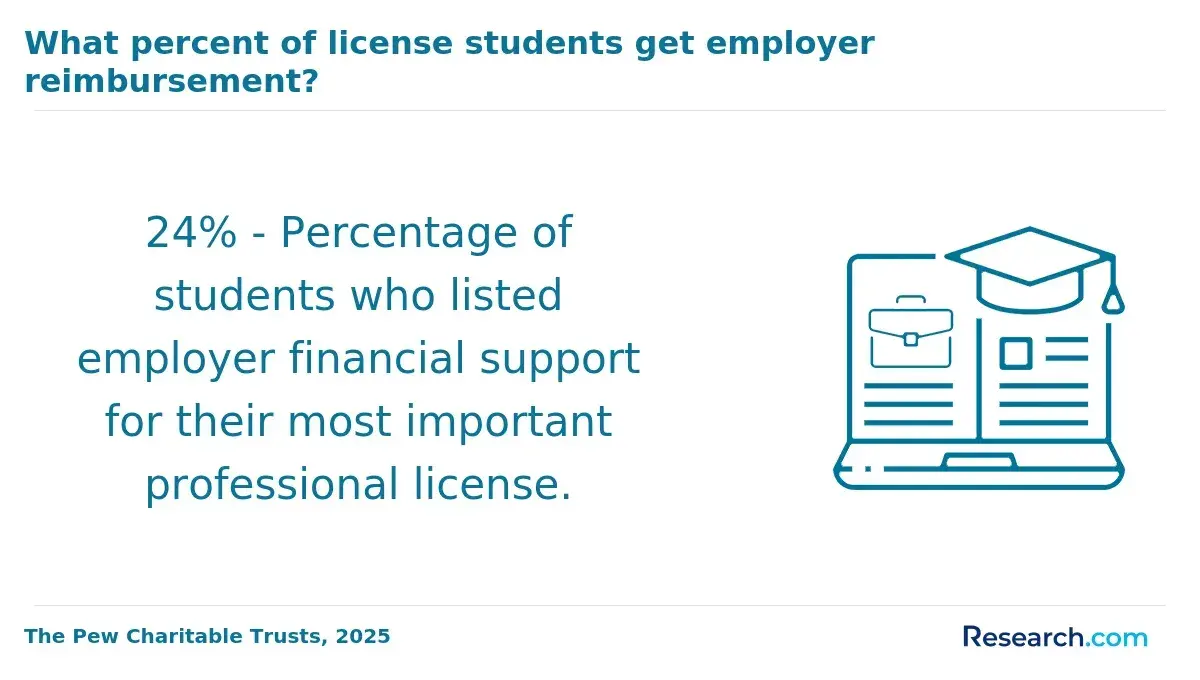
- Employer educational assistance may be tax-free up to $5,250 per year under current federal rules when the benefit qualifies.
When comparing programs, calculate total cost instead of focusing only on per-credit tuition. A program with lower tuition can become more expensive if it requires more credits, repeated dissertation terms, multiple residencies, or fees that are not included in the advertised rate.
The table below shows common cost factors and how they affect working professionals specifically.
| Cost factor | Why it matters | Question to ask |
| Per-credit tuition | Doctoral programs may require dozens of credits, so small per-credit differences add up | What is the total tuition for the full required credit count? |
| Fees | Technology, library, graduation, dissertation, and online learning fees can increase the total bill | Which fees are mandatory each term? |
| Residency travel | Campus visits can create airfare, lodging, meals, parking, and time-off costs | How many in-person visits are required, and when do they occur? |
| Dissertation continuation | Students may pay registration or continuation fees after coursework ends | What does dissertation enrollment cost after coursework? |
| Transfer credits | Accepted credits can reduce cost and time, but policies vary widely | How many doctoral or graduate credits can transfer, and from what type of institution? |
| Employer reimbursement | Benefits can lower out-of-pocket cost but may require grades, repayment agreements, or job tenure | Does my employer pay upfront or reimburse after course completion? |
Financial aid may include federal graduate loans, Grad PLUS loans, institutional scholarships, military and veteran benefits, employer tuition assistance, payment plans, and professional association scholarships. Students comparing an online business degree or leadership doctorate should remember that doctoral borrowing can accumulate quickly if the program extends beyond the planned timeline.
A good affordability test is simple: estimate the total cost under the normal timeline, then estimate the cost if the dissertation takes one extra year. If the second number is financially uncomfortable, ask whether the school offers stronger dissertation coaching, lower continuation fees, or a more structured applied project pathway.
Accreditation is one of the most important quality checks for an online Organizational Leadership doctorate. In the United States, the baseline standard is institutional accreditation from an accreditor recognized by the U.S. Department of Education or the Council for Higher Education Accreditation. Without recognized accreditation, transfer credits, federal aid eligibility, employer recognition, and academic hiring options may be limited.
Programmatic accreditation is less standardized for organizational leadership than it is for fields such as nursing, counseling, or education licensure. Some business-oriented doctorates may sit within business schools that hold AACSB, ACBSP, or IACBE accreditation, but many legitimate Organizational Leadership doctorates rely primarily on institutional accreditation.
Quality verification should go beyond the accreditation badge. Before applying, use a structured review process to reduce risk:
- Confirm the institution's accreditation directly through the U.S. Department of Education database or CHEA-recognized sources.
- Check whether the program is housed in education, business, leadership studies, public administration, or another academic unit.
- Review faculty credentials and look for research or professional experience related to your intended dissertation topic.
- Ask for recent dissertation titles or applied project examples to see whether student work matches your goals.
- Request completion, retention, and time-to-degree information if the school makes it available.
- Read residency, transfer credit, leave of absence, and dissertation continuation policies before enrolling.
- Verify that your employer, industry, or target academic institutions recognize the degree type.
Red flags include vague accreditation language, pressure to enroll quickly, unclear total cost, no published faculty list, limited dissertation support, unrealistic completion promises, or refusal to explain residency and continuation fees. Also be cautious of any program that markets "self-paced" doctoral study without clear academic milestones.
Licensure is usually not the primary purpose of an Organizational Leadership doctorate. If your goal involves school superintendent credentials, counseling licensure, psychology licensure, or another regulated profession, confirm state-specific requirements before assuming this degree will qualify.
What Career Outcomes and Professional Benefits Can an Online Organizational Leadership Doctorate Provide?
An online Organizational Leadership doctorate can support career growth by strengthening advanced leadership, research, communication, change management, and strategic decision-making skills. It may also signal credibility for consulting, executive work, higher education roles, and organizational development positions, especially when paired with substantial professional experience.
The table below connects common career directions with the ways a doctorate may add value. Outcomes depend on your prior experience, industry, location, employer, and ability to demonstrate results.
| Career direction | Typical responsibilities | How the doctorate may help |
| Senior organizational leader | Guide strategy, manage teams, lead change, improve performance, and align culture with goals | Builds evidence-based leadership and systems-thinking skills |
| Organizational development consultant | Diagnose workplace problems, design interventions, facilitate change, and evaluate outcomes | Supports research-based consulting credibility and applied problem-solving |
| Human resources or talent executive | Shape leadership development, culture, engagement, succession planning, and workforce strategy | Deepens understanding of organizational behavior, learning, and change |
| Higher education administrator | Lead departments, student services, academic operations, training, or institutional initiatives | Can align with education-focused leadership and applied research roles |
| Faculty or instructor | Teach leadership, management, organizational behavior, or professional practice courses | May meet credential expectations for some institutions, though requirements vary |
| Nonprofit or public-sector leader | Manage programs, stakeholders, funding, policy implementation, and mission-driven teams | Strengthens strategic planning, ethical leadership, and evaluation skills |
Salary context should be interpreted carefully. BLS May 2024 data showed a $122,090 median annual wage for management occupations, but that figure covers many roles and education levels. It should be used as labor-market context, not as a prediction of doctoral-degree earnings.
Professionals considering a leadership doctorate alongside an MBA operations management online should compare the credential's purpose. An MBA is usually broader and more business-operational, while an Organizational Leadership doctorate is deeper, more research-oriented, and better suited to advanced leadership practice, consulting, or academic-adjacent goals.
The strongest professional benefits often come from the work completed during the program: a dissertation that solves a real organizational problem, a research portfolio, improved executive communication, a network of experienced peers, and a clearer leadership philosophy. To maximize value, choose a program that lets you connect assignments to your current workplace or target industry.
Other Things You Should Know About Organizational Leadership
Yes, many programs are designed for working adults, but manageability depends on course load, deadlines, live attendance requirements, and dissertation expectations. Starting with one course can help you test the workload before increasing your pace.
No. Self-paced usually means you have some control over how quickly you complete certain coursework within school-defined limits. Doctoral programs still use term dates, academic progress rules, faculty review timelines, and maximum completion deadlines.
They can be, especially when the institution is properly accredited and the program aligns with your field. Employer perception varies, so confirm recognition with your HR department, professional network, or target hiring institutions before enrolling.
Write down your target role, weekly study availability, budget limit, and preferred learning format. Then compare only programs that match those constraints, including accreditation, part-time rules, residency requirements, and dissertation support.
- Educational Leadership: Master’s vs. Doctorate Degree - Graduate Programs for Educators https://www.graduateprogram.org/blog/masters-vs-doctorate-educational-leadership-degree/
- Doctorate in Education in Organizational Leadership (Ed.D) https://www.marian.edu/academics/programs/doctorates/indianapolis/organizational-leadership.php
- EU Ranked #3 Among Forbes’ Best Online Doctorates in Organizational Leadership https://www.eastern.edu/news/phd-management-forbes
- Doctorate of Education in Educational and Organizational Leadership | York College of Pennsylvania https://www.ycp.edu/academics/programs/doctor-education-educational-organizational-leadership
- 25 Best Online EdD Programs of 2025 https://www.eddprograms.org/schools/best-online-doctor-of-education-programs/
- Top 10 Best Online Doctoral Programs In Leadership [2026] https://kapable.club/blog/leadership/best-online-doctoral-programs-in-leadership/
- 5 Ways Educators Can Benefit From a Doctorate in Organizational Leadership https://www.umassglobal.edu/blog-news/5-ways-educators-can-benefit-a-doctorate-organizational-leadership
- Online EdD Programs in Organizational Leadership (Doctor of Education) https://www.onlineeddprograms.com/specializations/organizational-leadership