2027 Online Organizational Leadership Doctorate Programs That Give Credit for Prior Graduate Work

Co-Founder and Chief Data Scientist
If you already completed master's-level or doctoral coursework, repeating similar classes can add unnecessary cost and time to an online Organizational Leadership doctorate. Many programs review prior graduate work for transfer credit, advanced standing, or course waivers, but the rules vary widely. The stakes are real: the BLS reported a $122,090 median annual wage for management occupations in May 2024, making leadership credentials attractive for experienced professionals.
This guide explains what may transfer, how schools evaluate credits, and how to compare programs before enrolling.
Key Things You Should Know
- Prior graduate work can sometimes reduce an online organizational leadership doctorate by about 6 to 30 credits, but most schools require credits to come from an accredited graduate institution and match doctoral-level curriculum outcomes.
- Common minimums include a grade of B or better, a 3.0 graduate GPA standard, and course-age limits often around 5 to 10 years, especially for research, statistics, technology, or leadership theory courses.
- Transfer credit may lower tuition and shorten coursework, but it usually does not eliminate dissertation, capstone, residency, comprehensive exam, or minimum institutional-credit requirements.
Can Prior Graduate Credits Be Applied to an Online Organizational Leadership Doctorate?
Yes, prior graduate credits can sometimes be applied to an online organizational leadership doctorate, but they do not transfer automatically. Schools usually review completed graduate coursework to determine whether it is equivalent in level, content, rigor, accreditation status, and learning outcomes to courses in the doctoral curriculum.
In this context, prior graduate work usually means a completed master's, specialist, post-master's, certificate, or previous doctoral courses taken after a bachelor's degree. A school may recognize that work in several ways: as transfer credit that counts toward the total credits required, as advanced standing that places the student further into the program, or as a course waiver that removes a requirement but may not reduce total credits.
Students comparing a doctorate in organizational leadership online should read transfer policies before applying because two programs with similar tuition rates can lead to very different total costs if one accepts substantially more relevant graduate work.
What Types of Prior Graduate Work Can Count Toward an Online Organizational Leadership Doctorate?
Online Organizational Leadership doctorates often accept prior graduate work that overlaps with leadership, management, organizational behavior, education leadership, human resources, strategy, public administration, nonprofit leadership, or research methods. The closer the previous course is to a required doctoral course, the stronger the transfer case usually becomes.
The table below summarizes common categories of prior graduate coursework and how they are typically evaluated. Use it to estimate which parts of your transcript may be worth submitting for a formal review.
| Prior graduate work | How it may apply | Transfer strength |
| Master's courses in organizational leadership | May match leadership theory, organizational change, ethics, or team development requirements | Usually strong if recent and graded B or higher |
| Previous doctoral coursework | May transfer into advanced seminars, research foundations, or elective blocks | Often strong if from an accredited doctoral program |
| Graduate research and statistics | May apply to quantitative, qualitative, mixed-methods, or doctoral inquiry courses | Strong when methodology and software expectations match |
| MBA, MPA, HR, or education leadership courses | May apply to electives or leadership-adjacent requirements | Moderate and dependent on course outcomes |
| Graduate certificates | May count if transcripted as graduate credit from an accredited institution | Variable; noncredit certificates rarely transfer |
Students with leadership-focused master's coursework may also compare pathways through the best organizational development master's programs online if they are not yet ready for a doctorate or need stronger preparation before doctoral admission.
Professional training, executive education, military training, and corporate leadership programs may be valuable for admissions or portfolio review, but they usually do not become doctoral transfer credit unless they were evaluated, transcripted, and awarded as graduate credit by an accredited institution.
How Many Credits Can You Transfer Into an Online Organizational Leadership Doctorate Program?
The number of credits you can transfer depends on the program's total credit requirement, doctoral residency policy, and maximum transfer cap. Many online Organizational Leadership doctorates require roughly 45 to 70 post-master's credits, while transfer allowances commonly fall into a smaller range because schools want students to complete a meaningful portion of doctoral work in residence.
The table below shows common transfer-credit models rather than guaranteed rules. It helps you interpret advertised policies and avoid assuming that the maximum transfer amount is the amount you personally will receive.
| Transfer-credit model | Typical credit range | Best fit | Main caution |
| Limited course-by-course transfer | About 6 to 12 credits | Students with a few closely matched doctoral or master's courses | May not change the overall timeline much if courses are offered sequentially |
| Moderate transfer allowance | About 12 to 24 credits | Students with a related master's degree or unfinished doctoral coursework | Dissertation and residency requirements still remain |
| Advanced-standing pathway | About 18 to 30 credits | Students entering with a recognized specialist degree, post-master's coursework, or aligned doctoral work | May require strict curriculum equivalency and recent coursework |
| Block transfer | Varies by articulation or prior credential | Students from partner schools or defined feeder programs | Less flexible if your prior courses do not fit the block agreement |
A high transfer maximum is useful only if your transcript fits the curriculum. For example, a school that advertises up to 30 transferable credits may accept fewer if your courses are old, unrelated, unaccredited, pass/fail, or too applied for doctoral-level requirements.
Students should also verify whether transferred credits reduce both credits attempted and tuition charged. Some schools charge by credit, while others use term-based tuition or cohort pricing, which can affect how much transfer credit actually saves.
Doctoral transfer-credit decisions usually turn on three questions: Was the course completed successfully, is it equivalent to a course in the new program, and is the content still current? A course can be graduate-level and accredited but still be rejected if it does not align with doctoral learning outcomes.
The criteria below are the ones students should check before assuming graduate credits will transfer. They are especially important for research, analytics, leadership theory, and applied organizational-change courses.
- Minimum grade: Many schools require a B or higher, and some doctoral programs will not accept B-minus, C, pass/fail, or satisfactory grades for transfer.
- Graduate level: Courses usually must appear on an official graduate transcript and carry graduate credit, not continuing education units or professional development hours.
- Course equivalency: The syllabus, learning outcomes, assignments, textbooks, and contact hours must substantially match the receiving program's doctoral course.
- Credit age: Many programs review older courses carefully, and 5-to-10-year limits are common for fast-changing areas such as research methods, analytics, technology, and organizational systems.
- Accreditation status: Credits are more likely to be considered when earned at an institution recognized by an accreditor accepted by the receiving school.
Related graduate business coursework can sometimes support an organizational leadership doctorate, especially when it covers strategy, operations, finance, or management. Students who are still building graduate preparation may explore an online business degree first, but they should confirm whether those courses would later be eligible for doctoral transfer.
The biggest mistake is relying only on a course title. "Leadership Seminar" at one university may emphasize executive coaching, while another may focus on organizational theory, research critique, or change management. Admissions staff may offer guidance, but the registrar, program chair, or doctoral transfer committee typically makes the final decision.
The transfer-credit evaluation process usually begins after you apply, but the best time to prepare is before application. A strong transfer request gives the school enough evidence to compare your previous coursework against the doctoral curriculum instead of relying on transcript titles alone.
Use the steps below to make the evaluation more accurate and reduce the risk of surprises after enrollment:
- Request official transcripts from every graduate institution you attended, including unfinished doctoral programs and post-master's certificate providers.
- Download or request syllabi for courses you hope to transfer, especially those in leadership theory, research methods, statistics, ethics, organizational behavior, or change management.
- Match each prior course to a course in the new doctorate's catalog and note why the learning outcomes appear equivalent.
- Ask admissions whether the school offers a preliminary transfer review before you commit, and ask whether the result will be provided in writing.
- Confirm who makes the final decision, such as the registrar, dean, department chair, faculty committee, or doctoral program director.
- Review the final degree plan to see exactly which courses were accepted, which were denied, and whether your projected graduation date changed.
Written documentation matters because verbal estimates can be incomplete. A school may say that it accepts up to a certain number of graduate credits, but your official evaluation may approve fewer credits after faculty review.
Students should also ask whether denied credits can be appealed. Some institutions allow appeals when students provide additional syllabi, reading lists, graded assignments, catalog descriptions, or proof that the course was doctoral-level.
Accreditation is one of the most important filters in doctoral transfer-credit review. In the U.S., colleges and universities generally give strongest consideration to graduate credits from institutions accredited by agencies recognized by the U.S. Department of Education or the Council for Higher Education Accreditation.
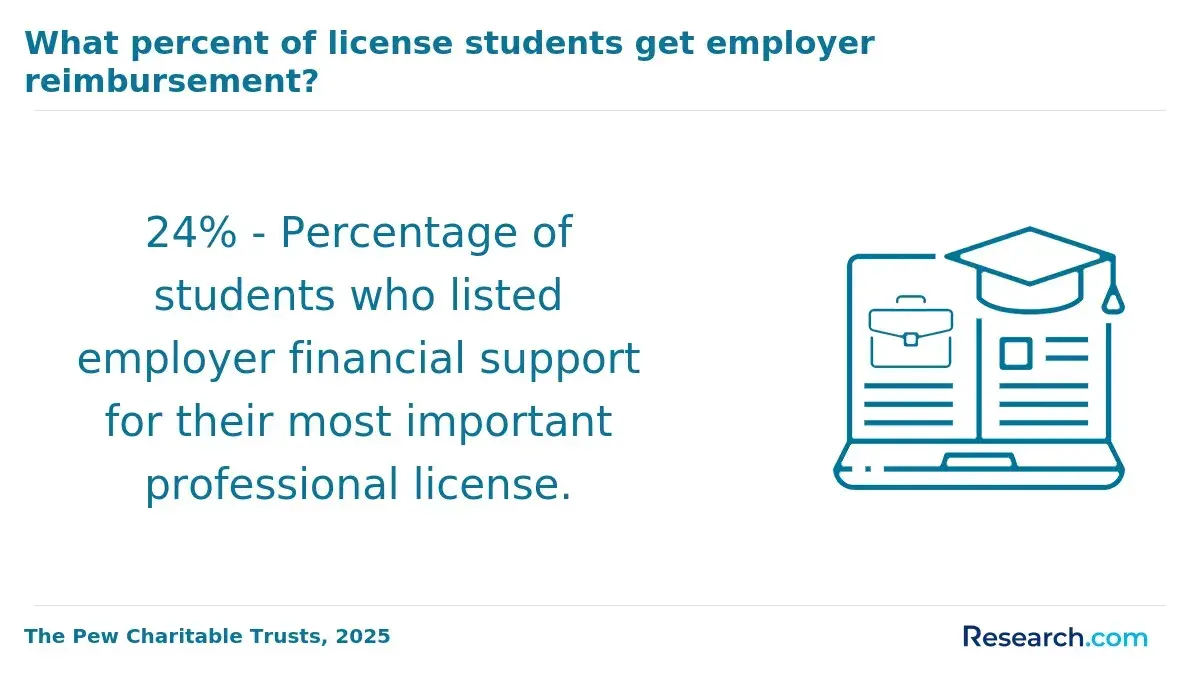
Accreditation does not guarantee transfer, but lack of recognized accreditation can make transfer unlikely. It can also affect federal financial aid eligibility, employer tuition reimbursement, academic hiring, and whether another institution will recognize your doctoral coursework later.
The table below explains how different recognition issues can affect a transfer request. This is not a substitute for a school's official policy, but it can help you identify questions to ask before enrolling.
| Recognition factor | Why it matters | What to verify |
| Institutional accreditation | Most doctoral programs require prior credits to come from a recognized accredited institution | Accreditor name, dates of accreditation, and institutional status during your enrollment |
| Programmatic accreditation | Organizational leadership doctorates may not require specialized accreditation, but business or education contexts may value them | Whether the program's field, employer market, or career goal expects specialized accreditation |
| State authorization | Online programs must be authorized to enroll students in applicable states | Whether your state is eligible for enrollment, internship, residency, or practicum participation |
| Institutional residency policy | Schools often require a minimum number of credits to be completed through their own program | Minimum in-house credits and whether dissertation credits count toward residency |
Be cautious with schools that promise unusually large transfer awards before reviewing transcripts. Legitimate doctoral programs usually document transfer decisions through academic review, not sales-style guarantees.
Transfer credits usually affect coursework first. They may replace foundations, electives, research prerequisites, or leadership concentration courses, but they rarely remove the core doctoral milestones that demonstrate independent scholarship or applied leadership expertise.
Most online organizational leadership doctorates still require students to complete institution-specific components because those elements protect academic integrity and ensure students are prepared for doctoral-level inquiry. Important nontransferable or hard-to-transfer requirements often include the following:
- Dissertation or doctoral capstone: Students usually must complete the final research or applied project under the supervision of faculty at the degree-granting institution.
- Residency or intensive sessions: Online programs may require virtual residencies, synchronous seminars, campus visits, research workshops, or cohort intensives.
- Comprehensive exams: Some programs require exams or portfolio reviews after core coursework, even if earlier courses were transferred.
- Research sequence: Schools may require students to take their own qualitative, quantitative, or dissertation-design sequence to align with faculty expectations.
- Minimum institutional credits: A program may require a set number of credits to be completed in residence, regardless of how much prior work you bring.
Students with operations, supply chain, or process-improvement experience may find that an MBA operations management online overlaps with organizational systems or strategic execution content, but doctoral programs will still evaluate whether that work meets leadership-doctorate expectations.
The main trade-off is depth versus speed. Transferring credits can prevent repetition, but taking the full research sequence at the new institution may strengthen dissertation readiness, faculty alignment, and confidence with the school's preferred methodology.
Transfer credits can reduce both time and tuition, but the savings depend on tuition model, course sequencing, dissertation progress, and whether the accepted credits replace required courses or only electives. A student who transfers 18 credits into a per-credit program may see clear tuition savings, while a student in a flat-rate cohort model may save less money but still reduce academic workload.
The table below uses a simple per-credit example to show how accepted transfer credits can affect direct tuition before fees. It is an estimate framework, not a promise, because actual tuition, fees, and course availability vary by school.
| Accepted transfer credits | Example tuition rate | Potential direct tuition reduction | Possible time effect |
| 6 credits | $800 per credit | $4,800 | May remove 1 to 2 courses |
| 12 credits | $800 per credit | $9,600 | May reduce one term in flexible programs |
| 18 credits | $800 per credit | $14,400 | May reduce multiple terms if sequencing allows |
| 24 credits | $800 per credit | $19,200 | May create major savings but still leaves dissertation work |
Recent federal borrowing conditions make this calculation more important. Federal Student Aid set the Direct Unsubsidized Loan origination fee at 1.057% for loans first disbursed during the 2024-2025 fee period, which means borrowing more than necessary can also increase financing costs beyond sticker tuition.
Time savings are less predictable than tuition savings. If a program uses locked cohorts or offers required courses only once per year, transfer credit may reduce workload without moving the graduation date much. If the program is flexible, asynchronous, and allows continuous enrollment, accepted credits are more likely to shorten completion time.
Students can sometimes transfer credits from another field, an international university, or an unfinished doctorate, but each path adds an extra layer of review. The central question remains whether the prior work is graduate-level, academically recognized, relevant, recent, and equivalent to the receiving program's requirements.
The following distinctions can help you decide how strong your transfer case may be before you spend time gathering documents:
- Another field: Business, education, psychology, public administration, communication, HR, and nonprofit management courses may transfer when they clearly support organizational leadership outcomes.
- International university: Schools often require a course-by-course credential evaluation from an approved evaluator to confirm U.S. graduate-credit equivalency.
- Unfinished doctorate: Prior doctoral courses may be strong candidates, especially if they were completed recently with high grades at an accredited institution.
- Old graduate coursework: Older credits may be rejected or limited unless the content remains current and the student can show continuing professional application.
- Noncredit professional learning: Workshops, executive certificates, and employer training may strengthen an application but usually do not count as doctoral transfer credit.
Students leaving another doctoral program should be especially careful. Ask whether the new school accepts dissertation-stage coursework, whether prior research credits can transfer, and whether a new dissertation topic, committee, proposal, or ethics review will be required.
International students and U.S. students with international graduate credits should start the evaluation process early. Credential evaluations can take time, and schools may still require syllabi, translations, grading-scale explanations, and proof that the institution had recognized authority to award graduate degrees.
How Should Students Compare Online Organizational Leadership Doctorate Programs That Accept Prior Graduate Work?
The best transfer-friendly program is not always the one with the largest advertised transfer cap. A better choice is the program that accepts the right credits, maintains credible accreditation, supports your research interests, fits your budget, and gives you a realistic path to completion.
Before enrolling, compare programs using questions that reveal the actual value of transfer credit rather than the marketing promise. These questions are especially useful when speaking with admissions advisors, program directors, or financial aid staff.
- How many credits can be transferred into this specific doctorate, and how many credits are students required to complete at your institution?
- Will you provide a written preliminary or official transfer-credit evaluation before I commit to enrollment?
- Which of my prior courses are likely to replace required courses, and which would count only as electives?
- Do transferred credits reduce tuition, program length, both, or neither under your pricing model?
- Are dissertation, capstone, residency, comprehensive exam, or research-sequence credits transferable?
- What minimum grade, credit-age limit, accreditation standard, and syllabus documentation do you require?
- If credits are denied, is there an appeal process and what additional evidence can I submit?
- How will the transfer decision affect my full-time or part-time degree plan?
The table below summarizes common red flags and better alternatives. Use it to protect yourself from choosing a program that looks fast but creates academic, financial, or career limitations later.
| Red flag | Why it matters | Better alternative |
| Promises a large transfer award without transcript review | Doctoral transfer decisions should be evidence-based | Request a written evaluation tied to specific courses |
| Focuses only on speed | A shorter path may weaken research preparation if core methods are skipped | Balance transfer savings with dissertation support |
| Unclear accreditation language | Recognition affects transferability, aid, and employer acceptance | Verify institutional accreditation directly |
| No clear dissertation support model | Dissertation delays can erase time saved through transfer credit | Ask about chair assignment, milestones, and completion support |
| Transfer credits do not change billing | Accepted credits may not always reduce total cost | Compare the final degree plan and total estimated charges |
Students who benefit most from transfer-friendly programs usually have recent, accredited, closely aligned graduate coursework and clear career goals. Students who are changing fields, uncertain about research interests, or weak in doctoral methods may prefer a program with fewer transfers but stronger foundations and faculty support.
Other Things You Should Know About Organizational Leadership
No. An Organizational Leadership doctorate often focuses on leadership theory, organizational change, culture, ethics, and applied research across sectors. A business doctorate may focus more heavily on management disciplines such as finance, marketing, operations, or strategy, depending on the program.
It can support some teaching and academic-adjacent roles, especially at institutions that value applied leadership experience. However, faculty hiring depends on the school, discipline, research record, terminal-degree expectations, and whether the doctorate is a PhD, EdD, DBA, or another professional doctorate.
Usually not. Organizational Leadership doctorates are generally not designed for state licensure in counseling, psychology, school administration, or clinical fields. Students with licensure goals should confirm requirements with the relevant state board before enrolling.
Important skills include research literacy, ethical decision-making, systems thinking, communication, data interpretation, change management, conflict resolution, and the ability to connect leadership theory with real organizational problems.
- Graduate Regulations and Degree Requirements https://www.albany.edu/graduate-bulletin/regulations-and-degree-requirements.php
- UMass Global Announces New Ed.D. Transfer Credit Policy https://www.umassglobal.edu/blog-news/umass-global-announces-new-edd-transfer-credit-policy
- What Documents Do You Need to Transfer College Credits? https://www.sophia.org/blog/higher-education/what-documents-do-you-need-to-transfer-college-credits/
- The Best EdD in Organizational Leadership Programs of 2025 https://www.eddprograms.org/schools/organizational-leadership/
- Online EdD Programs in Organizational Leadership (Doctor of Education) https://www.onlineeddprograms.com/specializations/organizational-leadership
- Transfer Credit Guidelines https://graduate.sit.edu/admissions-aid/application-process/transfer-credit-guidelines/
- How Long Does It Take to Get a PhD After a Master's Degree? https://streamlinedai.app/blog/how-long-phd-after-masters