2027 Online Organizational Leadership Doctorate Program Costs: Tuition, Fees, Financial Aid, and Employer Reimbursement

Co-Founder and Chief Data Scientist
Choosing an online Organizational Leadership doctorate is often a five-figure decision, and the wrong cost estimate can create years of avoidable debt. NCES data published in 2024 shows average graduate tuition and required fees were $12,596 at public institutions and $29,931 at private nonprofit institutions for a single academic year.
This guide is for working professionals comparing doctoral options, funding sources, and career payoff. You will learn how tuition, fees, aid, residency rules, employer reimbursement, and ROI interact so you can decide whether the degree fits your budget and goals.
Key Things to Know About Online Organizational Leadership Doctorate Program Costs
- There is no single federal "average" for online Organizational Leadership doctorates, but many programs price tuition by credit; a 48- to 66-credit program can become costly quickly when tuition, dissertation enrollment, and fees are combined.
- Federal graduate aid can be substantial, but it is debt-based for most students: Direct Unsubsidized Loans are capped at $20,500 per academic year, while Grad PLUS Loans can cover remaining certified cost of attendance after other aid.
- Employer reimbursement can materially reduce net cost, but many policies cap tax-free educational assistance at $5,250 per year and may require grade minimums, preapproval, and a post-completion work commitment.
What is the average tuition cost of an online Organizational Leadership doctorate program?
The practical answer is that students should budget by total credits, not by semester. Online Organizational Leadership doctorates are usually offered as EdD, PhD, or Doctor of Strategic Leadership-style programs, and most charge a per-credit tuition rate.
Because the federal government does not publish a standalone national average for this exact major and modality, the most reliable comparison is a program-by-program calculation using credits required, tuition per credit, mandatory fees, and dissertation continuation rules.
For many students comparing a doctorate in organizational leadership online, the clearest first filter is the total tuition formula: credits required multiplied by the per-credit rate. A lower per-credit rate is not always cheaper if the program requires more credits, has limited transfer credit, or charges extended dissertation fees.
The table below shows how tuition-only costs change under common doctoral pricing structures. These are planning examples, not guaranteed prices, because each university sets its own rates and may update them annually:
| Cost scenario | Example credit requirement | Example tuition rate | Tuition-only estimate | What it means for budgeting |
| Lower-cost online model | 48 credits | $650 per credit | $31,200 | Can be affordable if fees are modest and dissertation enrollment is tightly structured. |
| Mid-range online model | 60 credits | $850 per credit | $51,000 | Commonly requires careful planning around loans, payment plans, or employer reimbursement. |
| Higher-cost online model | 66 credits | $1,150 per credit | $75,900 | May still be worthwhile for specific leadership goals, but the ROI threshold is higher. |
A strong affordability comparison should also consider program length. A part-time student may pay the same tuition per credit, but taking longer can increase fees, books, software subscriptions, and dissertation continuation charges. A full-time student may finish faster, but may have less work flexibility and less time to use annual employer reimbursement benefits.
Before choosing a program, ask the admissions or bursar's office for a written estimate that includes tuition increases, all required fees, residency requirements, and the cost of dissertation enrollment after coursework. This protects you from the most common mistake: comparing programs using base tuition only.
Are online Organizational Leadership doctorate programs subject to distance learning or technology fees?
Yes. Many online doctoral programs charge technology, distance learning, online course, library, graduation, or dissertation-related fees in addition to tuition. These fees may appear small per term, but they matter because doctoral students often enroll for several years.
The table below summarizes common fee categories and why they affect total cost. The goal is not to predict every school's bill, but to help you identify the charges that are easy to miss before enrollment:
| Fee type | How it is commonly charged | Why it matters | Question to ask |
| Technology or online learning fee | Per credit, per course, or per term | Can raise the effective per-credit price beyond advertised tuition. | Is this fee included in the published tuition rate? |
| Student services fee | Usually per term | May apply even when all coursework is online. | Do online doctoral students pay the same student fees as campus students? |
| Residency or intensive fee | Per required session | May not include travel, lodging, meals, or local transportation. | Are any in-person or synchronous residencies required? |
| Dissertation continuation fee | Per term after coursework | Can add cost if proposal, research approval, or final defense takes longer than planned. | What is the fee after coursework is complete? |
| Graduation or administrative fee | One-time charge | Small compared with tuition but still part of the final cost of attendance. | Which one-time fees are charged before completion? |
Federal Student Aid's 2025-26 graduate loan rates also make fees more important than they appear. Direct Unsubsidized Loans for graduate students carry a 7.94% fixed interest rate for that aid year, so every borrowed fee can cost more over time if it is not paid down quickly.
To avoid surprises, request an itemized cost of attendance for your exact enrollment plan. If the school advertises "online tuition," confirm whether that phrase includes only instruction or also technology access, dissertation support, digital library access, and academic services.
What out-of-pocket expenses should online Organizational Leadership doctorate students anticipate?
Out-of-pocket expenses are costs you may need to pay directly even if tuition is covered by loans, scholarships, or employer reimbursement. These expenses vary by program design, but they can be meaningful for working adults balancing family, travel, and professional responsibilities.
The following table highlights common non-tuition costs that should be included in a realistic budget. Use it as a checklist when comparing schools, especially if one program looks much cheaper than another at first glance:
| Expense category | Typical cost driver | Why students underestimate it | Budgeting tip |
| Books and digital materials | Course readings, case studies, research texts | Some courses use paid digital platforms instead of traditional textbooks. | Ask whether course materials are bundled into tuition or billed separately. |
| Research software | Statistics, qualitative analysis, citation, transcription, or survey tools | Dissertation research may require tools not used in regular coursework. | Check whether the university provides licenses for doctoral students. |
| Residency travel | Airfare, hotel, meals, parking, local transportation | "Online" does not always mean 100% remote. | Confirm whether residencies are optional, virtual, or required. |
| Dissertation research costs | Participant incentives, transcription, permissions, editing, or data access | These costs depend on the study design and may arise late in the program. | Choose a research topic that is feasible within your budget and timeline. |
| Lost work time | Residencies, synchronous sessions, research interviews, writing time | The cost is indirect but real for hourly, consulting, or self-employed workers. | Estimate time away from paid work before selecting a pacing option. |
Common red flags include programs that publish tuition without clearly explaining dissertation fees, programs that require residencies but do not estimate travel costs, and programs that make transfer credit sound automatic before a transcript review. A good program should be able to explain the full cost path from first term to final defense.
One practical way to control out-of-pocket spending is to create two budgets: a "school bill" budget and a "life impact" budget. The first includes tuition and university charges; the second includes travel, software, child care, unpaid time off, and other expenses that do not always appear on the student account.
Sometimes. Public universities may charge different graduate rates for in-state and out-of-state students, but many online programs now use flat-rate online tuition to attract working adults nationwide. Private nonprofit and private for-profit institutions often use one tuition rate regardless of residency, though the rate itself may be higher or lower than a public university's price.
This distinction matters because the cheapest option for one student may not be cheapest for another. A resident student at a public university may benefit from in-state pricing, while an out-of-state student may find a private or flat-rate online program more predictable:
| Tuition model | Who may benefit | Potential drawback | Best use case |
| Public in-state graduate tuition | Residents of the institution's state | May not be available to online students in every program. | Best when the in-state rate is clearly lower after fees. |
| Public out-of-state graduate tuition | Students seeking a specific public university brand or faculty fit | Can be substantially higher than in-state tuition. | Best when the program's curriculum, network, or research fit justifies the premium. |
| Flat-rate online tuition | Students outside the university's state | May remove residency discounts for in-state students. | Best when predictability and national access matter. |
| Private institutional tuition | Students comparing mission fit, flexibility, or accelerated formats | Sticker price may be higher, and scholarships vary widely. | Best when transfer credit, pacing, or employer alignment reduces net cost. |
If you are comparing doctoral leadership programs with broader management pathways, reviewing the cost structures used in an online business degree can also help you understand how public, private, and flat-rate online tuition models differ across related fields.
The safest approach is to compare net cost, not residency labels. Ask each school for the tuition rate that applies to your state, online status, enrollment level, and program type, then confirm whether the rate can change if you move during the program.
Online programs are not automatically cheaper, but they can reduce several non-tuition costs. The main savings often come from avoiding relocation, commuting, campus parking, and reduced work hours. On-campus programs may offer stronger access to assistantships, faculty labs, and in-person networks, which can offset their higher living costs for some students.
The table below compares cost categories that commonly differ between online and campus formats. This helps you decide whether the lower visible cost is truly the lower total cost:
| Cost category | Online doctorate | On-campus doctorate | Decision takeaway |
| Tuition | May be flat-rate, per-credit, or similar to campus tuition | May vary by residency and enrollment status | Compare total credits and fees, not format alone. |
| Housing and relocation | Usually avoidable | May require relocation or higher local living costs | Online is often better for established professionals who cannot move. |
| Work continuity | Often easier to maintain full-time employment | May require daytime availability or reduced work hours | Preserving income can be a major affordability advantage. |
| Assistantship access | Often limited, program-dependent | More common in research-intensive campus programs | Campus may be cheaper if an assistantship covers tuition. |
| Residency and travel | Possible short-term residencies | Daily or weekly campus presence | Online still requires checking for travel requirements. |
Online study tends to make the most financial sense for mid-career professionals who can keep earning while completing the degree. Campus study may make more sense for students targeting tenure-track academic roles, funded research pathways, or programs where assistantships substantially reduce tuition.
A strong comparison should include opportunity cost. If an on-campus program forces you to reduce income for several years, the true cost may exceed the tuition difference. If an online program lacks the research support you need and extends your dissertation timeline, its convenience can also become expensive.
Yes, but online doctoral students should not assume assistantships and fellowships will be available. Graduate assistantships are more common in campus-based PhD programs because they often require teaching, research support, administrative work, or regular campus presence. Online EdD and professional doctorate programs are frequently designed for working adults, so they may offer scholarships, partner discounts, or payment plans instead of full assistantship funding.
When available, assistantships and fellowships can reduce tuition, provide a stipend, or both. The exact value depends on the institution, department budget, workload, and whether the student is enrolled full time.
Use these questions when evaluating funding opportunities before applying:
- Are online doctoral students eligible for the same assistantships as campus doctoral students?
- Does the award cover tuition, fees, a stipend, health insurance, or only a partial discount?
- Is full-time enrollment required to keep the award?
- Can the assistantship be completed remotely, or does it require campus work?
- Is funding guaranteed for multiple years, renewable by performance, or awarded one term at a time?
- Will assistantship work slow down your dissertation progress or conflict with your current job?
Fellowships are usually more competitive and may be tied to research priorities, leadership themes, diversity initiatives, or public-service commitments.
If your goal is a practitioner-focused leadership role, a smaller scholarship plus employer reimbursement may be more realistic than a full fellowship. If your goal is academic research, a funded campus or hybrid PhD may be worth comparing even if the online format is more convenient.
Financial aid for online doctoral students depends on institutional accreditation, program eligibility, enrollment status, and student circumstances. Most graduate students do not receive Pell Grants, so the core funding mix usually includes federal loans, institutional aid, external scholarships, employer benefits, military benefits, and personal payment plans.
The table below compares major funding options and how they typically affect the bill. It is especially useful for separating aid that reduces cost from aid that simply delays payment through borrowing:
| Funding option | How it can help | Key limit or caution | Best fit |
| Direct Unsubsidized Loan | Can provide up to $20,500 per academic year for eligible graduate students | Interest accrues while enrolled, and borrowing increases total repayment cost. | Students needing predictable federal loan access. |
| Grad PLUS Loan | Can cover remaining certified cost of attendance after other aid | Requires credit review and carries a higher federal interest rate than Direct Unsubsidized Loans. | Students with remaining costs after scholarships, employer aid, and unsubsidized loans. |
| Institutional scholarships | Can directly reduce tuition or fees | May be limited, competitive, or tied to enrollment level. | Students applying early and meeting priority deadlines. |
| External scholarships | Can reduce borrowing without repayment | Awards may be smaller and require separate applications. | Students with leadership, nonprofit, education, military, or professional association ties. |
| Military and veteran education benefits | Can cover eligible tuition and related costs depending on benefit type | Rules vary by benefit, institution, and remaining entitlement. | Eligible service members, veterans, and dependents. |
| Payment plans | Spread term charges over several installments | Do not reduce the total price and may carry enrollment fees. | Students avoiding loans for smaller balances. |
Start with the FAFSA if you want federal aid, then confirm that the program is eligible for Title IV funding. Also ask whether scholarships require a separate application, whether they renew automatically, and whether taking fewer credits changes your aid eligibility.
Students who are unsure about doctoral cost may also compare lower-cost graduate pathways first. For example, the best organizational development master's programs online can help some professionals build leadership credentials before committing to a terminal degree.
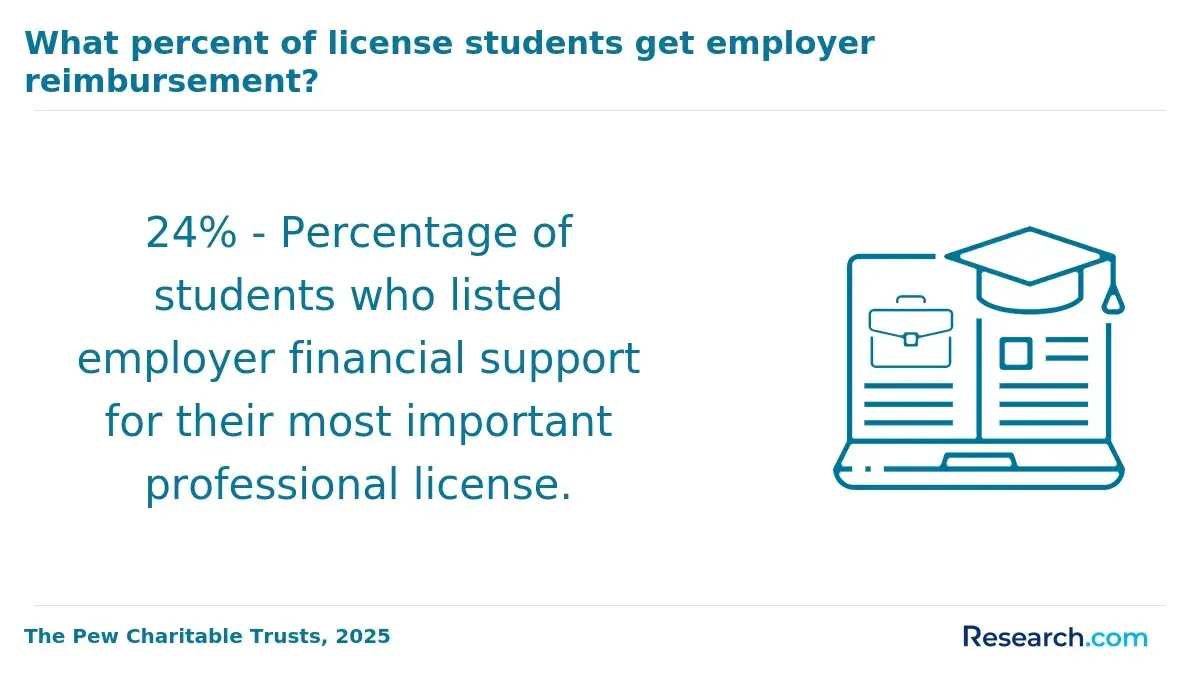
Often, but it depends on the employer's policy. An Organizational Leadership doctorate can align well with roles in human resources, learning and development, executive leadership, nonprofit administration, healthcare administration, government management, consulting, and higher education. Employers are more likely to support the degree when the coursework clearly connects to current or future business needs.
Under current IRS educational assistance rules, employers may generally provide up to $5,250 per year in tax-free educational assistance to an eligible employee. That figure is important because many companies design tuition reimbursement policies around the same annual amount, although some employers offer more and treat amounts above the limit differently for tax purposes.
Common employer reimbursement conditions include:
- Preapproval before the course or term begins.
- Enrollment at an accredited institution.
- A minimum grade or satisfactory academic progress requirement.
- Proof of payment and transcript submission before reimbursement.
- A requirement that the degree relate to the employee's current role or career path.
- A repayment clause if the employee leaves the company within a defined period.
Employer reimbursement works best when you can afford the cash-flow gap. Many plans reimburse after course completion, which means you may need to pay tuition first, use a payment plan, or temporarily rely on savings or loans. If your employer pays the school directly, the benefit can be much easier to manage.
The biggest mistake is enrolling before approval. Get written confirmation of covered programs, annual caps, eligible fees, required grades, reimbursement timing, and any service obligation before you commit to a doctorate.
Negotiating sponsorship is easier when you present the doctorate as a business investment, not a personal education expense. Your proposal should connect coursework and research to measurable organizational needs such as retention, change management, leadership development, succession planning, operational improvement, or culture transformation.
Use a structured approach before speaking with your manager or HR team:
- Identify the business problem your doctoral work will help solve, such as leadership pipeline gaps, employee engagement, organizational change, or training effectiveness.
- Map specific courses or dissertation topics to current company priorities so the degree feels immediately useful.
- Prepare a cost-sharing proposal that shows tuition, fees, reimbursement timing, and what portion you are willing to cover.
- Offer retention value, such as a reasonable service commitment after completion, if your employer requires it.
- Ask for alternatives if full sponsorship is not available, including partial reimbursement, paid study time, conference funding, data access for research, or internal mentorship.
- Get the final agreement in writing before registering for courses.
If your employer is more operations-focused than leadership-development-focused, you can still frame the degree around measurable improvements. Professionals comparing business leadership options may also look at an MBA operations management online to decide whether a management master's or doctoral leadership pathway better fits the company's needs.
Be realistic about what employers fund. A company may support a doctorate for a senior manager preparing for enterprise leadership, but hesitate if the employee's role has no clear connection to organizational leadership. The strongest case shows how the degree will produce value before graduation, not only after the credential is earned.
What ROI can graduates expect from an online Organizational Leadership doctorate?
ROI depends on your starting salary, total debt, career path, employer support, and whether the doctorate helps you reach roles that were previously unavailable. It should not be evaluated by tuition alone.
A lower-cost program with weak alignment to your goals can be a poor investment, while a more expensive program may be reasonable if it directly supports advancement, consulting credibility, or senior leadership eligibility.
BLS May 2024 wage data provides useful salary context, but it does not isolate the effect of an Organizational Leadership doctorate. The figures below represent occupational medians, not guaranteed outcomes for degree holders:
| Potential career direction | Relevant BLS salary context | How the doctorate may help | ROI caution |
| Human resources leadership | Human resources managers had a median annual wage of $140,030 in May 2024. | May strengthen credibility in talent strategy, organizational culture, and executive advising. | Experience, industry, and company size often matter as much as the credential. |
| Learning and development leadership | Training and development managers had a median annual wage of $125,040 in May 2024. | May support roles designing enterprise learning, leadership development, and change programs. | Portfolio evidence and measurable program outcomes remain important. |
| Management consulting or organizational development | Management analysts had a median annual wage of $101,190 in May 2024. | May support consulting authority, research-based diagnosis, and client-facing expertise. | Consulting income varies widely and is not guaranteed by a doctorate. |
| Executive or senior administrative leadership | Top executives had a median annual wage of $105,350 in May 2024. | May help in mission-driven, education, nonprofit, healthcare, or public-sector leadership contexts. | Executive hiring is strongly shaped by track record, network, and organizational results. |
A doctorate is more likely to be worth it if you are already in a leadership track, your employer will pay part of the cost, your dissertation can advance your professional goals, and the credential is valued in your target sector. It is less likely to be worth it if you are using the degree to enter management from scratch, if you must borrow the full cost at high interest, or if a master's degree, certificate, or targeted business program would achieve the same career outcome.
Use this ROI checklist before enrolling:
- Estimate total program cost, including tuition, fees, travel, dissertation enrollment, and interest if borrowing.
- Identify the specific roles, promotions, consulting opportunities, or academic pathways the doctorate could realistically support.
- Compare the doctorate with lower-cost alternatives such as a second master's, graduate certificate, executive education, or professional certification.
- Calculate how much employer reimbursement, scholarships, or assistantship funding would reduce your net cost.
- Set a maximum debt level based on your current income, expected repayment plan, and tolerance for financial risk.
The best ROI case is usually strategic: the degree supports a clearly defined leadership move, the student minimizes borrowing, and the program's research and faculty expertise match the problem the student wants to solve professionally.
Other Things You Should Know About Organizational Leadership
Many students finish in about three to five years, depending on transfer credit, enrollment pace, dissertation progress, and program structure. Longer timelines can increase total cost if the school charges dissertation continuation or per-term fees.
They can, but transfer credit is never automatic. Schools usually review graduate transcripts, course age, grades, accreditation, and relevance to the doctoral curriculum before reducing required credits.
Yes. Institutional accreditation is important for federal financial aid eligibility, employer reimbursement, credit transfer, and general credential recognition. Program-specific accreditation is less common for Organizational Leadership doctorates, so institutional accreditation should be verified first.
Not consistently. Cost depends more on credits required, tuition rate, funding availability, dissertation structure, and time to completion than on the degree label alone.
- Doctor of Education in Organizational Leadership https://www.umassglobal.edu/academic-programs/doctor-education-organizational-leadership
- Tuition Reimbursement Programs [A Guide for HR and Employers] https://compt.io/blog/employee-tuition-reimbursement/
- 3 Ways to Get Your Job to Pay for Graduate School — Dr. Jena Pugh https://www.drjenapugh.com/blog/blog-2-3-ways-to-have-your-job-pay-for-graduate-school
- Educational Funding https://phdproject.org/educational-funding/
- 2025 Most Affordable Online Doctorates in Education https://www.onlineu.com/most-affordable-colleges/education-doctoral-degrees
- Financial Aid and Grants: PhD in Organizational Leadership https://www.eastern.edu/academics/colleges-seminary/college-business-and-leadership/programs-offered/graduate-programs-22
- Average Cost of a Doctorate Degree [2026]: Ph.D., Psy.D. & More https://educationdata.org/average-cost-of-a-doctorate-degree
- Can You Get Financial Aid for Doctoral Programs? - Graduate Programs for Educators https://www.graduateprogram.org/blog/can-you-get-financial-aid-for-doctoral-programs/
- Getting Your Employer to Pay for Your Online Masters https://www.onlinemastersdegrees.org/financial-aid/employer-tuition-assistance/
- Funding your Degree https://gradsense.org/funding-your-degree/