2027 Online Journalism Bachelor's Degree Completion Programs for Working Adults

Co-Founder and Chief Data Scientist
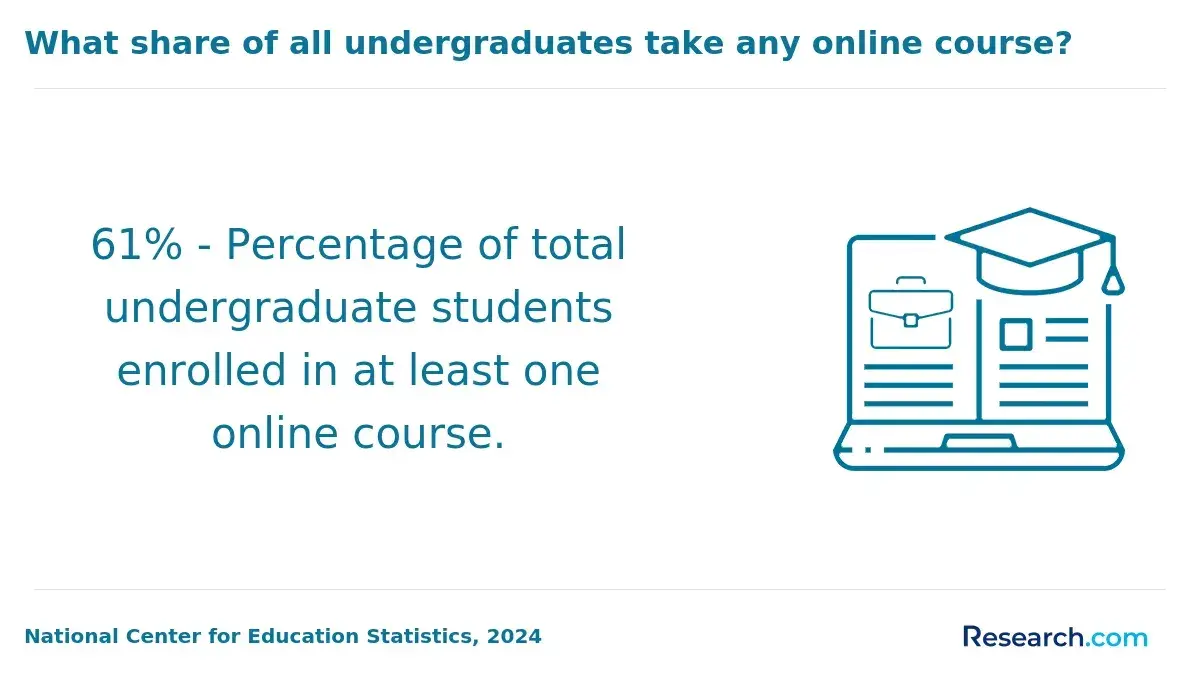
Balancing a full-time job while finishing a bachelor's degree in journalism online can feel overwhelming. Many working adults worry about inflexible schedules and credit transfer complications. According to the National Center for Education Statistics, nearly 60% of students enrolling in online bachelor's completion programs are adults returning to education after a break. These learners need programs tailored to their complex responsibilities, offering flexible pacing and recognition of prior learning. This article systematically reviews online journalism bachelor's degree completion programs by analyzing key factors such as accreditation, transfer policies, tuition, and career outcomes to help working adults select the ideal program for their needs.
Key Benefits of Online Journalism Bachelor's Degree Completion Programs for Working Adults
- Online journalism bachelor's degree completion programs offer flexibility, allowing working adults to balance coursework with full-time jobs without disrupting their income streams.
- Fully asynchronous classes enable students to study at their own pace, accommodating irregular work hours and personal commitments effectively.
- These programs often provide accelerated pathways, reducing time to graduation by leveraging transfer credits and prior learning, unlike traditional four-year degrees restarted from scratch.
What Are Online Journalism Bachelor's Degree Completion Programs, and Who Are They Designed For?
Online journalism bachelor's degree completion programs specifically serve adults who have earned some college credits but not yet completed a bachelor's degree. Unlike traditional four-year bachelor's degrees that begin with freshman courses, these programs emphasize upper-division requirements and build directly on prior coursework.
According to the National Center for Education Statistics (NCES), nearly 36 million Americans have some college experience but no credential, highlighting the demand for flexible pathways like the best online journalism degree completion programs for transfer students. These programs are tailored for working adults seeking to finish their degrees without starting over, such as community college transfers and military veterans.
These degree completion programs feature accelerated formats that allow students to earn credits faster than traditional semester schedules. They accept a high volume of transfer credits, including military training and professional certifications, which reduce redundancy and lower costs.
Most programs offer online or hybrid delivery, accommodating busy schedules by enabling students to study from anywhere and often on their own time.
- Target Audience: Adults with some college credits seeking to finish their bachelor's degree, including community college transfers, military veterans, and mid-career professionals aiming to enhance qualifications without starting anew.
- Program Structure: Focuses on upper-level coursework with significant transfer credit acceptance, reducing total time needed compared to traditional four-year programs.
- Delivery Format: Online or hybrid classes provide scheduling flexibility, accommodating work and family demands, often with accelerated course timelines.
- Growing Popularity: Increasing employer expectations for bachelor's degrees in roles once requiring less education drive demand for these programs as accessible, career-aligned options.
The growing popularity of these programs is linked to increasing employer expectations for bachelor's degrees in roles that once had lower degree requirements. Additionally, working adults exploring continuing education options might also compare offerings with the most affordable online MBA programs to support career growth across multiple fields.
How Do Online Journalism Degree Completion Programs Differ From Traditional Four-Year Journalism Bachelor's Degrees?
Online journalism degree completion programs are designed specifically for working adults who have earned 60 or more college credits and want to finish their bachelor's degree efficiently. These programs differ structurally from traditional four-year journalism degrees, focusing on flexibility and accelerated study to accommodate busy schedules.
- Credit Requirements: Completion programs usually require 60 to 70 credits to graduate, expecting transfer of prior coursework, while traditional programs demand about 120 credits, covering general education, electives, and major courses.
- Curriculum Sequencing: Unlike the sequential approach in traditional degrees, completion programs integrate general education with major courses or allow substitutions through competency-based assessments and prior learning recognition. This flexible sequencing supports working adults managing career and family obligations.
- Time to Completion: Adult learners transferring 60+ credits can typically complete these programs in 12 to 24 months. In contrast, conventional four-year degrees span approximately 48 months, including two full years of general education.
- Cost-Per-Credit Hour: According to IPEDS data, completion programs often have a slightly higher per-credit cost due to specialized online delivery and support, but lower overall costs because of fewer required credits. Traditional programs have lower per-credit fees but higher total expenses due to the greater number of required credits.
- Curriculum Mapping for Adult Learners: Completion programs value life experience and workplace learning, offering prior learning assessments, portfolio reviews, or competency-based modules that can replace some general education credits. Traditional degrees, in contrast, mandate classroom-based general education.
- Practical Trade-Offs: Completion programs prioritize efficiency and flexibility with personalized advising and asynchronous coursework, while traditional degrees provide a broader campus experience and networking. Adults should weigh faster graduation and tailored learning against the depth and community opportunities of a full four-year pathway.
For those exploring other affordable degree options tailored to working adults, consider a library science degree, which also offers flexible bachelor's and master's pathways. Choosing the best program depends on balancing your schedule, budget, and career ambitions within the landscape of flexible bachelor's in journalism programs for working adults.
2026 Update: Digital Portfolio Requirements for Journalism Completion Students
For 2026, this article adds a closer look at how online journalism completion programs help working adults build a job-ready digital portfolio while finishing remaining bachelor’s requirements.
- Whether the program requires a capstone, senior project, or published reporting portfolio
- Opportunities to produce multimedia work, such as audio, video, newsletters, or data-supported stories
- Access to student media, faculty-edited publications, or community reporting projects online
- Clear policies on using workplace-related reporting projects for class assignments
- Feedback from instructors with current or recent newsroom, digital media, or editing experience
- Support for organizing clips, author pages, and professional profiles before graduation
Checking these details helps students choose a program that does more than award credits—it should leave them with polished work samples they can show employers, freelance clients, or graduate programs.
The most economical programs tend to have flat tuition rates that do not vary with residency, generous acceptance of transfer credits, and options to earn credit through prior learning assessments. Regional accreditation combined with ACEJMC programmatic endorsement ensures robust academic standards and enhances career prospects.
- University of Central Florida: Florida residents pay $212.24 per credit hour, while non-residents are charged $355.32. Accredited by the Southern Association of Colleges and Schools Commission on Colleges (SACSCOC), UCF's Nicholson School of Communication and Media holds ACEJMC accreditation. Their online journalism completion program emphasizes multimedia skills and offers flexibility in transfer credits.
- Fort Hays State University: With a flat online tuition of $226.95 per credit hour for all students regardless of residency, Fort Hays State is accredited by the Higher Learning Commission (HLC). The Bachelor of Arts in Communication Studies includes journalism coursework and supports up to 75% transfer credit. Prior learning assessments can expedite degree completion and reduce costs.
- Texas Tech University: Charging $245 per credit hour for Texas residents and $601.50 for non-residents, Texas Tech is accredited by SACSCOC. Their Bachelor of Arts in Mass Communications includes a journalism track, accepts extensive transfer credits, and offers dedicated support for military students.
- Southern New Hampshire University: SNHU's online tuition is a flat $320 per credit hour regardless of residency. Accredited by the New England Commission of Higher Education (NECHE), its Bachelor of Arts in Communication with a digital journalism concentration emphasizes transfer-friendly policies and personalized faculty mentorship for working adults.
- University of North Dakota: Online tuition is $414.50 per credit hour for all students. UND is accredited by HLC and its journalism program holds ACEJMC endorsement. The Bachelor of Arts in Journalism and Public Relations accepts transfer credits up to 90 semester hours, facilitating timely degree completion.
Working adults pursuing an online journalism degree completion program can typically apply a significant portion of prior college coursework toward their degree. Most programs accept between 60 and 90 transfer credits, depending on the institution and the relevance of previous courses to the journalism curriculum.
This allows learners to complete the remaining coursework more quickly and efficiently, often reducing the time needed to earn the degree.
- Credit Caps: Most online journalism degree completion programs for working adults allow the transfer of 60 to 90 semester hours. These caps ensure that students fulfill a significant portion of coursework directly through the degree-granting institution, aligning with common academic standards.
- Credit Equivalency: Transfer credits undergo a thorough evaluation to verify they meet the learning outcomes of the journalism curriculum. Official transcripts are reviewed to determine credit acceptance based on equivalency to required courses, which is a key part of transfer credit policies for online journalism degree completion programs.
- Articulation Agreements: Many universities establish formal partnerships with community colleges to create clear pathways for credit transfer. These agreements help reduce the risk of credit loss by pre-approving courses, smoothing the transition for students moving between institutions.
- Credit Loss Statistics: Data from the U.S. Department of Education's transfer summit reveals that students often lose about 40% of previously earned credits when transferring. Choosing programs with guaranteed or structured transfer pathways is advisable to minimize credit loss and expedite degree completion.
- Transfer-Friendly Programs: Some of the most accommodating journalism degree programs accept various forms of prior learning credits, including ACE-recommended military training and professional certifications. These options benefit military veterans and working adults seeking flexible credit recognition.
- Transcript Evaluation: Before enrolling, prospective students should request an official transcript evaluation to clarify which credits will transfer and how they fit into their degree plan. This step ensures transparency and informed decisions throughout the transfer process.
Working adults interested in an EdD degree may also find similar structured transfer policies beneficial in their academic journey.
Admission requirements for online journalism bachelor’s degree completion programs usually focus on prior college credits, academic performance, and standard application materials. Most programs require applicants to have an associate degree or transferable college credits, along with official transcripts and a minimum GPA, typically around 2.5.
Some schools may also request additional materials such as a personal statement, letters of recommendation, or proof of relevant coursework or experience in writing, communications, or media.
- Transfer Credit Requirements: Most programs require applicants to have completed between 24 and 60 semester credit hours at accredited institutions to ensure readiness for upper-level coursework. This typically covers general education and foundational journalism classes before tackling major-specific studies.
- Minimum GPA Standards: Applicants usually need a cumulative GPA ranging from 2.0 to 3.0. More competitive programs may set higher thresholds to maintain academic rigor, whereas programs with open admission policies offer more flexibility to boost accessibility.
- Required Documentation: Candidates must submit official transcripts from all prior colleges. Additional materials might include recommendation letters, a personal statement, and occasionally a portfolio showcasing written or multimedia journalism projects.
- Journalism Prerequisites: Completion of introductory courses-such as news writing, media ethics, or reporting basics-is commonly expected. Some programs waive these prerequisites based on demonstrated experience or proficiency assessments.
- Admission Selectivity: Open-admission programs often welcome most transfer students, providing ample academic support like tutoring and advising. Selective programs require stronger academic backgrounds, which can enhance the institution's prestige but reduce ease of entry.
- Conditional Acceptance: Certain schools allow provisional admission for applicants who nearly meet qualifications, contingent on completing specific courses or maintaining GPA standards during initial terms.
- Application Enhancement Tips: Prospective students are advised to complete any missing prerequisite courses at community colleges and gain relevant internships or freelance work to strengthen their applications.
Completion timelines for an online journalism bachelor's degree vary significantly based on credits transferred and enrollment intensity. Students bringing in 90 credits may finish within about a year, while those with 30 credits often face closer to two or more years of coursework.
- Credit Transfer Impact: The more credits transferred, the less time needed to graduate. For example, students starting with 60 credits often wrap up their degree within 12 to 18 months enrolled full time, whereas 30-credit transfers typically require 24 to 30 months.
- Enrollment Pace: Part-time studies (around 6 credits per semester) offer a manageable balance for working adults but extend the timeline. Full-time enrollment involving 12 or more credits accelerates completion but demands a greater weekly commitment.
- Two Courses Per Semester: Many working professionals opt for two 3-credit courses each semester. At this rate, especially when including summer sessions, finishing the degree usually takes about two years.
- Accelerated and Competency-Based Models: Some programs feature eight-week accelerated terms, enabling focused study on fewer subjects and shortening terms. Competency-based approaches allow progress by proving mastery, which can slash time spent on familiar areas.
- Summer Terms: Taking advantage of summer courses provides additional credits faster, helping students reduce total time to graduation without overburdening regular semesters.
- Life and Employer Factors: Family obligations, job demands, and employer tuition assistance significantly influence pacing. Students with employer support often maintain fuller course loads or select accelerated paths more easily.
According to a 2023 National Center for Education Statistics report, nearly 30% of bachelor's students attend part time, underscoring the value of scheduling flexibility in online degree completion programs for working adults.
Working adults pursuing an online journalism bachelor's degree completion program have access to diverse financial aid tailored to their unique needs. Federal Pell Grants and Direct Loans remain key resources available to eligible students regardless of age, supporting undergraduate coursework. Many states also provide grants specifically for adult learners returning to college, acknowledging their distinct educational circumstances.
In addition to federal and state aid, institutional scholarships often focus on non-traditional students completing bachelor's degrees online, including those studying journalism. These scholarships frequently consider professional experience and prior academic credits, providing an advantage for working adults balancing education and career.
Employer tuition assistance programs are another valuable option. Under IRS Section 127, employers can offer up to $5,250 annually in tax-free educational benefits for undergraduate studies such as online journalism programs. This benefit helps reduce out-of-pocket costs and encourages continuous professional growth. Employees should connect with their HR departments to understand eligibility and application procedures.
Several fellowships and scholarships target adult learners committed to finishing journalism degrees. These awards, often requiring essays, work experience, or academic achievements, can significantly ease financial burden when identified and pursued early.
- File the FAFSA: Complete the Free Application for Federal Student Aid early to determine eligibility for federal grants and loans before enrolling.
- Research State Grants: Explore state-specific financial support aimed at adult learners returning to higher education.
- Explore Institutional Scholarships: Contact admissions offices to find scholarships designed for online journalism students and degree completers.
- Request Employer Benefits: Verify availability of tuition assistance with your employer and obtain any necessary tuition benefit agreements to access tax-free aid.
Per-credit-hour tuition rates for accredited online journalism degree program tuition comparison show wide variation across institutions, based on data from the National Center for Education Statistics (NCES) and the Integrated Postsecondary Education Data System (IPEDS). The national average cost per credit hour for online journalism bachelor's degree completion programs typically ranges from $400 to $450.
For students who have completed either 60 or 90 transfer credits, total tuition can vary significantly depending on the per-credit rate and program credit requirements.
Advertised per-credit tuition often excludes ancillary fees such as technology fees, graduation fees, proctoring charges, and required course materials. These additional costs can add 10-20% to the stated tuition, increasing the total expense students ultimately pay.
Evaluating the full cost is essential when considering financial commitments.
- Average Tuition Benchmark: National averages provide a useful baseline but may not capture institution-specific fees or credit hour requirements beyond the typical 120-credit model.
- Transfer Credit Impact: Students with 90 transfer credits benefit from significantly lower tuition than those with 60, highlighting the financial advantage of maximizing accepted transfer credits.
- Hidden Fees Matter: Additional technology and administrative fees frequently raise total costs, so reviewing detailed cost disclosures is vital before program selection.
- Total Cost vs. Rate: Choosing the lowest per-credit rate does not always guarantee the lowest overall expense if the program requires extra credits to graduate, which can particularly affect working adults balancing time and budget.
For working adults pursuing an affordable degree, it's also helpful to explore options like prior learning assessments and transfer policies. For those interested, the cheapest online communications degree programs often follow similar tuition trends, providing insight into cost-effective educational pathways.
Prior learning assessment (PLA) options provide working adults with valuable opportunities to apply their existing knowledge toward completing an online journalism bachelor's degree. These assessments include credit-by-exam programs such as CLEP and DSST exams, portfolio assessments, and credit for military training evaluated through the American Council on Education (ACE). Together, these pathways help reduce the time and cost needed to earn a degree by converting real-world skills into academic credit.
The most expansive online journalism completion programs accept up to 90 transfer credits and have flexible PLA policies, allowing students to submit a variety of evidence for portfolio review, including professional training, certifications, and work experience.
Military veterans gain particular advantages by leveraging the ACE credit recommendation system, which evaluates military coursework and training, as well as certain corporate training programs, to award college credit that aligns with degree requirements.
- Credit-by-Exam Programs: CLEP and DSST exams offer an efficient way for students to demonstrate proficiency in general education and journalism-related subjects. Successful exam results translate directly into transferable credits.
- Portfolio Assessment: Students prepare a comprehensive collection of work samples, certifications, and documentation of professional experiences. Institutions evaluate these portfolios to award credit aligned with required courses.
- ACE Evaluations: Military and corporate training evaluated by ACE simplifies the credit transfer process for service members and employees attending online journalism degree completion programs.
- Documentation Preparation: Careful organization of transcripts, certificates, and detailed work descriptions supports a smooth PLA review. Students should consult advisors early to understand submission guidelines and deadlines.
Working adults can also explore fastest masters degree online programs to continue advancing their careers efficiently after completing their bachelor's degree. These credit-by-exam programs for online journalism degree completion for working adults provide flexible and affordable pathways to gain a respected credential while balancing professional commitments.
Asynchronous schedules in online journalism programs allow full-time working professionals to access lectures, readings, and assignments on their own time. This flexibility helps learners balance work, personal responsibilities, and coursework without attending live classes at fixed times. By enabling self-paced progress, these programs let professionals steadily advance toward their degree while maintaining full-time employment.
- Fully Asynchronous Delivery: Online journalism completion programs often use fully asynchronous formats, letting students access lectures, submit assignments, and participate in discussions anytime. This flexibility supports learners in different time zones and accommodates irregular work schedules without live class attendance.
- Assignment Structure: Course work typically involves discussion boards, weekly tasks, and timed quizzes that students can complete independently. Clear deadlines guide progress, but there are no mandated synchronous meetings, making it ideal for shift workers and caregivers.
- Synchronous vs Hybrid: Some programs blend live sessions with online components or require real-time attendance. While these may offer more direct interaction, they can challenge professionals who travel frequently or have unpredictable hours compared to asynchronous-only formats.
- Eight-Week Terms: Institutions using accelerated eight-week courses let students concentrate on one or two classes at a time. This format reduces cognitive load and helps balance professional and academic demands more effectively than traditional semester schedules.
- Time Management: Successful adult learners prioritize weekly planning and set consistent study times. Using digital calendars, task managers, and note-taking apps can streamline organization and help maintain momentum in self-paced environments.
- Technology Tools: Learning management systems, mobile apps, and communication platforms enable seamless access to materials and peer engagement. Familiarity with these tools contributes significantly to student persistence and completion rates in online journalism programs.
Online journalism bachelor's completion programs frequently offer multiple specialized tracks designed to align with diverse career goals. Most concentrations fit within the typical 120-credit degree requirement, which helps maintain affordable tuition and a realistic timeline for degree completion. However, some specializations may require extra courses, potentially extending study duration.
- Multimedia Journalism: This track hones skills in digital storytelling across video, audio, and interactive media. Graduates often find roles as digital reporters or content producers. According to BLS, multimedia journalists earn a median annual wage near $49,300, driven by ongoing demand for versatile media talents.
- Broadcast Journalism: Focused on radio, television, and live event reporting, this specialization prepares students for careers as news anchors and correspondents. Employment growth remains steady with average salaries around $46,270 per year.
- Investigative Journalism: Concentrating on detailed research and ethical reporting, this path fosters critical thinking and may offer access to certifications in fact-checking or data journalism, enhancing professional prospects.
- Public Relations and Corporate Communication: Geared toward media relations and corporate messaging roles, this specialization leverages writing and communication expertise. BLS reports median salaries in this field near $62,810, reflecting strong market demand.
- Sports Journalism: Focused on coverage of athletic events and sports business, it prepares professionals for reporter and editor roles. Salaries typically align with general reporting but gain value through broadcasting and digital media opportunities.
Choosing a concentration should balance personal passion with labor market data. Concentrations embedded within the 120-credit framework reduce additional expenses and support on-time graduation, while some extend career opportunities via specialized certifications.
What Graduates Say About Online Journalism Bachelor's Degree Completion Programs for Working Adults
- Louie: "Completing my online journalism bachelor's degree was a game-changer, especially because the program was fully accredited and structured to respect my previous college credits. The clear transfer credit policy made the whole process transparent and stress-free. I also appreciated the flexible tuition model, which made it financially manageable alongside my full-time job."
- Zamir: "Reflecting on my experience, the opportunity to leverage prior learning really stood out for me-being able to earn credit for professional experience accelerated my path to graduation. The program's solid accreditation gave me confidence in the quality of education, while employer outcomes data convinced me it was a smart investment for my career. This course truly prepared me to step confidently into the evolving world of journalism."
- Matthew: "I approached this online journalism degree with a professional mindset, valuing the rigor of the curriculum and the accreditation standards that confirmed its credibility. The generous transfer credit policy allowed me to maximize my earlier coursework, which saved both time and money. Ultimately, the program's emphasis on career-ready skills helped me secure a position with a leading media firm shortly after graduation."
Other Things You Should Know About Journalism Degrees
Employers and graduate schools generally recognize online journalism bachelor's degrees from accredited institutions as equivalent to traditional degrees. The key factor is regional accreditation and the reputation of the awarding school. Completion programs specifically designed for working adults often emphasize practical skills and current industry standards, which employers find valuable. However, some competitive graduate programs may scrutinize an applicant's coursework and practical experience beyond the degree itself.
Many online journalism bachelor's completion programs offer dedicated academic advisors who understand the unique challenges faced by working adults. Support often includes tutoring, writing centers, and technical assistance tailored for remote learners. Career services typically provide job placement guidance, resume workshops, and networking opportunities within the media industry. These resources help students balance work and study while preparing for journalism roles.
Most online journalism bachelor’s completion programs accept up to 90 transfer credits from accredited colleges, leaving at least 30 credits to finish the degree. Many also require a minimum 2.0 GPA on transferable coursework and may review credits course by course before admission.
- Benefits of Journalism & Mass Communication Degrees | Amity https://amityonline.com/blog/6-career-opportunities-after-online-ba-in-journalism-and-mass-communication
- Bachelor of Journalism https://adelaideuni.edu.au/study/degrees/online/bachelor-of-journalism/
- Prior Learning Assessment: Master of Journalism | University of King's College https://ukings.ca/admissions/admission-requirements/graduate-advanced-admissions/admission-requirements-mj/prior-learning-assessment-master-of-journalism/
- Online Journalism (Bachelor of Arts) https://h-da.de/en/studies/study-programmes/study-programmes/architecture-media-and-design/online-journalism
- Everything You Wanted to Know About Degree Completion Programs for Adults https://explore.neumann.edu/everything-you-wanted-to-know-about-degree-completion-programs-for-adults
- Online Bachelor’s Degree Completion Majors https://www.hamline.edu/academics/online-bachelors-degree-completion/online-bachelors-degree-completion-majors
- What Financial Aid Options Are Available for Online Education? - Lakewood University https://lakewood.edu/online-education-financial-aid-3/
- How Colleges Award Credits For Work Experience https://www.affordablecollegesonline.org/college-resource-center/college-credit-for-work-experience/
- 2025 Most Affordable Online Journalism Degrees https://www.onlineu.com/most-affordable-colleges/journalism-degrees
- Credit for Prior Learning - Complete College America https://completecollege.org/our-approach/momentum/credit-prior-learning/