
2027 Online Early Childhood Education Doctorate vs Master's Degree: Cost, Salary, Career Outcomes, and ROI

Co-Founder and Chief Data Scientist
Choosing between an online early childhood education doctorate and a master's degree is a financial and career decision, not just an academic one. BLS May 2024 data shows preschool and childcare center directors earn about $55,000, while K-12 education administrators report median pay above $100,000, showing how role choice can matter more than degree title.
This guide is for educators, directors, coaches, and administrators comparing cost, salary potential, career access, and ROI so they can decide whether doctoral study is worth the added time and expense.
Key Things You Should Know
- A master's degree usually offers the faster ROI path because it often takes about 1 to 2 years, costs less overall, and qualifies educators for leadership, coaching, curriculum, and director roles without the added dissertation or capstone burden of many doctorates.
- An online doctorate can be worth it when the target role requires or strongly rewards doctoral-level preparation, such as higher education faculty, district-level leadership, research, policy, executive administration, or advanced organizational consulting.
- BLS May 2024 wage data places preschool and childcare center directors near $55,000, instructional coordinators around the mid-$70,000 range, and many education administrator categories above $100,000, so ROI depends on whether the doctorate helps you move into a higher-paying role.
What Are the Key Differences Between an Online Early Childhood Education Doctorate and Master's Degree?
An online master's in early childhood education is typically a career-advancement degree for teachers, center directors, coaches, curriculum specialists, and early learning professionals who want stronger leadership, instructional, assessment, or program-design skills. An online doctorate, usually an EdD or PhD, is a terminal degree designed for advanced leadership, research, policy, faculty, or executive-level work.
The most important difference is not prestige; it is purpose. A master's degree helps many educators move into specialized practice or mid-level leadership, while a doctorate is most useful when the job market you are targeting expects doctoral-level evidence of research ability, systems leadership, or scholarly expertise.
This table summarizes the core comparison points that usually affect the decision. Use it as a first-pass filter before comparing individual schools.
| Comparison point | Online master's in early childhood education | Online doctorate in early childhood education |
| Primary purpose | Advanced classroom practice, coaching, curriculum, administration, and program leadership | Executive leadership, research, policy, higher education, advanced consulting, and systems-level change |
| Common degree types | MA, MS, MEd, MAT, or MSEd | EdD, PhD, or education doctorate with an early childhood, curriculum, leadership, or child development focus |
| Typical admissions profile | Bachelor's degree, transcripts, recommendations, statement of purpose, and sometimes teaching experience | Master's degree, professional experience, writing sample, recommendations, resume, and a proposed area of inquiry |
| Academic emphasis | Applied teaching, curriculum, assessment, leadership, family engagement, and child development | Research design, policy, organizational leadership, equity, program evaluation, advanced theory, and dissertation or doctoral project |
| Best fit | Educators who want a practical credential with lower cost and faster completion | Professionals targeting roles where doctoral expertise changes promotion, authority, or eligibility |
| ROI risk | Lower upfront cost, but salary growth may be limited if the local market does not reward master's-level leadership | Higher cost and time commitment, with stronger ROI only if it leads to a materially better role |
Online delivery can make either degree more accessible, especially for working educators, but format alone does not determine value. Check whether courses are asynchronous, whether there are live sessions, whether fieldwork can be completed locally, and whether the program is institutionally accredited.
If your interest is more about learning technology, curriculum media, or adult learning than early childhood leadership, comparing the best online instructional design master's programs may lead to a better-fitting and more marketable alternative.
How Much Does an Online Early Childhood Education Doctorate Cost Compared With a Master's Degree?
A master's degree usually costs less because it requires fewer credits. A doctorate costs more because it often includes more coursework, doctoral seminars, research methods, comprehensive assessments, dissertation or capstone supervision, and additional semesters of enrollment.
Recent NCES graduate tuition data released in 2024 shows why school type matters: average graduate tuition and required fees are substantially lower at public institutions than at private nonprofit institutions.
For a student comparing an online master's and doctorate, that means the same credential level can carry very different ROI depending on whether the program charges public, private, flat-rate, or per-credit tuition.
The table below shows the cost categories to compare. It does not replace a school's official cost of attendance, but it helps you avoid comparing only sticker tuition.
| Cost factor | Master's degree impact | Doctorate impact | Why it matters for ROI |
| Credits required | Often about 30 to 36 credits | Often about 45 to 70 or more credits beyond the master's | More credits usually mean more tuition and fees before any salary benefit appears |
| Per-credit tuition | Lower total exposure because of fewer credits | Higher total exposure because doctoral credits accumulate over more terms | A small per-credit difference can become large over a longer program |
| Fees | Technology, distance learning, graduation, background check, and field placement fees may apply | All master's-level fee types may apply, plus dissertation, residency, or doctoral continuation fees | Fees can make a low-tuition program less affordable than it first appears |
| Books and materials | Moderate, depending on course design | Often higher because of research software, methodology texts, and dissertation resources | These are usually paid out of pocket or through loans |
| Residency or travel | Usually limited, but some programs require campus intensives | More common in some EdD and PhD formats | Travel, lodging, and missed work can increase true cost |
| Time in program | Shorter | Longer | Longer enrollment increases both direct cost and opportunity cost |
When comparing programs, calculate total degree cost instead of annual tuition. A low annual price can still produce a high total cost if the doctorate takes many years, requires extra continuation credits, or has limited transfer-credit flexibility.
Use this practical cost checklist before applying:
- Ask for the total number of credits required from your starting point, not just the advertised curriculum length.
- Confirm whether tuition is charged per credit, per term, by cohort, or through a flat-rate online model.
- Ask whether dissertation, capstone, or continuation credits are included in the quoted tuition.
- Compare total fees, books, travel, childcare, testing, licensure, and background-check expenses.
- Check whether employer tuition assistance, scholarships, assistantships, or tuition discounts reduce the amount you must borrow.
How Long Does a Early Childhood Education Doctorate Take Compared With a Master's Degree?
A master's degree in early childhood education is usually the shorter path. Many online master's programs can be completed in about 1 to 2 years of focused study, while an online doctorate commonly takes about 3 to 5 years depending on transfer credits, dissertation or capstone progress, enrollment intensity, and whether the student remains employed full time.
Timeline matters because time is part of ROI. A degree that costs less and lets you qualify for a raise, director role, coach position, or curriculum job sooner may outperform a higher credential financially, at least in the short term.
This timeline comparison shows how the two paths usually differ for working adults.
| Timeline factor | Master's degree | Doctorate |
| Typical pace | Full-time or part-time online study | Often part-time while working, though some students study full time |
| Coursework phase | Usually the main requirement | Coursework plus advanced research, leadership, or inquiry seminars |
| Final requirement | Capstone, portfolio, practicum, exam, or thesis depending on school | Dissertation, applied dissertation, doctoral project, or research study depending on degree type |
| Delay risk | Usually caused by course availability, fieldwork, or work-life conflicts | Often caused by dissertation design, data collection, committee feedback, or institutional review timelines |
| Career payoff timing | Earlier if the role only requires a graduate degree | Later unless the student is already moving into doctoral-level leadership while enrolled |
Accelerated doctoral formats can shorten the timeline, but students should examine them carefully. Some 1 year EdD programs online may be designed for experienced professionals with a relevant master's degree, transferable credits, and a narrow applied project, but speed should not come at the expense of accreditation, faculty support, or a credible doctoral outcome.
Salary comparisons are tricky because employers usually pay for the role, responsibility level, location, experience, and organization type, not just the degree name.
A doctorate may raise earning potential if it moves you into higher-level administration, higher education, research, consulting, or policy work, but it may not create a large salary jump if you remain in the same center-based or classroom role.
BLS May 2024 wage data is useful because it shows the salary spread across related education occupations. These figures are broad occupational medians, not guarantees for early childhood education graduates.
| Role category | Degree level often seen | Recent salary context | How to interpret it |
| Preschool and childcare center director | Bachelor's or master's, depending on employer and state rules | Median pay is about $55,000 | A doctorate is rarely necessary unless the role expands into multi-site leadership, policy, or executive administration |
| Instructional coordinator | Master's often preferred or required | Median pay is in the mid-$70,000 range | A master's may be sufficient for many curriculum and coaching pathways |
| K-12 education administrator | Master's commonly required; doctorate may help for district-level advancement | Median pay is above $100,000 | The doctorate may improve competitiveness for senior leadership, but experience and licensure are also critical |
| Postsecondary education administrator | Master's or doctorate depending on institution and level | Median pay is above $100,000 | Doctoral preparation can help for academic leadership, research administration, and senior roles |
| Postsecondary education faculty | Doctorate commonly preferred or required for tenure-track roles | Median pay varies by institution, rank, and contract type | A doctorate is often the stronger credential if the goal is full-time faculty work |
The practical takeaway is that the master's degree often offers the better near-term salary-to-cost ratio, while the doctorate can offer better long-term upside only when it unlocks a different job category. If your employer has a salary schedule, ask whether a doctorate produces a fixed pay lane increase and how long it would take to recover the added cost.
A master's degree can support many strong early childhood education careers. It may qualify professionals for curriculum leadership, teacher coaching, program administration, early intervention coordination, family engagement leadership, assessment roles, and director positions, depending on state rules and employer requirements.
A doctorate is more likely to matter when the work moves beyond one classroom, center, or program into systems-level decision-making. It can also help when credibility as a researcher, senior leader, faculty member, or policy expert is part of the hiring decision.
The following comparison shows where each credential commonly fits.
| Career path | Master's degree fit | Doctorate fit |
| Lead teacher or mentor teacher | Strong fit if the goal is advanced practice or pay-lane movement | Usually more credential than needed unless tied to research or leadership ambitions |
| Childcare or preschool director | Often sufficient, especially with experience and state-required credentials | Useful for multi-site, executive, or policy-facing roles |
| Instructional coach or curriculum specialist | Strong fit for many districts, agencies, and nonprofits | Useful for senior curriculum leadership, evaluation, or research-based program design |
| Early childhood program evaluator | Possible with strong assessment and data skills | Stronger fit when research design, grant evaluation, and publication are expected |
| Higher education faculty | May qualify for adjunct or community college roles in some settings | Often preferred or required for full-time, tenure-track, or doctoral-level teaching |
| Policy, advocacy, or state-level leadership | Can be sufficient with strong experience | May improve credibility for research-informed policy and executive leadership |
Some career goals are adjacent to early childhood education but require a different credential. For example, if your goal involves psychoeducational assessment, child mental health, or school-based psychological services, compare school psychology programs online accredited by NASP instead of assuming an early childhood doctorate is the right path.
Before choosing the doctorate, ask employers what they actually require for the roles you want. A common mistake is enrolling in a doctoral program to become "more competitive" without confirming that target employers reward the credential with higher pay, broader authority, or new eligibility.
For many educators, the master's degree has the better immediate ROI because it requires less time, usually costs less, and can qualify graduates for leadership or specialist roles sooner. The doctorate has better ROI only when the additional credential produces a clear career change, such as moving into senior administration, higher education, research, policy, consulting, or a higher salary lane.
ROI should be calculated as a relationship between cost, time, debt, and career change. Salary is important, but it is not the whole equation.
Use this simple process to compare your own doctorate-versus-master's ROI:
- Identify the exact job titles you want, not just the field you want to remain in.
- Verify the minimum and preferred degree requirements for those roles in your state or target employer market.
- Estimate total program cost, including tuition, fees, books, travel, childcare, and lost work hours.
- Estimate realistic salary change using employer salary schedules, public salary databases, job postings, or BLS occupational medians.
- Calculate how many years of added earnings it would take to recover the added cost of the doctorate compared with the master's.
- Factor in nonfinancial value, such as research goals, leadership influence, professional identity, and long-term mobility.
A doctorate can be a high-value investment for a director moving into state policy, a district leader pursuing executive roles, or a practitioner who wants to teach future educators at the university level. It can be a weak financial investment if it does not change your job category, salary schedule, or promotion prospects.
Opportunity cost is the value of what you give up while earning the degree. In this comparison, it includes the income you might not earn, promotions you might delay, family time you lose, consulting work you turn down, and energy you spend on doctoral research instead of career advancement.
Opportunity cost is usually higher for a doctorate because doctoral study lasts longer and includes a more demanding final project. Even if an online format lets you keep working, the time burden can still affect overtime, side income, leadership availability, and personal well-being.
This table shows how opportunity cost changes the value calculation.
| Opportunity cost question | Master's degree implication | Doctorate implication |
| Will you reduce work hours? | Less likely for shorter programs, but still possible during practicum or capstone terms | More likely during dissertation, data collection, residency, or intensive writing periods |
| Will the degree delay promotion? | May speed promotion if completed quickly | May delay promotion if the program consumes time needed for leadership projects |
| Can you earn while enrolled? | Often easier because of shorter duration and lighter research burden | Possible, but workload planning is critical |
| Will your employer reward partial progress? | Some employers increase pay after degree completion only | Some employers do not reward doctoral credits until completion |
| What happens if you stop out? | Partial credits may transfer to another master's or certificate | Doctoral credits may transfer poorly, especially after the coursework phase |
A practical rule is to compare the doctorate not only with the master's, but also with the career progress you could make during the same years. Publications, leadership projects, grants, director experience, policy work, and certifications may sometimes create similar career value at lower cost.
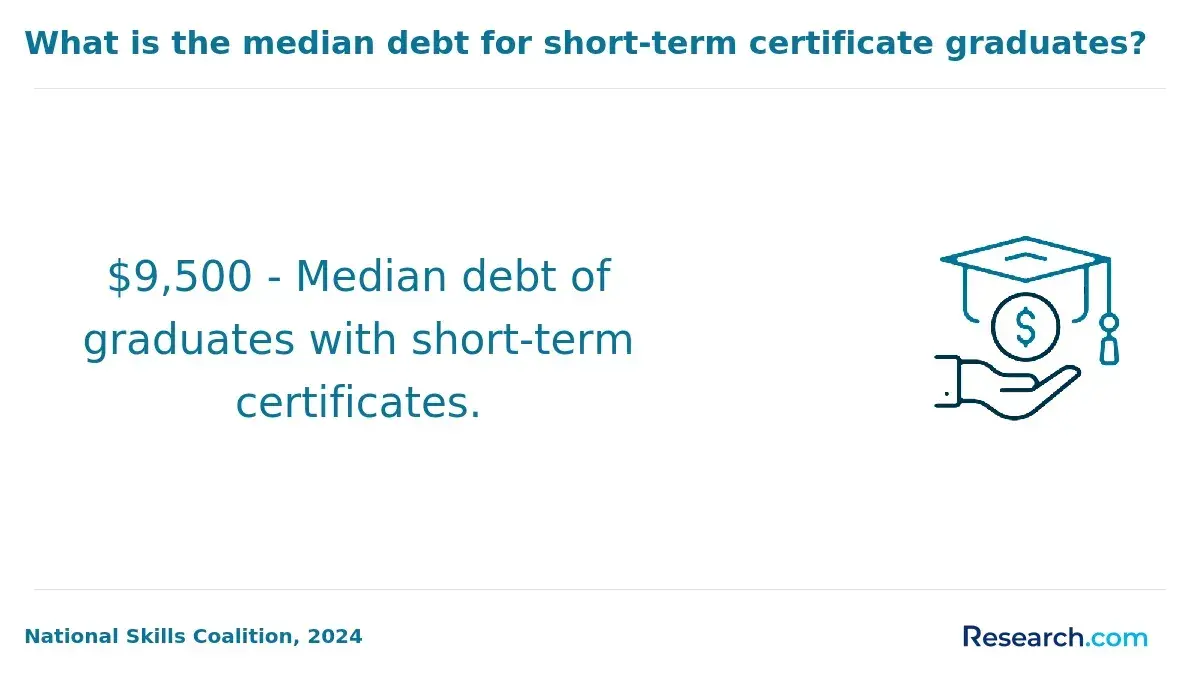
Financial aid can change the ROI picture dramatically. A partially funded doctorate with employer support may be more affordable than a self-funded master's at a high-tuition institution, while a loan-financed doctorate can become risky if the target role does not produce higher earnings.
Recent federal graduate loan rates show why borrowing deserves careful attention: Direct Unsubsidized Loans for graduate students carried an 8.08% fixed interest rate for 2024-25, while Grad PLUS Loans carried a 9.08% fixed interest rate.
For readers, the lesson is straightforward: the higher the borrowed balance and the longer the repayment period, the more the degree must improve earnings or career stability to justify the cost.
Compare these funding sources before deciding how much to borrow:
- Employer tuition assistance, especially if your district, Head Start agency, nonprofit, or early learning organization reimburses graduate coursework.
- Scholarships and institutional grants that do not require repayment.
- Assistantships or fellowships, which are more common in research-oriented doctoral programs than in fully online professional programs.
- Public service loan forgiveness eligibility if you work for a qualifying public or nonprofit employer and meet federal program rules.
- Pay-as-you-go enrollment, which may reduce debt but extend the time to completion.
- Transfer credits or prior graduate credits that reduce the number of credits you must pay for.
Ask financial aid offices for a debt scenario, not just an award letter. You want to know how much you would likely borrow over the full program, whether interest accrues while you are enrolled, and whether your projected post-degree role can reasonably support repayment.
Not all doctorates have the same purpose. A professional doctorate, usually an EdD, is generally designed for applied leadership and real-world problem solving. A research doctorate, usually a PhD, is generally designed for original scholarship, theory development, research methods, and academic research careers.
A master's degree remains the more practical option when your goal is applied advancement without a long research commitment. The doctorate becomes more compelling when the type of work you want requires doctoral-level inquiry, publication, faculty qualification, or executive authority.
This table compares the three paths.
| Degree path | Best for | Common final requirement | ROI consideration |
| Master's in early childhood education | Teachers, coaches, directors, curriculum specialists, and practitioners seeking advancement | Capstone, portfolio, thesis, practicum, or exam | Often strongest near-term ROI because it is shorter and less expensive |
| EdD in early childhood education or educational leadership | Working professionals pursuing applied leadership, systems change, administration, consulting, or policy | Applied dissertation, doctoral project, or problem-of-practice study | Best ROI when the credential supports promotion to a higher-responsibility role |
| PhD in early childhood education, child development, or related field | Researchers, tenure-track faculty candidates, policy researchers, and scholars | Traditional dissertation based on original research | Best ROI when research or faculty careers are the goal, especially if funding is available |
Some students prefer doctoral formats that replace the traditional dissertation with an applied project or capstone. If that structure fits your goals, compare online EdD programs no dissertation, but confirm that the final project is still rigorous and respected by your target employers.
When Is a Early Childhood Education Doctorate Worth It Instead of a Master's Degree?
An early childhood education doctorate is worth considering when it changes your professional ceiling. That usually means it helps you qualify for roles that a master's degree alone would not realistically unlock, or it gives you the research, policy, and leadership credibility needed for the next stage of your career.
The doctorate is more likely to be worth it if several of these conditions apply:
- You want to teach full time in higher education, supervise graduate students, or compete for tenure-track faculty roles.
- You are pursuing district, state, nonprofit, or executive leadership roles where doctoral preparation is preferred.
- You want to conduct research, lead program evaluation, publish scholarship, or influence early childhood policy.
- Your employer provides a meaningful salary lane increase, promotion pathway, or tuition support for doctoral completion.
- You can complete the program without taking on debt that would strain your expected post-degree income.
- You are personally motivated by advanced inquiry and can sustain several years of intensive academic work.
A master's degree is often the better stopping point if your goal is classroom leadership, coaching, center administration, curriculum work, or a salary increase that does not require doctoral-level study. It is also the safer option if you are unsure about research, cannot verify a doctoral salary payoff, or would need to borrow heavily.
Before enrolling, avoid these common mistakes:
- Comparing tuition only by semester instead of calculating total degree cost.
- Assuming a doctorate automatically produces a higher salary in early childhood education.
- Ignoring dissertation or doctoral project time when estimating completion length.
- Choosing a doctoral program before confirming that target employers value the credential.
- Overlooking institutional accreditation, state licensure implications, and field placement requirements.
- Borrowing based on best-case salary assumptions instead of conservative career scenarios.
The best decision is the one that matches the role you actually want. If the master's degree gets you there with less debt and faster completion, it may offer the better ROI. If the doctorate is the realistic bridge to higher education, policy, senior leadership, or research, the added cost and time may be justified.
Other Things You Should Know About Early Childhood Education Programs
Yes. At minimum, choose a school with recognized institutional accreditation. If the program is tied to teacher licensure, endorsement, or administrator certification, confirm that it meets your state's requirements before enrolling.
Sometimes, but not always. Many graduate programs are designed for licensed educators or current professionals and do not lead to initial licensure. Always ask whether the program is licensure-track, endorsement-track, or non-licensure.
Online degrees from accredited institutions are commonly accepted, especially when the program includes relevant fieldwork, strong faculty support, and outcomes aligned with the role. Employer perception depends more on accreditation, reputation, experience, and job fit than on online delivery alone.
Ask about total cost, transfer credits, average time to completion, fieldwork requirements, licensure alignment, dissertation or capstone expectations, graduate outcomes, employer partnerships, and how online students receive advising and faculty support.
- Ed.D. in Early Childhood Education | ACE https://ace.edu/degree-programs/doctoral-degrees/doctoral-education/doctor-of-education-in-early-childhood-education/
- Is It Worth Getting a Doctorate in Education (EdD)? https://teach.com/online-ed/education-degrees/online-edd-programs/is-an-edd-worth-it/
- The Highest Paying Early Childhood Education Jobs | Arizona Early Childhood https://azearlychildhood.org/resources/articles/the-highest-paying-early-childhood-education-jobs/
- 2025 Most Affordable Online Master's Programs https://www.onlineu.com/most-affordable-colleges/masters-degrees
- Understanding Educational ROI https://www.larson.com/educational-roi/
- How Much Does a PhD Cost https://aituedu.org/how-much-does-a-phd-cost/
- The Rewards of a Doctorate in Early Childhood Education - Graduate Programs for Educators https://www.graduateprogram.org/blog/the-rewards-of-a-doctorate-in-early-childhood-education/
- The Best Ed.D. in Early Childhood Education Programs of 2025 https://www.eddprograms.org/schools/early-childhood-education/
- Average Cost of a Master's Degree: 2025 Analysis https://educationdata.org/average-cost-of-a-masters-degree


