2027 How to Choose an Online Early Childhood Education Doctorate Program: Accreditation, Cost, Format, and Career Fit

Co-Founder and Chief Data Scientist
The hard part is not finding an online Early Childhood Education doctorate; it is knowing which one is credible, affordable, and useful for your goals. Federal IPEDS data published by NCES in 2024 shows average graduate tuition and required fees of about $12,596 at public institutions and $29,931 at private nonprofit institutions, before program fees or travel.
This guide is for educators, directors, consultants, and aspiring faculty who need a practical way to compare accreditation, cost, online format, curriculum, and career alignment before enrolling.
Key Things to Know About Choosing Early Childhood Education Doctorate Programs
- Start with accreditation: every school on your shortlist should have recognized institutional accreditation, and education-focused program approval can matter for licensure, employer recognition, and transferability.
- Use total cost, not tuition alone: most online Early Childhood Education doctorates require about 45 to 90 credits, so per-credit tuition, fees, residencies, dissertation or capstone costs, and time to completion can change the real price substantially.
- Match the format to your life and career goal: fully asynchronous programs suit working educators who need control over study time, while cohort, residency, or research-intensive formats may better serve students seeking faculty, policy, leadership, or advanced research roles.
What criteria should you use to assess an online Early Childhood Education doctorate program?
A strong online Early Childhood Education doctorate should be evaluated as both an academic credential and a career investment. The best choice is not always the cheapest, fastest, or highest-ranked program; it is the one that is accredited, financially realistic, academically rigorous, and aligned with the role you want after graduation.
Use the following criteria to build a shortlist before speaking with admissions. This keeps you from being swayed by marketing language before you have checked the fundamentals.
- Confirm institutional accreditation through a recognized accreditor before reviewing anything else.
- Identify the degree type: an EdD usually emphasizes applied leadership and practice, while a PhD usually emphasizes research, theory, and scholarly production.
- Compare total program cost by multiplying required credits by tuition, then adding fees, travel, books, technology, and dissertation or capstone expenses.
- Check the delivery model, including whether classes are asynchronous, synchronous, hybrid, cohort-based, self-paced, or residency-based.
- Review the curriculum for early learning policy, child development, family engagement, equity, assessment, leadership, research methods, and program evaluation.
- Look at faculty expertise to see whether professors publish, consult, or lead work in areas related to your goals.
- Ask about completion support, including dissertation coaching, research advising, writing help, statistics support, and access to online library resources.
- Compare outcomes carefully, such as graduate roles, dissertation topics, alumni placement patterns, and employer partnerships, without treating any outcome as guaranteed.
The table below summarizes the main comparison categories and what each one tells you. Use it as a screening tool before requesting an application fee waiver or scheduling an admissions call.
| Criterion | What it signals | Why it matters for decision-making |
| Institutional accreditation | The university has met recognized quality standards | It affects federal aid eligibility, employer recognition, and transferability |
| Degree type | Whether the program is practice-focused or research-focused | It helps you choose between leadership, policy, faculty, and research paths |
| Total cost | The real financial commitment beyond advertised tuition | It helps you compare ROI and avoid budget surprises |
| Online format | How much scheduling control you will have | It affects whether the program is manageable with work and family duties |
| Curriculum fit | How closely coursework matches your target role | It prevents you from choosing a program that is prestigious but poorly aligned |
| Student support | How much help exists after enrollment | It matters most during research, dissertation, capstone, and field-based projects |
If speed is a major factor, compare accelerated options carefully rather than assuming the shortest timeline is automatically best. Some educators exploring 1 year EdD programs online should pay especially close attention to workload, transfer credit policies, and whether the accelerated structure leaves enough time for meaningful doctoral research or applied inquiry.
How do you check if an online Early Childhood Education doctorate program is accredited?
Accreditation is the first credibility test for any online Early Childhood Education doctorate. It tells you whether the institution has been reviewed by an approved accrediting agency, but it does not automatically mean the program is perfect, affordable, or aligned with your career goal.
Follow a direct verification process instead of relying only on a program webpage. Accreditation language can be vague, outdated, or easy to misunderstand.
- Find the institution's accreditor on the university website, usually on an accreditation, consumer information, or institutional effectiveness page.
- Verify the accreditor through the U.S. Department of Education's Database of Accredited Postsecondary Institutions and Programs or the Council for Higher Education Accreditation directory.
- Check that the institution name, campus, online division, and accreditation status match what the program advertises.
- Look for warnings such as probation, show-cause status, teach-out plans, or recent loss of accreditation.
- Ask admissions whether the online doctorate is covered under the same institutional accreditation as the main university.
- If your career goal involves licensure, certification, public school administration, or state-funded early learning leadership, confirm requirements with the relevant state agency or employer before enrolling.
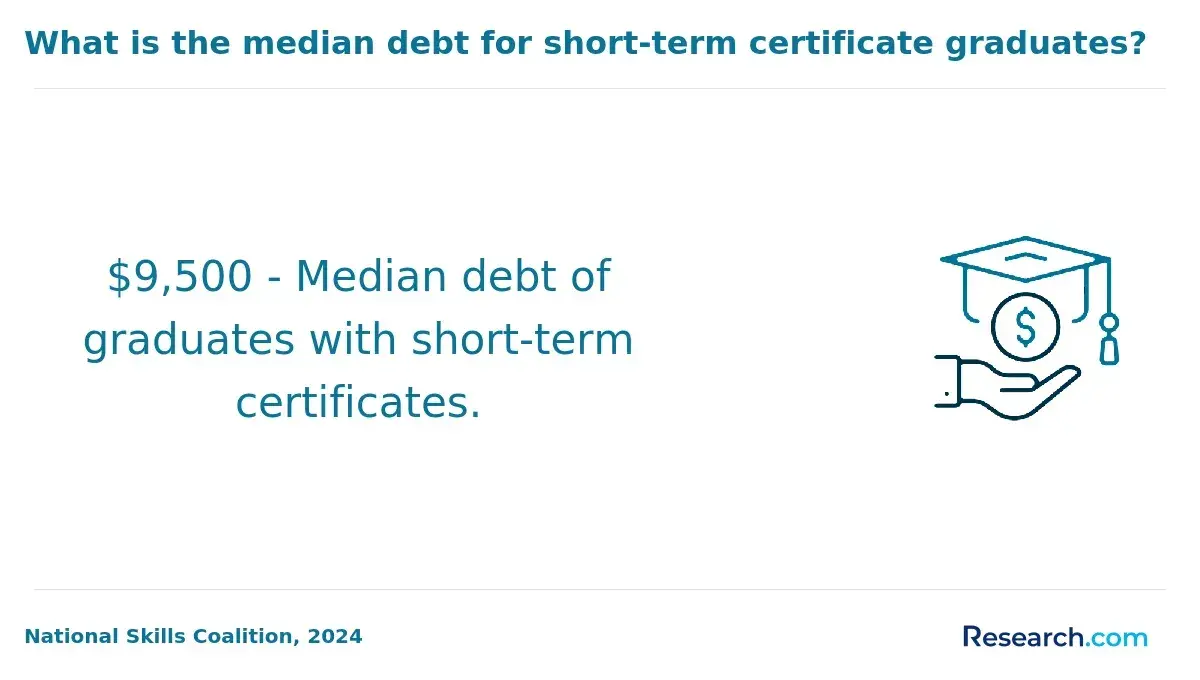
For online Early Childhood Education doctorates, a practical rule is that your shortlist should have a 100% institutional accreditation pass rate: if a school cannot be verified through a recognized accreditor, remove it. There is no reliable federal percentage that isolates accredited online Early Childhood Education doctoral programs, so the safer approach is program-by-program verification.
Decision rule: do not apply until you can independently verify accreditation outside the school's own marketing materials.
What programmatic accreditations matter most for an online Early Childhood Education doctorate?
Programmatic accreditation is separate from institutional accreditation. Institutional accreditation reviews the university as a whole, while programmatic accreditation or approval focuses on a specific professional field, department, or licensure pathway.
Early Childhood Education doctorates do not always have a single required programmatic accreditor, especially when they are designed for leadership, research, policy, or higher education roles. Still, the following quality signals can matter depending on your career plan.
| Accreditation or approval type | What it usually applies to | How to interpret it |
| Institutional accreditation | The entire university | Essential for baseline credibility and federal aid eligibility |
| CAEP accreditation | Educator preparation programs | Most relevant if the doctorate is tied to teacher preparation, leadership preparation, or educator licensure pathways |
| State educator approval | Programs linked to state licensure or endorsement | Important when the doctorate supports a credential required for public school or state-regulated roles |
| NAEYC-aligned curriculum or recognition | Early childhood professional standards | Useful as a curriculum quality signal, though not a substitute for institutional accreditation |
| Specialized school psychology or counseling accreditation | Adjacent child development and school-based programs | Relevant only if your goal crosses into assessment, intervention, or school-based mental health fields |
If your work overlaps with assessment, early intervention, or school-based child development services, compare adjacent credential standards rather than assuming an Early Childhood Education doctorate covers them. For example, readers considering psychology-oriented roles may want to understand how school psychology programs online accredited by NASP differ from education doctorates focused on curriculum, leadership, or policy.
The most important takeaway is that programmatic accreditation should be evaluated in context. It matters most when your intended role is regulated by a state, district, licensing board, or professional association; it may be less central for private-sector consulting, nonprofit leadership, curriculum design, or higher education administration.
To assess cost accurately, calculate the full program price rather than comparing only per-credit tuition. Online Early Childhood Education doctorates often list tuition clearly, but the final cost can change based on credit requirements, transfer credits, dissertation continuation fees, residencies, and how long you remain enrolled.
Published program plans for online education doctorates commonly fall between about 45 and 90 credits, depending on whether the degree is post-master's, post-bachelor's, EdD, or PhD. That range matters because a $900-per-credit program requiring 45 credits can cost less in tuition than a $650-per-credit program requiring 75 credits.
The table below shows the cost components to compare. It is designed to help you build an apples-to-apples estimate before you commit.
| Cost component | Where it appears | Why it can change the total |
| Tuition per credit | Tuition page or program page | The largest direct cost and the easiest number to compare |
| Required credits | Degree plan or catalog | More credits can outweigh a lower per-credit rate |
| Online learning fees | Student accounts or fee schedule | May be charged per course, per credit, or per term |
| Residency travel | Program requirements | Can add airfare, lodging, meals, and time away from work |
| Dissertation or capstone fees | Graduate catalog | May continue after coursework is complete |
| Books and materials | Course syllabi or bookstore estimates | Research courses may require software, texts, or assessment tools |
| Time to completion | Program plan and academic policy | Longer enrollment can increase fees and opportunity cost |
Use this practical calculation before applying. It helps expose programs that look inexpensive upfront but become costly after fees and enrollment time are included.
- Multiply tuition per credit by the exact number of required credits.
- Add mandatory fees shown in the graduate catalog and student accounts schedule.
- Add estimated residency travel if any campus visits are required.
- Add books, research software, background checks, testing, or portfolio costs if listed.
- Ask whether dissertation, capstone, or continuation credits are billed after coursework.
- Subtract confirmed grants, scholarships, employer tuition assistance, military benefits, or transfer-credit savings.
- Divide the remaining cost by the number of years you expect to enroll to estimate annual cash-flow pressure.
For a national benchmark, NCES graduate tuition and fee averages published in 2024 show that public institutions generally cost less than private nonprofit institutions on average. However, institution type alone does not determine value; a higher-priced program may offer stronger advising, better specialization fit, or employer support, while a lower-priced program may be the smarter choice if it is accredited and aligned with your goals.
Online Early Childhood Education doctorate programs vary widely in delivery format. The format affects your weekly schedule, interaction with faculty, peer support, travel needs, and ability to keep working while enrolled.
The table below compares the formats you are most likely to encounter. It can help you decide which structure matches your work schedule and learning style.
| Format | How it works | Best fit | Potential drawback |
| Fully asynchronous online | Students complete weekly modules without required live class meetings | Working educators with unpredictable schedules | Requires strong self-management and less real-time discussion |
| Synchronous online | Students attend scheduled live classes online | Learners who want structure and direct interaction | Harder for students with evening work, caregiving, or time-zone conflicts |
| Hybrid or low-residency | Most coursework is online with limited campus or intensive sessions | Students who value networking and faculty access | Travel costs and time away from work can add up |
| Cohort-based | A group of students moves through the program together | Learners who want peer accountability and structured pacing | Less flexibility if you need to slow down or pause |
| Self-paced or competency-based | Students progress by completing competencies or modules | Experienced educators who can work independently | May offer less cohort community or fewer fixed milestones |
Current online education doctorates increasingly emphasize flexible delivery, especially asynchronous coursework paired with structured milestones for research or applied projects. That trend benefits working professionals, but flexibility should not be confused with low workload; doctoral reading, research, writing, and fieldwork still require consistent time each week.
If your interest leans toward curriculum technology, learning systems, or professional development design rather than early childhood leadership specifically, comparing best online instructional design master's programs may help you decide whether a different graduate path fits your goals better before committing to a doctorate.
Pacing determines how quickly you move through coursework and how much control you have if work, family, or research delays occur. Most online Early Childhood Education doctorates advertise completion timelines of about three to five years for EdD-style programs, while research-intensive PhD pathways may take longer depending on dissertation progress.
To judge pacing realistically, focus on policies rather than slogans. "Flexible" can mean anything from choosing when to watch lectures to having the ability to stop out for a term without penalty.
- Part-time pacing is usually best for full-time educators, center directors, and caregivers who need a manageable course load.
- Full-time pacing may fit students with employer support, reduced work hours, or a clear need to finish quickly.
- Accelerated pacing can work for experienced graduate students with strong writing skills, but it may be risky if it compresses research milestones too tightly.
- Cohort pacing provides structure and accountability, but it can be less forgiving if you need to pause.
- Self-paced pacing offers control, but it requires strong motivation and clear advising checkpoints.
Ask admissions and faculty how students typically balance coursework with dissertation or capstone planning. A program that starts research preparation early may feel more demanding at first, but it can prevent delays later.
The core curriculum should show how the program develops advanced expertise in young children's learning, early childhood systems, leadership, research, and equity. A doctorate should go beyond classroom strategies and prepare students to analyze evidence, lead organizations, evaluate programs, and influence policy or practice.
Review the required courses before looking at electives. The core tells you what every graduate is expected to know, regardless of specialization.
- Advanced child development: coursework should address cognitive, social, emotional, language, and physical development in early childhood.
- Early learning curriculum and assessment: look for age-appropriate assessment, curriculum design, observation, and data-informed improvement.
- Leadership and administration: strong programs cover organizational leadership, supervision, finance, quality improvement, and early childhood systems.
- Family, community, and cultural responsiveness: the curriculum should address partnerships, inclusion, multilingual learners, and equity in early learning settings.
- Policy and advocacy: programs aimed at leadership should help students understand funding, regulation, access, and public policy.
- Research methods: doctoral study should include qualitative, quantitative, mixed-methods, and applied research design.
- Dissertation, capstone, or applied inquiry sequence: there should be clear milestones, advising, and expectations for original or practice-based scholarly work.
One current trend is the growth of applied capstone and dissertation-in-practice models, especially in EdD programs. These can be valuable for practitioners who want to solve real problems in early childhood organizations, but students seeking tenure-track faculty roles should check whether the program provides enough research depth, publication support, and methodological training.
Students who want a practice-focused doctorate but are concerned about a traditional dissertation can compare online EdD programs no dissertation to understand how capstone-based models differ from dissertation-based doctoral study.
A program matches your career goals when its degree type, curriculum, faculty expertise, research expectations, and professional network point toward the role you actually want. Start with the destination, then work backward to the program features that support it.
Use these questions to test career fit before applying. They help you avoid choosing a strong program that prepares students for a different path than yours.
- Do I want to lead early childhood centers, districts, nonprofits, agencies, or higher education programs?
- Do I need an EdD-style applied leadership program or a PhD-style research program?
- Does the curriculum include the specialization I need, such as early learning policy, infant-toddler development, literacy, special education, leadership, or program evaluation?
- Do faculty members have expertise in my intended research or practice area?
- Will the dissertation or capstone allow me to study a problem relevant to my workplace or career goal?
- Do alumni appear to work in roles similar to the one I want?
- Will my employer, state agency, district, or target institution recognize the degree for advancement?
Career fit also depends on whether the doctorate is necessary for your next step. For some educators, a doctorate can support advancement into leadership, policy, consulting, research, or faculty roles. For others, a certificate, master's degree, licensure pathway, or specialized training may be more efficient and less costly.
Be especially cautious if you are pursuing a regulated role. Requirements for public school administration, teacher leadership, special education, early intervention, and higher education faculty hiring vary by state and employer, so verify expectations directly before enrolling.
What red flags should I watch out for in an online Early Childhood Education doctorate program?
Red flags do not always mean a program is illegitimate, but they should slow down your decision. The biggest risks are enrolling in a poorly accredited program, underestimating total cost, choosing the wrong format, or discovering too late that the curriculum does not fit your career path.
The table below contrasts warning signs with evidence of a credible online Early Childhood Education doctorate. Use it during your final comparison stage.
| Red flag | Better sign |
| Accreditation is hard to verify outside the school website | The institution appears in recognized accreditation databases with current status |
| The program promises unusually fast completion without explaining workload | The program provides a clear degree plan, credit count, and research timeline |
| Admissions pressure is high and deadlines feel artificial | Admissions staff gives you time to review costs, policies, and outcomes |
| Tuition is advertised without fees, continuation costs, or residency details | The school provides a written total cost estimate |
| Faculty information is vague or missing | Faculty credentials, research areas, and advising roles are public |
| Dissertation or capstone expectations are unclear | Research milestones, committee structure, and support services are explained |
| The curriculum is generic and not early-childhood focused | Core courses directly address early learning, child development, leadership, policy, and research |
Common mistakes include trusting rankings alone, assuming every online program is fully flexible, ignoring residency requirements, and applying before checking whether the doctorate is recognized by your employer or state. To avoid these mistakes, keep a written comparison sheet and require every program to answer the same questions.
A good final test is simple: if a program cannot clearly explain its accreditation, total cost, format, curriculum, research expectations, and career fit, it should not be your first choice.
Other Things You Should Know About Early Childhood Education
It can be respected if the institution is properly accredited, the curriculum is rigorous, and the program fits the role you want. Employers usually care more about accreditation, relevance, experience, and evidence of advanced expertise than whether courses were delivered online.
Many online Early Childhood Education doctorate programs are designed for applicants who already hold a master's degree, but some admit students with a bachelor's degree and additional prerequisites. Check the program's admission requirements, transfer-credit policy, and expected professional experience.
Many students do, especially in part-time or asynchronous programs. However, doctoral reading, writing, research, and dissertation work are time-intensive, so ask how many hours students typically spend each week and whether field-based research can connect to your workplace.
Common requirements include transcripts, a resume, recommendation letters, a statement of purpose, writing sample, and sometimes an interview. Some programs may also ask for evidence of education experience, leadership background, or a proposed research interest.
- Ed.D. Program Accreditation: Why It's Important & What to Look For https://www.eddprograms.org/resources/edd-accreditation/
- Where Can an Ed.D. Take You? 6 Careers To Consider - Voices Digital https://www.pacificoaks.edu/voices/from-the-magazine/where-can-an-ed-d-take-you-6-careers-to-consider/
- Early Childhood Online Courses Online | Career Paths. https://www.apteachertraininginstitute.com/blog/what-are-the-career-options-after-an-early-childhood-care-and-education-course/
- Links | ECLBS EU Council of Business Schools https://www.eclbs.eu/list
- Top 10 Factors to Look for When Choosing the Best EdD Program - Cairn University https://cairn.edu/top-10-factors-to-look-for-when-choosing-the-best-edd-program/
- Login http://oiccpress.com/ttlt/article/download/15767/17323
- Accreditation for Online EdD Programs - OnlineEdDPrograms.com https://www.onlineeddprograms.com/resources/accreditation
- Finding Your Path: How to Align Studies with Career Goals https://www.alfabetaglobal.com/blogs/finding-your-path-how-to-align-your-studies-with-your-career-goals
- Course Delivery Formats 101: Synchronous, Asynchronous, and Blended/Hybrid Learning Explained https://www.iacet.org/events/iacet-blog/blog-articles/course-delivery-formats-101-synchronous-asynchronous-and-blended-hybrid-learning-explained/
- 2025 Most Affordable Online Doctorates in Education https://www.onlineu.com/most-affordable-colleges/education-doctoral-degrees