2027 Online Early Childhood Education Doctorate Programs with Quantitative, Qualitative, and Mixed-Methods Research Options

Co-Founder and Chief Data Scientist
Choosing an online early childhood education doctorate is not just a degree decision; it is a research decision. The methodology you choose shapes your dissertation, timeline, faculty fit, and career value. BLS May 2024 wage data show instructional coordinators had a median annual wage of $74,720, making advanced research skills relevant for leadership, curriculum, and policy roles.
This guide is for educators, administrators, and researchers comparing quantitative, qualitative, and mixed-methods options so they can choose a program that realistically supports the question they want to answer.
Key Things You Should Know
- Online early childhood education doctorates may support quantitative, qualitative, or mixed-methods research, but students should verify this in the dissertation handbook, research course sequence, and faculty profiles rather than relying on marketing language.
- Methodology affects workload: quantitative projects often require stronger statistics preparation, qualitative projects require intensive coding and fieldwork, and mixed-methods projects add integration work across both data types.
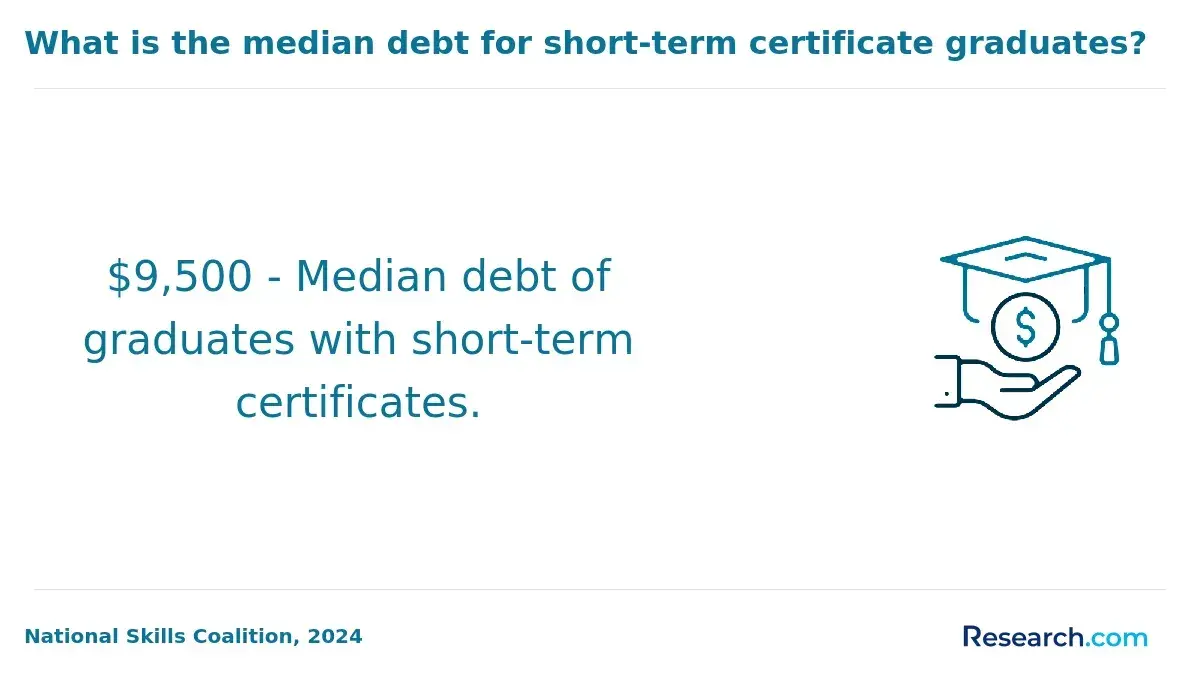
- Cost and timeline matter because doctoral students may borrow up to $20,500 per year in federal Direct Unsubsidized Loans, so added semesters for data collection or analysis can materially change total debt.
Which Online Early Childhood Education Doctorate Programs Offer Quantitative, Qualitative, or Mixed-Methods Research?
Online early childhood education doctorate programs rarely advertise methodology tracks as neatly as "quantitative," "qualitative," or "mixed methods." Instead, the available research options are usually embedded in the degree type, concentration, faculty expertise, required research courses, and dissertation approval process.
The table below summarizes the most common online doctorate structures that prospective students encounter and how each one typically supports research methodology choices. Use it as a screening tool before requesting a faculty consultation or reviewing sample dissertations.
| Program structure | Typical degree label | Methodologies commonly supported | Best fit for | What to verify before applying |
| Early childhood education leadership doctorate | EdD in Early Childhood Education, Child Development, or Early Childhood Leadership | Qualitative and mixed methods are common; quantitative may be available if faculty support evaluation or assessment research | Program directors, PreK leaders, Head Start administrators, nonprofit leaders | Whether dissertation chairs have early childhood fieldwork, policy, or assessment expertise |
| Curriculum and instruction doctorate with early childhood focus | EdD or PhD in Curriculum and Instruction with an early childhood specialization | All three may be possible, especially when coursework includes assessment, curriculum evaluation, and qualitative inquiry | Curriculum specialists, teacher educators, instructional leaders | Whether the early childhood specialization has dedicated faculty rather than only general curriculum faculty |
| Educational leadership doctorate with birth-to-grade-3 emphasis | EdD in Educational Leadership or P-3 Leadership | Qualitative and applied mixed methods are common; quantitative is useful for policy, systems, and outcomes analysis | District leaders, policy advocates, principal-track educators, agency administrators | Whether leadership faculty have experience with early learning systems and state-level data |
| Education research doctorate with early childhood faculty line | PhD in Education, Human Development, or Learning Sciences | Quantitative, qualitative, and mixed methods may all be available, depending on research lab and advisor match | Aspiring faculty, researchers, policy analysts, research-center staff | Whether online students can join research groups, access datasets, and receive advanced methods mentoring |
| Special education or inclusive early childhood doctorate | EdD or PhD in Special Education, Early Intervention, or Inclusive Education | Quantitative and mixed methods are common for intervention and outcomes studies; qualitative fits family, teacher, and inclusion research | Early intervention leaders, inclusion specialists, disability-service administrators | Whether the program supports research with minors, families, and protected populations through online advising |
A practical rule is to treat methodology availability as a three-part requirement: the program must teach the method, faculty must supervise it, and the dissertation committee must approve it. If any one of those pieces is missing, the methodology may exist on paper but not be feasible for your doctoral project.
How Do Quantitative, Qualitative, and Mixed-Methods Research Differ in Online Early Childhood Education Doctorates?
Quantitative, qualitative, and mixed-methods research differ in the type of evidence they use. In an online early childhood education doctorate, that difference affects the research question, participant access, software needs, ethics review, committee expectations, and the amount of analysis you must complete independently.
The comparison below clarifies the core differences so you can match your preferred way of thinking with a realistic doctoral design.
| Methodology | What it answers best | Common early childhood education examples | Typical evidence | Main challenge |
| Quantitative research | How much, how often, what predicts an outcome, or whether groups differ | Examining kindergarten readiness scores, teacher-child interaction ratings, attendance patterns, or effects of a coaching model | Assessment scores, surveys, administrative data, observation ratings, statistical datasets | Requires adequate sample size, statistical preparation, and careful measurement choices |
| Qualitative research | How people experience, interpret, implement, or make meaning of a practice or policy | Studying teacher perspectives on inclusive classrooms, family engagement experiences, or leadership during curriculum change | Interviews, focus groups, field notes, documents, reflective journals, video observations | Requires disciplined coding, participant recruitment, and strong evidence of trustworthiness |
| Mixed-methods research | How numerical patterns and lived experiences connect | Combining survey results with teacher interviews to explain implementation of a play-based curriculum | Both quantitative and qualitative data, integrated during design, analysis, or interpretation | Requires competence in both methods and a clear plan for integrating findings |
Students often assume quantitative research is more rigorous because it uses statistics, or that qualitative research is easier because it may involve fewer participants. Both assumptions are misleading. Rigor depends on whether the design fits the question, the data are credible, and the analysis is transparent.
Choose quantitative research when your question depends on measurement, prediction, comparison, or outcomes. Choose qualitative research when your question depends on context, experience, implementation, culture, or meaning. Choose mixed methods only when one form of evidence cannot fully answer the question on its own.
How Does Research Methodology Affect the Dissertation or Capstone in an Online Early Childhood Education Doctorate?
Your research methodology shapes the dissertation or capstone from the first proposal draft. It determines what counts as evidence, how long data collection may take, which committee members you need, and how much revision you may face during proposal and final defense stages.
The table below shows how methodology choice often changes the structure of a doctoral dissertation or applied project in early childhood education.
| Dissertation component | Quantitative design | Qualitative design | Mixed-methods design |
| Problem statement | Must identify measurable variables and a testable relationship or comparison | Must identify a bounded experience, setting, group, or phenomenon | Must justify why both numerical and narrative evidence are needed |
| Literature review | Emphasizes theory, prior measures, outcomes, and empirical findings | Emphasizes conceptual frameworks, context, participant perspectives, and prior qualitative themes | Must cover both bodies of methods literature and explain integration logic |
| Data collection | Often depends on surveys, datasets, assessments, or rating instruments | Often depends on interviews, observations, documents, or focus groups | May require sequential or parallel collection of both data types |
| Analysis | Uses statistical tests, modeling, reliability checks, or descriptive analysis | Uses coding, theme development, memoing, triangulation, and audit trails | Requires separate analyses plus integration of findings |
| Completion risk | Sample size or data-access problems can delay progress | Recruitment, transcription, and coding time can delay progress | Integration and scope creep can delay progress |
Some EdD programs replace the traditional dissertation with a dissertation-in-practice, doctoral capstone, or applied improvement project. Students comparing online EdD programs no dissertation should still ask about methodology because many nontraditional capstones require data collection, institutional review board approval, and formal analysis.
A common mistake is choosing a methodology before defining the problem. A stronger sequence is to identify the decision, practice, policy, or population you want to study first; then select the method that can produce credible evidence for that problem.
Research training in online early childhood education doctorates usually progresses from foundations to advanced design and then into dissertation-specific seminars. The strongest programs do not merely require a statistics course or a qualitative methods course; they connect methods training to real early childhood settings such as classrooms, family programs, intervention sites, and policy systems.
Students should expect a research sequence that covers both technical skills and doctoral judgment. The following elements are especially important because they determine whether you can design a study that is feasible, ethical, and defensible.
- Foundations of educational research, including research questions, theory, literature review strategy, validity, reliability, trustworthiness, and research ethics.
- Quantitative coursework, including descriptive statistics, inferential statistics, survey design, measurement, assessment data, and sometimes regression or program evaluation.
- Qualitative coursework, including interviewing, observation, coding, case study, phenomenology, grounded theory, narrative inquiry, or ethnographic approaches.
- Mixed-methods coursework or seminars that explain sequential, convergent, and embedded designs rather than treating mixed methods as a simple combination of two separate studies.
- Dissertation design seminars that help students align the problem statement, literature review, methodology, sampling plan, analysis strategy, and limitations.
- Responsible conduct of research training, including institutional review board procedures, informed consent, confidentiality, data security, and research involving children or families.
Not every student needs a doctorate to reach a career goal. If your interest is primarily online learning design, educator training, or digital curriculum development rather than original doctoral research, comparing best online instructional design master's programs may lead to a faster and less expensive credential.
Admissions requirements vary, but many programs expect a master's degree, professional experience in education or child development, academic writing samples, letters of recommendation, and a statement of research interests. Programs with heavier quantitative expectations may also look for prior statistics coursework or evidence that the student can complete advanced analysis.
Faculty mentorship is one of the strongest predictors of whether a methodology is actually workable in an online doctorate. A program can list multiple research courses, but if no faculty member is comfortable chairing your design, your options may narrow quickly once you reach the dissertation stage.
Prospective students should evaluate faculty support at three levels: content expertise, methodological expertise, and availability. A strong match means the faculty member understands early childhood education and the research method you plan to use.
| Faculty support factor | Why it matters | What to look for |
| Substantive expertise | Early childhood research has distinct developmental, family, classroom, and policy contexts | Faculty publications or projects in early learning, child development, early intervention, family engagement, or early childhood leadership |
| Methodological expertise | Dissertation chairs guide design decisions and committee negotiations | Evidence of supervising quantitative, qualitative, or mixed-methods dissertations similar to your intended study |
| Online mentoring structure | Distance students need predictable access to feedback | Scheduled dissertation meetings, writing groups, methods labs, virtual office hours, and clear response-time expectations |
| Committee availability | Some designs require a methodologist in addition to the chair | Policies explaining how committee members are assigned and whether students can include outside experts |
| Research network access | Participant recruitment and data access can be difficult for online students | Partnerships with districts, early learning centers, agencies, professional associations, or existing datasets |
One red flag is a program that says students may pursue "any research interest" but cannot identify faculty who recently supervised that type of dissertation. Another is a program that uses adjunct dissertation chairs without explaining how methodological quality and continuity are maintained.
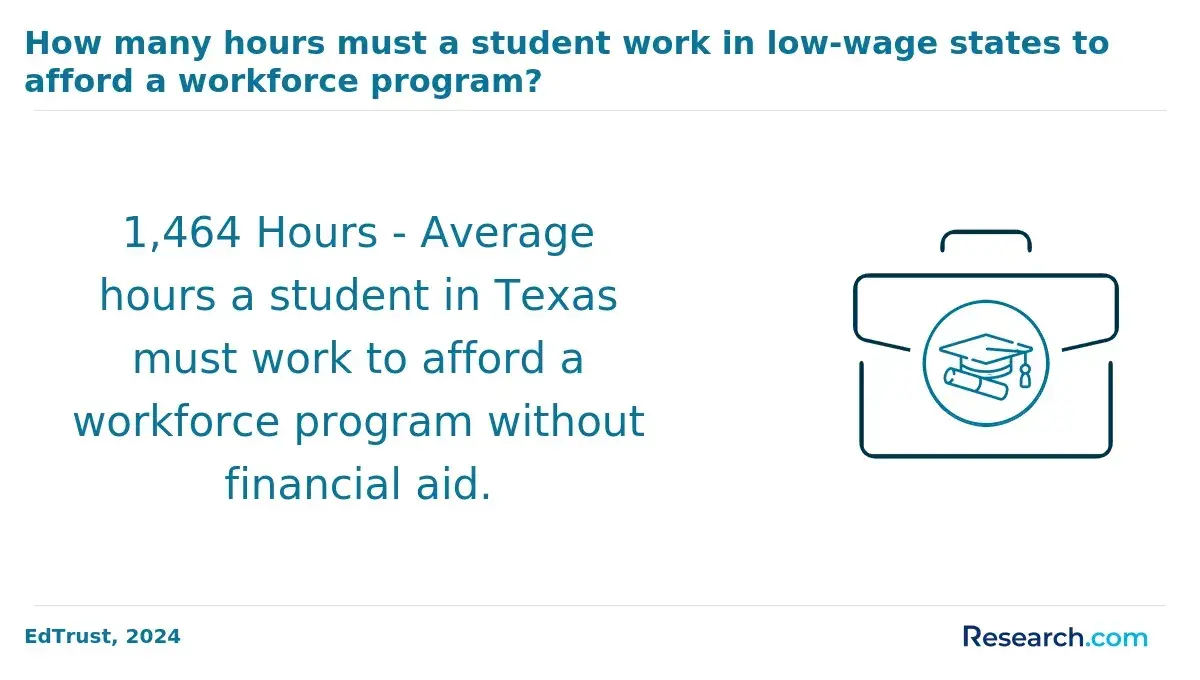
Online doctoral students can collect strong data, but feasibility must be planned earlier than it would be in many campus-based programs. Early childhood education research often involves children, families, teachers, administrators, or protected educational records, so access, consent, privacy, and institutional approval can become major barriers.
The table below connects methodology choice to practical data needs. It can help you spot whether your preferred design is realistic from a distance.
| Research method | Common data sources | Online feasibility considerations | Analysis tools students may need |
| Quantitative | Surveys, child assessment data, classroom rating scales, attendance data, program records | Students need permission to use records, adequate sample size, and secure data-transfer procedures | SPSS, R, Stata, SAS, Excel, survey platforms, data visualization tools |
| Qualitative | Interviews, focus groups, observations, program documents, reflective journals | Students need recruitment plans, recording consent, transcription support, and strategies for building participant trust virtually | NVivo, MAXQDA, ATLAS.ti, Dedoose, secure transcription tools, coding spreadsheets |
| Mixed methods | Survey plus interviews, assessment data plus focus groups, program records plus case studies | Students need a timeline that accounts for two forms of data and a plan for integrating findings | A combination of statistical, qualitative, and integration-mapping tools |
AI tools are increasingly used for transcription, literature organization, and early coding support, but doctoral students should treat them as assistive tools rather than replacements for analysis. Programs should have policies on data privacy, AI-assisted coding, citation integrity, and whether confidential interview data may be uploaded to third-party platforms.
Before committing to a methodology, ask whether the school provides software licenses, research librarian support, statistics tutoring, qualitative coding consultations, secure data storage, and institutional review board guidance for online students. These supports can matter as much as course titles.
Research methodology can affect both time and cost because it influences the number of dissertation terms, the need for software or transcription, and the likelihood of delays during data collection. Online doctorates may appear flexible, but dissertation enrollment fees can continue each term until the final project is approved.
NCES data published through its 2024 reporting show that average graduate tuition and required fees for the 2022-23 academic year were $12,596 at public institutions and $29,931 at private nonprofit institutions. Those averages are not doctorate-specific, but they remind students that added semesters can have very different financial consequences depending on institutional pricing.
| Cost or time factor | Quantitative research | Qualitative research | Mixed-methods research |
| Course preparation | May require additional statistics or measurement courses | May require advanced qualitative design or coding seminars | May require both quantitative and qualitative preparation |
| Data collection time | Can be fast if existing datasets are approved; slow if sample recruitment fails | Often slower because interviews, observations, and transcription take time | Usually longer because two data streams must be coordinated |
| Out-of-pocket tools | Statistical software, survey tools, data access fees | Transcription, recording tools, qualitative software | Multiple software types plus possible transcription and survey costs |
| Dissertation delay risk | Insufficient sample size or weak measures | Recruitment gaps, coding overload, or limited triangulation | Scope creep and weak integration of findings |
Students searching for 1 year EdD programs online should be especially careful. A compressed timeline may work for coursework or an applied project with an existing workplace problem, but original data collection in early childhood settings can be difficult to complete quickly because of consent, school calendars, and institutional review requirements.
Federal graduate borrowers may be eligible for up to $20,500 per year in Direct Unsubsidized Loans, with additional borrowing possible through Grad PLUS if approved. Because interest and fees add to the total cost, students should estimate the cost of dissertation extension terms before choosing a methodology with uncertain data-access requirements.
The best research method depends on what you want the doctorate to help you do. Academic research, policy work, program evaluation, teacher education, district leadership, nonprofit administration, and consulting do not all require the same kind of evidence.
The table below maps common post-doctoral goals to the methodology that often provides the strongest preparation. It is not a rule, but it can help you decide whether your preferred method aligns with your career direction.
| Career goal | Methodology that often fits best | Why it fits | Important caution |
| Faculty or research-center role | Quantitative, qualitative, or mixed methods, depending on research agenda | Academic roles value methodological depth and publication potential | A PhD or research-intensive EdD may be better than a practice-focused EdD for some faculty markets |
| Early childhood program director or agency leader | Qualitative or mixed methods | Leadership questions often involve implementation, family engagement, staff experience, and program improvement | Do not ignore basic quantitative evaluation skills if you manage outcomes data |
| Policy analyst or evaluator | Quantitative or mixed methods | Policy roles often require interpreting outcome data, needs assessments, and program impact evidence | Quantitative work requires comfort with statistics and data quality limitations |
| Curriculum specialist or instructional leader | Mixed methods or qualitative | Curriculum questions often require both implementation evidence and learning indicators | Keep the project focused enough to finish within the program's dissertation timeline |
| Family engagement, equity, or community partnership specialist | Qualitative or mixed methods | These roles often require understanding lived experience, culture, access, and trust | Strong qualitative work requires systematic coding, not anecdotal reporting |
| Assessment or accountability specialist | Quantitative | These roles rely on measurement, data interpretation, and evaluation | Ask whether the program teaches advanced statistics or only introductory methods |
BLS May 2024 data place the median annual wage for education administrators in kindergarten through secondary settings at $104,070, while preschool and childcare center directors had a median annual wage of $55,110. These figures cover broad roles rather than doctorate-only outcomes, so use them as labor-market context, not as a salary promise.
If your long-term interest is child assessment, mental health, intervention, or psychoeducational services, doctoral study in early childhood education may not meet licensure expectations. Students considering practitioner pathways should also compare school psychology programs online accredited by NASP because credentialing requirements differ sharply by state and profession.
Research resources determine whether online doctoral students can move from a promising idea to an approved, completed study. A low-tuition program with weak dissertation support can become expensive if students spend extra terms trying to solve avoidable methodology problems.
Use the following checklist when comparing online early childhood education doctorate programs. These questions help reveal whether a program has real research capacity or only broad claims about flexibility.
- Ask for the required research course sequence and confirm whether quantitative, qualitative, and mixed-methods design are taught at the doctoral level.
- Review dissertation or capstone handbooks to see whether the program restricts methodologies, sample types, data sources, or applied-project formats.
- Search recent dissertation titles from the program to identify which methodologies students actually used, not just which methods are described in catalogs.
- Confirm whether online students receive access to statistical software, qualitative analysis software, survey tools, library databases, interlibrary loan, and research consultation.
- Ask whether the institutional review board has experience with online doctoral students studying children, families, schools, childcare centers, or agency records.
- Request information about dissertation chair assignment, committee formation, methodologist availability, and whether students can change chairs if the research direction changes.
- Clarify whether residencies, synchronous seminars, proposal defenses, or data-analysis workshops are required and whether travel costs are included in published tuition estimates.
Accreditation also matters. At minimum, the university should hold institutional accreditation recognized for federal financial aid purposes. Specialized accreditation may be relevant for teacher preparation or leadership credentials, but early childhood education doctorates do not follow one universal licensure pathway, so students should check state rules and employer expectations before assuming the degree will qualify them for a regulated role.
Transfer credits can reduce cost and time, but they rarely replace advanced dissertation methodology requirements. If a program accepts prior doctoral coursework, ask whether transferred credits shorten only electives or also reduce required research courses.
How Should Students Choose an Online Early Childhood Education Doctorate Based on Research Methodology?
Students should choose an online early childhood education doctorate by starting with the research problem and career goal, then working backward to the degree type, faculty match, methodology support, and cost. The strongest program is not always the one with the most flexible catalog language; it is the one that can support your specific study through completion.
A practical decision process can prevent the most common and costly mistakes. Work through these steps before enrolling.
- Write a one-sentence research problem that identifies the population, setting, issue, and decision you want your study to inform.
- Decide what kind of evidence would answer that problem: measurable outcomes, participant experiences, implementation context, or a combination.
- Match the evidence type to a methodology instead of choosing quantitative, qualitative, or mixed methods based on preference alone.
- Identify at least two faculty members whose recent work aligns with both your early childhood topic and intended methodology.
- Compare required research courses with your current preparation, especially if you have limited statistics, evaluation, or qualitative coding experience.
- Estimate the cost of the full program plus at least one possible dissertation extension term, software, transcription, residency travel, and fees.
- Ask admissions or faculty whether your proposed methodology has been approved recently for online students in the same department.
- Choose the program that offers the best combination of methodological fit, faculty access, research resources, accreditation, manageable cost, and realistic completion structure.
Watch for red flags: vague claims that all methods are supported, no recent dissertations using your preferred design, no methodologist access, unclear IRB timelines, limited software support, or pressure to choose a dissertation topic before you have met potential faculty mentors. Mixed methods deserves special caution because it can look impressive but may double the data-management burden if the design is not tightly focused.
The right methodology should make your research question clearer, not more complicated. If you can explain why your evidence answers your question and why the program can help you gather and analyze that evidence, you are much closer to choosing a doctorate that fits your goals.
Other Things You Should Know About Early Childhood Education
Many students do, especially in EdD programs designed for working educators. The most difficult period is usually the dissertation or capstone stage, when data collection, analysis, and committee revisions require consistent weekly time.
Many programs prefer applicants with professional experience in education, child development, leadership, curriculum, or related services. Requirements vary, so applicants without classroom teaching experience should highlight relevant leadership, research, policy, family-service, or program-administration work.
Usually not by itself. Licensure rules vary by state, and doctoral programs are often designed for leadership, research, or advanced practice rather than initial teacher certification.
It can be, especially when the university is institutionally accredited, the program has strong faculty support, and the dissertation or capstone demonstrates rigorous research. Employers may care more about accreditation, relevance, experience, and demonstrated skills than delivery format alone.
- The Best Ed.D. in Early Childhood Education Programs of 2025 https://www.eddprograms.org/schools/early-childhood-education/
- The Rewards of a Doctorate in Early Childhood Education - Graduate Programs for Educators https://www.graduateprogram.org/blog/the-rewards-of-a-doctorate-in-early-childhood-education/
- Quantitative and Qualitative Methods Doctoral Programs https://www.apadivisions.org/division-5/resources/doctoral
- Research lines: Doctoral Programme in Education & ICT https://www.uoc.edu/en/research/doctoral-school/lines/education-ict
- Where Can an Ed.D. Take You? 6 Careers To Consider - Voices Digital https://www.pacificoaks.edu/voices/from-the-magazine/where-can-an-ed-d-take-you-6-careers-to-consider/
- Research Methods: The Ultimate Guide for Academic and Professional Success https://www.litmaps.com/articles/types-of-research-methods
- Mixed-Methods Research: Combining Qualitative and Quantitative Data https://www.nngroup.com/articles/mixed-methods-research/
- Earning an Online Doctorate in Early Childhood Education https://www.gograd.org/online-phd-programs/best-early-childhood-education-degrees/
- American College of Education Launches Online Doctoral Programs for Early Childhood Professionals | ACE News https://ace.edu/news/american-college-of-education-launches-online-doctoral-programs-for-early-childhood-professionals/
- Types of Research Methods: Quantitative & Qualitative (2026) https://paperguide.ai/blog/types-of-research-methods/