2027 Best Online Early Childhood Education Doctorate Programs for Career Advancement Beyond a Master's Degree

Co-Founder and Chief Data Scientist
A master's degree can open doors in early childhood education, but it may not be enough for senior leadership, policy, research, or higher education roles. BLS May 2024 wage data shows a large gap between preschool and childcare center directors at $55,770 and education administrators in kindergarten through secondary schools at $104,070. This guide is for experienced educators deciding whether an online doctorate is worth the time, cost, and workload. You'll learn which doctoral pathways support advancement, what employers value, and how to choose a program that fits your career goal.
Key Things You Should Know
- An online early childhood education doctorate is most valuable when it targets roles beyond classroom or center-level practice, such as district leadership, college teaching, policy design, program evaluation, or executive administration.
- Salary upside depends on the role, not the credential alone; BLS May 2024 data places instructional coordinators at a median wage of $74,720, while kindergarten through secondary education administrators have a median wage of $104,070.
- The strongest programs for career advancement usually combine regional accreditation, applied research, leadership coursework, flexible online delivery, and a dissertation, capstone, or improvement project aligned with the student's current workplace.
Which Online Early Childhood Education Doctorate Programs Best Support Career Advancement Beyond a Master's Degree?
The best online early childhood education doctorate for career advancement is usually not simply the most famous or fastest program. It is the program whose degree type, research expectations, field-based project, faculty expertise, and employer recognition match the role you want after graduation.
Most professionals compare three broad doctoral pathways: an EdD, a PhD, or a doctorate in education with an early childhood, curriculum, leadership, or policy concentration. Professionals who need a faster credential for an already identified promotion may also compare 1 year EdD programs online, but accelerated options should be evaluated carefully for workload, transfer-credit rules, and capstone expectations.
The table below compares common online doctorate formats and the career advancement goals they typically support. Use it to narrow your search before reviewing individual schools.
| Program type | Best fit after a master's degree | Typical doctoral requirement | Career advancement value | Potential limitation |
| Online EdD in Early Childhood Education | Practitioners seeking leadership in schools, early learning systems, nonprofits, or agencies | Applied dissertation, capstone, or improvement project | Strong fit for executive, program director, curriculum, and systems-change roles | May be less research-intensive than a PhD for tenure-track research roles |
| Online PhD in Early Childhood Education | Professionals pursuing university research, scholarship, or research-policy careers | Original dissertation and advanced research methods | Strong fit for faculty, research institute, and policy research roles | Often longer and less practice-focused than an EdD |
| Online EdD in Educational Leadership with Early Childhood Focus | Educators aiming for district, agency, or school-system leadership | Leadership-focused dissertation or capstone | Useful when the target role emphasizes supervision, budgeting, governance, and strategic planning | Early childhood content may be limited unless the program allows tailored projects |
| Online Doctorate in Curriculum and Instruction | Curriculum specialists, coaches, and instructional leaders | Curriculum research, program evaluation, or instructional improvement project | Strong for curriculum director, professional learning, and instructional quality roles | May not cover early childhood policy, family systems, or birth-to-five administration deeply |
| Online Doctorate in Child Development or Human Development | Professionals focused on developmental science, intervention, assessment, or policy | Research dissertation or applied developmental project | Useful for research, advocacy, public systems, and specialized consulting | May not satisfy education-leadership expectations for some administrator roles |
A strong program should show how doctoral coursework connects to real decisions in early childhood systems: staffing, family engagement, developmental assessment, inclusion, curriculum quality, funding, equity, and program evaluation. If a school cannot explain how its graduates use the degree in senior roles, that is a warning sign.
Which Career Paths Become More Accessible With an Online Early Childhood Education Doctorate?
An online doctorate can make the biggest difference in roles where employers need advanced leadership, research literacy, policy judgment, or evidence-based decision-making. It is less likely to matter for roles that are primarily classroom-based unless the educator is moving into coaching, administration, higher education, or systems leadership.
The table below shows career paths that may become more accessible after doctoral study, especially for professionals who already have a master's degree and several years of experience.
| Career path | Common responsibilities | Is a doctorate required? | How the doctorate may help |
| Early childhood program director or executive director | Oversee operations, staffing, compliance, family services, budgets, and quality improvement | Usually not required | Can strengthen credibility for large, multi-site, nonprofit, or publicly funded leadership roles |
| District early childhood administrator | Lead pre-K programs, supervise staff, align curriculum, manage compliance, and coordinate services | Varies by district and state | Can support advancement into central-office leadership when paired with required administrator credentials |
| Early childhood policy analyst or advocate | Analyze legislation, funding models, access gaps, quality standards, and program outcomes | Often preferred, not required | Builds research, evaluation, and policy communication skills |
| College instructor or professor of early childhood education | Teach future educators, advise students, conduct research, and support field placements | Often preferred or required, especially for full-time faculty roles | Can meet doctoral expectations for higher education hiring and promotion |
| Curriculum director or instructional leader | Design learning frameworks, train teachers, evaluate instructional quality, and align standards | Usually not required | Supports senior curriculum authority and evidence-based program improvement |
| Researcher or program evaluator | Study program outcomes, evaluate interventions, analyze data, and report findings | Often preferred for senior roles | Signals advanced research preparation and ability to lead evaluation projects |
The doctorate is most useful when it builds on your existing professional identity. A center director may use it to move into nonprofit executive leadership, while a master's-prepared teacher educator may use it to qualify for a full-time faculty role. The same degree can produce very different value depending on your prior experience and target employer.
How Does an Online Early Childhood Education Doctorate Increase Earning Potential After a Master's Degree?
An online early childhood education doctorate may increase earning potential by helping professionals compete for higher-level roles, not by automatically changing pay. The most realistic salary gains usually come from moving into administration, higher education, consulting, curriculum leadership, public systems, or research-focused positions.
BLS May 2024 wage data is useful because it shows how pay varies by occupation. For example, the median wage for preschool and childcare center directors is $55,770, while instructional coordinators are listed at $74,720. The difference suggests that moving from site-level management into curriculum, systems, or district-level work can matter more than the degree title alone.
The table below summarizes how doctoral education may affect earning potential across different advancement routes. It should be used as a decision tool, not as a salary promise.
| Advancement route | Typical master's-level ceiling | Doctoral-level opportunity | Salary implication |
| Center leadership to multi-site leadership | Director or senior director | Executive director, regional director, quality systems leader | Potentially higher pay if the role includes broader budget, compliance, and personnel authority |
| Teacher or coach to curriculum leadership | Instructional coach or lead teacher | Curriculum director, professional learning director, instructional coordinator | May improve access to roles tied to district or organization-wide pay scales |
| Master's-level instructor to faculty role | Adjunct instructor or lecturer | Full-time faculty, program chair, teacher preparation leader | Value depends heavily on institution type, publication expectations, and teaching demand |
| Practitioner to research or policy role | Program specialist or manager | Policy researcher, evaluation lead, senior consultant | May increase competitiveness for roles requiring advanced research and analysis |
Professionals should avoid treating doctoral salary growth as automatic. Before enrolling, review job postings in your region, check whether doctorate-preferred roles offer higher salary bands, and ask whether your current employer rewards doctoral completion through promotion, stipends, or salary-lane movement.
Doctoral study can help professionals qualify for leadership roles by developing the competencies employers expect from people who guide programs, people, budgets, policies, and outcomes. In early childhood education, leadership is increasingly tied to evidence use, equity, family engagement, staff development, and accountability.
The most useful programs go beyond theory and require students to apply research to real organizational problems. Professionals should look for coursework and projects that build the following leadership capabilities:
- Strategic planning for early learning systems, including quality improvement, staffing, community partnerships, and sustainable funding.
- Data-informed decision-making, such as using assessment, attendance, family engagement, and program outcome data responsibly.
- Personnel leadership, including teacher coaching, professional development, supervision, and conflict resolution.
- Policy and compliance knowledge related to state standards, licensing rules, publicly funded pre-K, Head Start partnerships, and inclusion requirements.
- Communication skills for presenting research, budgets, and program outcomes to boards, families, funders, school leaders, and policymakers.
The degree can also help professionals move from "implementing" decisions to "designing" decisions. That distinction matters: senior leaders are often expected to evaluate evidence, select interventions, defend resource allocation, and measure results across multiple classrooms, centers, or communities.
A common mistake is pursuing a doctorate without a leadership problem to solve. A stronger approach is to enter the program with a career-aligned question, such as improving kindergarten readiness, reducing teacher turnover, strengthening inclusive practice, or evaluating family support services.
The strongest specialization depends on whether your goal is administration, research, curriculum leadership, higher education, policy, or child development expertise. A specialization should extend your master's degree rather than repeat it.
Professionals interested in assessment, child development, intervention, and family-school systems should also understand the boundary between early childhood education and school psychology. If the target career involves psychoeducational assessment or school psychologist licensure, compare doctoral ECE programs with school psychology programs online accredited by NASP, because licensing expectations can differ substantially.
The table below compares specializations by advancement potential and career fit.
| Specialization | Best career fit | Why it may support advancement | When it may not be ideal |
| Early Childhood Leadership and Administration | Directors, executive directors, district early learning leaders | Aligns with supervision, governance, finance, compliance, and organizational change | Less ideal for research-intensive faculty roles |
| Curriculum and Instruction | Instructional coaches, curriculum specialists, teacher educators | Supports leadership in learning design, assessment, and professional development | May be too broad if you need birth-to-five policy expertise |
| Child Development or Developmental Science | Researchers, intervention specialists, policy analysts | Deepens expertise in developmental theory, early intervention, and child outcomes | May not include enough administrative leadership coursework |
| Education Policy and Advocacy | Policy analysts, nonprofit leaders, public agency professionals | Builds capacity to evaluate systems, funding, access, and equity | May be less useful for center-level management roles |
| Special Education or Inclusive Early Childhood Education | Inclusion coordinators, disability services leaders, early intervention professionals | Supports leadership in inclusive practice, family collaboration, and service coordination | May require separate state credentials for some regulated roles |
| Higher Education or Teacher Education | College instructors, faculty, program chairs | Aligns with adult learning, accreditation, field supervision, and educator preparation | May not provide enough systems-administration preparation |
Specialization choice should be practical. If you want to become a district early childhood administrator, leadership and policy coursework may matter more than a narrow research topic. If you want to teach in a university, research design, publications, and dissertation quality may matter more than administrative coursework.
Employers generally value an online doctorate when it comes from a regionally accredited institution and when the graduate can show relevant leadership, research, or program-improvement skills. The delivery format matters less than the credibility of the institution, the rigor of the doctoral work, and the fit between the degree and the role.
For career advancement, employers may look for evidence that the doctorate produced practical value. This can include a dissertation or capstone tied to early childhood outcomes, experience leading teams, published or presented research, grant writing, program evaluation, or measurable improvement work.
Several red flags can reduce employer confidence in the credential. Watch for these issues before enrolling:
- No clear regional accreditation or unclear institutional approval to offer doctoral degrees.
- Faculty with limited expertise in early childhood education, child development, policy, or leadership.
- Generic education coursework with no way to tailor assignments to early childhood settings.
- No transparent expectations for dissertation, capstone, residency, mentorship, or research support.
- Marketing that implies a promotion or salary increase is guaranteed after graduation.
Current employer expectations are also being shaped by technology. Early childhood leaders increasingly need to understand data dashboards, digital family communication systems, learning platforms, privacy concerns, and responsible AI use in curriculum planning or administrative work. A strong doctorate does not need to be a technology degree, but it should help leaders evaluate tools ethically and use evidence rather than hype.
Most working professionals should expect an online early childhood education doctorate to take about three to five years, depending on transfer credits, enrollment pace, dissertation or capstone requirements, and how quickly the student can collect data or complete field-based work. Shorter options may exist, but speed should not outweigh fit, accreditation, or doctoral support.
Some professionals compare dissertation-based doctorates with online EdD programs no dissertation because applied capstones can be more compatible with full-time leadership work. However, "no dissertation" does not mean no major doctoral project; most programs still require a rigorous applied study, improvement project, or portfolio.
The table below shows common timeline patterns for master's-prepared professionals.
| Enrollment pattern | Common time range | Best fit | Main trade-off |
| Accelerated full-time online doctorate | About 2 to 3 years when transfer credits and project progress align | Professionals with strong employer support, flexible schedules, and a clear project topic | Heavy workload and less time for reflection, networking, or publication |
| Part-time online doctorate | About 3 to 5 years | Working educators, directors, and administrators balancing employment and family obligations | Longer time before the credential can affect advancement |
| Cohort-based EdD | Often structured across 3 years or more | Professionals who value peer networks, predictable pacing, and guided milestones | Less flexibility if work demands change |
| Research-intensive PhD | Often longer than an applied EdD | Future researchers, faculty, and policy scholars | More demanding research expectations and potentially longer dissertation timelines |
To manage the timeline, professionals should take these steps before applying:
- Confirm whether the program accepts transfer credits from your master's degree and whether those credits reduce total time or only elective requirements.
- Ask how long recent online students took to complete the dissertation, capstone, or applied project.
- Identify a workplace-based problem that can become a doctoral project without creating ethical, data-access, or approval barriers.
- Review residency, synchronous class, internship, and comprehensive exam requirements before assuming the program is fully flexible.
- Discuss workload expectations with your employer if your project requires access to staff, families, records, or program data.
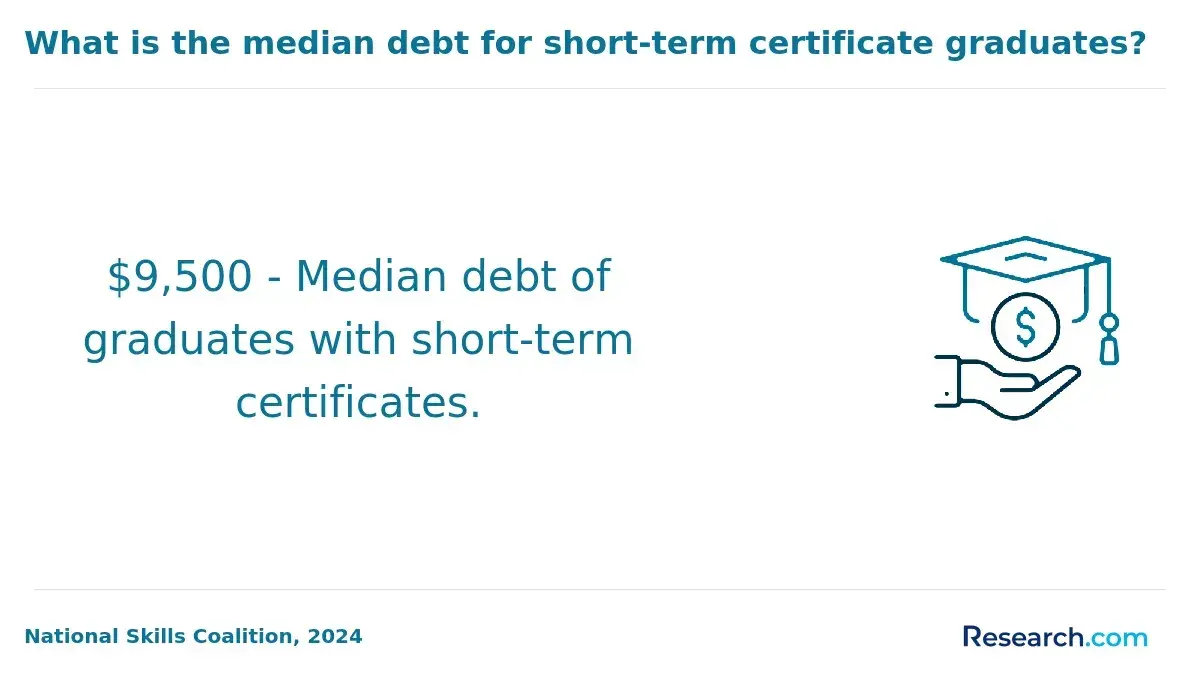
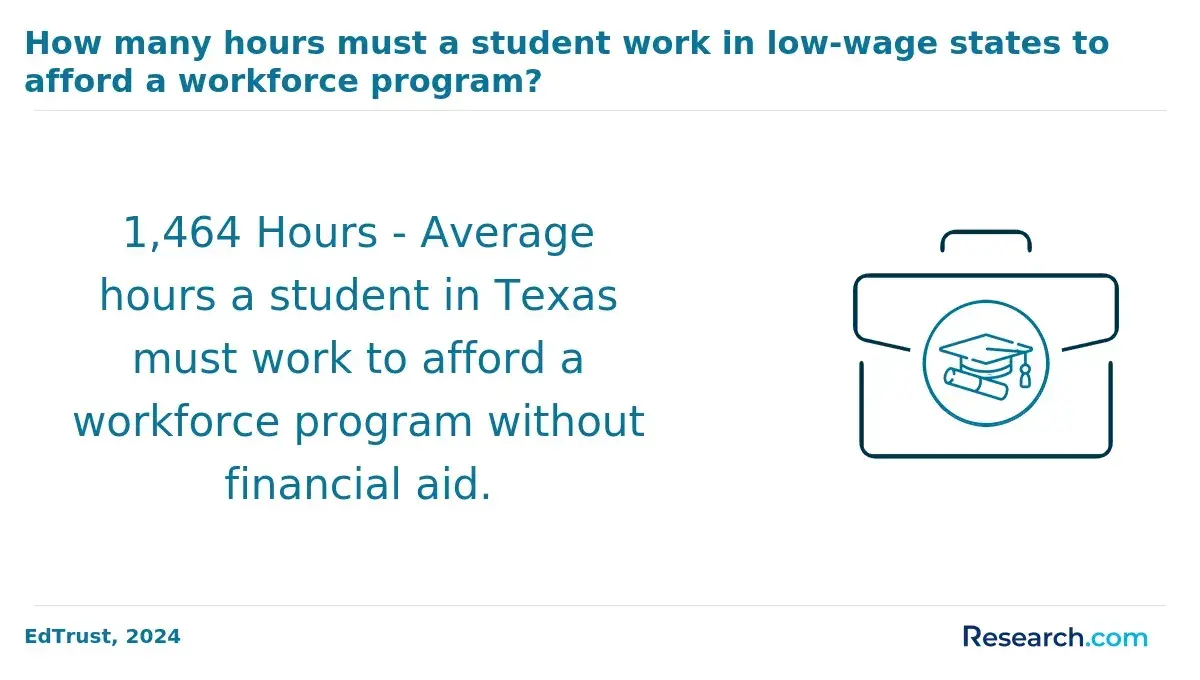
The ROI of an online early childhood education doctorate depends on total cost, time to completion, opportunity cost, debt, employer support, and the specific role you can realistically pursue. The degree may have strong ROI for professionals moving into higher-paying leadership or faculty roles, but weak ROI for those who plan to remain in positions where pay is set by master's-level salary schedules.
Cost should be evaluated carefully. NCES Digest of Education Statistics data released in 2024 shows that average graduate tuition and required fees were substantially higher at private nonprofit institutions than at public institutions in the most recent reported academic year. For readers, the key point is not that one institution type is automatically better, but that total program cost must be compared against realistic advancement opportunities.
The table below outlines common ROI scenarios for master's-prepared early childhood professionals.
| ROI scenario | When ROI may be stronger | When ROI may be weaker | What to verify before enrolling |
| Promotion within current employer | Your employer has doctoral salary lanes, leadership openings, or tuition support | The employer does not reward doctoral credentials or has few senior roles | Promotion criteria, pay bands, and tuition reimbursement rules |
| Move into district or agency leadership | The doctorate aligns with administrator, policy, or systems-level requirements | The target role mainly requires licensure or experience rather than doctoral education | State credentials, job postings, and leadership prerequisites |
| Transition to higher education | The doctorate meets faculty hiring expectations and includes research or teaching preparation | The market is saturated or the role is adjunct-only | Faculty job postings, publication expectations, and teaching experience requirements |
| Consulting or program evaluation | You already have a professional network and a clear service niche | You expect the degree alone to generate clients | Demand for evaluation, training, curriculum, or quality-improvement services |
A practical ROI calculation should include more than tuition. Include fees, books, travel for residencies, technology, childcare, reduced work hours, loan interest, and the time it may take to move into a higher-paying role after graduation.
Staying at the master's level can be the smarter decision if your target job does not prefer a doctorate, if a license or certificate would solve the barrier more directly, or if the doctoral program duplicates your existing specialization without expanding your career options.
The professionals who benefit most are those who already have experience, a master's degree, and a clear advancement target that rewards doctoral-level expertise. The degree is usually a strategic mid-career or senior-career investment, not an entry-level credential.
An online doctorate may be a strong fit for the following professionals:
- Early childhood directors who want to move into executive, regional, district, or agency leadership roles.
- Teacher educators or adjunct instructors who need a doctorate for full-time faculty, program chair, or higher education advancement.
- Curriculum specialists who want to lead instructional systems, professional development, or program improvement across multiple sites.
- Policy, advocacy, or nonprofit professionals who need stronger research, evaluation, and systems-change expertise.
- Special education, inclusion, or early intervention leaders who want to influence program design, professional learning, or cross-agency collaboration.
Some professionals may get better value from a lower-cost credential. For example, educators moving toward learning technology, adult training, or digital curriculum roles may want to compare doctoral study with best online instructional design master's programs, especially if their career goal is instructional design rather than senior early childhood leadership.
An online doctorate may not be the right next step if you are unsure about your target role, need initial teacher licensure, want a quick salary increase in a role with fixed pay, or cannot commit to sustained reading, research, writing, and project work. In those cases, endorsements, leadership certificates, administrator licensure, coaching credentials, or targeted professional development may produce faster value.
How Should Professionals Choose an Online Early Childhood Education Doctorate for Career Advancement?
Choosing the right program starts with your desired role, not the school brochure. A doctorate should solve a defined career problem: qualifying for faculty roles, leading larger programs, moving into policy, building research credibility, or advancing into executive leadership.
Use the following steps to compare programs in a career-focused way:
- Define your target role and collect at least several real job postings to identify required degrees, preferred credentials, licenses, and experience.
- Choose the degree type that fits the goal: EdD for applied leadership and organizational improvement, PhD for research and scholarship, or a specialized education doctorate for curriculum, policy, or child development leadership.
- Verify regional accreditation and confirm whether the program meets any state-specific licensure, administrator, or professional requirements relevant to your role.
- Compare dissertation, capstone, or applied-project models and choose the structure that will produce a portfolio-worthy outcome for your career.
- Ask schools for completion timelines, doctoral support services, faculty expertise, graduate career examples, and whether online students receive the same advising as campus students.
- Calculate total cost, including tuition, fees, residency travel, lost work time, loan interest, and the timing of any expected promotion or career move.
- Check whether the curriculum adds new value beyond your master's degree instead of repeating content you have already mastered.
Before committing, ask direct questions: What roles have graduates entered? How many online students finish the dissertation or capstone on time? Can the doctoral project be based in your workplace? Are faculty active in early childhood education research or leadership? Does the program support publication, conference presentations, or professional networking?
The smartest choice is the program that makes your next career move more credible, measurable, and attainable. A doctorate is a major investment, so it should be tied to a specific advancement path rather than a general hope that another credential will create opportunity.
Other Things You Should Know About Early Childhood Education
Not always. Many online doctoral programs admit master's-prepared professionals from teaching, administration, nonprofit, policy, or child development backgrounds. However, a teaching or administrator license may still be required for certain public school or district roles, depending on the state and employer.
Yes, especially if the program includes research methods, teaching experience, publication opportunities, and a dissertation or capstone related to early childhood education. Full-time faculty roles may prefer or require a doctorate, while adjunct roles may accept a master's degree depending on the institution.
Many education doctoral programs have reduced or removed GRE requirements, but policies vary by school. Applicants should expect to submit graduate transcripts, a resume, recommendation letters, a statement of purpose, and sometimes a writing sample or interview.
Many students do, but it requires careful planning. Part-time online formats are usually more manageable for working educators, while dissertation, capstone, residency, or data-collection periods may require temporary schedule flexibility.
- 2025 Most Affordable Online Doctorates in Education https://www.onlineu.com/most-affordable-colleges/education-doctoral-degrees
- Ed.D. in Early Childhood Education | ACE https://ace.edu/degree-programs/doctoral-degrees/doctoral-education/doctor-of-education-in-early-childhood-education/
- Online Ed.D. in Early Childhood Education | Doctorate in ECE Online https://www.pacificoaks.edu/academic-programs/edd-in-early-childhood-education/
- The Rewards of a Doctorate in Early Childhood Education - Graduate Programs for Educators https://www.graduateprogram.org/blog/the-rewards-of-a-doctorate-in-early-childhood-education/
- Everything You Need to Know About Earning a Degree in Early Childhood Education https://mybrightwheel.com/blog/degree-in-early-childhood-education
- Campus vs Online vs Hybrid Doctor of Education (EdD) Programs https://www.onlineeddprograms.com/faqs/campus-online-hybrid-edd-programs
- The Best Ed.D. in Early Childhood Education Programs of 2025 https://www.eddprograms.org/schools/early-childhood-education/
- Earning an Online Doctorate in Early Childhood Education https://www.gograd.org/online-phd-programs/best-early-childhood-education-degrees/