
2027 Best Online Early Childhood Education Doctorate Programs for Private Sector and Corporate Careers

Co-Founder and Chief Data Scientist
Professionals moving from classrooms, childcare leadership, curriculum, or family services into corporate education roles need more than advanced theory; they need evidence-based leadership, product strategy, analytics, and workforce training skills. BLS May 2024 wage data shows training and development managers earned a median salary of $127,090, making corporate learning leadership a serious target for experienced educators.
This guide explains how online Early Childhood Education doctorates fit private sector goals, which program features matter most, and how to compare research-focused and applied options before investing time and tuition.
Key Things to Know About Online Early Childhood Education Doctorate Programs for Corporate Careers
- An online Early Childhood Education doctorate is most valuable for corporate professionals targeting senior roles in learning design, early learning product development, childcare operations, research, policy strategy, or workforce training-not for roles that only require classroom licensure.
- BLS May 2024 data places several relevant private sector leadership roles in the mid-five-figure to six-figure range, including instructional coordinators at $74,720 and training and development managers at $127,090, but outcomes depend on industry, experience, geography, and role scope.
- Applied EdD programs usually fit corporate goals better than research-heavy PhD programs when the goal is organizational leadership, product implementation, training evaluation, or evidence-based program improvement.
Will Early Childhood Education doctorate programs benefit corporate professionals?
Yes, an Early Childhood Education doctorate can benefit corporate professionals when the role requires advanced knowledge of child development, learning systems, program evaluation, leadership, or evidence-based decision-making. The degree is less useful if the target job is purely operational and does not reward doctoral-level expertise, such as entry-level curriculum writing, basic childcare administration, or sales roles where industry experience matters more than academic credentials.
In the private sector, early childhood expertise appears in more places than many educators expect. Companies build preschool curriculum platforms, employer-sponsored childcare programs, teacher training products, family engagement apps, developmental assessment tools, and workforce learning systems for childcare providers. A doctorate can help professionals lead these initiatives because it signals the ability to interpret research, evaluate outcomes, manage complex programs, and communicate with executives, educators, regulators, and clients.
The strongest fit is usually for experienced professionals who already have a base in education, psychology, childcare leadership, instructional design, product management, nonprofit-private partnerships, or education technology. For these readers, the doctorate can sharpen credibility and open more strategic responsibilities. For professionals who need speed and already know they want an applied education doctorate, comparing 1 year EdD programs online may help clarify whether an accelerated route is realistic, although fast programs can be intense and may limit time for deeper research projects.
The value of the degree depends on the gap between your current role and your intended corporate role. The table below shows when the doctorate tends to have the strongest payoff and when another credential may be more practical.
| Professional situation | Doctorate fit | Why it matters for corporate goals |
| Experienced ECE leader moving into corporate learning, product, or strategy | Strong fit | The doctorate can add research fluency, executive credibility, and evaluation skills. |
| Curriculum specialist seeking senior product or content leadership | Strong fit | Advanced study supports evidence-based curriculum design and market differentiation. |
| Childcare operations manager targeting multi-site or enterprise leadership | Moderate to strong fit | Applied research and organizational leadership can support scalable program improvement. |
| Early-career educator with limited management experience | Moderate fit | A master's degree, certification, or supervisory experience may be a better first step. |
| Professional seeking classroom licensure only | Weak fit | Licensure is governed by state rules, and a doctorate usually exceeds entry requirements. |
What makes online Early Childhood Education doctorate programs ideal for private sector or corporate careers?
The best online Early Childhood Education doctorate programs for corporate careers are not simply the most prestigious or the shortest. They are programs that combine advanced child development knowledge with applied leadership, data analysis, curriculum innovation, adult learning, and measurable improvement in real organizations.
Corporate fit depends on whether the program helps you build evidence that employers can understand. A dissertation, capstone, consulting-style project, program evaluation, or applied improvement study should connect directly to problems a company might pay someone to solve, such as improving teacher training completion, evaluating a digital preschool product, reducing staff turnover in childcare centers, or measuring family engagement outcomes.
Look for these features before applying because they affect both learning value and employer relevance:
- Regional accreditation: This is the baseline quality signal most employers and other universities recognize.
- ECE-specific coursework: Courses should address early development, equity, family systems, early literacy, assessment, or early learning leadership rather than only general education administration.
- Applied research options: A strong corporate-focused program lets you study a workplace problem, product, population, or system you can connect to your career goals.
- Quantitative and qualitative methods training: Corporate leaders often need to interpret user data, learning outcomes, workforce metrics, and implementation results.
- Flexible online format: Asynchronous or low-residency formats are useful for professionals who cannot pause full-time work.
- Faculty with practitioner experience: Faculty connected to early learning systems, policy, assessment, instructional design, or organizational leadership can make the program more practical.
- Portfolio-ready outputs: Projects should produce work samples, evaluation reports, research briefs, or leadership artifacts that can support promotions or job searches.
Some applied programs reduce or replace the traditional dissertation with a capstone, dissertation-in-practice, or improvement project. If your goal is corporate implementation rather than academic publishing, reviewing online EdD programs no dissertation can help you understand alternatives, but always confirm whether the final project has enough rigor to impress senior employers.
What are the best online Early Childhood Education doctorate programs for private sector careers?
The strongest choices are usually online or low-residency doctoral programs with an Early Childhood Education specialization, applied leadership emphasis, or research pathway that can be shaped around private sector problems. Because admissions policies, tuition, and formats change, use the following list as a decision starting point rather than a fixed ranking.
The table compares program examples by corporate fit. Readers should verify current accreditation, total cost, residency requirements, and specialization availability directly with each institution before applying.
| Institution | Online doctorate option to investigate | Best private sector fit | Why it may work for corporate goals |
| American College of Education | EdD with early childhood-related specialization options | Working educators targeting applied leadership or childcare systems roles | Career-aligned online structure and applied education focus can support workplace-based projects. |
| Concordia University Chicago | EdD or PhD options in Early Childhood Education | Professionals comparing applied leadership and research-heavy routes | The availability of both EdD and PhD-style pathways can help students match doctoral format to career goals. |
| National University | Online EdD or PhD education pathways with early childhood specialization options | Professionals in curriculum, training, consulting, or education technology | Flexible doctoral structures may support research around product, program, or organizational problems. |
| Walden University | Online EdD with Early Childhood Education specialization | ECE administrators, trainers, and program leaders seeking applied doctoral study | The specialization can connect early learning expertise with leadership and change management. |
| University of Colorado Denver | EdD in Leadership for Educational Equity with early childhood-related pathways | Leaders focused on systems change, equity, policy, and program improvement | The leadership and equity orientation may fit companies working with public-private early learning systems. |
A program becomes "best" only when it matches your intended role. A candidate pursuing early learning product strategy should prioritize research methods, curriculum evidence, child development, and user-centered evaluation. A candidate pursuing multi-site childcare leadership should prioritize finance exposure, systems leadership, workforce development, compliance awareness, and applied improvement projects.
Common red flags include vague specialization names, no clear faculty expertise in early childhood, weak research support, unclear dissertation expectations, and marketing that implies a doctorate automatically leads to executive work. Stronger programs make career alignment visible through coursework, faculty profiles, student project examples, and transparent academic requirements.
An applied doctorate, usually an EdD, is often the better fit for corporate careers because it focuses on solving organizational problems. A research-focused doctorate, often a PhD, is stronger for professionals who want to lead research teams, publish studies, design assessments, teach at the university level, or move into evidence and evaluation roles where original research is central.
The distinction matters because employers will pay attention to what you can do with the credential, not only the letters after your name. A corporate hiring manager may value a dissertation-in-practice on improving teacher onboarding more than a theoretical study if the role involves workforce training. A research organization, assessment company, or policy contractor may prefer the deeper methodology training of a PhD.
This comparison shows how each path typically aligns with private sector goals.
| Factor | Applied EdD in Early Childhood Education | Research-focused PhD in Early Childhood Education |
| Primary purpose | Improve practice, systems, programs, and leadership decisions | Produce original research and contribute to the scholarly field |
| Best corporate match | Training leadership, operations, curriculum implementation, program improvement | Research director, assessment development, policy research, evidence strategy |
| Typical final project | Dissertation-in-practice, capstone, or applied improvement study | Traditional dissertation based on original research |
| Best for working professionals | Often strong because many EdD programs are designed around active practitioners | Variable because research intensity may require more time and methodological depth |
| Main trade-off | May be less ideal for research faculty or academic research careers | May be less directly tied to immediate workplace implementation |
Choose the EdD if you want to improve organizations, lead people, evaluate programs, and translate evidence into strategy. Choose the PhD if you want to generate new research, lead scientific inquiry, build assessments, or compete for roles where research design is the main job function.
A strong Early Childhood Education doctorate can build skills that corporate employers value when they are tied to measurable business or learning outcomes. The most transferable skills are not limited to child development knowledge; they include analytics, communication, strategic planning, product evaluation, adult learning, and change leadership.
BLS 2024 projections show management analysts are expected to grow faster than average through the 2024 to 2034 period, which reflects sustained demand for professionals who can diagnose organizational problems and recommend evidence-based improvements. For doctoral students, that means a program with evaluation and organizational analysis coursework may have broader corporate value than one focused only on classroom practice.
The table below connects doctoral learning areas to private sector applications, making it easier to judge whether a curriculum supports your target role.
| Doctoral learning area | Corporate skill gained | Private sector application |
| Early childhood development and learning science | Evidence-based product and curriculum judgment | Evaluating preschool platforms, learning materials, and family engagement tools |
| Research methods and statistics | Program evaluation and data interpretation | Measuring training outcomes, child outcomes, adoption rates, or implementation quality |
| Organizational leadership | Change management and team leadership | Leading multi-site childcare initiatives or corporate learning teams |
| Curriculum theory and instructional design | Learning experience design | Building teacher training, parent education, and digital learning products |
| Policy, equity, and systems coursework | Stakeholder and compliance awareness | Working with employers, states, districts, providers, and community partners |
| Dissertation or capstone work | Executive-level problem solving | Creating portfolio evidence for leadership, consulting, or strategy roles |
If your main gap is course design rather than doctoral-level leadership, a master's credential may be enough. Professionals focused primarily on learning technology, training assets, or digital course development may want to compare the best online instructional design master's programs before committing to a doctorate.
An Early Childhood Education doctorate can support advancement into senior roles where child development expertise intersects with business strategy, learning systems, workforce development, research, or product leadership. It is rarely the only requirement. Employers may also expect management experience, portfolio evidence, industry knowledge, and the ability to translate education research into business decisions.
The roles below are realistic targets for experienced professionals, although titles vary widely across education technology companies, childcare networks, publishers, consulting firms, employer-sponsored childcare providers, nonprofits with corporate contracts, and research organizations.
| Corporate role | How the doctorate can help | Relevant BLS May 2024 salary context |
| Director of early learning strategy | Supports evidence-based decision-making, stakeholder leadership, and program design | Comparable leadership roles may align with education administrator or operations manager wage data. |
| Training and development manager | Connects adult learning, teacher training, evaluation, and workforce development | Training and development managers had a median salary of $127,090. |
| Instructional design or curriculum director | Strengthens curriculum evaluation, learning science, and assessment literacy | Instructional coordinators had a median salary of $74,720. |
| Director of research or evaluation | Builds credibility for study design, implementation research, and outcome analysis | Management analysts had a median salary of $101,190. |
| Childcare operations executive | Adds systems leadership, quality improvement, and workforce planning expertise | General and operations managers had a median salary of $102,950. |
| Education product manager or learning experience lead | Helps connect child development evidence with product decisions and user needs | Market research analysts had a median salary of $76,950. |
For career planning, think in stages rather than assuming the degree immediately changes your title. Many professionals move from specialist or manager roles into director-level work after combining doctoral projects with measurable workplace achievements, such as improving training completion, leading a new curriculum launch, or building a data dashboard for early learning quality.
Programs with corporate, community, research, or employer partnerships can offer an advantage when those relationships create real projects, mentoring, field access, data opportunities, or career-relevant networks. A partnership is less meaningful if it is only a logo on a website and does not change what students can do, study, or document.
For corporate careers, the best partnerships are usually not limited to traditional school placements. Useful connections may include childcare networks, early learning companies, education technology firms, family services organizations, assessment providers, workforce development groups, hospitals with child development programs, or employer-sponsored childcare providers.
Before treating a partnership as a major selling point, ask the program specific questions:
- Can doctoral students complete applied research or capstone projects with partner organizations?
- Are corporate or private sector mentors available, or are partnerships mostly K-12 and university-based?
- Do students get access to anonymized organizational data for evaluation projects?
- Have recent students used partner sites for dissertations, consulting projects, or leadership initiatives?
- Does the program help students translate project results into portfolio materials, conference presentations, or executive briefs?
The trade-off is that partnership-heavy programs may steer students toward certain sectors or project types. If your goal is education technology product leadership, a program connected only to school district administration may still be valuable, but it may not provide the same career signal as a project tied to product testing, customer success, or digital learning analytics.
Corporate employers generally evaluate online doctorates through the same practical lens they use for other advanced credentials: accreditation, institutional credibility, relevance to the role, evidence of skills, and the candidate's work history. The online format itself is usually less important than whether the degree came from a legitimate accredited institution and whether the graduate can demonstrate business-relevant impact.
Online education is also no longer unusual in the U.S. higher education market. NC-SARA reported more than 2,400 participating institutions in its distance education reciprocity system in 2024, which reflects how widely regulated distance education has become across states. For readers, the implication is not that every online program is equal; it is that employers are more likely to focus on quality signals than on the word "online."
Employers tend to respond best when candidates present the doctorate as a tool for solving business problems, not as a credential alone. A resume or interview should connect doctoral work to measurable outcomes, such as training effectiveness, curriculum quality, program improvement, user research, compliance readiness, staff retention, or child and family engagement.
To reduce employer skepticism, prepare a concise evidence package:
- A short explanation of the program's accreditation and doctoral requirements.
- A portfolio item from the dissertation, capstone, or applied project.
- A one-page executive summary translating research findings into business recommendations.
- Examples of tools created during the program, such as evaluation plans, training models, dashboards, or implementation guides.
- A clear explanation of how doctoral study improved your leadership decisions at work.
There is no single salary for Early Childhood Education doctorate holders because the credential can lead to different private sector roles. Salary depends on job function, leadership level, employer type, location, prior experience, and whether the role is tied to revenue, operations, research, or training strategy.
BLS May 2024 wage data provides the best neutral benchmark because it reports salaries by occupation rather than degree title. The table below uses relevant U.S. occupations as context, not as a guaranteed outcome for doctoral graduates.
| Private sector career direction | Comparable occupation benchmark | Median annual salary, May 2024 | How to interpret the number |
| Corporate training and workforce learning | Training and development managers | $127,090 | Relevant for doctoral graduates leading educator training, onboarding, or learning strategy. |
| Operations leadership | General and operations managers | $102,950 | Relevant for multi-site childcare operations or early learning service companies. |
| Organizational improvement and consulting | Management analysts | $101,190 | Relevant for evaluation, consulting, and systems improvement roles. |
| Curriculum and instructional leadership | Instructional coordinators | $74,720 | Relevant for curriculum quality, instructional review, and learning program roles. |
| Market and product research | Market research analysts | $76,950 | Relevant for education product research, user insights, and early learning market analysis. |
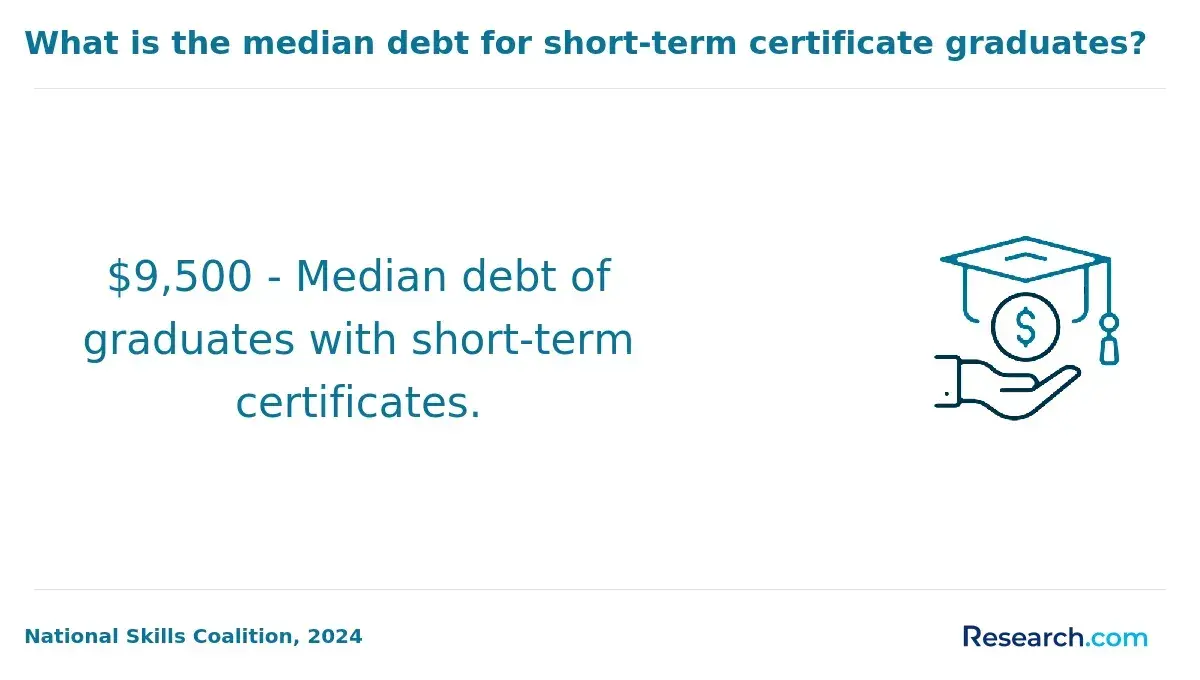
ROI should be evaluated against total cost, time to completion, opportunity cost, employer tuition support, and the likelihood that your target role actually rewards doctoral-level expertise. A lower-cost program with strong applied projects may create better private sector value than a more expensive program with weak alignment to your career path.
Be cautious with salary claims from schools or third-party rankings. A doctorate may strengthen your candidacy for higher-level work, but it does not override experience, management track record, networking, product knowledge, or business performance.
How do you narrow down online Early Childhood Education doctorate programs for corporate goals?
Start with the job you want, then work backward to the program features that build evidence for that job. This prevents a common mistake: choosing a program because it sounds impressive, then discovering that its coursework, dissertation model, or faculty expertise does not support your corporate direction.
Use this sequence to compare programs in a practical way:
- Define your target role in plain language, such as early learning product director, training leader, research manager, childcare operations executive, or education consultant.
- Identify the skills the role requires, including data analysis, product evaluation, workforce training, curriculum strategy, child development expertise, or executive communication.
- Compare EdD and PhD formats based on whether you need applied leadership or deeper research preparation.
- Review the curriculum for courses in early childhood, research methods, organizational leadership, adult learning, equity, assessment, and program evaluation.
- Check whether the final project can focus on a corporate, childcare network, education technology, or workforce development problem.
- Ask admissions advisors for examples of recent dissertations, capstones, or student projects related to private sector work.
- Calculate total cost, including fees, travel, residencies, books, technology, and reduced work hours if applicable.
- Confirm accreditation, transfer policies, faculty fit, online support, and time-to-completion expectations before applying.
You should also compare alternatives. For example, if your goal is child assessment, behavioral consultation, or psychological services, doctoral ECE study may not be the correct pathway; in those cases, researching school psychology programs online accredited by NASP may be more relevant because professional requirements differ.
Before committing, ask each school direct questions that reveal career alignment:
- How many students complete projects in corporate, nonprofit-private, childcare network, or education technology settings?
- Can I choose a dissertation or capstone topic tied to my employer or target industry?
- What research methods support is available for working professionals?
- Are faculty members experienced in early childhood systems, product evaluation, workforce learning, or applied research?
- What career services are available for doctoral students pursuing nonacademic roles?
- How transparent is the program about total cost, completion time, and attrition risks?
A strong final choice should pass three tests: it should be academically credible, logistically realistic, and directly connected to the corporate problems you want to solve. If it fails any one of those tests, keep comparing.
Other Things You Should Know About Early Childhood Education
Not always. Corporate roles in curriculum, training, product, research, or operations may not require teaching licensure, although prior classroom or childcare experience can strengthen credibility. Licensure requirements vary by state and role, especially for positions connected to public schools or regulated childcare services.
Many online education doctorates take about three to five years, depending on transfer credits, enrollment pace, dissertation progress, and program structure. Accelerated options may be shorter, but they often require heavier weekly workloads and a clearly defined project early in the program.
Sometimes. Many employers limit tuition assistance by annual amount, approved school, job relevance, grade requirements, or repayment rules if you leave the company. Ask HR for the written policy before enrolling, and confirm whether doctoral tuition, fees, and residencies are covered.
It can help, but consulting also requires a clear service niche, evidence of results, client communication skills, and a professional network. The strongest consulting candidates use doctoral projects to create case studies, evaluation tools, training models, or research briefs that show practical value.
- 202 Top Picks: Best Early Childhood Education ITP Master’s Degree Programs https://www.preschoolteacher.org/2020-21-top-picks-best-early-childhood-education-itp-masters-degree-programs/
- Can Private Companies Join Research Networks? » WAITRO https://waitro.org/blog/can-private-companies-join-research-networks/
- How to Create a Successful Leadership Development Program - Harvard Business Impact https://www.harvardbusiness.org/insight/how-to-create-a-successful-leadership-development-program/
- Top 7 Online Leadership & Management Programs for Business Professionals https://www.corpoladder.com/blog/top-online-leadership-management-programs-for-business-professionals
- Leadership & Management https://internationalcurriculum.com/leadership-and-management/
- Choosing the Right Management Training https://www.impactfactory.com/resources/choosing-the-right-management-training/
- Career earnings by college major - The Hamilton Project https://www.hamiltonproject.org/data/career-earnings-by-college-major/
- Our partners https://4euplus.eu/4EU-44.html
- The Rewards of a Doctorate in Early Childhood Education - Graduate Programs for Educators https://www.graduateprogram.org/blog/the-rewards-of-a-doctorate-in-early-childhood-education/
- Management Training Course: Master the 12 Skills That Matter https://www.imd.org/blog/learning-and-development/management-training-course/


