
2027 Best Online Early Childhood Education Doctorate Programs for Nonprofit, Policy, and Community Leadership Careers

Co-Founder and Chief Data Scientist
Choosing an online early childhood education doctorate is really a leadership investment: Will it help you influence programs, policy, funding, and community outcomes? The decision matters because the U. S. Bureau of Labor Statistics projects social and community service manager employment to grow 8% from 2024 to 2034, faster than average.
This guide is for educators, nonprofit professionals, advocates, and administrators comparing doctorates for mission-driven roles. You'll learn how to judge program quality, specialization fit, cost, accreditation, online format, faculty strength, and career alignment before enrolling.
Key Things You Should Know
- The strongest online early childhood education doctorate for nonprofit, policy, or community leadership is usually an EdD with applied research, leadership coursework, policy analysis, finance, evaluation, and a capstone or dissertation tied to a real organization.
- Use labor-market fit, not prestige alone: BLS May 2024 data lists $78,240 as the median annual wage for social and community service managers, a relevant comparison point for nonprofit and community leadership roles.
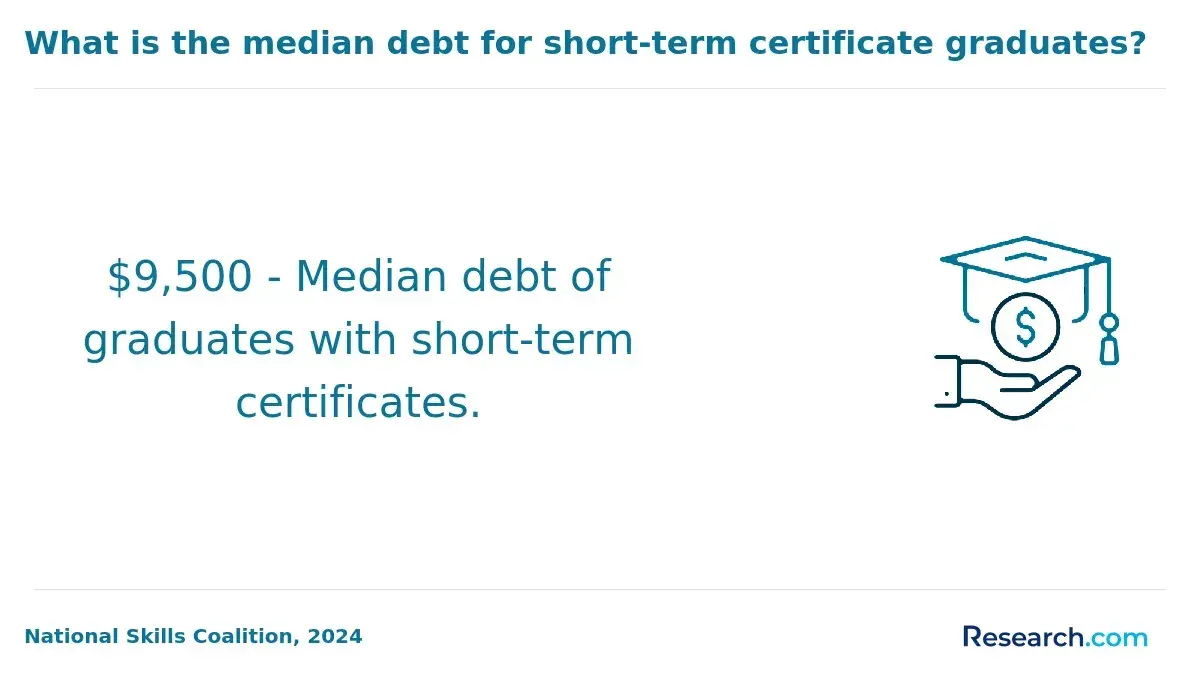
- Cost discipline matters because graduate borrowing can add up quickly; eligible graduate students may borrow up to $20,500 per year in Federal Direct Unsubsidized Loans before considering PLUS loans, employer aid, or scholarships.
Which Online Early Childhood Education Doctorate Programs Are Best for Nonprofit, Policy, and Community Leadership?
The best online early childhood education doctorate is not simply the highest-ranked or fastest program. For nonprofit, policy, and community leadership careers, the strongest fit is a program that connects early learning expertise with organizational strategy, public policy, grant-funded services, family engagement, equity, and measurable community impact.
Because schools use different degree names, start by comparing program design rather than assuming every doctorate prepares students for the same outcome. The table below summarizes common program types and when each one makes sense.
| Program type | Best fit | What to verify before applying |
| Online EdD in Early Childhood Education | Practitioners who want senior leadership roles in Head Start, early learning nonprofits, child advocacy organizations, state agencies, or community partnerships | Look for applied research, policy, finance, program evaluation, and field-based doctoral project options. |
| Online EdD in Educational Leadership with Early Childhood Focus | Professionals who want broader leadership training while keeping an early childhood lens | Confirm that electives, faculty, and dissertation topics can focus on birth-to-age-8 systems, family services, or early learning policy. |
| Online PhD in Education or Early Childhood Studies | Students aiming for research, policy analysis, think tanks, higher education, or evidence-building roles | Check research methods depth, faculty publication areas, and expectations for a traditional dissertation. |
| Online Doctorate in Human Development, Child Development, or Family Studies | Leaders focused on child outcomes, family systems, community intervention, or interdisciplinary services | Make sure the curriculum includes leadership and systems-level application, not only developmental theory. |
| Online Doctorate in Organizational Leadership with Education Concentration | Experienced nonprofit or community executives who want stronger executive leadership training | Confirm there is enough early childhood education content to support your career narrative and doctoral research topic. |
A strong "best" list for this career goal should prioritize evidence of fit. Look for programs that let you build a dissertation, capstone, or improvement project around a real challenge, such as workforce retention in child care, equitable kindergarten readiness, family engagement, early intervention access, or nonprofit program evaluation.
Use this shortlist test before spending time on an application:
- Identify the role you want after the doctorate, such as executive director, policy director, early learning systems leader, foundation program officer, or community impact director.
- Match that role to required capabilities: budgeting, policy writing, staff leadership, grant evaluation, public communication, research use, or coalition building.
- Review each curriculum and mark where those capabilities are taught, practiced, and assessed.
- Ask whether doctoral projects can be completed with your current employer, nonprofit partner, state agency, or community organization.
- Compare total cost, time to completion, residency requirements, and faculty expertise before giving weight to reputation or ranking.
Red flags include programs that mention leadership but offer little policy or finance coursework, programs that require a dissertation topic unrelated to your career sector, and programs that advertise flexibility without clearly explaining synchronous classes, residencies, or fieldwork expectations.
Which Early Childhood Education Doctorate Specializations Best Align With Nonprofit, Policy, and Community Leadership?
Specialization fit is one of the most important decisions because it shapes your coursework, doctoral project, faculty mentorship, and professional story. A nonprofit executive, policy analyst, and community coalition leader may all work in early childhood education, but they need different evidence of expertise.
The table below compares specialization areas by career alignment. Use it to decide whether a program's concentration supports your intended leadership path rather than simply sounding relevant.
| Specialization or focus area | Best-aligned leadership path | Why it matters |
| Early Childhood Leadership and Administration | Program director, executive director, child care systems administrator | Builds capacity in supervision, program quality, operations, compliance, and strategic planning. |
| Education Policy or Early Childhood Policy | Policy advisor, advocacy director, legislative analyst, state agency leader | Emphasizes policy design, governance, implementation, equity, and public funding systems. |
| Community Leadership or Community Engagement | Community impact director, coalition leader, family services leader | Focuses on partnerships, family voice, place-based initiatives, and cross-sector collaboration. |
| Nonprofit Management or Organizational Leadership | Nonprofit executive, foundation leader, grant-funded program administrator | Supports financial stewardship, board relations, fundraising strategy, staff development, and mission alignment. |
| Curriculum, Instruction, and Learning Design | Professional learning director, curriculum leader, training systems manager | Useful when the role centers on educator development, curriculum implementation, or instructional improvement. |
| Equity, Diversity, and Social Justice in Education | Advocacy leader, equity officer, community systems strategist | Helps leaders analyze disparities in access, quality, funding, and outcomes across early childhood systems. |
| Research, Evaluation, and Assessment | Program evaluator, research director, foundation evaluation officer | Strengthens data use, evaluation design, outcomes measurement, and evidence-based decision-making. |
If your goal is nonprofit leadership, prioritize organizational leadership plus early childhood systems knowledge. If your goal is policy, prioritize policy analysis, economics of early care and education, research methods, and governance. If your goal is community leadership, prioritize coalition building, family engagement, equity, and applied evaluation.
A common mistake is choosing a specialization based on job title alone. Instead, read the actual course descriptions and faculty bios. A program labeled "leadership" may be school-district focused, while your target work may be in child care access, Head Start, home visiting, family services, or community-based nonprofit systems.
What Curriculum Should a Early Childhood Education Doctorate Offer for Mission-Driven Leadership?
A leadership-focused early childhood education doctorate should teach more than child development theory. For nonprofit, policy, and community careers, the curriculum should help you make decisions with data, lead adults and organizations, communicate with funders and policymakers, and evaluate whether services improve outcomes for children and families.
Look for a curriculum that includes both doctoral-level inquiry and practical leadership application. The following areas are especially important because they map directly to mission-driven executive and systems roles.
- Early childhood systems, including child care, preschool, Head Start, early intervention, family support, and kindergarten transition.
- Organizational leadership, including change management, supervision, conflict resolution, strategic planning, and ethical decision-making.
- Policy analysis, including governance, public funding, regulation, advocacy, implementation, and equity implications.
- Finance and resource development, including budgeting, grants, nonprofit sustainability, and cost-effectiveness thinking.
- Research methods, including qualitative inquiry, quantitative methods, mixed methods, and improvement science.
- Program evaluation, including logic models, outcomes measurement, data dashboards, and reporting to stakeholders.
- Community engagement, including family voice, coalition building, culturally responsive practice, and cross-sector partnerships.
- Adult learning and professional development, especially if you will train teachers, coaches, home visitors, or program leaders.
Technology is becoming part of leadership preparation as well. Doctoral students should be ready to evaluate AI-enabled assessment tools, data systems, online family engagement platforms, and digital professional learning without treating technology as a substitute for ethical judgment or community trust.
The curriculum should also help you create usable products for your career, not just papers for class. Strong programs often let students develop policy briefs, evaluation plans, strategic plans, grant narratives, needs assessments, professional learning modules, or implementation guides.
If your career goal includes educator training or digital learning design, comparing options such as the best online instructional design master's programs can also help you decide whether a doctorate or a targeted master's-level pathway is the better next credential.
Most leadership-focused applicants compare two broad pathways: an applied doctorate, usually an EdD, and a research-focused doctorate, often a PhD. Neither is automatically better. The right choice depends on whether you want to lead change inside organizations and systems or produce original research for policy, academia, or large-scale evaluation.
The table below shows the practical differences that matter most for nonprofit, policy, and community leadership candidates.
| Decision point | Applied doctorate | Research-focused doctorate |
| Common degree | EdD | PhD |
| Primary purpose | Improve practice, organizations, programs, or systems | Generate original research and scholarly knowledge |
| Best for | Nonprofit executives, agency administrators, program directors, community systems leaders | Researchers, policy scholars, higher education faculty, think tank analysts |
| Final requirement | Dissertation in practice, capstone, applied project, or improvement study | Traditional dissertation with deeper theoretical and methodological expectations |
| Typical advantage | Direct workplace relevance and easier alignment with current leadership responsibilities | Stronger preparation for research-intensive and academic roles |
| Potential drawback | May be less research-intensive if you want a scholarly research career | May be less flexible for working leaders who need applied organizational outcomes |
An applied doctorate usually makes the most sense if you want to become a chief program officer, early childhood nonprofit executive, state early learning administrator, Head Start systems leader, or community partnership director. A research-focused doctorate may be better if you want to study early childhood policy impacts, publish research, teach future educators, or lead evaluation work in research organizations.
Do not assume "no dissertation" means "less rigorous." Some applied doctoral programs replace the traditional dissertation with a substantial capstone, improvement study, or dissertation-in-practice. If the traditional dissertation is your biggest concern, review carefully structured online EdD programs no dissertation to understand how alternatives are designed and assessed.
Before choosing, ask each program what recent doctoral projects looked like. A strong applied project should still require evidence, research design, ethical review when appropriate, analysis, and a defensible recommendation for practice or policy.
Accreditation is a nonnegotiable quality check. At minimum, the university should hold institutional accreditation from an agency recognized by the U.S. Department of Education or the Council for Higher Education Accreditation. Without recognized accreditation, you may have trouble accessing federal financial aid, transferring credits, qualifying for employer tuition benefits, or having the credential respected by employers.
Programmatic accreditation is more nuanced. Many early childhood education doctorates do not require a specialized accreditor in the same way some licensure-oriented fields do. However, education schools may have CAEP accreditation, and early childhood programs may align with NAEYC standards. These signals can be useful, but they do not replace a close review of curriculum, faculty expertise, and career fit.
Use this accreditation checklist before applying:
- Confirm institutional accreditation on the school's official accreditation page and through recognized federal or accreditor directories.
- Verify whether the college of education has CAEP accreditation or other education-related quality recognition.
- Ask whether the doctorate is designed for licensure, leadership advancement, research preparation, or professional development.
- Check whether credits, internships, or doctoral projects must meet state-specific educator or administrator requirements.
- Review employer expectations if you work in a state agency, Head Start system, public school district, foundation, or federally funded nonprofit.
Be especially careful if a program implies that a doctorate alone qualifies you for a licensed school role. Licensure varies by state and role. For comparison, fields with explicit programmatic expectations, such as school psychology programs online accredited by NASP, show why applicants should distinguish leadership doctorates from licensure-preparation degrees.
Online doctorate programs can differ dramatically even when they all advertise flexibility. The biggest format issues are synchronous class times, residency requirements, cohort structure, project expectations, and whether experiential learning can be completed in your current workplace.
The table below explains the format variables that working nonprofit, policy, and community leaders should compare before enrolling.
| Format feature | What it means | Why it matters for working leaders |
| Asynchronous coursework | Students complete weekly work without a fixed class meeting | Best for applicants with unpredictable nonprofit, agency, or family schedules. |
| Synchronous online sessions | Live virtual classes at set times | Offers interaction but may conflict with evening board meetings, events, or service obligations. |
| Hybrid or campus residencies | Required in-person meetings, often for orientation, research seminars, or dissertation milestones | Can strengthen networking but adds travel cost and scheduling constraints. |
| Cohort model | Students move through courses together | Can support peer networks, but may reduce pacing flexibility. |
| Self-paced or accelerated structure | Students complete terms more quickly or demonstrate competencies | Can shorten time to completion, but may be demanding for full-time professionals. |
| Workplace-based project | Doctoral research is completed in a real organization or community setting | Usually the strongest fit for nonprofit, policy, and community leadership ROI. |
Time to completion also deserves close attention. Many online EdD programs take about three to five years, depending on transfer credits, enrollment intensity, dissertation progress, and whether the program is cohort-based. Very fast pathways can be appealing, but applicants should verify the total credit load, research expectations, and weekly workload; comparing 1-year EdD programs online can help you understand what accelerated formats require and where trade-offs may appear.
Experiential learning is especially valuable when it helps you solve a real sector problem. Ask whether you can complete projects with a child care resource and referral agency, Head Start grantee, family foundation, early childhood council, state department, community action agency, or advocacy coalition. If the program cannot clearly explain how online students apply learning in the field, that is a warning sign.
Admissions requirements vary, but online early childhood education doctorate programs typically look for applicants with a master's degree, professional experience, leadership potential, and a clear reason for doctoral study. Programs serving working adults may weigh experience and purpose more heavily than standardized test scores.
Most applicants should be ready to submit a package that shows both academic readiness and professional fit. The list below includes common requirements and what they tell admissions committees.
- Accredited master's degree, often in education, early childhood education, child development, leadership, public administration, social work, family studies, or a related field.
- Graduate transcripts showing readiness for doctoral-level reading, writing, research, and sustained independent work.
- Professional resume documenting teaching, administration, nonprofit work, policy experience, coaching, advocacy, or community leadership.
- Statement of purpose explaining your leadership goal, sector focus, and possible doctoral research or applied project interest.
- Letters of recommendation from supervisors, faculty, or senior leaders who can speak to your leadership capacity and follow-through.
- Writing sample, interview, or scholarly essay to assess communication, analytical thinking, and research readiness.
- Possible GRE or other test scores, although many practitioner-focused online doctorates have reduced or removed this requirement.
Applicants without a traditional early childhood teaching background should not automatically rule themselves out. Some programs welcome nonprofit leaders, policy professionals, social service managers, instructional leaders, and family-service administrators. The key is showing that your experience connects meaningfully to young children, families, early learning systems, or community outcomes.
Before applying, ask admissions advisors direct questions: How many years of experience do admitted students usually have? Are applicants from nonprofit or policy roles common? Can students enter without teacher licensure? How are doctoral project topics approved? The answers will tell you whether the program understands your career path or mainly serves school-based educators.
Doctoral cost depends on tuition model, credit requirements, residency travel, technology fees, dissertation continuation fees, books, and how long you remain enrolled. Public universities may offer lower in-state rates, but some online programs charge a flat rate regardless of residency; private universities may cost more but sometimes offer employer partnerships or scholarships.
Because published tuition rarely shows the full financial picture, compare costs using total program cost rather than price per credit alone. Key cost and funding items include:
- Published tuition: multiply the per-credit rate by the total required credits, including research, dissertation, or capstone credits.
- Mandatory fees: include technology, online learning, graduation, library, dissertation, and student service fees when listed.
- Residency costs: include travel, lodging, meals, time off work, and child care if the program requires in-person sessions.
- Federal Direct Unsubsidized Loan: eligible graduate students may borrow up to $20,500 per year before considering other financing.
- Graduate PLUS Loan: may cover remaining cost of attendance after other aid, subject to eligibility and credit requirements.
- Employer tuition assistance: especially relevant for school systems, Head Start agencies, state agencies, hospitals, universities, and large nonprofits.
- Scholarships and fellowships: may be available through the university, professional associations, foundations, or early childhood leadership initiatives.
A lower-cost program is not automatically the best value if it lacks the specialization, mentorship, or applied project structure you need. At the same time, a high-cost program should offer clear advantages, such as strong faculty in early childhood policy, robust dissertation support, relevant networks, or partnerships with community organizations.
Ask each school for a written cost estimate that includes tuition, fees, expected years of enrollment, residency costs, and dissertation or capstone continuation charges. One common mistake is budgeting only for coursework and forgetting that delayed dissertation completion can add extra terms and fees.
Faculty and networks can determine how useful the doctorate becomes after graduation. For nonprofit, policy, and community leadership careers, you want mentors who understand early childhood systems beyond classroom instruction, including funding structures, public agencies, advocacy, family engagement, and community-based services.
Strong programs usually show evidence of active professional connection. Look for these signs while reviewing faculty pages, course descriptions, student handbooks, and information sessions:
- Faculty research or practice in early childhood policy, child care systems, Head Start, equity, family engagement, early intervention, workforce development, or community partnerships.
- Doctoral advising structures that match students with faculty based on sector interests, not only general availability.
- Opportunities to collaborate with state agencies, nonprofits, foundations, school districts, research centers, or advocacy organizations.
- Guest speakers from policy, nonprofit, philanthropy, community development, health, and social service sectors.
- Professional learning communities, cohorts, alumni networks, doctoral writing groups, and conference support.
- Evidence that online students receive the same advising, library, research, and career support as campus-based students.
Networking is especially important because many mission-driven leadership roles are filled through reputation, coalition work, board connections, and cross-sector partnerships. A doctorate can strengthen your credibility, but the program should also help you build relationships with people who influence early childhood systems.
During admissions events, ask faculty what kinds of organizations current students work in and what doctoral projects have recently been completed. If the examples are all school-building or classroom-based and your goal is nonprofit or policy leadership, the program may still be good, but it may not be the best fit for your intended network.
How Should You Evaluate Career Outcomes and ROI When Choosing an Online Early Childhood Education Doctorate?
ROI for an online early childhood education doctorate should be measured in career mobility, leadership readiness, network value, and mission impact, not salary alone. Many nonprofit and public-sector roles have compensation limits, so the degree should help you qualify for roles where doctoral-level expertise is valued and where the program's cost is reasonable for your expected path.
BLS May 2024 data reports $78,240 as the median annual wage for social and community service managers, a useful benchmark for many nonprofit and community leadership roles. This does not predict what a doctorate holder will earn, but it helps you compare likely sector compensation against tuition, debt, and opportunity cost.
Use a practical ROI review before enrolling:
- Define your target role and sector, such as nonprofit executive, policy director, foundation officer, state administrator, community systems leader, or research director.
- Confirm whether job postings in that sector prefer or require a doctorate, or whether a master's degree plus experience is usually enough.
- Estimate total program cost, including tuition, fees, travel, lost work time, and possible extra dissertation terms.
- Compare the curriculum to the actual competencies required in your target roles: finance, evaluation, policy writing, coalition leadership, supervision, and strategic planning.
- Ask for career outcome information specific to doctoral students, including employer types, promotions, dissertation topics, and alumni roles.
- Consider non-salary ROI, such as credibility with boards, funders, policymakers, and cross-sector partners.
- Set a debt limit that makes sense for nonprofit or public-sector compensation rather than borrowing based only on federal eligibility.
Common mistakes include relying only on rankings, assuming every EdD leads to executive advancement, ignoring whether the final project supports your career goal, and choosing the cheapest option without checking advising quality. The better approach is to choose the lowest-cost accredited program that still offers the specialization, faculty support, applied learning, and network you need.
The right program should make your next leadership move more credible and concrete. If you cannot clearly explain how the doctorate connects to a specific role, organization type, or systems-level problem you want to solve, pause and compare alternatives before committing.
Other Things You Should Know About Early Childhood Education
Yes, if the program includes policy, nonprofit leadership, evaluation, community engagement, or systems-level coursework. Many early childhood leadership roles exist in nonprofits, foundations, agencies, advocacy groups, research organizations, and family-service systems.
Not always. Some programs prefer licensed educators, but others admit applicants from nonprofit administration, policy, child development, social services, public administration, or community leadership. Always confirm the program's applicant profile before applying.
It may be worth it if your target roles require doctoral-level credibility, research skill, executive leadership preparation, or policy expertise. If your next step only requires a specialized skill, certificate, or management experience, a doctorate may be more than you need.
The biggest warning sign is unclear alignment: vague accreditation information, limited faculty expertise in your sector, hidden residency or fee requirements, or no clear explanation of how the dissertation or capstone supports your leadership goals.
- The Best Ed.D. in Early Childhood Education Programs of 2025 https://www.eddprograms.org/schools/early-childhood-education/
- Minority Doctoral Students: Scholarships & Financing for Your PhD https://www.phds.me/financial-aid/scholarships-and-grants/minority-students/
- Scholarships for Doctor of Education (EdD) Students | Teach.com https://teach.com/online-ed/education-degrees/online-edd-programs/scholarships/
- Ed.D. in Early Childhood Education | ACE https://ace.edu/degree-programs/doctoral-degrees/doctoral-education/doctor-of-education-in-early-childhood-education/
- PhD Scholarships: Explore Your Online Education Aid Options https://www.oedb.org/phd-scholarship/
- EU Ranked #3 Among Forbes’ Best Online Doctorates in Organizational Leadership https://www.eastern.edu/news/phd-management-forbes
- What Can You Do with a PhD in Education https://aituedu.org/what-can-you-do-with-a-phd-in-education/
- Educational Funding https://phdproject.org/educational-funding/
- Where Can an Ed.D. Take You? 6 Careers To Consider - Voices Digital https://www.pacificoaks.edu/voices/from-the-magazine/where-can-an-ed-d-take-you-6-careers-to-consider/
- Career Outcomes https://www.rand.edu/career-services/job-placement.html


