
2027 Online vs On-Campus Early Childhood Education Doctorate Programs: Cost, Flexibility, and Employer Perception

Co-Founder and Chief Data Scientist
The real choice is not simply "online or campus"; it is whether a doctorate format fits your work schedule, budget, research goals, and career market. NCES distance education tables released in 2024 show that roughly 1.3 million U. S. postbaccalaureate students studied exclusively online in fall 2022, making format comparison a mainstream graduate decision. This guide is for educators, administrators, curriculum specialists, and researchers comparing Early Childhood Education doctorate options. You will learn how cost, flexibility, rigor, fieldwork, dissertation structure, and employer perception should shape your decision.
Key Things to Know About Online vs On-Campus Early Childhood Education Doctorate Programs
- Online Early Childhood Education doctorates usually offer the strongest scheduling flexibility, but they are not automatically cheaper once technology fees, travel for residencies, childcare, and reduced assistantship access are included.
- Academic rigor depends more on accreditation, faculty research fit, dissertation support, admissions standards, and fieldwork design than on whether coursework is online or on campus.
- Employer perception has shifted as online graduate enrollment has grown; BLS projections released in 2024 show 8% growth for postsecondary teachers from 2023 to 2033, but hiring still depends on specialization, research experience, leadership record, and institutional reputation.
What are the key differences between online vs on-campus Early Childhood Education doctorate programs?
An Early Childhood Education doctorate is typically an EdD, PhD, or education doctorate concentration focused on young children's learning, early intervention, family engagement, curriculum, leadership, policy, assessment, or teacher preparation.
The format affects how you access coursework and faculty, but it does not remove the need for advanced research, applied inquiry, practicum or field-based work, and a culminating dissertation or capstone.
The table below summarizes the practical differences most students should compare first. Use it to identify which format better matches your learning style, work schedule, and career target before you start comparing individual schools.
| Comparison factor | Online doctorate | On-campus doctorate | Decision impact |
| Course delivery | Fully online or hybrid; may be asynchronous, synchronous, or both | In-person seminars, labs, research meetings, and campus-based cohorts | Online works well for employed educators; campus works well for students who want daily academic immersion |
| Residency expectations | May require short campus residencies, weekend intensives, or virtual research institutes | Regular campus attendance is usually expected | Online students should confirm travel requirements before calculating cost |
| Faculty access | Video meetings, online advising, digital office hours, learning platforms | Face-to-face advising, informal networking, research group participation | Campus may offer more spontaneous mentoring; online requires proactive communication |
| Peer network | Often geographically diverse and professionally experienced | Often local or regionally connected to campus research and school partners | Online may broaden professional perspectives; campus may deepen local placement access |
| Best fit | Working educators, administrators, military spouses, rural professionals, parents, and students who cannot relocate | Full-time researchers, aspiring faculty, students seeking assistantships, and those who need structured in-person support | The better format is the one that supports completion, not just admission |
The biggest mistake is assuming format tells you everything. A well-designed online EdD from a regionally accredited university can be more useful for a working early childhood leader than a campus program with poor advising; likewise, a campus PhD may be stronger for someone pursuing faculty research roles because it can provide closer access to research teams, teaching assistantships, and academic publishing opportunities.
Are online Early Childhood Education doctorate programs as rigorous as on-campus programs?
Online Early Childhood Education doctorate programs can be as rigorous as on-campus programs when they use the same admissions standards, doctoral faculty, research methods sequence, assessment expectations, and dissertation review process.
Rigor is not measured by where you sit during class; it is measured by the level of scholarship, the quality of feedback, and the standards required to complete independent doctoral work.
Look closely at these quality indicators because they tell you more than the delivery format alone:
- Regional accreditation for the institution and clear authorization to offer distance education in your state
- Doctoral faculty with current research, policy, or leadership expertise in early childhood education
- Required quantitative, qualitative, or mixed-methods research coursework before dissertation proposal approval
- Transparent dissertation, capstone, or applied research milestones with named faculty roles
- Access to library databases, statistical software, writing support, research ethics review, and doctoral advising
- Published student outcomes such as time to completion, dissertation completion patterns, licensure alignment where relevant, and alumni career paths
Be cautious with any program, online or campus-based, that markets the doctorate as "easy," avoids explaining faculty qualifications, hides dissertation expectations until after enrollment, or cannot tell you who supervises Early Childhood Education research. Convenience should never replace academic substance at the doctoral level.
How does scheduling flexibility differ between online and on-campus Early Childhood Education doctorate programs?
Scheduling flexibility is usually the strongest reason students choose an online Early Childhood Education doctorate. Many candidates are full-time teachers, preschool directors, instructional coaches, district leaders, nonprofit professionals, or parents, so the ability to study after work or around school-year cycles can determine whether enrollment is realistic.
The table below compares common scheduling models. It can help you decide whether you need maximum independence, a structured cohort, or a campus rhythm that keeps you accountable.
| Scheduling model | Common format | Flexibility level | Best for |
| Asynchronous online | Recorded lectures, weekly modules, discussion boards, independent assignments | High | Students with variable work hours or family responsibilities |
| Synchronous online | Live evening or weekend video classes | Moderate | Students who want real-time interaction without commuting |
| Hybrid cohort | Online coursework plus periodic campus meetings | Moderate | Students who want flexibility but also value in-person connection |
| Traditional campus | Weekly in-person seminars, research meetings, and campus events | Lower | Students who can relocate or reduce work hours |
Online flexibility is valuable, but it also requires stronger self-management. Students who need regular in-person structure, frequent unscheduled faculty contact, or a physical research community may find a campus format more manageable despite the commute.
If speed is a priority, compare program pacing carefully; some accelerated education doctorates are designed for working professionals, and resources on 1 year EdD programs online can help you understand what "fast-track" often means and what trade-offs to examine.
Before applying, ask admissions whether courses are asynchronous, whether live attendance is mandatory, how often residencies occur, whether dissertation meetings happen during business hours, and whether part-time pacing is allowed. A program that fits your calendar on paper may still be difficult if synchronous meetings conflict with school leadership duties, classroom responsibilities, or childcare.
Fieldwork in an Early Childhood Education doctorate is usually less like undergraduate student teaching and more like advanced professional practice, applied research, program evaluation, leadership inquiry, or policy analysis.
Online students often complete fieldwork in their local workplace or community, while campus students may have access to university-affiliated lab schools, research centers, school districts, clinics, or early childhood partnerships near campus.
The table below shows how fieldwork can differ by format. The key point is that "online" rarely means "no field-based work," especially in applied EdD programs.
| Requirement | Online format | On-campus format | What to verify |
| Local placement | Often completed in the student's current school, center, agency, or district | May be arranged through campus partnerships | Whether your workplace can serve as a field site |
| Supervision | Remote faculty supervision with local site approval or documentation | In-person faculty or partner-site supervision may be available | Who evaluates your fieldwork and how often feedback occurs |
| Research access | Depends on local permissions and institutional review board approval | May benefit from established university research sites | Whether you can collect data from young children, families, teachers, or programs ethically and legally |
| Travel | Usually limited, but residencies or site visits may still apply | Regular commuting or relocation may be necessary | All travel, lodging, and schedule expectations before enrollment |
Students often underestimate how much time fieldwork documentation, site permissions, consent forms, and data collection can take. If your research involves children, families, or teachers, approvals may be more complex than in adult-only professional settings. Ask whether the program has templates, sample timelines, and faculty who understand early childhood research ethics.
The dissertation process is where many doctorate students discover whether the program's support model actually works. Online and on-campus students may complete similar research milestones: topic development, literature review, methodology, proposal defense, institutional review board approval, data collection, analysis, final defense, and revisions. The difference is how structured and accessible the support feels.
Online programs may use virtual dissertation seminars, milestone courses, video advising, digital writing groups, and remote defenses. On-campus programs may provide more informal access to faculty, research colloquia, graduate writing centers, and peer accountability. Neither model is automatically better; the stronger choice is the one with clear checkpoints and responsive advisors.
Use the following questions when comparing dissertation support across formats:
- When are students assigned a dissertation chair, and can they choose a faculty member with Early Childhood Education expertise?
- How many formal research methods courses are required before proposal development?
- Are dissertation milestones embedded in tuition-bearing courses, or do students pay continuing fees after coursework?
- What is the average time from proposal approval to final defense, and is that figure available by program format?
- How often are students allowed or expected to meet with their chair?
- What happens if a chair leaves the university or does not respond consistently?
If your main goal is applied leadership rather than original academic research, compare alternatives carefully. Some education doctorates use a capstone, doctoral project, or dissertation-in-practice model; guides to online EdD programs no dissertation can help you understand how nontraditional culminating projects may differ from a conventional dissertation.
Tuition comparisons are harder than many students expect because there is no federal dataset that publishes a national average specifically for online versus on-campus Early Childhood Education doctorate tuition. IPEDS and College Navigator data released through federal reporting are useful for institutional graduate tuition, but they often do not separate tuition by doctoral concentration, online modality, cohort pricing, or dissertation continuation fees.
The table below shows the tuition components you should compare instead of relying on a single advertised rate. This approach is more accurate because doctoral programs often bill differently after coursework, during residencies, or during dissertation enrollment.
| Cost item | Online doctorate | On-campus doctorate | Why it matters |
| Per-credit tuition | May use a flat online rate, sometimes the same for in-state and out-of-state students | Often differs for in-state and out-of-state students at public universities | Out-of-state campus tuition can change the affordability comparison substantially |
| Program fees | Technology, online learning, residency, library, or doctoral services fees may apply | Campus activity, facilities, health, transportation, or graduate school fees may apply | Fees can narrow or erase a tuition advantage |
| Dissertation enrollment | May require continuing credits or doctoral project courses after coursework | May require dissertation credits, candidacy fees, or full-time registration | Longer dissertation timelines increase total cost |
| Assistantships | Less common in fully online professional doctorates | More common in research-intensive campus programs, but not guaranteed | Funding can make an on-campus program less expensive than its sticker price |
| Residency costs | Travel and lodging may apply for short in-person sessions | Daily commuting or relocation may apply | Travel costs should be included in total cost, not treated as incidental |
A practical comparison starts with total credits multiplied by tuition, then adds required fees, residency travel, books and software, dissertation continuation charges, and lost earnings if you reduce work hours. Online programs often look less expensive because they avoid relocation, but campus programs may offer assistantships, tuition waivers, or paid research roles that change the equation.
Employer Confidence in Online vs. In-Person Degree Skills, Global 2024

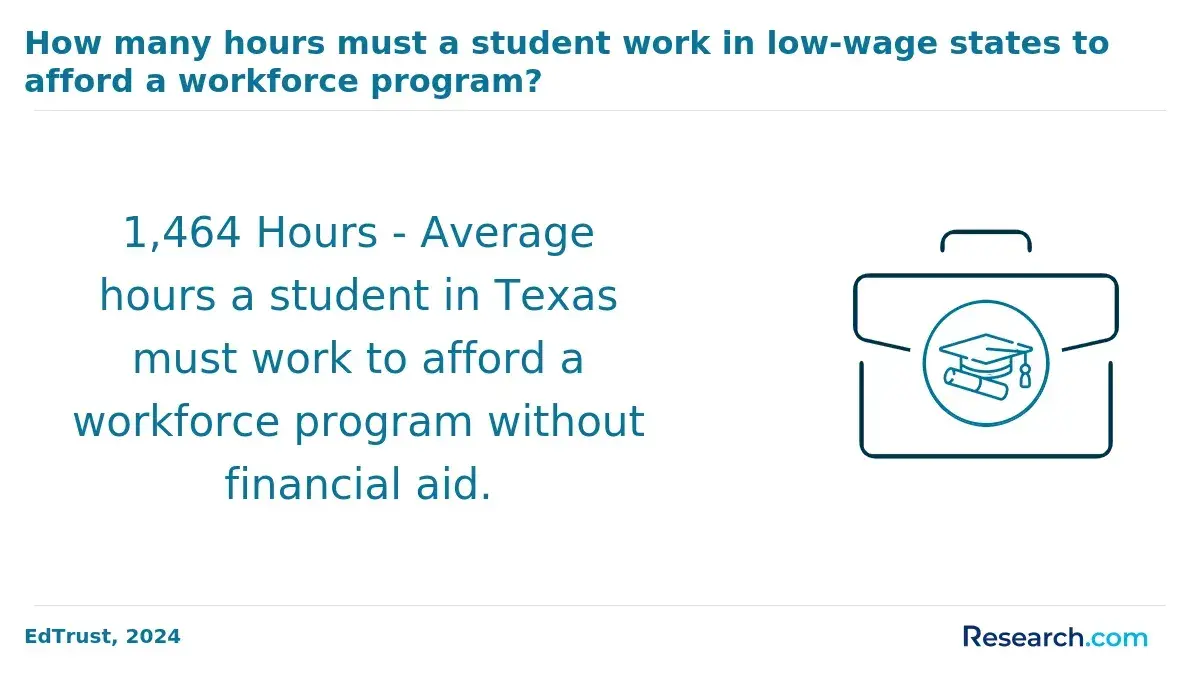
Cost of attendance includes more than tuition. For doctoral students in Early Childhood Education, the biggest hidden costs are time away from paid work, childcare, commuting, residency travel, technology, research software, conference attendance, and unpaid fieldwork hours. This is why the cheapest listed tuition is not always the lowest-cost path to completion.
The table below separates direct and indirect costs so you can build a realistic budget. This is especially important for working educators whose schedules and income may change during dissertation or fieldwork phases.
| Cost category | Online student | On-campus student | Budgeting note |
| Housing and relocation | Usually avoidable unless residencies are long | May be significant if relocation is required | Campus programs can become costly if you move near the university |
| Transportation | Lower weekly commuting; occasional residency travel possible | Regular commuting, parking, transit, or relocation costs | Calculate by semester, not by trip |
| Work income | Often easier to maintain full-time employment | May require reduced hours, especially for daytime seminars or assistantships | Lost wages can exceed fee differences |
| Childcare | May still increase during evening classes, residencies, or dissertation writing | May increase due to commute and campus schedule | Parents should price this into the total program plan |
| Research expenses | May include transcription, survey tools, software, printing, participant materials, or travel to local sites | Similar expenses, sometimes offset by campus resources | Ask whether the department provides research funding |
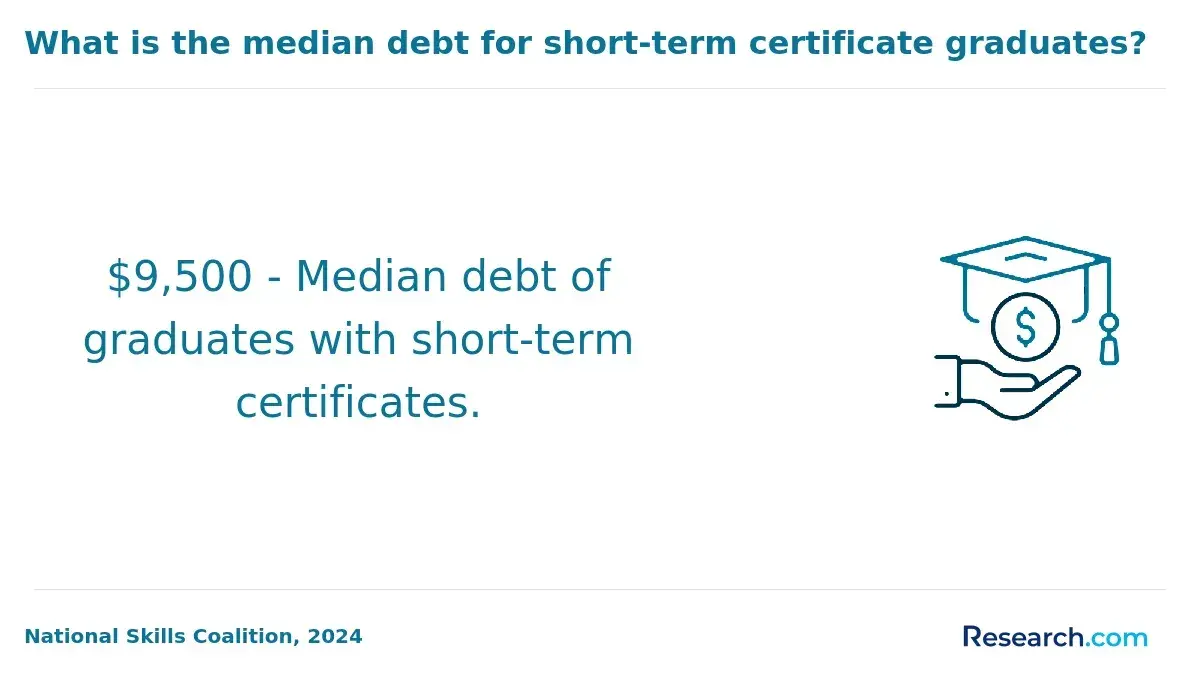
Federal student aid data released in 2024 show that graduate and professional borrowers hold a large share of U.S. education debt, but public databases do not reliably isolate average loan debt for Early Childhood Education doctoral graduates by online or on-campus format.
Treat any school-specific debt figure as useful only if it is program-level, recent, and based on enough completers to protect privacy and avoid distortion.
To avoid overborrowing, request the school's full cost-of-attendance estimate, ask whether dissertation credits are charged at the same rate as coursework, and compare monthly repayment scenarios before enrolling. If a program cannot explain the total cost through expected completion, that is a financial red flag.
Employers in Early Childhood Education usually care less about whether the doctorate was online and more about whether the university is accredited, the program is credible, and the graduate can demonstrate leadership, research skill, policy understanding, curriculum expertise, and measurable impact in early learning settings. However, employer perception still varies by role.
The table below shows how different employers may evaluate doctoral credentials. Use it to match format choice to the kind of job you want after graduation.
| Employer or role type | How format may be viewed | What often matters more than format |
| School districts and public agencies | Online degrees are commonly accepted when the institution is accredited | Leadership record, licensure where required, policy experience, and evidence of program improvement |
| Higher education faculty roles | Research-intensive campus doctorates may carry an advantage for tenure-track research roles | Publications, teaching experience, research methods preparation, and faculty mentorship |
| Early childhood nonprofits and advocacy organizations | Format is usually secondary to mission fit and applied expertise | Grant work, evaluation skills, community partnerships, and child development knowledge |
| Curriculum and professional learning companies | Online doctorates can be viewed positively when paired with strong practitioner experience | Instructional design, adult learning, assessment, and evidence-based training experience |
| State policy or research organizations | May scrutinize research training more than modality | Quantitative or qualitative analysis skills, policy writing, and early childhood systems expertise |
Current employer acceptance has improved as online graduate education has become more common, but brand, accreditation, and outcomes still matter. If you are targeting a conservative academic hiring market, ask current faculty and hiring committees how they evaluate online doctorates.
If you are targeting leadership in an early childhood organization, ask whether the degree will qualify you for salary lanes, senior leadership roles, or grant-funded positions.
Program format can affect job prospects indirectly, but it is rarely the only factor. Online study may let you keep working and build leadership experience while completing the doctorate. On-campus study may provide stronger access to faculty research groups, teaching opportunities, assistantships, conference networks, and academic mentors.
The better career pathway depends on the role you want. BLS projections released in 2024 indicate that postsecondary teacher employment is projected to grow 8% from 2023 to 2033, faster than many occupations.
That does not mean every doctorate graduate will move into a faculty role; it means candidates who want higher education work should pay close attention to research productivity, teaching experience, and specialization, not just the degree format.
Consider these format-career matches when building your shortlist:
- Choose online if you want to remain employed while preparing for district leadership, early childhood program administration, nonprofit leadership, curriculum development, consulting, or policy work.
- Choose on-campus if you want a research-heavy academic career, need assistantship funding, want close access to faculty labs, or plan to build a publication record before graduation.
- Choose hybrid if you want professional flexibility but still value periodic in-person networking, cohort bonding, and dissertation intensives.
- Be cautious with any format if the program has weak career services, unclear alumni outcomes, limited Early Childhood Education faculty, or no evidence of dissertation completion support.
Some students comparing doctoral options discover that a different graduate credential better fits their career goal. For example, educators aiming to design digital learning, professional development, or training systems may want to compare doctoral study with the best online instructional design master's programs before committing to a doctorate.
How do you choose between online and on-campus Early Childhood Education doctorate programs?
The best choice is the format that gives you the highest likelihood of finishing with manageable debt, strong research or leadership preparation, and a credential respected by your target employers. Do not start with convenience alone. Start with the job you want, then choose the format that supports the experiences that job requires.
Use this step-by-step process to compare online and on-campus Early Childhood Education doctorate programs without being distracted by marketing claims:
- Define your target outcome: faculty role, district leadership, policy work, early childhood administration, curriculum leadership, research, consulting, or nonprofit executive work.
- Verify accreditation and state authorization before comparing cost, especially for online programs serving students across state lines.
- Compare total cost through expected completion, including tuition, fees, residencies, dissertation credits, travel, childcare, and lost income.
- Ask for dissertation or doctoral project milestones, average time-to-completion information, and advisor assignment policies.
- Confirm fieldwork expectations and whether your current workplace can serve as a research or practice site.
- Review faculty profiles to make sure at least two faculty members match your early childhood interests.
- Ask employers, mentors, or hiring committees in your target field how they view the program and institution.
- Compare support services, including writing help, statistics support, library access, career advising, and peer communities.
Common mistakes include assuming online study is easier, ignoring residency travel, choosing the lowest tuition without checking dissertation fees, overlooking assistantship opportunities on campus, and failing to ask whether the diploma or transcript identifies the delivery format.
Another mistake is enrolling in an Early Childhood Education doctorate when your real goal is child assessment, school-based mental health, or psychological services; in that case, it may be more appropriate to review school psychology programs online accredited by NASP instead.
A strong final shortlist should include no more than five programs and should compare format, accreditation, total cost, faculty fit, dissertation model, fieldwork requirements, schedule, funding, and employer relevance side by side. If a program looks convenient but does not support your career goal, it is not the right investment.
Other Things You Should Know About Early Childhood Education
Usually, diplomas list the institution and degree, not the delivery format. Policies vary, so ask the registrar whether the transcript or diploma identifies online, hybrid, or campus delivery.
They are often similar, especially when offered by the same university. Typical requirements include a master's degree, transcripts, recommendations, a statement of purpose, professional experience, and sometimes writing samples or interviews.
Not usually by itself. Doctoral programs are generally designed for advanced leadership, research, policy, or higher education roles. Teacher, administrator, or specialist licensure requirements vary by state and must be verified separately.
Some programs allow limited transfer credits from prior graduate study, but doctoral transfer rules are usually restrictive. Ask how many credits can transfer, whether they must be recent, and whether they reduce tuition or only replace electives.
- Earning a PhD Your Way: How to Choose the Right Online Learning Format https://www.phds.me/resources/online-learning-modes/
- Ed.D. in Early Childhood Education | ACE https://ace.edu/degree-programs/doctoral-degrees/doctoral-education/doctor-of-education-in-early-childhood-education/
- What Employers Actually Think About Online Degrees https://www.onlineu.com/magazine/what-employers-think-about-online-degrees
- Campus vs Online vs Hybrid Doctor of Education (EdD) Programs https://www.onlineeddprograms.com/faqs/campus-online-hybrid-edd-programs
- The Rise of Distance Learning and the Online PhD: Is There Cause for Concern? – PUPN https://pupnmag.com/article/the-rise-of-distance-learning-and-the-online-phd-is-there-cause-for-concern/
- Online Colleges and Universities: Are They Delivering on Diversity and Inclusion? A Recent Analysis from IPEDS Data https://www.airweb.org/article/2023/03/30/online-colleges-and-universities-are-they-delivering-on-diversity-and-inclusion-a-recent-analysis-from-ipeds-data
- The Best Ed.D. in Early Childhood Education Programs of 2025 https://www.eddprograms.org/schools/early-childhood-education/
- The Rewards of a Doctorate in Early Childhood Education - Graduate Programs for Educators https://www.graduateprogram.org/blog/the-rewards-of-a-doctorate-in-early-childhood-education/
- Early Childhood Education Degrees: The Differences Explained https://www.pacificoaks.edu/voices/education/early-childhood-education-degrees-differences-explained/
- How employers see your online degree https://www.calcoast.edu/news/truth-about-how-employers-view-your-online-degree


