2027 Most Affordable Online Master's Degrees for Government Jobs

Co-Founder and Chief Data Scientist
An online master's degree can help you qualify for some government positions or advance in public service - but the lowest advertised tuition may not produce the lowest final bill. The U.S. Bureau of Labor Statistics (BLS) projects substantial demand in relevant occupations, including 33% growth for information security analysts from 2023 to 2033.
That projection covers employers across sectors, not just government. If you are weighing graduate study against your career goals and budget, this guide compares degree fields, explains hidden costs and qualification rules, and shows you what to verify before enrolling.
Key Things You Should Know
- Compare total degree cost, not per-credit tuition: required credits, fees, residency pricing, and in-person requirements can change which online program is cheapest.
- The strongest degree match depends on the job: an MPA fits many public-administration roles, while cybersecurity, nursing, and counseling positions may require specific technical preparation or licenses.
- BLS projects 33% growth for information security analysts from 2023 to 2033, but that nationwide, all-employer forecast does not guarantee government openings or make a master's degree necessary for every position.
Top 10 Most Affordable Online Master's Degrees for Government Jobs - Affordable Government Degrees
Business / MBA Programs
An online Master of Business Administration (MBA) can suit government employees pursuing budgeting, procurement, operations, or program management. Compare its total cost with a Master of Public Administration (MPA): a competitively priced MPA may cover public budgeting and administrative law more directly. MBA leadership roles generally require relevant experience, not just the credential. Check whether foundational business courses add time or expense and whether a capstone or scheduled team projects fit your workload.
Healthcare Administration & Management Programs
An online Master of Healthcare Administration (MHA), Master of Public Health (MPH), or healthcare-focused MBA can support work in public hospitals, health departments, and federal health agencies. Choose the MPH for population health or the MHA for organizational operations. Compare required credits, fieldwork, and any differential tuition before calling one affordable. Management jobs typically also require healthcare experience; an administration degree does not confer a clinical license.
Information Technology Programs
An online Master of Science (MS) in Information Technology can prepare experienced professionals for government systems, cloud, or IT operations work. A general IT degree may cost less than a specialized program, but it is poor value if it omits skills in the job posting. Compare software and lab fees as well as tuition. Many IT jobs accept a bachelor's degree plus experience; assess whether graduate study would add a needed specialization.
Computer Science Programs
An online MS in Computer Science fits applicants targeting advanced software development, computing research, or specialized technical work. It may be less affordable for career changers who must first complete programming and mathematics prerequisites. Compare total credits, prerequisite costs, and any thesis or project requirement. Government software roles do not uniformly require a master's, so check actual vacancy qualifications before paying for graduate study.
Cybersecurity Programs
An online MS in Cybersecurity can support work in government security operations, risk management, and digital forensics. Compare technical depth, required labs, and extra technology fees rather than relying on a low tuition rate. Some positions require a background investigation, specific experience, or certifications independent of the degree. If a less expensive IT program teaches the same skills required by your target roles, the specialized title alone may not justify a higher cost.
Data Science / Analytics Programs
An online MS in Data Science or Analytics can be relevant to government statistics, evaluation, and forecasting. Check whether it teaches the mathematics, programming, and data-governance skills in your target postings; analytics programs vary considerably. Prerequisite courses and computing fees can erase a tuition advantage. A lower-cost applied analytics degree may be preferable to a research-heavy data science degree for operational reporting, but research positions may call for deeper statistical preparation.
Education / Educational Leadership Programs
An online Master of Education (MEd) or educational leadership degree can suit public-school educators and education-agency staff. A low-cost leadership degree is not necessarily the cheapest route to a principalship if it requires additional supervised practice or fails to meet your state's requirements. Compare tuition, internship logistics, and certification eligibility before enrolling. Agency policy jobs may value education expertise without requiring an administrator license; school leadership roles often do.
Counseling / Psychology Programs
An online master's in counseling or psychology may relate to public schools, veterans' services, or community mental health, but these are not interchangeable credentials. Counseling licensure usually entails specified coursework, supervised clinical experience, examinations, and state approval. Psychology master's programs do not generally qualify graduates to practice independently as licensed psychologists. Required placements and supervision can materially increase cost, even when coursework is online. Verify the exact license and state requirements first.
Nursing Programs
An online Master of Science in Nursing (MSN) may help registered nurses pursue public-health, education, leadership, or advanced-practice roles in government settings. Applicants generally need an active nursing license, and some tracks require clinical placements or campus activities. Compare placement support, clinical travel, and program fees alongside tuition. An MSN does not itself grant advanced-practice authority; state licensure and applicable certification requirements remain separate.
Engineering Management Programs
An online MS in Engineering Management can fit engineers overseeing public infrastructure, utilities, or technical contracts. It often emphasizes project finance, systems, and leadership rather than qualifying someone for an engineering license. Compare prerequisites, required credits, and employer reimbursement with the cost of a general MBA. Government engineering-management positions may require an engineering background, professional experience, or a Professional Engineer license regardless of the master's degree.
Which online master's degrees lead to government jobs?
The best match is the degree that addresses a specific position's qualifications and duties at an affordable total cost. An MPA is often a more direct choice for public administration than an MBA; specialized clinical and technical roles need more targeted preparation. A degree can strengthen an application without guaranteeing eligibility or hiring.
This comparison connects common government goals with plausible graduate paths. It also highlights where another credential or prior experience may matter more.
| Government work of interest | Relevant master's path | Key qualification to check |
| Budgeting and program administration | MPA, MBA, or public-policy master's | Position-specific education and experience requirements |
| Public health and health systems | MPH or MHA | Required specialty, experience, or clinical license |
| Technology and security | MS in IT, computer science, or cybersecurity | Technical skills, experience, and any clearance requirement |
| Schools and behavioral health | MEd, counseling master's, or Master of Social Work (MSW) | State certification or professional licensure |
For some administrative jobs, an MPA's public-sector focus may be worth more than a pricier MBA brand. For licensed work, selecting a cheap degree that does not meet licensing rules is a costly mistake.
How much do affordable online government master's programs cost?
There is no single field-wide price: schools set graduate rates, and required credits and fees differ. Calculate total program cost from the tuition rate that applies to you, required graduate credits, mandatory and program fees, and any travel or placement expenses. Published tuition is the sticker price; your final out-of-pocket cost depends on aid and employer benefits.
The following cost categories show why two programs with similar advertised tuition can have different final bills. Request each item in writing for your expected enrollment pattern.
| Cost factor | Why it changes the comparison |
| Tuition and residency rate | Online students may face different in-state, out-of-state, or program-specific rates. |
| Required credits and prerequisites | More coursework means more tuition; foundation courses may add costs before degree study. |
| Mandatory and differential fees | Technology, laboratory, and program charges can offset low tuition. |
| In-person requirements | Travel, placements, and time away from work can raise the real cost. |
Federal graduate aid eligibility, scholarships, and employer tuition assistance depend on the student and program; a FAFSA-eligible institution does not make every expense affordable. Lists of cheap online colleges that accept FAFSA can help identify schools to investigate, but verify their graduate tuition and aid terms separately. Ask for a written graduate transfer-credit evaluation if you have prior graduate coursework: accepted credits save money only when they satisfy your degree requirements.
Are online master's degrees accepted for federal and state jobs?
Generally, the delivery format alone does not disqualify a degree. What matters is whether the institution and credential meet the vacancy's education rules and whether you possess any required experience, license, or other qualification. Federal applicants should read the applicable Office of Personnel Management qualification standard and the specific USAJOBS announcement; state and local employers set their own rules.
Do not assume that a master's substitutes for experience in every job series. Likewise, an online degree advertised as fully remote may still involve local clinical work, an internship, or scheduled class meetings. Confirm those obligations before choosing it for its apparent flexibility or low cost.
What accreditation should online government degree programs have?
Start with institutional accreditation from an accreditor recognized by the U.S. Department of Education, and verify the school's current status through the department's accreditation database. Accreditation matters for credential recognition and can affect federal aid eligibility, but institutional accreditation alone does not establish suitability for every licensed occupation.
Where relevant, check program-specific standards too: counseling, social work, nursing, public health, and healthcare management pathways may be judged against different professional or state requirements. Ask the appropriate state board whether the specific online program and track meet its educational rules. A school's broad claim that graduates can work in government is not a substitute for that check.
What do online master's programs for government careers teach?
Coursework follows the job target. An MPA commonly emphasizes public budgeting, policy, and organizational management; technical degrees emphasize computing or security; clinical degrees include supervised practice. Electives may let you focus on procurement, health systems, analytics, or another public-service specialty.
Programs may culminate in a capstone, thesis, examination, internship, or clinical experience. A practice-oriented project can be useful for agency work, while a thesis may better serve a research goal; neither is automatically the cheaper option. Research-intensive positions may call for doctoral training rather than a master's. Even doctoral programs without dissertation should be evaluated against the research expectations of the specific job, not treated as interchangeable credentials.
What are the admission requirements for online government master's degrees?
A completed bachelor's degree is the usual starting requirement. Schools may also request transcripts, recommendations, a statement of purpose, or a résumé; individual programs may set additional GPA, test, prerequisite, license, or experience requirements. For example, computer science applicants may need substantial technical preparation, while MSN applicants generally need nursing credentials.
Check the graduate program's published rules rather than assuming the institution's undergraduate admissions policy applies. Ask whether prerequisite courses carry graduate credit, whether admission is conditional if you lack them, and whether previous graduate courses can satisfy degree requirements. A transfer policy does not mean every course will be accepted or shorten your program.
Which government jobs can you get with an online master's degree?
Potential roles include program analyst, health-services manager, cybersecurity analyst, school administrator, and licensed counselor. Whether you qualify depends on the posting, your experience, and any regulated credential - not merely the degree title.
The examples below distinguish graduate study from other common entry requirements. Use actual vacancies in your preferred agency and location to test the match.
| Potential role | Relevant graduate preparation | Important limitation |
| Program or policy analyst | MPA, public policy, or analytics | Some jobs accept other education or relevant experience. |
| Information security analyst | Cybersecurity, IT, or computer science | Technical experience and position-specific screening may matter more. |
| Public-school administrator | Educational leadership | State credential and teaching or school experience may be required. |
| Licensed mental health counselor | Qualifying counseling master's | Supervised practice, examinations, and state licensure apply. |
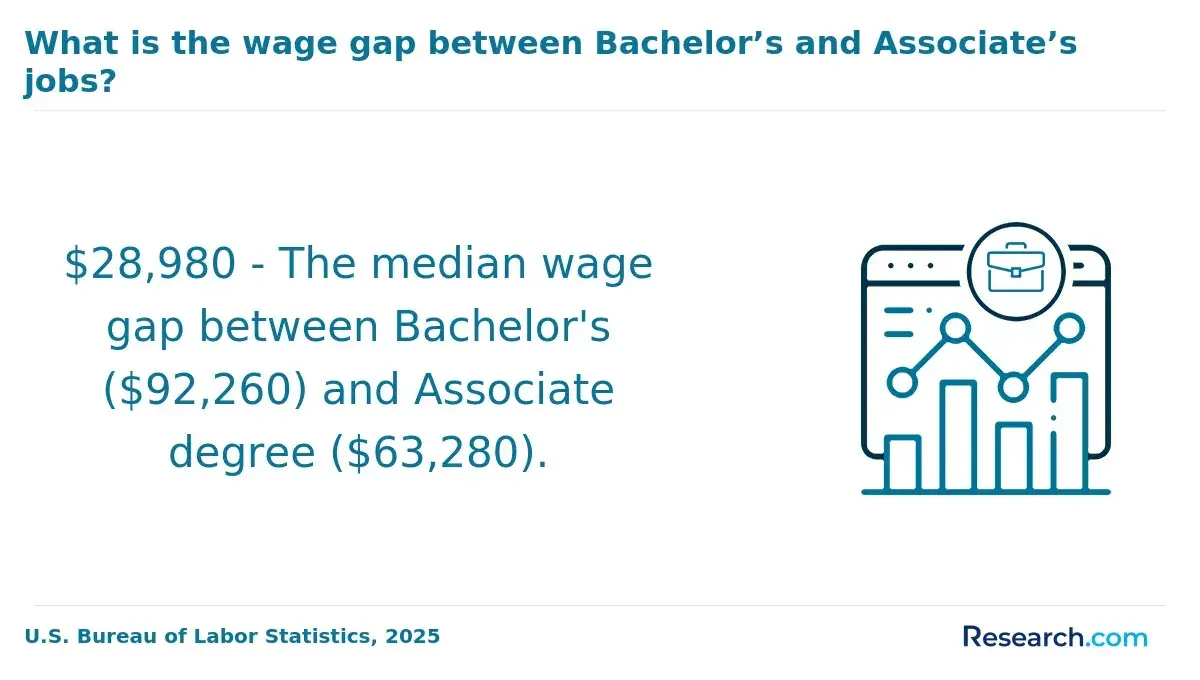
If you seek an entry-level administrative role, a master's may be unnecessary: relevant work experience, a bachelor's, or in some cases an associate degree may better match the posting at a lower education cost. Check advancement requirements before committing to graduate tuition.
What salaries and job outlooks can government master's graduates expect?
Occupational statistics describe workers in a job, not the earnings caused by a master's degree. BLS reported a 2023 median annual wage of $120,360 for information security analysts across employers. That figure is useful for understanding the occupation's pay, but it is not a federal salary offer or a forecast for new graduates.
BLS projected 33% employment growth for information security analysts from 2023 to 2033 across the U.S. economy. Government opportunities are only part of that market. To judge whether a degree is worth its cost, compare the salary range in actual job announcements with the required qualifications, your current earnings, the program's total out-of-pocket cost, and any income you would forgo while studying. Graduate education has a stronger financial case when it meets a requirement you otherwise cannot satisfy.
How can you choose a reputable online government master's program?
Begin with a target occupation, not a degree advertised as "best" or "cheapest." A credible comparison checks eligibility and career fit before price, then evaluates the complete cost of the programs that remain.
Use these checks to narrow your shortlist and avoid expensive mismatches:
- Save several relevant government postings and identify required education, experience, licenses, and technical skills.
- Verify institutional accreditation and, where applicable, program approval and state licensure eligibility.
- Request the degree plan, graduate tuition schedule, mandatory fees, and any prerequisite, travel, or placement costs.
- Ask how often required courses run, whether attendance is scheduled, and what an affordable part-time path would look like.
- Get a written evaluation of eligible prior graduate credit and confirm how it applies to remaining requirements.
Watch for claims of guaranteed employment, unclear fee schedules, or "fully online" marketing that omits required in-person work. If postings value a specific skill rather than a master's, compare the degree's incremental benefit with less costly certificate programs or employer-supported training before enrolling.
Other Things You Should Know About
An MPA usually offers more direct preparation for public budgeting and administration. An MBA may fit procurement, operations, or broader management goals. Compare the coursework and total cost against your target postings.
It can help if the degree meets the announcement's education rules. Accreditation, field of study, experience, and any position-specific conditions still matter.
Not uniformly. Some roles permit relevant experience or a bachelor's degree; others require specialized graduate education, professional licensure, or both. Read the specific vacancy.
Compare complete degree costs at accredited schools, check employer assistance and aid, and request an evaluation of eligible prior graduate coursework. Do not choose on per-credit tuition alone.
References
- Institutional Accrediting Agencies - U.S. Department of Education https://www.ed.gov/laws-and-policy/higher-education-laws-and-policy/college-accreditation/institutional-accrediting-agencies
- Education level and projected openings, 2024-34 | bls.gov https://www.bls.gov/careeroutlook/2025/article/education-level-and-openings-2024-34.htm
- What Financial Aid Offers Don't Tell You About the Cost of College | U.S. GAO https://www.gao.gov/blog/what-financial-aid-offers-dont-tell-you-about-cost-college
- How many years of experience do I need to qualify for a job? | usajobs.gov https://help.usajobs.gov/faq/application/qualifications/experience
- General Schedule Qualification Policies | U.S. Office of Personnel Management https://www.opm.gov/policy-data-oversight/classification-qualifications/general-schedule-qualification-policies/
- Understanding College Costs | studentaid.gov https://studentaid.gov/resources/prepare-for-college/students/choosing-schools/consider-costs
- DAPIP | Homepage - ed http://ope.ed.gov/dapip/
- How Do Transfer Credits Work? A Guide for Adult Learners | Whitworth Online https://online.whitworth.edu/news-articles/how-do-transfer-credits-work-when-you-go-back-to-school/
- The Cost of College: Ways to Compare School Cost | University of South Florida https://admissions.usf.edu/blog/the-cost-of-college-ways-to-compare-school-cost
- Guidelines for In-State Residency & Tuition | schev.edu https://www.schev.edu/financial-aid/in-state-residency/guidelines-for-in-state-residency-tuition