2027 Most Affordable Master's Degree Programs for Full-Time Workers

Co-Founder and Chief Data Scientist
The cheapest master's program may not be the one with the lowest tuition rate - especially if you must take extra courses, travel to campus, or cut back your work hours. This guide compares graduate degree fields through the lens of total cost and work-friendly scheduling. The stakes are real: the U.S. Bureau of Labor Statistics (BLS) projects 29% employment growth for information security analysts from 2024 to 2034, but a degree alone does not secure those jobs. You'll learn which paths merit a closer look, what costs to uncover, and how to choose a program you can finish while employed.
Key Things You Should Know
- Compare total cost, not tuition alone: Required credits, fees, prerequisites, travel, and time away from work can change which program is most affordable.
- Match the degree to the job: An MBA or technical MS may support advancement, while counseling, teaching, and nursing paths can involve separate licensing requirements.
- Check the schedule before applying: Online courses can still require live attendance, fixed deadlines, internships, or clinical hours; BLS projects 29% growth for information security analysts from 2024 to 2034, but experience and skills remain important.
Top 10 Most Affordable Master's Degree Programs for Full-Time Workers - Affordable Master's Programs
Business / MBA Programs
A Master of Business Administration (MBA) is a broad, practice-oriented option for workers pursuing management, operations, or a career change. A specialized business MS may be a better buy if you need focused accounting, finance, or analytics skills rather than a general curriculum. Compare required credits, foundation courses, and fees - not just the advertised tuition rate. Part-time, asynchronous study can protect your income, but team projects may require scheduled meetings. An MBA does not replace the experience employers often expect for management roles.
Healthcare Administration & Management Programs
A Master of Healthcare Administration (MHA) or healthcare-focused MBA can suit workers moving into operations, finance, or quality improvement. An MPH may fit population-health goals better. Check whether a program requires a practicum, residency, or employer-based project: these can add travel costs or daytime commitments. Healthcare administration is generally distinct from clinical licensure, and a degree alone does not qualify someone to manage a facility. Compare employer tuition assistance and healthcare-specific fees when calculating the cost of finishing.
Information Technology Programs
An MS in information technology typically emphasizes systems, cloud services, enterprise technology, or IT management. It may suit an experienced worker seeking technical specialization without the mathematics and theory required by some computer science programs. Look for published prerequisite, lab, and capstone requirements before choosing a low-priced option. Online delivery can reduce commuting costs, but scheduled group work may still affect a full-time job. If a targeted certification meets your goal, compare its cost with that of the entire degree.
Computer Science Programs
An MS in computer science can deepen software, algorithms, and computing knowledge; research-oriented versions may include a thesis. For career changers, prerequisite programming and mathematics courses can materially increase cost and completion time. Compare the price of the full path from your current preparation, not just graduate tuition. Part-time course sequencing matters if advanced classes are offered infrequently. Experienced developers should also assess whether a focused graduate certificate or employer-supported training would provide enough value for their goals.
Cybersecurity Programs
An MS in cybersecurity may cover security engineering, risk, incident response, or governance. Choose a concentration that builds on your current IT experience: a low-cost policy curriculum is not a substitute for the technical preparation needed in engineering roles. Check lab access, any in-person requirements, and whether a capstone can be completed around work. Certifications may be a less expensive first step for a narrow skill gap. Neither the degree nor a certification guarantees a security job.
Data Science / Analytics Programs
An MS in data science usually demands more programming and statistics preparation than some business analytics degrees. Both can support work with data, but their curriculum and prerequisites - and therefore total cost - can differ substantially. Ask whether foundation courses carry graduate credit and whether a project requires daytime access to an external organization. For a worker already using analytics on the job, a focused certificate may be more economical; for deeper technical roles, the broader MS may offer better preparation.
Education / Educational Leadership Programs
A Master of Education (MEd) may emphasize teaching practice, curriculum, or leadership; an MA may be more academic, depending on the program. Teachers should confirm whether coursework supports their district's pay rules or a specific state credential before paying for it. Leadership tracks may require teaching experience, fieldwork, or a separate administrator license. Check whether observations and internships can occur at your workplace. A lower tuition bill offers limited value if the degree does not meet your professional objective.
Counseling / Psychology Programs
A counseling master's designed for professional licensure is different from a general MA or MS in psychology. If clinical practice is your goal, verify your state's educational, supervised-practice, and examination requirements before comparing prices. Practicums and internships can require substantial hours at approved sites, sometimes during the workday; those obligations may outweigh a tuition discount. A general psychology master's may serve research or other goals but should not be assumed to qualify graduates for independent clinical practice.
Nursing Programs
A Master of Science in Nursing (MSN) can prepare registered nurses for education, leadership, or advanced practice, depending on the track. Entry requirements and costs differ sharply: some tracks require an active RN license, specific prior education, and clinical placements. Confirm that your state accepts the program for your intended role and that local clinical sites are feasible alongside work. Tuition alone understates the cost of travel, compliance requirements, and potential lost shifts. Graduation does not itself confer advanced-practice licensure.
Engineering Management Programs
An MS in engineering management combines technical decision-making with project, operations, or leadership coursework. It can fit engineers seeking broader responsibilities without a general MBA, although employers may still expect substantial experience for management positions. Check whether your bachelor's degree meets prerequisites and whether the program requires a team project or capstone. Compare employer reimbursement and course availability: an inexpensive program that offers required classes rarely may keep you paying fees - or waiting to advance - longer than expected.
What are the most affordable master's degrees for working professionals?
What are the most affordable master's degrees for working professionals? No field is universally cheapest. For a full-time worker, the most affordable path is an accredited program that meets a specific career goal at the lowest feasible total completion cost, without requiring an unsustainable reduction in paid work. Online business, IT, education, and other professional programs are worth comparing, but published prices and requirements vary by school.
This comparison shows where costs or scheduling demands commonly arise. It is a starting point for selecting programs to investigate, not a price ranking of degree fields.
| Degree family | Potential cost advantage | Cost or work-schedule risk |
| MBA or business MS | Part-time study may preserve employment | Foundation courses, program fees, group meetings |
| IT, computer science, or analytics MS | Existing technical preparation may limit extra coursework | Prerequisites, lab access, course sequencing |
| MEd or educational leadership | Workplace-based projects may be possible | Fieldwork and state credential requirements |
| Counseling or MSN | May directly support a defined professional pathway | Clinical or practicum hours and possible lost wages |
Start with programs that match your current qualifications and intended role. For a wider set of institutional options, compare affordable online master's programs, then verify each school's current graduate catalog and full cost estimate.
Are affordable online master's programs accredited?
Are affordable online master's programs accredited? Some are, but a low price or online format proves nothing about accreditation. Verify the institution's recognized accreditation using its official disclosures and the accreditor's records. In fields tied to licensure or certification, also check whether a particular programmatic accreditation is required or preferred by your state board or target employer.
Institutional accreditation, programmatic accreditation, and state authorization answer different questions. Before enrolling in a regulated field, request written confirmation of how the specific program aligns with requirements where you intend to practice; an accredited school does not make every degree a license-qualifying degree.
How much do affordable master's degree programs cost?
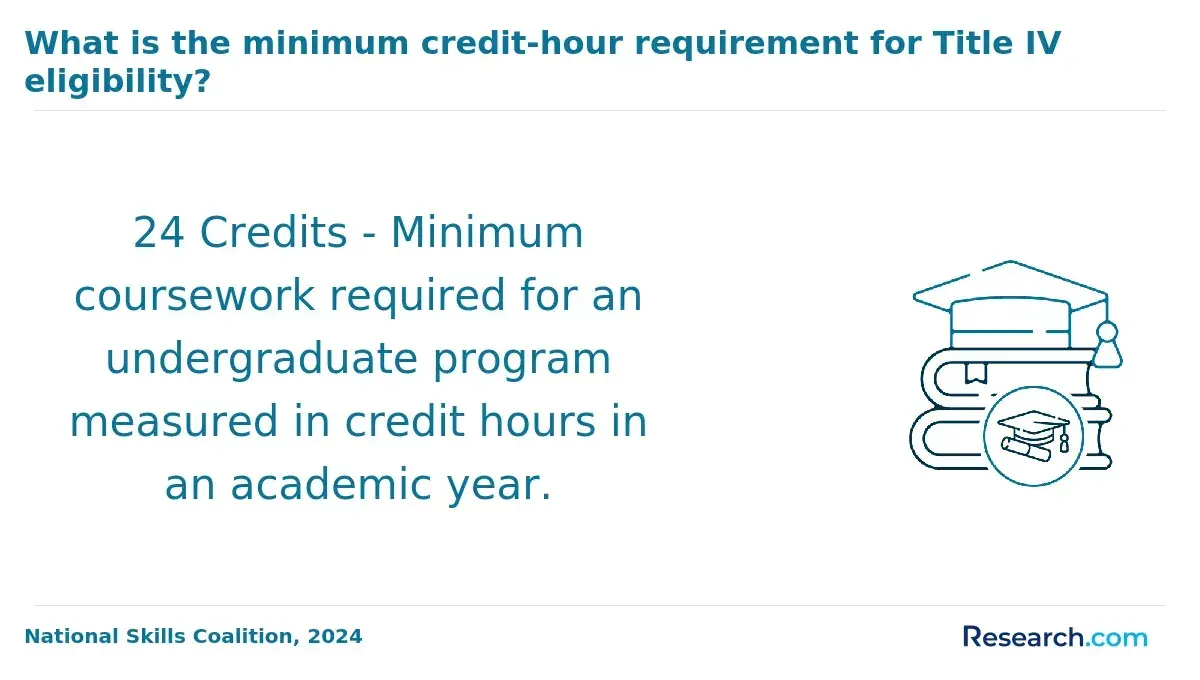
How much do affordable master's degree programs cost? There is no reliable single price for these fields. Your comparable figure is the cost of completing your degree requirements: graduate tuition for remaining credits, mandatory and program-specific fees, required preparation, and expenses associated with attendance or placements. Residency classification and accepted graduate transfer credit can change that figure.
The components below explain why two programs with similar tuition rates can have different final prices. Ask each school for an itemized estimate based on your enrollment plan.
| Cost component | Why it changes the comparison |
| Required graduate credits and tuition | More required credits can outweigh a lower per-credit rate |
| Mandatory, technology, and differential fees | Charges may apply by course, term, or program |
| Prerequisites and transfer evaluation | Additional courses add cost; accepted graduate credits may reduce it |
| Residencies, labs, and placements | Travel, supplies, or reduced work hours may be necessary |
| Financial assistance | Employer benefits, grants, and other aid can change out-of-pocket cost |
Do not confuse sticker tuition with net cost after assistance - or with the total amount you may need to finance. Check aid eligibility and employer reimbursement rules before relying on either to make a program affordable.
Which master's degree formats work best for full-time employees?
Which master's degree formats work best for full-time employees? The best format is one whose actual attendance requirements fit your job. Asynchronous online courses can reduce scheduling conflicts; scheduled online meetings may provide more interaction; hybrid and campus programs may offer useful facilities but add travel. None of these labels guarantees that deadlines, fieldwork, or course loads will be flexible.
This comparison separates delivery location from the time commitments that matter most when you work full-time.
| Format | Potential fit | Commitment to verify |
| Asynchronous online | Study around variable shifts | Weekly deadlines, group work, proctored activities |
| Scheduled online | Predictable evening or weekend routine | Required live sessions and time-zone differences |
| Hybrid or campus | Access to facilities and in-person support | Commute, campus visits, and class times |
For additional scheduling ideas, explore degree programs for working adults. An accelerated calendar is useful only if its workload remains manageable alongside your employment.
What are the admission requirements for affordable master's programs?
What are the admission requirements for affordable master's programs? Standard admission requires a completed bachelor's degree. Schools and individual programs may also review undergraduate grades, prerequisites, recommendations, statements, portfolios, interviews, or relevant experience. GRE or GMAT policies vary; do not assume a test is required or waived without checking the specific graduate program.
Ask admissions to identify any foundation courses you would need and whether they count toward the master's. If you have previous graduate coursework or a graduate certificate, request an evaluation showing which credits would actually satisfy degree requirements. Undergraduate credits do not ordinarily transfer in as master's-level credit. If you have not yet completed a bachelor's degree, 2 year online degrees may be one earlier step, but an associate degree alone does not meet standard master's admission requirements.
How long does it take to complete an affordable master's degree?
How long does it take to complete an affordable master's degree? Your timeline depends on remaining graduate credits, the number of courses you can take while employed, when required classes are offered, and whether a thesis, capstone, practicum, or clinical placement must be completed. An accelerated course term is not the same thing as an accelerated degree.
Request a part-time course map showing every required class and its likely offering term. If a school advertises a short completion timeline, ask what course load and prior preparation it assumes. Eligible graduate transfer credit may lower both time and tuition, but only after the school confirms how it applies to your intended degree.
Which careers can affordable master's degrees prepare you for?
Which careers can affordable master's degrees prepare you for? The answer depends on the curriculum and your prior experience. An MBA may support a move toward business operations; an IT or cybersecurity MS may develop specialized technical skills; an MEd may support an education-focused role. An MHA can build healthcare management knowledge, while an MSN or qualifying counseling degree may form part of a regulated professional pathway.
Work backward from actual job descriptions and, where relevant, state licensing rules. Management jobs commonly require experience in addition to education. If your target role primarily calls for a specific skill or certification, compare that smaller investment with a full master's before enrolling.
What salaries can graduates of affordable master's programs expect?
What salaries can graduates of affordable master's programs expect? No occupation-wide median is a reliable prediction of what a particular graduate will earn. For context, BLS reports a 2024 median annual wage of $124,910 for information security analysts. That is a figure for people working in the occupation - not a starting salary for cybersecurity master's graduates or evidence that the degree caused those earnings.
Pay varies with experience, location, employer, and duties. To judge whether graduate study is financially worthwhile, compare the degree's full net cost and any lost earnings with the requirements and pay ranges for jobs you could realistically pursue. Consider what advancement might also be possible through experience or a narrower credential.
How do you choose a reputable affordable master's program?
How do you choose a reputable affordable master's program? Build a shortlist around your target role, then obtain comparable answers from each institution. A cheap advertised rate is a red flag if the school will not clarify required fees, course availability, or whether its program meets your intended licensing requirements.
Use these questions before paying an enrollment deposit; written answers make cost and feasibility easier to compare.
- What is my estimated total cost through graduation, including prerequisites, mandatory fees, and required travel?
- Which courses require live attendance, campus visits, placements, or hours during the workday?
- Which previous graduate credits would satisfy this degree, and when can I receive a formal evaluation?
- What accreditation and, if applicable, state licensing requirements does this specific program meet?
- What part-time course sequence can I follow without delaying graduation because a required class is unavailable?
If your goal is research or an academic career rather than professional advancement, compare the master's with the preparation required for doctoral study; affordable online doctoral programs are a separate decision with different costs and commitments. Choose the master's only when its requirements, schedule, and likely value fit the goal you have now.
Other Things You Should Know About
Often, yes, if the program permits part-time enrollment and its live sessions, deadlines, and experiential requirements fit your schedule. Confirm those details in writing before applying.
Not necessarily. Compare the cost to finish, accreditation, career fit, and the likelihood that you can complete required courses without reducing your income.
It may, but coverage and conditions vary. Ask about annual limits, approved fields, grade requirements, reimbursement timing, and any obligation to remain employed afterward.
It depends on the role. Review job requirements and discuss advancement criteria with your employer; experience, a certification, or a graduate certificate may be a less costly alternative.
References
- Tuition and College Costs | WSAC https://wsac.wa.gov/tuition-and-college-costs
- Cost of Attendance (Budget) | 2025-2026 Federal Student Aid Handbook https://fsapartners.ed.gov/knowledge-center/fsa-handbook/2025-2026/vol3/ch2-cost-attendance-budget
- College Student Employment - COE https://nces.ed.gov/programs/coe/indicator/ssa/college-student-employment
- Types of Financial Aid: Grants, Work-Study, and Loans | studentaid.gov https://studentaid.gov/understand-aid/types
- How Much Does Grad School Cost? | UCLA https://www.ucla.edu/academics/graduate-benefits/how-much-does-grad-school-cost
- How to Work Full-Time and Go to School Without Burning Out | stevenson.edu https://www.stevenson.edu/online/about-us/news/work-full-time-and-go-to-school/
- Understanding Tuition and Fees | salemstate.edu https://ask.salemstate.edu/kb/understanding-tuition-fees
- Explanation of Fees | University of North Texas https://studentaccounting.unt.edu/explanation-fees.html
- Types of Aid: Federal Work Study | University of Arizona Office of Scholarships & Financial Aid https://financialaid.arizona.edu/types-of-aid/fws
- Cost of attendance - Office of Admissions https://admit.washington.edu/costs/coa/