2027 Best Online Professional Masters Degrees With 2.0 GPA Admission

Co-Founder and Chief Data Scientist
A 2.0 undergraduate GPA can make graduate school feel out of reach, but it does not tell you which online professional master's pathways are actually open - or whether a program will help you reach your goal. The stakes are worth examining: the U.S. Bureau of Labor Statistics (BLS) projected 36% employment growth for data scientists through 2033, though that occupation does not require a master's degree for every role.
This guide compares career-oriented fields and shows you how to check graduate-level GPA policies, strengthen an application, and avoid enrolling in a program that misses your career or licensing requirements.
Key Things You Should Know
- A 2.0 GPA does not establish eligibility for any master's degree field; verify the specific program's published graduate policy, including whether conditional admission is possible.
- Start with your goal: an MBA may support business advancement, while counseling and advanced nursing require separate checks for licensure or professional eligibility.
- Compare total cost and required in-person work, not just online tuition; BLS's 36% projected growth for data scientists through 2033 is an occupational forecast, not an admission or salary promise.
Top 10 Best Online Professional Masters Degrees With 2.0 GPA Admission - Top 10 Programs
Business / MBA Programs
A Master of Business Administration (MBA) is a practice-oriented option for applicants seeking broader management, finance, or operations skills. Some programs consider professional experience, recent coursework, or an admission exception alongside undergraduate grades; none should be presumed to admit applicants with a 2.0 GPA.
Check both the graduate school's rule and the MBA's separate rule. An MBA may fit an experienced professional better than a new graduate, and management jobs usually require substantial work experience. Compare required foundation courses and the total price before applying.
Healthcare Administration & Management Programs
A Master of Healthcare Administration (MHA), or a healthcare-focused MBA, can prepare students for administrative work rather than clinical practice. Relevant employment may help explain an earlier 2.0 GPA, but admission remains program-specific.
Ask whether the program requires healthcare experience, statistics prerequisites, an internship, or a capstone. Healthcare management positions often depend on experience and knowledge of regulations; an MHA alone does not confer a clinical license or guarantee a management position.
Information Technology Programs
A professional Master of Science (MS) in information technology may suit applicants interested in systems, cloud operations, or technology management. An unrelated bachelor's degree may be acceptable where bridge courses are offered, but those courses can add time and cost. For a 2.0 applicant, look for an explicitly published conditional-admission route and ask whether strong technical experience can support the application. Verify whether labs or exams have scheduled or in-person requirements.
Computer Science Programs
An MS in computer science generally demands more programming and mathematical preparation than a broad IT degree. Applicants with a 2.0 GPA may face two distinct hurdles: the graduate GPA policy and required undergraduate coursework. A bridge pathway may address missing prerequisites but does not automatically waive a GPA minimum. Compare software-development goals with less costly alternatives, including relevant experience or a graduate certificate; research-focused tracks may also require a thesis.
Cybersecurity Programs
An MS in cybersecurity can emphasize security operations, risk, policy, or technical defense. The best fit depends on your existing skills: an experienced IT worker may benefit from specialization, while a beginner may first need networking and systems fundamentals. A published 2.0-GPA exception must be checked at the program level. Ask about prerequisites, hands-on labs, and whether a certification could meet your immediate career goal at lower cost. A degree does not itself award a security clearance or professional certification.
Data Science / Analytics Programs
An MS in data science or analytics combines statistics, programming, and applied projects. Business analytics may offer a more accessible starting point than a mathematically intensive data science curriculum, but neither field guarantees admission with a 2.0 GPA. Ask whether prerequisite math or coding courses must be completed before admission and whether a strong portfolio can support an exception request. A capstone using real data can be valuable; compare its practical scope with your intended job.
Education / Educational Leadership Programs
A Master of Education (MEd) may focus on curriculum or instruction; an educational leadership master's may target school administration. Some tracks require a teaching license or classroom experience before enrollment. A 2.0-GPA applicant should check admission exceptions separately from state credential requirements. Online coursework may still involve supervised fieldwork at a local school. If your goal is principal licensure, obtain written confirmation that the specific track meets your state's requirements before paying a deposit.
Counseling / Psychology Programs
A clinical mental health counseling master's may be designed toward counselor licensure; a general MA or MS in psychology may not be. This distinction matters more than a flexible GPA policy. Counseling tracks can require supervised practica and internships even when classes are online. Check program admission standards, relevant accreditation, state educational requirements, and placement support. Becoming a licensed psychologist generally requires doctoral-level preparation and additional state requirements; a psychology master's alone is not a substitute.
Nursing Programs
A Master of Science in Nursing (MSN) typically requires an active registered nurse license, and tracks may specify a Bachelor of Science in Nursing, clinical experience, or additional credentials. A 2.0 undergraduate GPA may be especially consequential when a nursing department has its own admission standard.
Online classes do not remove required clinical placements. Verify admission eligibility, placement responsibilities, nursing accreditation, and your state's advanced-practice rules. An MSN alone does not automatically authorize advanced practice.
Engineering Management Programs
An MS in engineering management blends technical decision-making with project, operations, and leadership coursework. It may suit practicing engineers more than applicants seeking an entry-level engineering qualification. Programs differ on whether they accept nonengineering bachelor's degrees and which mathematics prerequisites apply.
If your GPA is 2.0, ask about an official conditional-admission policy rather than assuming work experience overrides the requirement. The degree does not replace professional engineering licensure where that license is required.
What Professional Master's Degrees Accept Applicants With a 2.0 GPA?
No degree field universally accepts applicants with a 2.0 GPA. Admission is decided by an institution and often by the individual graduate program. The ten fields above are career-oriented options to investigate, not a list of verified 2.0-GPA admission offers. A school's undergraduate admission standard, or its admission policy for a different master's degree, cannot establish your eligibility.
The most useful comparison is the route by which a particular program evaluates a low-GPA applicant. These possibilities have different consequences for your time and money:
Direct admission means you meet the program's published requirements as written. Conditional or provisional admission means an official policy permits entry with specified conditions, such as earning required grades in initial graduate courses. Individual review means the school may consider context, but it is not an admission guarantee. Preparation before applying may be the better route if the program will not consider your record yet or if you lack prerequisites.
For every promising degree, ask admissions to identify the current graduate catalog policy and confirm whether the particular master's department may impose a higher minimum. If neither source clearly permits a 2.0 applicant, do not label the program a 2.0-GPA option.
What Are the Admission Requirements for Online Master's Programs With a 2.0 GPA?
Online master's admission normally requires a completed bachelor's degree from an acceptable institution, transcripts, and any prerequisites set by the program. Depending on the degree, applicants may also need a résumé, statement of purpose, recommendations, interview, portfolio, professional experience, or a current license. GRE or GMAT rules vary; a test waiver is separate from a GPA waiver.
If your undergraduate GPA is 2.0, establish exactly which GPA the school evaluates: cumulative, last-credit, major, or another measure specified in its policy. Then ask whether a published conditional-admission or exception process applies to your intended program. You can prepare a stronger application with evidence of recent academic work, relevant achievements, and a brief, specific explanation of what changed since your undergraduate studies. None of these materials overrides a firm minimum unless the school's policy permits an exception.
If you have not completed a bachelor's degree, finish that requirement first; guidance on the easiest bachelor degree to get online may help you explore undergraduate choices, but an "easy" label does not establish graduate eligibility. Undergraduate courses can demonstrate preparation, yet they ordinarily do not count as master's-level transfer credit.
How Can You Verify Accreditation for Online Master's Programs?
Begin with institutional accreditation: confirm the university's current status through the accreditor and the U.S. Department of Education's accreditation information, rather than relying on a marketing badge. Accreditation matters for credibility and may affect eligibility for federal aid and acceptance of credits or credentials by other institutions. A guide to accredited online colleges can help frame the search, but verify the current status of the university yourself.
Next, check whether programmatic accreditation matters for your goal. Nursing, counseling, healthcare administration, business, and other fields may have relevant specialized accreditors; the appropriate one depends on the degree and intended role. Most importantly, ask the licensing board in the state where you intend to practice whether the exact online track satisfies its educational rules. Institutional accreditation, programmatic accreditation, and state licensure eligibility answer different questions.
Which Online Professional Master's Degrees Offer Strong Career Opportunities?
The strongest career opportunity is the one that builds on your current qualifications and meets the requirements of your target occupation. For example, an experienced nurse evaluating an MSN faces a different decision from a career changer evaluating analytics. BLS projected 36% growth for data scientists and 33% growth for information security analysts through 2033. Those forecasts signal occupational demand, not that every applicant needs a master's degree or will obtain one of those jobs.
The comparison below links each field to a plausible use of graduate study. It also flags where experience or regulation can matter more than the degree title.
| Field | Potential value of the master's | Qualification to check |
| MBA or healthcare administration | Broader business or healthcare operations preparation | Relevant experience for management roles |
| IT, cybersecurity, or analytics | Technical specialization or a supported career change | Demonstrable skills, prerequisites, and role-specific experience |
| Education or counseling | Preparation for a defined professional pathway | State credential rules and supervised work |
| Nursing | Preparation within an eligible nursing specialty | RN status, clinical requirements, and state authorization |
Some technology and analytics work can be performed remotely, but that depends on the employer and role - not the degree. If location flexibility is central to your decision, compare the occupations discussed in work-from-home degrees with actual job postings before committing to graduate tuition.
How Do Online Master's Programs Compare With Campus-Based Programs?
Online study can reduce commuting and expand your choice of institutions. It is not automatically self-paced: courses may meet live, enforce fixed deadlines, require proctored exams, or include campus visits. Clinical placements, counseling practica, internships, and student teaching generally require work at an approved site even when academic classes are online. Campus programs may offer more face-to-face access to facilities and peers, but can be harder to fit around work.
The right comparison is therefore the actual weekly schedule and required locations, not "online" versus "campus" alone. Request a sample course schedule and a complete list of in-person obligations. If a school describes a program as fully online, clarify whether that description includes its experiential requirements and whether approved placements are available where you live.
What Do Students Study in Online Professional Master's Programs?
Professional master's coursework combines advanced field knowledge with application. An MBA might include finance and operations; an MHA, healthcare systems and policy; a cybersecurity MS, security architecture and risk; and a counseling master's, assessment and supervised clinical training. Programs may also offer concentrations and electives, with a capstone, portfolio, comprehensive exam, internship, practicum, or thesis as the culminating requirement.
Read the required course sequence rather than judging by the degree abbreviation. A practice-oriented capstone may fit a workplace problem, while a thesis may better serve a research goal. For a low-GPA applicant, prerequisite and foundation courses deserve particular attention: they can be a chance to demonstrate current readiness, but they may increase cost and delay entry into the core curriculum. Confirm whether they carry graduate degree credit.
How Much Do Online Professional Master's Degrees Cost and How Long Do They Take?
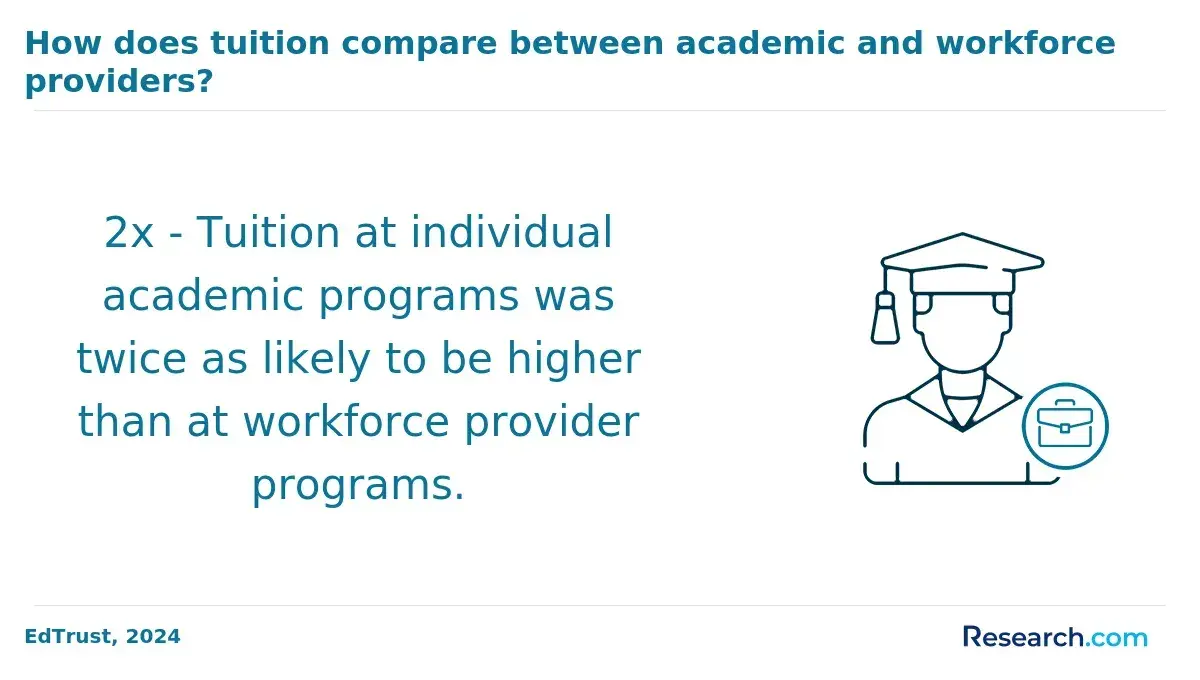
There is no reliable single price or completion time for these degree fields. Required graduate credits, tuition rates, fees, prerequisites, enrollment intensity, course sequencing, and experiential work all vary by program. A lower per-credit rate can still produce a higher total bill if the degree requires more credits or significant additional fees. An accelerated course calendar does not establish how quickly the entire master's can be completed.
To compare two offers, request each school's required degree credits and current graduate tuition and fee schedule. Account for foundation courses, technology or program fees, books or software, travel, and placement-related expenses. Ask for separate completion estimates at the course load you can actually sustain while working. Federal aid, institutional scholarships, employer tuition assistance, and payment plans may affect what you pay, but eligibility and borrowing terms must be checked against current rules.
Previous graduate-level coursework may reduce remaining requirements if the university accepts it and applies it to this particular degree. Ask for an evaluation of course equivalency, grade and age limits, transfer caps, and credits that must be earned at the institution. Do not assume prior undergraduate study or professional experience awards graduate credit.
What Salaries Can Graduates Earn With Professional Master's Degrees?
Salary figures describe occupations, not what a graduate of a particular master's program will earn. BLS recently reported a median annual wage of $120,360 for information security analysts and $110,680 for medical and health services managers. These are useful benchmarks for investigating a career, but both occupations include workers with different education, experience, employers, and responsibilities; a master's degree alone does not qualify someone for either role.
Before treating a potential salary as a return on investment, identify the job you could realistically pursue after graduation, given your present experience and any licensing requirements. Compare the full degree cost and time commitment with alternatives such as a certification, a graduate certificate, or advancement using your existing bachelor's degree. An employer's willingness to fund the degree can change that calculation substantially.
How Should You Choose a Reputable Low-GPA Online Master's Program?
Build a shortlist around your goal, then test each candidate against its published graduate-level 2.0-GPA policy. A prestigious name or appealing tuition rate cannot compensate for an admission rule you do not meet or a degree that fails to qualify you for your intended occupation.
Use these checks before submitting an application or deposit:
- Identify the exact master's track and confirm its current GPA minimum, exception process, prerequisites, and any separate departmental requirements in the graduate catalog.
- Ask admissions to confirm in writing how your 2.0 GPA will be evaluated and what conditions would apply if you were admitted provisionally.
- Verify institutional accreditation and, for regulated careers, the program and state-board requirements for practice where you plan to work.
- Request the full curriculum, schedule, in-person obligations, total estimated charges, and a completion estimate based on your intended course load.
- Compare the likely career value with a lower-cost alternative, and ask whether any prior graduate courses will apply to the degree before assuming savings.
Watch for claims that a school "accepts 2.0 GPAs" based only on undergraduate admission, or that online study eliminates clinical work. Be equally cautious about guaranteed jobs or salaries. If your ultimate goal is doctoral-level practice or research, investigate that requirement directly; lists of one-year doctoral programs are not evidence that a short doctorate will satisfy a psychologist's licensing pathway.
Other Things You Should Know About
Possibly, but only if the specific graduate program's policy permits direct admission, conditional admission, or an applicable exception. Confirm the rule with the graduate school and department before applying.
It may strengthen an application where holistic review or exceptions are allowed. It does not override a firm published minimum, and it does not automatically earn graduate credit.
Admission flexibility and accreditation are separate. Verify the university's current institutional accreditation and any specialized accreditation or state approval your career requires.
Ask your target programs first. Recent coursework may demonstrate readiness, but schools differ in how they evaluate repeated classes and which GPA they use; prerequisites can be more useful than retaking an unrelated course.
References
- An Overview of Accreditation of Higher Education in the United States | Congress.gov | Library of Congress https://www.congress.gov/crs-product/R43826
- General Schedule Qualification Policies | U.S. Office of Personnel Management https://www.opm.gov/policy-data-oversight/classification-qualifications/general-schedule-qualification-policies/
- Cost of Attendance (Budget) | 2025-2026 Federal Student Aid Handbook https://fsapartners.ed.gov/knowledge-center/fsa-handbook/2025-2026/vol3/ch2-cost-attendance-budget
- Requirements & Deadlines | The University of Chicago https://harris.uchicago.edu/admissions/requirements-and-deadlines
- Admissions Policy - Graduate School | Montana State University https://www.montana.edu/gradschool/policy/admissions.html
- FAQs for Clinical Courses: Practicum, Internship, & Field Experience - Wake Forest Department of Counseling https://counseling.wfu.edu/faqs-for-clinical-courses-practicum-internship-field-experience/
- Tuition & Expenses | Student Financial Services https://financialaid.wsu.edu/tuition-and-expenses/
- See Our Requirements | The University of Chicago Booth School of Business https://www.chicagobooth.edu/mba/full-time/admissions/requirements
- Tuition and Fees Full Time Students | uri.edu https://web.uri.edu/tuition-billing/tuition-and-fees/tuition-and-fees-full-time/
- Grades and Grade Point Average (GPA) Calculation | University of Arizona Office of the Registrar https://registrar.arizona.edu/records-enrollment/enrollment/grades/grades-and-grade-point-average-gpa-calculation