2027 Best Graduate Degrees With No Application Fee

Co-Founder and Chief Data Scientist
An application fee can make it harder to compare graduate programs - but a free application does not make a degree affordable or worthwhile. The distinction matters when career goals are changing quickly: the U.S. Bureau of Labor Statistics projects 36% employment growth for data scientists through 2033. That outlook may make graduate study appealing, but it does not tell you which program to choose.
This guide compares master's degree fields, identifies schools to investigate, and shows you how to confirm the fee policy, total cost, admissions requirements, and career fit before applying.
Key Things You Should Know
- A no-application-fee policy means the application costs $0; it does not remove tuition, required fees, or possible enrollment deposits.
- Southern New Hampshire University and Colorado State University Global are starting points for comparing online graduate options, but confirm the current fee for your specific program and applicant category.
- Choose the degree for its career fit and requirements first. For context, the BLS reported a $110,680 median annual wage for medical and health services managers - not a guaranteed salary for MHA graduates.
Top 10 Best Graduate Degrees With No Application Fee - Top 10 Degrees
Business / MBA Programs
A Master of Business Administration (MBA) is a practice-oriented choice for people seeking broader management, finance, or operations skills. Some programs welcome career changers; others expect professional experience or quantitative preparation. Compare the no-fee policy for the graduate application, then check tuition, foundation courses, and whether an internship or capstone fits your schedule. An MBA may support advancement, but management roles usually require relevant work experience too.
Healthcare Administration & Management Programs
A Master of Healthcare Administration (MHA) or related MS focuses on healthcare operations, finance, policy, and quality improvement rather than clinical licensure. It can suit professionals aiming for administrative work, especially those who already understand healthcare settings.
Look for an application-fee policy that covers the specific degree, and compare internships, employer partnerships, and total program cost. A low-cost application should not outweigh poor alignment with the healthcare role you want.
Information Technology Programs
An MS in information technology or IT management typically emphasizes systems, cloud services, enterprise technology, and project leadership. It may fit experienced IT workers seeking specialization or broader responsibility. Career changers should check programming, networking, and mathematics prerequisites: a free application does not eliminate bridge-course costs. Compare technical depth, hands-on projects, and whether the curriculum matches the jobs you see advertised, not just the degree's name.
Computer Science Programs
An MS in computer science often requires stronger programming and mathematical preparation than an IT management degree. Research-oriented tracks may include a thesis, while professional tracks may culminate in a project. If you lack a computing bachelor's degree, ask whether prerequisite courses are required and billed separately. Prioritize curriculum and preparation for your intended specialty over the convenience of a no-fee application; some software roles do not require a master's degree.
Cybersecurity Programs
An MS in cybersecurity may emphasize technical defense, risk management, or policy; those paths prepare students for different work. Before applying, compare labs, prerequisite knowledge, and whether a degree or a targeted certification better fills your skills gap. The BLS reported a $120,360 median annual wage for information security analysts, but that is an occupational figure, not an expected salary for graduates. Experience remains important in many security roles.
Data Science / Analytics Programs
An MS in data science generally demands more statistics and programming than a business analytics degree, though curricula vary. Both may include a portfolio-building capstone. Ask whether admission requires calculus, statistics, or coding and whether missing prerequisites add time and expense. Strong labor-market growth makes these fields worth considering, but a no-fee application is most useful when the program teaches the tools and analytical methods your target jobs actually require.
Education / Educational Leadership Programs
A Master of Education (MEd) may serve practicing teachers, while an educational leadership track may target aspiring administrators. These are not interchangeable credentials: principal or teacher-licensure rules depend on the state and may require experience, examinations, or supervised practice.
Confirm that the specific no-fee graduate program matches your state's requirements before weighing tuition or online convenience. Student teaching or fieldwork may still require local, in-person participation.
Counseling / Psychology Programs
A counseling master's may be designed for a specific licensure pathway; a general MA or MS in psychology may not be. Check the exact degree, programmatic accreditation where relevant, state board requirements, supervised clinical hours, and placement support before applying. Practicums can constrain an otherwise online schedule. A free application is little benefit if the program will not meet the educational requirements for your intended license.
Nursing Programs
A Master of Science in Nursing (MSN) generally requires an active nursing license and appropriate prior nursing education. Leadership, education, and advanced-practice tracks have different admissions and clinical requirements. If your goal is advanced practice, verify state licensure rules, clinical placement arrangements, and applicable nursing accreditation. A no-fee application does not reduce clinical-related expenses or establish eligibility for certification or licensure after graduation.
Engineering Management Programs
An MS in engineering management combines technical decision-making with finance, operations, and project management. It often suits engineers and technical professionals seeking broader responsibilities, but employers may still expect substantial experience.
Compare required engineering preparation, the depth of technical coursework, and employer tuition assistance. An MBA may be a better alternative if you want general business training rather than management education grounded in technical work.
What Are the Best Graduate Degrees With No Application Fee?
The best choice is the master's degree that advances your specific goal at a school where your particular graduate application is free. "Graduate degree" here means a master's degree; an institution's no-fee policy is an admissions feature, not a quality measure. The comparison below helps narrow the field before you investigate individual programs.
These degree families differ in the preparation they demand and the outcomes they support. Use the trade-offs to decide which applications are worth completing, even when submitting them costs nothing.
| Degree family | Strong fit for | Check before applying |
| MBA or management master's | Broad business or organizational leadership goals | Experience expectations and total tuition |
| IT, cybersecurity, or data science MS | Technical specialization or a carefully planned career change | Prerequisites, labs, and portfolio opportunities |
| MHA or healthcare management MS | Healthcare operations and administration goals | Internships and employer-relevant coursework |
| MEd, counseling master's, or MSN | A defined education or healthcare practice pathway | State-specific eligibility and field-placement requirements |
If you have not completed a bachelor's degree, you generally are not yet eligible for standard master's admission. Start with an appropriate undergraduate path; easy online associate degrees can be an initial step, but an associate degree alone normally will not qualify you for graduate study.
Which Accredited Schools Offer Graduate Programs Without Application Fees?
Southern New Hampshire University (SNHU) and Colorado State University Global (CSU Global) are useful schools to investigate for online master's programs and no-fee application policies. SNHU is institutionally accredited by the New England Commission of Higher Education; CSU Global is institutionally accredited by the Higher Learning Commission. SNHU offers options such as an online MBA, while CSU Global offers an MS in Information Technology Management.
Neither accreditation nor a school-wide promotional statement confirms that every graduate program, applicant type, or application route has the same fee. Before submitting, open the current graduate admissions page for your chosen program and confirm that the final application checkout shows $0. If a fee appears, ask admissions whether a waiver applies rather than assuming it will be removed later.
How Much Do Graduate Degrees With No Application Fee Cost?
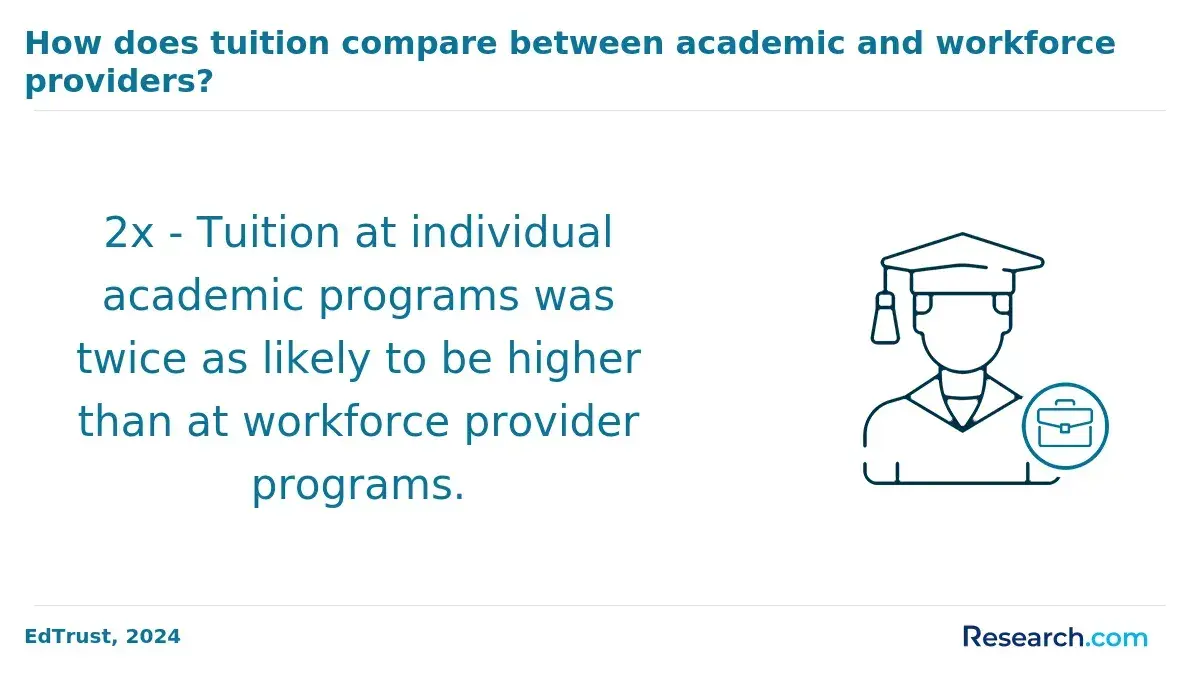
The application costs $0 when the no-fee policy applies; the degree itself does not. Schools may quote tuition by credit, term, or program, so compare the amount you would actually pay to finish - not just a headline rate.
Build a cost estimate from the items below. Request a written program-specific estimate when a school's published figures do not account for your location, track, or enrollment pace.
- Graduate tuition multiplied by the credits you must complete, including required foundation courses.
- Mandatory, technology, program, and graduation fees, plus books or software.
- Travel, lost work time, and placement expenses for required campus visits, internships, or clinical work.
- Scholarships, assistantships, employer assistance, and any eligible graduate financial aid.
Accepted graduate transfer credit may reduce costs, but only if it applies to degree requirements. If a full master's is not needed for your goal, compare its cost with short certificate programs that pay well online; a certificate is an alternative credential, not a substitute for a license-required degree.
What Admission Requirements Apply to No-Fee Graduate Programs?
A free application does not mean open admission. Master's applicants normally need a completed bachelor's degree and transcripts. Depending on the program, they may also need prerequisite courses, a minimum GPA, references, a statement of purpose, an interview, professional experience, or a portfolio. GRE or GMAT policies vary; never infer a test waiver from the absence of an application fee.
Check both graduate-school and program-specific requirements, particularly for nursing, counseling, education, and technical degrees. Ask whether conditional admission is available if you lack a prerequisite and whether completing that course adds cost or delays entry. If you still need undergraduate preparation, research the easiest degree to get with your long-term graduate prerequisites in mind - not just the shortest route to a diploma.
Are Online Graduate Degrees With No Application Fees Legitimate?
They can be. Application pricing says nothing about academic legitimacy; institutional accreditation, the actual curriculum, qualified faculty, and the degree's suitability for your goal matter more. An online MBA may be feasible without local fieldwork, while an online counseling or nursing program may require in-person clinical experience.
Do not equate "online" with "study whenever you want." Ask about live classes, fixed deadlines, proctored assessments, residencies, and who arranges required placements. For a licensed occupation, get confirmation that the program's educational pathway is appropriate for the state where you plan to practice.
What Do Students Study in These Graduate Degree Programs?
Coursework depends on the credential and its purpose. An MBA commonly covers organizational strategy and finance; an MS in data science emphasizes statistical and computational methods; an MHA examines healthcare systems and operations. Licensure-oriented programs add profession-specific practice requirements. Concentrations and electives let students specialize, but a promising concentration name is less useful than the actual courses and experience it provides.
Compare the required core, electives, and culminating work. A thesis can suit research or doctoral ambitions; a capstone or supervised practicum may better match an applied goal. Confirm whether prerequisites fall outside the graduate credit total.
How Long Do No-Fee Graduate Degrees Take to Complete?
There is no single timeline. Required graduate credits, full- or part-time enrollment, course sequencing, prerequisites, and a thesis, capstone, internship, or clinical placement can all change the finish date. Ask for a course-by-course plan based on your starting point, especially if you intend to work while studying.
Some applicants may qualify for a one-year master's degree, but an advertised timeline may assume a full-time load or specific prior preparation. If you have previous graduate coursework, ask for a transfer evaluation showing which credits satisfy this degree's requirements. Undergraduate coursework normally does not count as graduate transfer credit.
What Careers and Salaries Can These Graduate Degrees Lead To?
A relevant master's may support specialization, a career change, or eligibility for a professional pathway. It does not by itself guarantee hiring, advancement, or the occupational wage reported by the BLS. The figures below describe all workers in each occupation, not graduates of particular master's programs.
These recent U.S. median annual wages provide career context. Compare them with your current experience and the role's other qualifications before estimating a degree's financial value.
| Occupation | BLS median annual wage | Important qualification context |
| Data scientist | $108,020 | Relevant technical skills matter; a master's is not required for every position. |
| Medical and health services manager | $110,680 | Employers commonly value healthcare experience. |
| Information security analyst | $120,360 | Technical experience and role-specific credentials may matter alongside education. |
For counseling, nursing, and some education roles, add licensing requirements to the comparison. For management roles, account for the experience needed to reach the position rather than treating its median wage as an entry-level outcome.
How Can You Verify Accreditation, Licensing, and Program Quality?
Start with the school's current graduate catalog and admissions page, then verify its institutional accreditation with the accreditor or the U.S. Department of Education's accreditation database. Where the profession uses programmatic accreditation, check the relevant accreditor. For a regulated occupation, consult the licensing board in the state where you intend to work; the school's general assurance is not a substitute for that check.
Before you apply, confirm the points most likely to change your decision:
- Ask admissions to confirm the application fee for your exact master's program and applicant category.
- Request the full degree requirements, total-cost estimate, and a schedule showing any in-person obligations.
- Check whether the curriculum meets your intended licensing or certification pathway, if applicable.
- Ask how eligible prior graduate credits would apply and whether the school evaluates them before enrollment.
A common mistake is choosing the first free-to-apply program without checking these details. The better choice is the program that fits your goal and budget after the application-fee benefit is put in perspective.
Other Things You Should Know About
No. An application fee and an enrollment deposit are separate charges. Ask whether a deposit is required, refundable, or credited toward tuition.
Yes, if you meet each program's requirements. Focus on a manageable shortlist so you can compare offers, costs, and placement obligations carefully.
Not necessarily. Fee waivers and no-fee policies can differ by program and applicant category. Confirm eligibility before submitting an application that requests payment.
It can be if the curriculum, total cost, accreditation, and career or licensing fit justify the investment. The waived application fee should help you compare options, not decide for you.
References
- Cost of Attendance (Budget) | 2025-2026 Federal Student Aid Handbook https://fsapartners.ed.gov/knowledge-center/fsa-handbook/2025-2026/vol3/ch2-cost-attendance-budget
- Qualified Ed expenses | Internal Revenue Service https://www.irs.gov/credits-deductions/individuals/qualified-ed-expenses
- Graduate Admissions FAQs | Information Technology Services https://graduate.louisville.edu/admission/faqs
- Applying | universityofcalifornia.edu https://graduate.universityofcalifornia.edu/applying/
- Tuition and Fee Waivers | OneStop https://onestop.fiu.edu/finances/pay-for-tuition/tuition-and-fee-waivers/
- Admissions Information | ccp.edu https://www.ccp.edu/college-catalog/admissions-information
- Graduate Admission - Domestic Students | Texas A&M University-San Antonio Catalog https://catalog.tamusa.edu/graduate/student-enrollment/admissions/domestic-students/
- Application Fee Waivers | The Dietrich School of Arts & Sciences Graduate Studies | University of Pittsburgh https://www.asgraduate.pitt.edu/admissions/application-fee-waivers
- Can International Students Earn a U.S. Degree Online? | University of the People https://www.uopeople.edu/blog/can-international-students-earn-an-american-degree-online/