2027 Best Master's Degree Programs With Tutoring Support

Co-Founder and Chief Data Scientist
A master's program can fit your career goal and still leave you struggling when a statistics course, coding assignment, or clinical paper gets difficult. Tutoring matters most when it covers your actual graduate courses and is available when you need it.
The U.S. Bureau of Labor Statistics projects 34% employment growth for data scientists from 2024 to 2034, illustrating why students may be weighing specialized graduate study - but demand for an occupation does not establish a program's quality. This guide compares degree paths and shows prospective students how to verify tutoring, academic fit, and total cost before enrolling.
Key Things You Should Know
- Verify graduate access: An institution's tutoring page may describe undergraduate services only; confirm eligibility, covered courses, tutor qualifications, appointment hours, and delivery format with the graduate program.
- Match support to the hardest requirement: Statistics and coding help may matter most in analytics programs, while writing, clinical, or licensure-exam support may matter more in practice-oriented fields.
- Compare the whole degree: Check accreditation, required credits, placements or residencies, and total cost alongside tutoring. The strongest support cannot fix a program that does not meet your professional goal.
Top 10 Best Master's Degree Programs With Tutoring Support - Top 10 Programs
Business / MBA Programs
A Master of Business Administration (MBA) suits professionals seeking broad management training; an MS in business analytics or finance offers narrower technical depth. Useful tutoring covers accounting, quantitative methods, and case analysis - not merely general writing. Ask whether MBA students can book subject-specific appointments, including evenings if they work. Experience often matters for leadership roles, so an MBA plus tutoring should not be mistaken for a guaranteed promotion. Compare cohort schedules, team projects, and employer tuition assistance before choosing.
Healthcare Administration & Management Programs
A Master of Healthcare Administration (MHA) or related MS typically emphasizes operations, finance, policy, and quality improvement rather than clinical licensure. Look for graduate tutoring in accounting, statistics, and research methods, plus support for a capstone or applied project. Working healthcare staff should check whether appointments fit rotating shifts. Some programs value professional experience; management jobs commonly do, too. Compare internship expectations and industry connections, but do not treat access to career services as evidence of a job offer.
Information Technology Programs
An MS in information technology often combines systems, cloud infrastructure, databases, and IT management. Prospective career changers should ask about prerequisite programming or networking knowledge before relying on tutoring to close a preparation gap. Verify that graduate tutors can help with the software and technical courses actually taught, and whether remote screen-sharing is available. A project-based program may suit practitioners better than a research-heavy option, while a thesis route may better serve students considering doctoral work.
Computer Science Programs
An MS in computer science may emphasize advanced algorithms, software systems, AI, or research; admission can require substantial prior computing coursework. Check whether tutoring covers graduate-level mathematics and programming rather than introductory coding alone. Office hours, labs, and peer mentoring may supplement formal tutoring, but each serves a different purpose. Compare thesis and non-thesis options, project feedback, and course sequencing. If you lack prerequisites, calculate the added time and expense of bridge courses before applying.
Cybersecurity Programs
An MS in cybersecurity can focus on security engineering, governance, digital forensics, or risk management. Seek help matched to the curriculum: technical labs require different expertise from policy writing. Ask whether tutors can support secure lab environments and when assistance is available near assignment deadlines. Review prerequisites and hands-on components; a degree alone does not award a security certification or substitute for experience required by an employer. A graduate certificate may be a smaller first step for someone testing the field.
Data Science / Analytics Programs
An MS in data science or analytics commonly teaches statistics, programming, modeling, and data ethics. Graduate-level statistics and coding tutoring can be especially valuable to students changing fields, but cannot replace missing calculus or programming prerequisites. Ask whether support extends to the tools used in required courses and to the capstone, not just general math. Compare a technical data science curriculum with a business-oriented analytics program according to the work you want to do.
Education / Educational Leadership Programs
A Master of Education (MEd) in educational leadership may prepare experienced educators for school administration; requirements for principal credentials vary by state. Helpful support can include research methods, academic writing, and capstone guidance. Confirm whether tutoring is available during school-day hours only, particularly if you teach full time. Before enrolling, check admission experience requirements, any internship or fieldwork, and whether the specific program satisfies your state's certification pathway. An MEd by itself does not confer an administrator license.
Counseling / Psychology Programs
A counseling MA or MS may be designed for professional licensure, whereas an MS in psychology may be research-oriented and not meet counselor licensing requirements. Tutoring in research, statistics, and clinical writing can help, but it cannot replace supervised practicum or internship hours. Verify programmatic accreditation and state-specific licensure eligibility where relevant. Ask how students receive feedback during placements and whether academic support remains accessible then. Applicants should evaluate these requirements before comparing convenience or tuition.
Nursing Programs
A Master of Science in Nursing (MSN) can prepare licensed nurses for advanced practice, education, or leadership, depending on the track. Graduate tutoring in pathophysiology, pharmacology, research, or scholarly writing is most useful when matched to that track. Confirm clinical-placement responsibilities and access to help during rotations. Advanced-practice admission and licensing involve additional requirements; an MSN is not, by itself, an advanced-practice license. Compare track-specific accreditation, certification eligibility, and placement logistics before accepting an offer.
Engineering Management Programs
An MS in engineering management blends technical decision-making with operations, finance, and leadership. It often suits engineers seeking broader responsibility without leaving technical work entirely. Check tutoring coverage for quantitative courses and whether mentors or faculty can advise on an applied capstone. Programs may differ substantially in required engineering preparation and project access. A degree can develop management skills, but hiring for supervisory positions usually also depends on experience and demonstrated results.
What Are the Best Master's Programs With Reliable Tutoring Support?
The best master's programs with reliable tutoring support are those that document support for their own graduate students, in the subjects and formats those students need. No degree field or university name alone establishes that standard. Rather than treating an unverified tutoring claim as a ranking, use the comparison below to identify the evidence that would make a particular program a strong choice for you.
The table matches common degree paths to the academic support most worth confirming. Its entries are comparison criteria, not claims that every institution in a field provides these services.
| Program path | Support to verify | Potential mismatch to investigate |
| MBA or MHA | Graduate accounting, statistics, and capstone help | Appointments unavailable outside work hours |
| Computer science, IT, or cybersecurity | Graduate technical tutors and help with required tools | Services limited to introductory computing |
| Data science or analytics | Statistics, programming, and project support | Prerequisites mistaken for courses tutoring can replace |
| Education, counseling, or nursing | Research writing and track-specific academic support | Support ends or becomes inaccessible during placements |
| Engineering management | Quantitative coursework and applied-project feedback | Only general writing assistance is offered |
Ask for the graduate tutoring policy or booking page, a list of covered subjects, and an example of appointment availability during a typical term. Distinguish a tutor who explains course concepts from an advisor who plans enrollment and a faculty member who supervises a thesis. All can be valuable, but one does not automatically replace another.
How Can You Verify Accreditation for a Master's Degree Program?
Verify institutional accreditation first by checking the institution in the U.S. Department of Education's accreditation database or the accreditor's own directory. Confirm that its status is current and applies to the institution offering the degree, not merely to a similarly named campus.
Next, check whether your field or intended license calls for programmatic accreditation. For example, nursing and counseling programs may face distinct professional standards; accreditation relevant to one track or campus should not be assumed to cover another. If a school cites accreditation, ask which specific program, location, and delivery format it covers. Accreditation is a baseline check - not proof that graduate tutoring is effective.
Are Online Master's Programs With Tutoring as Effective as Campus Programs?
Online master's programs can be academically effective, but "online" does not describe the tutoring experience. A program may provide live virtual appointments, asynchronous writing feedback, both, or neither to graduate students. Compare tutor availability in your time zone, appointment wait times, screen-sharing for technical courses, and accessibility accommodations.
Also separate coursework format from location requirements. Scheduled online classes, campus residencies, proctored activities, clinical placements, and internships can still affect whether a program fits your life. An advertised short online master degree pathway deserves particular scrutiny: confirm the required credits, prior preparation, and whether tutoring remains available on an accelerated schedule.
What Do Master's Degree Programs With Tutoring Support Cost?
Total program cost is more useful than a tuition rate alone. Published graduate tuition may exclude mandatory fees, program differentials, software, books, travel to residencies, and placement expenses. Tutoring may be covered by institutional fees or limited to paid external services; ask which applies to your degree and enrollment status.
For each offer, calculate required graduate credits multiplied by the applicable tuition rate, then add mandatory charges and likely travel or placement costs. Subtract confirmed scholarships and employer benefits only when you understand their conditions. Ask whether part-time study changes fees or aid eligibility and whether eligible prior graduate-level credits would reduce remaining coursework. Federal aid eligibility, assistantships, and employer assistance depend on the student and program; a lower sticker price is not necessarily a lower final cost.
What Are the Admission Requirements for These Master's Programs?
Most master's programs require a completed bachelor's degree. Beyond that, admissions may consider GPA, prerequisite courses, recommendations, a statement of purpose, relevant experience, an interview, or a portfolio. GRE or GMAT requirements and waivers vary by program; an institution's general graduate policy may not describe a selective nursing, counseling, or computing track.
Identify prerequisite gaps early. A career changer may qualify for an MBA while needing foundation coursework for an MS in computer science; a nursing track may require an active RN license. If you have not completed a bachelor's degree, accelerated bachelors degree programs for adults may be worth evaluating before graduate admission. Ask admissions to confirm which prerequisites must be completed before applying and whether any can be taken after admission.
Which Courses and Skills Do These Master's Programs Teach?
Coursework depends more on the program's purpose than its degree abbreviation. Practice-oriented programs may emphasize applied projects, case work, clinical training, or internships; research-oriented programs may require advanced methods and a thesis. Electives and concentrations determine how closely the degree matches a prospective role, while foundation courses can extend the path for students changing fields.
Read the required-course sequence alongside the tutoring coverage list. If quantitative methods is required but tutoring is limited to undergraduate math, that is a meaningful gap. Ask when required courses run, whether capstone or thesis students can still book support, and what faculty - not tutors - will supervise. Students seeking a narrower skill set may find a graduate certificate or targeted professional training more appropriate than a full master's degree.
What Careers and Salaries Can These Master's Degrees Lead To?
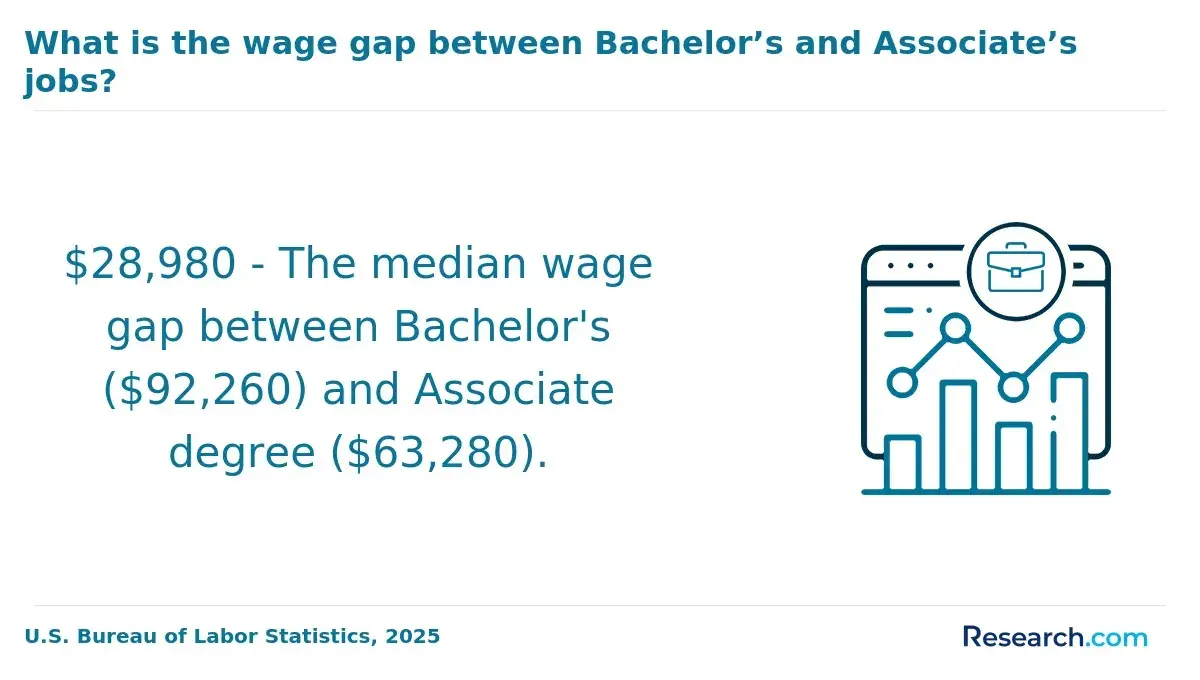
These degrees can support different goals: specialization in computing or analytics, a move toward healthcare or engineering management, or preparation for a regulated profession. The U.S. Bureau of Labor Statistics reports a May 2024 median annual wage of $112,590 for data scientists. That is an occupational figure across workers, not the expected pay for graduates of a data science master's program; education, experience, location, and employer all affect earnings.
Evaluate the degree's incremental value. Compare job postings in your target market with your present qualifications: do they require a relevant master's degree, prefer one, or prioritize experience and a portfolio? For management roles, ask what professional experience employers expect. Weigh any plausible career benefit against total cost, time out of work, and the possibility that a certificate or job-based experience would address the same gap.
What Certifications or Licenses Do Graduates Need?
A master's degree and a professional credential are separate achievements. Nursing graduates pursuing advanced practice must meet applicable state licensing and certification requirements. Aspiring counselors and school administrators must check their state's education, examination, and supervised-experience rules. Cybersecurity certifications are generally separate from an MS and may carry their own experience requirements. An MHA or MBA does not independently grant a management license or position.
If your goal is psychological research or a role requiring doctoral preparation, verify the occupation's requirements before selecting a terminal master's program. Compare doctoral pathways and funding - not just most affordable doctoral programs - against the qualifications your intended work actually requires.
How Should You Choose a Reputable Master's Program With Tutoring?
Build a shortlist around your intended outcome, then request comparable evidence from each program. This is more useful than relying on a broad ranking or assuming that a campus-wide tutoring service covers graduate coursework.
These checks help reveal support gaps before you commit tuition or accept admission:
- Confirm the exact degree, accreditation status, required credits, prerequisites, and any state-specific credential eligibility.
- Ask which graduate courses have subject-matched tutors, who qualifies for appointments, how sessions are delivered, and whether support continues through capstones or placements.
- Test the schedule: request typical appointment availability in your time zone and compare it with class meetings, deadlines, clinical hours, and work.
- Request a written estimate of tuition, mandatory fees, required travel, and remaining credits after any formal graduate transfer evaluation.
- Compare the resulting cost and workload with the skills and credentials your target employers or licensing board require.
A red flag is an assurance of "free tutoring" without confirmation that your graduate program is eligible. Another is an apparently easiest degree to get claim standing in for evidence of academic support or career fit. Choose the program whose documented services and requirements match your needs, even if another option has a more appealing label.
Other Things You Should Know About
Policies vary. Some institutions include eligible graduate students in academic-support services; others limit subjects, hours, or access. Confirm your specific program's eligibility and any charges.
Possibly with research skills or writing, but tutors typically do not replace the faculty supervisor. Ask what feedback is permitted and whether support remains available during the final requirement.
No. A program can offer virtual tutoring while requiring campus visits, clinical placements, internships, or other in-person work. Verify the full degree requirements separately.
Ask about faculty office hours, teaching assistants, writing support, and qualified peer mentoring. If your most challenging required courses lack workable support, compare another program before enrolling.
References
- Program Eligibility, Written Arrangements, and Distance Education | 2024-2025 Federal Student Aid Handbook https://fsapartners.ed.gov/knowledge-center/fsa-handbook/2024-2025/vol2/ch2-program-eligibility-written-arrangements-and-distance-education
- Undergraduate Tutoring - Weingarten Center https://weingartencenter.universitylife.upenn.edu/tutoring-services/
- FAQs for Admitted Students - Master of Arts in Economics https://ma.eco.utexas.edu/faq/admitted-students/
- Peer Tutoring Frequently Asked Questions | The Learning Center https://learningcenter.unc.edu/peer-tutoring-frequently-asked-questions/
- Academic Success Services | Academics | Manhattan University https://manhattan.edu/academics/academics-success
- Frequently Asked Questions | UMGC Tutoring https://www.umgc.edu/current-students/learning-resources/tutoring/umgc-tutoring-frequently-asked-questions
- Academic Common Market (SREB) | Louisiana Board of Regents https://www.laregents.edu/divisions/academicaffairs/academic-common-market-sreb/
- How Are Colleges Ranked? | The University of Olivet https://www.uolivet.edu/how-are-colleges-ranked-and-how-to-use-rankings-wisely/
- Frequently Asked Questions - Tutoring https://tutoring.sfsu.edu/faqs
- Tutoring | University College | Illinois State https://universitycollege.illinoisstate.edu/tutoring/