2027 Most Affordable Online Master's Degrees for Busy Adults

Co-Founder and Chief Data Scientist
A low tuition rate is appealing, but it does not tell a working adult what a master's degree will cost, or whether its schedule is manageable. The stakes are substantial: U.S. Bureau of Labor Statistics (BLS) data show median weekly earnings of $1,840 for workers with a master's degree in 2024, though that figure does not measure the payoff from earning one.
This guide compares ten online master's degree fields by likely cost drivers, flexibility, and career fit. You'll learn how to identify a genuinely affordable option without overlooking fees, time away from work, or licensing requirements.
Key Things You Should Know
- Compare total program cost, not tuition per credit: required credits, fees, prerequisites, and in-person requirements can change the bill substantially.
- For working adults, asynchronous coursework and part-time enrollment can improve fit, but deadlines, course sequencing, and placements still determine whether a program is practical.
- BLS projects 34% employment growth for data scientists from 2024 to 2034; strong demand may justify examining analytics programs, but it does not guarantee a job or make an expensive degree worthwhile.
Top 10 Most Affordable Online Master's Degrees for Busy Adults
Business / MBA Programs
An online Master of Business Administration (MBA) is a broad, practice-oriented option for experienced professionals seeking management or cross-functional skills. An MS in management or accounting may be a better value for a narrower goal.
Compare required credits and business-school fees before assuming the lowest advertised tuition is cheapest. Ask whether group projects require live meetings and whether your employer will help pay. An MBA does not replace the experience employers typically expect for management jobs.
Healthcare Administration & Management Programs
An online Master of Healthcare Administration (MHA) or healthcare-management MS can suit people moving toward operations, finance, or quality-improvement work. A Master of Public Health (MPH) may fit population-health goals better.
Compare total credits, internship requirements, and healthcare-specific fees; these can outweigh a low per-credit rate. Many management positions also require relevant experience. An administration degree is not a clinical license, so licensed-career goals require a different eligibility check.
Information Technology Programs
An online MS in information technology commonly emphasizes systems, cloud infrastructure, or IT leadership. It may suit working technologists who can apply coursework immediately. Compare prerequisite courses, lab access, and employer reimbursement alongside tuition.
Check whether projects are self-paced or tied to scheduled team meetings. For a targeted skill gap, a graduate certificate or relevant certification may cost less than a full degree; neither option automatically qualifies someone for an IT management role.
Computer Science Programs
An online MS in computer science can support deeper software, algorithms, or computing specialization. Career changers should price required foundation coursework separately: a low graduate tuition rate may conceal substantial preparation costs.
Compare thesis and project tracks, technical prerequisites, and access to needed computing resources. An MS may add value for specialized goals, while experienced developers seeking a specific tool or language might first consider shorter training.
Cybersecurity Programs
An online cybersecurity MS can combine technical security work with risk management or policy. Before choosing the least expensive option, check whether its courses match your intended role and whether labs require scheduled access.
Some employers value hands-on experience and role-specific certifications alongside a graduate degree. Compare those alternatives with the program's full price, and do not assume that completing the degree confers a professional certification.
Data Science / Analytics Programs
An online MS in data science or analytics may cover statistics, programming, data engineering, and applied projects. Analytics programs can be more business-focused, so examine the curriculum rather than relying on the degree name.
Budget for math or coding prerequisites if your bachelor's degree did not include them. A portfolio-building capstone can be useful, but assess its workload against your job schedule. For a limited skills gap, a certificate may be a less costly starting point.
Education / Educational Leadership Programs
An online Master of Education (MEd) or educational-leadership degree may support classroom specialization or school-leadership preparation. State rules determine whether it helps meet certification requirements. Confirm those rules before paying tuition, especially if you live outside the institution's state.
Compare cohort schedules, fieldwork, and any pay-scale benefits available through your employer or district. An inexpensive degree has limited value if it does not meet your intended credential requirements.
Counseling / Psychology Programs
An online counseling master's can be a licensure-oriented path; a general psychology MA or MS may instead emphasize research or nonclinical work. These are not interchangeable. Required practica, supervised placements, and state-specific course rules can add costs and constrain a working adult's schedule.
Verify that the specific program supports your intended license in the state where you plan to practice. A degree alone does not grant independent clinical practice authority.
Nursing Programs
An online Master of Science in Nursing (MSN) may prepare registered nurses for education, administration, or an advanced-practice pathway, depending on the concentration. Admission commonly requires an active nursing license; advanced-practice tracks can also require local clinical placements.
Compare clinical supervision, travel, and program fees - not just online tuition. Confirm state authorization and whether the chosen track meets applicable certification and licensure requirements. An MSN does not, by itself, award an advanced-practice license.
Engineering Management Programs
An online MS in engineering management blends technical decision-making with operations, projects, or finance. It can fit engineers seeking broader responsibilities while remaining employed. Compare prerequisite math or engineering coursework, capstone expectations, and fees.
If your goal is general business leadership, compare its full cost with an MBA; if you need one project-management skill, shorter training may suffice. Employers generally still expect relevant technical and leadership experience for management roles.
What are the most affordable online master's degrees for working adults?
There is no reliable field-wide winner: schools set prices, and degree requirements differ. Business, IT, education, and analytics offer options worth comparing, but a shorter program is not necessarily cheaper after fees or prerequisites. These are degree fields, not a verified ranking of particular universities.
The comparison below shows where costs and scheduling constraints can arise. Use it to narrow your search before requesting prices for specific programs.
| Degree field | Cost factor to check | Working-adult fit question |
| MBA or management | Business-school fees and required credits | When must teams meet? |
| IT or computer science | Foundation courses and lab costs | Are technical sessions scheduled? |
| Education | Fieldwork and credential-related expenses | Can requirements be completed locally? |
| Counseling or nursing | Placement, supervision, and travel costs | Can clinical hours fit around employment? |
To identify your lowest-cost workable option, use the same sequence for every school you consider:
- Choose a career goal and identify any required degree or license.
- Request a written estimate for all remaining credits, mandatory fees, and required in-person work.
- Compare schedules, employer benefits, and likely time away from paid work before choosing.
How much does an affordable online master's degree cost?
No single price applies across these fields. Calculate the amount you expect to pay to finish: tuition for required credits plus mandatory and program fees, prerequisites, materials, and travel or placement expenses, less aid you are eligible to receive. Published tuition is a sticker price; your estimated out-of-pocket cost depends on your circumstances.
This breakdown separates charges that are easy to overlook when comparing advertised rates. Ask each institution for its current graduate tuition schedule and a program-specific estimate.
| Cost component | Why it changes the comparison |
| Tuition and required credits | A lower rate can still produce a higher bill when more credits are required. |
| Mandatory and differential fees | Technology, program, or course charges may be billed separately. |
| Prerequisites and culminating work | Foundation courses, a thesis, or extended placements may add expense or time. |
| Location-related costs | Residencies, travel, and local clinical arrangements can reduce the savings of online study. |
| Available funding | Employer assistance, scholarships, and eligible federal aid can change what you pay. |
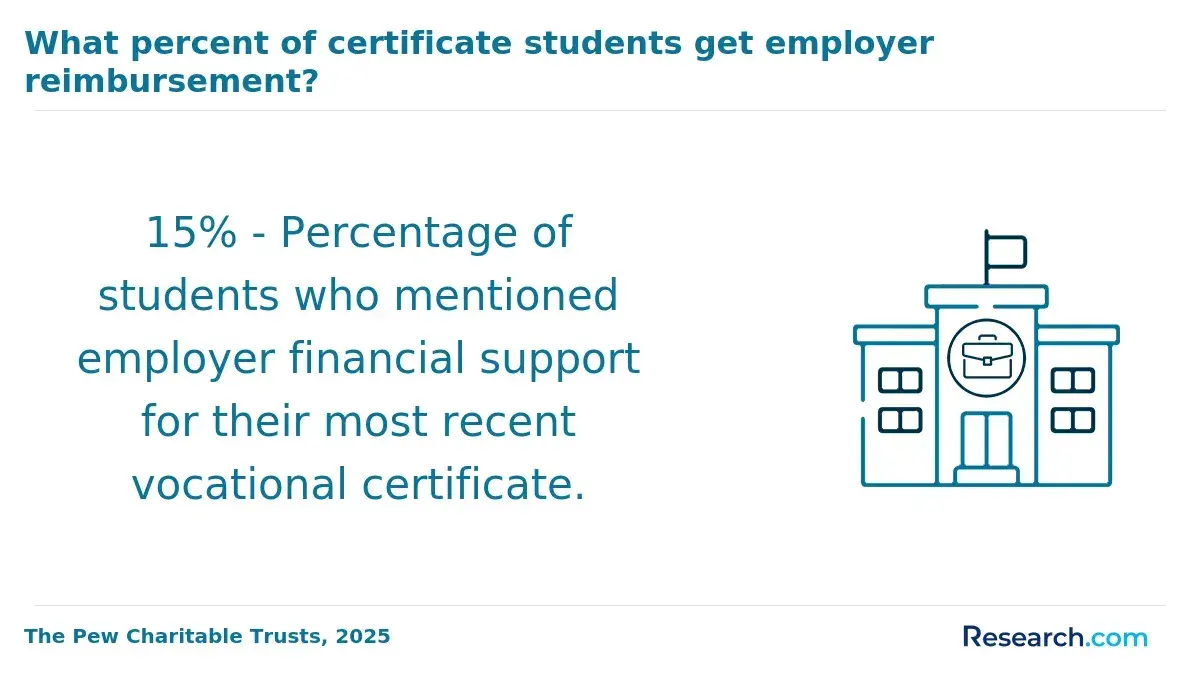
Ask whether part-time enrollment affects aid eligibility and whether tuition differs by residency. Borrowing can make payments manageable now but raises the eventual cost through interest. Avoid the common mistake of comparing monthly payments rather than the full amount you will repay.
Are affordable online master's programs accredited and reputable?
They can be. Verify institutional accreditation through the U.S. Department of Education's accreditation database or the accreditor itself. For a regulated career, also check whether the particular program holds the accreditation or approvals your state or credentialing body requires. A university's accreditation alone may not establish licensure eligibility.
Accreditation is a starting point, not a measure of whether a degree fits your goal. When comparing the best online universities, examine the specific graduate program's curriculum, faculty access, student support, and required placements rather than relying on a school-wide label.
Before submitting a deposit, confirm the following directly with the institution and, for a licensed occupation, the relevant state board:
- Which institutional and program-specific accreditations or approvals apply?
- Does the program meet requirements where you intend to work?
- What written information is available about completion support and required in-person activities?
Which online master's degrees offer the strongest career outcomes?
The strongest choice is the one that fills a documented gap between your current qualifications and a realistic next role. An MBA can broaden an experienced professional's management preparation.
An MS in computer science can deepen technical expertise; counseling and some nursing tracks can support regulated career paths if they meet licensing rules. None provides a promotion or job automatically.
Start with job postings in your target location: distinguish roles that require a master's degree from those that accept equivalent experience. Then compare the degree's full cost with a certificate, certification, or advancement using your existing bachelor's degree.
If location flexibility matters, remember that degrees for remote work describe possible career paths, not a promise that an employer will offer remote positions.
What are the admission requirements for online master's programs?
Applicants generally need a completed bachelor's degree and transcripts. Depending on the program, schools may also require prerequisite courses, a résumé, recommendations, a statement of purpose, an interview, or a portfolio.
MBA programs may weigh work experience; technical MS programs may expect math or programming preparation; nursing tracks may require a current professional license. GPA standards and GRE or GMAT policies vary by program, so verify the published graduate-level requirements rather than assuming an institution-wide rule applies.
If you have not finished a bachelor's degree, complete that requirement first. A 1 year bachelor degree online search may help you explore completion pathways, but advertised timelines depend on eligible prior credit and program rules; incomplete undergraduate study alone does not qualify you for standard master's admission.
How long do affordable online master's degrees take to complete?
The answer depends on remaining credits, part-time or full-time enrollment, course availability, prerequisites, and the final project or placement. Ask for a term-by-term plan based on the hours you can study while working. A short course term does not establish a short degree timeline.
An advertised online master pathway may assume continuous enrollment, prior preparation, or a specific course load. If you already have graduate coursework, request an evaluation before enrolling.
Accepted graduate credits must also apply to your intended degree, and the school may require a minimum number of credits completed there. Undergraduate credits generally do not count toward master's requirements unless the institution explicitly offers that pathway.
How do online master's programs compare with campus-based degrees?
The main difference is where and when coursework happens, not necessarily what the credential represents. Online study can remove a regular commute, but live classes, fixed deadlines, labs, residencies, and placements may remain. A nearby campus program may be less expensive or easier to complete if it offers the supervision and courses you need.
Compare formats against your actual work schedule. This table highlights the trade-offs most likely to affect completion and cost.
| Format | Potential advantage | Constraint to verify |
| Asynchronous online | More control over study hours | Weekly deadlines and group-work schedules |
| Scheduled online | Regular live interaction | Attendance during work or caregiving hours |
| Hybrid | Remote coursework with some in-person access | Travel frequency and residency costs |
| Campus-based | Direct access to facilities and local placements | Commute and fixed class times |
What salaries and job outlooks do master's degree graduates have?
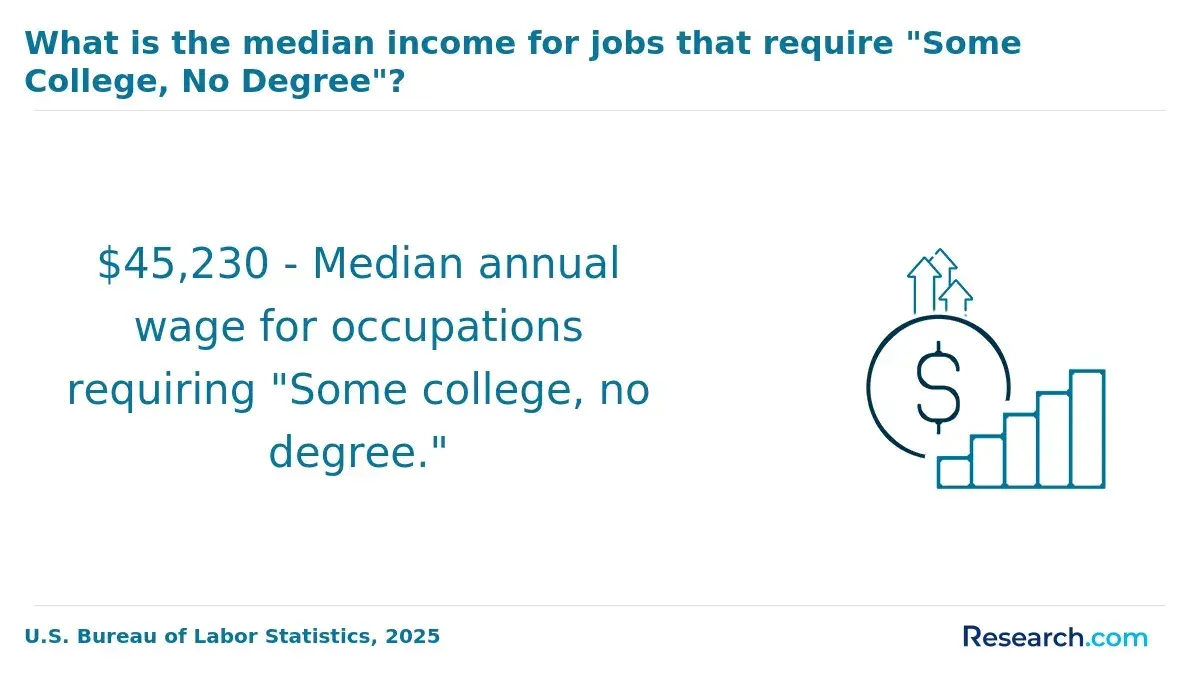
Salaries depend on occupation, experience, location, and employer, not simply on holding a master's degree. For context, BLS reports a 2024 median annual wage of $117,960 for medical and health services managers. That is an occupational median, not the typical salary of MHA graduates; these management jobs generally also require relevant experience.
Use BLS occupation pages to check wages, projected employment, and typical entry requirements for the roles you actually want. Demand for a field does not show that employers require graduate education or that a particular program's tuition will pay off. Ask schools for clearly defined graduate outcomes, and be wary of salary claims that omit the job, location, or graduates surveyed.
What certifications or licenses may online master's graduates need?
It depends on the role and state. Counseling graduates seeking independent clinical practice typically need a qualifying degree, supervised experience, and required examinations before licensure. Teachers and school leaders must meet state credential rules.
Advanced-practice nursing pathways can involve state licensure and national certification. In IT, cybersecurity, and project work, certifications may be useful or requested by employers without being awarded as part of a master's degree.
Before enrolling, name the exact credential you want, locate its current eligibility rules, and ask the school how its specific online track meets them in your state. Confirm who arranges any required placement. This check can prevent an affordable-looking degree from becoming an expensive detour.
Other Things You Should Know About Master's Degrees
Not necessarily. Compare total cost with accreditation, schedule, required placements, and whether the curriculum supports your goal. The lowest tuition rate may not produce the lowest final bill.
Often, yes, especially with part-time enrollment. Check live-attendance rules, weekly deadlines, course sequencing, and any fieldwork before committing.
Eligible students at qualifying institutions may have access to federal graduate aid; scholarships and employer assistance may also be available. Ask the school how your enrollment level and program affect eligibility.
Sometimes, if the institution allows certificate courses to apply toward that degree. Get written confirmation of credit applicability and any residency or time limits before counting on the savings.
References
- Practicum and Experiential Learning Requirement | Northwestern University https://sesp.northwestern.edu/undergraduate/degree-requirements/practicum.html
- A Self-Paced Path to Your Degree - UW Online Collaboratives https://uwex.wisconsin.edu/stories-news/a-self-paced-path-to-your-degree-understanding-asynchronous-learning/
- Military & VA Friendly | Online https://cps.unh.edu/online/why-unh-cps-online/military-va-friendly
- Tuition and Fees | NC State Online and Distance Education https://online-distance.ncsu.edu/tuition-fees/
- Is Accounting a Good Career? Pros, Cons, and Career Paths | post.edu https://post.edu/blog/pros-and-cons-of-accounting-career-path/
- How Internships, Practicums, and Clinicals Actually Work | Florida National University (FNU) https://www.fnu.edu/internships-practicums-clinicals-explained/
- Online Master's Degrees | University of Miami https://uonline.miami.edu/programs/online-masters-degrees/
- Can You Work Full-Time and Go to School? A Practical Guide | Whitworth Online https://online.whitworth.edu/news-articles/can-i-go-to-school-and-work-full-time/